
by M. Louisa Locke
 In the spring of 2010, just six months after I published Maids of Misfortune, the first novel in my Victorian San Francisco Mystery series, I published a short story in that series called Dandy Detects. Besides the fact that I wanted to give a character from the first book, a young Boston Terrier named Dandy, the chance to star, my primary reason for writing the story at that time was for marketing purposes.
It is hard to imagine, but in 2010, the indie author movement was in its infancy, there were only a few indie authors achieving much visible success, and selling books at 99 cents was the new—and very controversial— strategy that these authors recommended. Their logic, which has proven quite valid, was that a reader would be more likely to take a chance on an unknown author if the price of the book was low enough. Then, if the person enjoyed the book, they would be more likely to buy the author’s other books at full price.
However, with only one book out, which I didn’t want to discount, writing a short story seemed the most sensible alternative. Dandy Detects became my loss leader and did its job more successfully than I could have imagined. After it was featured in Kindle Nation Daily, one of the first ebook promotional sites, enough people went on to buy Maids of Misfortune at full price to place it on Amazon’s historical fiction best seller list, where it remained for the next year. Dandy Detects also continued to do well, selling over 30,000 copies since it was published.
In time, I no longer had to rely on a short story as my primary marketing tool. With more books in my series, I started to take advantage of promotional sites like BookBub where I could temporarily discount my full-length books to attract new readers to the series. Next, I made Maids of Misfortune, as the first in my series, free, and it now acts as my permanent loss leader.
That doesn’t mean I have stopped writing shorter-form stories. It just means I am writing these stories because it gives me a good deal of pleasure to have a medium where I can develop stories for the minor characters in the series. As of this date, I now have seven short stories and three novellas in the Victorian San Francisco Mystery series (compared to seven full-length novels.)
As a reader, one of the reasons I have always enjoyed mystery series, for example Louise Penny’s series set in Three Pines, is the continuing cast of characters that are introduced along the way. Whether these characters are family members, neighbors, co-workers, or local officials, they make the stories richer as they introduce humor, conflict, and even romance into the basic mystery plot.
Yet, as an author, I discovered that minor characters can slow down the plot too much if I give them free reign. It’s difficult to balance writing a well-plotted mystery, with well-developed main characters, within a rich historical setting, and my historical mysteries are already fairly long for this sub-genre—coming in at between 100,000 and 140,000 words. This means I really can’t afford to develop my minor characters as much as I want to within these novels, particularly since there are so many of them! My main protagonists, Annie and her husband Nate, run the O’Farrell Street boardinghouse, which currently has three servants and nine boarders. And these twelve minor characters also have family and friends, who often appear as minor characters as well.
My solution has been to give some of these characters their own published stories.
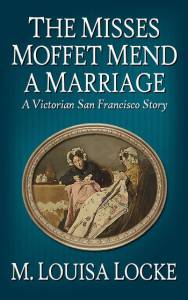 For example, in Maids of Misfortune, I had created two elderly dressmakers who lived in the O’Farrell Street boardinghouse. One of these sisters talked all the time, the other never said a word. And that was about all a reader learned of them in that first book. But I had developed a whole history for them and I wanted my readers to learn that backstory. So, in my second short story, The Misses Moffet Mend a Marriage, I gave them a minor mystery to solve that helped reveal a good deal about their past as well as their current occupation.
This desire to expand upon a minor character has also been behind my novellas—which in truth each started as a short story that just sort of grew. In Violet Vanquishes a Villain, I was curious about why Annie and Nate’s sister-in-law, Violet, was so hostile to the idea of women having a career. In my second novella, Kathleen Catches a Killer, it was the tension between Kathleen Hennessey, the young Irish boardinghouse maid, and her beau, the police officer, Patrick McGee, that I wanted to explore.
Thankfully, fans of the series seem to get as much enjoyment out of reading about these characters as I do in writing about them. In fact, a number of the reviews of the sixth book in my series, which was set mostly on the University of California Berkeley campus, complained that they had missed hearing about boardinghouse residents and what they were up to back across the Bay.
That’s why I wrote one of my latest short stories, Beatrice Bests the Burglar. Beatrice O’Rourke is the boardinghouse cook, and a great favorite of series fans. In this story, as she spends the day reminiscing, I was able to feature what I consider a major character in the series, the boardinghouse itself.
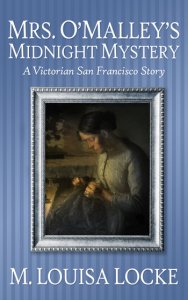 Finally, I write these stories so I can explore historical themes in more detail. In Mr. Wong Rights a Wrong, I addressed the anti-Chinese movement in the city, and in Dandy Delivers, I looked at the plight of the city’s newsboys. My most recent short story, Mrs. O’Malley’s Midnight Mystery, let me portray the difficulties a poor widowed woman in 1880s San Francisco would have faced, trying to raise children in a crowded two-room apartment––difficulties that seemed all too real as I wrote this story in the midst of the Covid-19 pandemic.
In each of these cases, if I had gone off in this kind of detail on these subjects in one of the full-length novels, I might very well have lost a reader’s attention or weakened the effectiveness of the mystery plot. Instead, I get to give readers something inexpensive to read while they patiently wait for my next full-length novel and to make a little money for myself in the process.
###
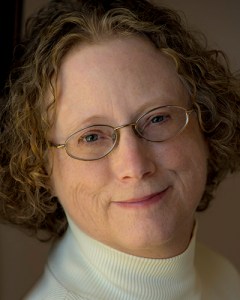 Louisa Locke, a retired professor of U.S. and Women’s History, is the author of the USA Today best-selling cozy Victorian San Francisco Mystery series. This series features Annie, a young boardinghouse keeper, and Nate Dawson, a local San Francisco lawyer, as they investigate crimes with the help of their friends and family in the O’Farrell Street boardinghouse. Not content with just exploring the past, Locke also helped create an open source, multi-author science fiction series called the Paradisi Chronicles. You can find out more about Locke’s books from both of these series at https://mlouisalocke.com.
***
This article was posted for M. Louisa Locke by Jackie Houchin (Photojaq)
.

 I love to write. I love to write novels that contain romance. I love to write novels that contain mystery or suspense.
 My kind of story, and I follow their bible and have my characters interact with the protagonists of other Colton stories in the various mini-series that are part of the Colton series. When I write stories that are all my own I fit a lot of dogs into them, and occasionally have been able to slip one in to a Colton story.


 During the Covid 19 enforced solitary confinement, my writing methods have changed somewhat. Partly because, after all the Woman’s Club administrative work,
  So now, sitting in my newly arranged office space, with smartly labeled files and clearly focused folders – I can’t find anything. I do a lot of research and have copious folders of notes, print-outs and clippings; now all neatly categorized. Normally, when I sit at my desk in my very small ‘office’ (in reality, a corner of the living room) I can reach my arm out and grab the stack of papers I need. Or reach the other arm out and grab the specific notebook. Everything’s at arms length and very convenient. Except now I have to stop and think “which arm?” “Is it to the left or to the right or behind me? My color-coded files are in upheaval because I have re-arranged them methodically. But my creative mind doesn’t work that way. Now I have to rethink my steps as to why I re-filed things and where my logic was going with the new system.

 After ordering restaurant take-out, my husband drove there to pick up dinner. It would take him almost an hour, leaving me time to explore a newly bloomed section of our garden, planted with rhododendrons. If you’re not familiar with the plant, they’re like azaleas on steroids, with flower clusters, some as big as your face, nestled against dark green leaves. Some grow as tall as trees; others have been pruned knee- or chest-high, their blossoms a riot of pinks, fuchsias, purples and reds.
 In the shelter of the garden, hidden beneath a canopy of lavender and laurel trees, I sauntered the path that wends through the rhododendrons. As I neared the end of the path, where it rejoins the lawn, I spotted something crescent-shaped sparkling on a branch. A closer look revealed a young bird, judging by its downy feathers of gray, which blended in with the bark. She (as I later discovered) had a curved beak, bright yellow, which stood out like a slice of sunlight in the darkness of the overgrowth.
 I so wanted to hear her sing, but she didn’t. Silently she sat there, occasionally darting her head, watching everything around her as I watched her, delighting in her curiosity, her seeming amazement with the world she’d recently entered. She hadn’t mastered flying yet. Her wings fluttered to help her balance on the branches as she hopped along, taking in the sights and sounds all around her. I’d been feeling blue awhile, in a rut. All that changed with my encounter with this fledgling. I found myself transfixed by her utter joy, and that joy flowed through me for the first time in months.

 Of course, the correct common usage idioms are “stubbed my toe, a drop in the bucket, beat around the bush, and a dime a dozen.” The last two are alliterative, yes, but why, I wonder, are toes the only part of our anatomy ever stubbed? And why drops only drip into a bucket instead of any other container? My favorite, though, is “a short/long week – or year, or hour.” What do they actually mean? Six days instead of seven? 11 months instead of 12? Sure, it’s easy to explain that an hour can drag on seemingly forever and a short week can mean time flies by, so why don’t we write that?
 I have a book, “The Describer’s Dictionary” that contains oodles of such hackneyed idioms but they do inspire me to create my own if possible. The book is tremendously helpful when trying to find a way to describe, for example, low-elevation clouds. One description offered is “a cloud mass like a formless gray horizontal sheet.” Would you honestly use that? However, I have found the book invaluable for character physiques, architecture, locales, settings, and surfaces and textures. There is an entire chapter on Necks. Granted, it’s only half a page but it encourages the mind to explore other possibilities.
 Jill Amadio is from Cornwall, UK, but unlike her amateur sleuth, Tosca Trevant, she is far less grumpy. Jill began her career as a reporter in London (UK), then Madrid (Spain), Bogota (Colombia), Bangkok (Thailand), Hong Kong, and New York. She is the ghostwriter of 14 memoirs, and wrote the Rudy Valle biography, “My Vagabond Lover,” with his wife, Ellie. Jill writes a column for a British mystery magazine, and is an audio book narrator. She is the author of the award-winning mystery, “Digging Too Deep.” The second book in the series, “Digging Up the Dead,” was released this year. The books are based in Newport
 op of one of my stacks of beloved books—ready for the right moment! And with my trusty Kindle at my side, as it often is, loaded with yet to be read or heard kindle and audio book offerings, I’ve been in couch-potato heaven. I did think about writing—but not about doing improvement tasks, or dusting “write your name in it” dust laden furniture, or any of the other neglected household items, or heaven forbid—donning a mask and going out into 2020’s real world. The “thinking” about writing part prompted this post…
 BBC Radio 4 Broadcast of Charles Paris, played by Bill Nighby, then there was Rumpole, played by Julian Rhind-Tutt, and now I’m finishing up Father Paolo Baldi played by David Threlfall. (I’m mentioning the actors names because I think they have great voices in case you want to give any of them a try) My current listening, Paolo Baldi, has taken me to his Ireland, including traveling around a bit, and I love his mystery focused adventures, and the Ireland he sees.
 The next stop on my rambling writing road is Maeve Binchy and her book. I’m in a wonderful book club, and periodically, each of us have to come up with a selection. Fellow Writer in Residence, Rosemary Lord, mentioned Maeve Binchy in one of her posts,





 After I joined Sisters-in-Crime/Los Angeles, I was asked to join the board. I started out as Speakers Bureau Director. I set up writers’ panels all over the area. I first went through the roster of members, located websites for those members with one, learned what they wrote, and got an idea what types of panels I could offer local libraries based on the types of books these folks wrote. I did cozy panels, Noir, mysteries with a travel theme. 80 panels later, I pretty well know who wrote what.

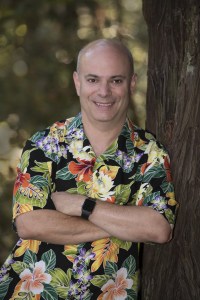 Marc Jedel writes humorous murder mysteries. He credits his years of marketing leadership positions in Silicon Valley for honing his writing skills. While his high-tech marketing roles involved crafting plenty of fiction, these were just called emails, ads, and marketing collateral.


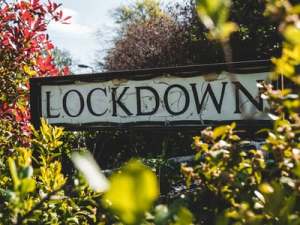 Yes, this is The Writers in Residence blog. And what am I posting about here today? Writers in residence.
 So most often these days, I assume we’re writers in residence. We all have homes–houses, apartments, condos or whatever–although maybe there are some homeless people out there who write, too. In any case, we reside somewhere. And write.
 Oh, and by the way, I was very impressed by our last Writers in Residence blog, written by Rosemary Lord–focusing on independent bookstores near us in Southern California. It’s a great idea to buy books from them, probably online and either have them shipped or pick them up outside the store. And it’s not only the independents doing that now. I’ve picked up several books from outside my nearby Bookstar, which is part of Barnes & Noble. I want that store, and the entire company, to survive, and the indies, too!

 The Writers in Residence
You must be logged in to post a comment.