LET GO AND LIVE….

by Rosemary Lord   


I went to the zoo. London Zoo. With my brother Ted. We took a picnic.

It was a lovely sunny day in May, shortly after my birthday, as we sat by the fountain enjoying our sandwiches. Just like we had done as small children – just yesterday!

Oh, the pleasure of revisiting such childhood memories.

Since then, the London Zoo has improved greatly, totally remodeled with expansive, imaginative new areas for the animals with the Global Wildlife Conservation programs. We saw the wonderful abandoned 1950s Indian railway station that is now The Land of Lions, complete with abandoned luggage, old handcarts and peeling, vintage Bollywood movie posters, to make these endangered Asiatic Lions feel they are still in Gujurat, India. The Sumatran tigers have their own roaming wilderness, as do the wild African rhinos. All endangered species, now thriving in this spacious conservation program. Even the butterflies have their own newly designed habitat. Each sanctuary was as fascinating as the last. It was an educational joyride.

Yes, I was in England visiting my family for the gathering of the Lord clan. After London, my siblings and I went back to the small fishing village in Greece that we’ve been returning to for several years. Not telling you where or it will get overrun with tourists! This is where we enjoyed leisurely dinners in the harbor, overlooking the small fishing boats. Souvlaki (chicken skewers) and moussaka still favorites – at around $14 a head including lots of wine and other dishes! We spoke of books and writers. We always come back to books and writers. Richard Osman’s Thursday Murder Club was much discussed as a well-thought-out Agatha Christie-style mystery. Also on the reading menu were Mick Herron’s Slow Horses, Victoria Hislop’s latest, The Figurine, and Sinclair McKay’s intriguing book about The Secret Life of Bletchley Park. I love those World War II books. And am fascinated to learn more about the young women at Bletchley Park, who, having signed the Official Secrets Act, never spoke of their heroic work.  

We wondered whether today’s kids will be as voracious readers as we were and still are…

We spent a couple of days in the delightful waterside town of Nafplio, an hour south of Athens. More delicious Greek food and friendly Greek hospitality.

Back in England, our wonderful, long-suffering brother-in-law, Peter, drove us to Broadstairs, in Kent – next to Ramsgate. What fun! It’s a lovely, old-fashioned ‘seaside’ town. It was one of Charles Dickens haunts. Bleak House stands on the top of the cliffs overlooking the expansive beaches. It’s a leisurely mix of old and new. The Edwardian and Victorian architecture, the Kent and Sussex painted wooden beach huts and wooden fishing and boat structures at the waters edge, unspoiled, next to charming new buildings. Beachside shops selling souvenirs, buckets and spades and saucy postcards. Fish and chips for lunch, of course. Perfect!

This was my much-needed escape from Hollywood and all the dramas of the Woman’s Club. To my jaded eyes, it seemed so much easier to be a writer in London now. Lots of cozy cafes in which to write the next best-seller and to swap literary tales with aspiring and established writers. They are everywhere in London.  Cafes and writers, that is. And there are endless magazines to read, too. Several have selections of short stories.  Where did the American writers’ magazines go?

And this time away gave me the chance to take a look at what I had been doing with my time and where I was going.

I read a piece by DJ Adams on ‘Letting Go of Expectations…’

She’s right.  As writers and artists – how perfect do we want to be? And who decides what is perfect? “To fully embrace your creative artists or muse,” she writes, “You must learn to let go. Let go of who you think you are, releasing your idea of what your creative gift is and what you expect to achieve. This is so contrary to everything we’ve been taught in order to be successful. So instead of holding on to who you think you are (noir novelist, oil paint artist, songwriter) stand back and observe your abilities. Just like our personalities are ever changing, so our muse has many faces. Our creative consciousness absorbs. Let yourself go. Experiment without considering the outcome. Stephen King said ‘Good writing is often about letting go of fear and affectation…’ Let go – to grow!”

Sounds good to me.

“It’s not where you start – it’s where you finish…” wrote Dorothy Fields, lyricist for the Broadway musical Seesaw, “It’s not how you go, it’s how you land.”

And Ralph Waldo Emerson put it another way: “Life is a journey, not a destination.”

And so, as I flew back to my Hollywood home, I thought a lot about those words.

I think many of us are still working with the adjustments forced on us by the Covid nightmare. And all of those challenges that crept up on us. Life is different now. Reading and writing habits have changed, too.

Now, I decided –  I wanna be FREE! I wanna be ME! I have so many untold books and stories in me, I feel I’m bursting at the seams. I gotta lotta writing to do!!

So, I’m ready for new horizons. I’m ready to let go. Not sure where or when. Not even sure who I am anymore. Just one big leap of faith into an amazing creative future.

Who do you think you are today? What do you expect of yourself? Or do you like where you are now? Eh?

Teach A Writing Class?

by Jill Amadio

Teach a writing class? I have enough trouble getting myself to work on my next mystery, of which I only have one-third finished. However, I am working full-speed on my new career as a writing coach.

Westport, CT has more than its share of elderly, I was told at the town’s country-club-style senior center where I use their gym. The executive director figured many of the members would love to write their life story if only they knew how.

Interesting, I thought, because I have been looking for a paying job. I’ve written four biographies under my own name and a few as co-author. My greatest contribution to assist another person’s attempt to get their autobiography on the page has been as a ghostwriter. I’ve written 15 for clients. This is the kind of book you can write with no repercussions tied your own fragile persona. No one can take pot shots at you for you putting on the published page swipes or dislike for certain relatives, remembered experiences that showed others as fools, or perhaps an opportunity to lay bare your absolute hatred of your cousin’s prize poodle. I do, however, urge a client’s caution and I try to appeal to their good nature, if they have one.

So, did I want to take up the challenge of teaching some old fogies like myself how to write their memoir? The idea appealed to me. I had never taught anyone anything in my whole life. Well, maybe a few table manners to my kids.   So, yes, I accepted the challenge to help anyone over 65 jot down their life story in presentable and publishable form.

Creating a curriculum was my first worry. What would I teach? The elements of style came immediately to mind. I’d want to know how to structure a book, create my personal style, and how to write down my thoughts and feelings.  I’d want to know how to describe places and people, events and experiences that had made up my world since birth, and was still occupying my psyche both physically and mentally.

For the first class I asked my students to create a Timeline, a list of each year of their life with a significant note, a few words, to mark why it was memorable.

I decided that handouts were important because I had always loved receiving them at writers conferences, so I found Rudy Vallee’s timeline I’d created back in 1989, as well as a champion cowboy’s timeline that chronicled his trek across America from coast to coast on horseback. One handout was a list of 106 descriptive verbs I’ve used for years.

In addition to the Timeline, I also mapped out writing techniques and elements for the following classes. In addition to Structure, Style, and Context I added how to write Characters, Flashbacks, Settings, Cliffhangers, Editing, Beginnings and Endings, Publishing, and Marketing.  I became so enamored of my advice I began to inspect my own WIP and made changes. I dredged up a few tips and notes I’d taken at various conferences and thus was able to flesh out my curriculum.

An observation about the students. They were exreremely keen to learn how to write their memoirs. It was clear some of them had been thinking about writing such a tome for a few years but had no idea how to go about it. By the homework I gave them, i.e. the Timeline, they returned to class time and time again more enthusiastic than ever. I told them to always interrupt me any time with questions, hoping that my fear they’d forget them before the end of class was not apparent.

Among these senior students, limited to 12,  were a school bus driver, a poet, an attorney, an ad saleswoman, a lady from Germany who escaped the Nazis, a couple of teachers, a financier, and an accountant. One gentleman dropped out after lesson #2 because he said now that he was about to describe his life he found it too painful to do so. Another gentleman said he doubted he would continue because as a reporter he was trained to write lean, and that was the antithesis of writing a book. I told him I’d initially experienced the same hesitation when I was first approached about ghostwriting. My editor at the magazine I wrote for said that a CEO had called asking for a referral to a writer for his business book. Before calling him back with a recommendation she sked me if I’d be interested.

“A book? A whole book? No way!” I said.  “I enjoy writing the 3,000-word articles for the magazine but 70,000 words? Forget it.”

“Think of it this way,” the editor said. “Approach each chapter is an article. And the pay is really good.”

“Oh. Okay, I’ll do it.”

After that first book I received many referrals and became a ghostwriter, a few people contacting me through my website, www.ghostwritingpro.com.  One client, a banker, asked me to ghostwrite her novel about a financial fraud.

“Hmm,” I said. “Sounds a bit boring. How about we add a murder to spice it up?”

“Yes! How many murders can we have?”

The publishing of that book inspired me to create my own Tosca Trevant mystery series while I continued to ghostwrite as my main source of income.

Back to my seniors’ class. The atmosphere was informal, friendly, and focused. I showed them several of my memoirs, and said that although we only had eight hours in total with which to cover the subject, at least it would get them started thinking and planning.

By lesson #4 we all felt comfortable with each other reading aloud the homework. One lady was writing her memoir only for her grandchildren and refused to share with us but everyone else was eager for everyone’s critique. The lawyer fella incorporated funny poems into his memoir, and someone else brought us to chuckles with her descriptions of working in a donut shop as a teenager. The German lady brought us to tears with her childhood memories of fleeing the Nazis

That first 8-hour course was popular enough to be repeated, and later in the spring I shall be teaching How to Write a Short Story or Essay. Luckily, when I lived in Laguna Woods, California, several of my stories were published in the community’s anthologies over the years although I can’t remember ever writing an essay. Tips for my seniors, anyone?

Writing About Bloodhounds & Pet Detection

Guest post by Landa Coldiron

I’m a Bloodhound Handler. I’ve been using my bloodhounds to find lost pets for 18 years.

I recently had a book published by Austin Macauley about my work as a pet detective. It is a work of ‘faction,’ as I like to call it. Some stories are true, some are fiction, and some are combined (real and made up).

It is titled ‘The Bloodhound Handler—Book One: Adventures of a Real-life Pet Detective.’ Like people, in search and rescue, search dogs are used for a direction of travel that can locate the pet, provide evidence, clues, and eyewitnesses, and /or target a search area where resources can be deployed.  In my book, I wrote about these abilities in stories, using the character Kalinda Dark as me.

My book is currently available on Amazon as a paperback or Kindle. It is a great action adventure with some mystery and has had many positive reviews. It has also been featured at Barnes & Noble.

I wrote the book a few years ago after my first bloodhound, Ellie Mae, died. She was young, and it took me by surprise. I knew I had to write about her and our life together.  Ella Mae won the 2011 California Veterinary Medical Association Animal Hall of Fame award for her work in finding lost pets.

Writing The Bloodhound Handler book took me three years of writing every day and another two years of rejections. Finally, I got an offer from a publisher!

The book also contains stories about Glory, my second bloodhound. She won the American Humane Search Dog of the Year in 2015. It was a national award over a weekend at the Beverly Hilton. Many celebrities were in attendance. Glory won over 500 other dogs in the category.

We were also flown to Washington, DC, to speak in front of a small congressional hearing on the lost pet problem in America. You can search her name on YouTube under American Humane, and you will find her story. It is really something. Glory has a Facebook following of over 16,000 people!

Thanks to anyone who supports my book. If you are an avid Kindle reader it is only $4.50 and even has colored pictures.

#

Landa Coldiron is a two-time award-winning bloodhound handler in Los Angeles. Her website and Facebook are Lost Pet Detection, and her Instagram is @thebloodhoundhandler.

###

NOTE from Jackie: I knew and wrote about Landa for a newspaper when I lived only blocks from her in Shadow Hills. I was privileged to watch Ellie Mae in action and learn about what pet owners can do when their pet goes missing. (The book covers this too.) 

Landa has also owned and trained Cadaver Dogs for her work. 

The Bloodhound Handler book is a fascinating read. It follows cases of lost (or stolen) pets from the first panicked telephone call through the process to the ending, which is sometimes joyous and thrilling and sometimes disheartening. One case toward the end of the book involves a missing dog and little girl and reads like it was “ripped from the headlines.” I enjoyed it very much.

Missing Author Found!

Missing Mystery Authors … whatever happened to your favorites? Do you ever ask yourself that question? I sure do. That’s what prompted the “Missing Author” series that I launched several years ago on my blog. It always drew traffic and prompted readers to ask about their own favorites who, for whatever reason, hadn’t published in a while.

While finding information for some authors wasn’t difficult, it was for others. Fortunately, many weren’t technically “missing.” They maintained websites and were active on social media, so I could contact them. Often life circumstances put her or his writing on hold—illness, care giving, changing job responsibilities are a few examples—but some made a comeback with a new series or picked up an old one. Earlene Fowler made things easy: she wrote on her website that she retired from writing when social media started taking over and she didn’t care to participate.

Others stopped writing altogether when publishers dropped their series or their agents retired. Sadly, some passed on.

Others have seemingly vanished. Does that spark story ideas for anyone?

How did the Missing Authors series start? I was a big fan of Rochelle Krich and have read just about everything she ever wrote. In 2003, she came to Richmond, Virginia and I took off work to hear her speak at the local Jewish Community Center. She last published in 2005. I’ve not been able to learn a reason for her retreat from the writing community. I don’t hunt down these authors, I don’t pry, and don’t publish anything without their permission. I had to let Rochelle go.

The same held true for many other authors. But I made some great connections. I found and became email pals with Corinne Holt Sawyer, Connie Archer (I’m interviewing her for my June newsletter), and Judith Van Gieson (sadly, she passed away few years ago). Author and blogger Charlotte Rains Dixon, who was also searching for Gabrielle Kraft, told me about a memorable writing class Ms. Kraft presented years ago in Portland, Oregon. Charlotte details the class here. To date, neither of us has located Ms. Kraft.

Readers of my blog participated with either information on the authors, or with requests about the whereabouts of their own favorites. They introduced me to some great new-to-me authors.

You can visit my blog and read the posts. I’ll list the links below. I started the series featuring one missing author per post. When requests started flooding my inbox, I included several authors per post. But I haven’t pursued this project in recent years (you may have noticed my use of the past tense), so you won’t find current information on the authors–but if you have any, please share.

This brings me to what prompted today’s post about the missing authors: I found one! A couple of weeks ago, author John J. Lamb, who I posted about in 2014, contacted me out of the blue.

John J. Lamb was a homicide detective and hostage negotiator in Southern California before retiring to Virginia’s Shenandoah Valley where he and his wife became teddy bear collectors. John also penned a series of mysteries featuring a homicide detective who retires to Virginia and collects teddy bears.

I met John several times, at book signings, when he led a writers’ workshop, and when he spoke to our local Sisters in Crime chapter. He gave me good advice about realistically depicting an amateur detective interacting with the police. He was kind, funny, irreverent, and loved sharing stories of his law enforcement career.

Then poof—he became one of those vanishing authors. He took down his website, and the email address on the card he had given me bounced.

On April 7, to my surprise and delight, I found the following message from John in my inbox (by the way, I have his permission to publish this exchange):

Good Morning, Maggie,

It’s been a long time and I hope you are well. I was taking a digital stroll down memory lane and came upon an old website posting where you wondered why I’d vanished. The abbreviated answer is:
a) Berkeley didn’t want any more Teddy books and my agent was unable to sell a standalone thriller.

b) Heart attack, from which I fully recovered.
c) Needing health insurance, I returned to work as a civilian evidence custodian at a large Shenandoah Valley PD.
d) My wife is battling Parkinson’s Disease, which takes up a great deal of my time.

I think that covers it. Anyway, I’m glad so see that you are still writing.

Take Care,
John Lamb

Excerpt from the resulting message thread:
I’m writing my memoirs of my life as a cop. I finished the first volume (Entitled: Service With a Sneer) of what I anticipate will be four books. My original intent was to make this anecdotal history available to my grandchildren, but only after they’re adults because this is definitely not cozy mystery territory. But my test readers have convinced me to try once more to get published. So, I’ve been querying agents and have actually received a couple of nice personal rejections.

Another excerpt from the thread:
Service With a Sneer covers my time as a USAF cop and deputy sheriff in the desert near Palm Springs. I’m at work on Beach Blanket Bedlam, which covers my first two years as a patrol cop in Oceanside. Next comes Bring Out Your Dead, recounting my history as a homicide detective. The final volume will be Three Stripes, Yer Out, which alludes to my terminal rank of sergeant. Not that I wanted to promote to a higher rank. I was always worried about surgical scars from the frontal lobotomy required for collar brass.

John’s books, including his standalones, are available on Amazon and at libraries.

The Missing Authors series has been fun and, as you can see, often rewarding. If there’s an author you’ve been missing, let me know in the comments. I could be persuaded to resurrect the series.

Here are the links to the series:

Missing Rochelle Krich

Discovering a Lost Author: John J. Lamb

Whatever Happened to Gabrielle Kraft?

Whatever Happened to (Name an Author)?

In Memory of My Favorite Mystery Authors (And Maybe Yours)

Those Missing Authors: An Update

Missing Author Found!

Missing Authors: Update 2

“Missing Authors: Update 3”

“Missing Authors: Update 4”

“Missing Authors: Update 5”

“Missing Authors: Update 6”

“Missing Authors: Update 7”

Dropping Clues Along the Way

by Gayle Bartos-Pool

Gayle at Bill's House Sept 2022

I have read a lot of mysteries over the years and have written quite a few myself. My detectives, whether they are a professional or a talented amateur, always gets the bad guy or gal. Writers like a happy ending.

Most detectives, private or otherwise, usually spot a few clues toward the end of the story that help them pinpoint the culprit responsible for the previous mayhem. Jessica Fletcher in the Murder She Wrote TV series usually came across a major clue early on in the hour show, but she doesn’t put two and two together until after the last commercial break. It might be formulaic, but most of us like the show and the redundant plotline enough to come back for more.

KNIFE

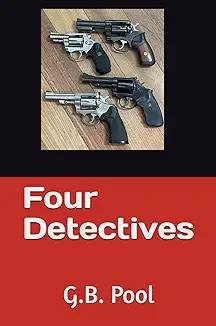
But there are a few variations of the theme that are kind of fun to write. While I was writing one of the new stories in my latest book called The Four Detectives, I was having trouble with how I was going to finally catch the would-be killer. In this new book, I have taken the three private detectives from my three previous mystery series, added a retired cop from a stand-alone book, and have them join forces in a new detective agency. But I couldn’t figure out how to get this one P.I. to catch the killer before she struck again.

First, I was going to have the killer turn the tables on Ginger Caulfield and blame her for the killing she was planning, but after researching how long it would take for Gin to go to court and deal with lawyers and judges and the media was way too time consuming. Some of these court cases take years. This was to be a short story, not Gone with the Wind.

People 5

I knew how I wanted Gin to get ensnared in the plot against her, but getting her out was taking too long, so I had another thought. What if she smelled a rat early on and turns the tables on this would-be menace?

Not that this hasn’t been done before, but I wanted to actually drop a ton of clues throughout the story so my readers might start getting the hint early on and guess what was coming. This method would allow the reader become the detective, too.

I did this by putting quotation marks around a few words. That usually means the word has a double meaning. And I have a character grin at certain times after they say something that might not require a grin. That telegraphs to the reader that the statement probably has a hidden implication. Or I had a character hesitate when they shouldn’t be hesitating. That usually means somebody’s lying. I added a number of these “tells” just like a bad poker player does when his actions let other players know what kind of a poker hand the guy is holding. Usually a bad one.

As for me, the writer, I wanted to give the reader some clues that they might put in their fertile brain to see if they could solve the case along with my detective. It was a fun journey and I think my private detective got a laugh out of it, too.

Writers always need a way to tell a story that entertains the reader, but it’s fun for the writer when they can have some fun as well. Write On!

typewriter-and-desk

LAVENDER and BURNT TOAST

      By ROSEMARY LORD

“Lavender and burnt toast.” A book title? A recipe? Sounds intriguing.

I have racked my brain to figure what this was about. I had written this in a notebook of story ideas. But then I have a plethora of such notes, squiggles, post-its, unfinished paragraphs in multiple notebooks and single pages – of ideas that swirl around my head – spilling as hurried notes in these many notebooks. But, over the years, I have become a lot more organized. I have actual files – with labels!

            It took me back to Professor Randy Pausch’s gem of a book, The Last Lecture, which he undertook during the last months of his life after a terminal cancer diagnosis. It was about overcoming obstacles and seizing every moment. “Because,” he said, “time is all you have – and you may find one day that you have less than you think.”   

“Time must be explicitly managed, like money,” he observed. And “Ask yourself, are you spending your time on the right things?”  Most useful was, “You can always change your plan, but only if you have one.”

But the thing I remember most was his thoughts on being really, super organized. Randy’s wife was against having everything filed and alphabetized. She said it sounded way too compulsive. Randy responded, “Filing in alphabetical order is better than running around saying, “I know it was blue and I was eating something when I had it.” Sounds familiar. How often have I been heard to mutter, “…It was blue and I was eating something……” as I rummage through my boxes of writing files for some specific pages of an unfinished manuscript.

“It’s not where you start – it’s where you finish…” wrote Dorothy Fields, lyricist for the 1973 Tony Award winning Broadway musical Seesaw, which was based on the William Gibson play, Two for the Seesaw.  “…It’s not how you go, it’s how you land.”

I’m not so sure about that…I’ve always favored the maxim that it’s the journey that counts. It was Ralph Waldo Emerson who said, “Life is a journey, not a destination.”

            Do you ever look back at the journeys you have been on – or had thrust upon you? Journeys are adventures. Because it’s on those journeys that we discover exciting detours and encounter fascinating people.

Even if it’s literally a train, plane, bus or car journey we’re taking. Just think of people you met along the way, places you saw. This is, after all, where many of us writers find our inspiration. From the people and happenstances along the way.

We can see how things have never got back to the way they were, since the Covid lockdowns. So much changed. We’re in a different reality now. We were shut-ins. As writers, we had more time to ourselves to write during the shutdowns. But the regular writer gatherings and frequent workshops and writers’ conferences have been very slow to return. And they were such fun, where we caught up with fellow writers from across the world, met new writers, editors, experts and publishers, heard new ideas, discovered new talent. I’ve missed them. Zoom meetings are not the same.

Sometimes one feels like Sisyphus, earnestly toiling away to survive and thrive in this new world, dealing with the puddles that life frequently presents for us to jump over.    

In Greek Mythology, Sisyphus was condemned to an eternity of pushing a boulder up a mountain. Once he got to the top, the weight of the boulder forced it to start rolling down to the bottom, wherein he had to start again.  According to Albert Camus, the Greek gods felt that there is no more dreadful punishment than this futile and hopeless labor for Sisyphus. Hmmm. Sometimes life feels like that. Oh well. We soldier on, dealing with the adventures and challenges of our regular lives and balancing our writer’s goals and dreams.

Then, just when we least expect it, something magical happens. We discover a new author whose words inspire us to try something new, encourage us to take a leap of faith into the unknown. We hear a new piece of music or see a new painting that re-awakens that creative spark. We make a new friend or meet someone who has that missing piece of life’s jigsaw we have been trying to complete. We never know where or when that serendipity appears.

And with the freezing winter and endless rain we have all been living through, hopefully now in the rear-view mirror, Spring is just around the corner. So it really is the time to start thinking of planting new seeds. New plants. New crops. In our gardens, window-boxes and in our lives. Maybe something different this year. Read something different. Write something different. But most of all – time to make fresh plans for the year ahead, seek new ventures, add new goals to our To Do lists.

Whilst I try to remember what Lavender and burnt toast was all about….

THE PRESSURE TO PROMPT

By Jill Amadio

Quick, write a sentence containing the word ‘shallow.’ Or ‘camel.’ Maybe your creativity freezes at the first word but gushes forth at the second.

The urge to prompt is overtaking the writing community, both fiction and non-fiction.

What is a prompt? A suggested word, phrase, or sentence on which to build a paragraph or two during a specified time period. Prompt and their answers can include half sentences and are all the rage these days. Indeed, dozens of books and workbooks have been written on the subject of prompts and to the why, where, how, and when to engage in this mental exercise.

Many writers love prompts as a way to get started writing of a sterile morning, to fire up the imagination, and even to provide satisfaction that you are actually working at writing something, anything, although, in fact, it has no relevance to your WIP. However, you could stick the finished prompt into your WIP folder for use somewhere if you feel your words are immortal and need to be recorded for posterity.

Frankly, I am not a fan pf the prompt phenomenon. I believe that if you are going to spend time writing, why not work on your book, article, or blog? Why spend the time fiddling around with a piece of prose you may never use, that has no relation whatsoever to your current project, and that can send you off on a tangent to which you may find it difficult to return?

Ah, say prompt fans, prompting gets you typing. It puts pressure on you to come up with some words to fit the suggestion and actually make sense. The closest I have come to prompts lately is writing a Grocery and a To-Do list. The former is boring, the latter daunting but I have a couple of writer friends who salivate at the prospect of attacking their morning prompt.

One definition of a prompt I found online, posted by Karen Frazier, notes that a writing prompt is a statement usually followed by questions. I also found a very large collection of books on amazon.com devoted to the subject including titles such as Polyvagal Prompts, Writing Prompts Balance, The Writing Prompts for Seasons workbook, Writing Prompts for the Apocalypse, and The Art of Prompt Engineering. Not sure about that last one but it was amidst the others so I assume one needs something of a mechanical mindset to tackle it.

Some prompt books include journaling pages, and vice versa. Another offering is in the form of prompt notecards in a pretty box– a nice gift and not too insulting.

The books are directed at both fiction and non-fiction writers as well as adults, children, and humans (who or what else writes?). Also targeted are genres such as poetry, fantasy, art, drawing, songwriting, and truly interesting:  for dinosaur enthusiasts.  I haven’t seen a prompt book for AI robots yet but one could be in the works. Or already on sale.

I certainly honor those who need and enjoy a prompt to spark their creativity but as my years advance I need as much time as possible to compete the third book in my “Digging…” mystery series, and beyond.

Could a prompt, if one writes sufficient words, be considered a short story? It could surely lead to one and that is a good thing. How about prompts for birthday and Christmas cards? They can be written in advance and stored on your computer for future use.

So, where does the pressure to prompt com in? We are urged to start writing as fast and as furiously as we can as soon as we clap eyes on the prompt. Now, that is pressure par excellence. No time to consult a thesaurus. Is reviewing and editing allowed afterwards or during?  I did try prompting once and sent myself off into daydreaming, my laptop forgotten as I imagined myself back in Bangkok.

I heartily endorse the claim that writing prompts can help create characters and other elements and that, too, is a good thing. Prompts can also build writing skills, craft, and techniques as well as become story starters.

This entire subject of defining prompts has kept me away from working on my WIP. In the past four weeks I have only come up with a new title. However, part of it could be considered a prompt. Here’s a clue: Dangling Participle.

NEW IDEAS, PAST AND PRESENT

by Miko Johnston

We’re barely two months into the new year, but as I contemplate what we’ll write about in the future, and what will inspire us to keep at it, I’ve found some of my answers to those questions in our posts from the previous year.

Hannah wrote about overthinking. How many of us are guilty of getting obsessive about our writing? Characters, plots and background have to be thought out, but we also must keep it all in balance. That has become harder for me to achieve, partly because age has undermined my ability to multitask and partly because my priorities have shifted. I still enjoy writing and am committed to finishing at least two more books, but I’m reminded of Madeline’s piece on Writing Scared, and the idea of switching up the type of writing you do. I’ve done that in the past, so now I’m adding a new avocation – photography.

Years of writing has given me a sense of what works and what doesn’t, and while I still rely on critiques from fellow writers, I often can figure out problems in my manuscript on my own. Not so with my new hobby. I look at a photo and I may like it, but I don’t know why, exactly, nor can I be certain it’s any good. I’ve joined a photography club and have been invited to participate in their biannual exhibit. I’m going to need a lot of critique and advice before I select which pictures I want to use.

Linda’s piece on attending writers conferences reminded me that many more may be held this year as the risk from the recent pandemic fades from our memory, if not from our lives. Will these events be successful, or will the attendance habit, having been interrupted, be broken? Costs, from registration to travel to hotels and meals, will likely be higher than we remember. I can see where some will be very selective about which they’ll attend while others choose not to register for conferences at all.

Gayle’s piece on The Future of the Written Word really resonated with me. I’m often puzzled, even shocked, by how many words have been usurped and had their meanings altered, some with additions, some with subtractions. Regardless, these 2.0 definitions have led to divisions. A lack of clarification, or precision, makes the word’s meaning, well, meaningless. I suspect if any of the worst offenders of this phenomenon were reading this, they would have stopped at usurped (insert my sarcastic smirk here).

And speaking of the written word, Jill contributed a post on a similar, if lighter, topic – the subtle differences between American and British English. With three Brits in our WinR group and many others within our writing circle, it can be a challenge.

Rosemary’s Collecting Memories touched me. While clearing out closets and shelves in anticipation of a thorough spring cleaning, I’ve uncovered a trove of precious mementos – cards, notes and letters from family and friends, some going back to my birth. Programs from bar/bat mitzvas, funerals, and other events. Menus from private supper clubs, conference galas and corporate dinners at restaurants. Each find brought back wonderful memories of the people and places I’ve enjoyed over the years. That included a copy of the dedication that went into the L.A. Library’s copy of Rosemary’s book, “Hollywood Then and Now”, in memory of her beloved husband Rick. Her post reminded me that these keepsakes – all comprised of words – and the memories they invoke, are precious, something Maggie explained so eloquently in her post based on the “a reason, a season, or a lifetime” quote.

Jackie’s interviews with writers as well as all the fabulous guest posts she’d arranged added dimension to our blog, and her piece on naming characters had many solid tips I’ve come to rely on. And I’ll add a special shout-out for all the technical help she’s provided to us, especially a technical “muggle” like me.

There are many more posts from my co-WinRs that have and continue to inspire me. I can only hope I might have had the same effect on them, as well as our readers.

Miko Johnston, a founding member of The Writers in Residence, is the author of the historical fiction series, “A Petal in the Wind”, as well as a contributor to several anthologies including the about-t0-be-released “Whidbey Island: An Insider’s Guide”. Miko lives in Washington (the big one) with her rocket scientist husband. Contact her at mikojohnstonauthor@gmail.com

Q&A With Marilyn Levinson

by Maggie King

Marilyn Levinson is my guest today. A former Spanish teacher, Marilyn writes mysteries, romantic suspense, and novels for kids. Her books have received many accolades, and we expect more accolades in a year that’s shaping up to be a big one for Marilyn.

When I asked Marilyn about her upcoming releases and the “secret” of her success, this is what she shared. Enjoy!

2024 promises to be a busy year for you. Tell us what you’ll be publishing, and re-publishing.
Yes, 2024 is a very busy year for me, with eight books and a short story coming out. The new books: Rufus and the Witch’s Drudge, the second in my middle grade series, comes out in early April; my romantic suspense, Come Home to Death, comes out April 30th; and Booked On Murder, the eighth and last book in my Haunted Library series, will be released on August 6th.

I also have five books scheduled to be republished: my YA horror, The Devil’s Pawn, just came out. Coming soon are two books in my Golden Age of Mystery book club series, and two novels for kids: And Don’t Bring Jeremy and Getting Back To Normal.

My short story “Stabbed in the Heart” will appear in the anthology, First Comes Love, Then Comes Murder. (Note from Maggie: I’m lucky to share space with Marilyn in this anthology!)

Please share about how persistence has contributed to your success.
I wouldn’t be anywhere if I hadn’t persisted in writing more books and sending them out. Also, being involved in the writing community has kept me informed re which agents and editors are open to new authors and new series.

What part of writing is the most fun for you? The most challenging?
I love writing dialogue. I find some plotting situations, especially when writing mysteries, the most challenging.

How long have you been writing? What started you on your writing journey?
I suppose we won’t count the years in elementary school, though I still have my notebook of stories from then. I started writing when my sons were very young. I wrote short stories and poetry, then segued into middle grade and YA novels, and eventually into mysteries.

What characters in your books are most similar to you or to people you know?
I suppose my sleuths are most like me, though they are braver and more adventurous than I am. But truthfully, my characters come from my imagination and are not based on people I know.

What comes first for you, the plot or the characters, and why?
A simple story idea comes first. Then the characters and plot come to mind and work together. That said, my characters and their relationships with one another are of utmost importance to me.

How important is setting in your stories?
Setting is very important in my stories. For one thing, it impacts my characters’ personalities and their lives. Working in a small town is very different from working in a city office building. Setting also dictates activities because of the weather and the terrain. It also can play a role in the mystery aspect of the story.

If you could tell your younger writing self anything, what would it be?
Don’t worry. You’ll get there. 😊

Please share your process for getting your books re-published.
I told my agent, Dawn Dowdle, who has recently died, that I wanted to make my “Children’s Choice” middle grade novel Rufus and Magic Run Amok the first book in a short series. And so she got me a contract to republish Rufus and to write three more novels. She also arranged to have my YA horror republished. A new publisher asked to republish some of my older books, and a publisher I’ve known for some time asked to republish others.

How do you use social media as an author?
Since my readers are on Facebook, that’s where I’m in constant contact with them. I love Author Takeovers. I do guest blogs and virtual book tours when a new book comes out. I also post occasionally on Instagram and X. I love doing video interviews and chats. And I write a monthly newsletter.

What marketing strategy works best for you?
Hard to tell. The ones I mentioned above seem to work.


As Allison Brook, Marilyn writes the Haunted Library series. Death Overdue, the first in the series, was an Agatha nominee for Best Contemporary Novel in 2018. Other mysteries include the Golden Age of Mystery Book Club series, the Twin Lakes series, and Giving Up the Ghost.

Marilyn’s juvenile novel, Rufus and Magic Run Amok, was an International Reading Association-Children’s Book Council Children’s Choice and has recently come out in a new edition. And Don’t Bring Jeremy was a nominee for six state awards.

Marilyn lives on Long Island, where many of her books take place. She loves traveling, reading, doing crossword puzzles and Sudoku, chatting on FaceTime with her grandkids and playing with her kittens, Romeo and Juliet.

Marilyn’s books are available for purchase on Amazon via her Amazon Author page.

The Devil’s Pawn is available for purchase at Barnes & Noble and Fantastic Fiction.

Connect with Marilyn on her website (signup for her newsletter), Facebook, Goodreads, X, BookBub, Pinterest, and Instagram.

Happy Valentine’s Day to the talented Writers in Residence and to the readers we treasure.

Writers & Time

by Linda O. Johnston

 I’m a writer, and I’m a fan of time—but sometimes it stumps me. Kicks me in the butt. Gives me a hard… time. 

For one thing, time in stories is a major factor. How long will the story go on? How old is the protagonist, and will they age much in it? 

And what is the time when the story takes place: contemporary times? Historical?  Sometime in the future?

And then there’s my own time. I’m good at fulfilling deadlines, but sometimes I really have to work at it. 

In fact, one of the reasons  I swapped the date for my post this month is because I was determined to finish a first draft of a novel I’m currently working in, with a deadline approaching, and I was focusing mainly on that. 

But I’m generally used to dealing with time and finding ways to handle it. For example, years ago when my kids were young and I was practicing law, I got up an hour earlier than the others in my household and wrote then. And a while later, when I wound up having to commute for more than an hour each way every day for my law job, I’d already started getting published, so I’d head very early to my job and hide in my office for an hour before starting to work—and everyone knew I was writing then and left me alone. 

And now? Hey, I’ll stop writing this soon and get into the edits of that manuscript I mentioned. I did finish a very rough first draft, but there’s lots more work to do. 

How about you? How do you deal with time in your life and writing or other work?