Stealing and more…

Remembering way-back-when at my first few book eventsoften asked questions were, “Where do you get your ideas?” and “How do you know all that stuff?”[i] Then there were blog-tourswhich several generous and kind authors asked me to participate inand often talked about was, “where do ideas come from.” And of course, our thoughts on inspiration and ideas, have all been shared here on Writers in Residence from several directions.

But then recently at the Vons grocery store, a lovely lady traveling on Route 66 from Illinois to Santa Monica came up to me, and said “I know you!” I had on a Route 66 T-shirt, and as it turned out, it was mistaken identity–she thought I was a “Roadie” she’d met elsewhere in another state.[ii] But after I gave her a bookmark and mentioned about my Route 66 connected writing and my books, she asked, “Where do you get your ideas from?” She seemed genuinely interested. Hence, this post was inspired.

Her question is not one I’ve thought about in detail for a long time, so not having a good answer, I flippantly said, “I steal ‘em.” And though a smart-alecky response, driving home, I realized there was a lot of truth in that statement. For example, in Rhodes The Movie-Maker,[iii]:

  • I stole film crew as an idea from Marilyn Meredith’s Tempe Crabtree River Spirits book,
  • Stole Cap Coleman tattoo from Hap Meredith’s very real tattoo,
  • Stole the real “ghost child” experience from Robert Haig – retired firefighter and author of Fire Horses,
  • Stole the castle-in-the-desert scenario from Scotty’s Castle in Death Valley,
  • Stole photographic flyovers from Aerial America,
  • and on a more generalized writing style level, stole a love for multitudinous characters with unique back stories from Ngaio Marsh, and Agatha Christie. And the love of and use of multitudinous (and far more than I should) compound sentences from P.D. James.

And to use a gentler word, incorporatingthere are the personal experiences, like with helicopters flying across the Mojave causing my ancient windows to rattle and my dogs to hide behind the couch, glorious sunrises and sunsets that I’ve lately come to appreciate, black-birds flying en masse and lining up on electrical wires going down our road, people who live where I live who willingly share orally, or like “Mojave Desert tales,”[iv] in the written word, and from seeing Route 66 films, articles, and museum visits. And even if the stealing connection isn’t direct, I’m pretty sure my subconscious snatches, grabs, kidnaps—whatever you want to call what it does—then lets my conscious mind use whenever and wherever needed. Just like with dogs that I talked about in an earlier post.

So part of this post is an “into-the-cosmos thank you” to so many, but also to verbally acknowledge a deep gratefulness to those who have come before me—laying a path for others(including me!) to follow. Especially my rock stars, P.D., Agatha, and Ngaio. And odd as it may sound, I want to thank computers and word processors.[v] They have been my enablers, wouldn’t be a writer without them. Indeed, how my writing-heroes wrote/edited on olden typewriters with their deep and hard to push keys, or with pen and pencil–will always amaze me. I once heard/read (possibly not true but sounds good), Eudora Welty would cut out her paragraphs and move around in her editing process. Early “cut and paste!”

And my ramblings connection for my fellow writers?—absorb, absorb, absorb. It may sound like I’m encouraging criminality, but I’m not. It’s more like, let it all in. Something I don’t do enough of. I tend to think what’s important is what I think is important at the time—what I’m doing research on. But all the other stuff needs to get it, be mushed(technical term) together, intertwined, concatenated; a lot will get used some time, somewhere.

And “on the other-side of the coin,” one of Louise Penny’s most wonderful novels is The Beautiful Mystery. I love her writing, and this novel in particular. After reading, I so wanted to write a book about a seminarian or monk detective. But it didn’t and won’t ever happen. Don’t know enough to get inside such a protagonist head, and can’t make it up (even though I know and have known several seminarians and priests)—and never will know enough. Sadly, sometimes stealing, incorporating, experiencing, and just plain winging it, just don’t get you there.

Happy writing trails!


[i] Like how things work, and types of items mentioned, or procedures or pottery stuff, and recently desert stuff…etc. — Real answer is research, flippant answer is “I make it up.”

[ii] Alas, I’ve never been approached by anyone recognizing me as an author. And after I mentioned my name to the lady in Vons, she still didn’t have a clue. Sigh, so much for fame and notoriety.

[iii] https://smile.amazon.com/M.-M.-Gornell/e/B002BM4L78/ref=dp_byline_cont_book_1


[iv] By Bill Smith

[v] Even with their crashes, malfunctioning software-hair-pulling incidents, and just general aggravation…

A Boost Up!

By Jackie Houchin

Boost up2“A boost up”….when someone holds their clasped hands together next to a horse, and you put your foot in like a stirrup, and they propel you upward into the saddle.

#

Sometimes a beginner (or lazy) writer needs a boost up into the writing saddle.  That’s where The Write Practice came into the picture for me. (I’m one of those lazy ones!)

The Write Practice

”If you want to become a better writer, you need to practice,” says Joe Bunting, creator of The Write Practice organization and blog. What’s involved? Fifteen minutes a day, five days a week, practicing with fresh writing prompts, unique lessons on technique, and getting feedback from a supportive community.

There are over 1000 practice exercises and lessons on the blog in such categories as; better writing, genre & format, characterization, grammar, journalism, plot & story, writers block, inspirational writing, publishing, and blogging. And it’s free.  http://thewritepractice.com/about/

I’ve attempted two lessons so far in the Short Story category. The first lesson was to read at least six short stories from the many magazine links supplied. The second lesson was to free-write for at least 15 minutes, post what you wrote in the comments section, read three of what other people wrote, and give them brief feedback.  Simple as that; practice writing and give feedback. It’s really the basis for everything Bunting does.

I wrote a short ditty on ‘Pig, Porcupine & Pineapple.’  It was totally fun!  Now to see with my fellow writers say about it

The Becoming Writer Community & Challenge

 If you are ready to go to the next level and start writing finished pieces (and get published), then the Becoming Writer community is the next step. Bunting compares this with what the “Inklings were for Tolkien and C.S. Lewis, the expats in Paris were for Hemingway, and the Bloomsbury group was for Woolf.”

I discovered Becoming Writer because membership in it (yes, it does cost a little) was a requirement to submit to The Write Practice’s quarterly short story writing contest. But what you get with membership is a lot more than the contest.

Like the free practice lessons above, you share your writing with a community of writers to get and give feedback.  Actually giving feedback on another’s work helps you when it comes time to edit your own piece.

The Challenge is to write ONE piece EACH WEEK, submitted on Fridays.  It can be a short story, blog post, poem, essay, or a chapter in a book.  This is what us “lazy” writers call accountability.

And finally, besides actually finishing your pieces (Yay!), you get opportunities to submit to magazines like Short Fiction Break, Wordhaus and others.

The feedback on my first piece, an essay I wrote about Africa, brought a suggestion for submission to a specific online magazine. I submitted it and am waiting to hear.  http://thewritepractice.com/members/join

The Fall Contest

This is what caught my attention at first, a writing contest that promised cash prizes, free books, and publication. The theme was “Let’s Fall in Love.” Stories had to contain the two elements FALL and LOVE and be no longer than 1,500 words.  I told myself, “I can do that.”

The name “Autumn Gold” sprang to my mind and I quizzed my writer friends on Facebook as to how a girl with that name might look. The first answer – a stripper – caused me to cringe because that’s not what I had in mind. But when another person confirmed what he said, it left no doubt.

The story I eventually wrote keeps the title “Autumn Gold,” but the girl’s name is Audrey Gould.  I wrote an outline of sorts, showed it to a friend for her opinion, and then pounded out a story about LOVE that takes place in AUTUMN. It was 1,948 words. Lots of cuts and edits later, I submitted it to the Becoming Writer Contest community.

For the contest (548 entrants) the community is divided into ten groups, A–J, with about 40-50 writers in each. I landed in Group D. There are 46 of us, and we’ve become a close-knit group.

I’ve gotten about nine feedbacks on “Autumn Gold,” and I’ve given at least many more on other stories.  Some are VERY good! Others will need some work.  Reading my story’s feedback and the feedback on the other stories has opened my eyes to what works and what doesn’t, and what readers “get” from what you write, even if it’s not what you intended.

Invaluable!

I’m considering rewriting the ending and running it past them one more time. The final deadline to submit the story to the judges is September 4.

Other Programs

The Write Practice offers other programs for writers and authors on building a platform, publishing & marketing, Twitter, and the 100 Day Book challenge.  http://thewritepractice.com/products

#

Now I’m up in the saddle. I’m trotting around and loving it. I can’t wait to press my calves against my steed’s sides and rise into a canter.  I needed that boost up.  Do you?  Perhaps you should consider a writing community.

I suggest The Writing Practice. Take advantage of the discipline and the getting and giving of feedback.  Pick the lessons you are interested in and go for it. They are free! You might also consider Becoming Writer.

Or join a critique group and begin giving your work over to new eyes and opinions.

Get up there and get galloping!

###

Currently the Becoming Writer and the 100 Day Book programs are closed until next semester.  Future contests in Becoming Writer will be on Flash Fiction, Essay writing, Novels, and Poetry.


The Long and Short of the Short Story

by Gayle Bartos-Pool


typewriterAfter writing my first three published short stories, something happened: Readers responded favorably to one of my characters. They liked this guy’s personality.


Of course a writer is supposed to craft memorable characters, but those are usually found in a novel. A writer has more room to flesh out characters in a 300-page novel, not a 25-50 page short story. But something was happening with my “Johnny Casino” character. His personality was too big to stay within 28 pages.


That’s when I realized I had more Johnny Casino stories in me. In fact, by the time I was finished, I had nine stories and 388 pages. That’s called a book. I had turned a one-shot story into what is basically a series.


But the journey was also a learning experience.


I wrote a batch of these stories and showed them to my agent. She liked them, but…she wanted more information about Johnny. She thought the stories needed a love interest, but I didn’t want the short stories bogged down with schmaltz. That wasn’t what I envisioned for my character. But I hadn’t written any reason why Johnny didn’t have a woman in his life, so I wrote a backstory. That’s when I learned a lot of new things about him. It was so detailed; it turned into the second story in the first collection, The Johnny Casino Casebook 1 – Past Imperfect.past-imperfect-cover-12

The backstory also gave me a different view of Johnny. He had his dark side as well as his sarcastic side. He was becoming a three-dimensional person. I started learning so much about him, more stories popped up. One was so compelling; it became the focal point of the second collection, The Johnny Casino Casebook 2 – Looking for Johnny Nobody.

bookcoverpreviewcropped

Since I had created a past for Johnny, I could write stories about him when he worked for the mob back in New Jersey when he was younger; after all, I had discovered that his father was a high ranking guy in the D’Abruzzo crime family. I could also do a story explaining how he became a private detective after he fled to California.


And here’s a heads up for all you multi-tasking short story/novel writers. The character I created who taught Johnny how to be a first class P.I. is the heroine in another mystery series I have been writing. I figured, if people like Johnny, they just might like the novel featuring Gin Caulfield. She is now in three novels, not short stories in this case.


The last thing I learned on this journey is that there is a different kind of short story out there. In classes I teach about The Anatomy of a Short Story I mention a short story is like an hors d’oeuvre. It consists of a few really good things served up in a small bite. Whether it’s a handful of cool characters in a terrific location involved in a catchy plot, the short story gets you to one location in the fastest way possible.


In contrast, a novel can take you far and wide with a cast of thousands with sub-plots and bits of interesting background stuff just for the fun of it, and the writer can use 300 to 400 pages to accomplish the task. But the short story writer has to chop out unnecessary characters, places, plot twists and trim down the description to its bare bones and do it in 10 to 25 pages, give or take. Or does he?


I think there is a new home for the short story. The Short Story Novel. The length of each individual story can be anywhere from 25 to 70 pages, but the main thing is to have a single set of characters, or in my case, one main character, in every story. Several characters make repeat appearances, and I mention one sub-plot in several of the earlier stories in any given collection that is resolved in a story of its own. Each story reveals more and more about my main character and the final story in Book One ends with a haunting question that will be answered in Book Two.


If this sounds like a television series, you betcha. I called it a “series” earlier in this blog and that is exactly how I visualize The Johnny Casino Casebook, whether it stays in book form or hits the TV screen. His stories might be in the “short story” format, but his entire life is a novel.


And for those of you who prefer to create something completely stand-alone in each short story you write, those individual tales can always be put into your own collection and published. I did just that in From Light TO DARK.

The Play’s the Thing – Plot is Everything - Some thoughts by Gayle Bartos-Pool

Second Chance Book CoverAnd to add one more thing to this blog, Johnny Casino isn’t the only short story character to be in a book of his own. Chance McCoy arrived this year. His first book is called Second Chance. There are more stories to come. And there is a second short story anthology called Only in Hollywood coming out next year. The book consists of various stand-alone stories, but one features a guy named Charles Miro, a former TV actor turned private eye. He works for a younger woman who owns the detective firm. There are several stories about these two coming up. You see, even a short story can magically turn itself into a book if you try.

Write on.

Only in Hollywood cover 2


My Book’s Been Published: Now What?

4618c-bonnie

Bonnie Schroeder started telling stories in the Fifth Grade and never stopped. After escaping from the business world, she began writing full-time and has authored novels, short stories and screenplays, as well as non-fiction articles and a newsletter for an American Red Cross chapter.


I am about as far away from being a book marketing expert as you can get, but I am slightly less clueless than I was three years ago when my first novel was published. At that time, I had no website, little knowledge of the power of social media, and Goodreads to me was a nifty place where I could learn about other authors’ books.
Things have changed a bit since then. I doubt you’ll ever see my name on the New York Times Best-Seller list, but when my second novel was published, at least I felt like I was doing a decent job of getting the word out.
Here are some tools I recommend all authors have in their marketing arsenal:


  • A website. I took the easy way out and hired a genius website designer to create mine, and she’s been worth every penny. However, you can do it yourself, and a lot of my fellow authors on this blog have created very attractive websites on their own. They’re smarter than I am—most of them write mysteries as further proof of that.
  • An Amazon Author Page. This is a great way for people who buy your books on Amazon to connect with you, learn a bit more about you, and perhaps discover another of your books to add to their library. It’s easy to do, and Amazon’s Customer Service is awesome if you run into trouble.
  • A Goodreads Author Page. Another very simple thing to set up and attract readers. In addition to displaying your books and biography, you can sign up for “Ask the Author” and answer questions from followers. You can stage a “Goodreads Giveaway” to promote a new book. You can also blog. When I remember to do igoodreadst, I copy posts from this blog onto my Goodreads blog, so I get extra mileage from it. When you have an “author event,” you can promote it on Goodreads. And unlike certain other websites that are mighty picky about who can and cannot review books, Goodreads lets you review your own books and give them five stars if you want to. What’s not to love about Goodreads?
  • A Facebook Page for your book(s), separate from your personal Facebook Page. You can post writing-related articles and photos from your author events. It’s a terrific way to publicize those events, too. I used it to invite Facebook Friends to my recent book launch and got 19 acceptances in just the first day.
  • Book Clubs. If you haven’t joined a book club yet, you’re missing out. Virtual or in-person, this is a fine way to connect to readers. I joined my book club long before my first book came out, because I wanted to learn what readers like and don’t like—and I just plain love to read. The club introduced me to books I might otherwise never have considered, I made some wonderful friends, and they’ve supported me when my books came out by choosing them for reading selectiBook Clubons. Book clubs are a terrific way to get your book noticed, but you can’t just wander in to any old club and ask them to read your book. You need to build a relationship first—but that’s half the fun! There are book clubs at most libraries and independent bookstores, and if you don’t find one, consider starting one yourself. Readers are everywhere; might as well make them potential readers of your books.


There are hundreds of other book marketing techniques, of course. I’m still trying to crack on the code on getting advance reviews. You can also hire a publicist if you have money to burn.

For someone like me, who just wants to give my books a fighting chance to find an audience, the steps laid out above have been easy to master and have given me the sense that I’m doing something besides crossing my fingers and hoping.


Moving Among Genres by Linda O. Johnston

lindaphotoLinda O. Johnston, a former lawyer who is now a full-time writer, currently writes one mystery series for Midnight Ink involving dogs: the Barkery & Biscuits Mysteries.  She has also written the Superstition Mysteries for Midnight Ink as well as the Pet Rescue Mystery Series, a spinoff from her Kendra Ballantyne, Pet-Sitter mysteries for Berkley Prime Crime.  She additionally currently writes for Harlequin Romantic Suspense as well as the Alpha Force paranormal romance miniseries about shapeshifters for Harlequin Nocturne.  Her June release was her 46th published novel, with more to come.


* * *

Versatility.  Keeping things fresh.  Using different voices.  Working in different points of view.  Multiple publishers.

Those are some of the good things about writing in multiple genres.

Confusion now and then.  Concern whether readers are focusing on one type of series and not the other(s).  Needing to belong to many different writing organizations rather than just one.

These are some of the not-so-good things about writing in multiple genres.

I should know.  I’ve written in several different genres, often at the same time.

My first published fiction was a short story in Ellery Queen’s Mystery Magazine, and I won the Robert L. Fish Award for best first short story of the year.  After that, I had several more mystery short stories published, and have had additional ones published over the years.

But then I moved into time travel romance, where I wrote several novels for Dorchester Publishing.  I got my rights back to those stories, which was a good thing since Dorchester went out of business.  But I knew I enjoyed writing paranormal romance.

Next was romantic suspense.  I wrote several novels for Harlequin Intrigue.

From there, I somewhat segued into cozy mysteries, beginning my Kendra Ballantyne, Pet-Sitter Mysteries for Berkley Prime Crime.  But was I done with romance?  No.  I also wrote some paranormal romances for a different Harlequin line, Nocturne.  That turned into my Alpha Force miniseries for Nocturne, about a covert military unit of shapeshifters, which will be ending next year.  I’ll have one more Alpha Force Nocturne, to be published in November 2018, before the line ends.

Back to cozy mysteries.  My Pet Rescue Mysteries were a spin-off from my Kendra mysteries.  I was definitely hooked on cozies, and when it looked like the Pet Rescue Mysteries were ending, I began writing the Superstition Mysteries for Midnight Ink.  Then, at the same time, I started writing another series for MI: the Barkery & Biscuits Mysteries.  They’re continuing, although the Superstition Mysteries aren’t.

But was I giving up on romances?  No.  As I mentioned, I am still writing Nocturnes.  Plus, I went back to romantic suspense, writing for the Harlequin Romantic Suspense line.   I’m also still writing for HRS and will have a new miniseries starting there next March, the K-9 Ranch Rescue series.

Oh, and I haven’t mentioned yet that all the stuff I’m currently writing features dogs.  That gives my books a recurring theme.

So am I confusing you–or my readers?

One way to hopefully avoid readers’ confusion is to use a different pseudonym for each genre, or use your own name for one of them and pseudonyms for the rest.

I’ve never done that.  I’ve been published by different print publishers, sometimes at the same time, and no editor has even suggested it.  And I like the idea of my own name being associated with me and what I write, no matter what it is.

Would I take on a pseudonym someday?  Sure, if it made sense at the time.  But I’m just as happy remaining me.

In fact, that’s the important thing: being happy with what you’re doing.  If you like writing in one genre, that’s fine.  If you like writing in multiple genres, go for it.  If you’re not sure, concentrate on what you like to read–or just start writing and see where it goes.

That’s something I find especially inviting and exciting about being a writer.  There are no restrictions!  And if you’re settled into one or two genres, whether fiction, non-fiction or both, and get an inspiration to go in a different direction, you can always do it!  You may have to rethink the publication process, with traditional publishers that are major or smaller, or go for self-publishing, or both.  Any way you choose is just fine.

Where am I going?  I’ve got some ideas–I always have ideas–and we’ll all just have to wait to see where the next steps lead me.

OH, TO BE IN ENGLAND….by Rosemary Lord

just-rosie-3

Rosemary wrote her first book when she was ten years old – for her little brother. She also illustrated it herself. It was later rejected by Random House!

She has been writing ever since.

The author of Best Sellers Hollywood Then and Now and Los Angeles Then and Now,  English born Rosemary Lord has lived in Hollywood for over 25 years. An actress, a former journalist (interviewing Cary Grant, James Stewart, Tony Hopkins, John Huston amongst others) and a Senior Publicist at Columbia Pictures, she lectures on Hollywood history. Rosemary is currently writing the second in a series of murder mysteries set in the 1920s Jazz Age Hollywood featuring Lottie Topaz, an extra in silent movies.


OH, TO BE IN ENGLAND….

… So begins Robert Browning’s poem Home Thoughts From Abroad. Browning extols the wonders of the English countryside and the changing seasons as Spring emerges.

But it’s not the green fields, buttercups and bluebells that I am missing so much lately – although the thought of those always brightens my heart – but I miss the British magazines that I used to read and, indeed, where I was first published as a writer.

When you’re in the midst of writing a novel and you’re stuck at page 218, knowing you have a hundred or more pages to fill, writing a 1,000-word article for a magazine is most appealing.

But then too, reading a magazine is appealing, when you don’t have the time or the attention-span to devour a lengthy novel. Problem is that today’s magazines seem so frivolous; filled with glaring advertisements and little or no content.

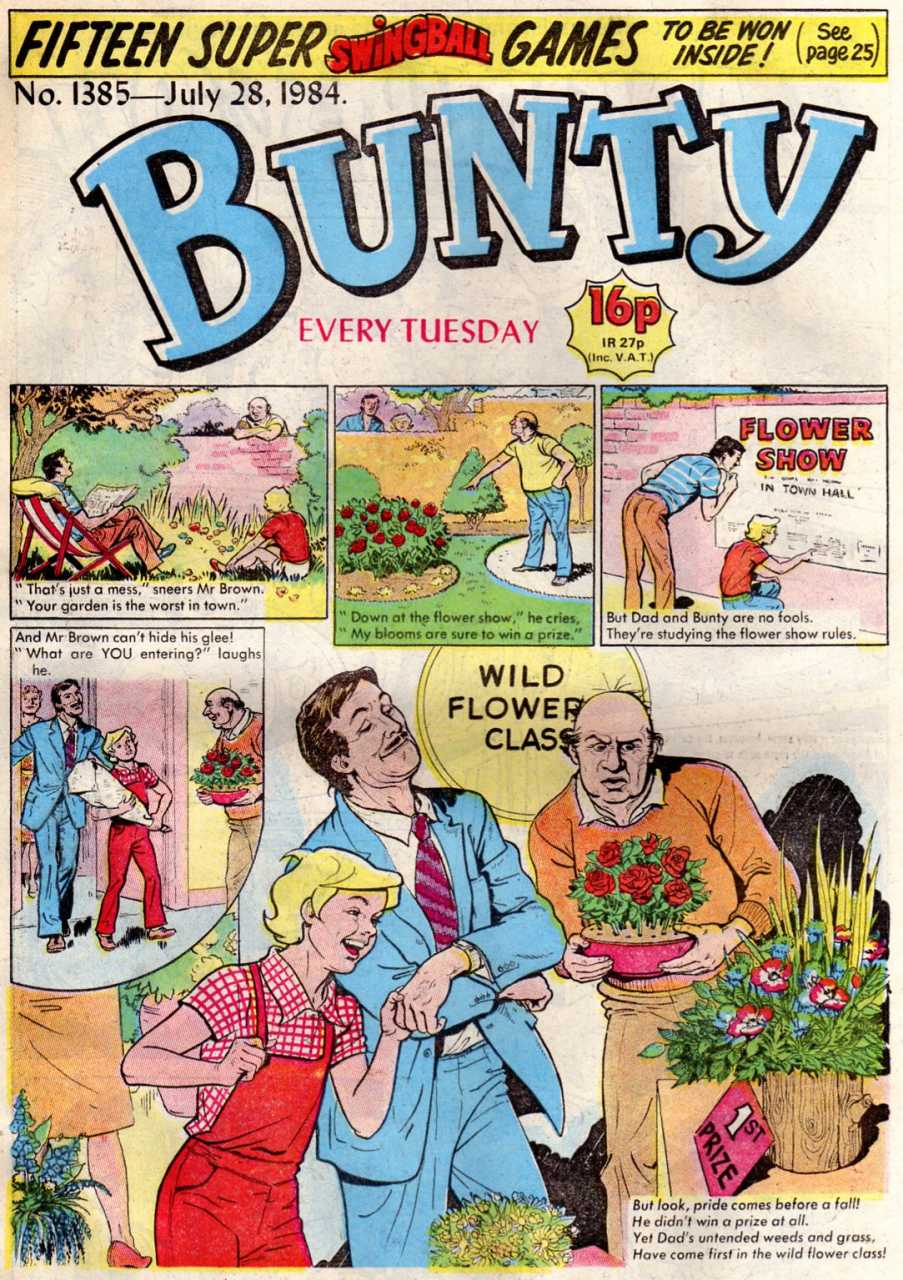
We writers start young as readers. Growing up in England, we had a wide assortment of children’s magazines and comics to choose from: Twinkle, Mandy, Judy and my favorite, Bunty. Then we progressed to Schoolfriend, Girl and eventually Jackie – the teen magazine. I suppose the names are a give-away, that these were for us girls.

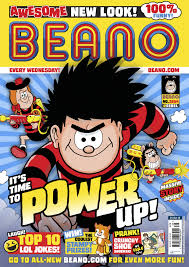
beanoThe boys had more serious comics and magazines such as The Boy’s Own Paper, The Beano, The Dandy. I guess adding a “The” made them more weighty. But then what about Buster, Topper and Beezer? Not so serious-sounding now, eh boys? As they got older, the boys progressed to The Eagle, Valiant, Look and Learn and Tiger. The Eagle was my older brother Ted’s favorite.

The paper-boy would deliver these treasures every Tuesday. They were a main form of entertainment for children until recent years and stemmed from the 19th century “penny-dreadfuls,” that led to the publishing of serial mystery stories such as Arthur Conan Doyle’s Sherlock Holmes exploits. The magazines introduced pirate tales and adventures of such legends as highwayman Dick Turpin and detective Sexton Blake.

Scottish publishing house D.C. Thompson Inc, started The Beano and The Dandy in the 1930s. The Beano is still published today.

The Dundee-based D.C. Thompson was my first publisher, when I wrote articles for My Weekly, People’s Friend and ended up having my own column in Jackie Magazine for several years – including my Letter From Hollywood column, once I moved Stateside. They were the nicest people to work for and My Weekly and People’s Friend are still going strong.

I also wrote a lot of pieces for IPC Magazines in London, for their teen magazines petticoatPetticoat, Mirabelle  and New Musical Express, as well as the women’s periodicals Woman and Woman’s Own. IPC (International Publishing Corporation) was founded in 1963, but its’ umbrella group goes back to the 1800s and covered the Suffragette Movement, two World Wars, the Swingin’ 60s and today’s revolutions. Taken over by Time Warner in 2001 and renamed Time Inc.UK in 2014, the groups periodicals include Horse and Hound, Woman’s Weekly, InStyle UK, TV Times, Woman, Country Life, Homes and Gardens and seemingly hundreds more.

But back to the children’s magazines that are so dear to me and others of a certain age. They included cartoon-style comic strip stories, but mostly were filled with how-to articles, history pieces and tales of adventure, romance and mystery – letting imaginations run wild. Yarns of super-heroes, dastardly villains, schoolboys-and-girls-to-the-rescue and hilarious school-days tales of characters like Billy Bunter, filled the boy’s comics. Often very “un-PC” – or un-Politically Correct: Billy Bunter was very overweight and always eating cakes and buns. Not to be outdone, his sister Bessie Bunter turned up in the girls’ magazines, preferring cake to croquet or hockey.

For us girls, there was page after page of  “The Secret Adventures of…” – plucky-heroine stories, romantic tales (often nurses falling for doctors), legends, fairy-tales and Cinderella-finds-her-Prince-Charming stories. There was no noticeable class divide, either. We could all dream of being a ballerina, champion jockey, Olympic medalist, a pilot, hospital-matron or doctor – or a princess. There was usually a moral theme to these, where the baddy gets his or her come-uppance and a good deed gets rewarded. Where honesty and loyalty were the benchmarks for everyone. No wonder our generation grew up to be such virtuous, practically-perfect goddesses!

The backdrop for the girls’ tales were often ballet schools, nursing, Boarding Schools, pony-clubs, gymkhanas, ice-skating – and school-holidays in Scotland or England’s West Country: Devon and Cornwall, home of pirates, smugglers, Agatha Christie and cream-teas.

So, as a writer, this was a great market to get started in and learn one’s trade. The money was pitiful – not that it’s much better today. But there were so many magazines that devoured articles and stories every week, that editors would give unknown writers a chance.

Often those short stories developed into books, like the Bunchy, Milly-Molly-Mandy, Marigold books, for readers who grew into Enid Blyton, Noel Streatfield or Nancy Drew fans. My Aunty Marjory gave me Gene Stratton-Porter’s book, A Girl of the Limberlost and Freckles set in the Indiana wetlands. I read Eleanor H. Porter’s Pollyanna, too. (Were they related?) No wonder I ended living in America.

But it wasn’t just the stories we read in those childhood comics and magazines – there were gifts, too, taped to the inside. Perhaps a slim, brightly-colored plastic bangle, a teeny pink lipstick, a plastic ring, a packet of flower seeds for the garden or an envelope of colored sparkly dust for art projects. And the last page of Bunty featured a cut-out doll’s cut-out wardrobe. Such value for money in every edition!

Bunty survived until 2001, Jackie Magazine lasted longer. The Beano lives on.

Today’s magazines for the young seem filled with advertisements and gossip about pop-icons like Justin Bieber.  Not quite the same. Where are the fanciful tales for kids today, taking them to other worlds, other planets, even, to get their imaginations stirring? Harry Potter was the exception, of course. But that was a book – not a comic magazine. Hmmm. Thank goodness we had Bunty, Twinkle, Schoolfriend and Judy….

Methinks I’ll stay with my tales of plucky heroines and lonely ballerinas, thank you very much.


INAPPROPRIATE MATERIAL – WHEN TO SAY ‘NO’ by Miko Johnston

               Bother: to disturb; cause physical pain to somebody

               Offend: to upset; cause somebody anger, resentment, or hurt


Twenty years on I can still recall my reaction after reading Kathleen Woodiwiss’s first book, “The Flame and The Flower” – a romance novel in which Heather Simmons falls in love with Brandon Birmingham. Lest you think they ‘meet cute’, during their first encounter he rapes her. Then they fall in love. Sorry. I can’t get into a novel where the heroine falls in love with her rapist or an equally despicable person. Of course, no one is forcing me to read anything like that.


Unless it’s presented in one of my critique groups.


One of the challenges in writing groups is dealing with material that individuals may feel unable to fairly critique. Sometimes it’s a matter of not understanding what has been written or having an aversion to a particular genre. If I don’t ‘get’ your poetry, I can’t tell if the problem lies with what you’ve written, or me. I’ll always begin my critique of anything paranormal with the caveat that those storylines don’t appeal to me because they strain credibility. I’ve known others who take issue with profanity, graphic violence or sexuality, religious affronts, child endangerment, and most often violence against animals. When critiquing sensitive material we should express our bias and move on. But on a few – mercifully few – occasions I’ve found myself subjected to unacceptable material in substance or presentation.


My first experience with this involved an ‘author’ who kept bringing in pieces that read like letters to Penthouse Forum, wild sexual encounters that defied believability. Our group had no policy in place for dealing with such material, so after a few weeks of explaining that, shall we say, he misunderstood what was meant by a story’s climax, we finally told him to seek out another group. I should note that the graphic content didn’t offend me as much as the intent of the writer to shock and titillate his audience, like a flasher who inflicts anatomical words instead of parts.


Once I’d been exposed to this issue (yes, that pun was intended) it made me wary of it happening again, so in my next group I suggested creating a policy for a comparable situation. The members laughed it off as unnecessary. Less than a year later, I received pages to critique via email that glorified pedophilia. I wanted to scrub my computer clean in every sense. Since no policy was in place it took a village to expel that writer; angered at our group’s united refusal to read his pages, he dropped out.


I included the definitions for Bother and Offend to make a point. I’ve always thought of offend as being much stronger than bother, so I found it interesting that bother relates to a physical discomfort while offend describes an emotional uneasiness. It makes sense, though. Being bothered is more concrete; you know what’s causing it and how it’s affecting you. But offence is harder to pin down; like Potter Stuart’s legendary Supreme Court determination that hard-core pornography was hard to define, but “I know it when I see it”.


Having gone through this experience more than once, I’ve come to believe that having a written policy best addresses the problem. Individual wording will vary depending on the group, but in general no one should have to read material that is ‘unacceptable’, a more concrete and less emotional term than objectionable. I define unacceptable to include any material that presents what is generally considered heinous – ethnic cleansing, nonconsensual sex, child rape, enslavement – in an agreeable or glorified manner. Simply put, the hero should fight evil, not be evil.


My writers group recently updated its by-laws, so I brought up the idea of including a clause on unacceptable material. Some members agreed that a written policy in place would be wise while others felt that common sense should prevail, otherwise we might be perceived as practicing censorship. The subject initiated more debate than all the other sections put together. Ironically, one member of our group submitted chapters from a religious philosophy book he’s writing and complained about the personal nature of the feedback. Apparently members found his reasoning ‘unacceptable’ and commented not on the writing, but the philosophical ideas behind it.


So am I wrong in thinking issues like this should be headed off at the pass, or left to a case-by-case basis. And where should the line be drawn? What would you advise?

Don’t Love Your Characters Too Much

headshot

Jacqueline Vick is the author of over twenty published short stories, novelettes and mystery novels. Her April 2010 article for Fido Friendly Magazine, “Calling Canine Clairvoyants”, led to the first Frankie Chandler Pet Psychic mystery, Barking Mad About Murder. To find out more, visit her website at http://www.jacquelinevick.com.


I was working on the next Harlow Brothers mystery.  During a scene where older brother Edward gets arrested, I noticed that I was leaving him with his dignity.

What?!

I had a perfect opportunity to make a screamingly funny scene, and I was letting it go because I didn’t want to embarrass Edward.

Like many authors, I love my characters. We spend a lot of time with them, so this is understandable. However, there has to be a line between caring about what happens to them and getting in the way of the story.

I should tell you up front that I will walk away from a movie or TV show if a situation gets too embarrassing. I have a chronic case of empathy, and the character’s humiliation is just too much to bear.  Still, if I want to write the best scene possible, I’ll have to find a way to get past this.

Maybe if I thought of them as little masochists who reveled in embarrassment and shame. The more I pile it on, the happier they are. No, that’s too creepy for me and would lead to a completely different kind of book.

What if I told them to trust me? That no matter how bad it gets, I will pull them out of the mire, clean them up and set them back on their pedestals.

I just don’t know.  Have you ever had this problem? How would you get past this dilemma?  Leave your suggestion in the comments below.

Called to Please

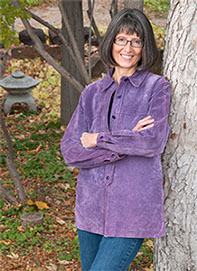
Guest post by Rebecca Carey Lyles*

becky Lyles

Write what pleases your readers?

While on my daily walk this morning, I listened to one of my favorite book-marketing podcasts. Although I’ve learned much from that audio show, I took exception to a statement made by today’s guest, who writes romance novels, thrillers and comedy. In addition to being versatile, she’s prolific and has sold thousands of eBooks. Obviously, she knows whereof she speaks. Even so, her suggestion that we write what pleases our readers didn’t quite jive with me.

My reluctance to accept her advice is partly due to being a faith-based author and partly due to the fact I’m old enough to be her mother. I realize more each day that life is short and my time on Planet Earth is limited. I want to leave a written legacy that deepens readers’ faith, enhances relationships, and inspires personal life-change as well as concern for others.

For a Christian author, writing for publication is a calling to use our God-given talent to honor him and draw others to him. Of course, I want to please readers. However, pleasing God should be my primary goal. Such a focus will enable me to compose stories that uplift, educate and challenge as well as entertain.

windsRomantic-suspense, peppered with frank reality

My romantic-suspense novels might attract a few readers similar to the above-mentioned readers. But difficult subjects like imprisonment and human trafficking will likely cause many who prefer a “lighter read” to turn away. Yet, I felt led to write about those important topics through a series of “serendipitous” events that precipitated each book in the Kate Neilson Series.

I’m currently conducting interviews and doing research for my next fiction series, which will feature individuals trapped in an abusive religious cult. Not exactly pleasant subject matter. Thanks to family members caught in a controlling group, I’ve learned that cult awareness is as crucial for Americans as is understanding the human-trafficking epidemic that plagues our country.

My part in disseminating truth about cults is to create an entertaining plot peopled by compelling characters who search for transformation and freedom in a beautiful mountain setting (only because I like mountains!). Just so you know, despite daunting themes and heartrending storylines, all my books have happy endings, even the nonfiction ones, It’s a God Thing! and On a Wing and a Prayer.

Passagways.A good story

 I might add that my writing is neither literary nor preachy (at least I try not to be preachy). I’ve penned short stories that entertain or make readers think but don’t overtly teach biblical truths (see Passageways)***. As Henry says in the movie The Book of Henry, “A good story will remind you of who you want to be.” All truth emanates from God’s Truth.

How do we live out our calling and write what God wants us to write? The same tools that help us know his will for other aspects of life are also useful for writing guidance. Prayer, Bible reading and study, Bible teaching, listening and responding to the Spirit’s nudges, wise counsel, inspirational books and music, intuition, contemplation, circumstances, confirmation, serendipitous moments—and peace when the right decision has been made.

“We know that in all things God works for the good of those who love him, who have been called according to his purpose.” Romans 8:28 (NIV)

Becky.Steve LylesBio

Rebecca Carey Lyles grew up in Wyoming, the setting for her Kate Neilson novels. She currently lives in Idaho, where she serves as an editor and as a mentor for aspiring authors. She’s also written two Colorado-based nonfiction books, “It’s a God Thing!” and “On a Wing and a Prayer,” and compiled a short-story collection with other Idaho authors titled “Passageways.”  With her husband, Steve, she hosts a podcast called “Let Me Tell You a Story.”

Please visit her website or contact her via email or Facebook.

*Posted for Rebecca Lyles by Writers In Residence member, Jackie Houchin

Excerpt from her most recent novel:

 Winds of Hope***

Prequel to the Kate Neilson Series

THE PRISON GATE CLANGED SHUT behind Kate Neilson, the sound as loud and harsh in her ears as coupling train cars. She’d heard that clatter of metal against metal hundreds of times during her five years of incarceration. Yet with each slam, her stomach lurched and her shoulders jerked. Try as she might to steel herself against the jarring crash, she couldn’t help but react like a startled bird.

For the first time, Kate stood on the visitor side of the barred gate that separated the reception area from the wide fluorescent-lit hallway leading to the cellblocks…..


***NOTE from Jackie: To read the entire excerpt, go to http://bit.ly/2sLVHzI  on my ‘Here’s How It Happened’ blog.

 ***NOTE from Jackie: PASSAGEWAYS  is a collection of 16 stories by four authors. They range from amusing (an old lady with an unusual “weapon” for an unusual purpose, in Mattie Cummins), to romantic (Follow the Moonbeam), heart-rending (Grand Champion), thought-provoking (Invisible Thread), mysterious (Three Days) and sweet (Morning Song) to….. downright creepy! (The Magician).

And yes, Gayle Bartos-Pool, there is a Christmas story (Spirit of Christmas) with a not-so-typical ending.


Let Freedom Ring!

*My country ’tis of thee,
Sweet land of liberty,
Of thee I sing.
Land where my fathers died!
Land of the Pilgrim’s pride!
From every mountain side,
Let freedom ring!

Our father’s God to, Thee,
Author of liberty,
To Thee we sing.
Long may our land be bright
With freedom’s holy light;
Protect us by Thy might,
Great God, our King!

Freedom.

Freedom.flagFreedom from fear and oppression, freedom to live our lives and fulfill our dreams, freedom to write our stories. It’s in our constitution and our patriotic songs. Freedom is a precious commodity still alive (for the most part) in this country. Oh, may we cherish it!

As authors and journalists, we are still relatively free from censor as long as we don’t intentionally harm someone. Ours is a country made for wordsmiths! We can write our articles, poems, songs, memoirs, stories, and books without fear of being imprisoned. We can think up plots that chill spines or puzzle astute minds; humor and satire that produce chuckles, guffaws, or wry smiles; and desperate, horrific situations that rend hearts (and bring out tissue boxes), and pierce consciences.

Freedom.pen.swordWords have power.

“The pen is mightier than the sword,” said English playwright, Edward Bulwer-Lytton. So let’s wield our words wisely.  Yes, let us use them to entertain, but  also to encourage, inspire, challenge, and provoke our readers toward  what is good.

Come mighty patriots, take advantage of the freedom you have. Write on! Publish! Change a mind, a life, a world!

The Lord announces the word, and the women who proclaim it are a mighty throng:” Psalm 68:11 NIV

“How beautiful upon the mountains are the feet of him who brings good news, who publishes peace, who brings good news of happiness, who publishes salvation, who says to Zion, “Your God reigns.” Isaiah 52:7


* Written by Samuel Francis Smith; the tune used for this song is “God Save the Queen”, the British National Anthem.