What’s in a Name?

Bonnie_Schroeder-McCarthy-Photo-Studio-Los-Angeles-7187

Bonnie Schroeder started telling stories in the Fifth Grade and never stopped. After escaping from the business world, she began writing full-time and has authored novels, short stories and screenplays, as well as non-fiction articles and a newsletter for an American Red Cross chapter.


As I get older, I seem to be experiencing an odd form of dyslexia (I think) where my brain transposes letters in words so that I read something that’s not there. Only on second glance do the letters rearrange into what they’re supposed to be.

This has been a boon for me in one way: character names. For example, I came across the surname “Murdock,” but my eyes thought they saw “Mudrock,” and after my initial annoyance at myself, I thought, what a great name for a character.

I collect names because few things are as frustrating to a writer as creating a new character and not being able to name them, right? First names are easier to come by; I pop open 1001 Names for Baby and can usually find one that works. But surnames? The tone must be just right.

In my novel Mending Dreams, the main character’s last name is Krajewski [yeah, even now I have to look it up in the book to spell it correctly], and that was intentional. I knew a fellow with that last name, and he used to joke about how people mispronounced it. I wanted the character, Susan, to have willingly kept the name even after she and her husband divorced. Her maiden name was Stafford, and it says volumes about her and her feelings about her ex-husband that she kept his name despite the difficulties it could cause.

My list of unusual surnames fills several pages in my notebook. One I’m trying to find a story for is “Evilsizer.” Meaning no disrespect to real people with this name—and I found several via Google—I think it would be perfect for a scheming couturier. Or maybe someone who is really nice. . .

Strong first and last names are essential to me so I can paint a picture in my own mind of the character before I start writing. Names help me visualize characters—sometimes even more than physical descriptions. Names bring with them associations for me personally that color a character’s nature and behavior.

Take the name “Joan,” for example. What does this name conjure up for you? Joan of Arc? Joan Crawford? Joan Baez? For me, it brings back the memory of a woman named “Joanie,” the utterly helpless wife of a fellow I worked for. This woman would call my boss with every little challenge life presented her. If she locked her keys in the car, her first call wasn’t to Auto Club; it was to her husband. I haven’t found a role for Joan or Joanie in my stories yet, but some day I will.

Names and the way they are used in a story also reveal behavior and sometimes emotion.  The main character in my novel Write My Name on the Sky goes by “Kate,” but when she exasperates her mother, she becomes “Kathryn Ann.” How many of you remember hearing the sound of your first and middle name as a cue that you were in big trouble with a parent? And if they added your last name—run for cover!

Sometimes the way a name is mis-used in a story can affect the outcome, too. For example, my flash fiction piece “What’s in a Name?” answers that question with one word at the end of the narrator’s date with the man of her dreams. If you want to check it out (it’s only 532 words), follow the link on my website: http://bit.ly/2En7TJw

Yes, names are important to writers, and to readers. And not just the human characters. The animals in our stories need particular names, too. After all, none other than the masterful poet T.S. Eliot admonishes us to give thought to the naming of cats:  http://bit.ly/2mZ47xQ

How about you writers: do you struggle as much as I do to come up with suitable character names? And, readers: any favorites among your literary heroes and heroines? Any tips for good name sources?


Hot to do Everything by Linda O. Johnston

linda-o-johnston-headshot-1smallerLinda O. Johnston, a former lawyer who is now a full-time writer, writes the Barkery and Biscuits Mysteries for Midnight Ink. She has also written the Pet Rescue Mystery Series, a spinoff from her Kendra Ballantyne, Pet-Sitter mysteries for Berkley Prime Crime.  She additionally currently writes the K-9 Ranch Rescue miniseries for Harlequin Romantic Suspense about a ranch where dogs are trained, as well as the Alpha Force paranormal romance miniseries about shapeshifters for Harlequin Nocturne.  And yes, they all involve dogs. Her most recent release is her 46th published novel, with more to come…soon.

* * *

I’m thrilled that I’m having four novels traditionally published this year.  I love being busy. 

But can you be too busy doing what you love?  Oh, yes!

I’m used to having deadlines, of course, with my fourth book this year to be my 50th published novel, as I mentioned before.  And I’ve always been able to negotiate deadlines that work for me.

This past week, though, was a bit nuts.  I already had a February 1 deadline for the fourth book of the year, which will be my last paranormal romance for Harlequin Nocturne.  I then received some detailed copy edits for my fourth Barkery & Biscuits Mystery, which will be published in May by Midnight Ink–and the revisions also had a February 1 deadline.  And in the middle of this, I had to take time out to come up with some additional title ideas for the second of my K-9 Ranch Rescue romantic suspense novels to be published this year by Harlequin Romantic Suspense.

I also had family things to do, including responding often to my dogs’ requests to go outside while I’m sitting at my computer working.  Obviously that can’t be ignored.  Neither can demands to be snuggled.  Plus, I’m taking my younger dog to her second round of obedience classes and need to practice what she learns with her.  We also had family in town whom we got together with a lot for meals and more.  And then there’s the normal stuff: sleeping, eating, shopping and more.

So how do I deal with it–and how should you, whether or not you’re a writer, handle it all?  For whoever you are, and whatever you’re doing, we all face times when there’s more to do than we hope or expect.

The answer?  Just dig in and do it!  And yes, I recognize that we all have lives in addition to our writing.   Some of us have full time jobs, young families who aren’t only pets, and other responsibilities as well. 

So… expect it.  Plan for it.  Think about it, don’t obsess–but do it.  Schedule things the best way you can, and recognize that those things may change as you go along.  You’ll adapt.  You have to.

So where am I?  Well, I sent in my title ideas and received word that they chose something similar to, but not identical with, one of my suggestions.  I finished and sent in my Barkery edit comments first, and I’m currently finishing the manuscript for my last Nocturne.  I feel pretty good about how I’d been able to work it all out, although all I had to do meant I haven’t had much time to work on two ideas I’ve had in the meantime for some additional stories.  But that’s okay.  February 2 is on its way, and then I’ll only be under a June 1 deadline for my next book. 

Soon it’ll be time for ideas to flow!

And you?  How do you do everything?


Starting the Year with a Blank Page by Rosemary Lord

just-rosie-3Rosemary wrote her first book when she was ten years old – for her little brother. She also illustrated it herself. It was later rejected by Random House!

She has been writing ever since.

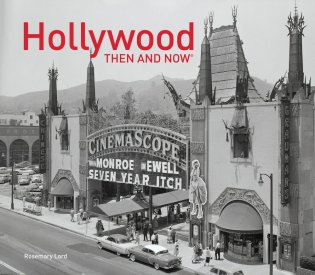
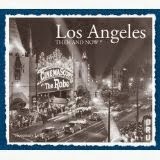
The author of Best Sellers Hollywood Then and Now and Los Angeles Then and Now, English born Rosemary Lord has lived in Hollywood for over 25 years. An actress, a former journalist (interviewing Cary Grant, James Stewart, Tony Hopkins, John Huston amongst others) and a Senior Publicist at Columbia Pictures, she lectures on Hollywood history. Rosemary is currently writing the second in a series of murder mysteries set in the 1920s Jazz Age Hollywood featuring Lottie Topaz, an extra in silent movies.


* * *


Don’t know about you, but I am still easing myself into this New Year. We relaxed through Madeline’s ‘betwixt and between’ week and suddenly there it is: a New Year. And, as if running down hill, you gather speed as life takes over once again.

But to get back to the beginning, less than three weeks ago:

At the start of each year, I look forward to the blank page.

Firstly, the clean, empty blank page of a new diary – or appointment book – as I anticipate writing that first entry. The first appointment. What’s it going to be? Something dire or something fun?

This year, it was the dentist, hairdresser, doctor check-ups. Finally taking care of me – so that was a good, healthy start. Then I set meetings about work, about writing: what new people will I meet? What adventures will I start this year?  And in the margins of the new diary page I start to note new ideas, new goals for the year as ‘A Plan’ begins to emerge. “This year, it really will be different, better,” is my theme song.

I determined to get a control of my pathway for the year, before life’s little jokes and challenges intercede.

My favorite blank pages are in my writing books. I have a series of brightly-colored leather-bound note books – a big clue I used in the first Lottie Topaz Hollywood Mystery, by the way… The different colors are for different stories I am working on.

I’ve not been one to dread the empty page, or the stuck-ness (did I just make up a word?!) of no ideas. Quite the reverse. Instead of a frozen, blank mind, my fingers can’t write fast enough. I have an annoying habit of starting a word in such a rush that I finish the next word on top of it, jamming two half words together, missing the middle letters, in my haste to finish the sentence. Then later I attempt to figure out what I was saying! I am trying to slow my thoughts down as they tumble onto the blank page, not always making sense, in speedy disarray. Fortunately, this first draft is always in pencil – there is a lot of erasing later on.

And so I fill up page after page, stopping only to sharpen pencils and grab a fresh cuppa (cup of tea) with no time to eat – just back to convert blank pages into the start of an amazing story.

I also have a collection of tiny, pocket-size notebooks that I carry with me. On those blank pages I make lists of names, lines of dialogue, clues, storyline notes that come to me as I wait in the check-out line, parking the car or waiting at appointments. Mind you, it’s not always neat blank pages of note-books that I scribble thoughts on. How often can you NOT find the note-pad when you need it? So backs of envelopes, register- receipts, shopping lists, coupons suffice. Whatever is handy. The trick is not to lose that scrap of paper! Later that day those bits get transferred to a proper blank page.

So these are part of my arsenal for the start of a new year. First, I have to remember to breathe. Slow my racing mind down. Then take it step by step into my writing world so that I finally finish another book.

Last year, amidst the very productive chaos, I did manage to write the revised, updated version of my first published book: Los Angeles Then and Now. Sadly, so much of historic Los Angeles has disappeared since I wrote the original book. The landscape is so very changed, the sky-line filled with towering apartment and luxury condominium blocks, many still empty.

I updated those original sites that are still standing, and discovered future plans, new focuses in the city. I researched all the new sites I have added, explored fresh archive photographs to mirror the new ‘now’ images. It was a fun challenge.

I also wrote a piece on the Hollywood School for Girls and the Woman’s Club of Hollywood for the Fall issue of Discover Hollywood magazine along the way.

And now my new Los Angeles Then and Now is coming out next month, so I will get busy promoting that. And guess what? A new notebook and new blank pages to fill as I travel that road.


Life is full of blank pages for us all to fill. What would you fill yours with?


Short Story Workshop

Join Mike Befeler and G.B. Pool (Gayle Bartos-Pool) at the Glendale Central Downtown Library (222 E. Harvard Street, Glendale, CA) this coming Saturday, January 20, from 11 a.m. until 2 p.m. when they teach a short story workshop for all you writers out there.  anatomy-book-cover

If you aren’t in the area, you can find Gayle’s book, Anatomy of a Short Story Workbook, on Amazon. It covers even more than the class and has oodles of examples.

Hope to see you there!


Gayle and Mike

THE METAMORPHOSIS OF WRITING by Miko Johnston

Miko first contemplated a writing career as a poet at age six. That notion ended four years later when she found no ‘help wanted’ ads for poets in the classified section, but her desire to write persisted. After graduating from New York University, she headed west to pursue a career as a journalist before switching to fiction. She is the author of the A Petal In The Wind Series; Book III – The Great War has just been released and is available through Amazon and Barnes and Noble.  Miko lives on Whidbey Island in Washington.


Happy New Year, everyone. A fresh year, a fresh beginning. Time to dig out that half-finished novel, or start a new one. There’s nothing better than curling up on a winter’s day and writing, which made me think….

Where do you write? For the past year my preferred spot has been a comfy chair in my bedroom, but I have a number of places that suit me, both at home and elsewhere. The reason is simple – I own a laptop computer. This has changed not only where I write, but how I write.

Like many of us in the craft, I began writing when I learned how to in first grade. I’d sharpen my yellow pencil and print words in my composition book – the ones with the black and white ‘marble’ cover – eventually switching to ballpoint pen and spiral bound notebook after I’d mastered cursive and good penmanship. That allowed me to write at home, the library, school cafeteria or a friend’s house, as long as I had a good light source. It worked well, except when story ideas erupted; I couldn’t write as fast as I thought.

I learned to type in high school and purchased a used manual typewriter when I began college. It sat on my desk, set near a window, with a swing arm desk lamp for writing at night. My typewritten work looked more professional, but the carbon copies were awful and my creative spurts still outpaced my typing. I hated making mistakes, a nightmare to fix until I discovered correction fluid in the eighties. However, typing forced me to think about my work since it was tedious to redo significant portions. I usually began with a hand-written copy and transcribed it to typing paper.

The electric typewriter worked much better; I could type faster, which allowed me to keep up with my thoughts. Mistakes were easier to correct, though major changes still required major retyping. Being electric it required a nearby outlet, and it wasn’t portable, so I had to resign myself to type at my desk. I sat with my back to the window for natural light and kept my desk lamp. Pad and pen filled in for other locations.

In the early nineties I worked in a windowless cubbyhole. That’s when I began to use my desktop computer at work for writing. The ability to not only make corrections, but to cut and paste, became a game changer for me. I could let my thoughts pour out, then go back and rearrange them, condense them, or flesh them out with ease. For the first time, I could write faster than I could think. I still had to work in one spot, but pen and pad filled in when I was away from work.

My first personal computer was ‘totable’, about seven pounds that could be moved and operate on battery power for a few hours. Suddenly I could work anywhere, with the portability of a pen and pad and the advantages of a word processor. Lighting wasn’t an issue; in fact, rather than sitting with my back to the window, I could now face it and have something other than a blank wall to stare at while waiting for inspiration to strike. Email allowed me to electronically transfer my work between home and office.

I currently write on a compact laptop that weighs about three pounds and has a battery life of at least six hours, longer if I turn off the wifi. It has its own black ‘jammies’, a padded slipover case to protect it when I travel. The portable computer fits in my larger purses, tote bags and suitcases. I can write anywhere. And I have. In just about every room in my house. On my deck. In hotel rooms, airport lounges, airplanes, boats, coffee shops and friends’ houses. I no longer have to plan out what I’m going to write before I commit it to the page – the ease of changing words, paragraphs and whole chapters means I can work freeform. Get my thoughts down and clean it up later. Of course, it’s also made it easier to constantly tinker with my pages, tweak a word, delete a comma, or cut that wonderful line that doesn’t serve the story.

Technology has changed the way I write in other ways as well. I presently do not have a desk. My handwriting, which used to be neat and easy to read, is neither without great concentration. I’m not as disciplined about organizing my thoughts as I was in the typewriter era, when changes or corrections required a major effort. I must always write a draft version of any notes or letters before committing my words to stationery. Then again, I’m also not obsessed with getting it ‘right’ on the first draft. Storing earlier drafts and critiques of my work in progress no longer requires multiple shelves of loose leaf binders and cartons filled with copies of printed pages covered with hard-to-read scribbled notes. I also love the idea of sending e-copies of my manuscripts to my publisher instead of mailing hard copies.

What about your writing journey? How has technology changed the way you write?


Jumpstart 2018 with Education

Face it. Those brain cells need refreshing. They’ve been hard at work on your work-in-progress, and they need a fresh focus so they can rejuvenate.

Our own G.B. Pool will appear at the Glendale Central Library with author Mike Belefer to teach a short story workshop on January 20th.  anatomy-book-cover

If you aren’t in the area, you can find Gayle’s Anatomy of a Short Story Workbook on Amazon.

Hope to see you there!


Gayle and Mike


Betwixt and Between


Madeline (M.M.) Gornell is the author of seven award-winning mystery novels. Her current literary focus is Route 66 as it traverses California’s Mojave Desert. Madeline is a lifetime lover of mysteries. She lives with her husband and assorted canines in the High Desert. Visit her website and Amazon Author Page.

The week between Christmas and New Yearsfrom childhood and school breaks through my “working for others life,” has always been a time to think about “stuff.” Daydream, refresh, and kick back (snooze, read, watch TV). Though it certainly is a different electronic world these days—finding it very hard to completely escape into my own little mental world, with email and Facebook calling me…

So my writing and posting thoughts in this betwixt-and-between kind of twilight-zone post are not after Christmas ponderings, or 2018 future thoughts about goals—but more like meanderings (if that’s an actual word) through writing thoughts I’ve collected and remain unresolved. I’m sharing, with the hope there might be something you might find worth thinking further about—or even keeping into the new year as a goal:

  • I love reading and writing murder mysteries. Meaning, there are always dead bodies and murderers inhabiting my stories. One of the things I’m pondering about is—the weighing of nature versus nurture. Especially in today’s world of genome and DNA exploration. Are my murderers compelled by genetics, or willfully evil, or? Or? A great underlying theme, I think, for at least a short story? For sure, a character trait/observation to include? Thinking about how to do that, and still maintain a story that’s FUN to read. The fun part, I also think is very important.
  • As an addicted TV watcher since childhood, I’m finding myself turning off more and more new shows and movies and removing the DVR timer completely. Why? Sometimes language, sometimes too much blood and gore (hubby reminds me I do write murder mysteries!), but most of all—characters I don’t give a darn about. Definitely want to write tales where the reader cares about what life has done to the character, and how they respond. Better ways of my accomplishing that key writing goal are floating around in my betwixt-and-between thoughts.
  • I get in my email “Websters Word of the Day.” Sometimes I know the word already, often I don’t, and occasionally I keep them in an electronic folder with the thought I’ll use sometime. Ha! (usually quickly forgotten) Using just the right word, without turning a FUN tale into a hard to read tome I think is tricky. As a side note on words: used “knackered” for tired the other day when speaking to someone who doesn’t watch as much BBC offerings as I do. They didn’t know what the heck I was talking about.
  • And lastly, do a lot of audio book “reading,” and I’m thinking about how much of my enjoyment is the voice-actor’s talent, or tenor of their voice, or the writing? Or? Think this one might be a post on my 2018 writing road…

I know this is a mish-mash post all over the place, but for me, that’s what this betwixt and between week is for—wading through my mental writing mess. And hopefully, some of this mental-mess (I know, too many “m”s) will get your writing thoughts going.

Sunset

Creating Seasonal Articles*

Christmas sugar plumsby Jackie Houchin

Does reading all those December magazines with their holiday stories, recipes, tips, traditions, and inspirations make visions of sugar plums, er, I mean, ideas for articles to dance on your head?

“Oh dear! I so wanted to write an article about those fun games we play for identifying Grandma’s tag-less gifts under the tree!” (Family Circle Magazine?)

“And how I wished I’d shared my Mom’s Christmas fruitcake recipe from her recipe box (that I inherited this year when she died), and told all who read the article why they really should try fruitcake again.”  (Reminiscence Magazine?)

But, I forgot to write them.

And now it’s too late – WAY too late.

At least for this year.

But not for next year, if I plan ahead.  Many magazines need seasonal articles. But they need them long before the pub date. Articles with a “time-tag” are a good way for new writers to break into print (or seasoned writers to pick up some pocket money).

It’s all in the timing

Start by picking up Chase’s Calendar Of Events and look ahead to see what holidays will be celebrated in six months to a year. Or you can check the guidelines in the new The Writers Market Guide for specific publications you hope to write for.

Send a query letter with your idea ahead of the suggested time. If you get a go-ahead, be sure to deliver your article on time. And be patient. If it isn’t used in 2018, it may be held till 2019.

Low-profile holidays

Brain storm ideas for the less popular holidays, such as Arbor Day, Grandparents’ Day, Flag Day, Patriot Day, Friendship Day, Bastille Day, Poppy Day, or even…. Cookie Baking Day! (December 18)  Also think about back-to-school and summer vacation themes.

Your special “slant”

If those “sugar plum” ideas aren’t already dancing away up there, then:

  • Leaf through old magazines (yours or at the library).
  • Think about experiences you’ve had during holidays.
  • Write a short biography of a person linked to a holiday.
  • Research a holiday custom.
  • Remember anniversaries. (What happened 5, 10, 500 years ago?)
  • Interview a teacher, a parent, a coach, a Macy’s clerk.
  • Write a holiday short story or poem. (Some magazines are still open to them.)

Christmas funny poem

Before and After Tips

Start an idea folder with clipped articles from magazines or newspapers. Jot notes about ideas on each. Not all will be usable, but many will work. When you’re looking for a certain seasonal theme, these may trigger an idea.

After the original-rights sale, look for reprint markets for next season. Make a list of potential ones and their lead times, and keep your original article with them.

Open a new bank account!

Christmas bank accountJust kidding!  You won’t get rich from these sales, but you will get “writing clips.”  And when magazine editors discover your timely, well-written articles/stories etc., they will approach YOU with their needs.

Okay… do you need some ideas for NEXT Christmas?  Check out these:

  • Favorite Christmas books, movies, musicals/plays (pastiche or true likes)
  • Christmas mishaps (humorous, or coping skills)
  • Christmas trees: cutting your own, uniquely decorating (we knew friends who lit live candles on their tree!), a special nostalgia ornament
  • Family traditions (oldies, or how to start your own)
  • How to make homemade gifts (food, ornaments, clothes, home decor)
  • Holiday baking (how-to, tastes & smells, shipping)
  • Holiday traditions from other countries (foods, decorations, activities)
  • Or…. interview someone with over 3,500 Santa Claus decorations (Hint: I can give you her name.)

Take away

After all the gifts are opened, the holiday meal is eaten (and cleaned up), the kids are playing with new toys (or the boxes), and the older “boys” are watching football, go grab a piece of crumpled wrapping paper, smooth it out, flick open that new expensive gold-plated pen, and start writing up your holiday impressions, experiences, and ideas while they are still “dancing in your head.”

Christmas garland

Merry Christmas &  Happy New Year !


*Inspiration for this post came from Jewell Johnson’s article, Writing Seasonal Articles in the Christian Communicator, Nov-Dec, 2017.

’Tis the Season


OLYMPUS DIGITAL CAMERA

It’s that time of year when the hustle and bustle of the holidays fills your heart with dread and anticipation… Did I say dread? Yep. The dread of what to get some of those people on your Christmas List.


If that significant other or friends or relatives gave you a Wish List, you’re lucky. But a lot of us are left panicking at the last moment about what to give somebody on our gift list.


Might I give you a suggestion?


How about a book?

books-on-shelf

The Writers-in-Residence ladies have a few new books out this year, but I’m not going to limit this pitch to just our tomes (even though they are listed at the end of this article). There are a lot of other books available. Of course, I recommend the classics. But some good books are from new writers. Some are the next book in a favorite series that you might have enjoyed and now might want to share with friends.


But there is another reason for me mentioning BOOKS. People aren’t reading as much anymore. WHY? Some schools think the classics are passe and sometimes their reading list leaves a lot to be desired. Here in the Los Angeles area, many of my favorite bookstores have closed. Amazon might have taken away customers, but those stores were a great place to browse and they will be missed. After all, it’s hard to browse through the “shelves” at Amazon. But you can get a book in a day or two delivered to your door. That’s nice. Or the Kindle version is available instantly. But why aren’t people, adults and children, reading as much anymore?


No imagination.


Movies with car chases and explosions don’t stimulate the imagination. They just drag you along for the ride. The viewer doesn’t bring anything to the party, as it were. As for video games, maybe you get to blow things up or destroy another dozen zombies or a peasant village, but when the game is finished you can start again and do roughly the same thing over and over and over. Boring. These games without a story or characters behind them actually go nowhere.


OLYMPUS DIGITAL CAMERA

That brings me back to BOOKS. They can take you places. They introduce you to new worlds and exciting people. They stimulate your imagination to, dare I say it… dream about things. They can help kids set goals in life. They can help adults get their lives in order in case they are going through a rough patch. Or they can just entertain. Nothing wrong with that.


Let me introduce you to a little fellow who turns up in a particular Christmas book that I can highly recommend. His name is Orville. He starts out as an egg left under the seat of Santa’s sleigh on Christmas Eve. The egg was left by a wizard with a note saying: Take care of this egg. DO NOT EAT. When the egg hatches, Orville, who happens to be a dragon, has come into the world on a mission. Orville is a special dragon. You see, he is what lights the fire of imagination under people when they READ.

OLYMPUS DIGITAL CAMERA

Young Orville learns a few lessons as he is growing up. He learns the value of the information in books and also about what the world would be like if there were no books… What a horrible thought.


This is why we here at The Writers-in-Residence introduce you to new books, both ours and others, just to stimulate your imagination. If you are a parent or have children on your gift giving list, think about giving them a book this year. Something to light that fire under those growing minds before they forget how to dream. And maybe your friends might like something to sooth them during trying times or spur them on when they need a little push in the right direction.


It’s the imagination that created every invention, opened frontiers, and let people realize there are others in this world who matter, too. Books stimulate the imagination. READ ON.


Have a very Happy Holiday, Merry Christmas, Happy Hanukkah.


These are a few of our most recent books.

Autumn-Gold, SFB cover photoFBRTMMFront300dpi1200pixFrontCoverOnly300dpi (002)An Almost Perfect MurderHollywood Then and NowBad to the BonePetal in the Wind III

Second Chance Book CoverEvery Castle Needs a Dragon


HOLIDAY MEMORIES by Miko Johnston

Miko first contemplated a writing career as a poet at age six. That notion ended four years later when she found no ‘help wanted’ ads for poets in the classified section, but her desire to write persisted. After graduating from New York University, she headed west to pursue a career as a journalist before switching to fiction. She is the author of the A Petal In The Wind Series; Book III – The Great War has just been released and is available through Amazon and Barnes and Noble. Miko lives on Whidbey Island in Washington.


*   *   *


I grew up in 1950s Brooklyn, in an ethnically mixed neighborhood of mostly Irish-Catholic and Jewish households like mine. Living in a community where part of the population celebrated Christmas and part didn’t made the holiday challenging for Jewish families. We may have been religious enough to keep a kosher home, observe the holidays and go to Temple, but we also watched television, listened to the radio, and read the same newspapers and magazines as everyone else. Therefore we couldn’t avoid Christmas, which in this country was beginning to be celebrated less like a religious holiday and more like a national day of celebration. Jesus never drank Coca Cola, but Santa Claus did. He apparently preferred the soft drink to his traditional beverage, milk.

I don’t recall when I first became conscious of Christmas. I knew my family didn’t celebrate the holiday. I figured that was one of the reasons we lived in our apartment. It had no fireplace to hang stockings, not a problem for Jewish tenants. I remember my mother taking me to see Santa at Macy’s Herald Square – yes, the one from the movie – shortly after I turned four. She didn’t prepare me at all for the visit, but as I waited on line, another parent instructed her child, “Don’t pull on Santa’s beard.” I clearly recall sitting on Santa’s lap and seeing tiny cross stitches on the beard along his cheeks. I felt very sorry for him. I thought his beard had been sewn onto his face.

When Santa asked me, “What do you want for Christmas?” the question took me aback. I blurted, “I’m Jewish.” Without missing a beat, he asked, “What do you want for Hanukah?” I recited my wish list.

Jewish parents usually fell into one of two camps: surrender or compensate. The former would succumb to buying a Christmas tree, or the more guilt-inducing Hanukah bush. The latter would remind their kids that at Hanukah, you got eight presents, one for each night of the holiday. Granted, seven of them were usually practical things like socks, or small, inexpensive items, with the big finale – the toy or game – on day eight. But it sounded better than getting only one gift.

My parents were big babies. They lacked the patience to dole out presents one day at a time, which led to an innovative way to counter some of the draw of Christmas. It began in 1957, the year I turned six and my kid brother was old enough to comprehend the joy of receiving. That’s when we learned of the existence of an amazing magical being: The Hanukah Man.

The Hanukah Man would show up every year on the first night of Hanukah, bringing gifts to my brother and me. Hanukah usually began on a school day, so when we arrived home from class we were always thrilled to learn he’d stopped by earlier in the day. Naturally, my curiosity about him grew with each year, until I longed to see him, catch him in the act. Whenever Hanukah fell on a weekend, I would stay home and wait for him to show up. I’d wait and wait. Then my parents would suggest I go downstairs to wish a happy Hanukah to my aunt, uncle and cousins, who lived in the apartment below ours. I’d rush down, not wanting to miss the Hanukah Man’s arrival. But wouldn’t you know it? No matter how little or long I waited to leave, how quickly I dashed to my aunt and uncle’s apartment and back, I’d just miss him. Sometimes by only a minute! Still, how could I stay upset for long when my home was filled with presents?

Now came the fun part. The Hanukah Man never left packages in one spot. He would hide them throughout the apartment, in places we could reach without causing any damage to us or the furnishings. Wasn’t he thoughtful? But I still wanted to see him, although part of me feared that if I ever did, he would stop coming. Maybe that’s why I don’t recall asking my parents what he looked like. Instead I made up his appearance in my imagination. Average height, with brown hair, slender body and lots of agility. He dressed in ordinary clothes so no one would suspect who he really was. Brown corduroy pants, tattersall shirt and a camel cardigan, as I recall. No hat.

As soon as we knew he’d arrived, my brother and I would tear through the house, opening drawers, looking under the bed, crawling beneath tables and chairs, and poking through closets in our search for presents. The Hanukah Man never wrapped them, but that was okay. The surprise wasn’t in the opening, but in the finding. Then we’d compare our loot. One year, months after the holiday, I looked for something in a drawer and found a previously undiscovered gift. It even surprised my mother, who had apparently lost track of what the Hanukah Man had hidden.

I once mentioned the Hanukah Man to some kids in school. Their reaction made me feel embarrassed. I wouldn’t talk about him after that except in the safety of my family.

I never had children, nieces or nephews, so I couldn’t continue the tradition of The Hanukah Man, but he lives on in spirit. I married a grandpa, and when our grandchildren were young, interfamily relations became tricky for a while. My husband and I didn’t want to make their parents’ lives more difficult, so we told them we’d come to celebrate and exchange presents whenever it was convenient, which usually meant days after Christmas. By that time, the grandkids had received gifts from their parents, siblings, aunts, uncles, cousins, and two other sets of grandparents. But no one except Grandma Miriam would come over and hide their presents throughout the house, sending the three youngest to search high and low for every wrapped box and gift bag. They’d bring whatever they’d found back to the living room, and then open their gifts.

I don’t know if any of them will continue that tradition, but hopefully they will at least have some good memories. It brought me joy to share this tradition with them, not as the receiver, but in the way my parents enjoyed it. Which is why the Hanukah Man will always be special to me.