A Lesson in Character Building

by Gayle Bartos-Pool

 

PeopleWhen I first moved to Sunny Southern California in the early Seventies, I decided I should take acting lessons. Not that I thought of taking Hollywood by storm, after all, I was no glamour girl or even thought I had any latent acting ability.


Trish StewartMy only claim to fame by that time was playing Girl Number Two in a high school production of Sabrina Fair. I had maybe two lines, but I did get a few laughs when my character had to feign a headache to make another character think that was why me and the Boyfriend, another minor character, were out on the patio getting some fresh air. I guess I did the funny bit of business well enough to get a chuckle from the audience. As for the girl who played Sabrina, Trish Stewart went on to an acting career in Hollywood. She was in the short-lived TV show with Andy Griffith called Salvage 1 and a recurring role on The Young and the Restless.

But a television career wasn’t why I wanted to take acting lessons. I wanted to be a writer. I wanted to know what writers needed to learn about writing dialogue and thought acting lessons would give me an insight into all those words actors should be saying on stage and on the screen.

I got an agent, a job… and a life lesson. I saw an ad in the newspaper about an exclusive acting class being taught by a couple of people from Hollywood. I use the term “exclusive” because the class cost money. It was several hundred dollars, so I thought it was going to be really good. Well, one of the guys who was to run this class ran off with the money. Many people were screwed. The other partner who was as surprised, if not as screwed, as the rest of us, took pity on little ol’ me and asked if I would like to be the nanny cum housekeeper for him, his wife, and his four kids. I needed a job, so I said yes.

This guy was a talent agent. A real one. One of his clients had been Agnes Moorehead. Another client was James MacArthur. I actually met James when he flew into Hollywood from his gig in Hawaii doing Hawaii 5-0. James kept his little sports car in my boss’s barn on their property in Encino. His battery was dead, so he asked if he could borrow my little VW and go get one. I tossed him the keys and went back to my nanny/housekeeper duties. Their house was always a mess, so the three days a week I worked over there I tidied up and played with the young kids, all of whom were pre-school or in elementary school.
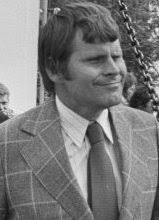
Bruce GloverDuring the nine months I worked for him, he got me into an acting class. The first class was taught by Bruce Glover. Old Bruce has been in a bunch of movies like Diamonds Are Forever and Chinatown and just about every TV series during his forty-year plus career. Something you might notice when he is in a movie is the fact that he makes sure he is either somewhere in the background of any scene even if he isn’t the guy doing the talking or while doing his scene he makes the most of it. In that I mean he is always doing some bit of business to capture the attention of the viewer. Sometimes the director will yell “Cut” and stop the attention grabbing, but many times that little extra shtick is the cherry on top of a scene.

And what does this have to do with writing, you may ask? It’s just this: Sometimes the writer needs to make a minor character more interesting by giving him or her a quirk, a trait, a personality. They don’t have to stay on the page or the screen all that long, but isn’t it fun to read or see a character who isn’t cardboard?

I still use that little trick I learned from Bruce about instilling a few minor characters with some unique trait just to make them more interesting and memorable. In fact, there are several characters that started out in a minor role who ended up with a much bigger part. Bruce would get a kick out of that fact, because he often said that “extra bit of business” might lead to an expanded role.

In the opening of my novel Caverns, the policeman who discovers the first body mauled by large rats in underground Chicago was to be a minor character if not just a “walk-on,” but I liked him so much he became one of the leads. In Hedge Bet I had originally picked one character to be the guilty party, but then I thought her character had only limited depth. This other character had far more opportunity for mayhem because he kept turning up in all the right places, so his part was expanded and he even had the original suspect bumped off.

In my Johnny Casino Series, I introduced an aging actress in one of the first short stories in the first book. I liked her so much, she kept coming back along with her butler who had a past to die for, so he turned into a charming regular, too. See, there are no small parts. Those little traits we write into our characters end up with a life of their own.
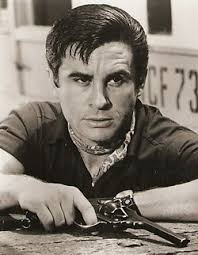
Rudy SolariThat brings me to the second acting class I took. The talent agent I was working for thought I might like to try another class taught by a couple of guys he admired. The guys were Rudy Solari and Guy Stockwell. Rudy starred in Garrison’s Gorillas. As for Guy Stockwell, he guested in just about every TV series there was for decades.

I have mentioned in other articles how Rudy had us actors write a biography of the character we were playing so we had an idea who our character was before we stepped onto the stage. You would have to make this stuff up, but the script gave you a lot of information and the genre of the piece would give you more parameters. To this day I write a biography of my main character and sketches of other people in a story. This will help you remember who everybody is, how they look, their age, and important details that you might need later. You don’t want “John” twenty-five years old on page 34 with blue eyes to turn into “John” forty-five years old on page 76 with brown eyes. It keeps you on track and if you bring the character back in a sequel you don’t have to read your first book to acquaint yourself with those facts.

But something else was gleaned from Rudy’s class. Improv. There is nothing like your acting teacher asking you to get up on that stage and do a scene with another actor with only a few words describing the scene. The one scene I remember doing was when another actor and I were to be an abusive husband and the long-suffering wife having a conversation. “She could kill him” was my prompt.

I started out playing the meek wife taking his abuse, but I kept countering his jibes with subtle remarks. When the scene was over and Rudy said “Stop,” he walked over to me and asked what I had in my hand. I had taken a piece of paper with me to the stage. It was probably what I wrote notes on, but it was in my hand, but as Rudy noted it had been folded and folded until it looked a bit like a knife. I hadn’t realized exactly doing it, but my character sure did. Scary? Maybe. But characters do have a life of their own. Give them free reign and see what they come up with.

The other interesting time in acting class was when my good friend and fellow actor, Karen Markham, and I were doing a scene from The Odd Couple. Let me digress for just a second and tell you a story or two. It’s relevant.

Rudy thought it might be interesting to have women play the lead in that play and later movie and even later a fabulous TV series written originally by Neil Simon. Rudy asked Karen and I to do a scene from the play. We christened Karen’s role as Esther (Oscar) and I played Felicia (Felix). We did one of the earlier scenes in the play. We rehearsed quite a bit and thought we had the roles down, but you know actors. Digging deeper into a role is always better.

We decided we should take the act “on the road.” That meant that we would go someplace “in character” and see how we did. There was a bar fairly close to where the acting class was, so we went there after class one night. It was a hangout for actors and stuntmen called The Drawing Board. We went in, Karen as the men-loving gal who always had a smart remark and me as the meek, penny-pinching woman who found dirt everywhere.

Harvey WallbangerI ordered a Harvey Wallbanger. (You aren’t the only one who liked them, Paul D. Marks.) Before the bartender set it down, I cleaned the spot in front of me. I complained openly about Esther making a spectacle of herself and Karen gave it back to me in spades. When the bartender told me how much my drink was, I gasped at the high price and said that I wasn’t buying drinks for the entire bar. Karen told me I was a penny-pinching old maid. The bartender laughed and then said, “Talk about the odd couple.”

Well, I broke character and laughed. Several of the guys around us took notice and I confessed that we were actors rehearsing our characters for Rudy Solari’s acting class. They got a kick out of it. Oh, and I didn’t have to pay for the drink. Don Stroud, the actor who starred in The New Mike Hammer and a million other TV shows, picked up the tab for Karen, and stuntman Paul Nuckles bought mine. We never had to pay for a drink in the place after that. Nice guys.

Guy StockwellSo back to my original point. Karen and I knew our roles. We knew the characters. We did the scene for Guy Stockwell one evening at the acting studio and he liked it, then he asked how well we knew the scene and did we know each other’s part? Yes. Next he said, “Switch roles.” We did. Karen played the fastidious Felicia and I played the ballsy Esther.

We did it without a hitch and to tell you the truth, it was exhilarating. We were totally free. No constraints. Exactly what your characters in your stories should be when you give them free reign to be themselves. You know who they are. You wrote a biography for most of those main characters. Now let them take you where they want to go. That’s the point I am trying to make in this article.

You will be surprised when you free a character to speak his own mind or let her go where she really wants to go. Trust them. And maybe take an acting class to let you see what dialogue and character on the hoof is like. You’re out there on a stage and the words are alive. Make your characters come alive as well. They will love you for it. And so will your readers.

Persistence Pays Off!

Guest Post by Bonnie Schroeder*

Bark Magazine cover“A decade ago, I sent a short story to “The Bark,” which is a super-cool, glossy magazine for “dog people.” They rejected it, but the editor wrote a note on the form letter: “We encourage you to keep writing, as you have an interesting voice.”

Those words sustained me through many dark times when I questioned my goal of getting published. This year, after my short story “Vigilantes” took First Place in the Idaho Writers Guild’s Short Story contest, I decided what the heck, let’s try again.

Less than twenty-four hours later, I got an email from “The Bark,” offering to publish my story–and they even paid me for the rights!  It is a short story about a lonely widow and a dog locked inside a car on a sunny day.

This has been the highlight of a busy year so far. In addition to the Idaho Writers Guild contest, I had a flash fiction piece published in Rose City Sisters

Furthermore, I have finished a solid draft of Turn Back the Clocks, my new novel, for which I’m seeking a new publisher. Alas, Champlain Avenue Books, the fine company that published my first two novels, has ceased operation, so I’m back on the hunt. Never fear, I’m determined that this book WILL be published, one way or another. I think it’s an important story and one that has real relevance for our time. So stay tuned!

That’s what’s going on in my world. Hope you and yours have a wonderful holiday season.

Cheers, and I’ll let you know WHEN Turn Back the Clocks is in print.”

photo-author-bonnie-schroeder-crop-u1986*Bonnie Schroeder is a former member of The Writers In Residence and has posted here many times in the past. (Use the search box in the upper right to find her posts.)  Since her move to the great North West, she has opted out, but follows the blog and says she misses our monthly lunches.  We have promised her a special spot when her next novel is published, with a “tell all” about the extraordinary research that went into it.

November has been a busy month for Bonnie. She has committed to extra duties in her new Toastmasters Club as well as participating in the National Novel Writing Month challenge,  a joint venture with a friend where each does a quarter of the 50,000 words.

Bonnie’s website: Bonnie Schroeder Books

This article was posted for Bonnie Schroeder by Jackie Houchin


Enjoyable Events

by Linda Johnston

 Who knew?

 When I started getting published, I still believed that writers just wrote. That was before I began joining fun organizations like Mystery Writers of America, Sisters in Crime, and Romance Writers of America.

 I learned otherwise fairly fast.  I joined MWA after I accepted my Robert L. Fish Award for Best First Short Story of the year in New York.  When I then began writing time travel romances, I joined RWA and also went to meetings.

 Even so, I had to learn that a good part of promotion is agreeing to be on panels and at special writing events.

So why am I talking about this now? Well, last weekend was a lot of fun.

 First, on Saturday, I was invited to attend Cozy Con, sponsored by Kensington at the Redondo Beach Library. I’ve not written for Kensington, but I was one of the authors there nonetheless.  And it was fun, with lots of opportunities for readers and fans to stop at tables where authors sat and chat for a while. Plus, there were giveaways to readers. And they were able to buy books which we could sign.

tri Color Spaniel dog-634031__340Then, on Sunday, I was on a panel for Sisters in Crime at the Thousand Oaks Library, where several published authors were on Dying Laughing, a mystery authors panel, where we were asked questions about our writing–how it starts, how it continues, and a lot more, including humorous aspects.  And I, unsurprisingly and fortunately, was asked a lot about the dogs in my stories.

 And although those were new events which I definitely enjoyed, they were among lots of others I’ve participated in, and will continue to participate in, as an author.  Local events, not just the many conferences I attend.

 So who believes writing is a solitary sport?  Oh, there are aspects of it that are… like the writing, at least most of the time. But getting out there is part of the career, a fun part of it, although I had to learn how not to be shy when out there giving answers or speeches to people.

 Now? Just ask me, and if the timing and location work for me, I’ll see you there!

How about the rest of you authors out there?


lindaphotoLinda O. Johnston, a former lawyer who is now a full-time writer, currently writes two mystery series for Midnight Ink involving dogs: the Barkery and Biscuits Mysteries, and the Superstition Mysteries.  She has also written the Pet Rescue Mystery Series, a spinoff from her Kendra Ballantyne, Pet-Sitter mysteries for Berkley Prime Crime and also currently writes for Harlequin Romantic Suspense as well as the Alpha Force paranormal romance miniseries about shapeshifters for Harlequin Nocturne.  Her most recent release is her 44th published novel, with more to come.


This article was posted for Linda O. Johnston by Jackie Houchin

PADDY’S HOUSE

by Rosemary Lord


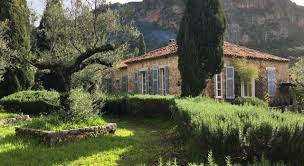
Paddy's house 1Paddy’s House was finally open for visitors. It’d been long enough. For 3 or 4 years, during our summer and winter visits, my siblings and I had peered through endless tall shrubs and overgrowth at the seemingly abandoned house, wondering what was going to happen to this magical home in the middle of nowhere. It was at the water’s edge of the remote little town called Kardamyli in Greece’s southern region of the Peloponnese.

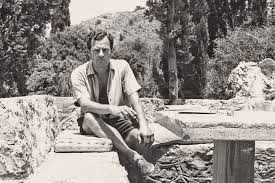
Paddy himself youngerThe house had belonged to British-born writer Sir Patrick Leigh Fermor – known as Paddy to friends and followers. A great traveler and adventurer, at age 18 in 1933, he walked across Europe, from Holland to Constantinople. He was travelling through Germany just as Hitler came into power and carried on to Greece at the outbreak of World War II, when he joined the Irish Guards. Having learned several languages along the way, Leigh Fermor joined the S.O.E and fought to help free occupied Crete.
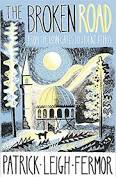

Many years later the film Ill Met By Moonlight retold this wartime episode, with Dirk Bogard playing Sir Patrick.

Paddy's book 1Patrick Leigh Fermor’s first non-fiction book was The Travellers Tree, followed by his only novel, The Violins of Saint-Jacques which was published in 1953. His later books about his travels include Mani, Roumelli and A Time of Gifts. These he wrote first in longhand at his Kardamyli retreat.


Paddy's house 2Paddy began building this charmingly beautiful, rambling Kardamyli House in 1965. He paid the local youths a penny a rock to gather small and large boulders from around the craggy area and help him create a rustic hideaway. He wove rock and pebble designs throughout the floors inside and outside in the meandering seating areas. Stone benches abound, each with a different inspiring view of the sea or the towering Taygetos mountains behind the property. A series of individual guest rooms surround the main house. In the centre of the house is the large living-room with long built-in, comfy seating at either end, under the windows that cover the length of the room and overlook the craggy rocks leading down to the turquoise waters of the Messinian Gulf.Paddy's house 3

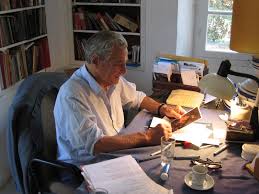
In the ensuing years Paddy and his wife Joan played host to writers Lawrence Durrell, John Betjeman, Henry Miller and painters Picasso, John Craxton, Ghiko and other literati of the day, inspired by the surroundings. This was how ‘Paddy’s House’ got its reputation.

Now Paddy’s house has been lovingly restored. It is light, airy, simple and very welcoming. Just the place to hide away and write a book. It was finally opened to the public this October and exhibits his vast book and art collection and is once again a writer’s retreat. Writer guests are chosen by a panel from UCLA, Princeton and the Banaki Museum, sponsors of this refurbishment.   Elpitha, Paddy’s house-keeper for his final eleven years after his wife Joan died, gives private tours and shares glimpses into Leigh Fermor’s life. She would clean for him, cook his favorite moussaka dish, drive him places and told us that he would clamber down to the sea and swim each morning until not long before his death in 2011 at the age of 94. He spoke mostly Greek to her.

Paddy himselfPatrick Leigh Fermor certainly had a full, well-lived life, as his books tell. Living in such a remote part of Greece – or anywhere in the Mediterranean area – would seem like a perfect place to inspire creativity; to write and paint. Or is it? It certainly is a wonderful respite from the hustle, bustle, traffic and cacophony of Hollywood or London – for a week or two. A wonderful place for me to meet up with scattered family members. A chance to relax, recharge one’s batteries and catch up on sleeping, eating – and writing. But I realize that I find my inspiration from my surroundings. The everyday tales of those I meet. The lengthy chats about youthful adventures. The revelations of the history of our surroundings.

I really look forward to my sojourns with no thoughts of any time-keeping. Instead, timeless days spent wandering through olive groves, exploring ancient ruins and unfamiliar towns. Or walking along the deserted beaches, watching the distant tide creep in and turn to crashing waves and then, later, marveling at the fierce summer thunder and lightning storms in the night. Hours spent enjoying free-flowing conversation over a simple, leisurely meal. What’s not to like? But would I want to live there?

I have a feeling that, were the opportunity to arise, I would get little work of any sort done in those surroundings. Especially writing. At my impending return to the ‘civilization’ of Hollywood, I relish the chance for another fresh attack on my next book. I look forward to sitting at my newly re-ordered and de-cluttered desk. It awaits all of the inspiration gathered during my travels. A new blank page waiting to be filled with fresh ideas and newly remembered forgotten words.

What’s not to like? How do you re-charge your batteries?

Typewriter and desk

In Defense of Clichés (and Other ‘Adjusted’ Words)

 by Miko Johnston

william-james-booksellerI frequent a bookshop in a neighboring town that sells books for and about writers, along with writing-related merchandise (if you’ve been to Port Townsend Washington you know which store I mean). They carry postcards and T-shirts with writing slogans like “Avoid Clichés like the Plague”. Cute. Unfortunately, it denigrates clichés. The meaning of the word has been ‘adjusted’, and unfairly so, IMHO.

Hear me out. I’m not endorsing the constant use of ‘isms’ we now label as cliché. But the word has become synonymous with trite, and that’s unfair. While some clichés may be trite, most are merely unoriginal, though with good reason – they’re shorthand for knowledge that’s been established throughout the ages and shown to be generally true.

clicheWhen selectively used, a good cliché expresses wisdom through metaphor. A stitch in time figuratively saves nine. Actions often do speak louder than words. Sometimes it is a dark and stormy night, but since that opening line shows up more in humorous writing nowadays, we expect it to be funny, not dark. Like cliché, the expression’s meaning has been ‘adjusted’.

Not a unique situation in phrases or in words. So many words have been adjusted – either with new meanings added on, or by having their definition abridged to one exclusive meaning. In one of my older posts (see July 17, 2019) I mentioned how Clarity in writing must include weighing a word’s intended meaning against what it’s perceived to mean.

Also consider how even when the word’s meaning should be clear, many don’t understand what the word means. Take secret, for example. It’s supposed to mean confidential, not to be disclosed, but too many people seem to be unaware of that, otherwise they wouldn’t try to get you to reveal a secret. Isn’t the very meaning of that word to withhold information based on a vow?

Or take the word average. It’s a mathematical term, meant to express the value of a group of data by adding it up and dividing it by the total of their number, yet it’s taken on social connotations. We hear the expression, the average person, or man, or woman, and wonder what that could be. We equate average with falling straight down the middle of a ranking system, not being good or bad, not taking sides. Somehow average has become something to avoid, either as a person or as an opinion. And don’t get me started on how compromise has become synonymous with cowardice.

How about proud? According to my dictionary the noun proud means: feeling deep pleasure or satisfaction as a result of one’s own achievements, qualities, or possessions, or those of someone with whom one is closely associated. Have you heard anyone say they were proud of themselves, even without accomplishing an achievement (which I believe includes making the attempt, working hard and doing your best)? Or proud of a celebrity whom they’ve never met?

As a writer, knowing words – their meaning, and using them in the proper context to express thoughts – has become more challenging as the meaning of words have become ‘adjusted’. Have you noticed this trend? How have you ‘adjusted’ to it?


mikoj-photo1

Miko Johnston is the author of the A Petal In The Wind Series, available through Amazon and Barnes and Noble. Miko lives on Whidbey Island in Washington. Contact her at mikojohnstonauthor@gmail.com


This article was posted for Miko Johnston by Jackie Houchin

M.M. Gornell: One Of Our Own!

by Jill Amadio

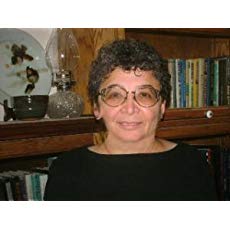
madelineI had the pleasure of getting to know one of our Writers in Residence bloggers, M.M. Gornell, more in depth last month and decided to write up my talk with her for the monthly column I write for a UK magazine called Mystery People.

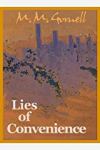
I thought you might like to know what I discovered about Madeline so herewith is the story. The magazine included a photo of her and one of her book covers.

***

U.S. Route 66

“The United States is such a whacking great country it encompasses every type of climate and terrain from deserts to glaciers, providing settings for crime writers in sand, mountains, seas, and snow.

Officially founded in 1776 and with archaeologists discovering tribes who lived here as long ago as seven millennia, America’s history of pioneers, gold miners, railway barons, and migrants continue to capture the imagination of writers. The push West from the East coast, where 100 or so Puritans from England disembarked from the Mayflower in 1620, has inspired books, movies, poetry, and songs, and created myths and legends.

How did these brave souls travel across the vast, undeveloped country?  One answer: Route 66.

route-66-2264400__340One of the most famous, nostalgic, fascinating and historic highways that wagon trains of homesteaders traveled, along with migrants seeking fortunes in gold mines, land, and new opportunities, U.S. Route 66 was originally a 2,500-mile dirt trail that ran from Chicago, Illinois to Santa Monica, California. It was eventually smothered in asphalt and became known as the Mother Road, and the Main Street of America, passing through a total of seven states.

John Steinbeck memorialized Route 66 in his masterpiece, THE GRAPES OF WRATH, in which he described sharecroppers’ gritty hardships and hopes. It is said that there was no symbol more loaded with meaning in Steinbeck’s novel than Route 66.

Many over the years have jumped on the bandwagon (forgive the pun) from the Rolling Stones, the Shakers, and other British bands who wrote hits about Route 66. Currently the BBC is preparing to launch another “The Hairy Bikers” show starring the popular cooks who will be riding their motorbikes along the renowned U.S. highway; no doubt pausing at the famed old diners along the way.

Crime writer M.M. Gornell

One author who actually lives smack on Route 66 in a small community called Newberry Springs in the western Mojave Desert is crime writer M.M. Gornell, Madeline to her friends. A typical oasis in the desert, the small town’s surrounding area boasts man-made lakes, farms, and ranches, and is about 100 miles south of Death Valley.

perfectAlthough her former residences have included other towns and the Sierra Nevada with its rich palette of Red Rock Canyon (the setting for her thriller, DEATH OF A PERFECT MAN), Madeline’s move to Newberry Springs inspired her to set the majority of her eight crime novels, including two series, along the famed highway. “For me, setting definitely comes first, then the story,” she said.
“Through some serendipitous miracle, probably springing from tiredness, the cost, and most importantly the feel of the place, we ended up in Newberry Springs. I come from Chicago, where Route 66 starts, and now I live at the end of it in California. I’m nowhere near to being an expert on the Road, not like real ‘roadies,’ and I’ve never driven the entire route, but in my mind, heart, and emotions the act of crossing this vast country has taken hold of my mind as a symbol for the hardiness and determination of the people who took it on, especially in those early days.”

As it proved for Steinbeck, Madeline said the name itself – Route 66 – is a pretty awesome beacon, leading the way in her writing adventures. “It is a constant writing inspiration.”

The multi-award-winning author’s first published work, including an Honorary Mention at the London Book Festival, was a short story in Alfred Hitchcock Magazine, which led to her debut crime novel, UNCLE SI’S SECRET. “It’s set in the majestic Cascade Mountain range where the seas of evergreen forests and the seemingly boundless waterways all combined to send my creative juices continually a-whirring”.

California and Route 66 beckoned…

liesBut California and Route 66 beckoned in the 1990s, due to mental pictures and expectations she had of the Mother Road twenty years earlier. It was not as easy as she had imagined, but new settings presented themselves and the majestic Sierra Nevada Mountains provided magnificent, magical scenery, inspiring her “Raven” mystery series, then LIES OF CONVENIENCE, and more recently her “Rhodes” mystery series.

dead.route-66-1238115__340Although the romance of the route was a fixed American landmark, it was soon bypassed by the new Interstate Highway System which either paralleled it, resurfaced portions, or went elsewhere, leaving Route 66 abandoned and lined with ghost gas stations and tiny deserted communities. Eventually, it was officially designated as “ceasing to exist.” But you can’t keep an icon like the Mother Road down. It was rediscovered by musicians, hippies, artists, movie makers, and writers.

Madeline is an avid fan of British novelists P.D. James, Ngaio Marsh, Margery Allingham, Marion Chesney, and others of the Golden Age.  She is published by Aberdeen Bay which describes her books as literary mysteries. “My intent is usually to write a murder mystery but they’ve all somehow gotten out of hand and ended up more what I call ‘character studies’.

Why ravens?

r.ravensAsked if any of her life experiences have crept into her stories, and what exactly was her attractions to ravens, Madeline responds with a smile. Those two things fit together in perfect harmony.

c.ravens“Ravens are indeed a prime example of life experiences creeping into my story-lines, even into the titles, RETICENCE OF RAVENS  and COUNSEL OF RAVENS. 

The ravens love our backyard, most likely because of the bird seed we set out. They seem to be intelligent and even fanciful. For reasons I can’t articulate, ravens seem rather mystical and mysterious. My writing mind went on from there.

“None of my stories carry “messages” but occasionally it can happen, especially after I select a title, and especially with the Rhodes series. I regard the Mojave and Route 66 as a sanctuary where no-longer-needed pasts are blown away in the dust.”

Like many authors, Madeline chafes at having to spend time promoting and publicizing her mysteries. But she enjoys talking to people in person where she can present them with bookmarks or even a few small samples of the stoneware pottery she creates when not writing.  She attends a few writers conferences and loves England but her favorite celebration is the annual Newberry Springs Pistachio Festival on Route 66. It attracts many Europeans, as well as locals, who are “doing the Route” and exploring its ramshackle old cafes, rental cabins, and trading posts.

It is a sure bet author M.M. Gornell will never run out of inspiration for her mysteries thanks to her choosing to live along this fixture of historic and popular culture.

***

stoneMoviecaretaker

M.M. GORNELL

Madeline (M.M.) Gornell is the author of six award-winning mystery novels. Her current literary focus is Route 66 as it traverses California’s Mojave Desert. Madeline is a lifetime lover of mysteries, and besides reading and writing, is also a potter. She lives with her husband and assorted canines in the High Desert. Visit her Her Amazon Page


sign.route-66-868967__340


This article was posted for Jill Amadio by Jackie Houchin


Metaphorical Tapestries…


My post today is about “depth and richness.” [i] And as usual, the road winding roadgetting here is twisting and curving. This particular writing thought path started for me this last August, with a Jackie Zortman post on her blog, Jackie’s Mountain Memos. It is the most lovely post, and the link is provided below[ii]. Besides Jackie sharing her past memories and her present day touchstone to her family, there are several lovely oil lamps pictured in “This Little Light of Mine.” I’ve collected a couple lamps myself from antique stores, and I find the unknown memories and possible past family events associated with the lamps, intriguing and compelling when it comes to story-imaginings.

Then recently at a High Desert Book Festival discussion on what inspires authors to write about the desert, I talked about those courageous and tough individuals that came before us, how tough it must have been, and how lucky we are to have benefited from their pioneering efforts. (Such as in my current Rhodes series.)

Then from another direction,[iii]—there are past discussion I’d read orrug participated in—on whether pottery was Art versus craft. I always sided with art, and now as I move more down my writing road, once again I’m siding with art. So, how can we  make our writing-tapestry[iv], more alive, more colorful, and more textured?  More artful? Fancy flowery talk I know—but at the core, I think, a true and solid goal.

In a nutshell, the key here for me is how the past is influencing, determining, and controlling how our characters are experiencing their present. And on all levels, physically, emotionally, and proactively even–such as in determining what they do in the action part of our story. Indeed, I very much think our metaphorical writing tapestries then become more colorful, more textured–more a work of art.

In my reading, I love it when the author brings the past into a current story; which for me, not only brings an emotional touch of nostalgia to the tale, but also a richness to the current world happenings–as they are layered upon past events–and the contrasts between those two worlds. The past is no longer just background for what’s about to happen—but key to understanding current world character’s thoughts, emotions, and motivations. Why the heck they’re doing what they’re doing.

My bottom line point is, past events need to come through on a personal level through our characters eyes and heart. Not cardboard characters with simply narrative pasts, but living, breathing pasts that are part of their being, and make them full-flushed-alive as they experience their present. I know, I’m talking about characters as if they are actually alive. They are, aren’t they?

Happy writing trails.


[i] From Webster online–Tapestry: A piece of thick textile fabric with pictures or designs formed by weaving colored weft threads or by embroidering on canvas, used as a wall hanging or furniture covering. Used in reference to an intricate or complex combination of things or sequence of events.

[ii] https://jtzortman.wordpress.com/2019/08/25/this-little-light-of-mine/

[iii] Trying to figure out if and how to get back into pottery.

[iv] I know the picture is not a tapestry, but a rug–but it is the closest visual I have.

NaNoWriMo – No Never! or You Bet!

by Jackie Houchin

NaNo_2019_-_Poster_DesignNa-

NaNoWriMo is short for National Novel Writing Month. You knew that, right?  But did you know that it is the largest writing event in the world?  More than 300,000 writers sign up each November for a “simple but audacious” challenge: Write 50,000 words of a novel in a month. In the twenty years of NaNoWriMo, approximately 3 million writers have taken that challenge, including many bestselling authors.

Fifty thousand words in a month means 1,667 words per day. Doesn’t sound too hard, right?  Maybe an hour and a half at the keyboard? Two at most? A mere sliver out of your day.  HA!

I’ve entered NaNoWriMo five times since 2004 and it IS a heck of a lot of writing time; my bottom got numb, my fingers stiff, everything around me was out of my mind except “The Story.”  Sadly, I only completed the challenge once with my novel “Sister Secrets.” The novel was only 2/3 done at 50,000 words, but I never finished it (let alone edited it). It sits in a dusty file in my computer. (sigh)

So, if you plan to write the 50K words in a month, you’d better allow yourself a bit more time. Many NaNo veterans suggest bumping that word count up on the weekdays, in case your weekends get crazy. And remember, in the US, we have the Thanksgiving Holiday in November. (Eek! Can Aunt Sally do the turkey this year??)

Speaking of word count, why 50K? The staff of NaNo believe that this number is challenging, but doable, even for people with full-time jobs and children. It is definitely long enough to be called a novel. That’s about the length of F. Scott Fitzgerald’s The Great Gatsby.

-No-

A NaNo novel is defined as “a lengthy work of fiction.” Any genre of novel is okay.

Nonfiction, memoir, biography, essay, unrelated short stories, music, etc. do not qualify. But, if you want to write 50,000 words in any of those categories, there is a special group for you – NaNoRebels. Join that forum and you can chat with your fellow outlaws. You can also use the NaNo site to upload your 50K words and validate your work.

Here’s how one “rebel” couple did it:  Nanotunes-NaNoWriMo-NaNoMusicals

NaNo never questions a manuscript. “This is a self-challenge” say the moderators. “The real prize is accomplishment and a big new manuscript you have at the end. Everything beyond that is icing on the cake.”

-Wri-

There are only a few rules.

  1. Write a 50,000 word (or longer) novel, between November 1st and 30th.
  2. Only count words written during November. None of your previously written prose can be included (although outlines, character sketches, and research are all fine). If you choose to continue a previous work, ONLY count the words you write during November.
  3. Be the sole author.
  4. Upload your novel for word-count to our site during the winning period.
  5. Write more than one word repeated 50,000 times.

NaNoWRQI Mo tumblr_pynwv9HiLJ1qd8ab4o2_640“Traditionally, NaNoWriMo works best when you start a brand-new project. It may be an arbitrary distinction, but we’ve seen that novelists do better (and have more fun) when they’re free from the constraints of existing manuscripts. Give yourself the gift of a clean slate!

“That said, we welcome all writers at any stage. Outlines, character sketches, and other planning steps are encouraged, and you’re welcome to continue an old project. Just be sure to only count words written during November toward your goal.”

-Mo

So you decide to accept the month-long challenge, what kind of preparation can/should you do before NaNo begins?  Anything, from a vague idea of your story to one of the detailed outline structures found in the following blog sites.

 NaNoWriMo 6-week Prep.

  • Develop a story idea – September 9-13
  • Create Complex Characters – September 16-20
  • Construct a detailed plot or outline – September 23-27
  • Build a strong world – September 30-October 4
  • Organize your LIFE for writing – October 7-11
  • Find and manage your time – October 14-18

Writers Write – Countdown to NaNoWriMo 1 month Prep.

  • Week One – 1-8 October – Decide on your story idea, protagonist & antagonist, their names, the setting
  • Week Two – 9-16 October – Work out your plot. Give your novel title.
  • Week Three – 17-23 October – Flesh out your characters.
  • Week Four – 24-31 October – Create a timeline. Write a LIST of 60 scenes and sequels that you will include in your novel.

Angel Leigh McCoy on  AngelMcCoyBlog recommends the Milanote.com: “How to start your novel: 5 critical questions you must answer first” article. How to start a Novel

  • The Premise – In 20 words or less, what is this novel about at its core?
  • The Stakes – If the story ended in tragedy, what would that look like?
  • The Core Conflict – What are the opposing sides?
  • The Resolution – How does the core conflict resolve?
  • The Lesson – What is the moral of your story?

There are many more places you can Google to get a head start if you plan to join NaNoWriMo this year.  I know it’s late for most of the above now, but you can do a crash course over an upcoming weekend, or lay out a simple outline to show you a direction.

NOTE: Be sure to check out the blogs above, especially Writers Write which is packed full of writing advice. The daily blog also offers writing tips, writing comics, writing quotes, and writing prompts. They have a monthly Short Story Challenge. And they offer seven extensive online writing courses (fee).  

Speaking of costs, all of NaNoWriMo’s programs (including Camp NaNoWriMo and the Young Writers Program) are FREE.  They run on donations. (tax-deductible) Whether you are writing or not, you can donate here  NaNoWriMo – Donations

You bet!

Yes, I signed up this year. But 50K words? Probably not. But if I get 5K words and finish my children’s mystery “The Bible Thief,” I will jump for joy!


Give me a Na!

Give me a No!

Give me a Wri!

Give me a Mo!

Na-No-Wri-Mo!

Hooray!

My Declaration of Accountability


NOTE: The links to NaNoWriMo may be a little slow loading right now. They changed their hosting company (Yeah I know, dumb time, right?) but they promise all will be up to snuff in the next week or so.


Polishing the Gem

Jewel 6by Gayle Bartos-Pool

Part Five – Finding the Right Word


Stephen King said “Any word you have to hunt for in a Thesaurus is the wrong word.”

I beg to differ, Mr. King. Here’s why. If I have used the same word ad nauseam in several close paragraphs, I just gotta find another word. Your computer writing software usually has a few suggestions when you Right Click on Synonyms. And I have a really nice Thesaurus that I will turn to if the computer doesn’t come through.

But, come on, guys. We’re writers, authors, novelists, playwrights, wordsmiths for crying out loud. Words are our life. Personally, I like adding a few new words to my vocabulary every so often. And I definitely want to use some fresh, innovative, new-fangled words when writing just to shake things up a bit.

I’ll stumble over a boring, colorless, lackluster word when doing one of the many edits I complete before sending out a book for publication. The troublesome word will be sitting there like a wilted piece of lettuce, limp and begging to be tossed into the garbage…. (And, yes, I did use the Thesaurus on a few of the words in this recent paragraph just to make the point.)

So why not use the sources available and pick another word so you don’t sound tedious, uninteresting or just plain _____________. (You fill in the blank.)


Jewel 7Polishing the Gem

Part SixPicky Picky


Last, but not least, be picky about your work. Agonize over a word or sentence or paragraph until you think (or even feel) that it’s the right choice. Feeling’s okay, too. Your name is going to be on the work, so why not do your best?

Something I have mentioned before might be of help when doing that last slog through those thousands of words you have put on paper. Ask yourself three things:


Does it Advance the story?

Does it Enhance the story?

Is it Redundant?


These questions make you re-think aspects of your work. If you have a long section of dialogue that doesn’t add anything to the plot and it doesn’t get your characters any closer to their goals, cut it or rework it.

Idle chatter between characters about the weather or their latest boyfriend over tea or yet another lunch at the local tearoom can become stale especially if the weather doesn’t change, no storm is brewing, and the boyfriend’s body isn’t buried in their backyard. Make sure most of what your characters talk about actually has something to do with the story.

As for enhancing the plot or even who your characters are, take note: If a long section of great descriptive passages doesn’t set the stage, but rather clutters it up, trim it or make sure you don’t keep piling on more and more of the same thing every few pages. You might like all your great descriptions of period furniture or sweeping landscapes, but after a while it stops the action. When it’s done well, it is a joy. Too much detail starts sounding like a boring college lecture course. You know, the class you fell asleep in when the teacher droned on for an hour about one more Roman army siege of yet another small village in ZZZZZZZZZ.

Wake up!

Here’s another point: Enhancing your characters personality or description or painting a beautiful picture of the scenery in your story is great as long as you don’t keep putting too much makeup on the characters or clutter the scenery with too many trees so you can’t see the forest. You want a stunning image, not layers of paint.

As for the redundancy part, during your final read-through as you are editing your work, check to see if you have said the same thing twice. During your final read-through as you are editing your work, check to see if you have said the same thing twice. (See how redundancy gets to be a problem? That sentence was in there twice.) Whether you repeat yourself in the same paragraph or page or chapter or throughout the book, it gets old and your reader will think you are either padding your word count or not paying attention.

As you polish your gem, remember another thing: if you file off the rough edges, sharpen the angles, and buff out the dull areas, the reader will come back for more. Everybody admires a beautiful jewel. Write On!  (And Read On Below)

Jewel 8

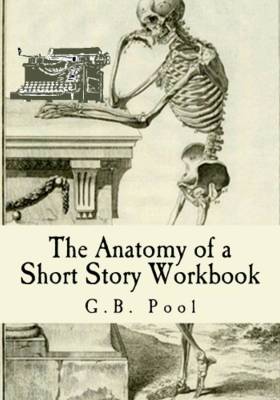
Let me add one more little tidbit. Several years ago I published The Anatomy of a Short Story Workbook. It was to accompany a class I taught by the same name. It is a quick reference to writers as to how to get those few chosen words on a page in a short story as well as a novel, screenplay, or even an article you might be writing. As a member of The Writers-in-Residence group, I have also written many blogs on the art of writing. Many times I just expanded on the points I made in the Anatomy book. Recently I compiled those many blogs into a new book: So You Want to be a Writer. It gives some history to my own career and some expanded thoughts on writing. You might find it helpful in your writing journey.

So You Want to be a Writer Amazon cover 2  anatomy-book-cover

Clothes Make the Character

By guest author,  Sally Carpenter

If you saw a stranger walking down the street, what can you tell from her clothes? Sherlock Holmes could determine the social standing, wealth, occupation, education and gender of persons by their clothes.

Authors use to spend much time in describing their characters’ garments, sometimes to a fault. Without TV or film, writers felt they needed many words to help readers depict the characters in their minds.

In the story “A Scandal in Bohemia,” Arthur Conan Doyle writes: “His dress was rich with a richness which would, in England, be looked upon as akin to bad taste. Heavy bands of astrakhan were slashed across the sleeves and fronts of his double-breasted coat, while the deep blue cloak which was thrown over his shoulders was lined with flame-colored silk and secured at the neck with a brooch which consisted of a single flaming beryl. Boots which extended halfway up to his calves, and which were trimmed at the tops with rich brown fur, completed the impression of barbaric opulence . . .” Sensory overload!

Nowadays writers limit their characters’ physical description, because readers often skip over lengthy sketches to get to the action, and also to encouraging readers to imagine their own selves in the story.

Nancy Ddrew 2The only physical description we have of Nancy Drew is her “titian hair” and “blue eyes.” However, we hear a lot about her chic wardrobe and apparently endless clothes closet. Beyond her stylish threads, Nancy often dresses in costumes and old garments found in attic trunks. When the books were originally released in the 1930s, low-income readers could imagine  wearing Nancy’s pretty outfits for themselves.

Cozy mysteries continue the trend of “less is more.” Clothes are mentioned briefly, if at all. With the modern heroine’s casual lifestyle, her wardrobe consists of tee-shirts, sweats and jeans. Readers want a quick and easy read without wading through mounds of description.

But when I started writing my Psychedelic Spy retro-cozy series, clothing was crucial.

Flower_Power_Fatality_jpg (1) (1)The books are set in 1967, an era of vibrant and varied clothes. Poodle skirts and bobby socks gave way to miniskirts and pillbox hats. East Indian garments were in style. The “British invasion” of roc


k music also brought English designers such as Mary Quant. African Americans adopted styles that expressed their ethnicity. The hippies had their own unique forms of dress.

Clothing of the 1960s differs so much from today’s styles that I had to describe nearly everything that people wore. I tried to keep such explanations to a minimum, yet the clothes were essential to place the reader into the era.

My protagonist, Noelle McNabb, is single and 25 years old. She apparently spends most of her income on clothes. In the first book, “Flower Power Fatality,” Noelle wears 14 different outfits! And her clothes are new, many purchased at the big city mall. She talks about how she loves shopping and checking out the latest fashions.

In finding clothes for Noelle, I’ve used a few costumes that I’ve seen in 1960s TV shows. I also have a great reference book, “Fashionable Clothing from the Sears catalogs: Mid 1960s.” The book has actual photos (and prices) from the era’s Sears mail order catalogs. I’d love to see those clothes come back into style, as they’re more beautiful and feminine than the women’s tee-shirts and leggings sold today.

Clothes also express the generation gap. When Noelle wears a miniskirt to church, her mother complains that the dress is too short. Mom is clad old, fussy dresses with below-the-knee skirts. Mom wears stockings and garter belts; Noelle is in pantyhose and colored tights.

In the 1960s, women wore dresses more frequently than today. I put Noelle in dresses most of the time. Even when she wears pants at her record store job, she’s in nice slacks and pant suits. The only time she’s in dungarees is when lounging around home.

Jeans are reserved for my “bad boy” characters, a group of young males who spend their time racing their choppers, shooting craps and smoking Marlboro cigarettes. In the mid 1960s denim was only slowing becoming acceptable as a fashion choice.

afro in orangeDestiny King is an African American agent who takes Noelle on her spy missions. Destiny sports a trimmed Afro and frequently wears jumpsuits. Her clothes are functional in more ways than one way. For example, she has a pair of earrings that are really plastic explosives.

My hippie couple, Rambler and Moonbaby, are the most fun to cloth. Hippies wore an eclectic style, often put together from castaways and thrift store finds. Styles, patterns and colors did not need to match. One useful reference book is “The Hippie Handbook” by Chelsea Cain, which has a chapter on “How to Dress Like a Hippie” and information on making skirts out of old jeans and how to tie-dye a shirt.

Trevor Spellman is a newspaper reporter on the prowl for a big scoop. He rebels against the small-town norms by wearing his hair long—below his ears—and he never puts on a tie. In the 1960s the collarless shirt became appropriate for formal/dress wear.

The clothing of Mr. Baldwin, the audio-visual technician at the high school, describes him well: white shirts, skinny dark ties, dark pants, plastic-rim glasses and a “dorky haircut.” Did “geek” and “nerd” pop into your head?

What the retired Army colonel wears also paints a picture. He’s in an Army bomber jacket over a khaki shirt. “His voice was as crisp and sharp as the creases pressed into his khaki pants.” Even in retirement he runs his life with military precision.

Clothes can describe a character more efficiently than a long list of traits, helping a reader to visualize a person more so that relying on the reader’s imagination alone.

###


NEW Carpenter photoSally Carpenter is native Hoosier living in southern California.  She has a master’s degree in theater, a Master of Divinity and a black belt in tae kwon do.

Her Sandy Fairfax Teen Idol books are: The Baffled Beatlemaniac Caper (2012 Eureka! Award finalist), The Sinister Sitcom Caper, The Cunning Cruise Ship Caper and The Quirky Quiz Show Caper.

Her Psychedelic Spy series has Flower Power Fatality and the upcoming Hippie Haven Homicide (2020).  Sally has stories in three anthologies and a chapter in the group mystery Chasing the Codex.

She’s a member of Sisters in Crime/Los Angeles. Reach her her at Facebook or  http://sandyfairfaxauthor.com or scwriter@earthlink.net.


This article was posted for Sally Carpenter by Jackie Houchin