
That is where I am right now.
Oh, sure, I’m writing every day: checks to pay bills, answers to emails and texts, posts on Facebook and Instagram, birthday cards to put in the mail that day, a grocery list, a “to do” list, a note to Hubby about an errand I need to do and when I’ll be back.
But creative writing? Um, no. Unless you count a quick book review I pound out in fifteen minutes, knowing that unless I do it today, it will be late, and then I’ll feel awful. Too bad I only skimmed the last two chapters… but you don’t mention how books end anyway, do you? And then I still felt awful, because I’ve always determined to finish a book – every word – before writing a review. Boo-hoo.
Oh, I do write curriculum for my third (used to be fourth) to sixth grade class* at church every week. That can be fun. The delivery can be somewhat creative, but not the text of course. It’s the Bible, after all.
In one point in last week’s lesson I was teaching how that precious Word of God is called “the sword of the Spirit” in the Bible. “Sharper than any two-edged sword, able to discern the thoughts and intents of the heart.” I’d been teaching them the first sermon preached by Peter, the fisherman-turned-apostle, when I came to its conclusion. (It’s a doozy!) I pictured a duel between forces of good and evil, raised my imaginary sword and did a bit of fencing (pantomime, of course), ending up with my opponent on the floor, my sword tip on his chest. The phrase “coup de grace” came to my mind, and still holding my imaginary position with opponent pinned down, explained the French phrase. “The final blow,” I said, looking at the fifteen kids slowly. “The thrust that pierces the heart,” I said. And then I jabbed my sword right to the floor… holding for a few seconds before looking up. Then I jerked it free, held it high, then slipped it into my imaginary sheath at my left hip.
There was quietness for a few seconds, then I had the kids read verse 37 of Acts chapter 2, which was the response of the crowd to the strong finish of Peter’s sermon. It reads, “Now when they heard this, they were cut to the heart, and said to Peter and the rest, ‘Brothers, what shall we do?'” Peter’s inspired use of Scripture had brought instant conviction.
But that was “creative” thinking and teaching, not writing. So what do you do when your ink well is dry?
- Read in the genre you want to write. Read for pleasure (maybe even some old favorites). Read those authors who inspire you. Read, read, read.
- Go online to the sites that list daily (a month at a time) story prompts or story ideas. Here’s one I sometimes use. (Click farther on the site for other ideas.) https://mailchi.mp/writerswrite/daily-writing-links-29-september-2020?e=befa474c79
- Start (or start up again) a daily or weekly journal. I have to admit that when we returned from our (fantastic) cruise and a week later faced the monster that became Covid-19, I quit journaling. (Crazy huh? What a “ripe” season of lockdowns, scary bar graphs, no one working, everything closed, ghost freeways, that I could have used in stories. Sigh!) Well, it’s not too late. Maybe begin with a “to do” list, and comment on your doings and feelings during that day. Or… you choose.
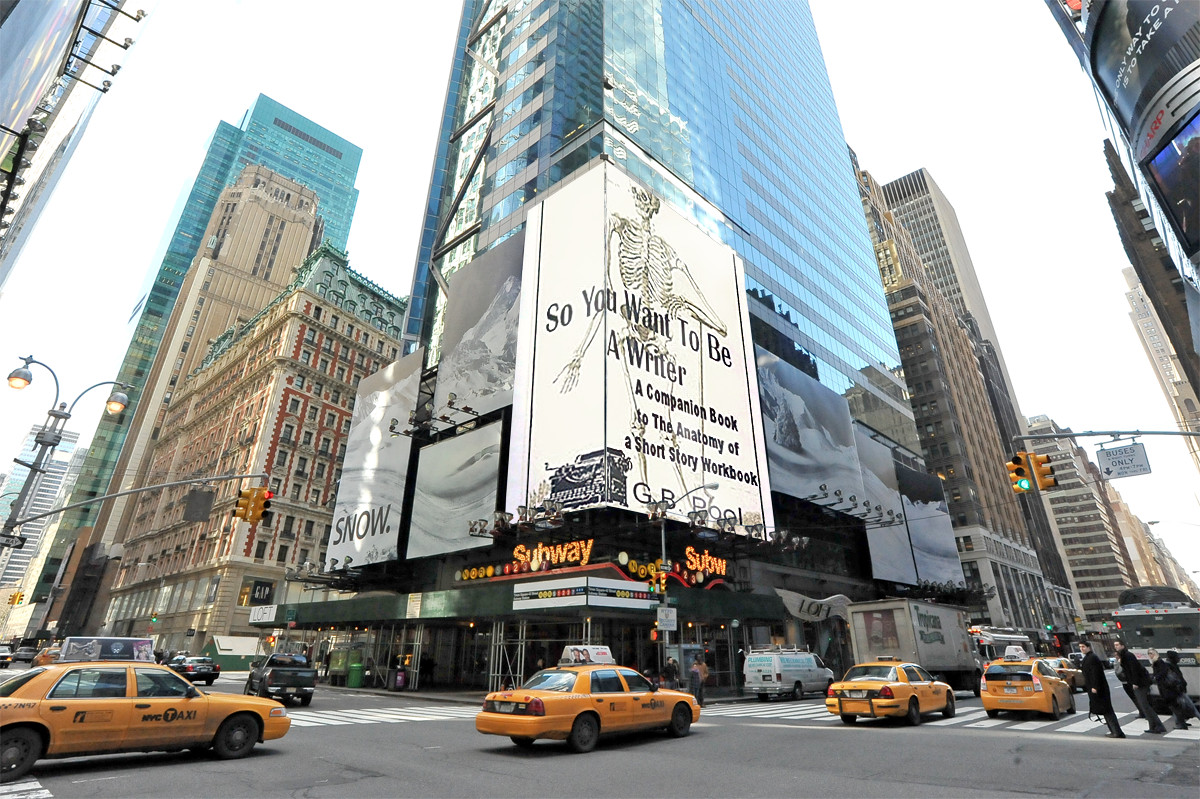
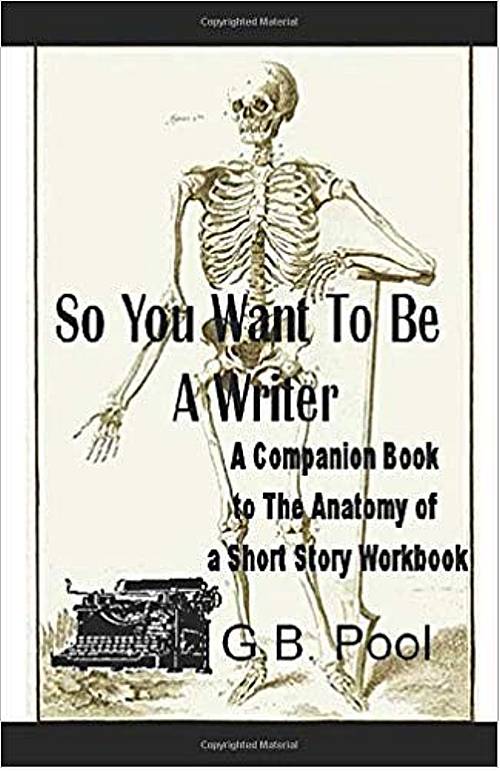
- Study books by writers that give instruction. A few weeks ago we had Sara Rosett as a guest blogger. She wrote about she used lots of things for Research in her historical mysteries. But she also mentioned a couple “How To ” books she has written. “How To Outline A Cozy Mystery” and “How to Write a Series.” Both are easily found on Amazon. (I recently bought them both and am eager to dig in, for at least a chapter a day.) Look for books on short story writing by our own The Writers In Residence, G. B. Pool.
- Take note of those weird dreams. Hey, maybe your creative muse is locked down inside your head, and wants to safely, with some social distancing via dreams, give your mind some help.
- Look at a calendar. Upcoming holidays are always good for getting the juices or muses working. Think back to fond memories. Think forward with some Sci-Fi or Fantasy weirdness. Let the seasons inspire.
Do whatever it takes, even acting out some scenes from your favorite book in front of your spouse, dog or cat, or the mirror. The movements, actions, even words may lead to some nice black… or maybe purple… INK in your writing well.
###
*I used to teach a class of 4th to 6th graders, but now that all must wear a face covering in class, I have inherited the 3rd graders as well. (They used to be together with 1st and 2nd grade.) According to the “order,” all students in 3rd grade and up must wear masks etc. Second grade and below do not have to. The Children’s Ministry leader felt it would be hard on some in a class that have to wear them while others didn’t. But, on the fun side, I’ve discovered that those third graders are pretty sharp too and I only need a little tweaking of the lesson that I prepare for the older kids. (PS: I wear a face shield, so the kids can see me better.)


 People used World War II, the Vietnam War, the Depression, -insert disaster here-, in their work. The memorable stories didn’t dwell on the event itself per se. They used it as a backdrop and then showed how their characters’ personalities dealt with the event.
 As for myself showing up in the books I write, a little of me is here, a little is there, but I actually like to have my characters be themselves. I might like them because we are compatible, but not identical twins. And I definitely don’t want us to be Siamese twins joined forever, never having a life of our own. That wouldn’t be fair to my characters, after all, they are like one’s own children in a way. You might want to instill some values in them, but you really have to let them be themselves. Think of your friends, you like them because you have something in common, but if you try to change them, I bet you won’t have them as friends anymore.

 USA Today bestselling author Sara Rosett writes lighthearted mysteries for readers who enjoy atmospheric settings, fun characters, and puzzling whodunits. She loves reading Golden Age mysteries, watching Jane Austen adaptions, and travel. Publishers Weekly called Sara’s books “enchanting,” “well-executed,” and “sparkling.”


 It certainly gave me time to sort out a lot of Woman’s Club files, paperwork and organization. That makes it easier for me to delegate and hand over the reigns, so I can focus full-time on my writing once more.
 But after weeks of world-wide shut-downs and no travel permitted, I also saw how small some of our lives had become. Often out of fear. When we do something out of fear – we cease to think rationally, boldly. Our courage leaves us. Some never get it back, especially as we get older.
 In my former writer-life I spent many solitary hours writing. I was oblivious of the world around me. I forgot to eat. Not good when you had a husband hoping for dinner, after returning from a long day’s work! But Rick was very patient and sometimes cooked for us, and a plate of food would appear in front of me, on top of my typed pages. “You haven’t eaten in hours. You’ve GOT to eat…” he would grin and return to listening to his music through headphones, so as not to disturb me. But I loved what I was doing. He knew that, so he was happy.
 So I am becoming a happy writer, once more. I’ll be even happier once we’re allowed to travel, too. Even if I’m not going anywhere, at least I like to know that I could if I wanted to. I’m a dreamer, too.


 I’m sharing today two short blog writing-trails I’ve been down recently. As always, my hope is there’s something in my meanderings that might send you down helpful writing paths of your own.
 Knowing what I know about my myself and where I am writing-wise——answering Paul’s question, I did arrive at being a Movie/TV Show Producer and/or Director (admittedly based only on outsider-knowledge of the professions). I do love movies and TV, and in my mind, producers and directors do all the great things in putting together a compelling story, like picking the setting, lighting, color pallet, sequence of scenes, casting…
 I should backtrack a bit, and point out my prevailing approach and perspective on writing comes from reading. And especially from the golden age. Updated by P.D. James, of course! So, adding radio and movie profession perspectives, though it may be obvious to some, was not such a straight line for me.
 My second Little thing–is weighing egoism, good sense, advice taking, and the shortness of life. Items/thoughts which are a continuing balancing act for me–especially during the editing process.
 Definitely interested in hearing your thoughts on Paul’s question(which I’m still thinking about), and what “perspectives” you might be using for your writing reviews. And here’s hoping, my ziggy/zaggy comments will help you make your next work

 Thank you, Jackie! I’m a native of California, I was born and raised in the Pasadena area. My husband and I still live here, although we have talked about living elsewhere that is less expensive. I have two adult sons and two adorable granddaughters. We live in a condominium with two precious pups, Minnie, a mellow Maltese, and Mandy, a very precocious Terrier mix. They keep us on our toes and give us hours of unconditional love and fun!
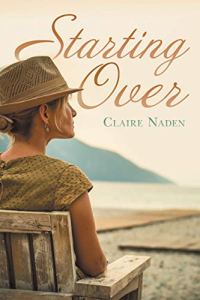 Cache Under the Stacks was published in August 2018, and Starting Over was published December 2019. Both books I “pantsed,” but now I am trying to outline and it is not as easy for me. I’m working on a sequel to Cache Under the Stacks and a sequel to Starting Over, a woman’s fiction that has evolved into a bit of a mystery.
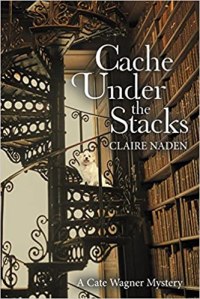 BOOK REVIEW: Cynthia (pen-name Claire Naden) published Cache Under the Stacks, A Cate Wagner Mystery, two years ago, and I have just found and read it. It’s a story about a divorced, empty-nester bookstore owner, living alone in a nice neighborhood with her sweet pup, Minnie.
 As you learn new skills, like doing a TV interview, let people know about it on your website. Polish old skills. (You can always improve.) You should have learned a hundred great writing techniques and mistakes to avoid in that writing group you joined. (We can all learn from other’s mistakes as well as our own.)


You must be logged in to post a comment.