We are a group of published writers who come here weekly to entertain, inform, and encourage you in your writing and your reading journey. Grab a cup of coffee, get comfortable, and join us.
By the time you read this, the manuscript for my fourth A Petal In the Wind novel will be back from the editor and ready for its final draft before publication. Prior to sending it out, I made several passes through it, each time searching for ways to fix or improve the work.
In my first pass I searched for everything from formatting issues to misspelled words. In light of recent events I found parts of the story, which I’d begun writing in 2017, had become dated. I couldn’t gloss over a worldwide pandemic and the social rifts that emerged from political discord. Several new characters who were introduced in chapters written years before the book’s conclusion sounded too generic; I’d gotten to know them better as the story progressed and that needed to be reflected in their earlier dialog and mannerisms.
Other passes looked for repetition, excess verbiage, more precise word choices, missed misspellings, lapses in logic, and incorrect information. With that complete, I sent out my manuscript, anticipating a few more changes would be needed once I heard back from my editor. I took advantage of the wait time to put together all the additional material needed – logline, book blurb and synopsis.
Whenever I have to write marketing stuff, I cringe. It’s not what like to do, or do well. I view it as a necessary evil, and many authors I know feel the same way. However it must be done, and the good news: I’ve found an advantage to it beyond promoting the book.
When you have to encapsulate your x-hundred page novel into a one page summary, then a teaser for the back cover, and finally a one-sentence logline, it forces you to look at your theme in a different way. Gone are the long passages of prose, the snappy dialogue, the transitional scenes and flashbacks. You must have a laser focus on what your story is about – what you’re trying to get across to the reader in terms of theme, character, and plot. By doing so you sometimes will see aspects of the story that are important but may not have been shown in a compelling or complete way. So beyond my editor’s input, I saw that I wasn’t done with my revising.
I came to that conclusion when I encapsulated a 106,500 book into a few paragraphs with just a hint of where the story will eventually wind up. I had my external conflict and internal struggle, and pointed that out in my blurb. Then I wrote my logline:
Amidst the social and political upheaval in the aftermath of WWI, a woman who identifies as an artist marries the love of her life, but chafes at being relegated to wife and mother.
We can understand the difficulties a woman would face in giving up her career to marry and have children, especially at a time when such notions weren’t as accepted as they are today. But had I adequately shown how she feels in the book? Could I have made it not only clearer, but on a much deeper level?
The logline hints at the deeper issue. What she rails against is not being married to the man she loves, or even the challenges of motherhood. It’s losing her identity, having to see herself as only a reflection of her husband and children. When Jane marries John Doe, she becomes Mrs. John Doe. Her baby’s mama. She’d wonder—what happened to Jane?
My character Lala is a woman who’s accomplished a great deal despite her youth. She not survived the trauma and hardships of WWI and kept her family alive, but her home town as well. It’s described as a factory town north of Prague throughout the series. In America we’d call it a company town, where a single business – in this case a furniture factory – provides the economic base of the area. Circumstances force her to take charge of the factory and oversee its conversion to wartime production. If it had closed, which it nearly did, the town would have been devastated. How can someone like this ignore all she achieved, the skills she developed, the talent that resides within her?
When the manuscript returns from the editor, I will review the comments and make some changes, including a few of my own – adding more layers of my character’s internal dilemma to the story. Then I’ll probably rework my promotional material. A writer’s work is never done…that is, until it goes to the publisher.
Miko Johnston, a founding member of The Writers In Residence, is the author of the historical fiction saga A PETAL IN THE WIND, as well as a contributor to anthologies, including “LAst Exit to Murder” and the soon-to-be-released “Whidbey Landmarks”. The fourth book in her series is scheduled to be published later this year. Miko lives in Washington (the big one) with her rocket scientist husband. Contact her at mikojohnstonauthor@gmail.com
Escapism through scenery and characters is what I love about reading fiction! And because of that I’ve often shared here on Writers in Residence my meandering and self-centric thoughts on both aspects—scenery and characters from a writing perspective. And in this post, I’m visiting both again—conjointly— as they are both affecting my writing adventure right now. For sure, I was completely surprised by Parnell Chatterman. A new hero and series I hope to start this year. (Big deal for me—a one at a time kind of writer.)I’m guessing part of my interest and surprise stems from a 2021 malaise that grabbed hold of me writing-wise all last year. So I certainly didn’t expect a new and concurrent series popping up!
In the past, my one at a time few books have been inspired and happened in the various places I lived at the time. I.e, Uncle Si’s secret, my first was written when I lived in North Bend, WA. From there, the next was around Ridgecrest, CA, and from there to the Mojave and fictional Newtown and Shiné. All real and inspiring places for me, and the last, nonexistent Shiné in particular, has become very real. And I’m thinking, the people in Shiné too? Hence the surprise—out of Shiné the place and it’s inhabitants, I’m starting a new series (only a few pages written) based on an “inhabitant” of Shiné. I honestly hadn’t realized how real Shiné had become for me. Real enough to become further fiction?
The distinction (and irony) I’m making and pointing out may not be obvious…so I’ll try to explain a little further. I walk my dog(s) every morning. It’s early, and I’m out in open desert (Shiné land!) But in the far distance I can barely see trucks moving along I-15. Sometimes my imagination wanders off to what the drivers might be thinking, their back stories, and of course, how they would fit in a murder mystery. For me, scenery and setting inspiring fiction. (one such driver has a “walk on” in my current WIP.)
But Parnell Chatterman’s existence came out of place already in existence. (I know, I know, Shiné doesn’t really exist), but it is very real in this writer’s mind. The Mojave location, Shiné’s layout, the inhabitants—combined and somehow gave life to a new character with a series of his own!
So what is the take away from what I’m experiencing that might inspire writing friends, and also may be interesting to readers as to where all this writing stuff comes from? I think the nugget is to try to make your setting and characters so enticing, that consequently, a place someone might want to live in or visit in reality— and for the writers reading this, a whole new series may arise? Maybe there’s a character you really like in a current book that you want to bring to the stage? Or, on the other improvement side, maybe your current-book’s world isn’t enticingly-real enough to “create” new fiction. And the question would be do you want to change that?
And, the additional point —that for me and maybe some others of you—this writing journey is sooo full of surprises, and the importance of keeping our minds open to those surprises. Let them in!
Having reread this—I’m thinking my thoughts here might be either helpful—or maybe just come across as idiotic twaddle. Either way though, hoping my meanderings will re-emphasize how important setting and characters are. Parnell Chatterman certainly thinks so!(smile) I better get writing… And reading. Have Death of a Green-Eyed Monster by M.C. Beaton with R.W. Green waiting for me, and Hamish Macbeth and the Scottish Highlands are a setting and characters I love visiting! Lochdubh and Hamish are real, aren’t they?
Not all mysteries require vast amounts of page-turning events to keep the story moving along. If the main characters are interesting, intriguing, fun, clever… you know what I mean, the reader will keep reading to the end. There should be some drama and a little danger for the hero or heroine to overcome, but it can be parceled out gently. Cozy mysteries work in that manner and have done very well for the past hundred years.
Private detective stories and police procedural might have a few more cliff-hangers at the end of every chapter, but they usually deal with more technical aspects of tracking down the bad guy rather than discussing the situation over a cup of tea in a cozy novel. Those gals in the cozies always get their man or woman, so their way works, too. But professionals do have access to information not available to Miss Marple in the Agatha Christie novels or Jessica Fletcher in all those Murder She Wrote TV shows. I’ve seen them all many, many times and loved every one.
We all know the Three-Act Structure of writing. Act One introduces the main characters and a problem. Act Two has the hero assembling his resources and trying to understand what’s really going on while the bad guy is setting more traps for our hero. Act Three has that do-or-die moment when the hero asks himself if he can handle the job, then he calls up all his resources and goes to battle the villain in the last chapter.
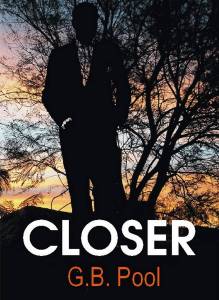
But how do writers construct those “page-turner” events at the end of every chapter? Here are some of those moments in my stand-alone novel Closer. I recently reread the book and was surprised how many of these little hints were strategically placed throughout the story, some even within the chapter and not necessarily at the end of one. And something else I noticed, sometimes my main character would have a thought she posed on the page. Sometimes it was another character thinking to themselves about things that were happening. Those are good ways to let the reader know what those characters are reacting to or plotting, after all, they are moving the story along with those thoughts. They let the reader know there are things that have to be discovered.
But several times the third-person teller of the story (the author) throws in a thought or two himself. These are shared between the reader and the writer. It’s up to the characters in the book to not only ask the questions himself, but discover the answers in order to solve the puzzle. Closer has numerous hints, thoughts, and questions posed by the characters as well as the writer. Here are a few from the beginning of the book:
As she turned off the car’s engine, Shelby noticed her tank was nearly empty. She thought she had nearly a full tank. As one of the two lieutenants with the Santa Isabel Police Department and one of the two officers who had to be on call for anything that happened in town because the higher-ups always managed to find an excuse not to show up, she always kept a full tank just in case something important did happen.
She was surprised she hadn’t noticed the low gas gauge when she drove home the evening before. But then, she hadn’t noticed the sedan sitting on the street opposite the police station either. It was an unremarkable vehicle, gray and nondescript, invisible in weather like this. Since the weather made the roads slippery, she spent more time trying not to hydroplane into parked cars along the street rather than notice somebody watching her.
Or how about this part?
Harry wasn’t good at small talk. The cop in him had to either ask questions or formulate an hypothesis. He came right to the point after several miles down that dark country road.
“Maybe the shooter was aiming at me.”
“What makes you think that?” she asked.
“I’m up here from Los Angeles. I knew the poor woman who got shot. Maybe the killer wanted to get rid of anybody who might recognize him.”
Shelby studied Harry’s face. His eyes never left the road. He was taking this pretty well, considering the ramifications. And here she had thought the shooter might have been after her since this was her turf. Now they could share the worry, if that made it easier. But two dead people wasn’t good no matter what, and she didn’t want any more additions to the body count.
“I’ll put out some feelers back in L.A.,” added Harry, “to see if anybody was interested in the fact I was sent up here to investigate the commander’s wife’s death.”
“Do you think somebody down in LA would want Mrs. Wright dead?” Shelby tossed that one out as another hypothesis.
He turned and looked at her this time. Something about her question made him think of other possibilities. She could tell there was something on his mind, but he wasn’t ready to share that bit of information. Instead, he answered her with, “I’ll think about that one. Let me change the subject for a while. Let our brains relax. You worked in Los Angeles. What was it like for you?”
Now it was her turn to avoid the subject. She gazed out the window and then spoke. “I guess I’m better in a small town. Too much happens in the big, bad city that you don’t see coming.”
“Tell me about it.” His voice was calming. He sounded truly interested in her response, but she wasn’t quite ready to open up.
“Nothing to tell,” she said back to him. Her words clipped. Then she added in a friendlier tone, “Didn’t get along with a few of my fellow officers in L.A., so I asked for a transfer. Best thing all around.”
Harry gave her another look. “If you ever want to talk about it, I’m a good listener.”
She breathed a small sigh. She dodged that bullet. Maybe some other time the two would open up. Not today. “How about you tell me why you decided to transfer to LAPD.” She turned slightly in her seat and watched him drive. “L.A.’s bigger and hairier and the publicity can be brutal.”
“You got that right,” he admitted. “As for me, the drug busts up in the Foothills had started to clean out that cesspool. I worked on a few of those babies. A couple of my cases took me out of the country when I was after a drug dealer wanted by several countries. All I could do was gather evidence and hand it over to the local constabulary and then hope we had extradition privileges with that country.”
“We’ve had the same problem up here with major art thefts. If the fugitive heads to some countries in Africa, we’re screwed unless we can hogtie them, stuff them in a trunk, and spirit them out of the country.”
“Would you do that?” He took another glance in her direction.
She thought about her answer for a second. “Maybe. It depends on what painting he stole and from whom.” She said that with a slight chuckle in her voice. “But don’t quote me. How about you?”
“I always wonder what someone would do if the circumstances were right.”
“It would take mighty big circumstances for me to go too far out of bounds.”
“What if someone you cared about did something totally wrong? Would you lie for them?”
“Sometimes you don’t really know people.” She turned away from him and gazed out into the dark. “They can disappoint you,” she said this mostly to her reflection in the window as she watched the black trees crowd that section of highway.
Harry didn’t look over at her this time. The road was not lighted and the curves were too sharp to take his eyes away, but he did hear her. Now he had more to think about.
He dropped her off at the station. He said he had a lot of phone calls to make and that he would get together with her for dinner the next evening. She waved as he drove away. Her thoughts were on the case as well as on the guy from L.A. There was something about him that grabbed her attention.
A few paragraphs more and we have this…
She opened her car door and saw her sunglasses hanging over the steering wheel.
“Rats,” she said out loud. She needed gas. That’s when she remembered it was odd that she had run out of “petrol.” She never ran out of gas.
She grabbed the flashlight from the shelf under the dashboard and aimed it under her car. No sign of a leak. This older model vehicle didn’t have all the new fangled bells and whistles that opened and locked the doors with an electronic device. Even a third-rate carjacker could get into her car with little effort, but everybody in town knew who owned the boxy beauty, so stealing it wouldn’t get them very far. And if anybody wanted to siphon gas, all they had to do was undo the gas cap.
She thought about who in town might pull a stunt like that as she drove to the nearest gas station and filled up. She also thought she’d find a mechanic who could put a lock on the gas cap.
She thought that would be her only concern except for that body on the pier and poor Earl Riley, but that wasn’t the half of it.
More questions for Shelby to get answers to. But they are trying to solve a murder, so the young officer working with Shelby is out with Harry Davenport’s young officer sidekick, Frances Lynton, and getting some information and some questions, too.
“How long have you worked with Davenport?” Not that he wanted to know, but maybe she would finally run out of “Harry the Magnificent” stories.
“Ever since he came back to L.A. He actually asked for me as a partner.” Her eyes widened like a kid on Christmas morning. “He interviewed almost everybody in the division, but he liked me best. I’d do anything for him.”
“My boss is like that, too, but sometimes she goes places I don’t want to go.”
“I know what you mean. Harry was checking on your boss—”
“He what?”
Afraid she said too much, Frances went into damage control mode. She reached over and took Marcus’s hand and then gave him a smile that aroused his libido. “He wanted to make sure you guys put the best person on the case. The death of his boss’s wife meant a lot to Harry. He had to make sure Shelby was up to the job. The fact he spends so much time with her, says he trusts her.”
And remember, you can always begin a chapter with a page-turner…
CHAPTER 7
_________________________
The next day was a game changer on more than one level. It was around eight o’clock in the morning when the team met in the larger conference room where they had set up a whiteboard for notes and a long table with the evidence from the crime scene laid out. Other than the flashlight, the old map, the passports, and those now wilted flowers and fern, there wasn’t any new tangible, solid evidence. But there are different kinds of evidence.
Or what about when our police detective is checking on a vehicle that was driven by the now dead wife of the high-ranking police officer in Los Angeles and Shelby wonders if the car rental place rented a particular vehicle that nearly ran her off the road a few days earlier.
“Did you rent a big gray Volvo a few days ago? Maybe one that came back with a ding on the front bumper?”
“Yeah. I worked on the repair job the day it happened. Only needed a little tapping with a rubber mallet to straighten her out. I can do those in my sleep.”
“You probably clean them up pretty thoroughly when they’re returned, right?”
“You bet. I get that job, too. Why?”
“Fingerprints. Can you tell me who rented it?”
He gave her a questioning look and then said, “Sure.”
Back inside the office, Kirby looked up the vehicle and found the information.
“Frances Lynton. If I remember right, I think she’s a cop,” said the young man.
Frances Lynton is Harry’s sidekick…
Here is Shelby’s thought on the matter.
The drive back to the station gave her time to think. From what Marcus had told her, Shelby knew Frances had a thing about her boss, but trying to run them off the road because she might be jealous was a bit extreme. Or was there something else driving that woman?
So now we have tension from another cause… Jealousy, perhaps? Some new truths are going to be revealed from Harry, Shelby, and Frances. But there are more players in this story and their connection to the dead body found at the dock in this small town is revealed one layer at a time.
I use the word “layer” because it’s the old “peel the onion” method of writing a page-turner one layer or revelation at a time. Set up a question or drop a hint early on and then answer it or expose a truth later to make sure your reader stays happy. Just remember to answer those questions somewhere before the end of the story. You never want to disappoint your readers. You want them to come back for more. Write On!
It’s fun, isn’t it, to start a new year? We rush in, brimming with scintillating ideas – relieved to see the back of last year, when all did not go according to plan. We had some wonderful memories, but – nah – let’s look forward.
I think we enjoyed this Holiday Season – Hanukah, Christmas, New Year festivities and the like – as a chance to take a deep breath, chill out and set our course on totally new horizons.
Speaking of ‘chilling out’ – I spent Christmas in England with my siblings. For the first time since we were teenagers! And the Kent countryside was so beautiful – like a winter wonderland painting. But it was freezing cold! For me, anyway. Used to California temperatures, it was a shock to my system, since I’d not been there in December for decades. London (where I stay with my brother, Ted) was not much better – only fractionally warmer. I was wrapped up in a long, quilted coat over a leather jacket, a fleece jacket, sweaters, vests (!), thermal underwear including long-johns. I wore gloves, a huge warm scarf, woolly hat and – the best bit: faux-fur earmuffs. The obligatory face mask actually helped keep my face warm!
So my brothers Ted and Phil, brother-in law Peter and sister Annie and I had a wonderful old-fashioned, cozy Christmas filled with lots of laughter over childhood memories. Christmas lights everywhere and hours ‘mucking in’ together in the kitchen, preparing endless delicious meals to fill tables groaning with food. It was especially meaningful, as Annie and Peter had moved into this spacious, welcoming house last March – in a truly delightful ‘Miss Marple’s style village – during the Covid lock-downs. So we gave the house a wonderful Christmas launch.
They had moved from a picturesque, 18th century cottage further out in the country, with 4 acres of fields with stables. With no horses, those stables became the repository for all sorts of boxes, trunks – and assorted exercise equipment.
One of those trunks was mine. With my roaming all over, from the moment I left school, before I settled in Hollywood, California, my Mum had saved my ‘stuff’ from my childhood bedroom, from my travels and beyond. And when Peter and Annie downsized for their house move – a whittled down version of my ‘stuff’ came with them. So, some of this Christmas was spent going through this large box of my life. I’d forgotten I’d saved all my old 9×12 inch diaries, filled with all my appointments, interviews and auditions from leaving school through my early acting and journalism years. There were letters from big-time film directors that I had naively written to, asking for an acting job! In those days they actually wrote back to me! Alfred Hitchcock, Fred Zinneman, Elia Kazan, Bryan Forbes, Carl Foreman, Delbert Mann and so on. Wow!
I found my old, long-forgotten scrapbooks, filled with pictures of sunny Hollywood, palm trees, movie studios. Photos of the movie stars I wanted to emulate – Audrey Hepburn, Olivia DeHavilland, Irene Dunne, Gene Tierney, Grace Kelly. And those gorgeous actors that made girls swoon – Tyrone Power, Clark Gable, James Stewart, Gregory Peck. Pictures and articles of them all – and how they had accomplished their dreams. And now I have that large box of diaries, letters, several scrapbooks, that Mum had watched over for me – and that my sister had stored for me.
Looking through this treasure trove of memories, I reconnected with that skinny little girl with pigtails and freckles who had Big Dreams. Dreams of living and working in Hollywood, after devouring all those black and white Ginger Rogers and Fred Astaire movies on the telly. Bette Davis, Greer Garson, Gene Kelly, Cary Grant. That was the world I wanted to inhabit. And so I did.
I remember, not long after I had made Hollywood my home, I was having coffee with Tony Hopkins (as you do!) at the luxurious Beverly Hills home he and his wife Jenny lived in. He was giving me a ‘pep talk’ about following my dreams. He said that before he became an actor, living and struggling through life in a small town in Wales, he had dreams of becoming an actor and living in America. So he kept some pictures cut from magazines of the life he aspired to. Including a beautiful home in a sunny American setting. Many years later he moved into this beautiful home, where we were sitting, and realized that it was the same house that he had kept a now dog-eared magazine picture of all these years.
It’s amazing the things we keep. Especially us writers. We hang on to notes, scribbles, pictures, photos, pages that pique our interest. And what a good thing that we do. For this is often where we glean our ideas and inspiration.
My first published writing in England and America, was about the Movie Stars I had interviewed. About the city of Hollywood and the Movie Studios. I wrote for magazines and newspapers – all about Hollywood. Especially the Golden Era of Hollywood. That led to my first published books on the history of Hollywood and Los Angeles. And it all started because I had kept cuttings, articles and pictures of the life I wanted to live – in Hollywood.
So now I have a whole new box of memories to plow through, that will inspire many more stories. Although now they will not only be about Hollywood, but inspired by all the other places I have visited on my journey here. With a murder or two woven into my stories along the way. Boy, am I glad I kept all that ‘stuff.’ Stuff that now feels like a goldmine to me.
Do other writers and readers out there keep ‘stuff’? Do you save articles, pictures, notes that have later inspired you to write something wonderful? Did you ever make those Vision Boards filled with inspiring words and pictures? And did anything ever come of them, I wonder? And what would your visions be now, today, for your future? Have you accomplished your childhood dreams? And have your earlier desires and ambitions changed? To what? I see another story emerging here….
I perceive my goals with my blog thinking and writing efforts–are to improve my own writing, while taking our readers along the trip with me—in case my issues and insights are more universal than just me. Said a different way, my sharing all this writing angst is hopefully to mirror what some writers are also feeling/thinking; and for readers, emphasize the fact it’s not just sitting down at the keyboard(smile, smile) and pounding out a book. At least not for me!
And most importantly in my thinking— is I want readers to gleefully jump full-steam into the story happenings, and want to be there. For the whole point—bottom line in my mind—is fiction writing and reading is to enjoy a chunk of time in our lives.
Writing and reading should be Fun. With a capital “F”!
Last year I focused on characters. This year I’m going back to scenery. I say back to, because much of my novice nattering was a lot about how important scenery and characters are. Well, I’m still of that mind, but hopefully I’m thinking and working on both on a deeper level. This year back to looking at scenery with more veteran eyes. Because “A-Number-1” for me as a reader, is escapism. Going somewhere that isn’t my house(more specifically, my couch!)
I write third person, omnipotent—all seeing and all knowing, ha, ha! Third person, can be omnipotent when it comes to viewing the world from the outside, or viewing through a characters perspective—knowing what he/she—actually what everyone—is thinking or doing. And that’s where the writing competence comes in—when and how to present the scenery my characters are acting in. With the key goal of sensory intake of the reader—bringing them into my story.
So today is “sensing” the scenery. And here’s what I’m thinking . My first “new thinking” inclination is the past is more easily able to be internalized by a reader if “told” by the characters themselves. Not through omniscient expose. More often than not, I’ve filled in past happenings as the omniscient storyteller. But, if a character was actually there, they should share their vision. We should see what they saw, not what the author thinks is a pretty or interesting picture…
An example off the top of my head—as narrator I might say about a past event, “It was a rough fight, hard punches thrown, blood drawn and splattered all over.” While a character would say/or think, “God, when I got smacked in the mouth, it really hurt against my teeth. I still remember the taste of my own blood…”
And if talking about scenery in the past in particular, I could say “it was a cool summer morning, and xxx remembered that first day it started. Indeed, her minds eye could once again see that sky as she looked up and from her books and saw such beautiful colors – as the sun rose…” OR xxx rubbed her eyes and looked up from the book she was reading, and the scratchiness she felt in her right-eye reminded her of a similar day two years previously—feeling the same ocular irritation, seeing almost identical colors on the horizon, experiences almost identical feelings of apprehension….” I’ll stop(smile) getting carried away.. The goal, I think, is to bring the past out of the background, into a current plot happenings.
So the take away, I think, even though you might be writing in third person, sensory recounting the past should be done when possible through a character’s eyes. This is going to be hard for me because I like past stuff to come out in the “mystery reveal.” Hmmm. And the combining this thought with sensory perception exposition. Hmmm. But using my thoughts from last year on characters, and how they sensed the past, is a good place to start I think..
Speaking of last year, on a personal note, so glad 2021 is in my rear view mirror. My thinking is probably psychological craziness on several levels, but for me, good riddance none the less… And hello 2022!
We here at The Writers-in-Residence wish you all a Very Happy New Year. We have an entire new year to do good things, get things done, and make each other happy along the way. Oh, if you’re a writer… WRITE ON!
All of us writers here on the WinR blog wish you a Very Merry Christmas. Enjoy this holiday, savor the moments, love your family and friends, and consider writing about not only this holiday, but the other ones you have celebrated. The memories are priceless and fleeting if you don’t write them down. And remember: We all have a story or two in each of us.
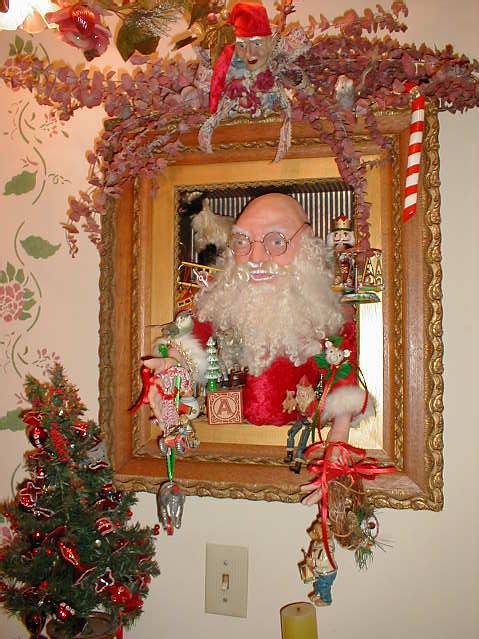
These pictures might get you in the mood to capture your precious moments.
OLYMPUS DIGITAL CAMERAOLYMPUS DIGITAL CAMERAOLYMPUS DIGITAL CAMERAOLYMPUS DIGITAL CAMERAOLYMPUS DIGITAL CAMERAOLYMPUS DIGITAL CAMERAOLYMPUS DIGITAL CAMERA
We here at The Writers-in-Residence are writers. Whether it’s a novel, short story, news article, play, movie script, or even a How-To book on writing, words are our life and love and sometimes our nemesis because it can be hard to get those words on the page when life gets in the way. But we have all had our work published and know how hard it is to get that done. Whether it’s more than fifty books in print like our Linda O. Johnston or a few books like some of us or newspaper articles like Jackie Houchin, we have gotten those words out.
I have taught writing classes and have spoken to numerous people in my daily life who wanted to write, but they didn’t know exactly how to go about it. I’m very sure they actually knew how to write. We all learned to do just that in the first grade, at least we learned how to get a few words down on that wide-lined paper way back in the Dark Ages before computers. I would ask these folks who wanted to be writers what had they written so far and over half said nothing. Not a chapter, an opening paragraph, an outline or even a concept. Nothing. They have a long way to go, but perhaps they are more interested in the “idea” of writing rather than have an idea of what to write.
I remember speaking with a nurse in a hospital lunchroom when Richard was ill. I had mentioned that I was a writer and she said she wanted to write. I told her that everybody had a story or two in them whether it was a fiction tale or the story of one’s own life. She started telling me some of her family’s stories. They were fascinating. This gal had a story in her that should be written even if only her family reads it, but the way she told those few tidbits, lots of people would enjoy reading about her life. I wished her well.
But talking doesn’t get those words on paper. Whether writing it in longhand like Ray Bradbury did with every single book he ever wrote including The Martian Chronicles and Fahrenheit 451 which he wrote with a pen, he got those stories written down. Don’t get mesmerized by the “idea” of writing, or the “fame” (that’s only if you sell a million copies the first week your book is in print), or the “money” you’ll make (authors usually get a small percentage of the cover price after the publisher and the distributor and the bookstore get their cut; sorry, that’s the reality unless you have sold that previous million copies). Don’t let that stop you from writing. Write.
Do you have a story you want to tell? After these past two years being basically isolated due to the flu that has kept most of us living in solitary confinement, you just might have something you were tossing around in your head or maybe even you got a chapter or two written or an outline dashed off so you wouldn’t forget the story line. I can tell you from personal experience, if you don’t write it down, you will definitely forget it. Dear Bonnie Schroeder, a fellow scribe, gave me a notepad that hangs up in the shower along with a pencil that allows one to write down that elusive idea that pops into your head while the hot water is calming you and you are free to let those creative juices flow. Write.
You can always run an idea past a friend to see how it sounds. If you belong to a writers’ group, you might toss the idea out during a meeting and see what the group thinks. They might have some suggestions to help you focus your story. If they shred your idea like a head of cabbage, perhaps join another group. I’m serious about this. Some groups aren’t there to help. But then again, you might get a good story out of the fact the group was all wrong because of the hidden agendas of the other members of said group. Hey, ideas are everywhere. Write.
Nevertheless, if you actually have an idea for a story, write that outline. Who are the characters in the story? Don’t have a cast of thousands. Readers won’t be able to follow Who’s on First. Next, where does the story take place? Location, location, location. They do that all the time in the movies. Where do you want your small cast of characters to be situated? You’ll get to describe the place. Don’t make it a travelogue, but make it interesting. Visual. Maybe even astonishing. The moon, a sinking ship, a haunted house. A jail cell. Write.
When your characters speak do they have something to say? Again, I’m serious. Make whatever they say part of the story. If their dialogue doesn’t add anything to the story, cut it. And make a character or two colorful in his or her speech. It adds to the flavor. Write.
Then of course you have to have a plot. Why are those interesting characters in that interesting place saying those interesting things? That is your story. You have had this idea running around in your head; what is it? You will realize (hopefully) that the story you are telling has a point to make. You might think that the story is the point. Ask Aristotle about that. Since he’s busy, let me say this: After someone reads your story and has gotten to know your characters and has visualized that intriguing setting and has listened to the witty dialogue your characters are saying while the story progresses, when the reader gets to the end of your story they need to be able to say, “Ah! That was a story about Man against Nature or Woman against Society or Man Struggling against Himself.” That’s the point of the story, not the plot.
Say you want to tell a story about Man against Himself. Now you have a goal to come up with a story that centers on that Theme. The man keeps setting up roadblocks to stop himself from doing something he really wants to do. You must construct that plot. You will define those roadblocks and his excuses to not do what he needs to do to fulfill himself, to reach his goal. You create the characters that both help and hinder him. You design a setting that either lulls him into complacency or he thinks is above his lot in life. And you write the dialogue that has him expressing his dreams and desires along with those who tell him can or can’t achieve his goal. And Voilà, you have that story. And you might actually realize that the stubborn character you are creating is really you and then get more of those words on the page.
We are finishing up one hell of a year, actually two. Soon a New Year will open up those dreams you have buried because you keep telling yourself you’ll write that story later. It is later. Write it. What do you want to say? Get those words on the page. Write it.
Have a Merry Christmas and a Happy New Year! Write on!
If you’re a writer, how do you decide what to write?
Often, it’s the kind of story you love to read: romance, mystery, paranormal, historical fiction, whatever. That makes sense.
Or maybe something you believe others will want to read, so it’ll sell well. But that’s not something totally predicable. So I go with what I enjoy.
With me, my preferences have changed over the years. Oh, I’ve always enjoyed romances, romantic suspense and mysteries. I’m not as much into historical stories as I used to be. Same regarding paranormal stories.
But you could probably tell what my favorite stuff was at any time of my life in the past many years by seeing what I’ve written!
My first published fiction was a short story in Ellery Queen’s Mystery Magazine, and I won the Robert L. Fish Award for first published short story! Yes, it was a mystery of sorts, a humorous one: “Different Drummers.”
My first published novels consisted of time travel romance, and most revolved around places or things I particularly liked. For example, one of them, Point in Time, took place in Pittsburgh, where I grew up. Another took place in Alaska, in the Klondike, and I’ve always loved visiting there: The Ballad of Jack O’Dair. And of course there’s Once a Cavalier, featuring my babies, Cavalier King Charles Spaniels.
I wrote other paranormal romances too, including Stranger on the Mountain, and the Alpha Force miniseries I created for Harlequin Nocturne, about a military unit of shapeshifters.
I loved paranormal romance! But notice that’s in the past tense. So is my focus on paranormal stories. I still read some, but I’m not writing any now.
I’d always enjoyed mysteries and romantic suspense. I still do—and that’s in the present tense!
That’s why I write them both: romantic suspense for Harlequin Romantic Suspense—and formerly for Harlequin Intrigue—and mysteries, over time, for multiple publishers including Berkley and Midnight Ink, and—upcoming!—Crooked Lane. Most of the mysteries, and as many romantic suspense as possible, include animals, especially dogs. I love to write about dogs. Why? Because I love dogs!.
So that’s how I decide what to write: again, what I love to read. But also what I most enjoy writing about.
How do other authors decide? Based on conversations with fellow writers, I gather they, too, mostly figure out something they enjoy, then pounce on it and pour out a story they love.
It’d be hard, after all, to write a story if you didn’t like its subject or genre.
Those writers who are reading this blog, I’d love to hear in comments where your ideas originate and how you decide to write about them. And how you enjoy writing about them!
Many of us get very reflective around this time of year, as we look forward to spending Thanksgiving with friends and loved ones. I love this American tradition. As a transplanted, naturalized American, over the years, I have spent this annual celebration in so many different places, with many different people. I’ve listened to memories of childhood Thanksgivings, of different family traditions across the nation, handed downfrom great grandparents to sons and daughters and then to their offspring, in due course.
Frankly, I envy these traditions. And I just love the importance of all the special family dishes that are served. The recipes handed down through the generations have their ownstories. And the simple custom, at so many tables, of each person sharing what they are thankful for. It’s a wonderful time when everything else stops for a while, and people from different generations, different religions and all walks of life get together to simply say “Thank you.”
After such a strange couple of years, I think many of us realize we have a lot to be thankful for. Maybe for things that we previously had taken for granted. Such as walking out in public bare-faced and exchanging smiles with strangers… an impulsive stop by your favorite family-run café – that is still in business. Or simply – hugs with friends.
As writers, we are more easily able to notice these little things that have come to mean so much. And as writers, we are especially fortunate that, whatever external restrictions the dastardly Covid plague inflicted on so many people, for us scribes, we could just keep on writing.
However, so often we get our story ideas from a chance remark in a casual conversation overheard – or eavesdropping (‘ear-wigging’ is the more colorful informal English term.) I would often make up my own version of the end of some snippet I’d heard and that would sometimes turn into a whole story.
But during these cloistered times, we’ve missed out on overhearing strangers’ conversations.
The Covid situation affected people differently. All around us, some were having meltdowns, dramas, or ‘wobblies’ – as in “She/he’s having a wobblie” – a charming current English phrase. Others found a strength and a fortitude they hadn’t realized they possessed. They found a new purpose, as they stepped into the fray to help the home-bound, the elderly living alone, or the children without an open school to attend. They volunteered wherever they were needed. Many new friendships were created. Everyday heroes emerged, as people found innovative and creative ways to handle the situations we all found ourselves thrust into – and along the way, found ways to improve other people’s lives.
For writers, fascinating tales appeared for our writing brain to feed on. People stories.
These interminable lock-downs have given many people the chance to write that novel they always felt they had in them – but never had the time to pursue. For the uninitiated, they had their first crack at completing that novel. For us old-timers, it was the opportunity to maybe write outside our normal field. (Did I tell you I have a quarter of a noir, dark and creepy contemporary novel done? Who knew I could write that?) And for writers at every level, the burgeoning self-publishing market has been a boon and a blessing.
I have discovered so many new writers from all over the world – especially when I can get the bargain price of a used book, I don’t feel so guilty if I don’t like it. Plus, I have a whole slew of new books to read on my Kindle.
I must confess that my own, personal reading, at the end of a long day wrestling with Woman’s Club administrative ‘stuff’ is more and more escapist. Often tales of a newly widowed or newly divorced woman who decides to start a new life on the other side of the world and open a bakery or her own winery. I’m re-reading my Rosamunde Pilcher favorites and re-discovering what a good, simple, nuanced writer she was. Her books are inspiring – usually about starting again, uncovering deep family secrets that lead to wonderful, happy endings. I like a happy ending. Especially these days.
I think I have a life of unfinished things…. That’s what it seems like to me at the moment. Some painting and fixing things around my apartment. Some sewing bits and pieces. But mostly unfinished novels and stories, which is a good thing, because I have started some new writing projects and my busy mind keeps thinking of more. Not so good because I haven’t had time to complete them. And the characters in my stories are still whispering, nay yelling, in my head to share them with the world…
But I’m thankful for every moment when I am able to write – and plan that “next year it will be different. Promise!” Hmm, I think I’ve said that a time or two before. But I really, really mean it this time!


 but it is very real in this writer’s mind. The Mojave location, Shiné’s layout, the inhabitants—combined and somehow gave life to a new character with a series of his own!
 Having reread this—I’m thinking my thoughts here might be either helpful—or maybe just come across as idiotic twaddle. Either way though, hoping my meanderings will re-emphasize how important setting and characters are. Parnell Chatterman certainly thinks so!(smile) I better get writing… And reading. Have Death of a Green-Eyed Monster by M.C. Beaton with R.W. Green waiting for me, and Hamish Macbeth and the Scottish Highlands are a setting and characters I love visiting! Lochdubh and Hamish are real, aren’t they?



 I found my old, long-forgotten scrapbooks, filled with pictures of sunny Hollywood, palm trees, movie studios. Photos of the movie stars I wanted to emulate – Audrey Hepburn, Olivia DeHavilland, Irene Dunne, Gene Tierney, Grace Kelly. And those gorgeous actors that made girls swoon – Tyrone Power, Clark Gable, James Stewart, Gregory Peck. Pictures and articles of them all – and how they had accomplished their dreams. And now I have that large box of diaries, letters, several scrapbooks, that Mum had watched over for me – and that my sister had stored for me.














 If you’re a writer, how do you decide what to write?


You must be logged in to post a comment.