
by Gayle Bartos-Pool

Sometimes the name of a character a writer uses just pops into their head. Other times they use the name of a friend or relative. There are also times when the writer changes the name they started with when they realize it doesn’t fit the character anymore. But how is that possible? The writer is just making up the name and the story.
Well, it’s like this…
When a writer is creating a story, they are creating a new world. It will be filled with things everyone will recognize or at least understand if the writer gives good descriptions. A space odyssey might be made-up, but there will be enough things explained so the reader can follow along. Hey, the people who wrote the Star Trek episodes imagined fantasy gadgets that were actually invented many years later by real scientists who used roughly the same concept and style for actual things we use today… “Scotty, beam me up!”
But character names can be tricky.
If one is writing a story that takes place a hundred years ago, names like Tiffany or Jaiden might not work. Watch an old movie and check out the names used. Or maybe read an old book. But something interesting is happening now in the first quarter of the 21st Century. Names from fifty to seventy-five years ago are making a comeback. This will probably mean that you can use any name for a contemporary story. But there still is the problem of fitting the name to the character.
In most cases you wouldn’t want the “heavy” in a cops and robber tale to have a cutesy name like Willy or Felix. They would more likely be the comic relief characters in another story. The same is true with the hero’s name. It would have to be something a bit stronger like Max or Duke. Remember, studio executives and a director changed Marion Morrison’s name to John Wayne to fit the type of characters he would be playing in the movies. And that’s a fact.
Female names have the same concerns. The female lead in a romantic story could be called April or Amber, not Bertha or Myrtle. Wilhemina could definitely be the name of the amateur sleuth in a cozy mystery. She could be a librarian or maybe an older sleuth like a Miss Marple.
Names can do as much to define a character as what he or she does within those pages. If you start off by introducing your main character with his or her name linked to a strong action, it will help the reader understand the part they are playing. But that is only if you want the reader to know who they really are from the start.
If, for some reason, you wanted to gradually introduce your hero, you could peel away certain aspects of your lead character by letting him show the reader those special qualities a little at a time, but that method is usually meant for the villain who starts off as just one of the boys or maybe some influential person in the plot, but who knew he was actually the bad guy? The hero will finally see the real person under all that finery and expose him.
As for the hero, usually the reader knows who he is from the beginning, but the hero might have to discover that truth about himself by peeling away his own fears and finding his own strength when push comes to shove at the end of the book. The reader will be rooting for him, but he has to do the work.
But establishing the name for that character will still take some planning. Now that we have access to the Internet, you can type in the name that you have cleverly come up with. It fits the parameters of your story. It isn’t too quirky or too cumbersome. But “what if” there is some famous person with the same name out there? Just about every name I have come up with has two or twenty-two people with the same name on the Internet. I have a rule: If it isn’t some current name in the news and I like it, I’ll go with it.
I seldom use the actual name of a friend in my stories. If I only use their first name, I’ll do that, but I have added little changes to their names just for fun. The reason I do this is because I do want my characters to have a life of their own. After all, my friends have their own lives. But it’s fun to use their first name for a character who makes a “special guest appearance.” I even used a version of my dad’s name in my spy novels. Dad dealt with spy planes and did some rather interesting things that are still classified, so calling my character “Ralph Barton” instead of “Ralph Bartos” worked. And dad got a kick out of it.

I probably do keep the names of my characters fairly simple. If they are all wildly intricate with too many syllables, the reader might get lost in the multi-syllabic confusion. And several odd names might confuse the reader as well. They might think Henrietta is Hildegard and not understand why the wrong one riding in the taxi with the killer.
So, I keep the names a little simpler and do something else. I don’t have three or four characters in the same story with a name that begins with the same letter. This makes it easier for the reader to follow, and it actually makes writing the story easier, too. I don’t want to confuse my characters while I’m writing.
And I do try to fit the name to the character. One of the fun names I picked was for my second private detective series. It came about this way. I always liked the old detective shows on television back in the 50s, 60s, 70s and 80s. And the private eyes from the old black and white movies I watched on the movie channel. I wanted this new character to be a tribute to those guys. Too bad they don’t have good detective shows on TV anymore. Our loss.
I started with Sam Spade. That was the name of the character Humphrey Bogart played in The Maltese Falcon based on the 1930’s novel written by Dashiell Hammett. A classic. I also liked the television series, “Richard Diamond,” starring David Janssen, that ran from 1956 to1960. I was a fan of “Hart to Hart,” starring Robert Wagner that ran from 1979-1984.
So, I liked all these cool detectives. I noticed that their names were like the different suits in a deck of playing cards – Spade, Diamond, Heart. I needed a Club, but that name wouldn’t work. Sounded like a caveman or something.
Then I thought: what’s another word for “club”?
There’s gaming club, gambling club, and a gambling casino!
How about just casino?
And Johnny Casino was born.
The name fit this character who took a chance, changed his name from Cassini to Casino after he worked on a gambling ship near Maimi and had to leave in a hurry. He then took another chance and moved to Los Angeles and after getting his life together, he became a private investigator.
But I worked on getting his name and his life right…Three books later, I guess the “chance” I took paid off.
And you know what? There was one more chance in this story. Another character was working his way into my head. His name: Chance McCoy. He got a second chance in life himself. There are three books in his detective series.
You see, names do matter. If they fit the character you’re writing, they can lead you to many new places. Write On!





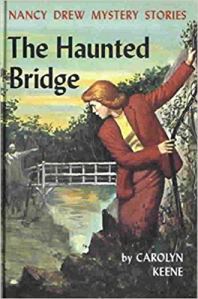 The only physical description we have of Nancy Drew is her “titian hair” and “blue eyes.” However, we hear a lot about her chic wardrobe and apparently endless clothes closet. Beyond her stylish threads, Nancy often dresses in costumes and old garments found in attic trunks. When the books were originally released in the 1930s, low-income readers could imagine wearing Nancy’s pretty outfits for themselves.
 The books are set in 1967, an era of vibrant and varied clothes. Poodle skirts and bobby socks gave way to miniskirts and pillbox hats. East Indian garments were in style. The “British invasion” of roc
 Destiny King is an African American agent who takes Noelle on her spy missions. Destiny sports a trimmed Afro and frequently wears jumpsuits. Her clothes are functional in more ways than one way. For example, she has a pair of earrings that are really plastic explosives.
 Sally Carpenter is native Hoosier living in southern California. She has a master’s degree in theater, a Master of Divinity and a black belt in tae kwon do.
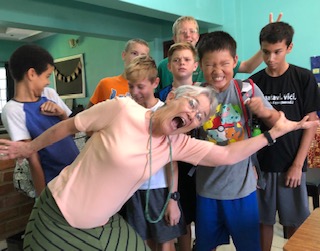
 On a recent short-term mission trip to Malawi for my church, I had the opportunity to teach Writing classes to two groups of home schooled MKs (Missionary Kids). These were children from American, Canadian and South African families. There were nine in the 3rd-4th grade group and seven in the 5th grade and up group.
 After reviewing the stories and talking to the other home school teachers, we all agreed that the kids needed help in character development. The action was amazing; the worlds they created were vivid, but the heroes, helpers, and villains were flat and hard to imagine.
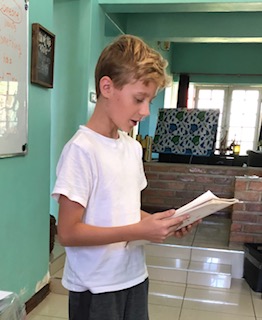
 Before I arrived I asked that the kids (both classes) bring the first several paragraphs of a story they had written to class. In class, I had them each read their paragraphs aloud. There were Captain Jack, Commander of a Starship, twin girls named Peace and Harmony, and a 20-year old girl named Ella who wanted to become a princess (and a dozen others).
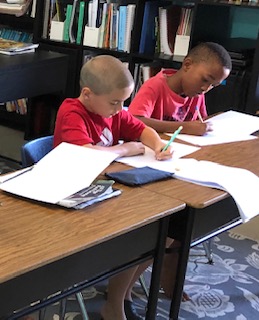 For the younger class, I had them draw in their workbooks a circle for a face, then slowly add features (eyes, nose, mouth, ears, hair) and write a description of each as they went. Next they drew bodies with any kinds of clothes and shoes (or not) they wished. I had them write why these “characters” were smiling, wearing… glasses, a soccer jersey, a swim suit, a long dress, a tutu, and had on sandals or swim fins. They began to see how to show what their story characters looked like by writing descriptions, and in the process developed more interesting information about them. (I could see “light” dawning in their eyes!)
 Next, we had fun with thirty-six
 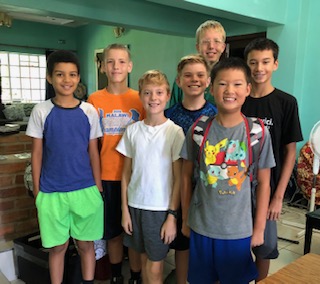 For the older class (all boys, and most writing sci-fi or fantasy) we delved a bit deeper into making their characters memorable by using various ways to describe physical as well as personality traits. They practiced describing a character in an action scene (showing fear or bravery without actually using those words) and played around with using an occasional quirk, flaw, or unconscious mannerism to reveal hidden traits.

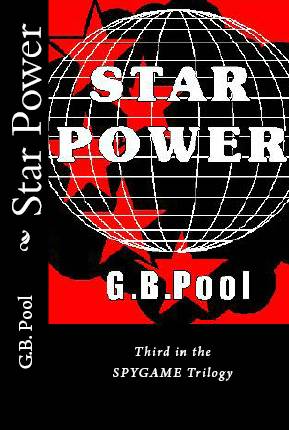
 A former private detective and once a reporter for a small weekly newspaper, Gayle Bartos-Pool (G.B. Pool) writes the Johnny Casino Casebook Series and the Gin Caulfield P.I. Mysteries. She also wrote the SPYGAME Trilogy: The Odd Man, Dry Bones, and Star Power; Caverns, Eddie Buick’s Last Case, The Santa Claus Singer, Bearnard’s Christmas and The Santa Claus Machine. She teaches writing classes: “The Anatomy of a Short Story” (which is also in workbook form), “How to Write Convincing Dialogue” and “How to Write a Killer Opening.” Website:
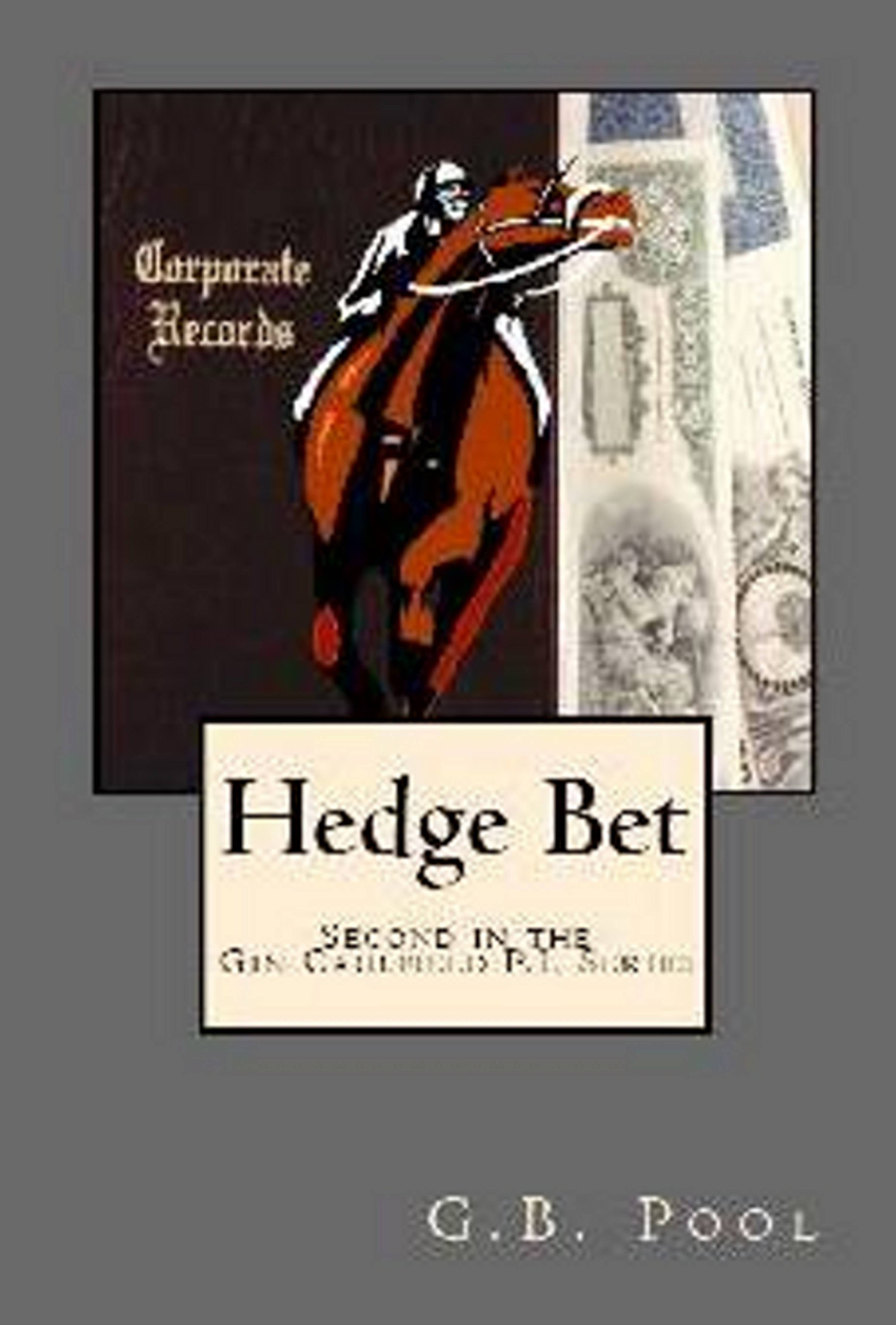 “Johnny worked for me several years until he had enough P.I. hours under his belt to go out on his own. I hated to see him go, but I knew he worked better alone. Most of the time I do my work solo like the case at the racetrack in Hedge Bet. I should amend that statement because I got my husband, Fred, to do some work for me. His trip to Mexico to bring back a witness led to a few choice words from him, mostly unprintable. But the guy’s a natural P.I.

 or at least I thought it was his real name, until another story in the Johnny Casino Casebook series uncovered something that even Johnny didn’t know. It changed everything for him. It’s in The Johnny Casino Casebook 2 – Looking for Johnny Nobody. That’s when I started seeing a pattern.”


 The Writers in Residence
You must be logged in to post a comment.