
Cynthia, we are so glad to have you in our Writers in Residence blog group. Tell us about yourself.
 Thank you, Jackie! I’m a native of California, I was born and raised in the Pasadena area. My husband and I still live here, although we have talked about living elsewhere that is less expensive. I have two adult sons and two adorable granddaughters. We live in a condominium with two precious pups, Minnie, a mellow Maltese, and Mandy, a very precocious Terrier mix. They keep us on our toes and give us hours of unconditional love and fun!
I bet they are cute! When did you first get interested in writing?
I have been a writer since I was a child. The first book I fell in love with was Pearl Buck’s Good Earth. I subsequently read the rest of her tomes. The first attempt at writing occurred when I was in the 4th grade and wrote about an imaginary trip I made to Australia aboard the SS Lurline. What fun that was! Throughout my years in school, I always veered back to writing about Asia and when in college, studying for my Master’s in History found myself back in Asia but more specifically China.
Was History your only avenue of study?
No, besides my Master’s in history, I also have a Bachelor’s in English and Paralegal Studies, and a Master’s in Library and Information Science. But my writing career really took off following the completion of my last Masters. I took a couple online writing courses and found myself writing a romantic suspense that is loosely based on a personal experience of my own.
You mean, the events in Cache Under the Stacks actually happened to you? That’s scary.
Well, some of the elements did, but not all. It is fiction. (smile)
A bookstore features prominently in the book. Do you have a favorite one?
I love bookstores. Whenever we travel my first stop is a bookstore. One of my favorites is Chaucer’s in Santa Barbara, but our own Vroman’s here in Pasadena is the best of the best.
What other writing interests do you have?
I’m interested in writing historical fiction and have a couple of novels started that take place during World War II – one in Europe and the other in the Pacific Theatre. And I would someday love to write about cooking or do restaurant reviews. Always something that I am striving towards. But my one far-fetched desire is to own a boarding house for dogs with all the amenities!
I love it! We have some dog-lovers in our group and among our readers. They would be happy about that aspiration. I see you have many yummy recipes on your blog as well. Cynthia’s blog recipes
Yes, and did you notice the SPAGHETTI BOLOGNESE recipe at the end of Cache Under the Stacks?
I sure did! I plan to try it soon. I love Italian food. So, what have you in the works right now?
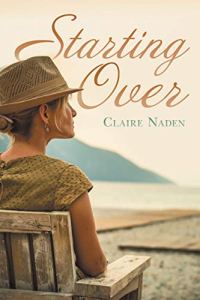 Cache Under the Stacks was published in August 2018, and Starting Over was published December 2019. Both books I “pantsed,” but now I am trying to outline and it is not as easy for me. I’m working on a sequel to Cache Under the Stacks and a sequel to Starting Over, a woman’s fiction that has evolved into a bit of a mystery.
How about those two WWII novels you were considering?
One is set in the late 1930s New York and London. It is called Because of You. The other one set in Pearl Harbor, and is yet to be titled, although tentatively I call it Murder in Waimea.
What are you reading now?
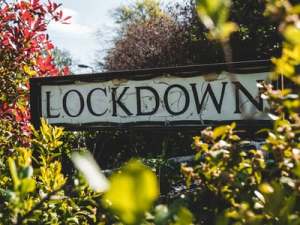
Reading during this “lock down” time has not been as productive as I thought it would be. I have several books on my bedside table: Woman in the Shadows by Jane Thynne; Erik Larsen’s The Splendid and the Vile; The Last Bathing Beauty by Amy Sue Nathan; and Landing by Moonlight by Ciji Ware.
How have you been managing during the “lock-down” time?
I thought I would have gotten a lot of writing done, but it has been hard to concentrate. If anyone has any suggestions, I would gladly like to know about how to overcome this. It has been a time of great distraction.
Do you have any dreams or goals?
My dream would be for Covid to be over and to travel to London, France, and Germany. I would like also like to publish at least one book a year and if possible, someday land a traditional publisher.
Thank you, Cynthia (Cyn), for sharing your past and your heart. We are so glad to have you here, and look forward to when you will be posting alongside us next year.
###
 BOOK REVIEW: Cynthia (pen-name Claire Naden) published Cache Under the Stacks, A Cate Wagner Mystery, two years ago, and I have just found and read it. It’s a story about a divorced, empty-nester bookstore owner, living alone in a nice neighborhood with her sweet pup, Minnie.
But then, she begins to get threatening phone calls from an unknown person. It doesn’t matter if she is at home, at the bookstore, or 100 miles away, he seems to know just where she is and what she is doing. For most of the book, this stalker only terrorizes by phone, but towards the climactic end, the calls and messages get more specific. And when strange packages and people begin to appear at her bookstore, she knows her life is in danger.
Fortunately for Cate, a handsome police detective enters her life and takes an interest in her case. As the threats escalate, their relationship begins to heat up. But he can’t be with her every minute. She is alone sometimes and the stalker knows it.
Advertised as Romantic Suspense, I can assure you the book is both. From the first pages, you will feel an unease for the main character that quickly turns into unrelenting anxiety. It’s hard to stop reading even at chapter breaks, because you simply must find out who is terrorizing the heroine and why.
Naden writes simply but in great detail. Where another author might say “She went into the house and locked the door,” this author breaks down those movements into tiny increments (fumbling with the key, dropping it, her purse strap catching on the knob, preventing her from closing the door fast). You think it would be boring, but not so. It holds you captive while it ratchets up the suspense. You “just KNOW” someone is in the house, in her bedroom, or right behind her…
PS: You only understand the title at the very end!

 In the spring of 2010, just six months after I published
 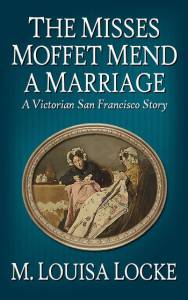 For example, in Maids of Misfortune, I had created two elderly dressmakers who lived in the O’Farrell Street boardinghouse. One of these sisters talked all the time, the other never said a word. And that was about all a reader learned of them in that first book. But I had developed a whole history for them and I wanted my readers to learn that backstory. So, in my second short story,
 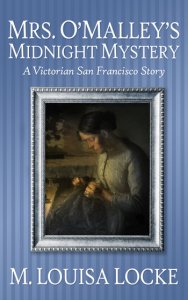 Finally, I write these stories so I can explore historical themes in more detail. In
  Louisa Locke, a retired professor of U.S. and Women’s History, is the author of the USA Today best-selling cozy Victorian San Francisco Mystery series. This series features Annie, a young boardinghouse keeper, and Nate Dawson, a local San Francisco lawyer, as they investigate crimes with the help of their friends and family in the O’Farrell Street boardinghouse. Not content with just exploring the past, Locke also helped create an open source, multi-author science fiction series called the Paradisi Chronicles. You can find out more about Locke’s books from both of these series at
 I love to write. I love to write novels that contain romance. I love to write novels that contain mystery or suspense.
 My kind of story, and I follow their bible and have my characters interact with the protagonists of other Colton stories in the various mini-series that are part of the Colton series. When I write stories that are all my own I fit a lot of dogs into them, and occasionally have been able to slip one in to a Colton story.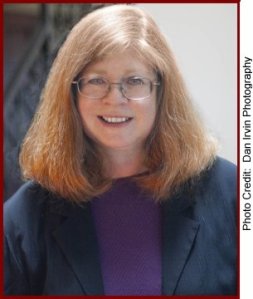

 After ordering restaurant take-out, my husband drove there to pick up dinner. It would take him almost an hour, leaving me time to explore a newly bloomed section of our garden, planted with rhododendrons. If you’re not familiar with the plant, they’re like azaleas on steroids, with flower clusters, some as big as your face, nestled against dark green leaves. Some grow as tall as trees; others have been pruned knee- or chest-high, their blossoms a riot of pinks, fuchsias, purples and reds.
 In the shelter of the garden, hidden beneath a canopy of lavender and laurel trees, I sauntered the path that wends through the rhododendrons. As I neared the end of the path, where it rejoins the lawn, I spotted something crescent-shaped sparkling on a branch. A closer look revealed a young bird, judging by its downy feathers of gray, which blended in with the bark. She (as I later discovered) had a curved beak, bright yellow, which stood out like a slice of sunlight in the darkness of the overgrowth.
 I so wanted to hear her sing, but she didn’t. Silently she sat there, occasionally darting her head, watching everything around her as I watched her, delighting in her curiosity, her seeming amazement with the world she’d recently entered. She hadn’t mastered flying yet. Her wings fluttered to help her balance on the branches as she hopped along, taking in the sights and sounds all around her. I’d been feeling blue awhile, in a rut. All that changed with my encounter with this fledgling. I found myself transfixed by her utter joy, and that joy flowed through me for the first time in months.

 Of course, the correct common usage idioms are “stubbed my toe, a drop in the bucket, beat around the bush, and a dime a dozen.” The last two are alliterative, yes, but why, I wonder, are toes the only part of our anatomy ever stubbed? And why drops only drip into a bucket instead of any other container? My favorite, though, is “a short/long week – or year, or hour.” What do they actually mean? Six days instead of seven? 11 months instead of 12? Sure, it’s easy to explain that an hour can drag on seemingly forever and a short week can mean time flies by, so why don’t we write that?
 I have a book, “The Describer’s Dictionary” that contains oodles of such hackneyed idioms but they do inspire me to create my own if possible. The book is tremendously helpful when trying to find a way to describe, for example, low-elevation clouds. One description offered is “a cloud mass like a formless gray horizontal sheet.” Would you honestly use that? However, I have found the book invaluable for character physiques, architecture, locales, settings, and surfaces and textures. There is an entire chapter on Necks. Granted, it’s only half a page but it encourages the mind to explore other possibilities.
 Jill Amadio is from Cornwall, UK, but unlike her amateur sleuth, Tosca Trevant, she is far less grumpy. Jill began her career as a reporter in London (UK), then Madrid (Spain), Bogota (Colombia), Bangkok (Thailand), Hong Kong, and New York. She is the ghostwriter of 14 memoirs, and wrote the Rudy Valle biography, “My Vagabond Lover,” with his wife, Ellie. Jill writes a column for a British mystery magazine, and is an audio book narrator. She is the author of the award-winning mystery, “Digging Too Deep.” The second book in the series, “Digging Up the Dead,” was released this year. The books are based in Newport


 Marc Jedel writes humorous murder mysteries. He credits his years of marketing leadership positions in Silicon Valley for honing his writing skills. While his high-tech marketing roles involved crafting plenty of fiction, these were just called emails, ads, and marketing collateral.


 Yes, this is The Writers in Residence blog. And what am I posting about here today? Writers in residence.
 So most often these days, I assume we’re writers in residence. We all have homes–houses, apartments, condos or whatever–although maybe there are some homeless people out there who write, too. In any case, we reside somewhere. And write.
 Oh, and by the way, I was very impressed by our last Writers in Residence blog, written by Rosemary Lord–focusing on independent bookstores near us in Southern California. It’s a great idea to buy books from them, probably online and either have them shipped or pick them up outside the store. And it’s not only the independents doing that now. I’ve picked up several books from outside my nearby Bookstar, which is part of Barnes & Noble. I want that store, and the entire company, to survive, and the indies, too!


 Turned out I had grabbed a paperback I’d bought second-hand years ago and never got around to reading, Irving Wallace’s “The Writing of One Novel.’ It relates the all-absorbing 16 years he spent researching, traveling for settings, and finally writing his bestseller, “The Prize.” In meticulous detail Wallace describes his exhausting, frustrating, and determined journey into the background of the Nobel Prize. He interviewed dozens of judges, winners, losers, and journalists who covered the event. He kept daily journals and diaries of his efforts to get behind the politics, drama, and the decisions, all of which resulted in “The Prize” being almost non-fiction. Wallace discovered facts, regarded as explosive and titillating at the time, about all those involved over the years. Most of the characters were a combination of the real person and the author’s creativity but they were so obvious that the country of origin of the Nobel Prize, Sweden, refused to publish or distribute the book.
 That aside, the tattered paperback I was reading, yellowed with age – it was published in 1951 – was the most honest and revealing of any author’s how-I-wrote-it book I have come across. It is more than a fascinating peek into Wallace’s writing process and method of research. He lays bare the heart, mind, and soul of a writer’s inner workings. Would reading this book turn off a new writer? It’s a daunting task that Wallace set for himself because he wanted to know everything, and as he dove deeper and deeper into the history of the Nobel Prize he uncovered real data that he could not resist including in his novel. Luckily today we are armchair researchers, although I find that visiting locales can’t be beat for sniffing the atmosphere.
 Interestingly, Wallace’s “The Writing of One Novel” mentioned another author who wrote a tell-all of his writing process. I immediately downloaded Thomas Wolfe’s “The Story of a Novel.”
 “Look Homeward, Angel.” Wolfe dredged up so many childhood and young adult personal experiences that the novel is considered practically autobiographical. His first draft was over one million words! Happily, Scribner’s genius editor, Max Perkins, sorted it all out and gave us Thomas Wolfe in all his glory. Perkins probably also heavily edited “The Story of a Novel” because Wolf admits at one point that all he did when writing it was jot down a few random notes.
 Both memoirs put me in mind of Graham Greene’s despondent “The End of the Affair,” another heart-breaker that makes one wonder how much of the author’s life it reveals. Faulkner called the book “true and moving.”

 The Writers in Residence
You must be logged in to post a comment.