Character Flaws

by Gayle Bartos-Pool

gayle-at-bills-house-sept-2022

Through the centuries man has written novels and other stories using that plan old Aristotle, born in 384BC, came up with and documented in The Poetics. He said there are 5 Basic Elements used in writing a story: Plot, Character, Dialogue, Setting, and the Meaning of the story. He was so right. As for the people who populate said story, many authors utilize the “Character Flaw” idea to give their main character some quirk that might trip them up while pursuing their goal.

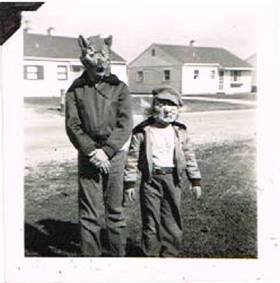
Whether it’s a private detective with a drug problem (Sherlock Holmes), a gal who drinks too much (the woman in The Days of Wine and Roses), or even the kid who can’t tell the truth (The Boy Who Cried Wolf.), when the reader learns the character has this flaw and also learns what the goal is in the story and what the roadblocks are in trying to achieve that goal, there will be anxiety on the part of the reader to see if the hero can overcome his or her problem and succeed.

This method has been used for centuries and works, but there have been other ways to toss a curve to the hero just to see how he or she handles it. A blind main character (in the movie: Wait Until Dark) or a blind detective (the movie and book called exactly that: The Blind Detective) or a hero in a wheelchair (the TV show: Ironside) worked just fine in catching the bad guys.

Rob a Bank

A physical handicap can actually make the hero stronger. I’ve known real people who had severe health problems turn into some of the strongest people I have ever seen in my life. But a drug addict or an alcoholic isn’t exactly wearing a badge of courage. I’ve also known people who had those issues as a part of their character and who had no intention of getting rid of them. I probably wouldn’t turn to them in a crisis. In a story they might be the main character with what is known as a “fatal flaw” who solves the problem or reaches the final goal as he dies on the last page. That’s been done, but it’s a bit of a downer.

But there can be other ways to give the main character something to deal with besides thrusting negative points on him. In fact, some TV characters don’t really have major flaws, but some of their friends do. The main character in the series Magnum, P.I., and Jessica Fletcher in the TV show Murder, She Wrote were basically good people, but some of their acquaintances had problems. Usually those problems were thrust upon them by someone else, otherwise known as the villain, and the hero has to solve the case before the jail cell closes on their friend.

So, are we supposed to make our main characters flawed? I’ve read some best-selling books where the hero had flaws that were rather unpleasant and I only read one of their books. I didn’t find that trait a selling point. I often say that I want my main characters to be people I would invite to my house. They don’t have to be sickeningly sweet or holier-than-thou, but I would like to respect them.

But these heroes might have a friend with a major flaw and part of the story is to get the friend on the right track so they don’t die or end up in prison. You can even have the hero mention that he almost went down that same path until somebody straightened him out. My Johnny Casino character used drugs when he was a kid while he was growing up in the Mob. They were importing and selling those drugs until a local priest challenged him to a boxing match and whooped his little butt. Johnny never touched a drug again. This revelation in one of the stories let Johnny use himself as an example to help somebody else shake their dependency.

people-4

I’ve wrestled with the notion that the main character should have something wrong with him since that theme is prevalent in many books and movies, but I prefer my main character to have either overcome some minor flaw or never really had one in the first place. Most people I know aren’t one step away from the slammer or psycho ward, so I’m not stuffing my character in that camp. He can have doubts and reservations, but in the end his upbringing and persona got him where he is, so I’m not going to let him fall into a pit. And anyway, that’s what heroes are…heroes.

People with problems don’t usually go to people with their own troubles. They go to the guy or gal who made it through the gauntlet and survived. We learn from characters like that, so my heroes fight to keep on an even keel and get us all to shore.

Coast Lighthouse

STARTING OVER….

by Rosemary Lord

1.08RoseSignCrop

Happy New Year!

It’s time to come out from hiding under that duvet!

This winter is turning out to be tough on so many, with the freezing temperatures and endless rain across much of America and Europe. But I’m in California, where it’s still often sunny during winter, even when it feels to us as if it’s freezing.  My siblings in England ridicule me with our 66-degree “heatwave.” Hey! We’ve had several days of rain – and the ensuing power-cuts and floods. Los Angeles comes to a halt at the first sign of rain…. Enough already! I’m done with winter!


But I digress: Each January is a fresh start. Time to dust off our goals, our dreams, our great plans for life.  

As a teenager I had so many dreams and goals – and many of them I have accomplished. The fourteen-year-old me never questioned that I could not go from a quiet little town in England, far removed from the acting and showbiz worlds, to living in Hollywood, (where I knew no one and was totally ignorant of how things worked), to working as an actress and a writer in Hollywood movies. My dreams, my positive beliefs and my naivete fueled my journey.  I’m not saying it wasn’t very tough at times, frustrating and sometimes heartbreaking. It took a lot longer than I thought. But I was driven by my dreams and never gave up.  


Then a new chapter of my life opened up. My dreams and my goals changed.

Writing was my new focus. I wrote articles about Old Hollywood and Movie Stars from Hollywood’s Golden Era. I wrote about Hollywood history. But I never thought I would be smart enough or talented enough to be a novelist. I was and am still in awe of so many of the great novelists. How could I ever come close to that?


It was shortly after my first non-fiction book Los Angeles Then and Now was published and I was having lunch with fellow British-born writer Jacqueline Winspear. We’d both been honored by the Southern California Book Sellers Association. Jacqui had launched her first amazing Maisie Dobbs novel and I was chosen for my Los Angeles Then and Now. As we chatted about our current and future writing plans, she convinced me that I, too, could write a novel. Even a mystery novel. She explained how Maisie Dobbs came about and the basic method she used. Wow! She opened up a whole new world for me.

A new pathway. She showed me how to look at writing in a totally different way. I will be forever grateful. I subsequently joined Mystery Writers of America and then Sisters-in-Crime. I found a new family of writers.


But even along this writers’ journey, there comes a time when we have to step off into the unknown to get new results, to shake things up.


“This year will be different,” we often promise ourselves on New Year’s Day. But in order for it to be different, we have to do things differently. Maybe it’s a time to take a fresh approach, take another path. I’ve been toying with the idea for a children’s book – taking a break from intense historical research. Another writer friend is inspired to try her hand at poetry this year, after several successful noir thrillers. Perhaps a crack at a movie script?


New Year’s is a great time to plan a do-over. Change writing habits. Shift the energies around. The year ahead is filled with new opportunities, new hopes and wonderful blank pages for us writers to fill.


Perhaps go back to the simple way of doing things – without all the current programs available to us. I sometimes wonder whether our world of social media, immediate access to ‘google’ or ‘duckduckgo’ information is a blessing or a curse.


In days of yore, writers would be found in dusty libraries, surrounded by research books, furiously taking notes. That’s what the Agatha Christies of her day would have done. Jane Austen too. Mary Roberts Rhinehart didn’t use Instagram to tout her The Circular Staircase success. Edgar Alan Poe didn’t have a Facebook page. Charlotte Bronte didn’t Tweet. Raymond Chandler did okay without all that. Hmmm.


But today we have a choice to avail ourselves of those services. And we have Sisters-in-Crime, The Authors Guild and Mystery Writers of America to turn to. We have options.

Writers are storytellers. We’re the ‘wandering minstrels ‘of our time. Minstrels would wander from village to village, singing about the news around the countryside. Today we fictionize the local village stories and don’t have to travel from village to village to share them. We have a flourishing publishing world, movies, television, internet, podcasts and multi-media resources to spread the word. Or we can choose to keep it simple with a yellow pad, pencil and our imagination.


I love the excitement of the New Year options. A chance to start over.

What about you?

When A Series SPINS OFF: the Maisie Frobisher Mysteries

A Guest Post by Liz Hedgecock

I didn’t so much decide to write the Maisie Frobisher books. It was more that Maisie Frobisher decided she ought to have her own series!

Let me explain.

The Maisie Frobisher books are actually a spinoff series: the series they sprang from is the Caster and Fleet Mysteries. I co-wrote Caster and Fleet with another writer who is now a good friend, Paula Harmon.

When we began writing the books, Paula and I hadn’t actually met in real life – only via a Facebook writing group. We were already online friends, we liked each other’s writing styles, and we both wrote historical mystery (among other things). We’re not sure who first suggested writing a book together, but we’re very glad they did!

Maisie is a very minor character in the Caster and Fleet world until she has more of a starring role in book 4, The Case of the Masquerade Mob, which is a romp involving masked balls and all sorts of skulduggery. At the end of the book, poor Maisie, who has had rather a rough time, decides to travel the world and forget about men for a while. That was my jumping-off point, because I’d grown to like Maisie very much and I didn’t want to let her go.

My friend Paula also has a spinoff series of her own, set in the run-up to World War I, which follows the younger sister of one of our protagonists, Margaret Demeray.

I had many reasons to set the Maisie series abroad. Firstly, at the end of Masquerade Mob Maisie was going travelling, and I couldn’t go back on that! Secondly, in the 1890s, when the series is set, the world was opening up. Bigger and more luxurious cruise ships, faster journeys, and more capacity to travel for pleasure. I chose India because it was a well-known destination, the route was interesting, and also because of the opportunity to look at the British in India in the time of the Raj.

I try not to get too bogged down in historical research, though there are all sorts of opportunities to get lost down research rabbit holes! One advantage is that I have a Master’s degree in Victorian literature, so I’m fairly well grounded in some aspects. While I want to make the stories accurate, I don’t want to spoil a story for the sake of including every historical fact I’ve discovered. Probably a tenth of the things I’ve read about make it into the final book.

I didn’t choose the late Victorian period just because I knew a bit about it, though. It’s also fascinating because of what was going on at the time. Women were fighting for their rights, the ‘New Woman’ had arrived, and inventions like the safety bicycle meant that women’s mobility could increase.

The Maisie books are also special to me because they mark a change in the way I write. Up to that point, I had always written at my computer. With Maisie, I had the urge to try something different. In the first book in the series, All at Sea, Maisie is on a ship which is always moving, and she must solve the mystery before the ship reaches port. With that sense of urgency in mind, I tried an experiment. I took my phone for a walk and dictated the book’s opening: a letter from Maisie to her mother, followed by a rather different diary entry on the same subject. The words seemed to flow. Ever since then, I’ve dictated my fiction rather than writing it. The result needs correction and editing, of course, but it’s a really good way to get into the flow, get that first draft down, and spend time walking rather than sitting.

If you do try the first Maisie book, All at Sea, or indeed, the first in the Caster and Fleet series, The Case of the Black Tulips, I hope you enjoy them!

#

Liz Hedgecock grew up in London, England, did an English degree, and then took forever to start writing.  Now Liz travels between the nineteenth and twenty-first centuries, murdering people. To be fair, she does usually clean up after herself.

Liz lives in Cheshire with her husband and two sons, and when she’s not writing you can usually find her reading, on a walk, messing about on social media or cooing over stuff in museums and art galleries. That’s her story, anyway, and she’s sticking to it.

Website: http://lizhedgecock.wordpress.com

Facebook: http://www.facebook.com/LizHedgecockWrites

Twitter: http://twitter.com/lizhedgecock

Amazon author page (global link): http://author.to/LizH

###

Note from Jackie Houchin: I began the Maisie Frobisher series – All at Sea – while on a cruise. (I could so identify with Maisie!)  But I got so attached to her sense of adventure and fearless deeds of daring, that I bought the second one (Off The Map). Of course I had to buy that third book with the magnificent Leopard on the cover (Gone to Ground). I’m now reading the fourth one and Maisie is back in London, but still involved in mystery and intrigue. (In Plain Sight)

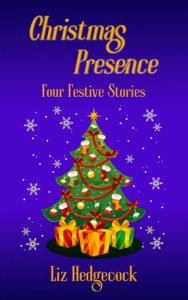
A character from the Maisie books appears in one of the four Christmas short stories in Liz Hedgecock’s Christmas Presence, Four Festive Stories. It’s a perfect way to sample Liz’s work and to gift for the Holidays!

.

This article was posted by member, Jackie Houchin

.

SHADOWS OF THE PAST

 by Miko Johnston

My first book, A Petal in the Wind, begins a family saga that encompasses a half century. As each subsequent entry in the series carries a subtitle, my fifth and last book, which I’m writing now, will be called Shadows of the Past.

That phrase took on new meaning recently when my husband Allan and I traveled to Europe.

Our trip began in Prague, where much of my series takes place. I spent a day walking in the footsteps of my characters, visiting their homes, businesses and the landmarks mentioned throughout the pages. I’d selected most of the locations on Google Maps, so seeing them for real was, shall we say, enlightening. It took an hour to find U Seminaire, the location of the bachelor pad I’d used for the man who eventually marries my protagonist, Lala. I’d chosen it because it seemed like a quick walk from the Charles Bridge. In actuality it sits underneath the bridge, entangled in a labyrinth of short blocks and alleys. Somehow the building’s image got reversed on Maps – it’s on the opposite side of the street. Ouch. The little greenbelt across from Lala’s mother’s apartment, where ladies sat on benches underneath the shade trees and gossiped, actually sits below street level, though trees do line the sidewalk and there are benches. And the “gentle slope” of the street where Lala’s family lived for twenty years turned out to be a heart-pounding climb on a good day, and treacherous during inclement weather. Sigh. Still, as I stood in front of the building, seeing it for real, I felt thrilled.

In my fourth book, Lala launches her design career by converting a series of buildings into a world-class hotel. Ironically, the palace (the Czech term for a fine home), which I’d chosen for the location is now an actual hotel, and we decided to book it for our visit. It turned out the be the finest hotel I’ve ever stayed in, and although I have no right to take pride in that, I can’t help but feel delighted. On a slow afternoon I cornered the hotel staff and peppered them with questions about the building’s history, particularly during the Second World War. What began as a brief history lesson turned out to be a wild series of stories and gossip, which will inevitably solve some plot issues.

Three days later Allan and I bid ahoj to Prague and boarded a train bound for Poland. After an overnight stop in Katowice, the largest city in the region known as Upper Silesia, we took a cab to the nearby city of Bytom, the hometown of my father and his entire family. Back then Upper Silesia was part of Germany, the city known as Beuthen. As I walked along the streets, I tried to picture what his life must have been like. I gazed at the people who passed, wondering if I’d see any signs of familiarity in their faces.

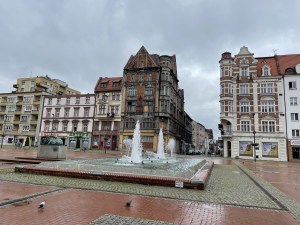
The picturesque parts of the town – with some remarkable architecture and a delightful town square, partially rebuilt after being bombed in WWII – surprised me, but other areas wore the hard reality of over a half-century of decline. I saw it in the run-down buildings left to rot and the pervasive trash, especially cigarette butts, in the street. I also saw it in the faces and the body language of so many, but most strikingly in the older folks, who’d lived through Nazi occupation, followed by decades of Soviet rule, only to be largely ignored by the European Union. They bore a sense of quiet despair, of resignation to the bleakness in their existence. The only signs of joy were in little children interacting with pigeons in the town square, swarming with them, chasing them or karate-kicking them away. I saw no faces that resembled mine, nor any signs of my past in the city. It had been wiped clean.  

Our next stop in Poland was Krakow, a city Allan has always wanted to visit. Rich in history, it has a beautiful castle on a hill overlooking the Vistula River, and the largest town square in Europe. I went for a different reason. On our second day there we boarded a bus to tour the two largest and most infamous Nazi-era concentration camps, Auschwitz and Birkenau.

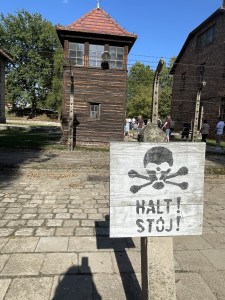
Entering into the first camp, with its ARBEIT MACHT FREI (“Work sets you free”) sign over the entrance gate, I wondered how I would react, or feel. I’m still not sure, to be honest, other than the eerie familiarity of what I heard and saw – from decades of studying photographs accompanied by written accounts, of documentaries and movies filmed on location, and stories I’d heard from survivors, including my father. For many, the trip was a history lesson. For me, it was akin to visiting the cemetery; I lost an estimated ninety members of my family there.

After a brief break, the tour continued to nearby Birkenau. Unlike Auschwitz, which to me felt small and claustrophobic, Birkenau is huge. You’ve seen it in many movies: a long low building with railroad tracks leading to a central tower, open at the bottom to allow trains to enter with their human cargo, like a gaping maw ready to devour all who arrive. Alongside and beyond the entrance, what seems like miles and miles of barbed wire fencing surrounds a huge open area interspersed with low barracks and guard towers. In the distance I could see different tour groups traversing the grounds, and for one brief moment I pictured them in the striped uniforms and hats of prisoners.  

Prior to abandoning the camp in January 1945, days ahead of the advancing Russian forces, the Nazis burned the meticulous records they’d kept of all who were brought to the camps and blew up the gas chambers. Only piles of rubble remain. Many, many piles. They left behind the prisoners too weak to continue; the rest (including my father) went on a forced march from one concentration camp to the next, always trying to stay ahead of the Russians, whom they rightfully feared more than the other Allies. It took several more months until my father was liberated, but at least the Americans freed him. Had he stayed behind in Auschwitz, he would have lived the rest of his life under the thumb of the Soviets. After what I saw in Bytom, I’m grateful he had the strength to wait.

The entire tour took seven hours and, although it allowed for a few bathroom breaks, it did not include a meal. The irony was not lost on me.

We left Poland and continued our travels, with France the next destination. There I stumbled upon traces of history that will influence my writing, and my life, but I’ll save that for a future post.

I can’t say these experiences will enrich the final chapter in my saga, but I can say I truly feel as though I’ve walked in the shadows of the past, both my characters’, and mine.


Miko Johnston, a founding member of The Writers in Residence, is the author of the historical fiction series, “A Petal in the Wind”, as well as a contributor to several anthologies including the about-t0-be-released “Whidbey Island: An Insider’s Guide”. Miko lives in Washington (the big one) with her rocket scientist husband. Contact her at mikojohnstonauthor@gmail.com


How Do You Name Your Characters?

by Jackie Houchin
NAMES in stories are important in that they have to “fit” the characters, the era, the country, and even class in which they live. You wouldn’t name a society woman, Buster. (Well, unless there was a right good reason for it.)  Also, a native seamstress of New Delhi probably wouldn’t be called Manuela. So how do you find those perfectly fitting monikers?

It used to be you could use telephone books, but who even has seen one of those in the last 15 years??  There are websites that offer names for babies and their meanings. Some even suggest names that were popular in different years. (See below)  Maybe you will name your heroine or villain after someone you love, or love to hate.

SUGGESTION One – A couple years ago I came up with an idea for a short story in a contest. I liked the name Autumn (the story had to be set in the fall). She would be a painter. I know how I wanted her to look – long, wavy auburn hair, green eyes. And she would be the quiet type.

Boy, did I get a shock when I asked my friends on Facebook what a character with the name Autumn Gold would look like and what she might do for a living. Nearly all of them said she would be a sexy night club dancer or even a street walker. Yikes!  I changed her name to Audrey Gould. But I titled the story, and named the fantastical woodland painting her boyfriend made with her hidden image in the colors, “Autumn Gold.”

I got honorable mention out of 400 entries.  Asking around might be a way to check out that clever name you’ve chosen.

SUGGESTION Two – I also wrote a middle grade mystery titled “The Bible Thief” set in a church much like the one we attend. For some weird reason 4 or 5 people (including myself) lost their Bibles at some church event. Some were found, others not.

Hmm. I pondered, and immediately thought of a clever gang of kids who would “investigate” and discover the remarkable solution to this mystery. Because I wanted to share the story with the kids in the 4th-6th grade class I was teaching, I minimally disguised their own names as the gang, their parents, and a few other easily recognizable people (by description) in the congregation.

That was easy!  And maybe YOU have used names of people you know but changing Sheryl to Sherry, or Garrett to Darren.

SUGGESTION Three – And lastly, I also wrote a series of related short stories for the same age children, set in Africa. There were seven kids (one set of twins, and one who passed away at a week old), and they all had names that coordinated in some way with the month they were born in.

The youngest boy, born near Christmas (and since his father was a mission pastor) got named Deacon. “Deek” for short.

There was a girl, April (yeah, I know, too easy) and the twin girls were named Melody May and Charity June. (Know why twins have two months?)

A younger boy was named August, nicknamed “Gus.”  The oldest boy was Marshall (can you guess his month?).

A sensitive girl born in July I named Julie Joy. And the little guy that didn’t make it very long was Freddie, born just after Valentine’s Day.

So, that is how I sometimes choose character names. How do YOU come up with yours?

##

Baby names from Social Security lists by popularity, the top 5 by year, by decade, state, and US Territory – https://www.ssa.gov/oact/babynames/

2023 Baby name finder and the meaning/origin – https://emma.ca/baby-names

70,000 Baby names by gender, alphabet, origin, meaning, and religion – https://www.momjunction.com/baby-names/

An Interview with Wendy Walker

by Jill Amadio

Sometimes, as writers, we flounder around seeking ideas, whether from our own lives, others’, and from the daily grind we read about in the media. One author I greatly admire is Wendy Walker. I interviewed her recently, and am sharing her impressive insights here. Her multi-faceted career has included commercial litigation, investment banking, and world business. She lives in Connecticut and writes novels, thrillers, and audio originals.

  What is your background? Has it provided material for you?

I’ve worn many hats in my life! Once an aspiring figure skater, I redirected that energy to get a job at Goldman Sachs in mergers and acquisitions just after college. At the time, I never thought about being a writer. From there, I went to law school and worked in corporate litigation, and later family law. I was a stay at home mom for several years, and it was then I started to write. It took seventeen years to make this a sustainable career, and I have been a full time writer ever since! I use all of my experiences in my work – from legal knowledge, to finance, to parenting, and especially the psychology I learned while being a family law attorney.

Any characters based on you, as your alter ego

I think there are parts of me in all my characters. But the one I drew most closely for is Molly from “Don’t Look For Me.” While the character was eventually given some very difficult situations, including the loss off a child, which I do share, the initial spark for her and the book came from a moment I had one afternoon when I felt overwhelmed by life and my responsibilities as a mother. Her love for her children and the heartache that love can bring, are deeply explored in the book.

When did you decide to become a suspense writer, and why?

After publishing two novels that were general fiction I almost gave up on writing. The books didn’t do very well and I was no longer able to juggle writing, being a lawyer, and a single mother with three children. I asked my agent at the time what I could write that would be more marketable and she said, “the next ‘Gone Girl’.” I had heard of the book but didn’t really know what was different about it. When I looked at the genre of psychological suspense, I knew I had found the perfect home for my interest, skills, and knowledge.’’

Where do you get your inspiration?

Book idea comes from everywhere. I think once you know you need to find them, you begin to see them in every aspect of life. From news stories, to things I hear about people, and experience myself, ideas are sparked. My philosophy is this – if something catches my eye ad makes me curious, then it will probably be the same for others. I make a mental note of it and then ask questions about what made me take notice and what could be the story behind it. Not all of these moments lead to as book idea, but many do.

What is your writing process, routine, if any?

I have to write first thing in the morning. Staring at a blank page is very difficult for me. I find that I will do almost anything to avoid it. Even tasks that I normally would not look forward to will pull me away from sitting down to write. I will usually find a place away from my desk that feels less like doing work. I like to put my feet up, I have my laptop on my lap over a blanket, with a cup of coffee and some little treats nearby. That way, I feel like I’m not working, but having a luxurious morning.

How important are minor characters?

All characters in a book are important. I think of them as scaffolding for the main characters and the plot. Through minor characters, I can challenge, explore, and deeply develop the other characters that are more central to the book. Sometimes, the minor characters will become so interesting to me that I will bump them up to major characters and give them more page space.

How do you do your research?

I rely very heavily on the Internet and also specialists in different fields for my research. I will usually start online to get a rough idea of the topic and then find someone who works in the field or has personal knowledge of the aspect of the book that I’m researching.  People are remarkably generous with their knowledge  and time. I always feel a little bit nervous when I reach out to them and explain my plots. Sometimes they will just laugh, and other times they will come up with plot twists that they have thought of themselves. It’s fascinating!

How did you become editor of some of the Chicken of the Soul books?

After my first two novels were published and I realized that I had not established a financially sustainable career, I began to look for all kinds of work as a writer. At the time I had not practiced law for several years while I was staying home with my kids. I still wanted flexibility to be with them after school, so I was reluctant to go back into that field. As it turned out a local business group had purchased the business of Chicken Soup for the Soul. They asked me to edit a book about being a stay-at-home mom, I ended up doing three books with them and it was a wonderful experience.

Do any suspense authors inspire you? If so, why?

I find inspiration in almost every book that I read in this genre. Whether it’s a particular plot twist that took my breath away or the depth of a character, or a writing style, each book is unique and has something to offer in terms of learning to be a better writer myself. I look at writing as both creative and technical. I need to have idea and character, but I also need a box of tools that I can use to tell the story. It’s wonderful to have so many talented people in the field to draw inspiration from.

Favorite settings?

Most of my books are not dependent on the setting. I like to explore my characters’ minds. For me, that is the setting hat I like to be in when I’m writing. Some of my books do not even give the names of the towns where they take place. Of course, it’s important to have some context for the characters in the world they live in. I make sure to sketch those out, but many books tend to be very light on setting and deep on the emotional lives of my characters.

Are you an outliner or seat-of-pants?

 I outline everything. In fact, I have a lot of trouble writing without a very detailed outline for every chapter. This is because my books tend to have complex plots  where many pieces that need to fit together. I start with a basic plot sketch, and then I make a list of disclosures that have to be made throughout the story so that the reader will be intrigued and the twists can be developed properly. From there, I create a detailed plot outline where each disclosure is added. This make it much easier for me to dive into the more creative aspects of the process, because I know that the technical pieces have been taken care of.

If your characters ‘talk’ to you, what is the experience like?

I’ve never noticed a particular moment when a character is ‘talking’ to me. But I definitely try to get into the head of my characters when writing their internal thoughts and dialogue. I tend to write in the point of view of the character and I love writing in first person. This allows me to really become the character while I’m writing, and live vicariously through them. From detectives to criminals to mothers and daughters, it’s a lot of fun to be different people every day.

Which is the most difficult part of writing suspense for you?

The hardest part about writing crime suspense is coming up with a plot twist that hasn’t been done, or that a reader  won’t see coming. The genre of psychological suspense is known for its twists that are not just the reveal of the good guys and bad guys. They are twists that are more based on assumptions made by the readers about timeline and characters’ intentions. Readers have become very savvy. And coming up with twists is not something that can be forced. All of mine have come when I have been doing other things away from my computer. But when they do come, it’s really extraordinary.

Publishing history?

In 2008 and 2009 I published books that were in general fiction. They were stories about women in the suburbs. I was interested in exploring the dynamics that exist between husbands and wives and also the impact of wealth on communities. When those books did not establish my career, I went back to practicing law. At the time, I found work as a family law attorney. I kept writing and eventually found my way to the genre of psychological suspense. I was going to write one last book before giving up altogether and I wanted to make it as practical as I could from a business standpoint. I got the great  advice to write a thriller and it turned out to be the perfect home for me. I wrote “All Is Not Forgotten” in the spring of 2015 and it sold in July at a five-way auction! Since then I have written five more thrillers, plus three audio originals. I am very grateful for this career.

Your marketing plan, or does the publisher handle it all?

More and more authors need to be their own publicist. While the publishing houses do a great job at promoting books, so much is done on social media now. I had a book coming out in June (2023) and I spend most of my time these days organizing my event schedule, creating content for social media, posting to social media, and providing content for blogs and other media outlets. Every author will tell you that this is now a central part of our career.

Which book was the most enjoyable to write?

Every book I’ve written has been enjoyable and in different ways. If I had to choose one, it would be my first thriller, “All Is Not Forgotten”. Because the book was not under contract, and because it was my first time writing a psychological thriller, I had a freedom in writing that was really wonderful. I was able to put on the page whatever I felt was relevant and important to the story. Ad I was also able to create a plot and characters that I felt attached to. There’s a purity to the process that is impossible to re-create when others are weighing in on every aspect of the book from a marketing standpoint. And I am grateful for that because it’s so important to having continuing success in this career. But I will always cherish that experience.

Do you scare yourself with your plots/characters/settings?

That’s a great question! The only time I was scared was after writing a plot for a book that’s coming out in 2024. It involves a serial killer and I wrote one point of view that takes the reader through the attempted murder of a woman in her house. I ended up using the layout of my own house because it was just easier to visualize as I was writing. I wasn’t scared at the time but about a month, after I finished the book, my house alarm went off in the middle of the night. It turned out to be a door that swung open but in that moment my mind was turning to those chapters. It was very embarrassing when the people showed up!

Any tips for first-time crime writers?

My best advice is to gather as many tools as you can. Many people come up with great plot ideas and characters. But being able to put that story onto the page requires a lot of skill that has to be learned. When I wrote my first novel I did not have the skills. It was a legal thriller that was never published and probably never will be. I had a great idea and thought that my writing skill as a lawyer would be sufficient. I read a lot of books in the genre and tried to understand how they were written. It was not until I worked with a writing professor that I realized the specific tools that are utilized in this process. It was a big mistake that I made and I wish I had taken a class or worked with a professional before I sat down to write my novel.

Your current WIP?

I am now writing two pieces of work every year. One is a traditional printed novel of psychological suspense. The second is an audio original that is fully scripted. At the moment I am about to begin drafting another audio play that will likely be out in 2025. I also have the audio play that I just finished coming out in 2024 that is called “Mad Love”. So I am very busy! But I love it.

Short Stories: The Reader

by Maggie King

A while back, I had a conversation with a well-read young couple. Like me, they enjoyed mysteries, the classics, and literary fiction. When they asked what I was working on, I said I was finishing my third novel and planned to focus on short stories for a while.

“Really?” The man looked doubtful. “I know that writers like writing short stories, but do readers like reading them?”

“I’m guessing you don’t,” I said. “What is it you don’t like about them?”

“They’re too, well, short.”

The woman added, “Just when I’m getting into the characters, the story ends.”

Are their comments typical ones? I expect so.

When I asked my book group members if they read short stories, I got blank looks. One of them, a retired English teacher no less, said, “Well … we read them in school.”

My first short story was published a year before my first novel. Two people I know told me plainly that they would wait for my novel, as they had no interest in reading a short story.

I selected the following comments from reviews of anthologies published by the Sisters in Crime Central Virginia chapter:

Short stories cannot deliver a good mystery to me. There were a few short ones that were good, but on the whole, not a great book.”

I am not a huge short story person usually because I don’t feel like I get enough information. I only read this book because of a book club I belong to.”

My biggest problem is that they don’t end with a clean-cut solution. You pretty much get a ‘feel’ for what will happen and then have to use your imagination to finish the ending.”

And some good reviews:

Very much enjoyed! I’m a busy mom with not much time for fiction, so I loved that it was a collection of short stories. …. It was truly refreshing to be able to read a good short story and then move onto the next when I was ready! Interesting stories and well written.”

My first ever mystery story collection. A friend recommended it and I really enjoyed it! Glad I branched out to try something new.”

I asked award-winning short story writer Art Taylor to comment on the reviewer who wished that short stories ended with clean-cut solutions. This is his response:

Short stories don’t always tie everything up nicely at the end. They often end on an ambiguous note and the reader can draw her/his own conclusion. Sometimes readers complain, as they expect the endings that novels have.

I do try to strike some balance myself—key questions answered (no information left out) but emotional issues still up in the air a bit, if that makes sense. Maybe what happened is explained, but the fallout is still to come, and the reader can imagine some of that rolling on into the blankness of the page beyond the final word.”

Despite the criticisms, many short stories are being published in anthologies, collections, magazines (the magazines are mostly digital now). For some time, I’ve been hearing that the availability of short stories in digital format has made them attractive to readers. But based on the above in-person conversations and online comments, writers need to do more than digitize their stories–they need to make them appealing. How can we do that? How can we satisfy the reader who wants “more?”

Such a reader might like a story collection. Anthologies present stories by different authors, but the ones in collections are penned by one author.

In Shooting Hollywood: The Diana Poole Stories by Melodie Johnson Howe the mysteries are not only beautifully written, but Diana Poole, actress/amateur sleuth, appears in each one. So if you take a liking to Diana, you’ll find her in the next story. And the next. Perfect for the reader who wants continuity and character growth. Other authors feature different characters and settings in each story of their collections.

Authors with published collections include Ruth Rendell, Agatha Christie, Arthur Conan Doyle, Marcia Muller, Bill Pronzini, and our own Gayle Bartos-Pool with her outstanding Only in Hollywood. There are many more. Suggestions for non-mystery collections: Maile Meloy’s Both Ways is the Only Way I Want It, and Elizabeth Strout’s Olive Kitteridge.

An idea from M. Louisa Locke, who guest-posted for Writers in Residence in 2020: she wanted to keep readers interested while they waited for her novels, so she started publishing short stories based on her Victorian San Francisco Mystery series.

In addition to short stories serving as a marketing tool, they allowed her to develop the minor characters in the series.

Read M. Louisa Locke’s post.

As for satisfying readers who want the clean-cut solutions they find in novels–that’s a tough one. Writers certainly want to please readers, but short stories are not just short novels. In my own stories, the reader will usually know who committed the crime, but vigilante—not traditional—justice is often served. I can only think of one story where I had the villain led away in handcuffs. However, I agree that some authors end their stories on overly vague, even abrupt, notes.

Likely there will always be readers who prefer novels over short stories—and that’s okay. Perhaps the best thing we can do is keep writing, stay true to ourselves, keep improving our craft, and the readers will come.

A parting idea: writers and publishers could work together to come up with effective ways to promote their short stories, collections, and anthologies.

These are my thoughts. Yours?

Coming in September: Short Stories: The Writer.

Images courtesy of book.store.bg, abebooks.com, ElizabethStrout.com

The Future of the Written Word – Will Anybody Remember What Words Mean?

by Gayle Bartos-Pool

Writing Books

This is a Follow-Up to Jill Amadio’s post about words used by younger folk that might need a new dictionary to understand them because they aren’t in my old Webster’s Seventh New Collegiate 1965 edition. We hear slang on TV shows geared to a younger audience and from young folk in our daily life, some of which needs to be defined by the user because the listener has no clue what they mean. But what will books in the not so distant future be like? Here’s a sobering take on this subject.

I was in a writers’ group years before we formed the Writers-in-Residence blog that consisted of aspiring novelists of all ages. The majority of us were older, but the young folks wanted to be writers and this was a good way to have their work critiqued and maybe improved. Each month one person in the group would submit 30-60 pages and the others would read them and make notes and suggestions about that sample. The pages were usually part of a novel-in-progress. None of the younger people had published work, though most of us older folk did have one or two books in print or wrote for a newspaper. We still wanted our work read and have the group toss around ideas to make the WIP (Work in Progress) better.

That was basically wishful thinking on most of our parts. First, the younger folks didn’t understand sarcasm and how it was used in writing. In other words, they couldn’t understand a good joke about life in general. They also didn’t understand references to anything more than a few years older than they were. A sense of humor was foreign to them, as were the names of famous movies or actors or World History or… Anyway, much of the color and character in our work went over their “collective” heads.

As for their work, I remember reading the first few pages of one person’s novel. The lousy spelling and total lack of punctuation made the pages unreadable. I felt like a Fifth Grade teacher grading a kid’s paper who would definitely be getting an “F.” I had to tell the person why I didn’t finish reading his work. He wasn’t happy and didn’t stay in the group much longer. But every one of those younger people wrote the same way: badly.

I have heard that schools aren’t teaching little things like grammar or spelling or punctuation or math or science that you might find in a school book back in the last half of the last century. I’m not talking about the 1800s. I’m talking about 1950-1999. But remember: Gravity still exists. 2 plus 2 still equals 4… so far. A dictionary from that earlier era should still be relevant. We can add words, but not change their spelling or eliminate their original meaning. Or can we…?

If a word can mean anything you want it to mean or its spelling can be whatever you key into your handheld device with your thumbs or if World War Two was won by space aliens and not the Allied Forces, “Houston, we have a problem.”

4 Great Books

But if this Brave New World is what the future holds, the only hope we have is that the people who use these new words can’t spell them, much less understand how to use a pen and write them, so there won’t be any new books out there to read containing these odd words with nebulous meanings. But folks in the future will still have Shakespeare and Agatha Christie and a few books by some of us who still write in a readable language… but that of course does depend on a hope that kids are taught to read in school and right now that doesn’t look too promising. And of course some people are removing great books from schools and libraries or are rewriting them to suit a new generation’s feelings, so that is problematic. Ray Bradbury wrote about a dark future like this in Fahrenheit 451. Orwell saw this coming in his book, 1984. I actually made references to the books 1984 and Brave New World in this post, if you caught the sarcasm. (Look up the meaning of the word if it’s unfamiliar. Use a Webster’s…) So folks, keep copies of these great books in your home library and other books that you have in your collection so future generations can see what people wrote about a century earlier, though you might have to read the book to these younger folk if they weren’t taught in school…

Do I think this is a problem? What part of “Yes” don’t you understand? (Oh, by the way, that’s sarcasm…)

RayGayleClose

This is Ray Bradbury and me.

How I Set A Mystery In The Galapagos

By Guest Blogger, Sharon Marchisello

For as long as I can remember, I had three goals in life: become a bestselling author, meet and marry the love of my life, and travel the world together. And I always figured I’d do them in that order. Although I achieved my dream of being a published author, I’m still working on that “bestselling” part.  

When I graduated from the University of Southern California with a master’s degree in professional writing, I realized I’d have to get a “real” job. Not only was I not making a living as a writer; I wasn’t even published. Should I go for an opportunity that involved writing but might drain my talent and energy? Or should I look for something mindless that would pay the bills, so I could focus on my stories during off hours? Then a position as a reservations agent at Western Airlines fell into my lap.  

My roommate had a friend who worked there, and one day the friend called to say Western Airlines was hiring. I was the first person to listen to the message on our answering machine and begged to go to the interview too.  

The woman who interviewed me said, “You’re overqualified for this job. You just want it for the travel perks, and I know you’ll quit after a year or so. But I won’t stand in your way.” I stayed with the company for twenty-seven years; my roommate left after six months.  

But she was right about me wanting the travel benefits, and my first few years, I was on a plane every time I had a day off. I met my future husband at the Los Angeles airport, and together we’ve taken 65 cruises and visited over 100 countries on all seven continents.  

Although I kept writing fiction and even published a few travel articles, I never set a story in one of the destinations I’d traveled to. Until the Galapagos.  

If you’re looking for the Galapagos on the map, it’s a group of islands straddling the equator, approximately 600 miles off the Pacific Coast of Ecuador. I never planned to set a book there, either, but six months later, I remembered an experience from our cruise that I thought would make a great opening scene for a mystery.  

Normally, the guides were conscientious about counting heads and watching over all the passengers in their charge whenever we were away from the ship. In an archipelago comprising 97% national park containing flora and fauna found nowhere else on earth, tourists must be carefully supervised.

But one day, my husband and I left another activity to join a snorkeling excursion already in progress, and neither of the guides assumed responsibility for us.  

We were swimming along, marveling at the vast array of colorful underwater life, when I surfaced to see both Zodiac boats motoring back to the ship—without us! I can still feel the panic of being left alone in the middle of the ocean, treading water off the shore of an island populated only by sea lions and blue-footed boobies.  

I waved and screamed, bobbing up and down like a spyhopping whale, and fortunately, someone spotted me. One of the boats turned around and came back to pick me up. I didn’t see my husband right away but told the guide he was still out there. In a moment, he’d swum up and climbed aboard. All was well.  

But what if… What if my protagonist’s companion didn’t get picked up? And what if the person was left behind on purpose?  

I had a great time writing the book, reliving our trip through photos and program notes, plus doing a lot of supplemental research on the internet.  

When Secrets of the Galapagos begins, my heroine, Giovanna Rogers, is snorkeling with her new friend, tortoise researcher Laurel Pardo. The two get separated from the group, and Laurel disappears. No one on the ship will acknowledge that Laurel didn’t make it back.  

To determine a motive, I recalled a conversation I’d had with one of our guides during a visit to the Charles Darwin Research Station in Puerto Ayora, the largest town on Santa Cruz (one of only four inhabited islands in the chain). “I know a secret about Lonesome George,” he said. “But if I tell you, I’ll have to kill you.”

Lonesome George was a Galapagos giant tortoise made famous for being the sole survivor of the Pinta Island species. Unfortunately, efforts to breed George were unsuccessful, and the ancient tortoise passed away in 2012 without an heir.  

But what if someone discovered another giant tortoise from a different subspecies also thought to be extinct? And then a tortoise researcher unearthed information about the animal that the tourist industry didn’t want released?  

You’ll have to read Secrets of the Galapagos to find out what happens next.  

Blurb:  

Shattered by a broken engagement and a business venture derailed by Jerome Haddad, her unscrupulous partner, Giovanna Rogers goes on a luxury Galapagos cruise with her grandmother to decompress. At least that’s what her grandmother thinks. Giovanna is determined to make Jerome pay for what he’s done, and she has a tip he’s headed for the Galapagos.  

While snorkeling in Gardner Bay off the coast of Española Island, Giovanna and another cruise passenger, tortoise researcher Laurel Pardo, become separated from the group, and Laurel is left behind. No one on the ship will acknowledge Laurel is missing, and Giovanna suspects a cover-up.  

When the police come on board to investigate a death, Giovanna assumes the victim is Laurel. She’s anxious to give her testimony to the attractive local detective assigned to the case. Instead, she learns someone else is dead, and she’s a person of interest.  

Resolved to keep searching for Laurel and make sense of her disappearance, Giovanna learns several people on board the ship have reasons to want Laurel gone. One is a scam involving Tio Armando, the famous Galapagos giant tortoise and a major tourist attraction in the archipelago. And Jerome Haddad has a hand in it. Thinking she’s the cat in this game, Giovanna gets too involved and becomes the mouse, putting her life in jeopardy. But if she doesn’t stop him, Jerome will go on to ruin others.

AMAZON 

SUNBURY PRESS

Bio:  

Sharon Marchisello is the author of two mysteries published by Sunbury Press—Going Home (2014) and Secrets of the Galapagos (2019). She has written short stories, a nonfiction book about finance, training manuals, screenplays, a blog, and book reviews. She earned a Master’s in Professional Writing from the University of Southern California and has been an active member of Sisters in Crime since 1995, currently serving as treasurer of the Atlanta chapter. Retired from a 27-year career with Delta Air Lines, she now lives in Peachtree City, Georgia, and volunteers for the Fayette Humane Society.  

Website: sharonmarchisello.com (https://smarchisello.wordpress.com/)  

##

This article was posted by member, Jackie Houchin. If you’d like to read my review of the audiobook version of  SECRETS OF THE GALAPAGOS, click here.   


Let Your Characters Take Over

by G.B. Pool

Let me repeat myself:

When your characters start talking,

get out of the way and let them talk.

Why do I say this? Because I have done just that and my characters have taken me places I didn’t know I would be going to. They have told me who they were when I thought they were somebody else. This goes for minor characters as well as major characters.

When I was writing CAVERNS about rats eating away the ground underneath the high rises along Lake Shore Drive in Chicago, I was going to kill off a cop who first discovers the rats, but as I was writing about him, I realized I liked this guy, so I had him turn into one of the three male leads in the book. I gave him a life with a not-so-great wife, a great kid, and a really nice girlfriend. He kept telling me who he was and the story grew. I even have my female lead in the story help rescue the girlfriend. Who knew there was that much more story to write? I guess my character did, because the cop character kept nudging me to write more about himself.

One of my three detective series features this guy named Johnny Casino. I figured that would be his name. I grew up reading detective novels that my mother had and watching detective shows on television. There were three famous detectives from old TV series and a movie whose name was like a playing card: Spade, Diamond and Heart. Sam Spade from the Humphrey Bogart movie The Maltese Falcon, David Janssen’s TV series “Richard Diamond, Private Detective,” and Robert Wagner who starred in “Hart to Hart.” I wanted my detective to be the fourth playing card, a club. But “Club” wasn’t right for a last name, so I thought: what name means club? How about casino? And Johnny Casino was born.

But wait: Johnny was more than just a name. He started “talking” to me about who he was. The first page of The Johnny Casino Casebook 1, Past Imperfect, the first book in the trilogy, was literally Johnny telling me about himself. I just typed out what he was saying. This is the first paragraph in that book:

My name is Johnny Casino. I’m a retired P.I. with a past. I just hope it doesn’t catch up with me. Before I went legit, I ran numbers in Jersey for Big Louie “Fingers” D’Abruzzo and then busted heads in Miami for Big Eddie “Mambo” Fontaine. But at the ripe old age of twenty-four, Little Johnny beat a hasty retreat to L.A. when somebody slipped the cops a hot tip and all of a sudden, I became the fall guy for the Mob.

That first page was typed out in one continuous effort… No re-writes. This was who the character was going to be. I couldn’t tell you where it came from, but there it was. He knew he was born in Jersey. His dad was a consiglieri to a local crime family. His mother was from another crime family in Chicago. He worked for the mob for a while until he told himself this wasn’t the life for him and eventually moves to California. But Johnny’s real name had been Cassini back in Jersey. He changed it when he made that move to Los Angeles. But in The Johnny Casino Casebook 2, Looking for Johnny Nobody, Johnny finds out he really wasn’t a Cassini. He meets his real mother and her second husband. Johnny’s father, a cop, had been killed before he was born and an unscrupulous organization basically took him from his mother and sold him to the New Jersey pair. And how did I learn all this stuff? Johnny told me when I was writing out more of his biography for the second book.

Biography? Why not? I learned to do this when I took acting lessons in the last century. Back in 1973, I took acting lessons so I could learn how to write dialogue. It was a great way to see what actors needed to do to bring their characters to life. My teachers, Rudy Solari and Guy Stockwell, were fabulous teachers. They wanted the actor to know who they were portraying before they set foot on the stage or in front of the camera, so they had the actor write a brief bio of their character. The script doesn’t tell you everything, so Rudy said create a life for these people that you are portraying. I did it then and I still do it for the characters I write. It can be a paragraph or pages long. Just enough to know where the character came from, who they are, and why they do what they do. It really does a make a difference to the actor. If the character had a rough upbringing, they will hit the stage with attitude. If they were sheltered or beaten, they will hunch over, head down, eyes averted. The actor needs to know this. So does the writer.

Sometimes the character tells me who they are when I’m writing their dialogue. They’ll start saying something that defines them. I did this recently with one of the short stories in the third Chance McCoy book, my third detective series. I wanted a television scriptwriter to write a murder mystery that has something in the plot that rings a bell with somebody who recognizes exactly what they had done in a fairly recent murder. I was going to have the gal be a mousy little writer, but as she started to appear on the page, I realized this lady was no shrinking violet. Chance McCoy might have a lady-friend from book two, but this gal gets him thinking about doing something more permanent about his relationship with that first woman. And it all came about when this new character started talking about herself in her own voice.

I really do this, and I’m not the only writer who “hears voices.” Other writers tell me the same thing. And if you ask an actor who has taken acting lessons, they will tell you about doing “improv.” That’s when an actor will be on stage “in character” and will let their imagination make up dialogue that fits the character and the scene they’re creating on the spot. The Improv Comedy Club in the Los Angeles area and The Second City Improve group in Chicago have been doing this for decades.

So, open your mind and your imagination and let some of these characters you are fashioning tell you a little more about themselves. You never know who will appear on the page to make your story terrific. Write On!