LONDON’S WORLD OF WORDS AND STORIES ….

  By ROSEMARY LORD

“London Bridge is falling down…” so the song goes. Well, it’s not. It is thriving, bustling with people, merchants, tourists and local inhabitants who love this very special part of London.

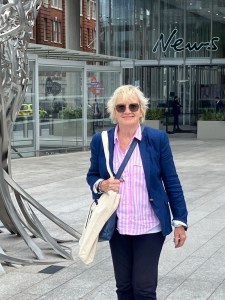
I was there recently visiting my family in England. I had a meeting with my new Editor at Harper Collins Publishing offices (I still get a kick being able to say that: “My publishers, my editor”!) at London Bridge. Many of the major publishers and newspapers are housed in this towering building that is right next to London Bridge tube station.

Security was very tight. As I approached the main entrance to the office tower, security guards stopped me, ready to turn me away. But I had an appointment and had to show my ID, which was checked against the computer appointments records before I could walk through those hallowed doors. Once inside the lobby, I was checked again by security and ushered through a metal detector. Just like at the airports. I had to wait until someone came to escort me upstairs. And when I left, I was chaperoned back through the same security system. So, this is what it’s like working in London today! Not quite the fun, easy-going offices I recall from my days of writing for the teenage magazine Jackie and the host of women’s magazines in Fleet Street.

My brother Ted had accompanied me and waited patiently nearby until my meeting was done. We had decided to explore the area of London Bridge and Borough Market – the new Hot Spot in London.  The hip, cool place where the young hangout. Pop-up food stalls proliferate; vintage clothing stalls, cosmetics, tattoos, stacks of vintage records for sale, ‘Bubble Tea’ adverts and music from all over the globe wafted through the crowds. I never did find out what ‘Bubble Tea’ was. But it seemed very popular. The market was wall-to-wall students and young entrepreneurs in their eye-catching, colorful attire. Creativity and innovative ideas abounded.

One of the reasons for the throngs of young people in the vicinity selling and buying was, I realized, because the market was so close to the medical colleges and universities. Lots of medical students.

I also learned that this market began life in 1756 as a cluster of stalls at the foot of London Bridge. It’s come a long way, baby!

The tall, grim buildings on St. Thomas Street are a focal point of the medical world. The famous Guy’s Hospital, founded in 1721 by philanthropist Thomas Guy, stands cheek-by-jowl with St. Thomas’ Teaching Hospital – where Florence Nightingale trained her dedicated nurses. This hospital was named for St. Thomas Becket and founded in the Middle Ages but located here in Lambeth since 1871. These are part of the Kings College, London Medical Education programs.

Just across the road is the tiny Operating Theatre Museum, in the Herb Garret at the top of the narrow 17th century brick building. A museum of surgical history housed in the old apothecary.  Herbs and flowers used in those days are displayed, with mortar-and-pestle and hand-written notes on their efficacy.  Completed in 1822 is the operating theatre is the oldest surviving operating theatre in Europe for surgeries that predated anesthetics and antiseptics.   

What fun! It offers learning experiences for all ages. I especially loved the large yellow rubber ducks placed around the exhibits. They were each painted with some dreadful disease: blobs of green goo representing gangrene, or drooling, lumpy additions depicting small-pox, syphilis, or the black plague. Symptoms were written on a card next to the duck. You had to guess what they represented. The answer was found underneath the duck. I noticed medical student visitors taking great delight in guessing the correct answers.  The enormous, black all-encompassing metal head gear with the long snout, for the brave doctors during the plague in 1660 London was there. Various operating tools were displayed, including the large hacksaw next to the operating table that was labeled “for the removal of legs and arms”.

There were rows of seats where the medical students sat to observe the operations by doctors who had no awareness of cleanliness, let alone surgical gowns, masks or even handwashing. Hand-written notes, instructions and explanations of the various implements (of torture?) used, as well as reports of individuals’ surgical successes – or traumas!

Today’s root-canals are easy-peasy by comparison!

This part of London shared so many stories, characters, tragedies and successes. I made copious notes, as Ted and I later stopped for a delicious cake and coffee in a little corner French café. A quiet haven amidst the noise and bustle.

Everywhere I looked were stories, historic revelations and wonderful new ideas and a revitalized energy.

Charles Dickens strolled through these London streets at night when he couldn’t sleep, and claimed this was where he found inspiration for his timeless novels. Incidentally, did you know that in 1847 Dickens founded a ‘Home for Homeless Women’ in London?

We walked down to the water’s edge and followed the River Thames as it snakes its way through London, past Shakespeare’s Globe Theatre towards Charing Cross, watching such a polyglot of people of all ages – “a seething mass of humanity” moving on its way through lives humdrum, urgent, desperate, happy, exciting. Who knows?

There is so much written about London through thousands of years. It’s difficult for a writer not to come away with a myriad of story ideas, a cacophony of images and circus of characters. Painters and artists of all fields must be similarly affected.

As Dr. Samuel Johnson wrote in 1777, “When a man is tired of London, he is tired of life. For there is in London all that life can be.”

What is your favorite source of inspiration?


Christmas in Bangkok & Hong Kong

by Jill Amadio

I looked forward to spending Christmas in Bangkok, Thailand. We’d moved there four months earlier when my husband was posted to Saigon, and I landed a job as a reporter for the Bangkok Post.

Writing about an Asian Christmas energized me, and I eagerly looked around the local shopping districts for gifts, decorations, and seasonal goodies for the kitchen. Writing features and pointing out the differences between our holiday in England and America and our current home seemed like endless discovery.

Alas, none of these visions came to a realization. Thailand, like most other Southeast Asian countries, does not celebrate Christmas because it is Buddhist. With three children expecting to wake up early on The Big Day and rush downstairs to open their gifts, what to do?

Ah! Got it! We’d spend the holiday in Hong Kong, just an hour’s flight away. At the time, the colony was highly attuned to British customs, and the big hotels, I was assured, displayed a splendid farang (foreign) Christmas that would enthrall any Westerner. In addition to enjoying the holiday, I planned to interview hotel guests, locals, market stall owners, and tourists. Among the latter I encountered, were Swiss, German, Swedish, and Australians.

I’d visited Hong Kong several times due to assignments and visited the island of Macau to cover auto racing. There were always a plethora of stories worth reporting for the newspaper in Bangkok but I was eager to experience how stupendous this Christmas adventure would surely prove to be.

My husband and I decided it would be silly to take wrapped gifts with us, so we planned to take the kids shopping to choose their own. My editor agreed that I would write about the trip, sending in daily reports and photos taken with my Polaroid camera before we skipped New Year’s Eve and returned to Bangkok. As our last day drew near and we were anxious to return home, we booked an earlier flight.

Big mistake.

It turned out that December 31 was always a massive celebration for both Brits and Chinese, a richness of reporting I decided to cover, even though I had plenty of stories of our own excursions in Hong Kong. Besides, who wanted to miss the turn of a century in this historic city at the southern tip of China?

Our children had never been in a toy store because two were born in Spain, where Christmas was essentially a religious holiday. Our third child was born in the U.S. during a quick turnaround trip to New York and back to Thailand to ensure her American citizenship by being born in the States. My son was already pledged to fight, at 18, in any war that Spain became involved in because he was born in Madrid, but his second sister was registered as American, as by then, I had received my own U.S. citizenship.

Our shopping trip was a great success with many changes of mind as we, as parents, pointed out the mounting cost of their decisions. Finally, having selected their toys and new clothes, and I had talked to several shoppers from various countries, we returned to our hotel. It was my turn to choose a gift. My husband wanted to go out alone and buy me a watch. I told him I’d like a Patek Phillipe, please. Off he went but returned rather quickly.

“Are you insane?” he asked. “Do you know what those watches cost? No way. You’re going to have to settle for a Rolex.”

At the time, Hong Kong was turning out fake Rolexes by the thousands. Most had wristbands that looked like gold but were, in fact, made from anything but that precious metal. Aha! Another good story! In fact, the bona fide Rolex dealer pointed out our mistake when we showed him the watch we’d bought elsewhere. Never mind. The band looked authentic, and the watch itself was confirmed as the real McCoy.

The festive air in the colony extended everywhere we went through the perpetually crowded streets. I knew that more than 7 million people lived in the small British enclave, and they invaded every restaurant, bar, and all the shopping districts in sight. Antique stores added red ribbons to their vintage wares, and the buildings were ablaze with Christmas lights. Even the hotel’s small office for guest use had a small Christmas tree. Laptops didn’t exist back then, but the electric typewriters fit the bill for typing up my interviews.

After a great New Year’s Eve, the hotel manager asked if we planned to stay on for January 6, the Chinese New Year, but by then, we’d had our fill of festivities.

I returned to Bangkok with a new satchel filled with notes and an extra suitcase for the kids’ toys and outfits. In Bangkok, we had to have our clothes tailor-made as there were no ready-made stores. The upside was that a dressmaker charged $5 or $6 to create a dress, a blouse, or a skirt. I’d simply bring in the fabric, show her a Chanel photo in Vogue or another magazine, and she’d copy it.

We left Hong Kong after two glorious weeks and enough material for several follow-up feature stories in the Bangkok Post.

Now, permanently living in America, with stores brimming with seasonal cheer, I wish my dear friends and readers at The Writers in Residence a Happy Hanukah, a Merry Christmas, and a Happy New Year!

Let Me Entertain You!

by Jackie Houchin

Lots of medical stuff going on with me right now, so I thought I’d simply share a fun aspect of our Alaska cruise last fall. That aspect is called MUSH.  No, not yelling at sled-pulling dogs (although we DID do that), but a different kind of Mush.

In Skagway, Alaska, I bought a small toy Husky, a beanie-bag size and shape little guy, with soft gray/white fur, big blue eyes, and the name MUSH printed on the tag. I loved the little guy from the first glimpse and perched him on my pillow in the stateroom when we got back to the ship. Joel, our cabin steward aboard the Oceania Regatta ship, loved Mush too.

When we left for dinner in the evenings the steward would come in to straighten up and turn down our beds. When we returned later, we found the usual chocolate candy on our pillows, AND…..Mush, posed in a series of so cute antics. The first time, he was propped on a pillow with the TV remote, watching a football game on the screen.

Another time he was standing on an open book (that I’d been reading), as if he were reading too.

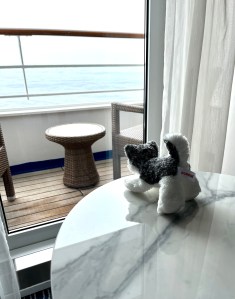
Once when we came back from an excursion ashore and after we’d had lunch at the buffet, we found him on our small room table with the curtains draw slightly, looking out at sea.

And then, every evening HE started getting chocolate candy too, an additional piece placed between his paws. We were absolutely delighted.

Of course “I” started posing Mush for Joel too when we went out for the day, hiding him where the pitcher of ice water was kept, or behind the desk alarm clock, or sometimes just lying on the bed, his head tucked in and front feet up, waiting for a belly rub.

We had such fun with Mush and our very good and so kind cabin steward.  Another sweet memory.  And now, Mush resides on my dresser at night, guarding my glasses, and sometimes on my pillow during the daytime.  (But he’s on a diet now – no chocolate.)

##

Maybe I could write a cute kid’s story starring Mush on an ocean cruise. He could meet friends, find a missing object, solve a mystery, or rescue someone in danger.  Now that’s an idea!! Mush and I might have to put our heads together and come up with a plan!

When A Series SPINS OFF: the Maisie Frobisher Mysteries

A Guest Post by Liz Hedgecock

I didn’t so much decide to write the Maisie Frobisher books. It was more that Maisie Frobisher decided she ought to have her own series!

Let me explain.

The Maisie Frobisher books are actually a spinoff series: the series they sprang from is the Caster and Fleet Mysteries. I co-wrote Caster and Fleet with another writer who is now a good friend, Paula Harmon.

When we began writing the books, Paula and I hadn’t actually met in real life – only via a Facebook writing group. We were already online friends, we liked each other’s writing styles, and we both wrote historical mystery (among other things). We’re not sure who first suggested writing a book together, but we’re very glad they did!

Maisie is a very minor character in the Caster and Fleet world until she has more of a starring role in book 4, The Case of the Masquerade Mob, which is a romp involving masked balls and all sorts of skulduggery. At the end of the book, poor Maisie, who has had rather a rough time, decides to travel the world and forget about men for a while. That was my jumping-off point, because I’d grown to like Maisie very much and I didn’t want to let her go.

My friend Paula also has a spinoff series of her own, set in the run-up to World War I, which follows the younger sister of one of our protagonists, Margaret Demeray.

I had many reasons to set the Maisie series abroad. Firstly, at the end of Masquerade Mob Maisie was going travelling, and I couldn’t go back on that! Secondly, in the 1890s, when the series is set, the world was opening up. Bigger and more luxurious cruise ships, faster journeys, and more capacity to travel for pleasure. I chose India because it was a well-known destination, the route was interesting, and also because of the opportunity to look at the British in India in the time of the Raj.

I try not to get too bogged down in historical research, though there are all sorts of opportunities to get lost down research rabbit holes! One advantage is that I have a Master’s degree in Victorian literature, so I’m fairly well grounded in some aspects. While I want to make the stories accurate, I don’t want to spoil a story for the sake of including every historical fact I’ve discovered. Probably a tenth of the things I’ve read about make it into the final book.

I didn’t choose the late Victorian period just because I knew a bit about it, though. It’s also fascinating because of what was going on at the time. Women were fighting for their rights, the ‘New Woman’ had arrived, and inventions like the safety bicycle meant that women’s mobility could increase.

The Maisie books are also special to me because they mark a change in the way I write. Up to that point, I had always written at my computer. With Maisie, I had the urge to try something different. In the first book in the series, All at Sea, Maisie is on a ship which is always moving, and she must solve the mystery before the ship reaches port. With that sense of urgency in mind, I tried an experiment. I took my phone for a walk and dictated the book’s opening: a letter from Maisie to her mother, followed by a rather different diary entry on the same subject. The words seemed to flow. Ever since then, I’ve dictated my fiction rather than writing it. The result needs correction and editing, of course, but it’s a really good way to get into the flow, get that first draft down, and spend time walking rather than sitting.

If you do try the first Maisie book, All at Sea, or indeed, the first in the Caster and Fleet series, The Case of the Black Tulips, I hope you enjoy them!

#

Liz Hedgecock grew up in London, England, did an English degree, and then took forever to start writing.  Now Liz travels between the nineteenth and twenty-first centuries, murdering people. To be fair, she does usually clean up after herself.

Liz lives in Cheshire with her husband and two sons, and when she’s not writing you can usually find her reading, on a walk, messing about on social media or cooing over stuff in museums and art galleries. That’s her story, anyway, and she’s sticking to it.

Website: http://lizhedgecock.wordpress.com

Facebook: http://www.facebook.com/LizHedgecockWrites

Twitter: http://twitter.com/lizhedgecock

Amazon author page (global link): http://author.to/LizH

###

Note from Jackie Houchin: I began the Maisie Frobisher series – All at Sea – while on a cruise. (I could so identify with Maisie!)  But I got so attached to her sense of adventure and fearless deeds of daring, that I bought the second one (Off The Map). Of course I had to buy that third book with the magnificent Leopard on the cover (Gone to Ground). I’m now reading the fourth one and Maisie is back in London, but still involved in mystery and intrigue. (In Plain Sight)

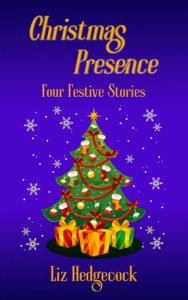
A character from the Maisie books appears in one of the four Christmas short stories in Liz Hedgecock’s Christmas Presence, Four Festive Stories. It’s a perfect way to sample Liz’s work and to gift for the Holidays!

.

This article was posted by member, Jackie Houchin

.

How I Set A Mystery In The Galapagos

By Guest Blogger, Sharon Marchisello

For as long as I can remember, I had three goals in life: become a bestselling author, meet and marry the love of my life, and travel the world together. And I always figured I’d do them in that order. Although I achieved my dream of being a published author, I’m still working on that “bestselling” part.  

When I graduated from the University of Southern California with a master’s degree in professional writing, I realized I’d have to get a “real” job. Not only was I not making a living as a writer; I wasn’t even published. Should I go for an opportunity that involved writing but might drain my talent and energy? Or should I look for something mindless that would pay the bills, so I could focus on my stories during off hours? Then a position as a reservations agent at Western Airlines fell into my lap.  

My roommate had a friend who worked there, and one day the friend called to say Western Airlines was hiring. I was the first person to listen to the message on our answering machine and begged to go to the interview too.  

The woman who interviewed me said, “You’re overqualified for this job. You just want it for the travel perks, and I know you’ll quit after a year or so. But I won’t stand in your way.” I stayed with the company for twenty-seven years; my roommate left after six months.  

But she was right about me wanting the travel benefits, and my first few years, I was on a plane every time I had a day off. I met my future husband at the Los Angeles airport, and together we’ve taken 65 cruises and visited over 100 countries on all seven continents.  

Although I kept writing fiction and even published a few travel articles, I never set a story in one of the destinations I’d traveled to. Until the Galapagos.  

If you’re looking for the Galapagos on the map, it’s a group of islands straddling the equator, approximately 600 miles off the Pacific Coast of Ecuador. I never planned to set a book there, either, but six months later, I remembered an experience from our cruise that I thought would make a great opening scene for a mystery.  

Normally, the guides were conscientious about counting heads and watching over all the passengers in their charge whenever we were away from the ship. In an archipelago comprising 97% national park containing flora and fauna found nowhere else on earth, tourists must be carefully supervised.

But one day, my husband and I left another activity to join a snorkeling excursion already in progress, and neither of the guides assumed responsibility for us.  

We were swimming along, marveling at the vast array of colorful underwater life, when I surfaced to see both Zodiac boats motoring back to the ship—without us! I can still feel the panic of being left alone in the middle of the ocean, treading water off the shore of an island populated only by sea lions and blue-footed boobies.  

I waved and screamed, bobbing up and down like a spyhopping whale, and fortunately, someone spotted me. One of the boats turned around and came back to pick me up. I didn’t see my husband right away but told the guide he was still out there. In a moment, he’d swum up and climbed aboard. All was well.  

But what if… What if my protagonist’s companion didn’t get picked up? And what if the person was left behind on purpose?  

I had a great time writing the book, reliving our trip through photos and program notes, plus doing a lot of supplemental research on the internet.  

When Secrets of the Galapagos begins, my heroine, Giovanna Rogers, is snorkeling with her new friend, tortoise researcher Laurel Pardo. The two get separated from the group, and Laurel disappears. No one on the ship will acknowledge that Laurel didn’t make it back.  

To determine a motive, I recalled a conversation I’d had with one of our guides during a visit to the Charles Darwin Research Station in Puerto Ayora, the largest town on Santa Cruz (one of only four inhabited islands in the chain). “I know a secret about Lonesome George,” he said. “But if I tell you, I’ll have to kill you.”

Lonesome George was a Galapagos giant tortoise made famous for being the sole survivor of the Pinta Island species. Unfortunately, efforts to breed George were unsuccessful, and the ancient tortoise passed away in 2012 without an heir.  

But what if someone discovered another giant tortoise from a different subspecies also thought to be extinct? And then a tortoise researcher unearthed information about the animal that the tourist industry didn’t want released?  

You’ll have to read Secrets of the Galapagos to find out what happens next.  

Blurb:  

Shattered by a broken engagement and a business venture derailed by Jerome Haddad, her unscrupulous partner, Giovanna Rogers goes on a luxury Galapagos cruise with her grandmother to decompress. At least that’s what her grandmother thinks. Giovanna is determined to make Jerome pay for what he’s done, and she has a tip he’s headed for the Galapagos.  

While snorkeling in Gardner Bay off the coast of Española Island, Giovanna and another cruise passenger, tortoise researcher Laurel Pardo, become separated from the group, and Laurel is left behind. No one on the ship will acknowledge Laurel is missing, and Giovanna suspects a cover-up.  

When the police come on board to investigate a death, Giovanna assumes the victim is Laurel. She’s anxious to give her testimony to the attractive local detective assigned to the case. Instead, she learns someone else is dead, and she’s a person of interest.  

Resolved to keep searching for Laurel and make sense of her disappearance, Giovanna learns several people on board the ship have reasons to want Laurel gone. One is a scam involving Tio Armando, the famous Galapagos giant tortoise and a major tourist attraction in the archipelago. And Jerome Haddad has a hand in it. Thinking she’s the cat in this game, Giovanna gets too involved and becomes the mouse, putting her life in jeopardy. But if she doesn’t stop him, Jerome will go on to ruin others.

AMAZON 

SUNBURY PRESS

Bio:  

Sharon Marchisello is the author of two mysteries published by Sunbury Press—Going Home (2014) and Secrets of the Galapagos (2019). She has written short stories, a nonfiction book about finance, training manuals, screenplays, a blog, and book reviews. She earned a Master’s in Professional Writing from the University of Southern California and has been an active member of Sisters in Crime since 1995, currently serving as treasurer of the Atlanta chapter. Retired from a 27-year career with Delta Air Lines, she now lives in Peachtree City, Georgia, and volunteers for the Fayette Humane Society.  

Website: sharonmarchisello.com (https://smarchisello.wordpress.com/)  

##

This article was posted by member, Jackie Houchin. If you’d like to read my review of the audiobook version of  SECRETS OF THE GALAPAGOS, click here.   


MY GREEK SOJOURN….

 By ROSEMARY LORD

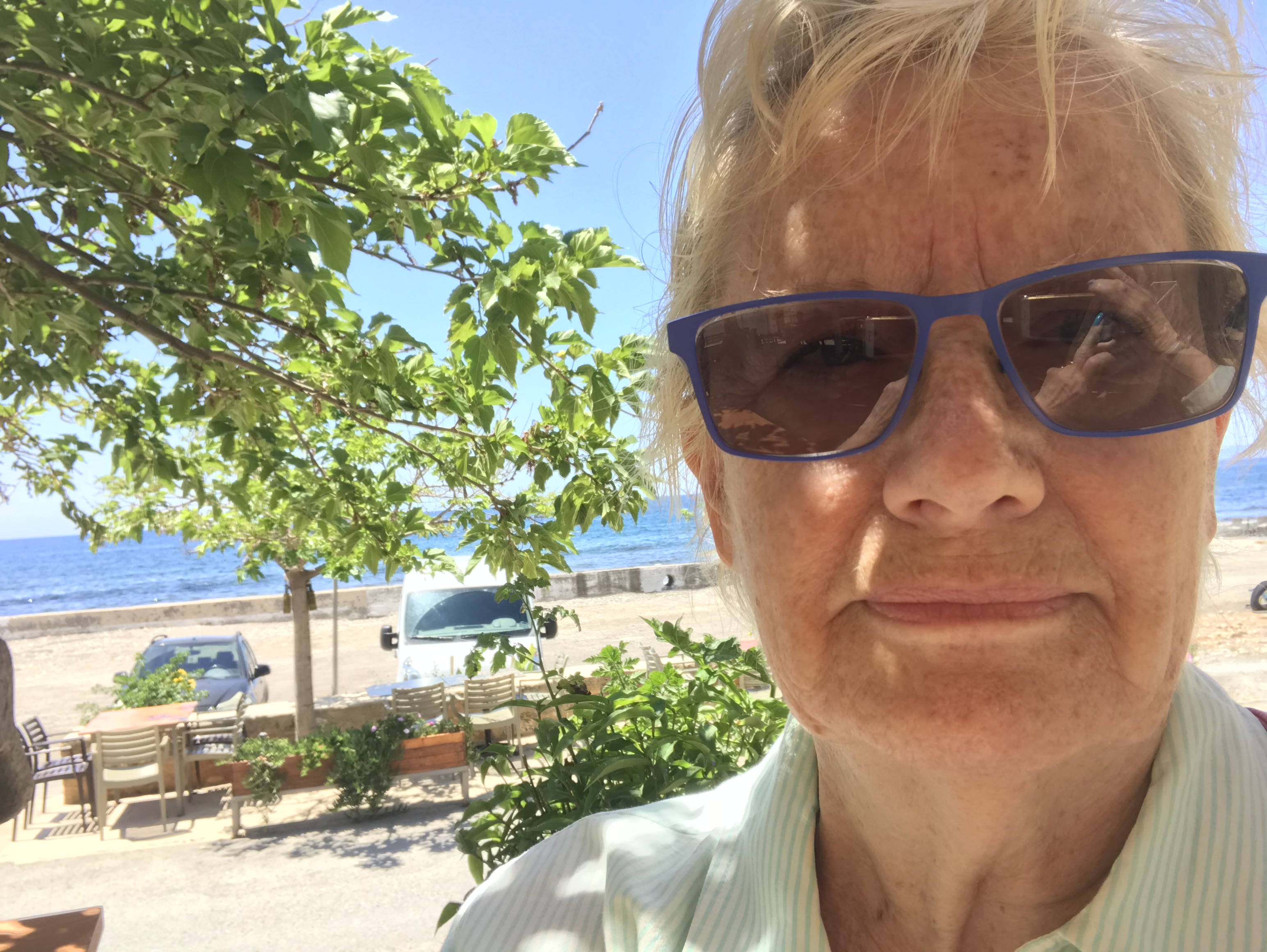
Rosie Selfie

I love to see the writing trends and what’s being read in different locales. So here I am doing my research in far away Greece. Well, someone has to do it!

You see, my older brother, Ted, is undergoing treatment for prostate cancer and my sister Angela – an ex-dancer – is recovering from knee surgery. So, the best idea was to scoop everyone up and retreat to this sleepy village on the Greek coast, where we can do family healing and recouping – and where I can get a proper break from running the Woman’s Club of Hollywood.

It seemed like a good idea at the time, during those cold winter months.

And, as I sit on my balcony in the afternoon sun, while my siblings take a siesta, I concluded that this was indeed a very good idea!

Rosie in Greece 2

Behind me, the Taygata Mountains shield us from the rest of Greece. In front I can see the waves of the Ionian Sea rolling in, then rhythmically retreating. Olive trees and the occasional lemon tree fill in everywhere else, colored by a profusion of wildflowers wherever one looks. The birds – chaffinches, sparrows, house martins and the constantly-cooing doves – provide the background music. With the occasional bleat from a stray goat, or a distant dog bark.

Not many distractions for industrious writers here.

Rosie and sister 2 croppedAnd there are small writers’ groups in the little villages. Especially poetry writers. Mostly American, German and English ex-pats, who escaped the cold winters of their homelands to have a fresh start here.

An ideal place for writers – except that it’s very hard to get work done in such an idyllic surrounding. It was in the next village that Nicholas Kazantzakis wrote about the legendary local man, Zorba the Greek – the black-and-white film of the book had the iconic music as Alan Bates and Anthony Quinn danced on the local beach. Ernest Hemingway, Lawrence Durrell, Dorothy Parker and other writers would stay nearby at the home of British writer and war hero, Patrick Leigh Fermor. His home has recently been turned into a writers’ retreat, with programs through UCLA and the New York and the British Library. We watched it being restored over recent years and toured the light and airy library and living and writing rooms. A magical place.

But, back to today’s writing. In the small local Katerina supermarkets, I always head for the book stands to see what’s being read. Jeffrey Deaver, Lee Childs and James Patterson head the English-language shelves, with Danielle Steele and Mary Higgins Clarke perennial favorites for holiday reading. The same titles printed in Greek and in German occupy the next shelves. Victoria Hislop’s beautifully written and researched sagas based on Greek and Spanish civil wars are prevalent and, on a lighter note, Joanna Trollop, Lucida Riley, Leah Fleming and, still, Agatha Christie paperbacks remain popular purchases. At one of the nearby cafes there is a “bring one/take one” wall of books, where one can swap a book you’ve finished and read something different.

Rosie and Sister

Here I am with my sister Annie.

There’s a lot of sitting in the shade of the olive trees or under an umbrella on the beach and reading done here. Forget about TV in this part of the world – so there’s a lot of reading and writing going on. Until you nod off, that is, and awaken 40 minutes later, wondering where you are and what you’re supposed to be doing! I have done that many times since being back here! I’m catching up on lost sleep!

But getting away from one’s normal routine can be very productive. As Marcel Proust pointed out: “The real voyage of discovery consists not in seeking new landscapes, but in seeing with new eyes.”

Looking at one’s life and work from afar brings new perspectives.

I have long been working on a book of the history of the Woman’s Club of Hollywood that has occupied my life for lo these many years. Here, I have been able to attack it with a different, fresh approach. I have also taken a different slant with two of my other half-finished novels that really need to be ‘out there.’ And I’ve been sketching a new mystery set in these parts.

I picked up an interesting idea from the prolific Lee Goldberg (who wrote the “Monk” television series, “Diagnosis Murder,” and recently Hallmark’s “Mystery 101”) on my recent trip to the Left Coast Crime Writers’ Conference, where we were fellow panelists.

Lee explained that script writing was much easier and quicker for him than all the novels he had written. Novels take him many months to write. Scripts could be done in a matter of weeks – often due to the pressing time allowed by the studios. So now he does a simple script of his new novel first. In the script, he said, he writes the step by step ‘what happened.’ No back-story and scant descriptions. Because, in a TV or film production, all the other departments fill this in.

The Casting Department bring in the actors whose personality, looks and ability provide the story’s characters. The Costume designers create the clothes for everyone, based on their view of the script they have read. The Production Designer designs the sets and, with the Art Department, select the locations and the back-drops. The Prop Master decides all the bits and pieces that fill the set, bringing it further to life. It’s a collaborative effort. They all meet up and discuss their ideas, along with the Cinematographer, Lighting and sound people. They each add their own talents and experience, orchestrated by the Director and the Producer. Writing the script, Lee says, is the simple part. He may not agree with or recognize the end-product on the screen, but, as long as the check didn’t bounce, he’s okay with this.

And so, he uses that basis for his novels now. He says it’s quicker than the old outline route. He writes the basic storyline as he would a script. With this, he can see if there is a part of the mystery or plot that doesn’t work, or something left unfinished. Once he knows he has the story worked out, he will go back in and fill in the character details, the background, the setting. This is the stage where he adds in any research he has undertaken and adds the touches of flavor and nuances. Whatever that particular novel needs to bring it to life.

And so, as the sun begins to sink behind the olive trees, I have re-assessed my various writing projects with fresh, ‘new’ eyes. Would fresh, ‘new eyes’ change your current writing?

                  Love from Greece,

                              Rosemary

Rosie in Greece 3

Writers on the Road

by Linda O. Johnston

Well, not literally on the road necessarily, but traveling. On vacation. 

Is there such a thing as a vacation for a writer? Yes… and no.

Wherever we are, whatever we’re doing, our minds are busy.  Never mind whether we’re sitting at a computer churning out whatever story we are working on. That might not happen as much while we are out of our usual environment.

But yes, we’re writing when we’re not writing. Our minds are at work, observing what’s around us, the environment, the people including possibly our families but also those who are there on vacation too, or locals, or those who are taking care of us at whatever hotels or resorts we might be visiting or cruises we’re on.

It’s all inspiration! No matter what we might be writing at the moment or planning to write in the near future, we’re always open to new ideas that we might head for in the future.

Yes, last time I was here I wrote about a life of strange inspirations. But what about inspirations that aren’t strange, but fun?

So why am I addressing this? Well, last week I was on a family trip at a resort in Cancun. Oh, yes, it was fun. I loved being with family, and the environment was amazing. Extremely windy when we were there, but the brilliant blue water beyond the white sand beach at the place we were staying was beautiful. A lot of generous service from the resort staff. Multi-level swimming pools. Vast buildings around areas where outside entertainment was provided. Even fireworks!

I had mixed emotions about some of it. We’d been to that resort before, and they have a couple of large pools containing dolphins that appear to be well treated considering where they are, but having such smart animals that are originally from vast sea environments contained like that… Well, I’ve researched dolphins. They’re wonderful beings. As smart as humans in their environment. Am I inspired to write about them? I’ve always been inspired to write about them, but definitely not in situations like that—unless they can find a way out and get revenge!

See! My mind was at work while I was relaxing and enjoying my vacation.

How about you? Does traveling inspire you to develop new ideas, new stories, different kinds of things?

By the way, this subject is so vital to me that I’m incorporating it into the three blogs I’m posting on the same day this month. I’m addressing it somewhat differently, but it’s definitely on my mind. Along with my writing.

###

Photo by Leon Overweel on Unsplash

WHAT ARE WE MISSING?

by Rosemary Lord

Well, we wanted this year to be different, didn’t we? Or, did we yearn for The Good Old Days of yore: that is pre-Covid? The truth is somewhere in the middle…

For two years, we did as we were told. Because lives were at stake, and livelihoods, businesses, careers. We shut our lives down, following the Covid-19 restrictions and guidelines. We did the best we could.

But now, not a moment too soon, our world is supposed to be opening up again. How’s that working for you?  What are you looking forward to doing, as we get out and about, and happily smile, bare-faced, at each other again?

I don’t know about you – but, as a writer, I really missed all the Writers’ Conferences and workshops. It was a chance to get together with other creative folk from all over the world – writers, publishers, readers, agents – and swap ideas, hear news and get inspired and encouraged once more. Whether we attended in person, participated via Zoom or read about them online. They always made me feel part of a wonderful, chattering, writers’ world.

I loved reading about the conferences far, far away. Especially those sublime Writers’ Retreats in Tuscany, Greece or exotic Eastern islands. I mean, who could afford them? Even the fare to get there? Who had the time? But it was lovely to dream about the ‘one day’ when I had several best-selling novels under my belt and knew I could write the expenses off from my high taxes of my super-successful writing career.

I also learned a lot reading the descriptions of the workshops offered. Some were business oriented, about how the super-successful J. K. Rowlings and her compadres ran their writing careers or businesses. Or had someone else do it for them. Details of the foreign retreats that focused on creativity had descriptions to drool over: the leisurely, dreamy days gazing out on azure seas, after early-morning yoga, while tutors encouraged one to write something totally different from your usual style. To explore hidden corners of our creative brains. A morning of writing would be followed by exquisitely prepared meals of fresh, local produce served ‘en-plein-air’ – in the shade of exotic trees. To be followed by an afternoon saunter to the local farmers’ markets – or perhaps a wine tasting at the local vineyard. Then return to your room for more writing time. That is, if you could stay awake after the food and wine! Those Writers’ Retreats are VERY expensive. But one can dream…

In reality, most of us attend the more practical conferences packed with workshops on different styles and genres, on research, on editing our tomes, and how to wrap them up with an eye-catching pitch. There are always plenty of opportunities to attend agent-lead workshops, meet publishers and editors and hear lectures by our successful counterparts. I used to love listening to the late (and dearly missed) Sue Grafton. She always made us feel that if she had achieved success, then we could surely do the same. Charlaine Harris, Ann Perry, Lee Child, Ann Cleeves, Michael Connelly – I could go on – but they all spoke at these numerous events, sharing advice and encouragement for their fellow writers.  

These conferences are held all over the country. The annual Bouchercon was to have been in New Orleans last year but was cancelled due to Covid. I was looking forward to that! This year it’s in Minneapolis in September. The last Left Coast Crime Writers Conference I attended was in Vancouver in 2019. The 2020 one in San Diego was cancelled. This next one is in Albuquerque in April. (I’m moderating a panel of screenwriters and guesting on a panel about Twentieth Century Mysteries.) Malice Domestic Conference will be in Bethesda late April. The International Thriller Writers Conference is June 4th in New York.

There are several more venues for writers to hone their craft and network, including the California Crime Writers, which has gone online due to Covid precautions. There’s something for every writer: romance writers, mystery writers, screen writers, short-story writers. Something for every genre, for beginners and experienced career writers, traditionally published, self-published and ‘pre-published.’ In that long conference weekend, we get to talk about writing, meet new writers and readers, new agents and publishers, learn the latest forensic discoveries, the new publishing trends – and often, we plot how to commit murders that we can get away with! For our literary characters that is, of course! Although that discussion might well happen at the Romance Writers Conference occasionally, too!

            Many conferences were in California, so I would drive to them. But other times I would fly to another state.  Apart from the fun adventure of travelling to these events, I’ve missed seeing my writer friends from all over the globe. We laugh a lot, catch up on each other’s lives, eat a lot – and the bars are always open. It’s a lovely escape – before we return home to our usually isolated writing life. There, we scribble in our endless notebooks, then tap away on our computers – until we have something completed that we can discuss at the next writers’ conference.

So, we’re back to normal – sort of.

Almost.

Yay!

What part of your writers’ life did you miss most these past couple of years?

Mystery People, Jessica Speart

by Jill Amadio

Few mystery writers pour their personal passion into their fiction to get their message across as successfully and as brilliantly as multi-book author Jessica Speart.  Published traditionally by such as Severn House, William Morrow, and others as one of the most addictive thriller series, the acclaimed American author’s plots are based on true, wildlife issues.

Elephants slaughtered for their tusks, sharks for their fins, rhinos for their horns, and other species for their rarity, many endangered, form the focus of Rachel Porter’s action-packed sleuthing. An agent for the U.S. Fish and Wildlife Service, (USFWS), the fictional character is a composite based on real agents who investigate smuggling, murders, and criminals who break the laws that cover illegal species trading.

Casting a worldwide net, Speart sets her mysteries in several American states, and peoples them with characters in Mexico, Russia and other countries where illegal hunting is at its most prevalent such as Hawaii for its rare reptiles and exotic birds in Florida, but what stands out the most is the remarkably meticulous and detailed research that Speart brings to her books. The reader learns a wealth of fascinating facts told in an often-humorous style while at the same time learning how poachers work, the tools needed to trap tortoises, and the clever ruses criminals use that include the rich and famous with their collecting obsessions.

Doing research is essential to my writing,” she said. ”The idea is not to just make things up [but] to provide facts in a compelling way.”

An investigative freelance journalist for several years after studying theater at the Boston University College of Fine Arts, and stints as an actress off-Broadway, in commercials, and soap operas, Speart switched from acting to writing.

“I needed to get away for a while and ended up going to Africa. It was there that I witnessed the poaching of elephants for their ivory and rhino for their horns. I came home determined to do something to try and help.”

Speart took a direct approach and began her magazine career writing stories about the USFWS special agents and their investigations. She became fascinated with their work. Many of her articles involved wildlife and drug-trafficking crimes and were published in the New York Times, Mother Jones, and many other outlets.

But the subject matter, she discovered, wasn’t high on the list of law enforcement agencies. An animal lover, she decided to take justice into her own hands by starting a crime series, knowing the popularity of mysteries and thrillers could give her topic a voice.

My first ten books are the fictional Rachel Porter mystery series,” she said, “which sprang from my magazine work. I became frustrated with the outcome of many wildlife cases. The illegal trade in endangered species is worth between $15-20 billion a year and yet the fines and punishment remain low.”

In the process Speart became an expert in demand at endangered species conferences, a keynote speaker at a wide range of distinguished forums including the American Museum of Natural History, John Jay College of Criminal Justice, chapters of the Audubon Society, and others, and a frequent guest on television shows and documentaries..

“The transition from non-fiction journalism to fiction wasn’t difficult, given the reality of the issues,” she said, having covered cases from initial suspicious behavior to arrest and conviction.

The fast-paced Rachel Porter series begins with what could be considered fragments of the author’s own life. Titled GATOR AIDE, it takes place in the steamy bayous of Louisiana and the New Orleans French Quarter, featuring an alligator chained to a bathtub with a dead stripper nearby. The book’s characters include cops, killers, drag queens, and corrupt politicians.

Speart’s second book, TORTOISE SOUP, crosses the country to a new assignment in Nevada where endangered tortoises have disappeared, while book 3, BIRD BRAINED, sends the USFWS agent back to the southeast coast and Florida, where exotic cockatoos and parrots are smuggled out. The cast includes a wonderfully-rendered sleazy snake dealer, Cuban cigar smugglers, airboat cowboys, and Castro terrorists. The action never stops.

Primates inhabit book 4 and the locale is the Mexican border. Not too surprisingly because they exist in real life, there’s a game ranch stocked with rare antelopes, Indian deer, and African oryx for the rich to hunt down and kill for sport. Rachel Porter unwittingly joins the group on the wrong side of the party.

Caviar, anyone? BLACK DELTA NIGHT explains how Tennessee’s Mississippi River paddlefish becomes a rival to Beluga for the Russian mafia to exploit. This time Rachel goes undercover when murder is on the menu.

While her methods eventually result in catching the criminals, her way of operating tends to irritate her bosses and, once again, she is shipped off to another state. Montana, long known as home to private militias and survivalists, also has more than its share of grizzly bears. But why are they being killed along with several Native Americans? A KILLING SEASON provides a dazzling backdrop to the puzzle.

Books 7, 8 and 9 see Rachel once again shuttled off to other states to get her out of her boss’ hair. This time she is sent to Georgia with its manatees in COASTAL DISTURBANCE, and then to northern California with BLUE TWILIGHT in which a collector is obsessed with a rare butterfly. Again, Speart’s research brings reality to the characters, locales, and plot lines. In RESTLESS WATERS Rachel is back in Hawaii to chase down those who upset the fragile ecological balance.

Book 10 winds up the series with UNSAFE HARBOR involving the importation of illegal Tibetan antelope fur clothing, before Speart turns to non-fiction for her 11th book, WINGED OBSESSION: The Pursuit of the World’s Most Notorious Butterfly Smuggler.
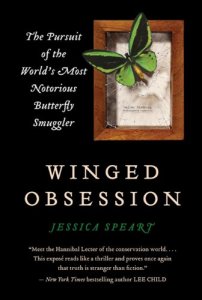
“It deals with an actual case that is so crazy no one would believe it if I wrote it as fiction,” she said. “A Japanese national began prowling around America’s national parks. One butterfly he chased was the Apache Fritillary, catching 500 of them and shipping them back to Japan to sell.”

Following up on the true case she flew to Japan and went undercover to make friends with the man. Soon, she discovered he was setting her up. A thriller, indeed.

Whether writing non-fiction or fiction Speart spends time outlining her books before giving it its freedom. “I’m a big outliner, especially when it comes to writing a mystery. Otherwise, it’s like driving your car through a tunnel without lights on a dark night. You are bound to have an accident.”

She noted that some authors spend a year-sometimes two or three – nurturing their book. “Then comes the morning when we finally have to let go and the book takes on a life of its own.”

Speart finds that releasing a published book is exciting and frightening both at the same time. “There’s the rush of having the published book hit the stores, there’s the fear that no one will like it. But what about those folks who read your book and become angry?”

After BLUE TWILIGHT went on sale a small group of butterfly collectors felt she had attacked them, and, in turn, began attacking her.

“Apparently, I’d hit a nerve,” she said. “I’m not saying butterfly collecting is a crime but there are those who cross the line between collecting legal butterflies versus collecting protected and endangered butterflies. There are instances where even legal butterflies have been over-collected.”

The author points out that there is a class system when it comes to species being valued, and that if they were chimps, tigers and others public reaction would be one of horror. She continues the argument on her website in one of her blogs. She also discusses the difference between the two styles, saying that narrative non-fiction is fact-based storytelling employing some of the same skills that are used in fiction, setting each scene, presenting fascinating characters, and creating a strong narrative persona.

As for specific dialogue in non-fiction, Speart again brings her research to the forefront. It requires, she says, exhaustive digging which is something she enjoys. She also points out that narrative non-fiction doesn’t have to be told as purely objective journalism. Writers can bring emotion to their characters and create a sense of drama while following the story arc.

A few books that fit into the discussion are some of her favorites including In Cold Blood by Truman Capote; Into Thin Air by Jon Krakauer; The Orchard Thief by Susan Orlean; The Perfect Storm by Sebastian Junger, and Midnight in the Garden of Good and Evil by John Berendt, a book that began Speart’s love affair with the city of Savannah.

Jessica Speart teaches an advanced mystery writers workshop in Connecticut, and reminds students: “You have to believe in your work and not give up. Writing is a rough business and not for the faint of heart.

The Secret Books of Poison

by Alan Bradley


In my library are three slightly repellent books. One is the colour of poisoned custard, and the other two are a poisonous purple.

They look as if they’ve been through a lot. And they have.

These fat volumes, of about 500 pages each, were compiled in a time of disaster, and at the time, I didn’t know what I was doing or why. All I knew was that it needed to be done.

But first, a word of explanation. I am often asked, as are most writers, “Where did your main character come from? How did you go about creating him/her?” The simple answer is “I didn’t”, but the truth lies hidden in the thousand and more pages of these three uneasy books.

We had, at the time, a comfortable home on the edge of a forest – just like in the fairy tales. Until one night, lightning struck, and our forest was ablaze. Although we managed to get out safely with our pets, just ahead of the flames, more than 200 of our neighbours’ homes were reduced to ashes. When we were finally allowed to return, several weeks later, we found ourselves living in a blasted landscape: skeleton trees in a dead landscape of soot and ashes.

Time changed, and everything became different, including ourselves. What were we to do?

Sometime during those long hours and days and weeks that followed, I began compiling a compendium of poisons. The psychologists ought to have a field-day with that! Without knowing why, I had begun collecting and collating everything I could find on poisons and their history, all nicely filed alphabetically and indexed all the way from ‘A is for Arsenic’ to ‘Z is for Zarutin.’

The files grew from a folder, to many, and then to a book, then two, then three.

They contained detailed descriptions of the life and crimes of famous and not-so-famous poisoners, the history of specific poisoners from antiquity until just yesterday, the chemistry of poisons and their medical aspect. Ancient newspaper accounts told many a grim story, all so sadly the same: love gone wrong, ambition gone mad, and cleverness come a cropper.

There were heart-breaking tales of poor children who, in searching for something to eat, had – but enough! You get the idea.

Then, as the world around us restored itself, I put these books away, not knowing if I would ever look at them again. Whatever angel had caused me to compile this stuff had not bothered to leave an explanatory note. When the time came, I would know why.

Several years passed. Five, in fact. And there came a day when I decided that it was time to sit down and write that ‘Golden Age’ mystery novel I had been mulling since my younger days. It was a book that I much looked forward to, a tale that would draw on my years of experience in television broadcasting. Something fresh – something startling.

But it was not to be. I got no farther than the second chapter when, in a scene involving a visit to a crumbling country house in England, an eleven-year-old girl materialised suddenly on the page and would not, in spite of my every effort, be budged. She would not be written out and she would not be ignored. After a time, I realised that she had taken over my book completely. It was her book now, and my role was to sit down, shut up, and write what she told me to write.

And it came as no real surprise that her whole being revolved around a passion for poisons. Her knowledge of the subject was, you might say, voluminous.

Since then, she has more or less dictated ten novels, and has gathered readers around the globe in forty-some countries and forty-some languages. She has been on the New York Times bestseller list.

And that, dear reader, is the origin of Flavia de Luce, as best as I can manage to explain it.

And these three noxious volumes are the only proof I have that all of this is true.

See for yourself!

#


My website is www.flaviadeluce.com  My facebook page is AlanBradleyauthor. My gmail is flaviadeluce@gmail.com
 
Happy to hear from readers.
 
Photo by Jeff Bassett
 
I grew up in a small town in Southern Ontario, and being always fascinated by the magic of light and colored glass, naturally went into television broadcasting, both private and public. After twenty-five years as Director of Television Engineering at the University of Saskatchewan, I took early retirement to write a mystery that never got written. I did manage to write other things, though.
 
Now that I’m retired from retirement, having lived for a while in Malta, my wife and I now live in the Isle of Man, in the shadow of an old castle, where we keep an eye on the sea at our door, which was once frequented by Saint Patrick and the Vikings.


Alan Bradley has written TEN Flavia deLuce books, plus a short story, The Curious Case of the Copper Corpse. His newest novel is The Golden Tresses of the Dead. All the books are available in audiobook form (which I love). 
He also wrote a wonderful ebook memoir, The Shoebox Bible.