We are a group of published writers who come here weekly to entertain, inform, and encourage you in your writing and your reading journey. Grab a cup of coffee, get comfortable, and join us.
Promotion. Writers need to do it, especially when they have a book coming out.
As I do. The fifth in my Shelter of Secrets series for Harlequin Romantic Suspense, CANINE REFUGE, will be an April release. It’ll be the last in that series, which I’ve enjoyed writing. And I want to make sure the world knows about it.
And so I’m mentioning it here. And on my weekly blog for Killer Hobbies. Plus, I’m speaking today at the Union Oil Company Alumni Association lunch, and guess what I’ll be mentioning along with a lot more. In addition, I subscribe to a promotional organization called Writerspace, which also maintains my website. I do more promotions there, including sending out a newsletter—which I haven’t done for a while.
So, what do other writers do? Most published writers understand the importance of getting the word out when they have a new book coming out, whether it’s from a traditional publisher, as mine are, or if they self-publish, which is becoming much more popular these days.
My first career was in advertising and public relations many years ago, but things have changed. A lot of promo then could be in publications like newspapers and magazines, but there was no internet then. Now, it’s much easier to get word out all over the country, all over the world, by finding sources online and utilizing them.
But is it okay to bombard prospective readers with info about new books? Well, why not? It’s good to let them know about them, whether it’s via social media or otherwise. The more they know, the more likely they are to buy and read a new book. And they certainly don’t have to buy it if it’s not their kind of thing—if they prefer mysteries or regular romance to romantic suspense, for example.
So all you other writers out there, how do you promote your new releases? Do you promote them? And readers, whether writers or not, how do you prefer to learn about new releases?
Whether it’s time or words – it’s an ongoing challenge for me.
Not having the luxury of a 30-hour day, I’m always trying to squeeze things in, so that, apart from ‘work’, I can have some sort of personal life, family time and of course writing time. As I struggle to transfer my workload at the Woman’s Club of Hollywood to a new dedicated crew, it’s taking a lot longer than I anticipated – and about 6 new people to do the work I’ve been doing on my own for so long!
But – I will make it all fit.
I designated Sunday as MY day, when I will not deal with any Woman’s Club work and only speak with family, friends, potter, catch up on housework and fit in some writing time, too. My ‘work phone’ is switched off. This is the only way I’ve been able to catch up on my personal life, finding serenity, make things fit – and even make time to paint my nails – a pale blue this week! I cherish my Sundays.
I envy some of my friends who retired early and travel all the time. I just can’t fit that in now!
And then there’s making things fit in my writing. I have three major writing assignments at the moment. A non-fiction, 144-page coffee-table history book, an historical novel and a memoir. So far, I’ve not had the time – or the mental focus – to sit for hour after hour, day after day, as I used to, to complete one of them. I tend to fit in the odd hour or two and peck away at one of my projects. Although my mind is always working overtime thinking about them.
First, in fiction, especially in mysteries, I have to get the right name for my characters. I have to make the name fit.
I mean, you can’t really have an exotic, sultry siren called Mary or Jane, could you? Sophia or Camille, maybe. Or a tall, hunky, sun-bronzed hero called Arthur or Reginald, doesn’t really work, does it? The names have to fit the character, the story, the era, the background, in order to be believable.
Although one of my pet peeves as a reader is to have the characters all having a similar sounding name, especially in the same scene: Fin, Tim, Dick, Nick, Rick – or Jim, Jon, Jan, Jen, Janey, Jed and so on. I make a point of making sure the names differ in sound and length. You’re not going to get confused when characters names are specific for the storyline and sound different. Such as a Jim, Stephen, Montgomery, Drew and Samuel. Or Roberta, Annie, Pamela, Sue, Gwendoline and Florence. Different lengths and starting with different consonants. Easier for the reader (and me, the writer) to keep track of.
I always feel challenged with the word-counts we’re given. Tough to fit all I want to say within their limits. Should my work be a short-story, a novella, a novel – or a War and Peace tome? My storyline has to fit into the right category.
Then I (hopefully) unobtrusively, fit in the clues and red herrings. Remembering the villain needs to be seen, fleetingly, very early on in the story. Almost hidden, with no big flashing neon signs. So that at the end, when all is uncovered, I haven’t cheated my readers by suddenly announcing: “By the way, the Butler, whom you’ve never seen before, did it.” As a reader I like to think I know ‘Who Dunnit,’ but I’m not sure and I keep trying to work it out. Then the satisfaction at the end of saying “of course!” and retracing the steps to figure it all out for myself. So, I have to make sure that it all fits in.
And I have to fit in the adversity, the challenges, the processes my characters go through, without the reader aware of what I’m doing. Static stories are boring. My characters need to lose something – or fear losing it. They must process crisis – large & small – then recover and carry on obliviously enjoying life, until another surprise stops them in their tracks from an unexpected source. Unseen forces. Another deadly trap.
It was Raymond Chandler who said, “there’s no trap so deadly as the trap you set yourself.”
Whatever that means. But then it was Mark Twain who said: “write what you know.” So, between the two, I should have a story somewhere!
And somehow, I will fit in the time to make it all happen.
Writing anything is a challenge, but writing mysteries is a unique adventure, unraveling the human mind. It’s like designing a large jigsaw puzzle, making all the pieces fit.
So, I’ve become very proficient at making things – time and words – fit. How about you?
This week the Writers In Residence members answered a “group question.”
How do you choose the titles for your books or stories?
1. Rosemary Lord: For me, titles flow as part of whatever I am writing at the time. Sometimes, the title comes first, maybe snatched from a song title or a poem. But the titles have to fit the setting, period, and essence. The title has to match the “inside” and be intriguing or evocative because it is the first thing that catches the reader’s attention.
Once, I thought a writer friend’s book titles were heavy and pretentious, a bit “off-putting.” I felt bad for her as I thought her big publisher chose them. I was going to make a “diplomatic” suggestion. Then she said SHE had come up with all her titles! Oops!
.
2. Maggie King: There are so many ways to choose a title. It’s not my strong suit, so I often collaborate with others. For Murder at the Book Group, my agent helped. When I re-released MABG as Death Turns the Page, my songwriter husband helped. I don’t recall how the title for Laughing Can Kill You came about, but I think “I” thought of it. For Murder at the Moonshine Inn, I brainstormed with a friend and her son. The son suggested the title based on his many visits to redneck bars (much to his mom’s surprise).
I had an easier time coming up with the titles for my short stories on my own. Maybe being “short” made the titles more apparent.
.
3. Madeline Gornell: I’m not being flippant, but they seem to come to me out of the blue. Maybe from dreams? Or TV? I say, don’t worry about it, they just come.” Hmmm.
.
4. Miko Johnston: For me, a good title hints at the theme and tone of the piece before it’s read and summarizes it afterward. Some titles came easily, like calling my short story, featuring a nameless protagonist who creates “art” By Anonymous. Others took a while to find the right title – years in the case of my series A Petal in the Wind – a perfect metaphor for my character.
.
5. Linda O. Johnston: I generally consider titles for any new series and the book I’ll next be working on as I’m starting to plot them. I jot them down, often on the computer, and modify them as new ideas come to me. And, of course, I anticipate that my editors will most likely modify them again once I submit them, although I do get to approve any new ones.
.
6. G. B. Pool: This is a fun question. When I’m pondering a new book or short story, the title almost always comes right as I’m coming up with the plot. I couldn’t tell you which came first. This is when I’m actually writing the story, not just tossing around ideas.
I have had a title before I had a plot. I mention this fact in the book of short stories I’m working on right now, called Bits and Pieces. This book is the result of several folders I keep of story ideas I’ve written down, newspaper articles I have saved, or ones a friend like Jackie Houchin has sent me over many years. These “bits and pieces” of ideas just might prompt a story. These are all fragments of an idea, and most have no title listed.
I have changed the title of a story once or twice, but that comes about only if I totally redirect the plot into something entirely different and the title just doesn’t work anymore.
One title I came across in a folder that I haven’t used yet is: “Just Shoot the Archbishop and Pass the Brandy.” All I have is the title. No story. A story may never come of it, but I mention it in this upcoming short story collection just to show how writers work. But I do think the title has to fit the story, the two coming as Siamese twins seems to work.
.
7. Jackie Houchin: It’s never been published, but a “woman’s fiction” book I wrote had the title of Sister Secrets. It’s about three women who have the same mother but different fathers. They each have a long-standing “secret” that has returned to haunt them. As the story unfolds, each sister’s strengths and talents help unravel and resolve the secret that is keeping another sister captive.
In my children’s short stories set in Africa I tried to make the titles be “teasers” for stories that middle-grade kids would enjoy. Dead Mice, The Eyes in the Well, and Deek’s Wild Ride were a few.
All my titles come to mind in the process of writing the story. They just fit.
###
READERS: If you enjoy these “Group Questions” and have one YOU would like to ask us, please mention it in a comment below or forward it to me at Photojaq@aol.com
Remember, if you comment, first click above on the TITLE of this post. (How do writers….)
Words have become a frequent topic for my posts. I often say they’re a primary tool in the writer’s toolbox, and like all tools they need to be kept sharp as well as up-to-date.
When I read, I’ll occasionally come across a word I don’t know or might be unsure of its meaning, whether in English or another language. Whether plots or articles, writing that includes corporations or government agencies and bureaus often use acronyms, and thanks to texting, so does modern fiction. We all know FBI, CEO, LOL. If the mystery is set in the fictional Gotham City, we can figure out what GCPD stands for. When the unfamiliar term is foreign, an acronym or other modern slang I’ll search for it online. I don’t mind doing this, as I enjoy learning new words, terms and expressions to expand my vocabulary, even if I never use them.
I used to keep my dictionary and thesaurus handy when I write. Now, I prefer to look up words online when I’m not sure of the proper meaning, or if they’ve changed over time. I google “(language) to English” if I need a translation, or the reverse if I need the word or phrase in another language. If I’m uncertain if a word I want to use is best or if another would be clearer, I check the thesaurus. I often understand the meaning better from similar examples than dictionary descriptions. If the synonyms don’t relate to what I want to express I delete the word and find another. You could say the dictionary “tells” me the meaning while the thesaurus “shows” it.
My thesaurus also comes in handy when I need a substitute for an overused word, or if I can’t think of the right one to use. However, it’s old and doesn’t reflect modern speech. If I want the language to be au courant, I google the word, or the idea I want to express, and add synonym. The results help me decide whether to stick with my original word, choose a better one from the list, or pick a different word that more closely expresses what I want to say.
I also search for the etymology of words, phrases and expressions. As a writer of historical fiction, I must know when they came into usage to avoid anachronisms. The reverse is true as well. A word or phrase that brings authenticity to a period in history would sound ridiculous spoken out of time – who says 23 skidoo, groovy, or gag me with a spoon anymore? Then, I consider who will use the word. For example, I wouldn’t have a fusty old person use hipster (for the time) jargon, or vice versa.
Sometimes I must use an obscure word. When it’s foreign or an historical reference, I often describe it in the sentence following its usage. Sometimes the meaning can be gleaned by context, such as when my characters lit a yahrzeit candle to commemorate a loved one’s death. However, some terms can’t be explained without a dictionary-like entry – for example, plastron, which I used in my first novel, set in 1899. I expect most readers had to look that word up to find it meant “an ornamental front of a woman’s bodice or shirt consisting of colorful material with lace or embroidery, fashionable in the late 19th century”. Hardly something that could evolve naturally in dialogue. Certain genres, such as historical fiction and hard sci-fi, as well as unique careers and hobbies of the characters, give the writer some leeway for the occasional obscure term. So does a post on a writer’s blog.
Even so, I sometimes question the use of vocabulary that may be unfamiliar to the average reader, like etymology or anachronisms. I don’t want to oversimplify the subject, nor do I want to write over the reader’s head. I wonder – should I find another way to express myself? Is there a better way that won’t send readers rushing for their dictionary? Or is that necessarily a bad thing?
Some believe using more complex terminology – what we used to call “hundred dollar words” – makes them sound smart, while others find it pompous and pretentious. A wise person can explain complex ideas in complex terms, but a wiser person can do the same using plain language. I wouldn’t consider that “dumbing down.” I’d call it making the information more accessible to more people. Even so, the best word may be foreign to some, including me. As a reader, I will look up a word I don’t know or am unsure of its meaning in the context of what’s on the page. If I have to do that once or twice, I will, but too many unfamiliar words put me off.
Some writers must use foreign words, terminology, slang, or acronyms related to the time period, profession, or avocations of their characters. How do you handle challenging vocabulary as a writer and as a reader?
.
Miko Johnston, a founding member of The Writers in Residence, is the author of the historical fiction series “A Petal in the Wind” as well as a contributor to several anthologies, including the about-t0-be-released “Whidbey Island: An Insider’s Guide”. Miko lives in Washington (the big one) with her rocket scientist husband. Contact her at mikojohnstonauthor@gmail.com
Whether you self-impose a deadline or your publisher sets one for you, a looming deadline (pardon the cliché) for writers can send terror racing through our veins, to say nothing of a scramble for inspiration for that perfect ending to our story.
Time as a concept rules our lives but little comes as close to engendering fright as an editor’s reminder, if any, that you have three days to send in your manuscript.
Idioms that refer to time are many but the word ‘deadline’ has few competitors for sheer panic, leading to writer’s block. Mine was so pronounced a couple of years ago that instead of diligently finishing editing my mystery prior to submission, I took off for a lecture on The Hidden Infrastructure of Waterways.
The deadline effect can strike as early as signing a publisher’s contract to write a book, with the due date blithely ignored in order not to spoil the moment.
If we separate the word into ‘dead’ and ‘line’ we can carry on without another thought. ‘Dead’ is, of course, a wonderful word for crime writers. It finds its way into titles, sub-titles, true crime, novels, and non-fiction. It is often overworked, but there are some great substitutes that have a satisfying, final ring to them. Even time itself cannot escape its fatal meaning when we talk of ‘killing time.’ As for ‘line,’ it can refer to the last line of your book or, my favorite, The End.
I remember talking to Michael Connolly at the Los Angeles Festival of Books one year when we were suddenly interrupted. I assumed he was urged away by one of his publisher’s staff for more book signings with the threat of ‘we have a deadline before the store closes..’
Escaping one’s deadline can become quite a game. We can close the document and play online Solitaire; dig into more research; meet a friend for coffee; walk the dog, or read someone else’s book and envy the author who made their deadline and is subsequently well-published and a much-in-demand panelist at writers conferences.
It is easy for creative people to bristle at a deadline but without one, would we ever finish a book? Many deadlines hang over our heads such as filing taxes by April 15, but it doesn’t seem to make us feel pressured as we fall into line without protest or ask for a delay.
Self-published writers, of course, have the luxury of ignoring any deadline they may initially give themselves, but adhering to a disciplined writing life points to a professional approach to one’s career.
Often, we use the word ‘deadline’ as an excuse to avoid doing something, seeing someone, or simply to justify lazing around claiming we are mentally sorting out a plot, a character trait, or a setting.
Throwing out the word has its own resonance. We sound important. It surrounds writers with an aura of being special when uttering it, often with a fake facial expression begging sympathy.
I wonder if a deadline has the same time limit if it were to fit into a short or a long day, month, or year. Does the deadline contract or expand with these descriptions depending on our individual sense of time? When push comes to shove, do we tend to interpret a deadline one way while its dreaded imposer means it in an entirely different context?
As a reporter, I was always under deadline, which I credit for bringing me to heel and making it easy to comply with my traditional publishers’ edict. But once released from their tyranny, plunging into self-publishing, and receiving monthly royalties I discovered how simple it was to let the world go by with no deadlines to obey.
Roget’s Thesaurus has zillions of ways to describe a deadline, not the least of which include crunch time, point of no return, and my favorite, kairotic. What? Oh, that means time-sensitive.
I once read that a character ‘insisted on killing time before his deadline.’ Is that an oxymoron?
Finally, there is an upside to a deadline: it can get writers into the chair and tapping the keyboard. Perhaps my colleagues on this blog have a secret way to beat a deadline. Care to share?
After reading Maggie King’s intriguing post last week about writers and an old movie, I realized that many of the mysteries we watch on cable (Acorn and others) are based on books by mystery writers.
We have watched many of The Murdoch Mysteries, set in late 1800s Toronto. The original writer of the books is British Canadian author Maureen Jennings. Her most recent book (2019) is HEAT WAVE, which introduces Murdoch’s son as a police detective in 1936. It has not been made into a TV show (as yet.) She is 86.
We enjoy most of the episodes, and although they have evolved into semi-comedic, some are absolutely silly. We stopped watching them for a while!
How much can an author control content once the series is bought? (Probably none.)
.
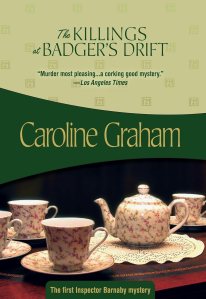
We have also enjoyed many, many episodes of The Midsomer Murders. Caroline Graham is the British author of the Inspector Barnaby mysteries. Her first five Barnaby books formed the basis of the Midsomer episodes.
The plots are complex and sometimes dark but have a touch of comedy, primarily as Barnaby interacts with his wife, dog, and sergeant. As of Oct. 2024, Graham was still alive at age 93.
Can an author still write books after her books are bought for television? Would they automatically be a part of the filmed series? Hmm.
.
P.D. James is the author of the darker Adam Dalgleish mystery series, which has 14 books and a few TV episodes we have just begun watching. She (Phyllis Dorothy James) was an English Baroness. She wrote 14 books about the Poet/Detective and was planning a 15th when she died at age 94.
If you have watched them, have you ever noticed how they frame his face with a peculiar expression for the last few seconds of the episode? I like it.
.
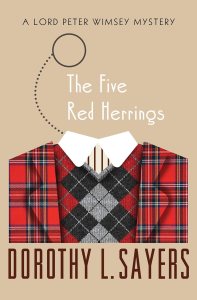
Of course, Dorothy L. Sayers wrote the clever and popular Lord Peter Whimsey novels adapted into a TV series. Along with mystery, there was the added pleasure of a romance. (Such a handsome and wealthy sleuth!) Sayers lived 64 years.
My absolute favorite Lord Peter Whimsy book was THE NINE TAILORS. I wonder if it was ever made into a TV episode or film?
.
Very recently on PBS, we watched the 4-season adaptation of Frank Tallis’ book, Death in Vienna, the diary of Dr. Max Liebermann (based on Sigmund Freud), a fictional Viennese crime solver, with his pal Detective Oskar Rheinhardt, in the series Vienna Blood.
They were well-written, had strong plots and vivid characters, and were very cinematic. The setting (Vienna and Istanbul) was gorgeous.
They say there will not be another season because the story in Tallis’s book is finished. Hey, that didn’t stop Midsummer Murders….
.
Two more present-day shows follow.
Dark Winds is a new series on Acorn (4 episodes so far) based on Tony Hillerman’s Leaphorn and Chee novels.
It is on my list to begin watching. I’ve read many of Hillerman’s mysteries, so I hope these are good.
.
And lastly, we have also tried the new series on Acorn, Case Histories, based on Kate Atkinson’s Jackson Brodie private investigator books, also set in England.
The first one was pretty good. Brodie investigated and unraveled several cases, either distinct or entwined with each other. There was a sex scene, however, which I didn’t enjoy watching.
We will try another and decide.
.
Of course, we have watched many old and newer adaptations of Agatha Christie’s and Arthur Conan Doyle’s Hercule Poirot, Miss Marple, and Sherlock Holmes novels.
And I know YOU can name many more shows that you watch.
.
My first question is, which do you enjoy more, books or screen adaptations? And what is the “why?” for your choice?
I enjoy the books, but I must admit that my decreasing vision makes reading fine print daunting these days. I get more involved in watching the actors (especially the settings) in the series’ episodes.
My second question for authors is, other than the monetary reward, why would you like (or dislike) to have your books made into a TV series?
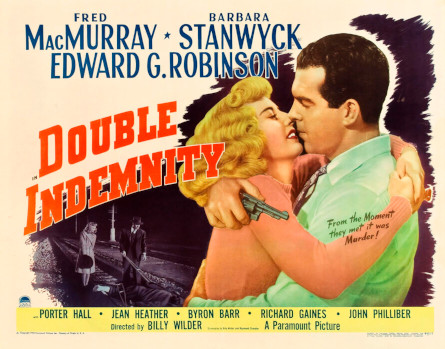
“How could I have known that murder could sometimes smell like honeysuckle?”
One of many memorable lines from Double Indemnity (1944), a film I never tire of watching—even after the fifth or sixth time! It’s a film I urge all crime writers to study—whether you’re writing cozies or hard-boiled detective stories. The superb dialogue, with its emphasis on double entendres and provocative banter, not only entertains but moves the plot along. The use of light and shadow create a virtual underworld that emphasizes the unsavoriness of the characters and plot. It is film perfection.
Double Indemnity is the ultimate film noir—it’s dark, steamy, loaded with atmosphere, and the characters are sleazy as all get out. In this story, originally penned by James M. Cain and adapted for the silver screen by Billy Wilder and Raymond Chandler, discontented housewife Phyllis Dietrichson (Barbara Stanwyck) bewitches insurance salesman Walter Neff (Fred McMurray) into killing her husband. Together, she promises, they will collect on a double indemnity insurance clause.
Phyllis is film noir’s classic femme fatale, luring a man whose brain goes on hiatus the moment he sees her. Walter seems like a good guy, but he’s no match for the lovely and smoldering Phyllis. She doesn’t even seem good—she’s evil to the core. Since he’s only marginally good, ensnaring him in her web is child’s play. Indeed, Double Indemnity’s best lesson for writers may be its showing how easily someone can be led astray by promises of a lifetime of riches and passion.
Writers are frequently advised to show, not tell. Double Indemnity follows this advice to good effect in its depictions of the life styles of Phyllis and Walter. Phyllis lives in an elegant Spanish house in the hills overlooking the Loz Feliz section of Los Angeles. Walter spends his days selling insurance, operating out of a ubiquitous office building in downtown LA, where the worker bees toil in a pre-cubicle bullpen desk arrangement (I worked in a few bullpen set-ups myself). Evening comes and Walter returns to his cramped apartment not far from his office. The contrast of life styles is stark, but never verbalized, only shown.
When it comes to sex scenes, the censorship of the day forced writers to show without telling, allowing them to achieve higher levels of creativity. Sex was left to the imagination, using suggestive dialogue and longing looks. A scene in Walter’s apartment hints that Walter and Phyllis had just been intimate. You don’t know for sure … but you’re pretty sure.
Elements of Alfred Hitchcock are evident in Double Indemnity. You don’t see the murder but you know it’s happening just out of camera range. Phyllis’s satisfied look and the gleam in her eye are what tell you that her husband is now thoroughly dead.
So … no sex, no violence, no profanity. Sounds like a modern day cozy. Not a chance! Double Indemnity is far from a cozy, and a current version of it would include all three no-nos. Body Heat (1981) is an example.
And there’s the creative way the senses are incorporated into the narration: “How could I have known that murder could sometimes smell like honeysuckle?” and “I couldn’t hear my own footsteps. It was the walk of a dead man.” There are many such quotes in Double Indemnity.
Here’s a quote that sums up the film in a nutshell: “I killed him for money and for a woman. I didn’t get the money. And I didn’t get the woman.”
You can almost feel sorry for Walter—after all, if you go to all the trouble of murdering your lover’s husband, shouldn’t you reap some of the benefits? Perhaps the film’s best lesson for writers is showing how easily someone can be led astray by promises of a lifetime of riches and passion. It makes you wonder how many of us are just a whisper away from evil.
After the murder, things go downhill. For one thing, Walter’s boss, Barton Keyes (Edward G. Robinson), is highly suspicious of Phyllis’s double indemnity claim and investigates it like a dog with ten bones. And Walter and Phyllis grow to distrust each other (no surprise there). By the time Walter realizes that murdering Mr. Dietrichson wasn’t such a good idea, it’s too late. But is he sorry that he killed the man? Or does he only regret that he’s left with nothing to show for his efforts beyond a bullet in his shoulder?
Often when I re-watch a movie, or re-read a book, I start finding flaws and turn critical. Not so with Double Indemnity. But I will notice something new with each viewing. Like how Barton Keyes never has a match, and Walter Neff has to light his cigar. But in the last scene, it’s Mr. Keyes who lights a cigarette for Mr. Neff (there’s that bullet in his shoulder). An unexpected touching moment.
James M. Cain took his inspiration for Double Indemnity from a real life case. In 1927 a New York woman named Ruth Snyder persuaded her lover, a corset salesman named Judd Gray, to kill her husband. She had recently convinced her spouse to take out a $48,000 insurance policy with a double indemnity clause. For more information on the case, read this Wikipedia article.
I’m a writer. I usually write fiction. I also read a lot of books. There are some classics that I read as a youth and have reread recently just to see if I got a different reaction in this new century. The same goes for old movies. Some were old when I first watched them, so now, fifty years later, they are most interesting to watch again just to see how they hold up. Most do quite well. What I found astonishing was the fact that some of the old books as well as a few of the classic movies could have been written today because their underlying themes were basically stories torn right out of today’s headlines.
What I find troubling is the fact that an awful lot of what’s reported on the nightly news sounds like some of these old movies and books. But what if the non-fiction news is really fiction written… by a machine?
Having a machine, as it were, spit out information or data or even a fairy tale using bits and pieces of things already out there in the “ethosphere” has been a concept used for centuries. Verbal stories were passed around by cave dwellers before people had a written language. You can bet one caveman’s story was retold from caveman to caveman in between the hunting and gathering they did back then.
Fast forward to the late Sixteenth-Early Seventeenth Centuries when Bill Shakespeare wrote his plays. There are those who say he took his ideas from other people. His name’s on the Playbill, so he did more with the idea than anybody else around at the time, so he gets credit for those memorable plays.
A century later, books were filling the shelves of private libraries and people who could read, read them. As more and more people learned to read, more books came out. The printing press helped enormously since those scribes in monasteries who were giving us copies of the Holy Bible could only do so much. God Bless them. But a basic education gives people even in the lower economic brackets a chance to learn things. Books worked.
Jump to the Twentieth Century and we get that invention that rocked the world, at least a world with electricity and an antenna to pick up television signals from a local broadcaster. People turned away from books and started watching stories come to life in their own living rooms on a twelve-inch screen.
Now you ask, where does this AI stuff come in today? You ever watch Murder She Wrote or Columbo or any of the many Hallmark Channel cutesy mystery/romance stuff? The plots vary only in which actor plays any particular role. Murder She Wrote always had an older, yet famous, actor or actress play the villain, or the person accused of the killing, and Jessica Fletcher would always solve the case after remembering one little clue we all saw about eight minutes into the show and which she remembers when she reveals the bad guy in the final few minutes of the program.
In Columbo, he was onto the villain, also a once popular TV or movie actor who was now doing guest bits on TV, from the beginning of the show. Most of the time it didn’t ring plausible, but people liked the show, so the plot remained basically the same for ten seasons.
The Hallmark movies are very formulaic, whether it’s the scene where the two who end up in love by the end of the movie throw snowballs at each other or the scene where the girl totally misunderstands the handsome guy’s motives and tells him to get lost only to learn the truth and they kiss in the last scene. They’re all the same. That doesn’t mean people don’t watch them. I do, but I also watch to see how many of those routines they use in each episode. If I did it as a “drinking game,” I’d be drunk about eighteen minutes into the show.
A lot of this redundancy is done by design. Back in the early-Eighties I got myself an agent, Ivan Green, and he tried to sell a few of my scripts to Aaron Spelling and Leonard Goldberg who were producing TV shows like The Love Boat, The Mod Squad, and Charlie’s Angels. My agent submitted a few of my scripts to Fantasy Island that the pair also produced. One of my scripts about an angel who goes to the island was liked by Goldberg, but just as he was ready to accept it, Spelling decided he was only going to use the small group of writers who had been writing for the series for a while. Spelling didn’t want anything new. The series went a few more years, then ended in 1984.
Lots of television series must use the same team of writers because their episodes are so much alike. And different television shows are quite similar to others on TV, just like some books published by major publishing companies are like many other books also on their shelves. It’s been said for decades in television, motion pictures and books, if people like it, keep writing the same thing until the public gets sick of it. Publishers and producers seldom take anything, book or script, that’s different because they don’t want to rock the boat until something sneaks in under the tent and all of a sudden there is a new game in town and everybody uses that new theme for a decade or two. Vampires and the living dead have both had a long run. The “end of the world theme” keeps popping up. I’ve seen enough buildings blown up and car chases that should have killed half a city’s population along with the obligatory diabolical corporation owner or evil space alien who wants to conquer the world to last me two lifetimes. Today, it’s a lot of teen fantasy stories or some things that used to be considered X-rated back in my youth that’s perfectly Okay to show on major networks.
But isn’t that what AI does? It uses ideas already out there. It cuts and pastes stuff that’s sort of acceptable just enough to seem like a slightly different animal and then pushes it as something new that everybody should enjoy. That’s why I haven’t been to a movie in about thirty years, and I hardly watch anything new on TV.
Okay, let the AI machines watch and read the stuff they write. I’d prefer something different written by a human who really understands life as a living, breathing being does. Some newer books and TV series from smaller studios have themes that aren’t all that bad. I think a human wrote them, but I wouldn’t put money on it. I would really like to know there was actually a person with a mind and a soul who penned those stories.
If AI can aid science, great, as long as there is a human somewhere in the picture who can check the results and make sure we aren’t going down one of those paths we see in the apocalyptic movies where the world ends because a machine pushes the wrong button.
So, humans, why don’t you write the books and the movies. Now I just have to find a way to prove a human really did write the stuff I’m reading and watching… And by the way…no machine, other than my fingers typing on my computer, wrote this blog. Honest.
Hey, it’s only the third week of January 2025, and a lot has happened that we writers in Los Angeles could use as subjects or backgrounds in our writing for the rest of the year.
What’s happened?
Well, those terrible fires that apparently made the news everywhere. Rosemary did a wonderful job of describing them last week. And I certainly identified with a lot she was saying. But with all that happened, I just found myself focusing on it when I started to do my post for this week. So here we are again.
I was one of the fortunate people who had fires start not too far away but not come very close. The winds were strong, and the air quality became terrible. But I didn’t even see any of the fires anywhere nearby.
Writers often take things that happen around us and make them subjects of our writing. Will I do that?
Maybe, and maybe not. I’m currently working on a new mini-series for Harlequin Romantic Suspense, and although I do have the stories set in the Los Angeles area, I’m not sure about working the fires into them.
I hope that all of you reading this remain safe, from fires and every other disaster that might occur wherever you are.
And so, a new year begins, filled with expectations and promises of magical things to come.
But then, Mother Nature had a different idea for Los Angeles.
We held our collective breath as we watched a hungry fire race through the SoCal shoreline, devouring parts of Malibu and the picturesque town of Pacific Palisades. House after house on street after street. The ferocious winds carried the flames through acres of unfettered dry brush and vegetation, erasing entire homes, lives and neighborhood shops, schools and businesses.
OLYMPUS DIGITAL CAMERA
In just moments so many lives were changed forever. Not just the wealthy, not just the celebrities, many of whom have called this part of Paradise home for decades, but the working people who have lived there for generations, living everyday lives with everyday jobs. They, too, lost everything in an instant.
This swathe of destruction was not limited to Pacific Palisades, which took the brunt of it. Malibu, Santa Monica and on the other side of Los Angeles, Pasadena, Altadena and environs became engulfed. Altadena suffered desperately for days. That was where the awful death toll was greatest. This is a lovely, peaceful area with lovely houses. Just good, honest hardworking residents; many multi-generational family homes were lost.
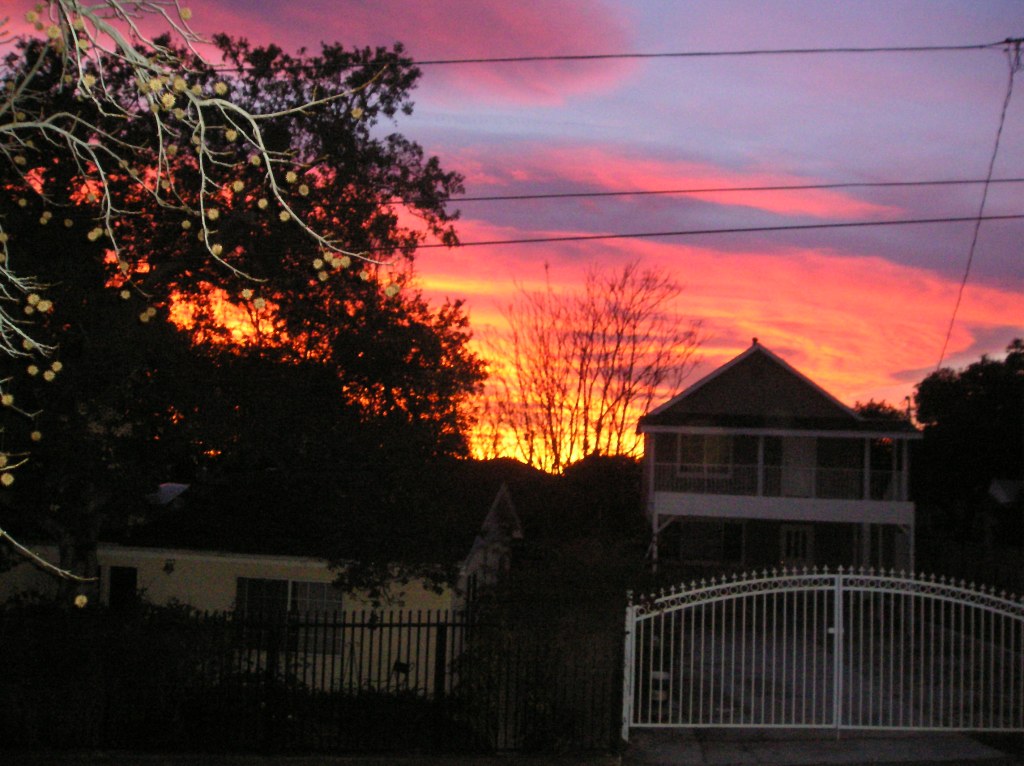
Everywhere, the sky was a dull yellow and thick with smoke, as the sun kept trying to peek through. And in the middle of LA, even Hollywood was caught in the crossfire.
The rumor is that arsonists set the Runyon Canyon fire behind the Woman’s Club, which was evacuated. Nearby, Laurel Canyon, where I live, was set alight. Our buildings were evacuated. These were the Sunset Fires.
I first received an alarm on the Woman’s Club cellphone to “be prepared” and then the order to evacuate the area. Minutes later a similar alarm sounded on the phones throughout my building. Neighbors were gathering on the patio, with bags already packed.
And so I quickly grabbed a bag and stuffed my lockbox that held vital papers, passports etc. in it and, with my hands shaking at the enormity of what was happening, reached for my laptop: iPad, charging cords, several writing files and notebooks followed. I picked up thumb-drives, recent bills and my checkbook. After a couple of deep breaths to calm myself so I could think rationally, I selected a few photographs, a small carving my dad had done, my late-husband’s great aunt’s small 1918 diary of her time in WWI Paris.
Clothes! I’d forgotten about that. So, I darted into the bedroom, found a wheely-case and threw in shoes, a sweater, shirt, jeans, nightie and a handful of undies, plus moisturizer, mascara, lip balm. My toothbrush, I threw that in along with my hairbrush – and some English Tea-bags. All the essentials! I loaded them in my car, then returned to my apartment where my neighbor Tyler was following all the reports on his phone. My other neighbor Sharon had joined me, waiting for instructions. We were then told the roads were gridlocked, so we should shelter in place. Some of our neighbors had left earlier as they had family or friends nearby.
But where was I to go? My family are in England!
Sharon said we could go to her sister in Agoura, about 50 minutes away. Then, I was very touched to get calls from friends offering shelter in their homes. People were so kind. We were told our Evacuation Centre was at Hollywood High School. I envisioned us in the huge auditorium, with rows of cot-beds, trying to sleep…
We decided to stay in my living room, watching ongoing reports on tv. They showed the police cars, fire trucks and barricades at the end of our street. We felt a bit safer, knowing everyone was watching out for encroaching flames. Tyler regularly walked outside, checking progress from the street to the canyon and checked for evacuation updates.
I regularly checked the security cameras covering the Woman’s Club property after the evacuation order. All looked calm. Except – suddenly it looked as if it was raining. Then I heard the drone of additional helicopters overhead. It was the wonderful, brave Fire Fighters, getting water from the Hollywood Reservoir and dropping it on the fires in Runyon Canyon behind the Woman’s Club and on the Laurel Canyon fires behind our apartment building. There was a collective sigh of relief as we learned they were successful at putting out the majority of those fires, while ground-crew battled the stubborn embers blown around creating new fires in unexpected spots throughout the night and next day.
So, we waited, listening to updated reports. Eventually, close to 10 pm, we felt safe enough to declare, “that’s it. We’re staying!”
I retrieved my case from my car. Some of our other neighbors were doing the same thing, dragging bags and suitcases back indoors. Sharon went back to her apartment and Tyler assured us he would be on guard all night and alert us if anything changed.
I think we all slept fitfully that night, packed bags by the front door, everything ready.
The next morning, things were eerily quiet. Slowly traffic appeared along Laurel Canyon once police had removed the blockades. I dressed hurriedly, prepared for a sudden departure. False Evacuation alarms from the city went off over the next couple of days. “Sorry! Mistake!” messages followed. Raw nerves everywhere. But the winds died down.
People had a respite to check on friends, family, survey the damage, start to clean up.
God bless those Firefighters, Police, First Responders and volunteers. Heroes, all of them.
Almost a week later, things have quietened down, although we are currently on alert for a new High Winds forecast. So ,I remain vigilant. We all do.
Eventually I unpacked my bags, knowing now exactly what to take, important papers in a ‘go-bag’ at my feet as I type. But I cannot find that toothbrush anywhere! Never mind, I have others…
Life really is bigger than fiction, I recognized. And we have had time to reflect on what really are the important things to save, once you know that people around you are safe. What really matters. And to count our blessings every day.
If you were given 10 minutes to pack for evacuation – what would you take?















You must be logged in to post a comment.