Metaphorical Tapestries…


My post today is about “depth and richness.” [i] And as usual, the road winding roadgetting here is twisting and curving. This particular writing thought path started for me this last August, with a Jackie Zortman post on her blog, Jackie’s Mountain Memos. It is the most lovely post, and the link is provided below[ii]. Besides Jackie sharing her past memories and her present day touchstone to her family, there are several lovely oil lamps pictured in “This Little Light of Mine.” I’ve collected a couple lamps myself from antique stores, and I find the unknown memories and possible past family events associated with the lamps, intriguing and compelling when it comes to story-imaginings.

Then recently at a High Desert Book Festival discussion on what inspires authors to write about the desert, I talked about those courageous and tough individuals that came before us, how tough it must have been, and how lucky we are to have benefited from their pioneering efforts. (Such as in my current Rhodes series.)

Then from another direction,[iii]—there are past discussion I’d read orrug participated in—on whether pottery was Art versus craft. I always sided with art, and now as I move more down my writing road, once again I’m siding with art. So, how can we  make our writing-tapestry[iv], more alive, more colorful, and more textured?  More artful? Fancy flowery talk I know—but at the core, I think, a true and solid goal.

In a nutshell, the key here for me is how the past is influencing, determining, and controlling how our characters are experiencing their present. And on all levels, physically, emotionally, and proactively even–such as in determining what they do in the action part of our story. Indeed, I very much think our metaphorical writing tapestries then become more colorful, more textured–more a work of art.

In my reading, I love it when the author brings the past into a current story; which for me, not only brings an emotional touch of nostalgia to the tale, but also a richness to the current world happenings–as they are layered upon past events–and the contrasts between those two worlds. The past is no longer just background for what’s about to happen—but key to understanding current world character’s thoughts, emotions, and motivations. Why the heck they’re doing what they’re doing.

My bottom line point is, past events need to come through on a personal level through our characters eyes and heart. Not cardboard characters with simply narrative pasts, but living, breathing pasts that are part of their being, and make them full-flushed-alive as they experience their present. I know, I’m talking about characters as if they are actually alive. They are, aren’t they?

Happy writing trails.


[i] From Webster online–Tapestry: A piece of thick textile fabric with pictures or designs formed by weaving colored weft threads or by embroidering on canvas, used as a wall hanging or furniture covering. Used in reference to an intricate or complex combination of things or sequence of events.

[ii] https://jtzortman.wordpress.com/2019/08/25/this-little-light-of-mine/

[iii] Trying to figure out if and how to get back into pottery.

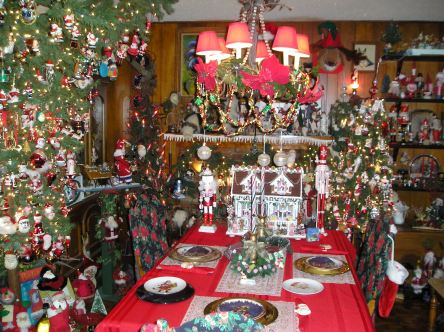
[iv] I know the picture is not a tapestry, but a rug–but it is the closest visual I have.

NaNoWriMo – No Never! or You Bet!

by Jackie Houchin

NaNo_2019_-_Poster_DesignNa-

NaNoWriMo is short for National Novel Writing Month. You knew that, right?  But did you know that it is the largest writing event in the world?  More than 300,000 writers sign up each November for a “simple but audacious” challenge: Write 50,000 words of a novel in a month. In the twenty years of NaNoWriMo, approximately 3 million writers have taken that challenge, including many bestselling authors.

Fifty thousand words in a month means 1,667 words per day. Doesn’t sound too hard, right?  Maybe an hour and a half at the keyboard? Two at most? A mere sliver out of your day.  HA!

I’ve entered NaNoWriMo five times since 2004 and it IS a heck of a lot of writing time; my bottom got numb, my fingers stiff, everything around me was out of my mind except “The Story.”  Sadly, I only completed the challenge once with my novel “Sister Secrets.” The novel was only 2/3 done at 50,000 words, but I never finished it (let alone edited it). It sits in a dusty file in my computer. (sigh)

So, if you plan to write the 50K words in a month, you’d better allow yourself a bit more time. Many NaNo veterans suggest bumping that word count up on the weekdays, in case your weekends get crazy. And remember, in the US, we have the Thanksgiving Holiday in November. (Eek! Can Aunt Sally do the turkey this year??)

Speaking of word count, why 50K? The staff of NaNo believe that this number is challenging, but doable, even for people with full-time jobs and children. It is definitely long enough to be called a novel. That’s about the length of F. Scott Fitzgerald’s The Great Gatsby.

-No-

A NaNo novel is defined as “a lengthy work of fiction.” Any genre of novel is okay.

Nonfiction, memoir, biography, essay, unrelated short stories, music, etc. do not qualify. But, if you want to write 50,000 words in any of those categories, there is a special group for you – NaNoRebels. Join that forum and you can chat with your fellow outlaws. You can also use the NaNo site to upload your 50K words and validate your work.

Here’s how one “rebel” couple did it:  Nanotunes-NaNoWriMo-NaNoMusicals

NaNo never questions a manuscript. “This is a self-challenge” say the moderators. “The real prize is accomplishment and a big new manuscript you have at the end. Everything beyond that is icing on the cake.”

-Wri-

There are only a few rules.

  1. Write a 50,000 word (or longer) novel, between November 1st and 30th.
  2. Only count words written during November. None of your previously written prose can be included (although outlines, character sketches, and research are all fine). If you choose to continue a previous work, ONLY count the words you write during November.
  3. Be the sole author.
  4. Upload your novel for word-count to our site during the winning period.
  5. Write more than one word repeated 50,000 times.

NaNoWRQI Mo tumblr_pynwv9HiLJ1qd8ab4o2_640“Traditionally, NaNoWriMo works best when you start a brand-new project. It may be an arbitrary distinction, but we’ve seen that novelists do better (and have more fun) when they’re free from the constraints of existing manuscripts. Give yourself the gift of a clean slate!

“That said, we welcome all writers at any stage. Outlines, character sketches, and other planning steps are encouraged, and you’re welcome to continue an old project. Just be sure to only count words written during November toward your goal.”

-Mo

So you decide to accept the month-long challenge, what kind of preparation can/should you do before NaNo begins?  Anything, from a vague idea of your story to one of the detailed outline structures found in the following blog sites.

 NaNoWriMo 6-week Prep.

  • Develop a story idea – September 9-13
  • Create Complex Characters – September 16-20
  • Construct a detailed plot or outline – September 23-27
  • Build a strong world – September 30-October 4
  • Organize your LIFE for writing – October 7-11
  • Find and manage your time – October 14-18

Writers Write – Countdown to NaNoWriMo 1 month Prep.

  • Week One – 1-8 October – Decide on your story idea, protagonist & antagonist, their names, the setting
  • Week Two – 9-16 October – Work out your plot. Give your novel title.
  • Week Three – 17-23 October – Flesh out your characters.
  • Week Four – 24-31 October – Create a timeline. Write a LIST of 60 scenes and sequels that you will include in your novel.

Angel Leigh McCoy on  AngelMcCoyBlog recommends the Milanote.com: “How to start your novel: 5 critical questions you must answer first” article. How to start a Novel

  • The Premise – In 20 words or less, what is this novel about at its core?
  • The Stakes – If the story ended in tragedy, what would that look like?
  • The Core Conflict – What are the opposing sides?
  • The Resolution – How does the core conflict resolve?
  • The Lesson – What is the moral of your story?

There are many more places you can Google to get a head start if you plan to join NaNoWriMo this year.  I know it’s late for most of the above now, but you can do a crash course over an upcoming weekend, or lay out a simple outline to show you a direction.

NOTE: Be sure to check out the blogs above, especially Writers Write which is packed full of writing advice. The daily blog also offers writing tips, writing comics, writing quotes, and writing prompts. They have a monthly Short Story Challenge. And they offer seven extensive online writing courses (fee).  

Speaking of costs, all of NaNoWriMo’s programs (including Camp NaNoWriMo and the Young Writers Program) are FREE.  They run on donations. (tax-deductible) Whether you are writing or not, you can donate here  NaNoWriMo – Donations

You bet!

Yes, I signed up this year. But 50K words? Probably not. But if I get 5K words and finish my children’s mystery “The Bible Thief,” I will jump for joy!


Give me a Na!

Give me a No!

Give me a Wri!

Give me a Mo!

Na-No-Wri-Mo!

Hooray!

My Declaration of Accountability


NOTE: The links to NaNoWriMo may be a little slow loading right now. They changed their hosting company (Yeah I know, dumb time, right?) but they promise all will be up to snuff in the next week or so.


Polishing the Gem

Jewel 6by Gayle Bartos-Pool

Part Five – Finding the Right Word


Stephen King said “Any word you have to hunt for in a Thesaurus is the wrong word.”

I beg to differ, Mr. King. Here’s why. If I have used the same word ad nauseam in several close paragraphs, I just gotta find another word. Your computer writing software usually has a few suggestions when you Right Click on Synonyms. And I have a really nice Thesaurus that I will turn to if the computer doesn’t come through.

But, come on, guys. We’re writers, authors, novelists, playwrights, wordsmiths for crying out loud. Words are our life. Personally, I like adding a few new words to my vocabulary every so often. And I definitely want to use some fresh, innovative, new-fangled words when writing just to shake things up a bit.

I’ll stumble over a boring, colorless, lackluster word when doing one of the many edits I complete before sending out a book for publication. The troublesome word will be sitting there like a wilted piece of lettuce, limp and begging to be tossed into the garbage…. (And, yes, I did use the Thesaurus on a few of the words in this recent paragraph just to make the point.)

So why not use the sources available and pick another word so you don’t sound tedious, uninteresting or just plain _____________. (You fill in the blank.)


Jewel 7Polishing the Gem

Part SixPicky Picky


Last, but not least, be picky about your work. Agonize over a word or sentence or paragraph until you think (or even feel) that it’s the right choice. Feeling’s okay, too. Your name is going to be on the work, so why not do your best?

Something I have mentioned before might be of help when doing that last slog through those thousands of words you have put on paper. Ask yourself three things:


Does it Advance the story?

Does it Enhance the story?

Is it Redundant?


These questions make you re-think aspects of your work. If you have a long section of dialogue that doesn’t add anything to the plot and it doesn’t get your characters any closer to their goals, cut it or rework it.

Idle chatter between characters about the weather or their latest boyfriend over tea or yet another lunch at the local tearoom can become stale especially if the weather doesn’t change, no storm is brewing, and the boyfriend’s body isn’t buried in their backyard. Make sure most of what your characters talk about actually has something to do with the story.

As for enhancing the plot or even who your characters are, take note: If a long section of great descriptive passages doesn’t set the stage, but rather clutters it up, trim it or make sure you don’t keep piling on more and more of the same thing every few pages. You might like all your great descriptions of period furniture or sweeping landscapes, but after a while it stops the action. When it’s done well, it is a joy. Too much detail starts sounding like a boring college lecture course. You know, the class you fell asleep in when the teacher droned on for an hour about one more Roman army siege of yet another small village in ZZZZZZZZZ.

Wake up!

Here’s another point: Enhancing your characters personality or description or painting a beautiful picture of the scenery in your story is great as long as you don’t keep putting too much makeup on the characters or clutter the scenery with too many trees so you can’t see the forest. You want a stunning image, not layers of paint.

As for the redundancy part, during your final read-through as you are editing your work, check to see if you have said the same thing twice. During your final read-through as you are editing your work, check to see if you have said the same thing twice. (See how redundancy gets to be a problem? That sentence was in there twice.) Whether you repeat yourself in the same paragraph or page or chapter or throughout the book, it gets old and your reader will think you are either padding your word count or not paying attention.

As you polish your gem, remember another thing: if you file off the rough edges, sharpen the angles, and buff out the dull areas, the reader will come back for more. Everybody admires a beautiful jewel. Write On!  (And Read On Below)

Jewel 8

Let me add one more little tidbit. Several years ago I published The Anatomy of a Short Story Workbook. It was to accompany a class I taught by the same name. It is a quick reference to writers as to how to get those few chosen words on a page in a short story as well as a novel, screenplay, or even an article you might be writing. As a member of The Writers-in-Residence group, I have also written many blogs on the art of writing. Many times I just expanded on the points I made in the Anatomy book. Recently I compiled those many blogs into a new book: So You Want to be a Writer. It gives some history to my own career and some expanded thoughts on writing. You might find it helpful in your writing journey.

So You Want to be a Writer Amazon cover 2  anatomy-book-cover

Clothes Make the Character

By guest author,  Sally Carpenter

If you saw a stranger walking down the street, what can you tell from her clothes? Sherlock Holmes could determine the social standing, wealth, occupation, education and gender of persons by their clothes.

Authors use to spend much time in describing their characters’ garments, sometimes to a fault. Without TV or film, writers felt they needed many words to help readers depict the characters in their minds.

In the story “A Scandal in Bohemia,” Arthur Conan Doyle writes: “His dress was rich with a richness which would, in England, be looked upon as akin to bad taste. Heavy bands of astrakhan were slashed across the sleeves and fronts of his double-breasted coat, while the deep blue cloak which was thrown over his shoulders was lined with flame-colored silk and secured at the neck with a brooch which consisted of a single flaming beryl. Boots which extended halfway up to his calves, and which were trimmed at the tops with rich brown fur, completed the impression of barbaric opulence . . .” Sensory overload!

Nowadays writers limit their characters’ physical description, because readers often skip over lengthy sketches to get to the action, and also to encouraging readers to imagine their own selves in the story.

Nancy Ddrew 2The only physical description we have of Nancy Drew is her “titian hair” and “blue eyes.” However, we hear a lot about her chic wardrobe and apparently endless clothes closet. Beyond her stylish threads, Nancy often dresses in costumes and old garments found in attic trunks. When the books were originally released in the 1930s, low-income readers could imagine  wearing Nancy’s pretty outfits for themselves.

Cozy mysteries continue the trend of “less is more.” Clothes are mentioned briefly, if at all. With the modern heroine’s casual lifestyle, her wardrobe consists of tee-shirts, sweats and jeans. Readers want a quick and easy read without wading through mounds of description.

But when I started writing my Psychedelic Spy retro-cozy series, clothing was crucial.

Flower_Power_Fatality_jpg (1) (1)The books are set in 1967, an era of vibrant and varied clothes. Poodle skirts and bobby socks gave way to miniskirts and pillbox hats. East Indian garments were in style. The “British invasion” of roc


k music also brought English designers such as Mary Quant. African Americans adopted styles that expressed their ethnicity. The hippies had their own unique forms of dress.

Clothing of the 1960s differs so much from today’s styles that I had to describe nearly everything that people wore. I tried to keep such explanations to a minimum, yet the clothes were essential to place the reader into the era.

My protagonist, Noelle McNabb, is single and 25 years old. She apparently spends most of her income on clothes. In the first book, “Flower Power Fatality,” Noelle wears 14 different outfits! And her clothes are new, many purchased at the big city mall. She talks about how she loves shopping and checking out the latest fashions.

In finding clothes for Noelle, I’ve used a few costumes that I’ve seen in 1960s TV shows. I also have a great reference book, “Fashionable Clothing from the Sears catalogs: Mid 1960s.” The book has actual photos (and prices) from the era’s Sears mail order catalogs. I’d love to see those clothes come back into style, as they’re more beautiful and feminine than the women’s tee-shirts and leggings sold today.

Clothes also express the generation gap. When Noelle wears a miniskirt to church, her mother complains that the dress is too short. Mom is clad old, fussy dresses with below-the-knee skirts. Mom wears stockings and garter belts; Noelle is in pantyhose and colored tights.

In the 1960s, women wore dresses more frequently than today. I put Noelle in dresses most of the time. Even when she wears pants at her record store job, she’s in nice slacks and pant suits. The only time she’s in dungarees is when lounging around home.

Jeans are reserved for my “bad boy” characters, a group of young males who spend their time racing their choppers, shooting craps and smoking Marlboro cigarettes. In the mid 1960s denim was only slowing becoming acceptable as a fashion choice.

afro in orangeDestiny King is an African American agent who takes Noelle on her spy missions. Destiny sports a trimmed Afro and frequently wears jumpsuits. Her clothes are functional in more ways than one way. For example, she has a pair of earrings that are really plastic explosives.

My hippie couple, Rambler and Moonbaby, are the most fun to cloth. Hippies wore an eclectic style, often put together from castaways and thrift store finds. Styles, patterns and colors did not need to match. One useful reference book is “The Hippie Handbook” by Chelsea Cain, which has a chapter on “How to Dress Like a Hippie” and information on making skirts out of old jeans and how to tie-dye a shirt.

Trevor Spellman is a newspaper reporter on the prowl for a big scoop. He rebels against the small-town norms by wearing his hair long—below his ears—and he never puts on a tie. In the 1960s the collarless shirt became appropriate for formal/dress wear.

The clothing of Mr. Baldwin, the audio-visual technician at the high school, describes him well: white shirts, skinny dark ties, dark pants, plastic-rim glasses and a “dorky haircut.” Did “geek” and “nerd” pop into your head?

What the retired Army colonel wears also paints a picture. He’s in an Army bomber jacket over a khaki shirt. “His voice was as crisp and sharp as the creases pressed into his khaki pants.” Even in retirement he runs his life with military precision.

Clothes can describe a character more efficiently than a long list of traits, helping a reader to visualize a person more so that relying on the reader’s imagination alone.

###


NEW Carpenter photoSally Carpenter is native Hoosier living in southern California.  She has a master’s degree in theater, a Master of Divinity and a black belt in tae kwon do.

Her Sandy Fairfax Teen Idol books are: The Baffled Beatlemaniac Caper (2012 Eureka! Award finalist), The Sinister Sitcom Caper, The Cunning Cruise Ship Caper and The Quirky Quiz Show Caper.

Her Psychedelic Spy series has Flower Power Fatality and the upcoming Hippie Haven Homicide (2020).  Sally has stories in three anthologies and a chapter in the group mystery Chasing the Codex.

She’s a member of Sisters in Crime/Los Angeles. Reach her her at Facebook or  http://sandyfairfaxauthor.com or scwriter@earthlink.net.


This article was posted for Sally Carpenter by Jackie Houchin


Deadlines–The Good, the Bad and… any Ugly?

By Linda O. Johnston


calendar and writingI’m a writer.

Writers have deadlines.

If we’re traditionally published, they’re set by the publisher, with our agreement.  If we’re self published, they’re largely set by ourselves.

I’ve been doing this for a while and generally consider deadlines my friends.  They certainly keep me moving.

Recently I’ve been under deadlines for four Harlequin Romantic Suspense novels.  I met the first two with no problem, but I’d agreed to the third being shorter than usual thinking I could meet it anyway–but I had to ask for an extension.

I just turned in that manuscript.

DEADLINE1Now I’m working on the fourth of those books. I’m first doing a synopsis and three chapters to turn in, then finishing the rest of the manuscript.  I have a few months, so I should be fine. But right now I’m looking at all the weekend events, panels and more, that I’ve agreed to in the near future. Then there will be a visit from some dear family members that will probably use up a week. And an annual trip that has been extended to see those family members at their home. So… well, I’m worried about meeting that deadline.

After I do?  Well, I’m not sure what I’m writing next.  I’m hoping to do more mysteries, but I’m not under any contracts.  And I’d enjoy writing more romantic suspense books as well.

But after that deadline is over, I have some trips planned, so I’ll have to be careful.

Okay, I’m not the only one with deadlines. And I had all kinds of other deadlines when I was also a practicing attorney. Nearly everyone has deadlines in their lives. Do you? Writing deadlines? Work deadlines? Family deadlines?

calendar for deadlineYes, deadlines are a part of life.

What do you think of the ones in your life? Do you face them down and stare at them and meet them? Or do you cringe when you think of them?

Or do you want more of them, as I do?


##

lindaphotoLinda O. Johnston, a former lawyer who is now a full-time writer, currently writes two mystery series for Midnight Ink involving dogs: the Barkery and Biscuits Mysteries, and the Superstition Mysteries.  She has also written the Pet Rescue Mystery Series, a spinoff from her Kendra Ballantyne, Pet-Sitter mysteries for Berkley Prime Crime and also currently writes for Harlequin Romantic Suspense as well as the Alpha Force paranormal romance miniseries about shapeshifters for Harlequin Nocturne.


This article was posted for Linda O. Johnston by Jackie Houchin


HERE THERE BE DRAGONS….. by Rosemary Lord

Here there be dragons“Here there be dragons…”

In the 1700s, this phrase was used by cartographers when drawing maps. They knew so little of the world in those days – a mere 100 miles or so beyond their own spheres. So, when they did not know what lay in those outer regions, they would mark it with drawings of sea monsters and the warning, “Here there be dragons.”

But it is still used today to warn people away from unchartered or unexplored places and areas. Untried actions. Hmm.

There are a lot of dragons about today, it seems. I don’t know about you, but I keep wandering off into uncharted waters. Unintentionally.

I’ve recently faced all sorts of dragons where the Woman’s Club of Hollywood is concerned. We are finally steering our way out of the choppy waters of bankruptcy. We’re removing the tentacles of uninvited outside parties, desperate to make a quick buck on another land grab of a historical Hollywood property.

ATT00019“It’s just a bunch of middle-aged women who don’t know what they’re doing. They can’t stop us,” one was overheard saying. Oh, that set my blood boiling.

I found strength I didn’t know I had and learned to dance very fast, maneuvering through loan papers, legal documents, escrow. I – who know nothing about real estate! But I’m learning.

I’m a writer, following my own instinct as to what would work best. I asked for the impossible – and got it. Borrow $4 million? Sure. If that’s what it takes to stop evil and greed.

As certain parties saw the promise of all that real estate money being moved out of their reach, desperate last-minute threats (some ugly and personal) came my way. But I was on a mission. Them there dragons can be quite scary.

But then the magic started. The wonderful, angel-people began to step forward to help, guide and encourage me. So many ‘coincidences’ happened. People turned up just when I needed them. Old friends and acquaintances stepped up.

The Woman’s Club in bankruptcy was as if it had leprosy. People shied away. But now, as I faced the dragons and survived, wonderful opportunities have opened up and I have a fabulous, strong team now working on the future of this historic institution. I don’t have to shoulder it alone. And as I can step back a bit, I get to return to what I really need to do: my writing.

This whole saga has taught me so much – and of course I will write about it, too.

Here there be dragons 2It can be scary stepping off into the unknown. It took me a long time to find the courage to sit down to write a mystery novel, for instance. I had no idea where to start or how to go about it. Those were baby dragons and easily overcome.

As well as my Old Hollywood adventures of Lottie Topaz, I now have several other, totally different books swimming around my head, waiting to be written. Those are not in dragon-occupied lands. Just perhaps amongst porpoises – and the occasional mermaid.

It’s the realization that tomorrow is promised to no-one, so you’d better get on with it. Dragons or not. Carpe Diem and all that.

Life has thrown many of us some challenges this past year. But we have dealt with them. So maybe it’s time to make a fresh start – take a few risks. Try writing something totally different. Start painting, sketching, pottery – do something else creative to get those juices flowing again.

One idea I heard is to write your own obituary. No – it’s not as grim as it sounds. Honest. Write out how you would want to be remembered. Was it for having the cleanest home in the world – or was it for writing that brilliant, life-changing book? Did you write an amazing character that brought pleasure to millions of readers?

And what happened before all that acclaim? How did you actually write that book, or paint that picture? Work your way back in your life. Before you hit the Best Seller list – or won the Housekeeper-of-the-year award – what led up to that? Keep going back until you are where you are today, when you made a decision to change your path. To really follow your hidden dreams. To step out of your comfort zone and risk rejection. Start with the day you decided to step off in to that unknown world, despite all the warnings of “Here there be dragons…”

I am amazed at what has happened in the recent months. It’s not been easy. And I often thought that I could just not go on. But I did. And it has been exhilarating, when I look back and see where I came from, the new path I’ve taken – and how brilliant the future looks. Those dragons turned out to be quite magical….

Who knew?

Dragon with book (2)


September Memory

by Miko Johnston

When you read this my husband and I will in France for an annual international conference that we’ve attended most years since 1993. All have been wonderful and enriching experiences, but one will always stick out in my memory until my dying day.

We arrived in Grenoble on a warm Saturday and after checking into our hotel, wandered to the main street for dinner. We’d been attending these conferences for enough years to have met and befriended many of the attendees, so when we passed a few of them sitting outside a restaurant they invited us to join them. The organization chairman ordered mussels and white wine for the table.

zan-ilic-WrueFKpTlQs-unsplashSoon waitstaff brought out steaming five-gallon pots filled with briny shellfish, loaves of French bread and bottles of chilled wine – a white Beaujolais, which I’d never heard of before. I took one sip and delighted in its light freshness, its unpretentiousness, like young girls in summer dresses.

More attendees showed up and joined our group, and soon extra tables were added as our numbers grew. We ate and drank, laughed and caught up with each other’s lives as more orange-enameled cast iron pots of mussels emerged from the kitchen, more bread, and more of that innocent young wine.

This was September 8, 2001.

Three days later, as I returned from a morning of hiking up La Bastille hill and riding down the spherical cable cars known as “Les Bulles” (bubbles), I returned to my hotel room shortly after three and turned on the television to CNN. I saw coverage of a plane that had crashed into one of the World Trade Center towers in New York. My first instinct was to blurt, “What the ___?” but before I could get the words out I watched as a second plane hit the other tower.

world-trade-center-67695_960_720Not wanting to be alone, I found my husband and we gathered with other Americans in the lobby, where we watched the horror continue to unfold on a big screen. We gathered in small groups to commiserate. One friend had a brother who worked in the first tower (miraculously, he wasn’t there that day). Another recognized a name from the passenger list of one of the planes that hit the tower – his former boss. All of us were too shocked to respond until he said, “If anyone deserved to go like that, it was that SOB.”

Then the first tower collapsed.

That evening the conference attendees and their guests had been invited to the Hotel de Ville  – the administrative building of the city – for the annual reception hosted by the mayor. It usually involves a brief greeting and welcome, followed by drinks and refreshment. Instead, we gathered with the mayor and city officials in a moment of silence followed by the usual greetings to the attendees, albeit in a more subdued manner.

Then we left, passing the restaurant we’d dined in Saturday night. Someone inquired if they could accommodate our group for dinner. They could, but for our numbers, not outside. They took us to a separate room upstairs.

Once again we gathered, not outside but in a converted attic to eat and talk. You can imagine the conversation. The pots of mussels soon appeared, along with the bread, but not that delicate wine. Every bottle of white Beaujolais was gone, along with our innocence.

new-york-4321235_960_720

##


mikoj-photo1

Miko Johnston is the author of the A Petal In The Wind Series, available through Amazon and Barnes and Noble. Miko lives on Whidbey Island in Washington. Contact her at mikojohnstonauthor@gmail.com


This article was posted for Miko Johnston by Jackie Houchin


Web Site Ads, Anyone?

by Jill Amadio

How many of us buy site ads to promote our books?

Grinding my teeth at low sales in August I was able to ask a couple of successful authors how they manage to keep their titles before the public. Brenda Novak, who writes the Dr. Evelyn Talbot thrillers, said that one of the publicity tools she uses are book marketing sites.  Although her wallet is somewhat fatter than those of many of us with four million copies of her books sold, Brenda still sends some of her personal advertising dollars to these sites.

business close up commerce computer

Among her tactics: Organize your own book group on Facebook. It’s free. Offer inexpensive swag such as commemorative pins in exchange for downloading only your book titles from her web site – not the books themselves.

Add a shopping page to your own website to sell T-shirts, mini-totes, Christmas ornaments, etc. Brenda said that it cost her $2,000 initially to set up her online shop and now it is hugely successful. 

Another tactic she uses is to create a Foodie Friday recipe which she cooks and posts on her Facebook and Instagram accounts, including a video.

Book trailers are one of her favorite ways to attract attention although she cautions that changing it regularly is key. To keep costs low (still expensive!!), the video company she contracts with uses stock video for much of the content.

Another tip: offer giveaways – one of her most popular was on Facebook Live in which she read from her books.  

Find a company that sells “scrap” advertising which are spots in major magazines discounted at the last minute. But don’t let the “scrap” description fool you. Brenda says that even discounted, it can cost a bundle. Nevertheless, one she found available was in People magazine, and she is always on the lookout for deadline deals with women’s magazines. 

“Not all marketing endeavors achieve the same goal. Some are more about brand building,” she told me. “I look at marketing my books like a farmer might his fields – it’s what I put into the soil before planting that makes the biggest difference in the end.”

*

Away from Brenda’s heady, enterprising and pricey ads are the less expensive and free methods used by some of us Writers in Residence and by our colleague, psychological thriller writer Sheila Lowe. Like Brenda, Sheila subscribes to www.BookBub.com, a web site that sends out daily emails advertising books to millions of readers, although costs can be high.

Here’s how it works: you set a maximum price you’ll pay for the exposure, say $100. When someone clicks on your book cover you get charged a certain amount of money for the impression. After your stated maximum budget, the $100, is reached, BookBub takes down your ad. You can choose which readers and audiences you want to target by genre, interests, retailers, and location, and you can monitor your campaign on the site’s dashboard.  Extremely popular, the site has a waiting list of authors eager to sign up. 

While Sheila takes advantage of the benefits Facebook offers including its Authors Page, she likes affordable subscription sites such as www.BargainBooksy.com and www.RobinReads.com. The latter is a free author promotion service affiliated with Amazon and you don’t have to be part of Amazon’s Prime/Kindle Unlimited yourself to use it.  The site focuses on promoting eBooks which are now enjoying a massive surge. RobinReads buyers pay for discounted books if they choose to buy them only on Amazon. However, the deals are swift, lasting only 24 hours before they are retired for fresh offers.

man wearing pink polo shirt with text overlay

At BargainBooksy with around 3,000 subscribers, advertising for eBooks is also king along with print books. After a buyer clicks on a link to a specific book they are taken to Amazon’s web site, where the book can cost 0.99 cents or less, while pricing is based on your genre. This, of course, affects your royalties, so unless you are only targeting publicity you might want to reconsider. However, the site also links to your books at Kobo, Apple, and Nook, and to your own web site.

To splurge, you can buy a $50 BargainBooksy Deal of the Day promotion on FreeBooksy, a specialized-genre readers’ site designed to boost your click-through rates and purchases with free books that are not available on the main site.  

So, there you have it. A few costly as well as reasonably-priced ideas. Raid your piggy bank!

money pink coins pig


JillAmadioHeadJill Amadio is from Cornwall, UK, but unlike her amateur sleuth, Tosca Trevant, she is far less grumpy. Jill began her career as a reporter in London (UK), then Madrid (Spain), Bogota (Colombia), Bangkok (Thailand), Hong Kong, and New York. She is the ghostwriter of 14 memoirs, and wrote the Rudy Valle biography, “My Vagabond Lover,” with his wife, Ellie. Jill writes a column for a British mystery magazine, and is an audio book narrator. She is the author of the award-winning mystery, “Digging Too Deep.” The second book in the series, “Digging Up the Dead,” was released this year. The books are based in Newport http://www.jillamadio.com

Books: Digging Too Deep, Digging Up the Dead

Non-Fiction: My Vagabond Lover: An Intimate Biography of Rudy Vallee; Gunther Rall: A Memoire, Luftwaffe Ace and NATO General


***


This article was posted for Jill Amadio by Jackie Houchin


The Last Goodbye…

This is a short post “looking inside” one author’s writing process/journey…

ThinkingHeadtoBook2Several weeks ago, Gayle Bartos-Pool posted an excellent writing on polishing your latest[i] before sending your wonderful novel out into “the world.” My “polishing activity” follow-on thoughts this week, are on my developing questions to use when looking back on my novels once they are actually gone and fending for themselves in the world.

One of my writing goals has always been to continually improve my writing — classes, books, editors, advice from writers I know, reviews, blogs like Writers in Residence (smile)—you get the picture.  Mainly, trying to do better than my last book.

This last item for me, has always been haphazard and unstructured. Especially since I have never reread any of my books after publication, except when I’ve read snatches at several events. Even that was hard—once published, the work is mentally and emotionally gone. If I didn’t have “important details” files, I probably couldn’t recall many characters names. Though sort of having a series now, my Shiné world and inhabitants have remained with me from book to book much better, stronger, and more fondly. Still, I haven’t reread any of them.

So, my point in this post is to share an actual list I’m working on to counteract my unfortunate tendency not to re-live what I’ve written, AND also enable thinking about what I want to do better in the next one. Improve my writing. Here’s the beginnings of what I’m working on so far from my looking back perspective..:

RTCTQuestionMark.jpg

  • More dialogue, and more action involving characters physically doing things (this is just a nugget of a goal—and I’m not sure exactly what I mean yet. Especially since I just reread a short story by P.D. James called the Mistletoe Murders where there’s mostly narrative—and I loved it.)[ii]
  • More action with real personal danger involved.
  • More real romance other than intellectual “love of the Mojave.”
  • Characters “actually” having changed, versus in the “process” of change.
  • More skillfully handle “musicality.” (do so much rewriting in that area — especially balancing long passages with short)
  • Better develop traditional “mystery” conundrums. (An outstanding example of what I’m talking about here is Agatha Christie. What a mind!)
  • Better balance against each other – (1) stopping a reader in reading-stride, versus (2) using the absolutely perfect word–noun, adjective, adverb, verb–for description emotional impact. Love finding the perfect word!

I plan to think about all these items, and more, as I start writing my latest Shiné adventure, Deceiving Eyes. But these items are peculiar to me and my writing goalsand the point of my sharing all this “what’s in my mixing bowl stuff” is to offer the thought of doing this type of farewell with your own ideas, writing, and goals?

Which leads to my second point, actually using Last Goodbye thoughts in the future. Not just thinking about them…smile. Another bullet for my list.

Happy writing trails…


[i]  https://thewritersinresidence.com/2019/08/14/polishing-the-gem-3/  Polishing the Gem

[ii] See Jackie Houchin’s post last week about our favorite authors.  https://thewritersinresidence.com/2019/08/21/these-are-a-few-of-my-favorite-reads/


These Are a Few of My Favorite … Reads

by Jackie Houchin

Raindrops on roses and whiskers on kittens
Bright copper kettles and warm woolen mittens
Brown paper packages (from Amazon) tied up with strings
These are a few of my favorite things (reads)

When the dog bites, when the bee stings
When I’m feeling sad
I simply remember my favorite things (reads)
And then I don’t feel so bad” *


Who doesn’t know the catchy lyrics to that song? I bet you can even picture Julie Andrews singing them while twirling around. And who of us bibliophiles can’t say we have been transported and uplifted during and after reading those few special books that we cherish in our libraries.

The majority of my all-time fave books are mysteries, the old fashioned, clean, puzzling and often romantic reads that still make me smile just thinking of them.

My very favorite book was written by Mary Stewart** in 1964. But it was a few years earlier that I began my journey into this marvelous writer’s world.

Madam Talk audio 51B6UTiH4GL._SX342_I’d asked a wise librarian in Burbank if there was something beyond Nancy Drew, but kind of like her, that I could read. She looked at this budding, though still gangling young teen, and recommended Mary Stewart’s first book, Madam, Will You Talk? (1955)

I was hooked immediately!

The setting is Southern France and involves a young widow, a lovable mutt, a child in peril, high-speed car chases, and a dark and handsome man who is either villain or saint, and suspense.  Delish!

In less than a week I rushed back to the library to check out more of Mary Stewart’s books, reading down the list as fast as I could. Until I came to THE ONE. My favorite book of all time, re-read at least a half dozen times cover to cover, and often, as the song says, “when the dog bites, when the bee stings, when I’m feeling sad…”

Rough Magic Audio; 61gkNEBPKYL._SX342_This Rough Magic (1964), my opiate. ***

I’m not sure what makes my breathing slow when I open the book and settle into a soft chair, but in only a few pages I am deep into the atmosphere I love that is written so well by Mary Stewart in all of her books.

A writer’s hidden retreat on the isle of Corfu in Greece… An old house with secret passages… Wisps of Shakespeare’s The Tempest, quoted by the old recluse playwright living there, that seems to foreshadow the events in the book.

A young woman recovering from a career failure, arrives at the retreat with her sister seeking rest and solace but finding danger and death. Fog along the beach at dawn so thick you can only hear the waves slapping the shore… and the wooden oars of a boat bumping in their cradles, soft murmurs and oaths from its occupants, and grunts as they drag something heavy across the sand and into the trees.

A dolphin’s seeming magical appearances play an important role. And an arrogant and handsome figure, rough in clothes and manner slips in and out of the house at all hours. Is he a killer and smuggler, or a hero?

This is no silly Gothic, but is (to me) outstanding storytelling by a “wordsmith extraordinaire” whose sense of descriptive place is beyond amazing. My favorite read!


Next on my list is a puzzle mystery, that just so happens to also have a murder.

marinersCompass2Mariner’s Compass (1999) is Earlene Fowler‘s sixth Benny Harper mystery, set along California’s central coast. Each of her books is named for a quilting pattern although Benny is not a quilter herself. She is a rancher and married to a cop, but she helps maintain a historical museum in town that features old quilts.

What entrances me in this book, unlike any of her other mysteries, is the puzzle. In this story Benny receives a mysterious bequest from a dead stranger. She will inherit his entire estate if she will stay in his home in Morrow Bay for two weeks. Alone. Being alone, abandoned, is something that terrifies Benny.

She agrees, although her protective hubby-cop is not fond of the idea. Soon Benny is on a strange and dangerous scavenger hunt to find the man’s true identity. The clues he leaves hidden, if carefully followed, lead to more clues in a widening spiral of strange places. The deep mystery they reveal piecemeal is totally captivating. It’s a real stunner when she finally discovers who this Jacob Chandler was, and why he was stalking her.

More than the location in Mariner’s Compass, it’s the entwined maze of clues which makes this one of my favorite books. (BTW, if you look on Fowler’s fan page, this book is the favorite of many of her fans.)


Old Bones, maginfierOld Bones (1987) *** by Aaron Elkins is another favorite on my list. His protagonist Gideon Oliver is a forensic anthropologist, but his moniker in the series is “bone doctor.” It is absolutely amazing what you (he) can discover from a set of fresh or ancient bones. Who they were, yes, but more importantly in the book, how, where, when, and why a person becomes bones.

Oliver himself is a big, kind of cute, socially inept “nerd” of a guy, who is brilliant with bones. I like all of his cases, but in this one, it’s the location that grabbed me, chilled me, and after many nightmares, made me book a tour to the real place in France.

Mont St Michel,  the small island off the Western coast of France topped by a towering monastery, is tour-worthy for sure. (The original cover pictures the island.) But it is the incoming tides, racing without warning at a speed faster than a man can run, over quicksand riddled mud, that terrifies me.

Yes, I went there, rode in a bus across the long, straight road from the mainland at low tide, trudged up the steep, winding road to the top, and toured the ancient building with a set of huge bells. Very Nice. Reminded me of Notre Dame.

But I could see those swirly patches of mud and sand from atop the “Mont” and in the distance a dark blue-green smudge. Suddenly I couldn’t wait to get into the bus and race back to mainland safety.

You are not so lucky in Old Bones. You will suffer fear, panic and worse, when you read the final chapters. I dare you! But, it’s the reason this is one of my faves.


Christining Day MurderA freaky location again is the reason for my listing The Christening Day Murder (1993) by Lee Harris as a memorable favorite. (All Lee Harris’ Christine Bennett – a former nun – mysteries have a special “day” as their title.) I can’t even remember the mystery, but I remember where a good portion of it takes place.

Thirty years before, the small town of Studsburg was evacuated by the government and flooded to create a reservoir. (Feeling creepy yet?) In this story, a drought has uncovered the town’s forgotten church, along with a gruesome discovery in the dank basement. It is the skeletal remains of a 30-year-old murder.

As Christine tries to piece together the sordid puzzle from the past, the water begins rising again and she is trapped in the basement…..(Gasping scream from me!)


Shell SeekersAnd lastly, the wonderfully warm and well-written family saga by the gifted Rosamunde PilcherThe Shell Seekers (1987) **** (all 582 pages ) This is not a mystery, but a lovely women’s novel featuring Penelope Keeling, a 64 year old woman whose days are limited, and whose family does not understand her. A woman whose past is calling her, but whose present threatens to fence her in.

A painting which her children vie for, lusting for the wealth it will bring at her passing, but which is too sweetly precious for Penelope part with, is in the center. Instead of giving it to her children, she uses it – to their chagrin and horror – to fund one last trip into her romantic past.

In the book, sixteen characters have their own section and say. Shell Seekers is not a linear book, so the characters each tell their story, almost as if they are all in a room together, and one steps forward to knit their story into the entire piece. They form a complete picture of “Miss Penelope Keeling,” who speaks last in the book.

These multiple POVs – besides Pilcher’s amazing, evocative, sweeping, tender, gorgeous writing – makes this a favorite. It is the voices of 16 people, separate and yet forever intertwined in the story of one wonderful woman. A tear-jerker. You won’t want it to end. When it does, you’ll fly to the first page and begin again. (PS: Rosamunde Pilcher was 60 when she wrote this book.)


Suspense and romance, locations and mystery

Old Bones and bodies, shrouded in history

Villains and heroes revealing their deeds

These are A FEW of my favorite reads.


Have you got any favorite reads? What is it that makes them memorable to you? Characters, setting, style, genre, author, the writing…?


* Richard Rodgers, The Sound of Music, with my words in italics

** Mary Stewart is credited with developing the genre of romantic suspense featuring intelligent, independent, and capable women who don’t fall apart in a crisis. A reviewer wrote, “There is an old-fashioned elegance about Mary Stewart‘s writing. A stately polish with more than a hint of an old 1950’s Hollywood movie.”

*** Mary Stewart‘s mysteries are now all available in audio through Amazon/Audible. Here’s the link to This Rough Magic

**** 1988 Edgar Award Winner – Best Mystery of the year. (“Look out Sherlock Holmes!”)

***** In her introduction, Pilcher writes that she intended The Shell Seekers to be “A big fat novel for women. Something above all, that tapped into my life and the experiences of my generation.”