WORDS AND PICTURES – AND MEMORIES….

By ROSEMARY LORD

NEW YEAR PIC2

It’s fun, isn’t it, to start a new year? We rush in, brimming with scintillating ideas – relieved to see the back of last year, when all did not go according to plan. We had some wonderful memories, but – nah – let’s look forward.

I think we enjoyed this Holiday Season – Hanukah, Christmas, New Year festivities and the like – as a chance to take a deep breath, chill out and set our course on totally new horizons.

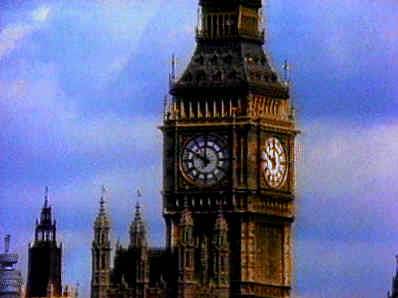
Speaking of ‘chilling out’ – I spent Christmas in England with my siblings. For the first time since we were teenagers! And the Kent countryside was so beautiful – like a winter wonderland painting. But it was freezing cold! For me, anyway. Used to California temperatures, it was a shock to my system, since I’d not been there in December for decades. London (where I stay with my brother, Ted) was not much better – only fractionally warmer. I was wrapped up in a long, quilted coat over a leather jacket, a fleece jacket, sweaters, vests (!), thermal underwear including long-johns. I wore gloves, a huge warm scarf, woolly hat and – the best bit: faux-fur earmuffs. The obligatory face mask actually helped keep my face warm!
Big Ben

So my brothers Ted and Phil, brother-in law Peter and sister Annie and I had a wonderful old-fashioned, cozy Christmas filled with lots of laughter over childhood memories. Christmas lights everywhere and hours ‘mucking in’ together in the kitchen, preparing endless delicious meals to fill tables groaning with food. It was especially meaningful, as Annie and Peter had moved into this spacious, welcoming house last March – in a truly delightful ‘Miss Marple’s style village – during the Covid lock-downs. So we gave the house a wonderful Christmas launch.

They had moved from a picturesque, 18th century cottage further out in the country, with 4 acres of fields with stables. With no horses, those stables became the repository for all sorts of boxes, trunks – and assorted exercise equipment.

One of those trunks was mine. With my roaming all over, from the moment I left school,  before I settled in Hollywood, California, my Mum had saved my ‘stuff’ from my childhood bedroom, from my travels and beyond. And when Peter and Annie downsized for their house move – a whittled down version of my ‘stuff’ came with them. So, some of this Christmas was spent going through this large box of my life. I’d forgotten I’d saved all my old 9×12 inch diaries, filled with all my appointments, interviews and auditions from leaving school through my early acting and journalism years. There were letters from big-time film directors that I had naively written to, asking for an acting job! In those days they actually wrote back to me! Alfred Hitchcock, Fred Zinneman, Elia Kazan, Bryan Forbes, Carl Foreman, Delbert Mann and so on. Wow!

rosie-and-the-hollywood-sign    I found my old, long-forgotten scrapbooks, filled with pictures of sunny Hollywood, palm trees, movie studios. Photos of the movie stars I wanted to emulate – Audrey Hepburn, Olivia DeHavilland, Irene Dunne, Gene Tierney, Grace Kelly. And those gorgeous actors that made girls swoon – Tyrone Power, Clark Gable, James Stewart, Gregory Peck. Pictures and articles of them all – and how they had accomplished their dreams. And now I have that large box of diaries, letters, several scrapbooks, that Mum had watched over for me – and that my sister had stored for me.

Looking through this treasure trove of memories, I reconnected with that skinny little girl with pigtails and freckles who had Big Dreams. Dreams of living and working in Hollywood, after devouring all those black and white Ginger Rogers and Fred Astaire movies on the telly. Bette Davis, Greer Garson, Gene Kelly, Cary Grant. That was the world I wanted to inhabit. And so I did.

I remember, not long after I had made Hollywood my home, I was having coffee with Tony Hopkins (as you do!) at the luxurious Beverly Hills home he and his wife Jenny lived in. He was giving me a ‘pep talk’ about following my dreams. He said that before he became an actor, living and struggling through life in a small town in Wales, he had dreams of becoming an actor and living in America. So he kept some pictures cut from magazines of the life he aspired to. Including a beautiful home in a sunny American setting. Many years later he moved into this beautiful home, where we were sitting, and realized that it was the same house that he had kept a now dog-eared magazine picture of all these years.

It’s amazing the things we keep. Especially us writers. We hang on to notes, scribbles, pictures, photos, pages that pique our interest. And what a good thing that we do. For this is often where we glean our ideas and inspiration.
69a16-hollywood2bthen2band2bnowLos Angeles Then and Now new cover

My first published writing in England and America, was about the Movie Stars I had interviewed. About the city of Hollywood and the Movie Studios. I wrote for magazines and newspapers – all about Hollywood. Especially the Golden Era of Hollywood. That led to my first published books on the history of Hollywood and Los Angeles. And it all started because I had kept cuttings, articles and pictures of the life I wanted to live – in Hollywood.

So now I have a whole new box of memories to plow through, that will inspire many more stories. Although now they will not only be about Hollywood, but inspired by all the other places I have visited on my journey here. With a murder or two woven into my stories along the way. Boy, am I glad I kept all that ‘stuff.’ Stuff that now feels like a goldmine to me.

Do other writers and readers out there keep ‘stuff’? Do you save articles, pictures, notes that have later inspired you to write something wonderful? Did you ever make those Vision Boards filled with inspiring words and pictures? And did anything ever come of them, I wonder? And what would your visions be now, today, for your future? Have you accomplished your childhood dreams? And have your earlier desires and ambitions changed? To what? I see another story emerging here….

(Posted for Rosemary Lord by Gayle Bartos-Pool)

WHAT WOULD YOU SAY? 

by Miko Johnston

No tutelage or reflections on my writing today. I’m attempting to reboot – physically, emotionally and creatively. Instead, I want to know what you, our readers, have to say.

My original idea for this week’s blog post was to ask you if you’ve incorporated any of the recent turmoil in your writing, or if you’ve chosen to sidestep it. I see that topic very differently now than I did when I first wrote this piece.

Back in 2018 I began a mentoring program for a local high school’s creative writing class*. Along with other published authors, I offered critique and encouragement to these young writers. Alas, a combination of budget cuts and Covid put the program on hold for over a year, but it has been reinstated. I recently received sixteen submissions from the current class and as I always do, I read each entry before dividing the work between the volunteers.

In the past, many of the stories mirrored themes from books and television shows that were popular, filled with paranormal characters ranging from vampires to dragons. Other plots were taken from everyday life – going to school, hanging out with friends, getting dumped by a boyfriend, and family squabbles. One or two pieces dealt with darker subjects, usually following a death or other traumatic loss, but the majority had a light tone and many were flat-out funny.

The class assignment was to write a piece of flash fiction. With their submissions came a note from their teacher, informing me that prolonged isolation from school, and each other, had made her students shy and hesitant to share their work, so it lacked the usual peer review. I assumed the writing would be rough, and it was, but not in the way I expected.

I was shocked but not surprised at the bleakness that pervaded every single submission. At least half included nightmarish scenarios, and most involved death or dying. I felt saddened because I knew this was not an attempt to be “artsy”, but a reflection of the reality these teens face in uncertain, and even frightening, times.

My volunteer mentors’ purpose is to encourage and uplift young students in their writing, but somehow a verbal pat on the back for a good story or vivid imagery doesn’t seem enough. Nor do I want to push them into further gloominess. Does expressing dark thoughts on the page exorcise demons, or give them life?

We may have enough time for a second round of submissions. Should I ‘interfere’ and suggest writing prompts that would prod them into some more positive thoughts, or let them write what they want? What would you say to these teens?

*see “WORD FOR WORD”

Miko Johnston, a founding member of The Writers In Residence, is the author of the historical fiction saga A PETAL IN THE WIND, as well as a contributor to anthologies, including LAst Exit to Murder and the soon-to-be-released Whidbey Landmarks. The fourth book in her series is scheduled to be published later this year. Miko lives in Washington (the big one) with her rocket scientist husband. Contact her at mikojohnstonauthor@gmail.com


Past, Present, and Around the Corner

I perceive my goals with my blog thinking and writing efforts–are to improve my own writing, while taking our readers along the trip with me—in case my issues and insights are more universal than just me. Said a different way, my sharing all this writing angst is hopefully to mirror what some writers are also feeling/thinking; and for readers, emphasize the fact it’s not just sitting down at the keyboard(smile, smile) and pounding out a book. At least not for me!

And most importantly in my thinking— is I want readers to gleefully jump full-steam into the story happenings, and want to be there. For the whole point—bottom line in my mind—is fiction writing and reading is to enjoy a chunk of time in our lives.

Writing and reading should be Fun. With a capital “F”!

Last year I focused on characters. This year I’m going back to scenery. I say back to, because much of my novice nattering was a lot about how important scenery and characters are. Well, I’m still of that mind, but hopefully I’m thinking and working on both on a deeper level. This year back to looking at scenery with more veteran eyes. Because “A-Number-1” for me as a reader, is escapism. Going somewhere that isn’t my house(more specifically, my couch!)

I write third person, omnipotent—all seeing and all knowing, ha, ha! Third person, can be omnipotent when it comes to viewing the world from the outside, or viewing through a characters perspective—knowing what he/she—actually what everyone—is thinking or doing. And that’s where the writing competence comes in—when and how to present the scenery my characters are acting in. With the key goal of sensory intake of the reader—bringing them into my story.

So today is “sensing” the scenery. And here’s what I’m thinking . My first “new thinking” inclination is the past is more easily able to be internalized by a reader if “told” by the characters themselves. Not through omniscient expose. More often than not, I’ve filled in past happenings as the omniscient storyteller. But, if a character was actually there, they should share their vision. We should see what they saw, not what the author thinks is a pretty or interesting picture…

An example off the top of my head—as narrator I might say about a past event, “It was a rough fight, hard punches thrown, blood drawn and splattered all over.” While a character would say/or think, “God, when I got smacked in the mouth, it really hurt against my teeth. I still remember the taste of my own blood…”

And if talking about scenery in the past in particular, I could say “it was a cool summer morning, and xxx remembered that first day it started. Indeed, her minds eye could once again see that sky as she looked up and from her books and saw such beautiful colors – as the sun rose…”  OR xxx rubbed her eyes and looked up from the book she was reading, and the scratchiness she felt in her right-eye reminded her of a similar day two years previously—feeling the same ocular irritation, seeing almost identical colors on the horizon, experiences almost identical feelings of apprehension….” I’ll stop(smile) getting carried away.. The goal, I think, is to bring the past out of the background, into a current plot happenings.

So the take away, I think, even though you might be writing in third person, sensory recounting the past should be done when possible through a character’s eyes. This is going to be hard for me because I like past stuff to come out in the “mystery reveal.” Hmmm. And the combining this thought with sensory perception exposition. Hmmm. But using my thoughts from last year on characters, and how they sensed the past, is a good place to start I think..

Speaking of last year, on a personal note, so glad 2021 is in my rear view mirror. My thinking is probably psychological craziness on several levels, but for me, good riddance none the less… And hello 2022!

Happy Writing Trails!

Are You RESOLUTE? Or not…

Yeah, yeah, I know. Nobody makes resolutions at New Year’s anymore.  A least not ones they can keep beyond the 31st of January. (Surveys report that 47% of resolution makers can’t keep them until February 1st.)

WHY?

I have some suggestions, tips, and encouragements if you really want to change something in your life/writing in 2022.

From the Hints From Heloise column, I found these believable suggestions.

  1. Be specific.
  •  Don’t vow to “Lose weight” but, to Lose 20 pounds by May 1st.
  •  Don’t vow to “Exercise more” but, to Walk 2 miles a day for 4 days a week.
  •  Don’t vow to “Write more in 2022” but, to Write 2 chapters, or 2,000 words, or a complete short story or article each week.

2. Then add your answer to the question, “why?”

  •  Because I’m too young to be heavy and it makes me look matronly.
  •  Because walking is healthy for me, and the kids (dogs, Hubby) can go with me.
  •  Because I’m a writer and I want to finish my book and/or publish my work.
  1. Put these (your) resolutions on 3×5 cards and tape them to your bathroom mirror. Read them aloud to yourself every morning.
  2. Keep track of your progress.
  3. Reward yourself when you accomplish each one!

(If you try this, let me know how it works!)

Hey, have you heard this one? “I was going to quit all my bad habits for 2022. But then I remembered: Nobody likes a quitter!”

Here’s a unique take from The Victoria Magazine, letters, Jan/Feb.

        Says Wendy J. “Decades ago, a friend and I came up with the idea of “un-goals” instead of resolutions. This gave us permission to give up things we detested! I gave up zucchini. For years I had tried one recipe after another to use the piles of this vegetable that I received from neighbors’ gardens or the market. I finally decided that they all tasted the same because I truly dislike zucchini!”

Do you have something you really dislike and will renounce in 2022?

(Let me know, and I’ll rejoice with you!)

Do you have a (mental) list of what you want to do “someday?” Here are a few examples: (I love #2.)

  •  Finish the book I’m writing
  •  Spend a season living abroad
  •  Read that stack of books I’ve been accumulating
  •  Add weight training to my workouts
  •  Plan day trips with my family
  •  Schedule those _____________ lessons I promised myself I would take

Resolve to move these from the  “Someday” to the “In-progress” column.

(Maybe I’ll join you on those lessons!)

From Cathy Baker’s Creative Pauses Facebook group, Dec 31, 2021.  Choose a word or two as a theme for 2022. (Easier than a whole resolution.)

There are many websites that can suggest words to you, or give you ideas. Think of your goals/hopes for the New Year, and use these or other sites to help you choose.  Some even give you ideas on how to make the word stick for 365 days.

        https://elisabethmcknight.com/word-of-the-year-ideas/

(Scroll down to the 100-word list at the bottom, Abundance to Zest.)

        https://www.happinessishomemade.net/word-of-the-year-ideas-one-little-word/

(Schroll down to the 150-word, printable, non-alphabetized list.)

        OR… for heaven’s sake, we are writers & readers… pick your own. Haha!

(Let me know if you pick one and what it is, or maybe keep it secret.)

Here are some suggestions from the Orange County Register newspaper, on the personal side, with specific fill in the blanks.

  •   Mend a relationship with _______________.
  •    Be more kind to _________________.
  •    Call _______________ whom you haven’t spoken to in a long time.
  •    Adopt or foster a ___________ (animal) and take good care of it.

(Or sponsor a child.)

From an article in The Epoch Times:

  •         Get inspired by reading blogs you love (like The Writers in Residence).
  •         Begin with tiny stuff – make it a habit that is “too easy NOT to do.”
  •         Find a friend or family member for support.
  •         And lastly, don’t call them NEW YEAR’S RESOLUTIONS, rename them as “January Objectives” or maybe even “Today’s List.”

(And check those buggers off! I’ll celebrate with you.)

For me, three for ’22:

  • Try new recipes from my “Eating Clean” cookbook at least twice a week.
  • Shorten my “screen time” by half (PC and phone). Use a timer if needed.
  • Cut out sugar (again) to help with inflammation issues.

(And YOU can check on ME at the end of the month/year. Really!)

###

Our Faith Bible Church pastor gave us this verse for the year:

Romans 12:9b. “Detest evil; cling to what is good.”

#

A Very Merry Christmas

from the Writers-in-Residence Blog

All of us writers here on the WinR blog wish you a Very Merry Christmas. Enjoy this holiday, savor the moments, love your family and friends, and consider writing about not only this holiday, but the other ones you have celebrated. The memories are priceless and fleeting if you don’t write them down. And remember: We all have a story or two in each of us.

These pictures might get you in the mood to capture your precious moments.

Words on the Page

by Gayle Bartos-Pool

We here at The Writers-in-Residence are writers. Whether it’s a novel, short story, news article, play, movie script, or even a How-To book on writing, words are our life and love and sometimes our nemesis because it can be hard to get those words on the page when life gets in the way. But we have all had our work published and know how hard it is to get that done. Whether it’s more than fifty books in print like our Linda O. Johnston or a few books like some of us or newspaper articles like Jackie Houchin, we have gotten those words out.

I have taught writing classes and have spoken to numerous people in my daily life who wanted to write, but they didn’t know exactly how to go about it. I’m very sure they actually knew how to write. We all learned to do just that in the first grade, at least we learned how to get a few words down on that wide-lined paper way back in the Dark Ages before computers. I would ask these folks who wanted to be writers what had they written so far and over half said nothing. Not a chapter, an opening paragraph, an outline or even a concept. Nothing. They have a long way to go, but perhaps they are more interested in the “idea” of writing rather than have an idea of what to write.

I remember speaking with a nurse in a hospital lunchroom when Richard was ill. I had mentioned that I was a writer and she said she wanted to write. I told her that everybody had a story or two in them whether it was a fiction tale or the story of one’s own life. She started telling me some of her family’s stories. They were fascinating. This gal had a story in her that should be written even if only her family reads it, but the way she told those few tidbits, lots of people would enjoy reading about her life. I wished her well.

But talking doesn’t get those words on paper. Whether writing it in longhand like Ray Bradbury did with every single book he ever wrote including The Martian Chronicles and Fahrenheit 451 which he wrote with a pen, he got those stories written down. Don’t get mesmerized by the “idea” of writing, or the “fame” (that’s only if you sell a million copies the first week your book is in print), or the “money” you’ll make (authors usually get a small percentage of the cover price after the publisher and the distributor and the bookstore get their cut; sorry, that’s the reality unless you have sold that previous million copies). Don’t let that stop you from writing. Write.

Do you have a story you want to tell? After these past two years being basically isolated due to the flu that has kept most of us living in solitary confinement, you just might have something you were tossing around in your head or maybe even you got a chapter or two written or an outline dashed off so you wouldn’t forget the story line. I can tell you from personal experience, if you don’t write it down, you will definitely forget it. Dear Bonnie Schroeder, a fellow scribe, gave me a notepad that hangs up in the shower along with a pencil that allows one to write down that elusive idea that pops into your head while the hot water is calming you and you are free to let those creative juices flow. Write.

You can always run an idea past a friend to see how it sounds. If you belong to a writers’ group, you might toss the idea out during a meeting and see what the group thinks. They might have some suggestions to help you focus your story. If they shred your idea like a head of cabbage, perhaps join another group. I’m serious about this. Some groups aren’t there to help. But then again, you might get a good story out of the fact the group was all wrong because of the hidden agendas of the other members of said group. Hey, ideas are everywhere. Write.

Nevertheless, if you actually have an idea for a story, write that outline. Who are the characters in the story? Don’t have a cast of thousands. Readers won’t be able to follow Who’s on First. Next, where does the story take place? Location, location, location. They do that all the time in the movies. Where do you want your small cast of characters to be situated? You’ll get to describe the place. Don’t make it a travelogue, but make it interesting. Visual. Maybe even astonishing. The moon, a sinking ship, a haunted house. A jail cell. Write.

When your characters speak do they have something to say? Again, I’m serious. Make whatever they say part of the story. If their dialogue doesn’t add anything to the story, cut it. And make a character or two colorful in his or her speech. It adds to the flavor. Write.

Then of course you have to have a plot. Why are those interesting characters in that interesting place saying those interesting things? That is your story. You have had this idea running around in your head; what is it? You will realize (hopefully) that the story you are telling has a point to make. You might think that the story is the point. Ask Aristotle about that. Since he’s busy, let me say this: After someone reads your story and has gotten to know your characters and has visualized that intriguing setting and has listened to the witty dialogue your characters are saying while the story progresses, when the reader gets to the end of your story they need to be able to say, “Ah! That was a story about Man against Nature or Woman against Society or Man Struggling against Himself.” That’s the point of the story, not the plot.

Say you want to tell a story about Man against Himself. Now you have a goal to come up with a story that centers on that Theme. The man keeps setting up roadblocks to stop himself from doing something he really wants to do. You must construct that plot. You will define those roadblocks and his excuses to not do what he needs to do to fulfill himself, to reach his goal. You create the characters that both help and hinder him. You design a setting that either lulls him into complacency or he thinks is above his lot in life. And you write the dialogue that has him expressing his dreams and desires along with those who tell him can or can’t achieve his goal. And Voilà, you have that story. And you might actually realize that the stubborn character you are creating is really you and then get more of those words on the page.

We are finishing up one hell of a year, actually two. Soon a New Year will open up those dreams you have buried because you keep telling yourself you’ll write that story later. It is later. Write it. What do you want to say? Get those words on the page. Write it.

Have a Merry Christmas and a Happy New Year! Write on!

How to produce a Zoom/YouTube Series and make it work…correctly, part 2

by Will Zeilinger and Janet Elizabeth Lynn

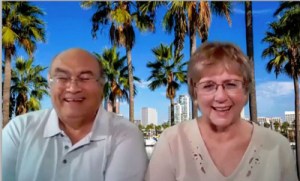
We are a husband and wife team who write together as well as individually. When the Pandemic hit, we were as shocked and confused as everyone else. Not only by the world’s sad state of affairs, but we missed our friends.  It took a few months to realize that the Pandemic was going to take some time to resolve. So, we decided to launch a YouTube channel, “Chatting with Authors.” We produce casual interview programs via Zoom and air them on YouTube.

          This is the second of a two-part series that discusses the ins and outs of making it work and some pitfalls to avoid.

Once you have all of your technical details worked out and, most important, are comfortable using them, next comes the talent (people you want to interview).

INITIAL CONTACT- First, we sent an initial letter to inform authors of the program, what it was going to involve and asked if they were interested in being on the program. Surprisingly, we had little response to the idea. We set up three Zoom recordings of those who were interested. After editing them and scheduling them on YouTube, we were able to refer the authors to the three programs. That’s when the flood gates opened!  

FOLLOW UP- We scheduled two to three Zoom recording sessions per day. We found that any more, and we were getting too “punchy” toward the end. The best was two or three. Once the talent was scheduled for recording, we asked them to send a headshot, website address, short bio, and five questions they would like us to ask them on the show.  Once we received their information, we scheduled a phone interview a week before their Zoom session. This is where we discussed the procedure and went through the bio and questions (we usually had to edit the bios and questions to fit in the 30-minute recording session).

DURING ZOOM RECORDING- We discovered gremlins in the internet that can cause all sorts of problems, especially when interviewing people in different countries or the east coast (we are in California). So it is best to schedule an hour even though our show is 30 minutes. Once you get them online, check audio and visual. Remedy any problems, like echoes, before you begin recording.

Be sure to keep the talent on after the recording is finished to discuss any problems that may have occurred during the session, i.e., visual static, audio blank spots, lights falling (it happens!!), and decide if you need to redo the interview at another time. This happened only twice out of 64 shows.

AFTER THE SESSION- Immediately after the recording session, summarize the interview for your PR for the show. We have a specific logo we use and superimposed their headshot on it. When we schedule our airings on the various platforms, we use that summary and logo.

 A week before we air their program, we send them a notification of day and time, a copy of the logo, address, and summary we are using. 

IMPORTANT!  Always ask them to confirm that they received the information. Always!

DRESS-be sure what you wear will not disappear into the background. And council your talent to be careful if they are using a green screen or a background. We had a few people who were armless and faceless or bodiless until they changed their clothing.

THE STUDIO- We record from a corner of our office, early in the morning every Thursday.  So, each Wednesday evening, we set up the studio and take it down every Thursday afternoon. It may seem like a pain, but it does get easier as you do it.

Things to watch out for:

—If you are recording on your premises (home, garage, outside), be sure you know when the gardeners, carpenter, cement workers, trash pickup, etc., are coming anywhere in the neighborhood. It can get embarrassingly loud! 

—Be sure your lights are soundly taped down or strapped. One of our lights managed to stay put during the first two interviews of the day but came crashing down on the third one. We acknowledged it but kept the interview going. 

—During the phone interview prior to recording, you will get a feel for the nervous state of the talent. If they have never done this before, they can get pretty frazzled. So encourage them as you record their interview.  

With much planning and practice before your first recording, you will have a blast doing interviews with friends, meeting new people, and, most of all, making connections. We have written five books and recorded 64 shows together, and yes…we are still married!


Janet Elizabeth Lynn
Author of mysteries, checkout my website www.janetlynnauthor.com
Check out our latest Skylar Drake Mystery.
 

(For questions and/or information on how  YOU and your writing can be hosted on “Chatting With Authors” please contact them at: lynnslp@earthlink.net )


This blog was posted for Will Zeilinger and Janet Elizabeth Lynn by Jackie Houchin


How to create a Zoom/YouTube series and make it work…correctly, Part 1

By Will Zeilinger and Janet Elizabeth Lynn

We are a husband and wife writing team who write individually, as well as co-write several books. We were shocked and confused, like many of our fellow authors when the pandemic hit.

Because the nation was given the “stay at home” orders at the onset of the pandemic, all live meetings, in-person book signings and book launches, speaking engagements and appearances in panel discussions came to an abrupt halt.  As writers, our marketing and promotion plans were put on hold.

One day we saw a YouTube interview with a musician that was recorded via Zoom, the online video meeting app. The interviewer and guest were shown side by side on the screen. After we watched several different examples of these YouTube interview videos, we had a brainstorm… why not conduct our interviews via Zoom on our computer?  We learned that doing this was not complicated at all. The result was our YouTube channel, “Chatting with Authors.” We interview authors of all genres about their work and life outside writing.

This is part one of a two-part series that discusses the ins and outs of making it work and tips on how to avoid some of the pitfalls.

What was needed:

(1) YouTube account (free) Go to YouTube.com and sign on. 

(2) Zoom account (free) Go to Zoom.com and sign up. 

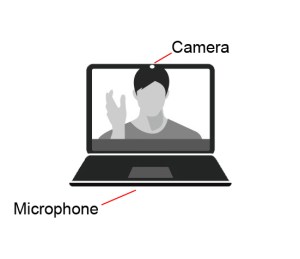
(3) Computer (laptop/notebook, desktop, or tablet) with a built-in camera and microphone.  
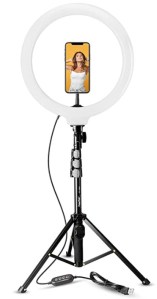


(Some people use their smartphones on a stand with a “ring light,”  but it can be very difficult to monitor what is happening when the screen is small and far away from you.)


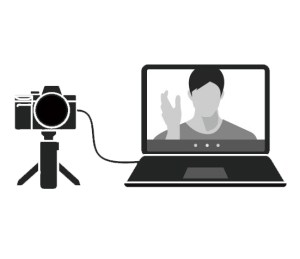
If you do not have a built-in camera, you may be able to connect a DSLR (digital reflex camera) to your computer. Ask for help from a tech-savvy friend if this is getting too complicated


(4) Make sure you have good lighting. Use a couple of lights (position them on either side of your computer.) They don’t have to be fancy lights, even table lamps will work. (Try not to sit with a window behind you.)


(5) A pleasant, but not distracting, room for your background.  If you don’t have a suitable space, try a solid, blank wall. Zoom provides digital backgrounds or you can use your own. 


 If you don’t have one, purchase “greenscreen” fabric on-line.



(6) A good Internet connection.

(7) Decide how long your interview will be (30 minutes, 1 hour, or longer) then schedule a meeting with your guest and be sure to set record while you chat on Zoom. When you are finished, upload your program to YouTube and tell your audience about it. That’s all there is to it.

(8) An opening title graphic or photo. You can create one yourself, use a template (available online,) or have someone create one for you…as well as a sign off.

(9) Before you decide to “go live” with your YouTube program, do a few “test interviews” and upload them to YouTube. You may delete them after you’ve viewed them. When you are satisfied with the lighting, background, clothing, hair (and make-up), and running time, you are ready to do your first interview.


(Continued next week with Part 2)


(Posted for Will & Janet by Photojaq)

Deciding What to Write

By Linda O. Johnston

 If you’re a writer, how do you decide what to write?

 Often, it’s the kind of story you love to read:  romance, mystery, paranormal, historical fiction, whatever. That makes sense.

 Or maybe something you believe others will want to read, so it’ll sell well. But that’s not something totally predicable. So I go with what I enjoy.

 With me, my preferences have changed over the years. Oh, I’ve always enjoyed romances, romantic suspense and mysteries. I’m not as much into historical stories as I used to be.  Same regarding paranormal stories.

 But you could probably tell what my favorite stuff was at any time of my life in the past many years by seeing what I’ve written!

 My first published fiction was a short story in Ellery Queen’s Mystery Magazine, and I won the Robert L. Fish Award for first published short story! Yes, it was a mystery of sorts, a humorous one: “Different Drummers.”

 My first published novels consisted of time travel romance, and most revolved around places or things I particularly liked. For example, one of them, Point in Time, took place in Pittsburgh, where I grew up. Another took place in Alaska, in the Klondike, and I’ve always loved visiting there: The Ballad of Jack O’Dair. And of course there’s Once a Cavalier, featuring my babies, Cavalier King Charles Spaniels.

 I wrote other paranormal romances too, including Stranger on the Mountain, and the Alpha Force miniseries I created for Harlequin Nocturne, about a military unit of shapeshifters.

 I loved paranormal romance! But notice that’s in the past tense. So is my focus on paranormal stories. I still read some, but I’m not writing any now.

 I’d always enjoyed mysteries and romantic suspense. I still do—and that’s in the present tense!

 That’s why I write them both: romantic suspense for Harlequin Romantic Suspense—and formerly for Harlequin Intrigue—and mysteries, over time, for multiple publishers including Berkley and Midnight Ink, and—upcoming!—Crooked Lane. Most of the mysteries, and as many romantic suspense as possible, include animals, especially dogs. I love to write about dogs. Why? Because I love dogs!.

 So that’s how I decide what to write: again, what I love to read. But also what I most enjoy writing about.

 How do other authors decide? Based on conversations with fellow writers, I gather they, too, mostly figure out something they enjoy, then pounce on it and pour out a story they love.

 It’d be hard, after all, to write a story if you didn’t like its subject or genre.

 Those writers who are reading this blog, I’d love to hear in comments where your ideas originate and how you decide to write about them. And how you enjoy writing about them!

##
Photo by Aaron Burden on Unsplash