NEW IDEAS, PAST AND PRESENT

by Miko Johnston

We’re barely two months into the new year, but as I contemplate what we’ll write about in the future, and what will inspire us to keep at it, I’ve found some of my answers to those questions in our posts from the previous year.

Hannah wrote about overthinking. How many of us are guilty of getting obsessive about our writing? Characters, plots and background have to be thought out, but we also must keep it all in balance. That has become harder for me to achieve, partly because age has undermined my ability to multitask and partly because my priorities have shifted. I still enjoy writing and am committed to finishing at least two more books, but I’m reminded of Madeline’s piece on Writing Scared, and the idea of switching up the type of writing you do. I’ve done that in the past, so now I’m adding a new avocation – photography.

Years of writing has given me a sense of what works and what doesn’t, and while I still rely on critiques from fellow writers, I often can figure out problems in my manuscript on my own. Not so with my new hobby. I look at a photo and I may like it, but I don’t know why, exactly, nor can I be certain it’s any good. I’ve joined a photography club and have been invited to participate in their biannual exhibit. I’m going to need a lot of critique and advice before I select which pictures I want to use.

Linda’s piece on attending writers conferences reminded me that many more may be held this year as the risk from the recent pandemic fades from our memory, if not from our lives. Will these events be successful, or will the attendance habit, having been interrupted, be broken? Costs, from registration to travel to hotels and meals, will likely be higher than we remember. I can see where some will be very selective about which they’ll attend while others choose not to register for conferences at all.

Gayle’s piece on The Future of the Written Word really resonated with me. I’m often puzzled, even shocked, by how many words have been usurped and had their meanings altered, some with additions, some with subtractions. Regardless, these 2.0 definitions have led to divisions. A lack of clarification, or precision, makes the word’s meaning, well, meaningless. I suspect if any of the worst offenders of this phenomenon were reading this, they would have stopped at usurped (insert my sarcastic smirk here).

And speaking of the written word, Jill contributed a post on a similar, if lighter, topic – the subtle differences between American and British English. With three Brits in our WinR group and many others within our writing circle, it can be a challenge.

Rosemary’s Collecting Memories touched me. While clearing out closets and shelves in anticipation of a thorough spring cleaning, I’ve uncovered a trove of precious mementos – cards, notes and letters from family and friends, some going back to my birth. Programs from bar/bat mitzvas, funerals, and other events. Menus from private supper clubs, conference galas and corporate dinners at restaurants. Each find brought back wonderful memories of the people and places I’ve enjoyed over the years. That included a copy of the dedication that went into the L.A. Library’s copy of Rosemary’s book, “Hollywood Then and Now”, in memory of her beloved husband Rick. Her post reminded me that these keepsakes – all comprised of words – and the memories they invoke, are precious, something Maggie explained so eloquently in her post based on the “a reason, a season, or a lifetime” quote.

Jackie’s interviews with writers as well as all the fabulous guest posts she’d arranged added dimension to our blog, and her piece on naming characters had many solid tips I’ve come to rely on. And I’ll add a special shout-out for all the technical help she’s provided to us, especially a technical “muggle” like me.

There are many more posts from my co-WinRs that have and continue to inspire me. I can only hope I might have had the same effect on them, as well as our readers.

Miko Johnston, a founding member of The Writers in Residence, is the author of the historical fiction series, “A Petal in the Wind”, as well as a contributor to several anthologies including the about-t0-be-released “Whidbey Island: An Insider’s Guide”. Miko lives in Washington (the big one) with her rocket scientist husband. Contact her at mikojohnstonauthor@gmail.com

Let Me Entertain You!

by Jackie Houchin

Lots of medical stuff going on with me right now, so I thought I’d simply share a fun aspect of our Alaska cruise last fall. That aspect is called MUSH.  No, not yelling at sled-pulling dogs (although we DID do that), but a different kind of Mush.

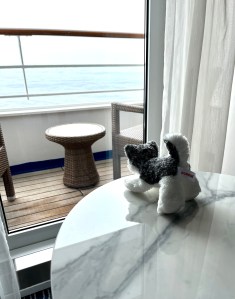
In Skagway, Alaska, I bought a small toy Husky, a beanie-bag size and shape little guy, with soft gray/white fur, big blue eyes, and the name MUSH printed on the tag. I loved the little guy from the first glimpse and perched him on my pillow in the stateroom when we got back to the ship. Joel, our cabin steward aboard the Oceania Regatta ship, loved Mush too.

When we left for dinner in the evenings the steward would come in to straighten up and turn down our beds. When we returned later, we found the usual chocolate candy on our pillows, AND…..Mush, posed in a series of so cute antics. The first time, he was propped on a pillow with the TV remote, watching a football game on the screen.

Another time he was standing on an open book (that I’d been reading), as if he were reading too.

Once when we came back from an excursion ashore and after we’d had lunch at the buffet, we found him on our small room table with the curtains draw slightly, looking out at sea.

And then, every evening HE started getting chocolate candy too, an additional piece placed between his paws. We were absolutely delighted.

Of course “I” started posing Mush for Joel too when we went out for the day, hiding him where the pitcher of ice water was kept, or behind the desk alarm clock, or sometimes just lying on the bed, his head tucked in and front feet up, waiting for a belly rub.

We had such fun with Mush and our very good and so kind cabin steward.  Another sweet memory.  And now, Mush resides on my dresser at night, guarding my glasses, and sometimes on my pillow during the daytime.  (But he’s on a diet now – no chocolate.)

##

Maybe I could write a cute kid’s story starring Mush on an ocean cruise. He could meet friends, find a missing object, solve a mystery, or rescue someone in danger.  Now that’s an idea!! Mush and I might have to put our heads together and come up with a plan!

Q&A With Marilyn Levinson

by Maggie King

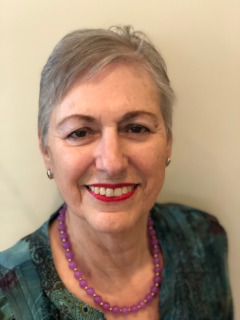
Marilyn Levinson is my guest today. A former Spanish teacher, Marilyn writes mysteries, romantic suspense, and novels for kids. Her books have received many accolades, and we expect more accolades in a year that’s shaping up to be a big one for Marilyn.

When I asked Marilyn about her upcoming releases and the “secret” of her success, this is what she shared. Enjoy!

2024 promises to be a busy year for you. Tell us what you’ll be publishing, and re-publishing.
Yes, 2024 is a very busy year for me, with eight books and a short story coming out. The new books: Rufus and the Witch’s Drudge, the second in my middle grade series, comes out in early April; my romantic suspense, Come Home to Death, comes out April 30th; and Booked On Murder, the eighth and last book in my Haunted Library series, will be released on August 6th.

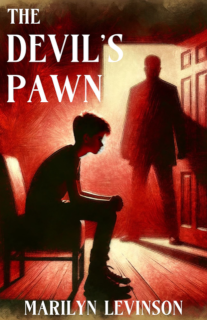
I also have five books scheduled to be republished: my YA horror, The Devil’s Pawn, just came out. Coming soon are two books in my Golden Age of Mystery book club series, and two novels for kids: And Don’t Bring Jeremy and Getting Back To Normal.

My short story “Stabbed in the Heart” will appear in the anthology, First Comes Love, Then Comes Murder. (Note from Maggie: I’m lucky to share space with Marilyn in this anthology!)

Please share about how persistence has contributed to your success.
I wouldn’t be anywhere if I hadn’t persisted in writing more books and sending them out. Also, being involved in the writing community has kept me informed re which agents and editors are open to new authors and new series.

What part of writing is the most fun for you? The most challenging?
I love writing dialogue. I find some plotting situations, especially when writing mysteries, the most challenging.

How long have you been writing? What started you on your writing journey?
I suppose we won’t count the years in elementary school, though I still have my notebook of stories from then. I started writing when my sons were very young. I wrote short stories and poetry, then segued into middle grade and YA novels, and eventually into mysteries.

What characters in your books are most similar to you or to people you know?
I suppose my sleuths are most like me, though they are braver and more adventurous than I am. But truthfully, my characters come from my imagination and are not based on people I know.

What comes first for you, the plot or the characters, and why?
A simple story idea comes first. Then the characters and plot come to mind and work together. That said, my characters and their relationships with one another are of utmost importance to me.

How important is setting in your stories?
Setting is very important in my stories. For one thing, it impacts my characters’ personalities and their lives. Working in a small town is very different from working in a city office building. Setting also dictates activities because of the weather and the terrain. It also can play a role in the mystery aspect of the story.

If you could tell your younger writing self anything, what would it be?
Don’t worry. You’ll get there. 😊

Please share your process for getting your books re-published.
I told my agent, Dawn Dowdle, who has recently died, that I wanted to make my “Children’s Choice” middle grade novel Rufus and Magic Run Amok the first book in a short series. And so she got me a contract to republish Rufus and to write three more novels. She also arranged to have my YA horror republished. A new publisher asked to republish some of my older books, and a publisher I’ve known for some time asked to republish others.

How do you use social media as an author?
Since my readers are on Facebook, that’s where I’m in constant contact with them. I love Author Takeovers. I do guest blogs and virtual book tours when a new book comes out. I also post occasionally on Instagram and X. I love doing video interviews and chats. And I write a monthly newsletter.

What marketing strategy works best for you?
Hard to tell. The ones I mentioned above seem to work.


As Allison Brook, Marilyn writes the Haunted Library series. Death Overdue, the first in the series, was an Agatha nominee for Best Contemporary Novel in 2018. Other mysteries include the Golden Age of Mystery Book Club series, the Twin Lakes series, and Giving Up the Ghost.

Marilyn’s juvenile novel, Rufus and Magic Run Amok, was an International Reading Association-Children’s Book Council Children’s Choice and has recently come out in a new edition. And Don’t Bring Jeremy was a nominee for six state awards.

Marilyn lives on Long Island, where many of her books take place. She loves traveling, reading, doing crossword puzzles and Sudoku, chatting on FaceTime with her grandkids and playing with her kittens, Romeo and Juliet.

Marilyn’s books are available for purchase on Amazon via her Amazon Author page.

The Devil’s Pawn is available for purchase at Barnes & Noble and Fantastic Fiction.

Connect with Marilyn on her website (signup for her newsletter), Facebook, Goodreads, X, BookBub, Pinterest, and Instagram.

Happy Valentine’s Day to the talented Writers in Residence and to the readers we treasure.

Writers & Time

by Linda O. Johnston

 I’m a writer, and I’m a fan of time—but sometimes it stumps me. Kicks me in the butt. Gives me a hard… time. 

For one thing, time in stories is a major factor. How long will the story go on? How old is the protagonist, and will they age much in it? 

And what is the time when the story takes place: contemporary times? Historical?  Sometime in the future?

And then there’s my own time. I’m good at fulfilling deadlines, but sometimes I really have to work at it. 

In fact, one of the reasons  I swapped the date for my post this month is because I was determined to finish a first draft of a novel I’m currently working in, with a deadline approaching, and I was focusing mainly on that. 

But I’m generally used to dealing with time and finding ways to handle it. For example, years ago when my kids were young and I was practicing law, I got up an hour earlier than the others in my household and wrote then. And a while later, when I wound up having to commute for more than an hour each way every day for my law job, I’d already started getting published, so I’d head very early to my job and hide in my office for an hour before starting to work—and everyone knew I was writing then and left me alone. 

And now? Hey, I’ll stop writing this soon and get into the edits of that manuscript I mentioned. I did finish a very rough first draft, but there’s lots more work to do. 

How about you? How do you deal with time in your life and writing or other work?


Character Flaws

by Gayle Bartos-Pool

gayle-at-bills-house-sept-2022

Through the centuries man has written novels and other stories using that plan old Aristotle, born in 384BC, came up with and documented in The Poetics. He said there are 5 Basic Elements used in writing a story: Plot, Character, Dialogue, Setting, and the Meaning of the story. He was so right. As for the people who populate said story, many authors utilize the “Character Flaw” idea to give their main character some quirk that might trip them up while pursuing their goal.

Whether it’s a private detective with a drug problem (Sherlock Holmes), a gal who drinks too much (the woman in The Days of Wine and Roses), or even the kid who can’t tell the truth (The Boy Who Cried Wolf.), when the reader learns the character has this flaw and also learns what the goal is in the story and what the roadblocks are in trying to achieve that goal, there will be anxiety on the part of the reader to see if the hero can overcome his or her problem and succeed.

This method has been used for centuries and works, but there have been other ways to toss a curve to the hero just to see how he or she handles it. A blind main character (in the movie: Wait Until Dark) or a blind detective (the movie and book called exactly that: The Blind Detective) or a hero in a wheelchair (the TV show: Ironside) worked just fine in catching the bad guys.

Rob a Bank

A physical handicap can actually make the hero stronger. I’ve known real people who had severe health problems turn into some of the strongest people I have ever seen in my life. But a drug addict or an alcoholic isn’t exactly wearing a badge of courage. I’ve also known people who had those issues as a part of their character and who had no intention of getting rid of them. I probably wouldn’t turn to them in a crisis. In a story they might be the main character with what is known as a “fatal flaw” who solves the problem or reaches the final goal as he dies on the last page. That’s been done, but it’s a bit of a downer.

But there can be other ways to give the main character something to deal with besides thrusting negative points on him. In fact, some TV characters don’t really have major flaws, but some of their friends do. The main character in the series Magnum, P.I., and Jessica Fletcher in the TV show Murder, She Wrote were basically good people, but some of their acquaintances had problems. Usually those problems were thrust upon them by someone else, otherwise known as the villain, and the hero has to solve the case before the jail cell closes on their friend.

So, are we supposed to make our main characters flawed? I’ve read some best-selling books where the hero had flaws that were rather unpleasant and I only read one of their books. I didn’t find that trait a selling point. I often say that I want my main characters to be people I would invite to my house. They don’t have to be sickeningly sweet or holier-than-thou, but I would like to respect them.

But these heroes might have a friend with a major flaw and part of the story is to get the friend on the right track so they don’t die or end up in prison. You can even have the hero mention that he almost went down that same path until somebody straightened him out. My Johnny Casino character used drugs when he was a kid while he was growing up in the Mob. They were importing and selling those drugs until a local priest challenged him to a boxing match and whooped his little butt. Johnny never touched a drug again. This revelation in one of the stories let Johnny use himself as an example to help somebody else shake their dependency.

people-4

I’ve wrestled with the notion that the main character should have something wrong with him since that theme is prevalent in many books and movies, but I prefer my main character to have either overcome some minor flaw or never really had one in the first place. Most people I know aren’t one step away from the slammer or psycho ward, so I’m not stuffing my character in that camp. He can have doubts and reservations, but in the end his upbringing and persona got him where he is, so I’m not going to let him fall into a pit. And anyway, that’s what heroes are…heroes.

People with problems don’t usually go to people with their own troubles. They go to the guy or gal who made it through the gauntlet and survived. We learn from characters like that, so my heroes fight to keep on an even keel and get us all to shore.

Coast Lighthouse

STARTING OVER….

by Rosemary Lord

1.08RoseSignCrop

Happy New Year!

It’s time to come out from hiding under that duvet!

This winter is turning out to be tough on so many, with the freezing temperatures and endless rain across much of America and Europe. But I’m in California, where it’s still often sunny during winter, even when it feels to us as if it’s freezing.  My siblings in England ridicule me with our 66-degree “heatwave.” Hey! We’ve had several days of rain – and the ensuing power-cuts and floods. Los Angeles comes to a halt at the first sign of rain…. Enough already! I’m done with winter!


But I digress: Each January is a fresh start. Time to dust off our goals, our dreams, our great plans for life.  

As a teenager I had so many dreams and goals – and many of them I have accomplished. The fourteen-year-old me never questioned that I could not go from a quiet little town in England, far removed from the acting and showbiz worlds, to living in Hollywood, (where I knew no one and was totally ignorant of how things worked), to working as an actress and a writer in Hollywood movies. My dreams, my positive beliefs and my naivete fueled my journey.  I’m not saying it wasn’t very tough at times, frustrating and sometimes heartbreaking. It took a lot longer than I thought. But I was driven by my dreams and never gave up.  


Then a new chapter of my life opened up. My dreams and my goals changed.

Writing was my new focus. I wrote articles about Old Hollywood and Movie Stars from Hollywood’s Golden Era. I wrote about Hollywood history. But I never thought I would be smart enough or talented enough to be a novelist. I was and am still in awe of so many of the great novelists. How could I ever come close to that?


It was shortly after my first non-fiction book Los Angeles Then and Now was published and I was having lunch with fellow British-born writer Jacqueline Winspear. We’d both been honored by the Southern California Book Sellers Association. Jacqui had launched her first amazing Maisie Dobbs novel and I was chosen for my Los Angeles Then and Now. As we chatted about our current and future writing plans, she convinced me that I, too, could write a novel. Even a mystery novel. She explained how Maisie Dobbs came about and the basic method she used. Wow! She opened up a whole new world for me.

A new pathway. She showed me how to look at writing in a totally different way. I will be forever grateful. I subsequently joined Mystery Writers of America and then Sisters-in-Crime. I found a new family of writers.


But even along this writers’ journey, there comes a time when we have to step off into the unknown to get new results, to shake things up.


“This year will be different,” we often promise ourselves on New Year’s Day. But in order for it to be different, we have to do things differently. Maybe it’s a time to take a fresh approach, take another path. I’ve been toying with the idea for a children’s book – taking a break from intense historical research. Another writer friend is inspired to try her hand at poetry this year, after several successful noir thrillers. Perhaps a crack at a movie script?


New Year’s is a great time to plan a do-over. Change writing habits. Shift the energies around. The year ahead is filled with new opportunities, new hopes and wonderful blank pages for us writers to fill.


Perhaps go back to the simple way of doing things – without all the current programs available to us. I sometimes wonder whether our world of social media, immediate access to ‘google’ or ‘duckduckgo’ information is a blessing or a curse.


In days of yore, writers would be found in dusty libraries, surrounded by research books, furiously taking notes. That’s what the Agatha Christies of her day would have done. Jane Austen too. Mary Roberts Rhinehart didn’t use Instagram to tout her The Circular Staircase success. Edgar Alan Poe didn’t have a Facebook page. Charlotte Bronte didn’t Tweet. Raymond Chandler did okay without all that. Hmmm.


But today we have a choice to avail ourselves of those services. And we have Sisters-in-Crime, The Authors Guild and Mystery Writers of America to turn to. We have options.

Writers are storytellers. We’re the ‘wandering minstrels ‘of our time. Minstrels would wander from village to village, singing about the news around the countryside. Today we fictionize the local village stories and don’t have to travel from village to village to share them. We have a flourishing publishing world, movies, television, internet, podcasts and multi-media resources to spread the word. Or we can choose to keep it simple with a yellow pad, pencil and our imagination.


I love the excitement of the New Year options. A chance to start over.

What about you?

Is Handwriting Dead Or Just Dormant?

“The pen is like the needle of a record player held in one’s hand,” Donald Jackson, calligrapher, and scribe to the Late Elizabeth II, once observed. “As it moves across the paper, it releases the music of our innermost selves.”

Wow. I just love that. Sadly if Mr Jackson saw my handwriting he would accurately surmise that I am permanently scattered.  

Mahatma Gandhi declared that a poor hand is “the sign of an imperfect education.” But mine leans more towards P.G. Wodehouse who said his, “resembled the movements of a fly that had fallen into an inkpot, and subsequently taken a little brisk exercise.”

Computer keyboards ruined everything for me.

I had the most perfect handwriting. As a Brit we were not trained to write “cursive” which I think is an American form of script. Here is an excerpt from my Home Economics book circa 1969 – please note the hilarious and dated content.

In 1977 I trained as a “shorthand typist” before Dictaphones were invented. In the UK the shorthand was Pitman shorthand;  – in the USA it was “Gregg,” although there are many other forms like Teeline or Fastnotes. I could boast 125 wpm (words-per-minute). I loved it. Here is an example of Pitman shorthand taken from “The Lerner’s Shorthand Reader” circa 1892 and priced at 6d.

Isn’t it pretty? If you’d like me to transcribe, I will …

I could “touch type” i.e. there were no letters on the keyboard so I would type the copy without looking at my hands (for those youngsters out there who have never heard the expression). There was also something immensely satisfying about coming to the end of the line and pushing the lever of the carriage return to be rewarded with a cheerful ting!

With the advent of computers, my typing has speeded up dramatically (I just did a free test) and it’s 75 wpm.  There is no way my handwriting now could keep up with my brain. Unfortunately, I can hardly hold a pen let alone write with one.

But let’s not forget the reality of handwriting of centuries past. It’s tempting to think that 19th century penmanship was beautiful and legible. This was not the case. Paper, ink, and postage was expensive. People wrote as small as they could. Anne Brontë’s famous final letter had the lines criss-crossing each other. So even if 21st century handwriting has deteriorated, in the big scheme of things, that’s nothing new. Sadly, a recent survey found that in the past five years, 12% of Britons have written nothing at all – not even a note. With the demise of the check book here in the UK, signatures are barely needed either. Some people don’t even have a PEN!!! I was at the post office recently using my USA credit card which demanded a signature to find that I was the only person in the store who carried a pen!

“When you type on a screen, the words seem as fleeting as rays of light. When you write, there’s a real physicality to it that adds another dimension to how you experience your own writing. It fosters a deeper engagement with the material you write, makes the writing voice inside your head clearer and louder.” Quote from Omwow blog, https://omwow.com/longhand-writing/

I love that expression “words seem as fleeting as rays of light.”

Handwriting is deliberate and intentional and requires focused attention. It encourages us to be fully present in the moment. Neat and well-formed handwriting can also indicate a level of discipline and organization. It’s also lovely to receive a handwritten note. It feels personal because it is personal. Someone has taken the time to write and not just zip off an email.

In the meantime, I’m just grateful that my appalling handwriting doesn’t get me into the following kind of trouble:

In 1636 an employee of the East India Company in London wrote to a colleague in India asking that he ‘send me by the next ship 2 or 3 apes.’ Unfortunately – his letter ‘r’ in the word OR caused some confusion. As a result, he received 80 monkeys, together with a note saying that the remaining 123 would be with him shortly.

What about your handwriting? Please share and shame mine.

SHADOWS OF THE PAST, Part Two

by Miko Johnson

We may be writers but we’re also observers, and I’ve observed that one picture can be worth a thousand words.

In my previous post, which covered my time in Prague and Poland, I promised to follow up with my trip to France, and how it influenced both my writing, and my life. It began with a trip to Paris ten years earlier, when my husband and I stumbled onto an exhibition at the Musée d’Art et d’Histoire du Judiasme, or MahJ for short. It featured political drawings and prints from Abel Pann, an artist who executed a series of drawings based on the pogroms carried out by soldiers on the Eastern Front during the First World War. His work covered the early 20th century.

Most broke my heart. They showed mothers and little children hiding behind barns, or cowering inside their homes, with captions like Quick, run and hide! One of his later drawings showed an elderly Jewish man hanging from the gallows while Nazi soldiers watch with amusement. The caption: Honoring the brave WWI veteran. It made me think of my grandfather, whom I never met. A German soldier wounded in the Great War, he was taken to Auschwitz and never seen again. That’s when I decided to dedicate my fourth book to him.

I mentioned in my earlier post the dejection I saw in the people of Bytom, Poland, a former mining town largely ignored by the EU. Images of An Other Europe, another photographic exhibit Allan and I saw in Prague, influenced that observation.

Photographer Constantin Pittas traveled to seventeen countries throughout Europe in the mid- to late-1980s, capturing people in the streets of cities. His stated goal was to “prove that Europe is one entity”.

I believe he failed. Not that his work wasn’t fascinating, but I could tell which side of the Iron Curtain he’d taken photographs by the faces and body language of the people. As in Bytom, I saw desolation throughout the Communist bloc images. In one photo, used for the brochure cover, a middle-aged man walks along a street alone toward the camera at twilight. Bag in hand, his head is tilted down to watch his step, figuratively and literally.

   I don’t see joy, or serenity, or even concern in his face. Only resignation. I’d recognized the Charles Bridge in the background so I knew this had been taken in Prague, but based on the other photographs, I had no doubt the location fell behind the Iron Curtain.

Many more showed similar images of people, their emotions constrained. Women standing on line at the market, an elderly woman sitting on a bench. Don’t ask, don’t tell, at least in places like Romania, Hungary, Armenia. People looked so different in Western Europe, where their faces bore the full range of emotions, whether young folks sunbathing on a Mediterranean beach or an elderly Portuguese woman gazing at a drunk lying in the street with a mixture of pity and disgust.

I kept returning to two images, each showing a different young woman with a little smile playing on her lips. In one, the woman sits at the counter of a Parisian café, enjoying a coffee. In the other, the woman turns to glance at a man she’s with. The pure pleasure behind the smile of the coffee drinker, compared to the sadness in the eyes of the woman presumably in love, was strikingly evident.

A series of photos the photographer had taken at the end of his journey, in Berlin, were especially moving. Pittas fortuitously found himself there in 1989, when the wall fell.

There, past and present collided, and  confusion mixed with elation as people tried to grasp what had happened.

However, the photographic image that has stayed with me the longest came from a different time.

Photograph by Constantine Pittas, from exhibition at Clam Gallasův Palác, Prague

After Eastern Europe we continued to Toulouse, France. One of my goals was to visit the Musee de la Resistance & de la Deportation, where I’d hoped to find background information for my current WIP, which covers the years around the second World War. The museum’s focus should be obvious even if you don’t understand French. Despite going through the museum with the objective eye of a researcher, I found it dark and disturbing, until I found this photograph:

Need I say more?

Photograph from the collection of Musee de la Resistance & de la Deportation, Toulouse, France

After Toulouse we spent the final days of our trip in Paris. We’d last stayed there six months before Notre Dame caught fire, and caught a heartbreaking glimpse of the ruined cathedral in 2022. While meandering through the city we once again found a photographic exposition of the decimation of one neighborhood during the Nazi occupation. Heartbreaking, we thought as we approached the cathedral. What other sad sight awaited us.  We turned the corner and saw this:

Photograph by Miriam Johnston

Progress. And hope. A balm for the soul.

Miko Johnston, a founding member of The Writers in Residence, is the author of the historical fiction series, “A Petal in the Wind”, as well as a contributor to several anthologies including the about-t0-be-released “Whidbey Island: An Insider’s Guide”. Miko lives in Washington (the big one) with her rocket scientist husband. Contact her at mikojohnstonauthor@gmail.com

.This article by M. Johnston was posted by Jackie Houchin

Writers Collaborating: How does it work?

By Jill Amadio

Co-authors, such as the several collaborators who write with bestselling James Patterson, are freely acknowledged by the thriller writer, and he gives them public credit for their work. Is there also an increasing trend for mystery writers to team up? One successful couple, Greg Wands and Elizabeth ‘Liz’ Keenan, are finding their books more and more popular, and sell in twelve languages. Here they explain how their writing process works:

What are your writing backgrounds? Were you published before collaborating?

Greg: Liz and I both wrote short fiction separately for many years, and I tried my hand at screenwriting. While we were early readers and supporters of each other’s work, it wasn’t until our debut, The Woman Inside, in 2019 that either of us became published authors, and it was a real thrill to be able to do it together!

How did you decide to collaborate and why crime?

Greg: We’d been discussing the idea of collaborating on a project together in the abstract for many years when we both suffered separate tragedies: my father passing away from cancer and Liz having a long-term relationship unravel in heartbreaking fashion. While supporting each other through the grief and trauma, we cooked up the seed of the idea that became our debut novel. A crime story seemed like the proper genre, as we were interested in exploring the more clandestine aspects of the human condition and the capacity people have for secrecy and deception.

What system do you use to organize and collaborate?

Greg: We write in Google Docs, which allows both of us to work on the manuscript simultaneously. As a duo, this helps when we’re in the revision or copy edit phases and often need to tackle separate plot points in a complementary fashion.

Which strengths and weaknesses do you each bring to the writing?

Greg: Liz is wonderful at scene setting, character development, and creating a visceral experience for the reader through the use of a specific image, textural description, or the like. And she’s marvelous with a turn of phrase! I enjoy writing dialogue, and would like to think I’m good at creating atmosphere. I think we’re also both skilled at being able to nudge the other in the right direction when one of us starts to lose the thread of the plot or makes a narrative decision that feels untrue to a character.

How have you changed or adjusted your system as you wrote more books?

Greg: We fell into our routine fairly organically, by volleying chapters back and forth with only a loose framework in place. This seemed to give the work an improvisatory energy that kept each of us–and by extension, the reader–on their toes. Thankfully, we’ve been able to keep our formula reasonably intact, which works well for us. With a couple of the books, the publisher has requested a more comprehensive breakdown, but we still find ways to surprise and confound one another on the page, to our mutual delight.

Which obstacles/pitfalls/challenges did you face in the writing of the books? Arguments? Agreements?

Greg: It can be a bit of a challenge having two separate brains tackling one story, mostly from a logistical point of view: keeping timelines straight, having slightly different ideas behind character motivations, and trying to foresee where your writing partner might take the plot of the book. But the uncertainty can also be thrilling, and lend to the feeling of discovery and surprise that makes for an engaging writing experience.

Do you think having two writers can shorten the length it takes to write a book?

Greg: Because we write in a back-and-forth style, with one author penning a chapter and then kicking it over to the other, it takes about the same amount of time to finish a draft as it would a solo writer. The advantage we have is that our method allows for extra time in between chapters to clean up the text and to find places where we may have slipped into some inconsistency or other in the plotting of the story.

Your separate backgrounds appear tailor-made for a collaboration. Have your experiences in publishing and screenwriting helped you write, publish, and market your books?

Liz: Our respective backgrounds have given us several useful tools. Our experiences in the film and publishing industries have informed our understanding of effective storytelling, audience, and the publishing process. For marketing, our past experience has helped us to succinctly pitch our books and connect with influencers and other writers in and out of our genre, as well as our understanding of how much authors have to be entrepreneurial when it comes to marketing their books.

Who does the research?

Liz: Since we typically split up the characters in writing our novels, we research our designated parts and their history, professions, passions, etc. For the broader story elements like forensic and legal procedures, we also split research and share our findings, which often spur new story elements in our plotting. We pick themes and story elements we are interested in learning more about, knowing we’ll spend six months to a year immersing ourselves in these topics.

What is your publishing history?

Liz: Our first novel, The Woman Inside came out in January (2019), and the following year, In Case of Emergency was published (2020), and The Rule of Three was released in 2022. We have a fourth novel publishing in 2024. Our books are all published by Dutton, an imprint of Penguin Random House

Either of you writing other books, fiction or non-fiction,  that are non-collaborative?

 Liz: Yes! We are both working on novels separately in between our collaborative projects. They are in various degrees of completion; Greg is further along than I am!

Which of your books did you have the most enjoyment writing?

Liz: Each of our novels has brought immense joy in the writing process in different ways. If I had to pick one, I think The Woman Inside was the most exhilarating to write since it was the first, the most personally motivated, and we were doing something completely new.

 Most effective marketing strategy?

Liz: This is a hard one since effective marketing is so elusive. However, the approach with the most ‘legs’ is personal recommendations from fellow thriller writers and bookstagrammers of our books when they are released. The trust of readers that these well-read influencers and writers have fostered is priceless and effective in spreading the word about our work, and we are eternally grateful to the people who support us in that way. We aim to do the same with all of the incredible books that are published each month!

Advice for budding collaborators?

 Liz: Like any healthy relationship, creative collaborators should focus on the foundation of the partnership as much (if not more) than the creative output. Communication, trust, and encouragement are vital to keeping momentum when things get creatively challenging. Making the work an extension of the friendship is the core of our collaboration; we write for the amusement and shock of the other, which keeps us motivated. Laughter is essential, too.

###

..

This interview by Jill Amadio was posted by Jackie Houchin.

Wishing You All a Wonderful Holiday Season!

CHRISTMAS CANDLE
a Poem by Kay Hoffman
.
Light a Christmas candle
And let it warmly glow
From out a friendly window
Across new-fallen snow.
Someone lone in passing
Will catch the strong bright beam
To cheer the rugged path ahead
And set the heart to dream.
Let the warm glad light shine
From your own candle’s ray
Glow deep within your loving heart
On each and every day.
Light a Christmas candle
To glow within your heart
And touch the life of someone dear
With blessings to impart.
.
Thank you for reading The Writers In Residence in 2023.
We will be back with new content on Wednesday, January 3, 2024.
.
Jackie
Gayle
Linda
Miko
Madeline
Jill
Hannah
Maggie
Rosemary
#
.