DEAD MICE, An African Tale – Turning Experiences Into Stories

By Jackie Houchin

In last week’s Writers in Residence blog post, Gayle Bartos-Pool asked the question, “What do I bring to the party?”  She went on to tell of her extensive and varied experiences and personal contacts that have helped in research for her detective and spy novels. It got me to thinking about what I “bring to the party” of my story writing.

(1) I have a good knowledge of the Bible. (2) I’ve been on three short-term mission trips to Malawi, Africa. (3) I have 3 granddaughters who were once little and to whom I told and wrote many stories. (4)  I teach the 4th-6th grade Sunday School class at church and I occasionally help in the K-2nd grade Junior Church.

What a set up for writing children’s stories that take place in Africa and that have a Bible truth woven into them. Hey! That’s just what I am doing. I write the “Missionary Kids Stories” series (about a family serving in Malawi) and I send them out to about a dozen young kids (6-11) at church via email every 1-2 weeks. They are entertaining (according to  the kids) informative about Africa and mission life (occasionally gross as in the story that follows), “safe” (one mom’s comment), and have truths from the Bible as a take away.

Here is the first one I sent out, introducing the family and setting up the series. It is the shortest and simplest one. The stories vary in age level depending on the MK (Missionary Kid) who is telling the story. Stories five and six – told by a teenager – is one story in two parts with a cliff hanger at the end of five.

Dead Mice

Introduction

 These stories are about the (make-believe) Matthews Family, who went to Malawi, Africa about eight years ago to be missionaries.  This family has a dad and a mom, and seven children (three boys and four girls including a set of twins). As part of their names, each of them has the month that they were born in as a first or middle name, like Melody May or April Grace.  All of the stories are written to you as letters.  The first story starts like this: 

Hi kids!

My name is Melody May, and I have a twin sister whose name is Charity June. I also have three brothers and two more sisters. We all have the month we were born in as part of our names. It’s really cool I think, but some people think it’s weird.

My mom – her name is Mrs. Matthews – is really fun and creative. She picks out all our names. My dad – his name is Mr. Matthews – just smiles at her with love and agrees to the names.

People call me Melody, but they call my twin sister “June.” You may wonder how twins could be born in two different months. Can you guess how? It’s kind of tricky.

I’ll let my brothers and sisters tell you about themselves in other letters, but right now, let me tell you about what happened to my sister June and I a week ago.

We are MKs (Missionary Kids) who live in Malawi, Africa. Our dad is a college teacher at the African Bible College. We go to a school there too, but in a different building.

One day, an African boy in our class showed us a mouse… a really DEAD mouse. Then he dared us to do something with it. At first June and I refused, but then…..

Here’s how it happened.

The boy’s name is Kukana (Koo-KAH-nah). On that day, the first day of the new school year, he dared us to EAT a dead mouse! Ewww! Would YOU eat a mouse, especially a dead one? (I guess a live one would be worse!)

There are kids from America and Canada and Holland and South Africa in my class. There are many Malawian kids too. We have three grades in our classroom because, well, our teacher is very smart and can teach three grades at once! At least that’s what I think.

That day, when Kukana stood up in class with a closed box and told us he brought something for us to eat, we all smiled. We thought it might be some roasted peanuts, or those small super-sweet bananas they grown in Malawi. Yum.

Then he opened the box and reached in and held up this really stiff, black, hairy thing.  Some of the new girls screamed, but June and I didn’t. We almost did, but we grabbed each other’s hands and squeezed real tight.

“This is a mbewa,” he told us.

(You say mbewa like this – mmmmm-BEE-wah.)

“They are very tasty to eat,” Kukana said.

Then he held the mbewa up high by the stiff tail, tilted his head back, put the old dead mouse’s head into his mouth… and crunched it off!!!!!  He smiled big as he chewed it. The Malawian boys cheered and stomped their feet!

Our teacher frowned a little, but she didn’t say anything.

Kukana smiled again, real big, and there were little bits of black fur in his teeth!  He leaned very close to June and me and showed us his icky tongue, trying to scare us, I think.

Then he ate the rest of it….. even the tail. There were more hoots from the boys, and this time Mrs. Molenaar said, “Okay. That’s enough. Now tell the class about mbewa. Why did you bring it – and eat it?”

Mrs. Molenaar knew about mbewa – we could tell by her look – but she wanted Kukana to explain about this “famous Malawian snack food.”

“We eat mbewa because it’s good protein food,” began Kukana.

June and I looked at each other, our eyebrows raised way up and our eyes got big. OUR family eats  eggs, chicken, fish, and sometimes pork or beef for protein.

Kukana went on, “Village families here in Malawi are very poor. They raise goats and sometimes cows to SELL but not to EAT. They do this to have money for beans and maize to eat, and seeds to plant.”

I thought about what else OUR family eats. We like the beans, tomatoes, pumpkins, and peanuts that the villagers grow. We also eat yogurt and canned fruit and oatmeal. Sometimes Mom cooks nsima (nnnnnn-SEE-mah) which is made from white corn, called maize, and tastes like thick hot cereal without any salt. (Mom adds some for us.) Poor Malawians eat that every day. Sometimes that is all they HAVE to eat.

“There’s LOTS of mbewa around,” said Kukana. “You just have to catch them. We go to where old maize stalks or dead grass is piled up. We stand around the pile with sticks. Then someone lifts up the pile with a long pole and mice run out everywhere.  We have a lot of fun killing them with our sticks!”

Kukana laughed and all the boys laughed too.

“Then we put five or maybe ten of them on a long stick and roast them.”

Kukana looked right at June and me, opened his eyes really big and added, “….just… like… your… marshmallows!” Then he laughed in a mean way.

That made us feel mad and scared and icky, but we didn’t do anything. I think it was then, that I started to think….. maybe I WILL eat a dead mouse!

Mrs. Molenaar gave Kukana a stern look and he finished his talk like this. “Sometimes our fathers burn off the maize stubble (old stalks) in our fields. Then all the people stand around the edge of the field to catch the mice that run out.”

Mrs. Molenaar told the rest of it. “After the mice are roasted, which dries out the bodies but doesn’t burn off all the fur, they will keep for quite a while. Maybe you American children have tried jerky. It’s a bit like that.”

She turned to Kukana. “Did you want to share your mbewa with the class?”

He walked through the desks with the box down low. All the Malawian boys and girls took one out and started crunching and chewing. One American boy, named Benji took one too.

When the box came to June and me, my sister leaned way back, but I….. I reached in, grabbed a stiff hairy burned mouse and took it out.  Before I could think about what I was doing, I leaned back, held the thing up, and crunched off its head!!!!!!

This time June DID scream. “Melody! Noooo!! You are going to get sick and die!! And Mom will be very mad!”

I didn’t look at her. I stared at Kukana as I chewed the prickly, scratchy thing. It tasted kind of like burnt peanut shells and grease to me. Finally I swallowed it and stuck out my black-specked tongue to prove I ate it.

Kukana was surprised. He smiled at me (nicely, this time) and gave a little nod.  After that, he didn’t tease June and me. He kind of respected me, and since I was usually with my sister, he didn’t dare tease her either. After a while we even became friends.

Let me tell you a secret now. I didn’t finish the dead mouse.  I passed it to the boy behind me who snatched it up and ate it.

And you know what else?  I didn’t get sick and die.

I just became a Malawian.

But Mom DID get mad at me and told me never to do that again. I promised her that I wouldn’t. I figured I would never HAVE to do it again.

Later in our Sunday School class at the International Bible Fellowship church where my Dad sometimes preaches, I learned what Paul wrote in one of his letters in the Bible. He was a missionary to MANY countries. I don’t know if he ever had to eat mice, but he did say in 1 Corinthians 9:22, that he wanted to “become all things to all men that he might save some” for Christ.

I hope Kukana will someday want to know Jesus too. Maybe he will listen to me now when I tell him the gospel story ….. BECAUSE I ate the mouse.

mk-mice-and-boy

mk-mice-1

~~ Facts ~~

          Malawians DO eat mice like this for protein. Sometimes you can see them along the road, selling mbewa still lined up in a row on the roasting sticks, or in piles on a piece of cloth they spread out on the ground. They also eat big grasshoppers for protein which they fry in oil and sprinkle with hot pepper. 

And So What Do You Bring to the Party?

99be9-gayle51closeupA former private detective and once a reporter for a small weekly newspaper, Gayle Bartos-Pool (G.B. Pool) writes the Johnny Casino Casebook Series and the Gin Caulfield P.I. Mysteries. She also wrote the SPYGAME Trilogy, Caverns, Eddie Buick’s Last Case, The Santa Claus Singer, Bearnard’s Christmas and The Santa Claus Machine. She teaches writing classes: “Anatomy of a Short Story” (which is also in book form), “How to Write Convincing Dialogue” and “How to Write a Killer Opening.” Website: http://www.gbpool.com.

#  #  #

If you are a writer, you do research. If you are a good writer, you do a lot of research. If you are a procrastinator/writer, you do even more research and very little writing. That isn’t good. The least we can do is check out facts to make sure we have has much right as possible. The worst we can do is to put so much in a story that the story gets lost in the endless details.

Any writer knows it is rather embarrassing to write about our hero driving south on a street (in a city where we have obviously never been) only to learn later that the street is one-way going north. It happens. Google Maps makes it a lot easier to find out about streets in towns we have never seen. If all else fails, make up the town and the street and do what you want.

There is technical stuff that some writers drop into their tomes to make it more interesting. Hopefully they check with people who actually know about the activity so they get it right. That research is great. I do a lot of it. Often I learn way more than is necessary for the tale I am telling. I edit out much of the knowledge lest I turn the story into a How To book.

But what about stuff you actually know? When you get to be a certain age, you should have done things in life like have a few jobs or a few hobbies. I have had my share of jobs and lived quite a few places and have hobbies up the wazoo. So, you ask, how have I used my knowledge in my books?

Got a minute?
ralphmbartosprintlarge    My father was in the Air Force. We traveled a lot. I lived on Okinawa and in France as well as in Memphis (near Elvis) and here in California. There were a few other military bases along the way and many of these places turn up in my SPYGAME Trilogy. I used some of my father’s experiences as a pilot during World War II and afterwards, as well as my imagination, to concoct an intriguing set of stories. The first one, The Odd Man, deals mostly with WWII and the Bay of Pigs. I went to a boarding school in France and that place finds a home in book two, Dry Bones. Book three, Star Power, wraps up the trilogy by bringing back characters from books one and two for a climax ending up in Southern California with some Hollywood stars tossed in for fun, though some are positively deadly.

the-odd-man-cover-4-cropped   dry-bones-cover-view-2-small  star-power-cover-trial-2

There is a lot of history plus my own experiences in those books. I actually use a few pictures my mother and I took while living in these places in the book. As one of my characters and I say: “The facts are true. I made up the rest.”

But I mentioned my own jobs as being hands-on research for my books. Let me tell you a story. I wrote my three spy novels and tried to get them published many years ago. I wasn’t having any luck. By then I had moved to California, married, and was writing yet another book that didn’t get published until later. My wonderful husband noticed my frustration and said this: “You used to be a private detective. Why don’t you write a detective novel?”

I had been a detective about a dozen years earlier. I actually went undercover in a variety of places looking for bad guys. Maybe…

I started thinking about a detective series. Then I got on a jury. I thought this might be a perfect segue into a plot. The jury thing ended when the case was settled out of court and I went home. Then Richard got on a case. He was to appear the same day the O.J. Simpson jurors were to be picked. He wasn’t in that cattle call, but he saw the media circus downtown with the television cameras and helicopters and reporters. He came back with a vivid view of the proceedings. Then the ad nauseam media coverage ensued.
media-justice-cover-2-small

But that case wasn’t the first or last to hyperventilate on TV. Experts came out of the woodwork and threw out their “wisdom” and opinion long before a jury was even seated. THAT was going to be my story. What happens when the media orchestrates the justice? My book, Media Justice, was the first in the Ginger Caulfield P.I. series.

hedgebetfinalcovercropped

Speaking of jobs, I worked over a decade in a bank dealing with stocks and bonds. That’s where I met Richard. (Do I have to say that was the best job I ever had?) I dealt with millions and millions of dollars daily. Then one day we got free tickets to the Santa Anita Racetrack. Richard and I went. I explored. I found a terrific place to find a body… I combined horse racing and hedge funds and got Hedge Bet out of it.

damning-evidence-cover-small

The third book in the series was the result of my fellow writer and friend, Jackie Houchin, doing an article about the local dam up here in the Foothills where I live. She took a terrific picture of the dam before the retrofitting took place. It was so ominous. It reeked of mystery. It ended up as the cover shot on Damning Evidence. Jackie wrote a great interview of the guy who lived up at the dam. I knew I was going to use that character someway, somehow. And I did.

caverns-cover-only-updated-smallHere’s another story. When I was on assignment in Chicago as a P.I., I lived in an apartment near Lake Michigan. It was February. A brutal winter. I had to take the subway and a bus to the job at night. I worked from 5 p.m. until 2 in the morning. I survived Chicago. Years later I heard a story from a co-worker in California about a police officer in New York City who ran across something rummaging around in garbage cans down an alley. He shot it. It was a rat. It weighed in at 105 pounds. I moved the rat and his friends to snowy Chicago and I have them eating away the garbage on which a large area of The Windy City was built after the Great Fire. This was near the lake. Huge caverns have been carved out under the condos around the lake. Disaster looms. That book is Caverns.

All of these prior books have a connection to my actual life. But so do my Christmas books. This is where my hobbies come in. I collect Santas. I have around 4000. I have made some, bought many. And I used to work in a miniature store called Miniature World. We sold dollhouses. Ibookcoverpreviewcropped started making my own and making vignettes. I had an idea for a Christmas castle that I designed. I still have the sketch. I decided to write a story to go along with the idea of this castle. Then I decided to build the castle and make the figures that went with the story. Then I published the book. The first one was Bearnard’s Christmas.

the-santa-claus-machine-cover-final-cropped

I say first because there is a second book coming out this Christmas called The Santa Claus Machine. I am currently working on the third, Every Castle Needs a Dragon.

Now you might say there is no research in fantasies. Well, I added pictures to these books. I had to have things to photograph that fit the story. My Christmas collection is vast. I have reindeer and animals and sleighs and miniature toys that fit my stories. I must have been saving them just for these books.

The third book needed fairies and a dragon and a miniature diving helmet… I just happened to have this stuff tucked away. I guess I have been researching this story even before I got the idea for it.

But we all have stuff to bring to the party. What do you have in your imagination closet that you can pull out to enhance a character or plot? Maybe there is somebody in the family who influenced you. Or a place you lived that aches to be part of a story. Be an archaeologist of your own life and dig for those relics that will set your story apart. Let the party begin.

What are Beta Readers and What Can They Do For You? by Kate Thornton

c27c8-kateinhawaiismsz

Kate Thornton is a retired US Army officer who enjoys writing both mysteries and science fiction. With over 100 short stories in print, she teaches a short story class and is currently working on a series of romantic suspense novels. She divides her time between Southern California and Tucson, Arizona.


# # #

I may be one of the luckiest writers around, not just because I have five current readers, but also because they are all smart, talented, capable, and also voracious readers on their own.

What is a Beta Reader? What do they do?

A beta reader is a nice person who will read your manuscript and give you feedback. That’s pretty much the basic definition, but there are as many nuances to beta readers and what they do as there are metaphors and similes in amateur works of fiction.

Give them guidance about what you are looking for and don’t take their criticisms personally. Mine are specialists, and here are the areas in which they excel:

“A” – let’s not use their real names – is a punctuation and grammar specialist. She reads through my completed (or nearly so) manuscript and picks out punctuation and grammar booboos. And what looks worse than misspelled words, incorrect punctuation or awkward grammar?

“B” reads for continuity. She knows I have a 3-book series, and she reads to make sure all the stuff that happens is in the right order and that there are no glaring booboos like the main character is a blond named Alice in one scene and a brunette named Alicia in another. She also monitors the progress of the romances, character development and story pacing.

“C” reads for the story alone. Is it fun? Does it move right along? Does it make sense? Are the characters engaging? Are there boring parts?

“D” and “E” both read for polish – they are my final readers who, once I have corrected anything the others have suggested – make sure that what I have is what I really want to have: a reasonably well-written manuscript that is a fun read, makes sense, and keeps the reader engaged.

My beta readers all volunteer their time and expertise to make my books and short stories better – they are those additional pairs of eyes, additional world viewpoints, and those well-read and highly opinionated people who can save my work from sloppiness and author-blindness. I revere them.

How do you get beta readers? Ask. And be one.

One of my readers is a well-known crossword puzzle writer and is extremely picky about words. She is a style, grammar, and punctuation fanatic who is brutal in her critiques. I love her dearly. I was honored when she agreed to read for me. She is now a fan and is currently looking ahead to a manuscript I have not yet finished, giving me helpful hints as to where some of the story threads should go.

I asked another reader, someone who does not write but is an avid reader of my particular genres, to take a look and she not only agreed, but now asks if there are other works with which she can help.

A third is a friend who just wanted something to read, but came back with a lovingly detailed line edit.

Many times, your critique group partners or your writers’ group can provide you with feedback which will help you move forward. While I have not always found this to be a safe bet, it can be a good starting place. Keep in mind that your beta readers are there to help you, not disparage your efforts. If a reader is nasty or unhelpful, disregard their comments and don’t ask them again.

Volunteer to help your fellow writers. Let them know if you are reading for technical structure, punctuation, grammar or spelling and word usage. Or maybe you want to read for continuity and story progression. Or maybe you just want to read and see if there’s anything you can do to help. The key word here is help.

And lastly, don’t worry if your work isn’t finished or is need of a lot of help. Good beta readers can set you on the right path and help you find the inspiration to continue and improve. They can tell you where you are going off track or where you really need to read up (good grammar texts abound!)

P.S.  Don’t forget to thank them, both in real time and in your finished work. Thank you, Maggie-beth, Mar, Kay, Dina, Tracy, John, Sunny, and all my past readers, too. You help us all to be better writers.

Research 101 by Bonnie Schroeder

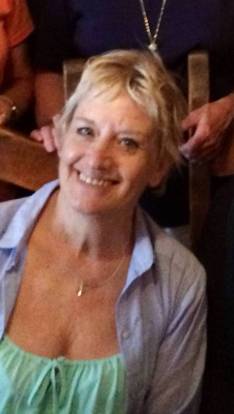
 2c097-bonnie

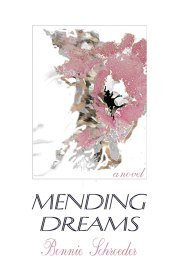
Bonnie Schroeder started telling stories in the Fifth Grade and never stopped. After escaping from the business world, she began writing full-time and has authored novels, short stories and screenplays, as well as non-fiction articles and a newsletter for an American Red Cross chapter. Her debut novel, Mending Dreams, was published by Champlain Avenue Books.


Science and I have never been good friends—except for high school physics, which was very cool because we learned how to make a hydrogen bomb. And lest this set off any Homeland Security alarms, I write “learned how to make” very abstractly here. It’s not like they gave us a recipe; the teacher merely explained the difference between fission (atom bomb) and fusion (hydrogen bomb), but my 17-year-old brain found it fascinating.

Flash forward several decades and I began work on a new novel, about a woman who suddenly and inexplicably begins growing younger. This has nothing to do with hydrogen bombs, but rather than writing the story as a fantasy—a gigantic case of wish fulfillment—I started asking questions. Could such a thing happen? How?

And this, inevitably, led me back to science.

Full disclosure: I did not find the Fountain of Youth in my travels, but I did learn more than I’ll ever need to know about genetics and cells and chromosomes. I’m not going to lay all that out for you, but I will share a few of my research techniques. Sooner or later, most writers will find they need knowledge, scientific or otherwise, that they don’t yet possess. Here’s how I went about getting it.

  1. I did some general reading first

I began my quest by reading several articles about the work doctors and scientists are doing to slow the aging process and extend our healthy lifespans. I noticed several names popping up over and over. Googling these names, I discovered contact information for several scientists—at places like Harvard and the National Institutes of Health.

2. I was audacious

I sent emails to several of these doctors and scientists, explaining my project and shamelessly asking for a few minutes of their time to review the initial premise I’d constructed and tell me if it seemed totally preposterous.scientist

Most of them never replied, but three did, and I learned something from this exercise: Scientists are really nice! They like to be helpful and to share their knowledge, and they can talk in plain English when they want to!

The first scientist I spoke with—via Skype, at his suggestion—reviewed my premise, diplomatically explained it was, in his words, “too specific and too unbelievable,” and sent me on a quest to learn about epigenetics (for the uninitiated, this is “the study of changes in organisms caused by modification of gene expression rather than alteration of the genetic code itself.” Got that?) He felt the clue to my premise lay in this area.

  1. I then read more specific material

My next stop was Amazon, to buy a book called Genetics for Dummies. Yes, there actually is a book by that title. I understood little of what I read, but it gaGenetics.jpgve me the vocabulary I needed to comprehend the technical articles I encountered as I chased down epigenetics and followed the threads that spun out from there.

  1. I was flexible

One of the scientists I contacted responded that she didn’t work with writers as a general practice, but she gave me the name of another scientist who was not on my initial “hit list.” This kind man turned out to be a goldmine of information and enthusiasm and not only gave me notes on my story’s outline, but also offered to read the narrative once I get to the point where science enters the picture and tell me if I got the jargon right.

  1. I was respectful of my sources’ time

This goes without saying, of course. Experts are busy people, so if one of them suggested a time and a method of contact (both Skype and teleconferencing seem popular), I was prepared to cooperate, and I was punctual.

  1. I expressed my gratitude often

There are not enough words in the language to thank these fine people who generously took time from their work to help a struggling novelist. I did thank each of them copiously during our discussions, and of course I will include a big, gushy acknowledgement in the book when it’s published. Because I was dealing with scientists in government and academia, I made sure to get their permission to mention them, because this won’t be the usual place where their name appears. And of course they will all get signed copies of the book, because without them it would have been banished to that box in the garage with all my thwarted projects.

Now I have to write the darned book, of course, and as we all know that’s a long and winding road itself. I have extra motivation on this particular trip, however, because I want to apply the knowledge I gained from my new scientist friends and prove their time wasn’t wasted in talking with me.

Has anyone else out there ever tackled a subject way beyond their area of expertise? How did you go about it? How did it turn out?

A FUNNY THING HAPPENED on my way to becoming organized …. by Rosemary Lord

06694-rosemaryatburbanklibraryjpgRosemary wrote her first book when she was ten years old – for her little brother. She also illustrated it herself. It was later rejected by Random House!

She has been writing ever since.

The author of Best Sellers Hollywood Then and Now and Los Angeles Then and Now,  English born Rosemary Lord has lived in Hollywood for over 25 years. An actress, a former journalist (interviewing Cary Grant, James Stewart, Tony Hopkins, John Huston amongst others) and a Senior Publicist at Columbia Pictures, she lectures on Hollywood history. Rosemary is currently writing the second in a series of murder mysteries set in the 1920s Jazz Age Hollywood featuring Lottie Topaz, an extra in silent movies.


  #  #  #

What I was trying to do was organize my life. Organize my life better – as I had so much writing to do, as well as a life to live.  I had – still have – several books, short stories and some magazine articles I wanted to write. I actually managed to finish a couple of mystery novels and started another. I wrote a magazine article and revised and updated two of my published non fiction books, Hollywood Then & Now and Los Angeles Then & Now. But this was not enough. I decided I really must get properly organized, so that I can increase my literary output.

 But hey – this is me. Remember all my notes on little bits of paper? And my “…I know it was blue – and I was eating something when I last saw it..”?   What chance do I have?

chartThen someone told me about “Org. Charts”… Online Organizational Charts that are supposed to make your life easier. Some of the versions can be very expensive, I was told. I was excited. Perhaps this is the magical cure I had been seeking?

But when I went online and perused various Org Charts, I realized that – uh – this is kind of how I always map out my writing. I just didn’t have a name for it.

 I have a large notice board and cover it with post-its. Each post-it has a chapter number and a brief outline. On a different colored post-it, characters in that chapter are listed underneath. Another sticky note has specific plot details for that chapter. I add to this ‘organizational chart’ of sticky post-its as I finish each chapter.

Towards the end, I review the arc of the story and how I got to this point. Then I sometimes move the post-its around to an earlier or later chapter, as I realize what needs to be revealed at certain times. On a read-through of my first draft, I might decide to cut a whole scene or even a chapter. If it is sounding too busy, I may chose to cut a lesser character out.  So I go back to my board and remove the relevant sticky-note or two and put them at the very bottom of the board, so I can see what I have taken out. I might be able to use those pages elsewhere – or even in another book. I find this method very helpful.

 Now along the way I get many interruptions from my writing time.

A major interruption was when an elderly lady rang me a few years ago and, with a shaky voice, said “…they’ve taken our club, changed the locks – can you help us get it back?” So began my long journey into saving the Woman’s Club of Hollywood from a real-estate grab and  from being turned into a luxury condominium resort.

2015-clubhse-from-front-drive-jpg_orig
Women’s Club of Hollywood;picture from their website

Founded in 1905, this club is where Mary Pickford attended events and handed-out award-cups for various flower shows. It is where Charlie Chaplin entertained and later on Gloria Swanson lectured on nutrition. Joan Crawford, Gary Cooper and other Hollywood legends attended fundraising luncheons. Big Bands used to play there. The property is on the site of the old Hollywood School for Girls, where Jean Harlow, Douglas Fairbanks Jr., Joel McRae, (boys were allowed in kindergarten there) and daughters of the early film pioneers Cecil B. DeMille and Louis B. Mayer and even David Selznick’s mom attended school. Oscar winning costume designer Edith Head was one of the teachers. Actor Charles Laughton came in to teach Shakespeare. The old 1903 school house still stands in the rear of the Spanish-style clubhouse. Property developers salivate at the thought of replacing this historic landmark with gleaming towers of condominiums and apartments.

But it’s not over yet. With huge legal fees accrued, there is a Federal judge and a Federal Trustee overseeing and scrutinizing how it is run. But at least we got the building back for the older ladies to do their charitable works and to save a piece of Hollywood history. Many younger women – and men – now enjoy the social hours and the philanthropic events at this historic club. And this is where I heard ‘The Org Chart’ again.  As a charitable, non-profit business I was told that an Org Chart is essential. Archive materials abound, historic documents, boxes of photos juxtaposed with legal documents, IRS papers and current documents.  So lately my head has been buried in setting up an Org Chart for the Woman’s Club, delegating committee work and assigning volunteers who offer to share the responsibility to keep this Hollywood legend flourishing. Those are the serious, grown-up Org Charts.

 But the Org charts of my own making, to do with my writing, are the real fun ones.  When I was revising and updating Hollywood Then & Now, my board was covered with thumbnail pictures of the various Hollywood landmarks I was writing about, as I attempted to weave the story of the origins of legendary places – and what they look like now.  Of course, throughout all of that writing, my desk, my floor and any other available surface was covered in sheets of paper and many hand-scribbled notes on scraps of envelopes and such. But I knew where everything was and could find the relevant note easily. I was organized. Honest!

 I think (I hope) there are other writers who  operate in this ‘organized chaos’ fashion.  I realize that I am perfectly, creatively organized when I am actually writing. I have to be – so much I write about has historical data and information in it. I can’t fudge that.

 It is my life that is not organized – and my time. Which is why I am often writing so late into the night… and I haven’t managed an Org Chart for that yet.

Any ideas?


HOW TO PROMOTE YOUR BOOKS (hint: don’t ask me) – by Miko Johnston

FROM SCREEN TO PAGE, Part 3 with Miko JohnstonMiko Johnston is the author of A Petal in the Wind and the newly released A Petal in the Wind II: Lala Hafstein.

She first first contemplated a writing career as a poet at age six. That notion ended four years later when she found no ‘help wanted’ ads for poets in the Sunday NY Times classified section, but her desire to write persisted. After graduating from NY University, she headed west to pursue a career as a journalist before switching to fiction. Miko lives on Whidbey Island in Washington. You can find out more about her books and follow her for her latest releases at Amazon.


#  #  #

Why do so many writers avoid or neglect promoting their work? Take me, for example. Deep down I believe I’m a capable writer, the author of books that are well written and enjoyable to read, literary enough to satisfy the mind, exciting enough to keep turning pages. But will I tell this to anyone? No.

I just did, you say? Not really. When you write something, you can detach from the words. Not so when you say them to someone face to face. With conviction, so they know you’re telling the truth and not exaggerating.

And it’s not just me. I’ve spoken about this to other writers, particularly women, and nearly all agree they have the same difficulty as me being direct when we talk about our work. We can state facts, like having a best seller on Amazon or having won an award. We can describe what the book is about. But if a prospective buyer asked us flat out if our book is good, I’m not sure any of us would answer, “Yes. Absolutely”.

I suspect one reason is what I call the Good Girl Syndrome. I was raised in an era when females were taught to be modest, not only in appearance, but in manner.  A proper lady never bragged, no matter how exceptional or accomplished. I think it’s why I find it difficult to talk about the quality of my novels to prospective readers, despite my enthusiasm.

I’m not alone. I belong to a writers group that has banded together to sell our books at local Farmers’ markets. We help each other and sell whatever is on the stand. I only feel comfortable presenting my own books to customers when they ask if any of them are mine, or if we carry historical fiction. A handful of writers plug their own work, often blatantly, and they sell far more than I do. Most of us hang back and let the customers decide what they want to buy, or we talk up each other’s books. Maybe that sounds more sincere.

I’m thrilled when I hear people who’ve read my novels tell me how much they’ve enjoyed them, how they’re looking forward to the next sequel. More than one has urged me to “hurry up and write more”. I’m most flattered when someone far from my target audience compliments my work. Yet somehow I can’t turn that around and use it to encourage others to buy my work. This has led to a theory: In fiction, the good guys win. In life, the good girls lose. But it hasn’t led to a solution.


Is “Write What You Know” Bad Advice? By Jacqueline Vick


“Write what you know.”

It’s sound advice. However, if I followed it, my protagonist would be an insurance customer service rep, which is not as exciting as a pet psychic.

A better saying might be “Write what you want to know.” There will be a learning curve, but that’s half the fun. Take my Pet Psychic mysteries.

I’m not a pet psychic, nor did I have any experience with them before I researched my book. I didn’t even knew they existed. What I did have was a neurotic rescue mutt.

One day, while walking with a neighbor, she raved about how her friend’s dog had been transformed after a visit with a pet psychic. Why didn’t I bring Buster to one and see if it helped?

My first response? What a waste of money.

af210-bird2527s2beye2flat2bfront2bcover-tifLater, as the more intriguing aspects of taking Buster to a psychic began to settle in, I thought I could make up some of my expenses if I could interest a magazine in running an article. I sent out queries and scheduled two appointments for my dog.

The first psychic, nationally recognized, was a disappointment.  In fact, I based Frankie Chandler’s fake pet psychic business on her and a pet psychic I saw at a fair.

The second psychic, who preferred the title animal communicator, came to my home. Buster lay at his feet and periodically woofed. He definitely seemed more connected to my dog.  Ever since, Benjamin Scuglia has been my go-to guy for background on Frankie Chandler’s psychic activities.

While my pup wasn’t cured of his anxiety issues, I did come up with an article for Fido Friendly Magazine called Calling All Canine Clairvoyants. Another neighbor suggested my next mystery feature a pet psychic as the detective, and since I now knew a pet psychic to help with my research and I also knew several animal trainers and behaviorists from working with Buster… .

Would I have attempted a pet psychic mystery if I hadn’t had a neurotic dog who needed help? Never.  And yet, the Frankie Chandler books are my most popular mysteries to date.

The third Pet Psychic mystery is almost ready to go. It takes place on a cruise to Alaska, and the idea came while I was on a–wait for it–cruise to Alaska. Talk about enjoying the research!

I’m also working on a mystery with a priest protagonist. He’s a former exorcist who has been reassigned to an all-girl high school. Talk about wrestling with demons! (I can say that with confidence because I once was a teenage girl!) While I’m not yet an expert on exorcists, I have listened to hours of talks given to priest groups and others, and it’s fascinating stuff.

What’s going on in your life that you could mine for book material? What would you like to know that would make fun reading? Jump right in. If nothing else, you’ll beat everyone else at trivia games.


b2866-dsc01979

Jacqueline Vick is the author of over twenty published short stories, novelettes and mystery novels. Her April 2010 article for Fido Friendly Magazine, “Calling Canine Clairvoyants”, led to the first Frankie Chandler Pet Psychic mystery, Barking Mad About Murder. To find out more, visit her website .

Her latest book, Civility Rules, is available on Kindle, Nook, and in other ebook formats. Paperback is coming soon!

The End. Or is it?

Madeline GornellMadeline (M.M.) Gornell is the author of six award-winning mystery novels. Her current literary focus is Route 66 as it traverses California’s Mojave Desert. Madeline is a lifetime lover of mysteries, and besides reading and writing, is also a potter. She lives with her husband and assorted canines in the High Desert. For more information, visit her at website or Amazon Author Page.

#  #  #

In my last post, I talked about “Openings.” Recently, the knowledge our reading personalities (our likes and dislikes) differ, was not only reinforced to mebut also the thought of writing about “Endings” came to mind as a good idea.

On the “our reading personalities differ” front, after reading the latest selection from my Book Club, I mentioned the book in a couple places and to a couple people because I liked some parts of the book a lot. Then I asked for and received input from both fellow authors and my Book Club. All their thoughts caused me to think again about how important Endings are. I already knew how special they were to me (both as an author and as a reader). But there’s knowing, and then there’s knowing.

I liked this particular book especially for its opening and ending (fond of unresolved characters, symbolism, and lyricism). I found the middle sagged, and the issues weren’t ones that particularly grabbed me. So, here’s my “readers are different” reinforcement anecdotes. Among other items, feedback I received was:

  • Didn’t like the end because it was too open ended—i.e. what happened to…
  • Almost put it down because didn’t like beginning
  • Didn’t like beginning or end, but loved the story, mainly the dialogue and the issues…

Smile!

I’m what I call a “Pantster” when it comes to writing. That means specifically, I usually write the beginning first, then the end[i], and finally fill in the middle. And that filling in the middle jumps around a lot—but that’s the fun part. That’s where the plot twists and turns come in. My personal joy in writing.

So, at the risk of possibly once again offering more than you want to know about how writing actually happens for one particular author, here’s even more. The kind of endings I love to read:

  • Tie to the beginning, giving the reader that “Oh yeah, I remember how all this started” feeling,
  • Endings that leave readers with pictures in their minds—not just mental, but photographic too,[ii] (in color with all the senses involved is even better!)
  • And highly desired, is leaving a symbolic nugget of some kind.

I live in a rural desert area, and if I want to get anywhere near civilization, I have to drive over one of two Burlington Northern/Santa Fe railroad tracks. One train line I usually get caught sitting at runs along Route 66. Several days ago, the train was relatively short compared to some, and it stuck out visually that there was an engine on both ends. And in my mind, symbolic at that moment in time, the lead engine was pulling the reader along the story track, but when at the end of the line, the ending engine would take your mind farther past a particular book, or back into the book. I know, fanciful and a flawed example in several waysbut sitting there, waiting for that train to pass gave me several ideas on how to improve my current ending.

And yes, every time I open my WIP, I “touch up” not only the beginning, but also the end.

I’m hoping there might be a writing tidbit here about the importance of the impression your reader is left with at the end–given all our differing likes and dislikes. Having readers of your offering who not only say, “wow,” I liked that, or even “ptooie,” what an awful book; but more–such as a not easily forgotten image(s) left in their minds. And just maybe ideas and thoughts taking them farther than the tale just finished. For me it’s a lofty goal, but one that keeps me striving, keeps me writing.

I also want the ending sentences to be lyrical—and what exactly I mean by that is another blog for another day. (translation—I haven’t figured out yet what exactly I mean by that. One of those “I know ‘it’ when I experience it in other books” kind of thing.)

Happy (writing) trails!


[i] Sometimes it’s the end first, then the beginning. [ii] Fire Horses by Robert Haig is a prime example for me.

“OUTSIDE THE LINES” Book Review by Jackie Houchin


“OUTSIDE THE LINES”

  Book Review by Jackie Houchin

Sad young woman and a rain drops

Sheila Lowe’s newest Claudia Rose Forensic Handwriting mystery delivers just what you are looking for; murder and mayhem,  crime scene investigation, clues and mis-clues, secret assignations, lovers’ spats, blurred lines between right and wrong, escalating suspense, and unique to Lowe’s books, a protagonist who can read a killer’s thoughts and intents from a mere sampling of his handwriting.

OUTSIDE THE LINES begins with a bang, literally. A maid attempts to gather her vacationing employer’s mail one morning and dies after a mailbox bomb explodes in her face. LAPD Homicide Detective Joel Jovanic catches the case and quickly discerns the incident to be more than a prank.

Across town in the Los Angeles Criminal Courts building, Claudia Rose testifies as an expert witness in a murder trial involving gang member, Danny Ortiz.  Having given her condemning statement, she exits the stand, only to be ferociously attacked and nearly murdered by the unrestrained gangbanger.  Worse yet, clips of the incident replay endlessly on the local news channels, exposing not only Ortiz’s rage, but a good deal of Claudia’s brief undergarments.

Traumatized and nursing her wounds, Claudia hides at home, jumping at every noise, seeing shadows where none exist; the classic symptoms of Post Traumatic Stress Disorder.  Det. Jovanic is both enraged by the attack on his fiancé and anxious about her emotional state. To relieve the tension at home, he submerges himself in the mailbox bombing investigation.

Relief from her growing paranoia comes in the form of an invitation to speak at the prestigious British Institute of Graphologists Conference in the UK. Claudia gratefully accepts, but before leaving, she helps Jovanic identify the author of the bomb threat from a writing specimen found inside a nearby geo-cache container. Under the “People for Safe Food” moniker, she detects an erased signature, that of a known eco-terrorist.

In London, a surprise interview by a TV journalist puts Claudia in the limelight, and on the spot. Asked her opinion on a handwritten note found in a similar geo-cache container in London after a local bombing, Claudia is reluctant to speak. The two samples were not written by the same person, but this contradicts the resident expert’s opinion, a man Claudia knows to be untrained and biased.

Across the Pond, Jovanic’s investigation leads him to the CEO of Agrichem, a company that produces toxic pesticides. Lab reports from the mailbox bomb confirm the lethal chemical is used in Agrichem’s pesticides. The detective senses something is off, especially after interviewing the company’s reclusive “mad” research scientist.

Meanwhile Claudia meets with members of the People for Safe Food activist group and responds to their grief with compassion, earning her the ire of New Scotland Yard.  Jovanic’s interviews produce testimony just as compelling about the need for pesticides in feeding a hungry world.  Two sides of the world and two sides of a controversial issue. Which side is responsible for murder?

More cruel attacks and homicides keep Jovanic working at a manic pace, while Claudia is politely asked to leave the UK. At home, she and Jovanic face another more personal issue, which could determine the future of their life together. Finally a truce is called and the pair work together using their specialties to identify a very cold and ruthless murderer.  The detective determines to take him down, and now Claudia is the one fearing for her lover’s life.

Part fast-paced police procedural and part Sherlockian puzzle mystery, Lowe’s OUTSIDE THE LINES, delivers food for the intellectual as well as the suspense addict. And for readers like me who are fascinated with the Forensic Handwriting Analysis profession, it’s a treat indeed.  The police have sketch artists, Crime Scene Investigators, and DNA testing. Handwriting examiners testify in court, bringing evidence that often brings a guilty verdict.  But Sheila Lowe has an unstoppable crime investigating team in Claudia Rose and Detective Joel Jovanic.

OUTSIDE THE LINES Amazon link: https://amzn.com/B01IPKPRNG

sheila-uscOUTSIDE THE LINES is sixth in the popular mystery series. Sheila Lowe has also written a stand-alone thriller in which her Handwriting Specialist appears in a minor role (What She Saw). Like her fictional character Claudia Rose, Lowe is a real-life forensic handwriting expert who testifies in court cases.  She has begun work on the 7th book in the series, UNHOLY WRIT.

As the current president of the American Handwriting Analysis Foundation (a 50 yr old non-profit), Lowe is working with their Campaign for Cursive committee to bring attention to the importance of maintaining cursive training in the public school curriculum. A recently published white paper on the topic is available for free download: http://www.ahafhandwriting.org/sites/default/pdf/white-paper.pdf

For a live podcast (and transcript) interview of Sheila Lowe by Laura Brennan of Destination Mystery visit: http://destinationmystery.com/episode-17-sheila-lowe/  In it Lowe reveals more about the two major areas of handwriting analysis, as well as a formerly unrecognized “theme” to her writing that Brennan identifies.  As to her writing fiction, Lowe discloses the title of the book that got her started on her mystery writing career… at the young age of 8.  

Can you guess what it was?   Nope, not Nancy Drew.


WinR profile pic Jackie Houchin is a Christian writer, book reviewer, and retired photojournalist. She writes articles and reviews on a variety of topics, and occasionally edits manuscripts. She also dabbles in short fiction.  She enjoys creating Bible craft projects for kids; growing fruits, flowers, and veggies; and traveling to other countries. She also loves cats and kittens and mysteries.”
 

What’s a Hundred Years? …by Gayle Bartos-Pool

99be9-gayle51closeupA former private detective and reporter for a small weekly newspaper, G.B.Pool writes the Johnny Casino Casebook Series and the Gin Caulfield P.I. Mysteries. She teaches writing classes: “Anatomy of a Short Story,” “How To Write Convincing Dialogue” and “Writing a Killer Opening Line.”


* * * *

Shakespeare died 400 years ago, but we all have read his plays. There is talk now that schools want to stop teaching works by the guys who basically gave us the foundation of our modern literature. I would give you their astute reasoning, but there is no good reason behind it. It’s a stupid idea.

Aristotle, Euripides, Aristophanes, Sophocles… I hope those names aren’t Greek to you (Sorry, that’s a little literary humor.), but these men crafted the basics of writing as we know it. Centuries later we got Shakespeare and Chaucer and Christopher Marlowe, Ibsen, Chekhov and, Charles Dickens, Mark Twain and the Bronte Sisters. And list goes on and on.

They make movies based on these books. People still read the classics. Some of the wording is a tad dated, but the stories are still relevant. Romeo and Juliet turned into West Side Story. How many retellings of A Christmas Carol have there been? Good lasts.
Anna Katharine GreenThis takes me to Anna Katharine Green and Mary Roberts Rinehart. These two ladies lived a hundred years ago. Anna Katharine Green wrote her Amelia Butterworth character in 1897, well before Agatha Christie wrote The Murder at the Vicarage (1930) featuring Miss Marple. Christie acknowledges Green as her inspiration. Green also wrote about a young female amateur sleuth, Violet Strange, years before the first Nancy Drew stories hit the bookstore shelves.

Mary Roberts Rinehart

Mary Roberts Rinehart turned out her first mystery, The Man in Lower Ten, in 1906 and The Circular Staircase in 1907, both astonishingly good mystery stories. She references both Edgar Allan Poe and Sir Arthur Conan Doyle in that first mystery. She went on to pen her Letitia Carberry stories featuring three old spinsters who have adventures and calamities that are rollickingly funny and dead clever.

SCircular Staircasehe is considered the source for the term: “The butler did it.” She didn’t use that exact phrase, but the butler was the culprit. She even has a series of stories centered around World War I. She was a trained nurse and married a doctor; so much of what she writes has facts behind it. She even served as a war correspondent during World War I in Belgium and toured the front lines, so the visuals are based on things she saw firsthand. Not all her stories are mysteries, but they are all good, solid stories, some even slightly romantic, but nothing even remotely lurid. How refreshing.

AKG Mystery Megapack
I started with the Anna Katherine Green stories. When I first started reading these two ladies, I couldn’t believe they were written a hundred years ago. The writing is fresh, some of the social/political comments could have been written today, and the work is witty, clever, and occasionally deliciously sarcastic. I have to admit, both ladies used a few words that are no longer in the vernacular (look it up), but since I was reading on my Kindle, I could look up the meanings right there and then carry on. But the overall feeling was that I was reading something written yesterday, not a century ago. I was and am still amazed at the contemporary handling of the stories.

The list of literary greats from that time and earlier does contain preponderance of male writers, but that’s just the way it was for quite a few centuries. Health care got better so women weren’t dying during childbirth, household appliances were invented to make domestic life easier, and some women decided they wanted to write… and they did. Women wrote short stories for magazines and even penned a few books. They showed what was possible.

But these two ladies weren’t writing fluff or recipes. In fact, there was a lawsuit against Anna Katharine Green because some fool didn’t believe a woman could write a story with such an accurate legal basis as a plot. Well, the idiot ate his words. Green’s father was a lawyer and the lady knew what she was writing about.

If you can’t find hardback books by these ladies, there are e-book collections of their many stories available at remarkably low prices. Some single stories are free, the work transcribing their books to an e-Book format done by volunteers. God Bless them. Some books are only available for free. (I pay for nearly every book that I read. These tireless workers who provided the works of these great ladies and frankly all writers deserve that we pay for their efforts.) These collections contain both novel-length stories and short stories and novellas.

And something else for you writers, these ladies show how to tell a story with a ton of stuff in them, no repetition, lots of plot, character and setting that will make you reevaluate your own writing. Remember, they did these stories a hundred years ago. They were cutting edge in the mystery genre… some of the first to do this genre, male or female. And their works are good.

As many contemporary books as I have read by men and women, these books are rising to the top as my favorites because they did it first and did it beautifully. Cleanly crafted, lots of stuff happening, lots of great characters. Some of the stories you don’t want to end. That is literary gold.