We here at The Writers-in-Residence wish you all a Very Happy New Year. We have an entire new year to do good things, get things done, and make each other happy along the way. Oh, if you’re a writer… WRITE ON!


We here at The Writers-in-Residence wish you all a Very Happy New Year. We have an entire new year to do good things, get things done, and make each other happy along the way. Oh, if you’re a writer… WRITE ON!
from the Writers-in-Residence Blog
All of us writers here on the WinR blog wish you a Very Merry Christmas. Enjoy this holiday, savor the moments, love your family and friends, and consider writing about not only this holiday, but the other ones you have celebrated. The memories are priceless and fleeting if you don’t write them down. And remember: We all have a story or two in each of us.
These pictures might get you in the mood to capture your precious moments.


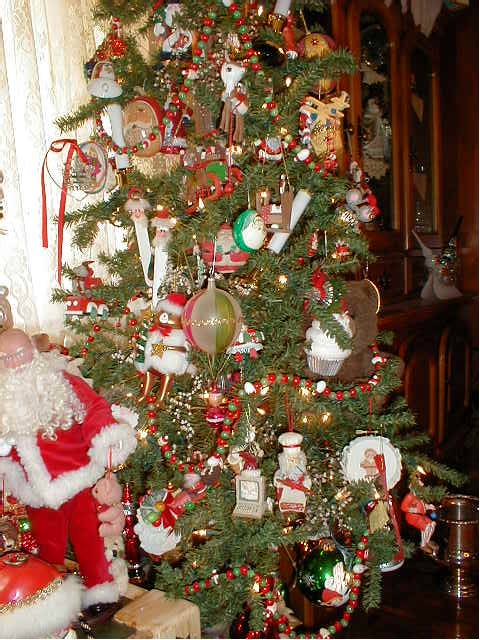


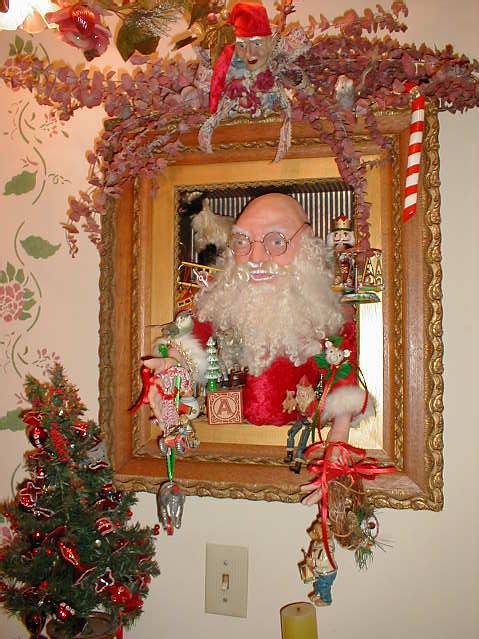


by Gayle Bartos-Pool

We here at The Writers-in-Residence are writers. Whether it’s a novel, short story, news article, play, movie script, or even a How-To book on writing, words are our life and love and sometimes our nemesis because it can be hard to get those words on the page when life gets in the way. But we have all had our work published and know how hard it is to get that done. Whether it’s more than fifty books in print like our Linda O. Johnston or a few books like some of us or newspaper articles like Jackie Houchin, we have gotten those words out.
I have taught writing classes and have spoken to numerous people in my daily life who wanted to write, but they didn’t know exactly how to go about it. I’m very sure they actually knew how to write. We all learned to do just that in the first grade, at least we learned how to get a few words down on that wide-lined paper way back in the Dark Ages before computers. I would ask these folks who wanted to be writers what had they written so far and over half said nothing. Not a chapter, an opening paragraph, an outline or even a concept. Nothing. They have a long way to go, but perhaps they are more interested in the “idea” of writing rather than have an idea of what to write.
I remember speaking with a nurse in a hospital lunchroom when Richard was ill. I had mentioned that I was a writer and she said she wanted to write. I told her that everybody had a story or two in them whether it was a fiction tale or the story of one’s own life. She started telling me some of her family’s stories. They were fascinating. This gal had a story in her that should be written even if only her family reads it, but the way she told those few tidbits, lots of people would enjoy reading about her life. I wished her well.

But talking doesn’t get those words on paper. Whether writing it in longhand like Ray Bradbury did with every single book he ever wrote including The Martian Chronicles and Fahrenheit 451 which he wrote with a pen, he got those stories written down. Don’t get mesmerized by the “idea” of writing, or the “fame” (that’s only if you sell a million copies the first week your book is in print), or the “money” you’ll make (authors usually get a small percentage of the cover price after the publisher and the distributor and the bookstore get their cut; sorry, that’s the reality unless you have sold that previous million copies). Don’t let that stop you from writing. Write.
Do you have a story you want to tell? After these past two years being basically isolated due to the flu that has kept most of us living in solitary confinement, you just might have something you were tossing around in your head or maybe even you got a chapter or two written or an outline dashed off so you wouldn’t forget the story line. I can tell you from personal experience, if you don’t write it down, you will definitely forget it. Dear Bonnie Schroeder, a fellow scribe, gave me a notepad that hangs up in the shower along with a pencil that allows one to write down that elusive idea that pops into your head while the hot water is calming you and you are free to let those creative juices flow. Write.

You can always run an idea past a friend to see how it sounds. If you belong to a writers’ group, you might toss the idea out during a meeting and see what the group thinks. They might have some suggestions to help you focus your story. If they shred your idea like a head of cabbage, perhaps join another group. I’m serious about this. Some groups aren’t there to help. But then again, you might get a good story out of the fact the group was all wrong because of the hidden agendas of the other members of said group. Hey, ideas are everywhere. Write.
Nevertheless, if you actually have an idea for a story, write that outline. Who are the characters in the story? Don’t have a cast of thousands. Readers won’t be able to follow Who’s on First. Next, where does the story take place? Location, location, location. They do that all the time in the movies. Where do you want your small cast of characters to be situated? You’ll get to describe the place. Don’t make it a travelogue, but make it interesting. Visual. Maybe even astonishing. The moon, a sinking ship, a haunted house. A jail cell. Write.
When your characters speak do they have something to say? Again, I’m serious. Make whatever they say part of the story. If their dialogue doesn’t add anything to the story, cut it. And make a character or two colorful in his or her speech. It adds to the flavor. Write.
Then of course you have to have a plot. Why are those interesting characters in that interesting place saying those interesting things? That is your story. You have had this idea running around in your head; what is it? You will realize (hopefully) that the story you are telling has a point to make. You might think that the story is the point. Ask Aristotle about that. Since he’s busy, let me say this: After someone reads your story and has gotten to know your characters and has visualized that intriguing setting and has listened to the witty dialogue your characters are saying while the story progresses, when the reader gets to the end of your story they need to be able to say, “Ah! That was a story about Man against Nature or Woman against Society or Man Struggling against Himself.” That’s the point of the story, not the plot.
Say you want to tell a story about Man against Himself. Now you have a goal to come up with a story that centers on that Theme. The man keeps setting up roadblocks to stop himself from doing something he really wants to do. You must construct that plot. You will define those roadblocks and his excuses to not do what he needs to do to fulfill himself, to reach his goal. You create the characters that both help and hinder him. You design a setting that either lulls him into complacency or he thinks is above his lot in life. And you write the dialogue that has him expressing his dreams and desires along with those who tell him can or can’t achieve his goal. And Voilà, you have that story. And you might actually realize that the stubborn character you are creating is really you and then get more of those words on the page.
We are finishing up one hell of a year, actually two. Soon a New Year will open up those dreams you have buried because you keep telling yourself you’ll write that story later. It is later. Write it. What do you want to say? Get those words on the page. Write it.
Have a Merry Christmas and a Happy New Year! Write on!

By Linda O. Johnston
 If you’re a writer, how do you decide what to write?
Often, it’s the kind of story you love to read: romance, mystery, paranormal, historical fiction, whatever. That makes sense.
Or maybe something you believe others will want to read, so it’ll sell well. But that’s not something totally predicable. So I go with what I enjoy.
With me, my preferences have changed over the years. Oh, I’ve always enjoyed romances, romantic suspense and mysteries. I’m not as much into historical stories as I used to be. Same regarding paranormal stories.
But you could probably tell what my favorite stuff was at any time of my life in the past many years by seeing what I’ve written!
My first published fiction was a short story in Ellery Queen’s Mystery Magazine, and I won the Robert L. Fish Award for first published short story! Yes, it was a mystery of sorts, a humorous one: “Different Drummers.”
My first published novels consisted of time travel romance, and most revolved around places or things I particularly liked. For example, one of them, Point in Time, took place in Pittsburgh, where I grew up. Another took place in Alaska, in the Klondike, and I’ve always loved visiting there: The Ballad of Jack O’Dair. And of course there’s Once a Cavalier, featuring my babies, Cavalier King Charles Spaniels.
I wrote other paranormal romances too, including Stranger on the Mountain, and the Alpha Force miniseries I created for Harlequin Nocturne, about a military unit of shapeshifters.
I loved paranormal romance! But notice that’s in the past tense. So is my focus on paranormal stories. I still read some, but I’m not writing any now.
I’d always enjoyed mysteries and romantic suspense. I still do—and that’s in the present tense!
That’s why I write them both: romantic suspense for Harlequin Romantic Suspense—and formerly for Harlequin Intrigue—and mysteries, over time, for multiple publishers including Berkley and Midnight Ink, and—upcoming!—Crooked Lane. Most of the mysteries, and as many romantic suspense as possible, include animals, especially dogs. I love to write about dogs. Why? Because I love dogs!.
So that’s how I decide what to write: again, what I love to read. But also what I most enjoy writing about.
How do other authors decide? Based on conversations with fellow writers, I gather they, too, mostly figure out something they enjoy, then pounce on it and pour out a story they love.
It’d be hard, after all, to write a story if you didn’t like its subject or genre.
Those writers who are reading this blog, I’d love to hear in comments where your ideas originate and how you decide to write about them. And how you enjoy writing about them!

By Rosemary Lord
Many of us get very reflective around this time of year, as we look forward to spending Thanksgiving with friends and loved ones. I love this American tradition. As a transplanted, naturalized American, over the years, I have spent this annual celebration in so many different places, with many different people. I’ve listened to memories of childhood Thanksgivings, of different family traditions across the nation, handed downfrom great grandparents to sons and daughters and then to their offspring, in due course.
Frankly, I envy these traditions. And I just love the importance of all the special family dishes that are served. The recipes handed down through the generations have their ownstories. And the simple custom, at so many tables, of each person sharing what they are thankful for. It’s a wonderful time when everything else stops for a while, and people from different generations, different religions and all walks of life get together to simply say “Thank you.”
After such a strange couple of years, I think many of us realize we have a lot to be thankful for. Maybe for things that we previously had taken for granted. Such as walking out in public bare-faced and exchanging smiles with strangers… an impulsive stop by your favorite family-run café – that is still in business. Or simply – hugs with friends.
As writers, we are more easily able to notice these little things that have come to mean so much. And as writers, we are especially fortunate that, whatever external restrictions the dastardly Covid plague inflicted on so many people, for us scribes, we could just keep on writing.
However, so often we get our story ideas from a chance remark in a casual conversation overheard – or eavesdropping (‘ear-wigging’ is the more colorful informal English term.) I would often make up my own version of the end of some snippet I’d heard and that would sometimes turn into a whole story.
But during these cloistered times, we’ve missed out on overhearing strangers’ conversations.
The Covid situation affected people differently. All around us, some were having meltdowns, dramas, or ‘wobblies’ – as in “She/he’s having a wobblie” – a charming current English phrase. Others found a strength and a fortitude they hadn’t realized they possessed. They found a new purpose, as they stepped into the fray to help the home-bound, the elderly living alone, or the children without an open school to attend. They volunteered wherever they were needed. Many new friendships were created. Everyday heroes emerged, as people found innovative and creative ways to handle the situations we all found ourselves thrust into – and along the way, found ways to improve other people’s lives.
For writers, fascinating tales appeared for our writing brain to feed on. People stories.
These interminable lock-downs have given many people the chance to write that novel they always felt they had in them – but never had the time to pursue. For the uninitiated, they had their first crack at completing that novel. For us old-timers, it was the opportunity to maybe write outside our normal field. (Did I tell you I have a quarter of a noir, dark and creepy contemporary novel done? Who knew I could write that?) And for writers at every level, the burgeoning self-publishing market has been a boon and a blessing.
I have discovered so many new writers from all over the world – especially when I can get the bargain price of a used book, I don’t feel so guilty if I don’t like it. Plus, I have a whole slew of new books to read on my Kindle.
I must confess that my own, personal reading, at the end of a long day wrestling with Woman’s Club administrative ‘stuff’ is more and more escapist. Often tales of a newly widowed or newly divorced woman who decides to start a new life on the other side of the world and open a bakery or her own winery. I’m re-reading my Rosamunde Pilcher favorites and re-discovering what a good, simple, nuanced writer she was. Her books are inspiring – usually about starting again, uncovering deep family secrets that lead to wonderful, happy endings. I like a happy ending. Especially these days.
I think I have a life of unfinished things…. That’s what it seems like to me at the moment. Some painting and fixing things around my apartment. Some sewing bits and pieces. But mostly unfinished novels and stories, which is a good thing, because I have started some new writing projects and my busy mind keeps thinking of more. Not so good because I haven’t had time to complete them. And the characters in my stories are still whispering, nay yelling, in my head to share them with the world…
But I’m thankful for every moment when I am able to write – and plan that “next year it will be different. Promise!” Hmm, I think I’ve said that a time or two before. But I really, really mean it this time!
………………………………………………

For me this year “On the writing road” has been a character exploring and development kind of journey. (How) our characters can be the readers eyes when it comes to exploring and—
Part of my interest in these character rest stops is a past tendency to lean on narrative explanation to develop many aspects of my tale. Now working on my characters doing more of the work!
Today, I’m pondering further down the “What” path, as in what’s next in terms of actual plot development. Not writing the next scene or plot development because I think it’s a good idea—but “what” my protagonist thinks would be a good idea.
Here’s an example of what I’m trying to say. The current Rhodes novel I’m working on, of course, takes place in Shiné. And at several locations. And in the beginning, early one morning Leiv needs to visit four spots to get the basic setting, background events, and murder situation in the reader’s mind. I’ve spent several months changing my mind, back and forth, flitting around on who, and in what order the first scenes should go. Duh! I asked Leiv “What” did his senses tell him was the next scene, based on his mental processes.
This approach may be already quite obvious to other writers—let Leiv tell the story. But I like writing in third person, so there hasn’t been the “I” POV in my tales from the start of my writing journey. So my excuse is, that starting as an outside narrator blinded me as to my protagonist actually leading plot scene exposition.
So, continuing as the third person story teller in my latest, I moved from an outside scene, to an inside scene, to outside again. However Leiv’s mind plot evolution started outside, where he remembered an inside bookstore scene, then another inside office scene, then another inside junkyard scene…
I’m exaggerating the distinction I’m making to make the point—my recent writing-improvement path is still characters—and on all levels and perspectives. There are elements in my tales that my protagonist doesn’t know about, and for those, scenes, the reader is stuck with me, the narrator.
Indeed, my characters have captured me…but I’m not sending out an SOS yet. (smile)
Bottom line for the writing nugget in this post, I think–is no matter your POV(but especially in third person), it is for your characters to bring your reader in (because we like or are interested in them), where we can then see the world through their eyes, and then they can lead us forward through story happenings based on what they see, feel, and need to know. Seems pretty obvious now that I’ve laid it out in writing…
This is a teaser post. The real article will be here tomorrow, Thursday October 20th.
Jackie Houchin (me) is switching slots with fellow blogger, Jill Amadio, who will be here tomorrow. (I’ll see you with my own post about writing ‘uber-short stories’ on November 3rd.)
Meanwhile, get your comments and questions ready for Jill on Thursday, when she will tell you what it’s like to be on the “other side” of the Book Club table.

As some of you who follow The Writers in Residence blog know, I have recently moved from California to Ohio. Coordinating the five thousand things one must do to leave one state, drive across country with a dog whose only experience in a car was going to the vet, and then re-situating in an entirely new place was…
That’s the subject of this blog. Not the fear the house wouldn’t sell at a decent price or the fact I bought another house strictly from photos and a video my niece took for me. No. That worked out. Or coordinating the movers to arrive on a certain date in Ohio and hoping the lady whose house I bought wouldn’t decide at the last minute that she needed to stay in her house for a few more weeks while her new abode was being refurbished. No, that all worked out, too. And getting a special crew to crate my dollhouses so they would have a 50-50 chance of surviving the trip happened. It was nail-biting time, for sure, but other than a lot of the miniatures I had glued down in the many miniature scenes I had built had come loose and are slowly being re-glued, the move across the country basically worked.
There were two large framed prints that had the glass broken. All my mom’s oil paintings and my paintings made the trip just fine. A martini glass and a margarita glass broke diminishing the service for four down to three, but I only drink one at a time anyway, so I guess I’ll manage.
 Not finding all the wires and cords and plugs for the computers for a month had me surviving using only my Kindle, but at least I could read my e-mail. I still haven’t gotten the landline set up. Or the printer. But it’s only been a month since I got here. And I still had several thousand things to do on this end.

I bought the house with the master bedroom furniture and sun-room furniture included. The problem was that the lady who owned the place tossed her mattress. Because of the COVID thing, I guess. I bought a new mattress. The salesman said it would take two weeks before it would be delivered. We are now ending week three and still no mattress. My dog Candy won’t sleep upstairs where the two beds I brought from Sunny Cal are sitting with mattresses, so we are camping out on the sofa in the sun-room. I would tell you how that is going, but I don’t use that language in polite society. Needless to say, I have a large pain somewhere.
Oh, I also had to buy living room and dining room furniture. What I left in California wasn’t worth shipping out here. The charming salesman from whom I purchased the items said it would take two months for the stuff to be made. That wasn’t a typo. They have to custom make the furniture now. So Candy and I sit on the uncomfortable sofa or the equally uncomfortable chairs in the sun-room when I need a break. They look great. Maybe other backs and derrieres find them just fine, but… Sorry, I digress.
Anyway, I spent the first month and will no doubt spend the next month unpacking. I had a lot of stuff in that little house back in California. This new house is bigger, but not the same. Not as many nooks and crannies for the ton of collectibles I had collected. But I will survive. Some of my “collectibles” might find new homes, but I’m not giving up… yet.
I could go on… and on… and on. But my point is, have you ever seen the movie Mr. Blandings Builds His Dream House with Cary Grant? Or how about The Money Pit with Tom Hanks? Each little adventure had its stars looking forward to a new, wonderful home, then reality hit, usually right between the eyes. Things go wrong. Lots of things go wrong. In fact, everything goes wrong. But they were movies. Yeah, right. Reality sucks.
But, hey. I’m a writer. I could use this challenge, or should I say “adventure” as the start of a new book. Make it funny, but I’m not laughing at the moment. I’m contemplating what might go wrong next. I have already replaced the stopper in the master bathroom. I tried a twist tie and then a clamp, but finally my brother went to the hardware store and bought a stopper and installed it. He’s an aeronautical engineer. It was easy for him. But my clamp worked for a while. So maybe the book shouldn’t be funny. But I refuse to write a downer book because everybody goes through this kind of thing many times during their lives. It’s reality. Let me repeat myself: Reality Sucks.
So what kind of book would I write? How about someone moving into this new neighborhood where the houses are all pristine. Think “Stepford Houses.” Perfect lawns. Perfect streets. The people… Ah, yes, the people. (In truth, the folks here have been wonderful. They brought me wine, flowers, muffins, fruit, and friendship.) But what if the people in this new story are a little different? Maybe a tad too quiet. They keep to themselves. Then the hero of the story finds out this is a “witness protection” community and a bunch of the people looking for these folks find out where they are?
 Okay, that’s an idea. But what if the people are overly friendly, almost too outgoing, and they want to know everything about this new neighbor who came from this distant state? What if they keep asking questions? Odd questions. Almost like they are learning about life here for the first time? What if the entire community is made up of space aliens and they want to learn everything they can about us humans before they take over the planet?
 And then there is the idea that came to me when I saw the first tree in the strip of woodlands near my house that had gone totally autumnal with orange and yellow leaves. There it was stuck down under all the taller, green trees around it. It reminded me of a kid wearing her mom’s fancy dress just for fun. But what if my main character happens to pick up a branch that had fallen off that little beauty and realizes the branch is plastic? Then my protagonist pulls a leaf off one of other trees and it’s made of fabric or plastic? My character runs to her house and as she yanks open the front door it comes off its hinges because it was only stuck there with a tiny metal hinge held on with glue. The curtains at the windows are little pieces of lace from an old handkerchief. Some of the furniture inside is made of plastic and several other pieces are overturned revealing a Made in China label. She’s living in a miniature world full of doll furniture that has gotten all shook up from its long drive from California to Ohio.

Ah, the possibilities are endless. Just like trying to unpack all this stuff, but it’s home now. So am I.
by Alan Bradley
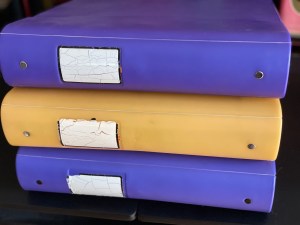
In my library are three slightly repellent books. One is the colour of poisoned custard, and the other two are a poisonous purple.
They look as if they’ve been through a lot. And they have.
These fat volumes, of about 500 pages each, were compiled in a time of disaster, and at the time, I didn’t know what I was doing or why. All I knew was that it needed to be done.
But first, a word of explanation. I am often asked, as are most writers, “Where did your main character come from? How did you go about creating him/her?” The simple answer is “I didn’t”, but the truth lies hidden in the thousand and more pages of these three uneasy books.
We had, at the time, a comfortable home on the edge of a forest – just like in the fairy tales. Until one night, lightning struck, and our forest was ablaze. Although we managed to get out safely with our pets, just ahead of the flames, more than 200 of our neighbours’ homes were reduced to ashes. When we were finally allowed to return, several weeks later, we found ourselves living in a blasted landscape: skeleton trees in a dead landscape of soot and ashes.
Time changed, and everything became different, including ourselves. What were we to do?
Sometime during those long hours and days and weeks that followed, I began compiling a compendium of poisons. The psychologists ought to have a field-day with that! Without knowing why, I had begun collecting and collating everything I could find on poisons and their history, all nicely filed alphabetically and indexed all the way from ‘A is for Arsenic’ to ‘Z is for Zarutin.’
The files grew from a folder, to many, and then to a book, then two, then three.
They contained detailed descriptions of the life and crimes of famous and not-so-famous poisoners, the history of specific poisoners from antiquity until just yesterday, the chemistry of poisons and their medical aspect. Ancient newspaper accounts told many a grim story, all so sadly the same: love gone wrong, ambition gone mad, and cleverness come a cropper.
There were heart-breaking tales of poor children who, in searching for something to eat, had – but enough! You get the idea.
Then, as the world around us restored itself, I put these books away, not knowing if I would ever look at them again. Whatever angel had caused me to compile this stuff had not bothered to leave an explanatory note. When the time came, I would know why.
Several years passed. Five, in fact. And there came a day when I decided that it was time to sit down and write that ‘Golden Age’ mystery novel I had been mulling since my younger days. It was a book that I much looked forward to, a tale that would draw on my years of experience in television broadcasting. Something fresh – something startling.
But it was not to be. I got no farther than the second chapter when, in a scene involving a visit to a crumbling country house in England, an eleven-year-old girl materialised suddenly on the page and would not, in spite of my every effort, be budged. She would not be written out and she would not be ignored. After a time, I realised that she had taken over my book completely. It was her book now, and my role was to sit down, shut up, and write what she told me to write.
And it came as no real surprise that her whole being revolved around a passion for poisons. Her knowledge of the subject was, you might say, voluminous.
Since then, she has more or less dictated ten novels, and has gathered readers around the globe in forty-some countries and forty-some languages. She has been on the New York Times bestseller list.
And that, dear reader, is the origin of Flavia de Luce, as best as I can manage to explain it.
And these three noxious volumes are the only proof I have that all of this is true.
See for yourself!
#



Thank you so much for inviting me to Writers in Residence today. As it happened, just last week, I was a writer in residence … if you can call hunkering down in my friend’s converted coal shed in the wilds of Wensleydale, a “residence.” It’s a six-hour journey by train but worth it.
My friends have a small farm and I have an open invitation to stay whenever I’m on deadline. I have known this wonderful couple, since we were all just 21. They are fiercely private otherwise I would announce their names in big bold font.
The day starts with eggs from their own chickens for breakfast, followed by four hours of solid writing, a break for lunch, a nap, a walk on the Fell, tea with homemade cake. After another hour or two of writing, the sun is over the proverbial yard arm and it’s time for a gin and tonic.
From the original coal chute window, I have an uninterrupted view of red squirrels (it’s a red squirrel sanctuary), sheep, (this is the home of Wallace and Gromit after all), and, when I’m lucky, I can enjoy watching the hares who really do box.
But, if it sounds like I need peace and quiet to be able to write, that’s not strictly true. One of my favorite books is “Becoming a Writer” by the formidable Dorothy Brande. She urges all writers to train themselves to be able to write at a specific time and anywhere, even if it’s just for fifteen minutes. I can write in a departure lounge, a train station, definitely on a plane, in fact, more or less anywhere.
I was listening to a panel of authors discussing the pros and cons of listening to music when they write. I can’t but I can write to the sound of a coffee shop! I subscribe to an app called Freedom. Not only can you block distracting websites on your Internet for set periods of time—in my case it’s the dreaded Daily Mail—it also has a white noise “coffee shop” feature with the low hum of voices and the occasional hiss and burble from the espresso machine! You can also choose the location of your coffee shop such as Stockholm, Berlin, New York or San Francisco. Believe it or not, they all sound very different. Another author admitted that she writes to the sound of a World War Two Flying Fortress just cruising along (no bombs dropping) from Mynoise.net.
Although it’s great to have the ability to write anywhere, I truly believe in having a dedicated space only for writing—even if it is the size of a cupboard. My space is the tiny guest bedroom. I pushed the narrow single bed against the wall and made it into a day bed. If I have visitors (which is rare), then I take sleep there with two huge dogs and give up my bedroom.
Speaking of dedicated spaces, just before the pandemic I taught a writing retreat on a small island called Tresco in the Isles of Scilly. Among the participants was a wonderful Methodist minister who shared how he always approached his writing with a ritual. He liked to put something on the back of his chair—usually a scarf. It was a way of indicating to the creative muse that he was entering his space with intention. I adopted that idea too and, unless I’m in the departure lounge where I’d most certainly be given “looks,” do this 99% of the time.
 Since I mentioned Tresco, I wanted to share my latest release, Danger at the Cove (An Island Sisters Mystery), the second book in my new series. I mention it because I was inspired by the beautiful setting of this remote resort, twenty-eight miles off the southwest Cornish coast. I was also intrigued by the idea that there is no police presence, no cars, no streetlamps and no hospital. I have it on good authority that seasonal workers are usually running away from something or hiding from someone. I couldn’t think of a better location to set a mystery. The series is about two sisters who find themselves chatelaines of a crumbling Art Deco hotel on a fictional island in the Isles of Scilly and naturally, murder and mayhem ensure.
I’d love to hear your thoughts on writing to music or white noise and if you do have a dedicated writing space, what can you see from your window?
Thank you so much for hosting me today.
BIO
British born, Hannah originally moved to Los Angeles to pursue screenwriting. She has been an obituary reporter, antique dealer, private jet flight attendant and Hollywood story analyst. Hannah has served on numerous judging committees for Mystery Writers of America and teaches mystery writing workshops for the UCLA Extension Writers’ Program now on Zoom. After twenty-five years living on the West Coast, Hannah returned to the UK where she shares her life with two high-spirited Hungarian Vizslas.
Hannah writes the Island Sisters Mysteries (Minotaur), the Honeychurch Hall Mysteries (Constable) and the Vicky Hill Mysteries (Constable)
Social Media Links
https://www.hannahdennison.com
https://twitter.com/HannahLDennison
http://instagram.com/hannahdennisonbooks
https://www.facebook.com/HannahDennisonBooks/


 The Writers in Residence
You must be logged in to post a comment.