THE PRESSURE TO PROMPT

By Jill Amadio

Quick, write a sentence containing the word ‘shallow.’ Or ‘camel.’ Maybe your creativity freezes at the first word but gushes forth at the second.

The urge to prompt is overtaking the writing community, both fiction and non-fiction.

What is a prompt? A suggested word, phrase, or sentence on which to build a paragraph or two during a specified time period. Prompt and their answers can include half sentences and are all the rage these days. Indeed, dozens of books and workbooks have been written on the subject of prompts and to the why, where, how, and when to engage in this mental exercise.

Many writers love prompts as a way to get started writing of a sterile morning, to fire up the imagination, and even to provide satisfaction that you are actually working at writing something, anything, although, in fact, it has no relevance to your WIP. However, you could stick the finished prompt into your WIP folder for use somewhere if you feel your words are immortal and need to be recorded for posterity.

Frankly, I am not a fan pf the prompt phenomenon. I believe that if you are going to spend time writing, why not work on your book, article, or blog? Why spend the time fiddling around with a piece of prose you may never use, that has no relation whatsoever to your current project, and that can send you off on a tangent to which you may find it difficult to return?

Ah, say prompt fans, prompting gets you typing. It puts pressure on you to come up with some words to fit the suggestion and actually make sense. The closest I have come to prompts lately is writing a Grocery and a To-Do list. The former is boring, the latter daunting but I have a couple of writer friends who salivate at the prospect of attacking their morning prompt.

One definition of a prompt I found online, posted by Karen Frazier, notes that a writing prompt is a statement usually followed by questions. I also found a very large collection of books on amazon.com devoted to the subject including titles such as Polyvagal Prompts, Writing Prompts Balance, The Writing Prompts for Seasons workbook, Writing Prompts for the Apocalypse, and The Art of Prompt Engineering. Not sure about that last one but it was amidst the others so I assume one needs something of a mechanical mindset to tackle it.

Some prompt books include journaling pages, and vice versa. Another offering is in the form of prompt notecards in a pretty box– a nice gift and not too insulting.

The books are directed at both fiction and non-fiction writers as well as adults, children, and humans (who or what else writes?). Also targeted are genres such as poetry, fantasy, art, drawing, songwriting, and truly interesting:  for dinosaur enthusiasts.  I haven’t seen a prompt book for AI robots yet but one could be in the works. Or already on sale.

I certainly honor those who need and enjoy a prompt to spark their creativity but as my years advance I need as much time as possible to compete the third book in my “Digging…” mystery series, and beyond.

Could a prompt, if one writes sufficient words, be considered a short story? It could surely lead to one and that is a good thing. How about prompts for birthday and Christmas cards? They can be written in advance and stored on your computer for future use.

So, where does the pressure to prompt com in? We are urged to start writing as fast and as furiously as we can as soon as we clap eyes on the prompt. Now, that is pressure par excellence. No time to consult a thesaurus. Is reviewing and editing allowed afterwards or during?  I did try prompting once and sent myself off into daydreaming, my laptop forgotten as I imagined myself back in Bangkok.

I heartily endorse the claim that writing prompts can help create characters and other elements and that, too, is a good thing. Prompts can also build writing skills, craft, and techniques as well as become story starters.

This entire subject of defining prompts has kept me away from working on my WIP. In the past four weeks I have only come up with a new title. However, part of it could be considered a prompt. Here’s a clue: Dangling Participle.

NEW IDEAS, PAST AND PRESENT

by Miko Johnston

We’re barely two months into the new year, but as I contemplate what we’ll write about in the future, and what will inspire us to keep at it, I’ve found some of my answers to those questions in our posts from the previous year.

Hannah wrote about overthinking. How many of us are guilty of getting obsessive about our writing? Characters, plots and background have to be thought out, but we also must keep it all in balance. That has become harder for me to achieve, partly because age has undermined my ability to multitask and partly because my priorities have shifted. I still enjoy writing and am committed to finishing at least two more books, but I’m reminded of Madeline’s piece on Writing Scared, and the idea of switching up the type of writing you do. I’ve done that in the past, so now I’m adding a new avocation – photography.

Years of writing has given me a sense of what works and what doesn’t, and while I still rely on critiques from fellow writers, I often can figure out problems in my manuscript on my own. Not so with my new hobby. I look at a photo and I may like it, but I don’t know why, exactly, nor can I be certain it’s any good. I’ve joined a photography club and have been invited to participate in their biannual exhibit. I’m going to need a lot of critique and advice before I select which pictures I want to use.

Linda’s piece on attending writers conferences reminded me that many more may be held this year as the risk from the recent pandemic fades from our memory, if not from our lives. Will these events be successful, or will the attendance habit, having been interrupted, be broken? Costs, from registration to travel to hotels and meals, will likely be higher than we remember. I can see where some will be very selective about which they’ll attend while others choose not to register for conferences at all.

Gayle’s piece on The Future of the Written Word really resonated with me. I’m often puzzled, even shocked, by how many words have been usurped and had their meanings altered, some with additions, some with subtractions. Regardless, these 2.0 definitions have led to divisions. A lack of clarification, or precision, makes the word’s meaning, well, meaningless. I suspect if any of the worst offenders of this phenomenon were reading this, they would have stopped at usurped (insert my sarcastic smirk here).

And speaking of the written word, Jill contributed a post on a similar, if lighter, topic – the subtle differences between American and British English. With three Brits in our WinR group and many others within our writing circle, it can be a challenge.

Rosemary’s Collecting Memories touched me. While clearing out closets and shelves in anticipation of a thorough spring cleaning, I’ve uncovered a trove of precious mementos – cards, notes and letters from family and friends, some going back to my birth. Programs from bar/bat mitzvas, funerals, and other events. Menus from private supper clubs, conference galas and corporate dinners at restaurants. Each find brought back wonderful memories of the people and places I’ve enjoyed over the years. That included a copy of the dedication that went into the L.A. Library’s copy of Rosemary’s book, “Hollywood Then and Now”, in memory of her beloved husband Rick. Her post reminded me that these keepsakes – all comprised of words – and the memories they invoke, are precious, something Maggie explained so eloquently in her post based on the “a reason, a season, or a lifetime” quote.

Jackie’s interviews with writers as well as all the fabulous guest posts she’d arranged added dimension to our blog, and her piece on naming characters had many solid tips I’ve come to rely on. And I’ll add a special shout-out for all the technical help she’s provided to us, especially a technical “muggle” like me.

There are many more posts from my co-WinRs that have and continue to inspire me. I can only hope I might have had the same effect on them, as well as our readers.

Miko Johnston, a founding member of The Writers in Residence, is the author of the historical fiction series, “A Petal in the Wind”, as well as a contributor to several anthologies including the about-t0-be-released “Whidbey Island: An Insider’s Guide”. Miko lives in Washington (the big one) with her rocket scientist husband. Contact her at mikojohnstonauthor@gmail.com

Teaching Seniors to Write A Memoir

by Jill Amadio

Invited to give as class on How to Write Your Memoir at the Westport, CT senior center, I agreed, somewhat reluctantly. It would be six 1-hour sessions and limited to 10 people. I almost wrote ‘students’ which, I suppose, they are, but somehow the idea of a group of elderlies didn’t seem to fit.

Having written what I now regard as a rather staggering number of biographies and autobiographies when I pulled all 18 of them from my bookshelves to show the class and let them know I felt confident to consider myself qualified to a certain extent, I realized that no matter how young or old such students would be, I had over the years accumulated the knowledge and experience to write and be published. Thus I would share my insights as an instructor. Of course, six hours is a laughably insufficient time to teach someone how to write their life story but I decided that covering the basics could start them on their journey.

All but six of my books were ghostwritten. The remainder were authored by me or co-authored – often a surprise as my contracts specifically identified me as the ghostwriter and thus hidden and forbidden to reveal who actually wrote the story. I am usually mentioned at the end of the ‘author’s’ Acknowledgements page, with a simple ‘Thank you to Jill Amadio.’ I am still waiting for a client to add – ‘for writing my book for me.’

One traditional publisher insister I be listed as co-author, much to the chagrin of the client’s boyfriend, and a UK publisher graced another book with my name as co-author without asking my permission. Quibble? Ha! It was a delightful surprise which earned me author talks at area locations including to a large group of auto racing drivers and vintage car collectors.

However, this first teaching gig to seniors gave me a few pre-class jitters. Would I have to speak very loudly if they were hard of hearing? Would they be able to read the handouts, meaning I’d probably have to print them in 18-point font? Would they find me boring and self-serving by passing around my hoard of books to establish my credentials?

I need not have worried. The first class was a group of extremely enthusiastic six women and two gentlemen who sat at our conference table with pens and pads ready to jot down my golden advice. I’d created a syllabus, and explained the subject matter each of the six sessions would cover. I also told everyone that they could interrupt me at any time with questions. I thought that if they held their questions until afterwards they might forget them.

All went well and I was bombarded with queries about all aspects of writing, not just memoirs. By the way, I had decided to lump the telling of life stories under the term ‘memoir’ because these days it appears to include biographies and autobiographies, and to my mind has a more important ring to it. Time was when ‘memoir’ meant a telling of a slice of one’s life, a particular incident, but these days many media outlets, for example, have called Prince Harry’s whiny-fest book, ‘Spare,’ by that description (whiny-fest is my own opinion)

My only admonition to the class was that they should not give in to temptation and use their book as a bludgeon against relatives, friends, employers, or others who have, perhaps, wronged the writer at one time or another. I hope they will remember this advice from Omar Khayyam’s poem, “The moving finger writes, and having writ, moves on. Nor all your piety nor wit shall lure it back to cancel half a line, nor all your tears wash out a word of it.”

As I prepare for my second class, next week, I will explain that bringing in several elements of mystery writing can lift a life story by adding tension and suspense, to name a few. Settings and characters can be enhanced with the addition of the writer’s detailed emotions, feelings, and personal point of view. I had told the class about the rhythm of writing and the very next day there was Tammy Walker’s excellent post on our site!

While researching my subject I came across a marvelous list of more than a hundred descriptive verbs. Using them is a great way to bring a scene alive – as we do in our mystery and thriller writing.

Interestingly, as a final note, there was a general consensus from the class when I announced there would be no prompts to be written. Many writing classes include a prompt at each class, whereby students are given a subject, a phrase, or a sentence, and must write a page around it. To my mind, this is a waste of time that can be better employed writing your book. Everyone agreed with me! However, I do encourage journaling as one way to loosen up that creative s spirit.

Do any of my fellow Writers in Residence have any relevant tips?

##


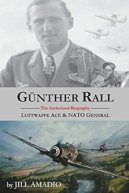
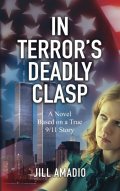
A few of Jill Amadio’s ghostwritten biographies.

WORDPLAY

by Miko Johnston

Words fascinate me. I think about them constantly, their surface meaning and their subdural meaning. The subtle differences in synonyms when attempting to find the best word in a situation. The unusual pairing of words to create fresh and unique imagery. Formulating a sentence that will dazzle the reader, but not distract them.

We who write in English have an amazing array of words to use. According to a linguist I know, our language stems from our Anglo-Saxon heritage, with words deriving from both cultures.  It provides us with an abundance of synonyms.

I became interested in words early on, which is why I wanted to be a poet and have read much poetry. One of my all-time favorites is Edgar Allen Poe’s “The Bells”, a master course in the use of repetition and word sounds to create different moods. It’s where I learned about onomatopoeia – words that sound like their sound. Poe’s bells tinkled in merriment, rhymed and chimed in happiness, clanged in alarm, and tolled in sorrow.

Before I could read I would hear words and “picture” them by their sound. I would think I knew what they meant, but not always – some didn’t translate into their actual meaning.

Growing up in New York, I ate a lot of delicatessen meats like pastrami, corned beef and tongue. As a child, I assumed the last item to be a homonym of the organ found inside mouths. It took until my late teens to make the connection – the delicacy I’d enjoyed for years was actually…a tongue. Had I not already loved it I would have been grossed out!

I’ve since learned tongue is an autological word – it describes what it is, or expresses a property it also possesses.  Examples of autology include unhyphenated, word, and pentasyllabic  (a five-syllable word that means a five-syllable word).

Onomatopoeia words sound like they sound. Autological words mean what they mean. However I’m more curious by other categories of words, which have no name that I’m aware of, the first being words that sound like what they mean.

Take alluring. When it’s said out loud it rolls gently off the tongue.  You can almost hear the trilling of the R, the sensuousness of the word. I find tranquil to have a soothing sound. To me, idiot sounds ‘fast’ while moron sounds ‘slow’, which is why I ascribe each term to different, um, problematic drivers. I also think stress, beginning with its three hard consonants and ending in the shrillness of double S, sounds, well, stressful. And come to think of it, shrill sounds…shrill. I wonder – do these words sound like their meaning because we know their meaning, or would they sound that way to someone unfamiliar with the word? What would you call words that sound like what they mean?

Then there are words that sound nothing like their meaning. Who came up with pulchritude to describe pleasing beauty? Is gorgeous, with its hard opening G and harsh final syllable, much better? Does relax inspire calmness? One of my favorite and most pleasant sense memories is the smell of summer rain hitting a hot, dry pavement. There’s a word for it – petrichor. Does that sound pleasing? Not to me. Shouldn’t words like these have a name as well?

You can probably come up with other examples of words that sound, or don’t sound, like what they mean, and please do. You might know of a word that describes these types of words, or suggest one of your own. All I know for certain is that my fascination with words and language led me to become a writer.

Miko Johnston, a founding member of The Writers in Residence, is the author of the historical fiction series, “A Petal in the Wind”, as well as a contributor to several anthologies including the recently released “Whidbey Landmarks”. Miko lives in Washington (the big one) with her rocket scientist husband. Contact her at mikojohnstonauthor@gmail.com

How I Set A Mystery In The Galapagos

By Guest Blogger, Sharon Marchisello

For as long as I can remember, I had three goals in life: become a bestselling author, meet and marry the love of my life, and travel the world together. And I always figured I’d do them in that order. Although I achieved my dream of being a published author, I’m still working on that “bestselling” part.  

When I graduated from the University of Southern California with a master’s degree in professional writing, I realized I’d have to get a “real” job. Not only was I not making a living as a writer; I wasn’t even published. Should I go for an opportunity that involved writing but might drain my talent and energy? Or should I look for something mindless that would pay the bills, so I could focus on my stories during off hours? Then a position as a reservations agent at Western Airlines fell into my lap.  

My roommate had a friend who worked there, and one day the friend called to say Western Airlines was hiring. I was the first person to listen to the message on our answering machine and begged to go to the interview too.  

The woman who interviewed me said, “You’re overqualified for this job. You just want it for the travel perks, and I know you’ll quit after a year or so. But I won’t stand in your way.” I stayed with the company for twenty-seven years; my roommate left after six months.  

But she was right about me wanting the travel benefits, and my first few years, I was on a plane every time I had a day off. I met my future husband at the Los Angeles airport, and together we’ve taken 65 cruises and visited over 100 countries on all seven continents.  

Although I kept writing fiction and even published a few travel articles, I never set a story in one of the destinations I’d traveled to. Until the Galapagos.  

If you’re looking for the Galapagos on the map, it’s a group of islands straddling the equator, approximately 600 miles off the Pacific Coast of Ecuador. I never planned to set a book there, either, but six months later, I remembered an experience from our cruise that I thought would make a great opening scene for a mystery.  

Normally, the guides were conscientious about counting heads and watching over all the passengers in their charge whenever we were away from the ship. In an archipelago comprising 97% national park containing flora and fauna found nowhere else on earth, tourists must be carefully supervised.

But one day, my husband and I left another activity to join a snorkeling excursion already in progress, and neither of the guides assumed responsibility for us.  

We were swimming along, marveling at the vast array of colorful underwater life, when I surfaced to see both Zodiac boats motoring back to the ship—without us! I can still feel the panic of being left alone in the middle of the ocean, treading water off the shore of an island populated only by sea lions and blue-footed boobies.  

I waved and screamed, bobbing up and down like a spyhopping whale, and fortunately, someone spotted me. One of the boats turned around and came back to pick me up. I didn’t see my husband right away but told the guide he was still out there. In a moment, he’d swum up and climbed aboard. All was well.  

But what if… What if my protagonist’s companion didn’t get picked up? And what if the person was left behind on purpose?  

I had a great time writing the book, reliving our trip through photos and program notes, plus doing a lot of supplemental research on the internet.  

When Secrets of the Galapagos begins, my heroine, Giovanna Rogers, is snorkeling with her new friend, tortoise researcher Laurel Pardo. The two get separated from the group, and Laurel disappears. No one on the ship will acknowledge that Laurel didn’t make it back.  

To determine a motive, I recalled a conversation I’d had with one of our guides during a visit to the Charles Darwin Research Station in Puerto Ayora, the largest town on Santa Cruz (one of only four inhabited islands in the chain). “I know a secret about Lonesome George,” he said. “But if I tell you, I’ll have to kill you.”

Lonesome George was a Galapagos giant tortoise made famous for being the sole survivor of the Pinta Island species. Unfortunately, efforts to breed George were unsuccessful, and the ancient tortoise passed away in 2012 without an heir.  

But what if someone discovered another giant tortoise from a different subspecies also thought to be extinct? And then a tortoise researcher unearthed information about the animal that the tourist industry didn’t want released?  

You’ll have to read Secrets of the Galapagos to find out what happens next.  

Blurb:  

Shattered by a broken engagement and a business venture derailed by Jerome Haddad, her unscrupulous partner, Giovanna Rogers goes on a luxury Galapagos cruise with her grandmother to decompress. At least that’s what her grandmother thinks. Giovanna is determined to make Jerome pay for what he’s done, and she has a tip he’s headed for the Galapagos.  

While snorkeling in Gardner Bay off the coast of Española Island, Giovanna and another cruise passenger, tortoise researcher Laurel Pardo, become separated from the group, and Laurel is left behind. No one on the ship will acknowledge Laurel is missing, and Giovanna suspects a cover-up.  

When the police come on board to investigate a death, Giovanna assumes the victim is Laurel. She’s anxious to give her testimony to the attractive local detective assigned to the case. Instead, she learns someone else is dead, and she’s a person of interest.  

Resolved to keep searching for Laurel and make sense of her disappearance, Giovanna learns several people on board the ship have reasons to want Laurel gone. One is a scam involving Tio Armando, the famous Galapagos giant tortoise and a major tourist attraction in the archipelago. And Jerome Haddad has a hand in it. Thinking she’s the cat in this game, Giovanna gets too involved and becomes the mouse, putting her life in jeopardy. But if she doesn’t stop him, Jerome will go on to ruin others.

AMAZON 

SUNBURY PRESS

Bio:  

Sharon Marchisello is the author of two mysteries published by Sunbury Press—Going Home (2014) and Secrets of the Galapagos (2019). She has written short stories, a nonfiction book about finance, training manuals, screenplays, a blog, and book reviews. She earned a Master’s in Professional Writing from the University of Southern California and has been an active member of Sisters in Crime since 1995, currently serving as treasurer of the Atlanta chapter. Retired from a 27-year career with Delta Air Lines, she now lives in Peachtree City, Georgia, and volunteers for the Fayette Humane Society.  

Website: sharonmarchisello.com (https://smarchisello.wordpress.com/)  

##

This article was posted by member, Jackie Houchin. If you’d like to read my review of the audiobook version of  SECRETS OF THE GALAPAGOS, click here.   


ANDS, NONES, and THANKS

By Miko Johnston

Happy New Year everyone. The holiday season has ended, but the memory lingers for many reasons. Because of all the activity at the end of the year, I limit my writing to holiday messages and thank you notes, but as we always say – writing is writing.

Each year I buy five dozen holiday cards with messages ranging from Merry Christmas to various generic seasonal greetings. It takes a full day to pick an appropriate card and think of something to write in each one that I send to family and friends, but the annual ritual always begins with updating the mailing list before my husband prints out labels. Although I get together, or at least correspond, with many on the list, with some this is the only time of year we’re in contact. The exchange is a way to stay in touch, see how we’re doing, and send good wishes for the holiday and upcoming year.

Revising the list has become a bittersweet part of the process. In the past, most of the changes have been addresses and the occasional addition (marriage, children) or  division (divorce). However, for the past few years, most changes have been subtraction – the painful act of deleting ANDs. Don and Jean are now Don, Bert and Ruth are now Ruth. Some former ANDs become NONEs. When Don or Ruth are no longer with us, the entire entry will have to be deleted, leaving gaps in my mailing list as well as my heart.

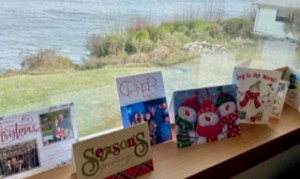
The joy of receiving cards offsets much of that nostalgia.  I often get to see pictures of the family and hear about their adventures over the past year.  Some of the news may not be happy, but the contact always is. I set up all my cards along the living room and dining room windows, each one like a handshake, or hug, from someone dear. When I remove them in early January I take a moment to reflect on the cards that are missing, a reminder of those I’ve lost, either in body, or in mind, or who’ve just drifted away.

For me the best part of holiday gifts isn’t receiving them, but writing thank you cards. Like the holiday cards, it starts with finding the right card for the person to be thanked. I have an assortment of stationery with different designs, ranging from charming illustrations to an embossed THANK YOU. I favor classic white or cream notes with matching or coordinating envelopes. Then there’s the challenge of coming up with something fresh, sincere and meaningful to write, just the type of challenge I relish.

I always begin with pen and paper, and write out something I think may be suitable using the three-step method*. I play around with the wording until I’m happy with the results, then carefully copy it onto the note**. Unlike my holiday cards, I always hand write both the recipient’s address and my return address on the envelope. Only the stamp and the card’s design is pre-printed. To me that’s part of the thank you process.

Don’t get me started on how getting thank you notes has become rarer than a 1952 Mickey Mantle rookie card, especially from anyone under 60. However, when I do receive one I treasure it. After reading the note, I study how the sender constructed the message, admire the wording – heck, I admire the attempt! One of the best notes I’d received last year came from the grandson of a cousin, thanking my husband and me for a high school graduation gift. We winged the present based on what little we knew of his interests, but his note expressed such appreciation and gratitude, and so eloquently, that it didn’t matter that he emailed it to us. I’ll happily accept an emailed, phoned or texted note of thanks now. Frankly, some of my younger relatives can’t be bothered to even say thank you, let alone send a written note to us. Only my husband’s intervention kept me from giving them coal for Christmas. But that’s another story.

How was your holiday season? Did you receive any cards or notes that were especially meaningful? And what was your favorite part of holiday writing?

#

*Thank the giver, tell them why you’re thankful, then thank them again.

**I have dysgraphia – the writing equivalent of dyslexia.

###

Miko Johnston, a founding member of The Writers in Residence, is the author of the historical fiction saga A PETAL IN THE WIND, as well as a contributor to anthologies such as the newly released “Whidbey Landmarks.”

Miko lives in Washington (the big one) with her rocket scientist husband. Contact her at mikojohnstonauthor@gmail.com

Reach Your Blog Readers – using Hashtags, Titles, & Images correctly!

A guest Post by Edie Melson

(Reprinted by permission – The Write Conversation, Monday, August 29, 2022.)

by Edie Melson @EdieMelson

A little teaching moment… 
 
With the chaos of social media, and the strict guidelines now in place with email, our digital connections have gotten more complicated. But one thing hasn’t change—the ability to be found through an organic search. 
 
This process begins when we know the basics of keywords and SEO. The post I wrote, How to Apply SEO to Your Blog – One Blogger’s Process, will help you get started.
 
Recently I’ve been working with several bloggers about ways to get more organic page views. Organic views happen when someone searches for a topic—either through a search in a search engine or by searching for a topical hashtag. Beyond keywords and SEO, titles and hashtags are critical to getting found. 
 
It may surprise you to learn that it is possible to be found. But as bloggers, we need to deliberately set ourselves us to be found in a topical search. So today we’re specifically looking at the use of hashtags when we share a post on social media, the titles we choose for posts, and the images we pair with them. 
 
Hashtags
There are two times when bloggers need to carefully choose hashtags for a post.
  1. When composing a click to tweet within the post.
  2. When sharing a social media update about a specific post.
Here are the things we need to remember when choosing hashtags.
  • Choose two. Occasionally it may make sense to use a third, and even more rarely use only one. But the majority of your updates (unless you’re on Instagram) should have two. 
  • Choose hashtags that are relevant and specific. I see more mistakes here than in any other use of hashtags. For example, if I was sharing a blog post about tips on how to deal writing rejection it might seem like a good thing to use rejection as a hashtag. The word rejection is not a good hashtag. The context of that hashtag is rejection—NOT writing rejection. It doesn’t help us get more views or likes because the people searching for rejection hashtags are primarily looking for relationship advice. Hashtags are a search tool and must stand alone in their context or they’re worthless.
  • If possible, hashtag words in the main message of the update. For example, if the word you want to hashtag is in the title, hashtag that instead of adding the word again unless it’s the first word. Avoid hashtagging the first word of a tweet.
Titles
Titles need to reflect the full topic of the post. This is not time to be clever or too generic. Here are three things to remember.
  • Your readers will evaluate your post’s content based on the title. When a title is misleading or even ambiguous, the reader can walk away feeling cheated.
  • The blog title must stand alone—with full context—when shared on social media. For example, if we go back to that imaginary post about how to deal with writing rejection. I’ve seen a lot of bloggers who would go with the title: Tips to Deal with Rejection. At first glance that seems like a pretty good title for someone who is reading a post on a writing site. But what about those doing a search in a search engine or reading the text in a social media update? For them it’s misleading and generic. A better title would be: Tips to Deal with Writing Rejection. What makes sense to a reader who has the full content of a blog is much different from what makes sense without visual clues and context.
  • The title should contain a phrase that someone would type into a search engine to find the content in your post. It’s not clever, but I can see many people typing How to deal with writing rejection, into a search engine. That’s the final piece of the puzzle and immediately moves your post up in a search engine search. 
Images
It may seem like images are less important when it comes to being found in an organic search, but when we know how to do certain things, an image can provide a huge boost in visibility. 
  • Images need to illustrate the main focus of the blog post. Let’s once again go back to the imaginary blog post, Tips to Deal with Writing Rejection. If we’re not careful about the image we choose, we can lead potential readers astray. For example, choosing the image below could send the wrong message if someone misses the word, writing, in the title. 
  • We all know that images aren’t searchable….Unless they are captioned….Unless the file name of the image contains a searchable keyword. Yep. By taking a few extra moments to compose a relevant caption and saving the image with a relevant file name instead of some generic title you can increase your organic search views. Let’s once again visit that imaginary blog post.
    • That image above has a file name that includes the word loneliness—this is what www.Pixabay.com lists as the title of this specific image. So this image is not only a poor choice, but with that file title it will reinforce the wrong type of results in an organic search. 
The bottom line is that the details matter. It’s important that we blog smart. By paying attention to the titles we choose, the hashtags we use, and the classification of images we can make a huge difference in the visibility of our posts. 
 
Now it’s your turn. What questions do you have about these details? Be sure to leave your thoughts in the comments section below. 
 
Don’t forget to join the conversation!
Blessings,
Edie
 
TWEETABLE


Edie Melson is a woman of faith with ink-stained fingers observing life through the lens of her camera. No matter whether she’s talking to writers, entrepreneurs, or readers, her first advice is always “Find your voice, live your story.” As an author, blogger, and speaker she’s encouraged and challenged audiences across the country and around the world. Her numerous books reflect her passion to help others develop the strength of their God-given gifts and apply them to their lives. Connect with her on her website, through FacebookTwitter, and Instagram.


What Makes a Good Mystery Series for the Author and the Reader?

While Jackie Houchin is on vacation (in Spain or France now) we have another Guest Author. (Thank-you, Elaine!)  Jackie hopes to return with her next scheduled post of June 8, 2022. 

by Elaine L.  Orr

Like most writers, I put words on paper because if they don’t get out that way I risk screaming on a street corner. I get those words into print because I think others would enjoy them.

When readers like the characters, they may clamor for more. Even if they don’t initially, we think they will. I consider several things when I start a new mystery series.

  • Is the setting or main topic interesting enough to keep exploring? My first series (the now twelve-book Jolie Gentil series) is set at the Jersey shore because I love small, east coast beach towns.
  • Can I connect to the characters enough that readers can too? This doesn’t mean does an author like the characters. Some of the most relatable ones are the evil ones.
  • Is the life of the main character part of a profession or hobby that makes discovering a lot of big problems (or bodies) realistic? Jolie is a real estate appraiser and runs a food pantry, both things that bring her into contact with many people in varied settings.
  • Is there a plan to have the characters evolve over time? If lead characters have the same strength and foibles in every book, they become predictable. That sameness can lead to reader (and writer) boredom.
  • Is the plan to write a certain number of books, culminating in a big event or life transition? Or can stories continue as long as the author has ideas?

I’ve used the Jolie Gentil Series as the example, so I’ll do it one more time. I envisioned three books, with the third being called Justice for Scoobie, a childhood friend she reconnects with as an adult. Wrong. He’s the favorite character. Couldn’t bump him off and have Jolie solve that crime!


My primary hobby is researching family history, a natural one seeing that I like U.S. history and finding my families’ links to it. Why did I never make that an important focus of a series? Beats me. It is now.

The Family History Mystery Series has the fourth book underway. And that tells me something. My other two series (River’s Edge and Logland) have three books each. I may start fourth books, but why not jump into them immediately after the third?

Did I not think through the first four questions above? I did, and I have more ideas. What was missing? Passion. Hard to define, but it’s another key component of writing. You have to REALLY want those characters’ lives to continue if they appear in a series.

Have you noticed I didn’t use the word plot once in this piece? All good stories need more than a beginning, middle and end. They need a compelling story and conflict, which doesn’t necessarily mean action. In mysteries, there are a myriad of criteria. For example, if the villain pops up at the end with very little role or foreshadowing, reviews may not be kind.

As in all books, plot matters in a series. But the characters (and their evolution) matter most. Main and even ancillary characters need to contribute to the story and have a clear purpose.

Reader reactions matter, but they can’t determine how your characters develop. They can, however, inform what you do after book one. Take them seriously, but don’t make them your guide.

Finally, enjoy writing the series. If you don’t, the series could meet an untimely demise.

###


Elaine L. Orr writes four mystery series, blogs, keeps in touch with lots of family and friends, and tromps cemeteries looking for long-dead ancestors.


To learn more, visit https://www.elaineorr.com.


A Final Pass

by Miko Johnston

By the time you read this, the manuscript for my fourth A Petal In the Wind novel will be back from the editor and ready for its final draft before publication. Prior to sending it out, I made several passes through it, each time searching for ways to fix or improve the work.

In my first pass I searched for everything from formatting issues to misspelled words. In light of recent events I found parts of the story, which I’d begun writing in 2017, had become dated. I couldn’t gloss over a worldwide pandemic and the social rifts that emerged from political discord. Several new characters who were introduced in chapters written years before the book’s conclusion sounded too generic; I’d gotten to know them better as the story progressed and that needed to be reflected in their earlier dialog and mannerisms.

Other passes looked for repetition, excess verbiage, more precise word choices, missed misspellings, lapses in logic, and incorrect information. With that complete, I sent out my manuscript, anticipating a few more changes would be needed once I heard back from my editor. I took advantage of the wait time to put together all the additional material needed – logline, book blurb and synopsis.

Whenever I have to write marketing stuff, I cringe. It’s not what like to do, or do well. I view it as a necessary evil, and many authors I know feel the same way. However it must be done, and the good news: I’ve found an advantage to it beyond promoting the book.

When you have to encapsulate your x-hundred page novel into a one page summary, then a teaser for the back cover, and finally a one-sentence logline, it forces you to look at your theme in a different way. Gone are the long passages of prose, the snappy dialogue, the transitional scenes and flashbacks. You must have a laser focus on what your story is about – what you’re trying to get across to the reader in terms of theme, character, and plot. By doing so you sometimes will see aspects of the story that are important but may not have been shown in a compelling or complete way. So beyond my editor’s input, I saw that I wasn’t done with my revising.

I came to that conclusion when I encapsulated a 106,500 book into a few paragraphs with just a hint of where the story will eventually wind up. I had my external conflict and internal struggle, and pointed that out in my blurb. Then I wrote my logline:

Amidst the social and political upheaval in the aftermath of WWI, a woman who identifies as an artist marries the love of her life, but chafes at being relegated to wife and mother.

We can understand the difficulties a woman would face in giving up her career to marry and have children, especially at a time when such notions weren’t as accepted as they are today. But had I adequately shown how she feels in the book? Could I have made it not only clearer, but on a much deeper level?

The logline hints at the deeper issue. What she rails against is not being married to the man she loves, or even the challenges of motherhood. It’s losing her identity, having to see herself as only a reflection of her husband and children. When Jane marries John Doe, she becomes Mrs. John Doe. Her baby’s mama. She’d wonder—what happened to Jane?

My character Lala is a woman who’s accomplished a great deal despite her youth. She not survived the trauma and hardships of WWI and kept her family alive, but her home town as well. It’s described as a factory town north of Prague throughout the series. In America we’d call it a company town, where a single business – in this case a furniture factory – provides the economic base of the area.  Circumstances force her to take charge of the factory and oversee its conversion to wartime production. If it had closed, which it nearly did, the town would have been devastated. How can someone like this ignore all she achieved, the skills she developed, the talent that resides within her?

When the manuscript returns from the editor, I will review the comments and make some changes, including a few of my own – adding more layers of my character’s internal dilemma to the story. Then I’ll probably rework my promotional material. A writer’s work is never done…that is, until it goes to the publisher.


Miko Johnston, a founding member of The Writers In Residence, is the author of the historical fiction saga A PETAL IN THE WIND, as well as a contributor to anthologies, including “LAst Exit to Murder” and the soon-to-be-released “Whidbey Landmarks”. The fourth book in her series is scheduled to be published later this year. Miko lives in Washington (the big one) with her rocket scientist husband. Contact her at mikojohnstonauthor@gmail.com


Deciding What to Write

By Linda O. Johnston

 If you’re a writer, how do you decide what to write?

 Often, it’s the kind of story you love to read:  romance, mystery, paranormal, historical fiction, whatever. That makes sense.

 Or maybe something you believe others will want to read, so it’ll sell well. But that’s not something totally predicable. So I go with what I enjoy.

 With me, my preferences have changed over the years. Oh, I’ve always enjoyed romances, romantic suspense and mysteries. I’m not as much into historical stories as I used to be.  Same regarding paranormal stories.

 But you could probably tell what my favorite stuff was at any time of my life in the past many years by seeing what I’ve written!

 My first published fiction was a short story in Ellery Queen’s Mystery Magazine, and I won the Robert L. Fish Award for first published short story! Yes, it was a mystery of sorts, a humorous one: “Different Drummers.”

 My first published novels consisted of time travel romance, and most revolved around places or things I particularly liked. For example, one of them, Point in Time, took place in Pittsburgh, where I grew up. Another took place in Alaska, in the Klondike, and I’ve always loved visiting there: The Ballad of Jack O’Dair. And of course there’s Once a Cavalier, featuring my babies, Cavalier King Charles Spaniels.

 I wrote other paranormal romances too, including Stranger on the Mountain, and the Alpha Force miniseries I created for Harlequin Nocturne, about a military unit of shapeshifters.

 I loved paranormal romance! But notice that’s in the past tense. So is my focus on paranormal stories. I still read some, but I’m not writing any now.

 I’d always enjoyed mysteries and romantic suspense. I still do—and that’s in the present tense!

 That’s why I write them both: romantic suspense for Harlequin Romantic Suspense—and formerly for Harlequin Intrigue—and mysteries, over time, for multiple publishers including Berkley and Midnight Ink, and—upcoming!—Crooked Lane. Most of the mysteries, and as many romantic suspense as possible, include animals, especially dogs. I love to write about dogs. Why? Because I love dogs!.

 So that’s how I decide what to write: again, what I love to read. But also what I most enjoy writing about.

 How do other authors decide? Based on conversations with fellow writers, I gather they, too, mostly figure out something they enjoy, then pounce on it and pour out a story they love.

 It’d be hard, after all, to write a story if you didn’t like its subject or genre.

 Those writers who are reading this blog, I’d love to hear in comments where your ideas originate and how you decide to write about them. And how you enjoy writing about them!

##
Photo by Aaron Burden on Unsplash