Free Write Your Way Out of Writer’s Block

By Maggie King

Writer’s block. Many writers suffer from this condition. I used to scoff at the very idea of writer’s block, regarding it as another way for writers to procrastinate. But the creative slowdown I’ve experienced for several months has humbled me.

I’m not blocked for ideas, I have them by the dozen. The problem lies in creating a story, one people would actually want to read. My writing skills have gone on hiatus.

My solution: free writing. According to Matt Ellis in his post in Grammarly.com, “How Freewriting Can Boost Your Creativity,” freewriting is a technique in which the author writes their thoughts quickly and continuously, without worrying about form, style, or even grammar.

Mr. Ellis extols the benefits of this practice: “The benefits of free writing revolve around organization, brainstorming, and inspiration, as well as beating writer’s block and relieving certain anxieties. Just getting anything written, even if it is imperfect, can jump-start creativity.”

Author Natalie Goldberg also encourages free writing, or “first thoughts” in her parlance. In this excerpt from her classic Writing Down the Bones: Freeing the Writer Within she explains how to write first thoughts (#6 is a tough one!):

  1. Keep your hand moving. Don’t pause to read what you’ve just written.
    That’s stalling and trying to get control of what you’re saying.
  2. Don’t cross out. That is editing as you write. Even if you write something
    you didn’t mean to write, leave it.
  3. Don’t worry about spelling, punctuation, grammar. Don’t even care about
    staying in the margins and lines on the page.
  4. Lose control.
  5. Don’t think. Don’t get logical.
  6. Go for the jugular. If something comes up in your writing that is scary or
    naked, dive right into it. It probably has lots of energy.

Sometimes I write from a prompt (maybe not technically free writing, but who’s nitpicking?); at other times I simply write whatever comes forth. I set a timer on my smart watch for thirty minutes and go, without stopping. At first I went for ten minute sprints, but soon found that half an hour worked best. My thoughts and words flow. When the timer goes off, I pause, then go for another thirty minutes. At that point my hand needs a rest!

My free writing is turning into a memoir. Nothing organized or even chronological—whatever occurs to me ends up on the page. What occurs are often experiences from my past: family, people I’ve known, jobs held, schools attended, challenges faced. I’ve devoted pages and pages to my summers spent with relatives in a rural part of upstate New York.

It’s been an enlightening process, especially as I discover how my perspectives have changed over the years. Frankly, there are memories I’d like to keep buried, but I’ve found it liberating to get them down on paper (See #6 of Natalie Goldberg’s list above).

Since I started this process in July, I now look forward to writing each day. I can’t yet report much creative writing activity, but last week I was invited to submit a short story to an anthology. I have a great idea for a story (remember, I have no dearth of ideas) and now feel up to the challenge of actually writing it.

And now, please excuse me … it’s time to free write!

Handmade Software, Inc. Image Alchemy v1.14

An Interesting Year Already

by Linda O. Johnston

           Hey, it’s only the third week of January 2025, and a lot has happened that we writers in Los Angeles could use as subjects or backgrounds in our writing for the rest of the year.

What’s happened?

Well, those terrible fires that apparently made the news everywhere. Rosemary did a wonderful job of describing them last week. And I certainly identified with a lot she was saying. But with all that happened, I just found myself focusing on it when I started to do my post for this week. So here we are again.

 I was one of the fortunate people who had fires start not too far away but not come very close. The winds were strong, and the air quality became terrible. But I didn’t even see any of the fires anywhere nearby.

Writers often take things that happen around us and make them subjects of our writing. Will I do that?

Maybe, and maybe not. I’m currently working on a new mini-series for Harlequin Romantic Suspense, and although I do have the stories set in the Los Angeles area, I’m not sure about working the fires into them.

I hope that all of you reading this remain safe, from fires and every other disaster that might occur wherever you are.

And I hope you all have a wonderful 2025.

What’s The Point of Resistance?

by Guest Blogger, Renee Le Verrier, E-RYT*

When the writing gets tough, the tough stay in the chair.

When the writing gets tough, I slide off the chair onto a yoga mat.

I begin a class with a short reading once everyone gets settled on their mats. On one particular morning, Greta, an eighty-something with a sunny smile who never missed a session, cleared her throat.

She leaned closer to me. “May I ask you something?”

I nodded.

“If you could define yoga in one word, what would it be?”

I didn’t hesitate.

“Awareness,” I said

Greta sat upright and seemed to be considering my response. “That could apply to nearly everything, that awareness thing,” she said.

That’s the day I went home and unrolled a mat beside my writing desk. So closely related, I wanted to practice each near the other.

Yoga, in a longer definition, is more a meditation in motion than it is bending into poses. Similarly, writing is more than the number of words on a page on any given day. The craft moves characters forward or back, into twists in a kind of motion of imaginative meditation. When my mind is with me, not off planning what’s for dinner, present with my pose or in a scene, both my yoga and my writing deepen.

The word yoga derives from Sanskrit meaning ‘linking together’—as in yoking—the mind and body. Awareness connects the two. When I take notice, the continuous chatter in my brain—that’s busy, busy making mental remember-to lists—fades. What’s opened up makes room to be attentive.

In writing, I focus on how and where the words affect me physically. If my typing resembles an air drum solo, I’m on a roll. If I’m in the middle of crafting a fight between two characters I’m breathing easy and my toes aren’t curled, something is off. It might not tell me what is awry but I’m aware I need to edit.

If I can’t connect with my body, I pause and take a detour to my face to take inventory there. Are my jaws clenched? Lips squeezed tight like a zipper?  Eyebrows furled?

Toggling from body to expression has revealed an assortment of secrets. In yoga, I may believe that I’m relaxed while my cheeks and lips form a frowny face.  In writing, I’ve been delighted with myself for a stellar phrase, yet the computer screen reflecting back at me is unsmiling. These scowls indicate dissatisfaction and point me to a needed revision.

Awareness isn’t skin deep, recognizing only pain or pleasure. In yoga, my mind is reading my body and reporting back, yes. But stretching only to the first sense of pushback doesn’t allow much room for lengthening or release. I instruct the class to go as far into the pose that they get to the point of ooh, ow, ow.  But don’t stay there. Know where that point is, then ease back to where the stretch first meets resistance, to just ooh.. From there, try to coax the line of opposition into backing away.

In writing, we reach points of resistance in our plotlines, our narrators, our characters—fictional or non. The story arc banks on opposition—without it, there’d be no conflict, no resolution, no growth. I look for the far edge of that resistance. It may be too intense, unbearable, so I take it back to the point where it feels right. Just like when I’m on the mat.

Greta was right about that awareness thing.

* An E-RYT (Experienced Registered Yoga Teacher) has documented over 2,000 teaching hours and attended at least 500 hours of training as a student.

.

BIO for Renee Le Verrier

Renee Le Verrier enjoys being surrounded by books, painting supplies, dog toys and yoga. The author of Yoga for Movement Disorders and Travels with Tommy (featuring a very special Great Dane), she has been awarded Best in Show in local juried art shows but mostly fills up the walls in her office. She has been teaching and presenting on yoga throughout the US and UK for eighteen years. She writes from an island off the coast of Washington where she lives with her husband and another Great Dane. She’s currently working on a YA novel, which also means she’s practicing yoga regularly. Visit her at http://www.leverrier.com

Acting Class 101

By Gayle Bartos-Pool

If we’re lucky, we learn stuff everywhere we go in life. I did just that when I moved to California when I was twenty-five. I wanted to write for television and the movies. Me and five million other people. Since I didn’t know anything about the “business” of Hollywood, I thought it would be a good idea to take an acting class to see what writers needed to know when creating a screenplay character.

I happened to get a job working for a talent agent, and he got me in an acting class. This one was taught by Bruce Glover. You might have seen him in the James Bond movie Diamonds Are Forever. He played the sinister/funny character that was trying to kill off Bond.

What Bruce taught was when you’re playing a character, large part, small part, or walk-on, have your character do something that makes him stand out. Have a menacing smile or a delivery of your lines that has everybody notice you. Many famous actors started as bit players and went on to fame and fortune when they did something that stood out on the screen. And that doesn’t mean just having a pretty face.

As a writer, I figured that when I wrote characters, large or small, I would give them something that stood out. It might be their clothes that telegraphed what economic bracket they fell into or a whacky giggle to show that maybe their elevator didn’t go up too many floors. Maybe it’s the words they use that show their high-toned upbringing or their lack of education.

While taking that class, I had to do an improvised scene with another actor. We were to be boyfriend and girlfriend who were having problems. As the other actor and I were chatting on stage pretending we were seeing eye-to-eye while all the time pointing out the major problems we were having with the other character, I had a piece of paper in my hand that I said was the love letter he had written to another woman. I kept folding it in half, long-ways, until it looked like a knife. Obviously, my character was signaling what I wanted to do to my soon-to-be-ex boyfriend. Actions speak louder than words sometimes.
I try to give most of the characters I write that little bit extra to define them, too.

That acting class wasn’t the only one I took. I got lessons from Rudy Solari and Guy Stockwell. Both men had long careers in Hollywood. What Rudy had actors do was write a biography for the character they were playing so they knew exactly who they were when they stepped on the stage. It didn’t have to write pages and pages, just a brief background of that character, stating where he came from, how he was raised, his education, and what he wanted out of that scene.

What this did for the actor was let him know what motivates his character because in a screenplay, the writer usually just provides the dialogue, maybe how the line should be spoken like a whisper or yelling, and a few physical actions like running away or punching someone. Of course, the director will provide even more of those directions.

But the writer of a novel or short story needs to know who this character is, what motivates him, and things like his age, hair color, and stature, because when you’re writing a story, you don’t want to get to page 275 and have your twenty-five-year-old character with black hair all of a sudden be a thirty-six-year-old blond.

I write a short biography for all my main characters, adding to it as I think about what their past might have included that will help the current story angle. And I keep a Character List for everybody appearing in the story so I know who is who, and who they know, and why they’re there. It sure helps when I get to a spot and need to know all the previous things I wrote about that character like their age, hair color, or their role in the story.

And something else about those two acting classes, they gave me the confidence to get up in front of an audience when I’m talking about the books I wrote. I already know my motivation: get people to read.

Finding Time to Write: a “Flashback” Post from 15 years ago. Still True?

by Jacqueline Vick

Some writers snatch a few moments of time wherever they find it. Others adhere to strict schedules. Walter Mosley tells us to write every day. Peter Brett wrote his first novel on his smartphone during his daily travels on the F train. Do you follow a set writing schedule? Write every day? Have a favorite writing spot? Do you put ‘butt to chair’ until you’ve finished a specific word count? Tell us about your writing schedule.
***********

Writers Write by Bonnie Schroeder

I try (emphasis on “try”) to write every day first thing in the morning — okay, I feed the dogs and make coffee first and then retreat to my desk with one dog underfoot and one cat in my lap. On my desk, I have a kitchen timer that I set for one hour. Some days, I actually write for the full hour before the phone rings or the other cat barfs or my stomach starts growling. Some days I have to stop the timer until the aforementioned distractions are dealt with; then I try to finish the hour later on. I don’t always make my goal, but occasionally, I actually exceed it.

For me, the important thing is to try for it every day — weekends included. It keeps the circuits open and the muse engaged. When I worked at a job 50 miles away with a two-plus hour daily commute, there were times when I could only manage 15 minutes a day, so an hour is a huge luxury for me now. But even with those quarter-hour writing sessions, I finished the draft of a novel. It took a few years, but that daily contact with the pages kept them in my mind and kept me plugged into the current. And that, to me, is the secret: write something every day, even if it’s just a paragraph or even a sentence. Then I can legitimately say, “I’m a writer.”

***

Lucky by Jacqueline Vick

I’m extremely lucky. I was able to quit my day job to pursue writing full-time. (Well, writing AND homemaking full time.) That means that every morning when I rise, my day is my own and my schedule is whatever I want. Sounds great, doesn’t it? There are a few downsides.

When I’m working on a novel manuscript, there is no boss handing me deadlines, no client with a specific need to fill. I have to set all of those goals myself…and keep them. Repercussions can be a wonderful motivator; without them, it’s more difficult to stay on course.

My deadlines consist of “finish the first draft by May 1st.” I’m always happy to find a short story contest, because that gives me a specific deadline and specific criteria to meet.

Yesterday, I was talking to my brother, who is a personal coach, and he said that the difficulty most people run into is keeping promises to themselves. They don’t value their own time and their own goals as much as they value other people’s time and goals. I’m starting to get around this by setting more specific goals and deadlines and then pretending that I work for a fabulous author named Jacqueline Vick. She has high expectations, and I don’t want to disappoint her. I imagine her asking me to have the rewrites on chapter one on her desk by Friday. It’s a bit kooky, but it works.

I write every day, including weekends. My butt is in the chair for about 8 hours on weekdays, a few hours here and there on Saturday and Sunday. I write in the only place available to me–the dining room table. It’s a pain to keep cleaning off the table each night, but the thought of my husband reaching around a stack of papers for the pepper mill helps keep me organized.

***

Writing Away by Jackie Houchin

For an organized, everything-in-its-place kind of person, my writing schedule is very haphazard and irregular. I mostly write when a deadline looms, so I’m thankful I have those. I write reviews for magazines and articles for a newspaper and newsletters. If I don’t get my copy in, it doesn’t get printed, and I don’t get paid. Simple as that, and no amount of boo-hoo’ing will fix it. The next issue already looms on the horizon.

If I were to write a book, I fear I would find myself writing franticly for 23 hours every day during the last weeks before the agent/editor/publisher’s scheduled deadline. I admire my fellow Wonder Women, who persistently and faithfully write for months and even years to bring their creations into the world. Their ultimate satisfaction will far outshine my instant bursts of pride.

So which style is best? “Whatever works for you.” Yeah, you’ve heard that before, but it’s true. Whether it’s dedicating specific minutes, hours, and days to craft a novel or franticly writing and rewriting and “ripping the paper out of a typewriter” before rushing it to an editor…it doesn’t matter. If our words, opinions, ideas, and stories are read (sooner or later), well, that’s what counts.

That’s my opinion, and I’m sticking to it. Now, let’s see… when’s my next deadline?

PS: Where do I write? Either at my dinosaur desktop PC in my office until the “backside” can’t stand sitting anymore, or more recently, standing at the breakfast bar in the corner of my kitchen with a 6-foot cat tree behind me (usually occupied by three cats lounging and looking over my shoulder, and trying to foil my thought processes with their diabolical purring and mind games) while I pound away on my laptop.

***

“Finding Time to Write,” from June 2009, was reposted by Jackie Houchin.

Photo by Andrey Grushnikov: 

Big Words, Bad Words

By Maggie King

Many years ago I read a mystery with so many words I didn’t know that I had to keep my dictionary close at hand. As I enjoy learning new words I liked the experience the popular author provided. But when I mentioned it to a couple of friends, they said, “Not me. I’d have put that book down, and fast. I want to read words I already know.”

I’ve always had a love of words. I fondly remember vocabulary lists in high school: perspicacious, truculent, vapid, loquacious, polemic, specious, logy. With all those big words swirling through my brain, you’d think my SAT scores would have been more impressive than they were.

When I presented my manuscript for Murder at the Book Group (my debut, published in 2014) to a long-ago critique group, the members advised me to ditch the big words. “What big words?” I asked, bewildered. They named a few but the one that stuck with me was “diatribe.” I didn’t consider diatribe a big word and it would surely be understood in context, as in “Arthur ignored his mother and carried on with his diatribe against Evan.”

The upshot was that I kept diatribe, but changed some of the other “big” words.

A word I recall from reading Nancy Drew was “elated,” as in “Nancy was elated by the news.” The context wasn’t clear, so I ran to the dictionary and learned that Nancy was ecstatically happy by the news. Elated is a wonderful word to teach a ten-year-old.

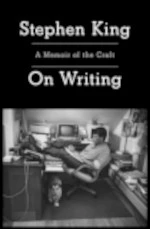
One of my favorite books on writing is On Writing: A Memoir of the Craft by Stephen King. In the book, King says, “Wherever your vocabulary is at today is fine. There’s no need to learn more words or different words. Whatever words you know right now, you use. This will help you develop your voice and sound unique.”

Is using big words in a story a good idea? In my opinion, the answer is yes—as long as the writer chooses words whose meaning and context is easily understood. A thesaurus is a great tool, but don’t use it to come up with words you think sound cool and sophisticated. Readers have a wide range of word knowledge but even those with an impressive vocabulary feel that showing it off is pretentious.

To sum it up: use your best judgment.

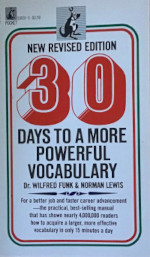
In the meantime, I’ll hang on to my precious dog-eared copy of 30 Days to a More Powerful Vocabulary and see how many of the words I learn end up in my writing. Ceraunophobia, anyone?

To swear or not to swear?


Do your characters swear? Do they swear too much? Not enough? Should they swear at all?

Personally, I don’t get exercised over swearing. Let’s face it, people swear—some a little, some a lot, some only when “necessary.” Swearing can add a touch of realism to our writing (after all, what does one say when tripping over a dead body?). We’ve all known colorful folks who liberally season their conversations with salty words. For one story, I created a character loosely based on a former co-worker who never felt the need to censor her speech. Not a word of it.

But my readers object to profanity and I must respect their wishes. There are ways to suggest swearing and author Naomi Hirahara is so skilled at this that you know the exact word she’s not using. Another author, F.M. Meredith, has this to say about the lack of salty language in her Rocky Bluff P.D. series: “Oh, the characters do cuss, I just don’t quote them.”

Here are ways I’ve suggested swearing in my stories: She shrieked a litany of curse words; She continued to scream and curse …; He included a few four-letter words of a sexist nature; Donna slurred a few non-PG13 adjectives to describe her feelings for her ex; Kat cursed a blue streak (I wouldn’t choose this one again, as it’s a cliché that sneaked past me and my editor).

On several occasions I’ve presented a seminar/webinar on dialogue and tackled the question of profanity. This is how I answered the question “To swear or not to swear?”:

• Know your reader and your genre. Cursing and four-letter words are more acceptable in a thriller than in a romance or a cozy mystery.
• Refrain from profanity in narrative, but an occasional expletive in dialogue is acceptable (depending, of course, on genre).
• Realize that profanity is more noticeable in a novel than it is in real-life conversation.

Again, use your best judgment. And ask your beta readers for feedback.

Your thoughts?

THE PRESSURE TO PROMPT

By Jill Amadio

Quick, write a sentence containing the word ‘shallow.’ Or ‘camel.’ Maybe your creativity freezes at the first word but gushes forth at the second.

The urge to prompt is overtaking the writing community, both fiction and non-fiction.

What is a prompt? A suggested word, phrase, or sentence on which to build a paragraph or two during a specified time period. Prompt and their answers can include half sentences and are all the rage these days. Indeed, dozens of books and workbooks have been written on the subject of prompts and to the why, where, how, and when to engage in this mental exercise.

Many writers love prompts as a way to get started writing of a sterile morning, to fire up the imagination, and even to provide satisfaction that you are actually working at writing something, anything, although, in fact, it has no relevance to your WIP. However, you could stick the finished prompt into your WIP folder for use somewhere if you feel your words are immortal and need to be recorded for posterity.

Frankly, I am not a fan pf the prompt phenomenon. I believe that if you are going to spend time writing, why not work on your book, article, or blog? Why spend the time fiddling around with a piece of prose you may never use, that has no relation whatsoever to your current project, and that can send you off on a tangent to which you may find it difficult to return?

Ah, say prompt fans, prompting gets you typing. It puts pressure on you to come up with some words to fit the suggestion and actually make sense. The closest I have come to prompts lately is writing a Grocery and a To-Do list. The former is boring, the latter daunting but I have a couple of writer friends who salivate at the prospect of attacking their morning prompt.

One definition of a prompt I found online, posted by Karen Frazier, notes that a writing prompt is a statement usually followed by questions. I also found a very large collection of books on amazon.com devoted to the subject including titles such as Polyvagal Prompts, Writing Prompts Balance, The Writing Prompts for Seasons workbook, Writing Prompts for the Apocalypse, and The Art of Prompt Engineering. Not sure about that last one but it was amidst the others so I assume one needs something of a mechanical mindset to tackle it.

Some prompt books include journaling pages, and vice versa. Another offering is in the form of prompt notecards in a pretty box– a nice gift and not too insulting.

The books are directed at both fiction and non-fiction writers as well as adults, children, and humans (who or what else writes?). Also targeted are genres such as poetry, fantasy, art, drawing, songwriting, and truly interesting:  for dinosaur enthusiasts.  I haven’t seen a prompt book for AI robots yet but one could be in the works. Or already on sale.

I certainly honor those who need and enjoy a prompt to spark their creativity but as my years advance I need as much time as possible to compete the third book in my “Digging…” mystery series, and beyond.

Could a prompt, if one writes sufficient words, be considered a short story? It could surely lead to one and that is a good thing. How about prompts for birthday and Christmas cards? They can be written in advance and stored on your computer for future use.

So, where does the pressure to prompt com in? We are urged to start writing as fast and as furiously as we can as soon as we clap eyes on the prompt. Now, that is pressure par excellence. No time to consult a thesaurus. Is reviewing and editing allowed afterwards or during?  I did try prompting once and sent myself off into daydreaming, my laptop forgotten as I imagined myself back in Bangkok.

I heartily endorse the claim that writing prompts can help create characters and other elements and that, too, is a good thing. Prompts can also build writing skills, craft, and techniques as well as become story starters.

This entire subject of defining prompts has kept me away from working on my WIP. In the past four weeks I have only come up with a new title. However, part of it could be considered a prompt. Here’s a clue: Dangling Participle.

NEW IDEAS, PAST AND PRESENT

by Miko Johnston

We’re barely two months into the new year, but as I contemplate what we’ll write about in the future, and what will inspire us to keep at it, I’ve found some of my answers to those questions in our posts from the previous year.

Hannah wrote about overthinking. How many of us are guilty of getting obsessive about our writing? Characters, plots and background have to be thought out, but we also must keep it all in balance. That has become harder for me to achieve, partly because age has undermined my ability to multitask and partly because my priorities have shifted. I still enjoy writing and am committed to finishing at least two more books, but I’m reminded of Madeline’s piece on Writing Scared, and the idea of switching up the type of writing you do. I’ve done that in the past, so now I’m adding a new avocation – photography.

Years of writing has given me a sense of what works and what doesn’t, and while I still rely on critiques from fellow writers, I often can figure out problems in my manuscript on my own. Not so with my new hobby. I look at a photo and I may like it, but I don’t know why, exactly, nor can I be certain it’s any good. I’ve joined a photography club and have been invited to participate in their biannual exhibit. I’m going to need a lot of critique and advice before I select which pictures I want to use.

Linda’s piece on attending writers conferences reminded me that many more may be held this year as the risk from the recent pandemic fades from our memory, if not from our lives. Will these events be successful, or will the attendance habit, having been interrupted, be broken? Costs, from registration to travel to hotels and meals, will likely be higher than we remember. I can see where some will be very selective about which they’ll attend while others choose not to register for conferences at all.

Gayle’s piece on The Future of the Written Word really resonated with me. I’m often puzzled, even shocked, by how many words have been usurped and had their meanings altered, some with additions, some with subtractions. Regardless, these 2.0 definitions have led to divisions. A lack of clarification, or precision, makes the word’s meaning, well, meaningless. I suspect if any of the worst offenders of this phenomenon were reading this, they would have stopped at usurped (insert my sarcastic smirk here).

And speaking of the written word, Jill contributed a post on a similar, if lighter, topic – the subtle differences between American and British English. With three Brits in our WinR group and many others within our writing circle, it can be a challenge.

Rosemary’s Collecting Memories touched me. While clearing out closets and shelves in anticipation of a thorough spring cleaning, I’ve uncovered a trove of precious mementos – cards, notes and letters from family and friends, some going back to my birth. Programs from bar/bat mitzvas, funerals, and other events. Menus from private supper clubs, conference galas and corporate dinners at restaurants. Each find brought back wonderful memories of the people and places I’ve enjoyed over the years. That included a copy of the dedication that went into the L.A. Library’s copy of Rosemary’s book, “Hollywood Then and Now”, in memory of her beloved husband Rick. Her post reminded me that these keepsakes – all comprised of words – and the memories they invoke, are precious, something Maggie explained so eloquently in her post based on the “a reason, a season, or a lifetime” quote.

Jackie’s interviews with writers as well as all the fabulous guest posts she’d arranged added dimension to our blog, and her piece on naming characters had many solid tips I’ve come to rely on. And I’ll add a special shout-out for all the technical help she’s provided to us, especially a technical “muggle” like me.

There are many more posts from my co-WinRs that have and continue to inspire me. I can only hope I might have had the same effect on them, as well as our readers.

Miko Johnston, a founding member of The Writers in Residence, is the author of the historical fiction series, “A Petal in the Wind”, as well as a contributor to several anthologies including the about-t0-be-released “Whidbey Island: An Insider’s Guide”. Miko lives in Washington (the big one) with her rocket scientist husband. Contact her at mikojohnstonauthor@gmail.com

Reach Your Blog Readers – using Hashtags, Titles, & Images correctly!

A guest Post by Edie Melson

(Reprinted by permission – The Write Conversation, Monday, August 29, 2022.)

by Edie Melson @EdieMelson

A little teaching moment… 
 
With the chaos of social media, and the strict guidelines now in place with email, our digital connections have gotten more complicated. But one thing hasn’t change—the ability to be found through an organic search. 
 
This process begins when we know the basics of keywords and SEO. The post I wrote, How to Apply SEO to Your Blog – One Blogger’s Process, will help you get started.
 
Recently I’ve been working with several bloggers about ways to get more organic page views. Organic views happen when someone searches for a topic—either through a search in a search engine or by searching for a topical hashtag. Beyond keywords and SEO, titles and hashtags are critical to getting found. 
 
It may surprise you to learn that it is possible to be found. But as bloggers, we need to deliberately set ourselves us to be found in a topical search. So today we’re specifically looking at the use of hashtags when we share a post on social media, the titles we choose for posts, and the images we pair with them. 
 
Hashtags
There are two times when bloggers need to carefully choose hashtags for a post.
  1. When composing a click to tweet within the post.
  2. When sharing a social media update about a specific post.
Here are the things we need to remember when choosing hashtags.
  • Choose two. Occasionally it may make sense to use a third, and even more rarely use only one. But the majority of your updates (unless you’re on Instagram) should have two. 
  • Choose hashtags that are relevant and specific. I see more mistakes here than in any other use of hashtags. For example, if I was sharing a blog post about tips on how to deal writing rejection it might seem like a good thing to use rejection as a hashtag. The word rejection is not a good hashtag. The context of that hashtag is rejection—NOT writing rejection. It doesn’t help us get more views or likes because the people searching for rejection hashtags are primarily looking for relationship advice. Hashtags are a search tool and must stand alone in their context or they’re worthless.
  • If possible, hashtag words in the main message of the update. For example, if the word you want to hashtag is in the title, hashtag that instead of adding the word again unless it’s the first word. Avoid hashtagging the first word of a tweet.
Titles
Titles need to reflect the full topic of the post. This is not time to be clever or too generic. Here are three things to remember.
  • Your readers will evaluate your post’s content based on the title. When a title is misleading or even ambiguous, the reader can walk away feeling cheated.
  • The blog title must stand alone—with full context—when shared on social media. For example, if we go back to that imaginary post about how to deal with writing rejection. I’ve seen a lot of bloggers who would go with the title: Tips to Deal with Rejection. At first glance that seems like a pretty good title for someone who is reading a post on a writing site. But what about those doing a search in a search engine or reading the text in a social media update? For them it’s misleading and generic. A better title would be: Tips to Deal with Writing Rejection. What makes sense to a reader who has the full content of a blog is much different from what makes sense without visual clues and context.
  • The title should contain a phrase that someone would type into a search engine to find the content in your post. It’s not clever, but I can see many people typing How to deal with writing rejection, into a search engine. That’s the final piece of the puzzle and immediately moves your post up in a search engine search. 
Images
It may seem like images are less important when it comes to being found in an organic search, but when we know how to do certain things, an image can provide a huge boost in visibility. 
  • Images need to illustrate the main focus of the blog post. Let’s once again go back to the imaginary blog post, Tips to Deal with Writing Rejection. If we’re not careful about the image we choose, we can lead potential readers astray. For example, choosing the image below could send the wrong message if someone misses the word, writing, in the title. 
  • We all know that images aren’t searchable….Unless they are captioned….Unless the file name of the image contains a searchable keyword. Yep. By taking a few extra moments to compose a relevant caption and saving the image with a relevant file name instead of some generic title you can increase your organic search views. Let’s once again visit that imaginary blog post.
    • That image above has a file name that includes the word loneliness—this is what www.Pixabay.com lists as the title of this specific image. So this image is not only a poor choice, but with that file title it will reinforce the wrong type of results in an organic search. 
The bottom line is that the details matter. It’s important that we blog smart. By paying attention to the titles we choose, the hashtags we use, and the classification of images we can make a huge difference in the visibility of our posts. 
 
Now it’s your turn. What questions do you have about these details? Be sure to leave your thoughts in the comments section below. 
 
Don’t forget to join the conversation!
Blessings,
Edie
 
TWEETABLE


Edie Melson is a woman of faith with ink-stained fingers observing life through the lens of her camera. No matter whether she’s talking to writers, entrepreneurs, or readers, her first advice is always “Find your voice, live your story.” As an author, blogger, and speaker she’s encouraged and challenged audiences across the country and around the world. Her numerous books reflect her passion to help others develop the strength of their God-given gifts and apply them to their lives. Connect with her on her website, through FacebookTwitter, and Instagram.


Deciding What to Write

By Linda O. Johnston

 If you’re a writer, how do you decide what to write?

 Often, it’s the kind of story you love to read:  romance, mystery, paranormal, historical fiction, whatever. That makes sense.

 Or maybe something you believe others will want to read, so it’ll sell well. But that’s not something totally predicable. So I go with what I enjoy.

 With me, my preferences have changed over the years. Oh, I’ve always enjoyed romances, romantic suspense and mysteries. I’m not as much into historical stories as I used to be.  Same regarding paranormal stories.

 But you could probably tell what my favorite stuff was at any time of my life in the past many years by seeing what I’ve written!

 My first published fiction was a short story in Ellery Queen’s Mystery Magazine, and I won the Robert L. Fish Award for first published short story! Yes, it was a mystery of sorts, a humorous one: “Different Drummers.”

 My first published novels consisted of time travel romance, and most revolved around places or things I particularly liked. For example, one of them, Point in Time, took place in Pittsburgh, where I grew up. Another took place in Alaska, in the Klondike, and I’ve always loved visiting there: The Ballad of Jack O’Dair. And of course there’s Once a Cavalier, featuring my babies, Cavalier King Charles Spaniels.

 I wrote other paranormal romances too, including Stranger on the Mountain, and the Alpha Force miniseries I created for Harlequin Nocturne, about a military unit of shapeshifters.

 I loved paranormal romance! But notice that’s in the past tense. So is my focus on paranormal stories. I still read some, but I’m not writing any now.

 I’d always enjoyed mysteries and romantic suspense. I still do—and that’s in the present tense!

 That’s why I write them both: romantic suspense for Harlequin Romantic Suspense—and formerly for Harlequin Intrigue—and mysteries, over time, for multiple publishers including Berkley and Midnight Ink, and—upcoming!—Crooked Lane. Most of the mysteries, and as many romantic suspense as possible, include animals, especially dogs. I love to write about dogs. Why? Because I love dogs!.

 So that’s how I decide what to write: again, what I love to read. But also what I most enjoy writing about.

 How do other authors decide? Based on conversations with fellow writers, I gather they, too, mostly figure out something they enjoy, then pounce on it and pour out a story they love.

 It’d be hard, after all, to write a story if you didn’t like its subject or genre.

 Those writers who are reading this blog, I’d love to hear in comments where your ideas originate and how you decide to write about them. And how you enjoy writing about them!

##
Photo by Aaron Burden on Unsplash