Naming Characters

by Gayle Bartos-Pool

Sometimes the name of a character a writer uses just pops into their head. Other times they use the name of a friend or relative. There are also times when the writer changes the name they started with when they realize it doesn’t fit the character anymore. But how is that possible? The writer is just making up the name and the story.

Well, it’s like this…

When a writer is creating a story, they are creating a new world. It will be filled with things everyone will recognize or at least understand if the writer gives good descriptions. A space odyssey might be made-up, but there will be enough things explained so the reader can follow along. Hey, the people who wrote the Star Trek episodes imagined fantasy gadgets that were actually invented many years later by real scientists who used roughly the same concept and style for actual things we use today… “Scotty, beam me up!”

But character names can be tricky.

If one is writing a story that takes place a hundred years ago, names like Tiffany or Jaiden might not work. Watch an old movie and check out the names used. Or maybe read an old book. But something interesting is happening now in the first quarter of the 21st Century. Names from fifty to seventy-five years ago are making a comeback. This will probably mean that you can use any name for a contemporary story. But there still is the problem of fitting the name to the character.

In most cases you wouldn’t want the “heavy” in a cops and robber tale to have a cutesy name like Willy or Felix. They would more likely be the comic relief characters in another story. The same is true with the hero’s name. It would have to be something a bit stronger like Max or Duke. Remember, studio executives and a director changed Marion Morrison’s name to John Wayne to fit the type of characters he would be playing in the movies. And that’s a fact.

Female names have the same concerns. The female lead in a romantic story could be called April or Amber, not Bertha or Myrtle. Wilhemina could definitely be the name of the amateur sleuth in a cozy mystery. She could be a librarian or maybe an older sleuth like a Miss Marple.

Names can do as much to define a character as what he or she does within those pages. If you start off by introducing your main character with his or her name linked to a strong action, it will help the reader understand the part they are playing.  But that is only if you want the reader to know who they really are from the start.

If, for some reason, you wanted to gradually introduce your hero, you could peel away certain aspects of your lead character by letting him show the reader those special qualities a little at a time, but that method is usually meant for the villain who starts off as just one of the boys or maybe some influential person in the plot, but who knew he was actually the bad guy? The hero will finally see the real person under all that finery and expose him.

As for the hero, usually the reader knows who he is from the beginning, but the hero might have to discover that truth about himself by peeling away his own fears and finding his own strength when push comes to shove at the end of the book. The reader will be rooting for him, but he has to do the work.

But establishing the name for that character will still take some planning. Now that we have access to the Internet, you can type in the name that you have cleverly come up with. It fits the parameters of your story. It isn’t too quirky or too cumbersome. But “what if” there is some famous person with the same name out there? Just about every name I have come up with has two or twenty-two people with the same name on the Internet. I have a rule: If it isn’t some current name in the news and I like it, I’ll go with it.

I seldom use the actual name of a friend in my stories. If I only use their first name, I’ll do that, but I have added little changes to their names just for fun. The reason I do this is because I do want my characters to have a life of their own. After all, my friends have their own lives. But it’s fun to use their first name for a character who makes a “special guest appearance.”  I even used a version of my dad’s name in my spy novels. Dad dealt with spy planes and did some rather interesting things that are still classified, so calling my character “Ralph Barton” instead of “Ralph Bartos” worked. And dad got a kick out of it.

I probably do keep the names of my characters fairly simple. If they are all wildly intricate with too many syllables, the reader might get lost in the multi-syllabic confusion. And several odd names might confuse the reader as well. They might think Henrietta is Hildegard and not understand why the wrong one riding in the taxi with the killer.

So, I keep the names a little simpler and do something else. I don’t have three or four characters in the same story with a name that begins with the same letter. This makes it easier for the reader to follow, and it actually makes writing the story easier, too. I don’t want to confuse my characters while I’m writing.

And I do try to fit the name to the character. One of the fun names I picked was for my second private detective series. It came about this way. I always liked the old detective shows on television back in the 50s, 60s, 70s and 80s. And the private eyes from the old black and white movies I watched on the movie channel. I wanted this new character to be a tribute to those guys. Too bad they don’t have good detective shows on TV anymore. Our loss.

I started with Sam Spade. That was the name of the character Humphrey Bogart played in The Maltese Falcon based on the 1930’s novel written by Dashiell Hammett. A classic. I also liked the television series, “Richard Diamond,” starring David Janssen, that ran from 1956 to1960. I was a fan of “Hart to Hart,” starring Robert Wagner that ran from 1979-1984.

So, I liked all these cool detectives. I noticed that their names were like the different suits in a deck of playing cards – Spade, Diamond, Heart. I needed a Club, but that name wouldn’t work. Sounded like a caveman or something.

Then I thought: what’s another word for “club”?

There’s gaming club, gambling club, and a gambling casino!

How about just casino?

And Johnny Casino was born.

The name fit this character who took a chance, changed his name from Cassini to Casino after he worked on a gambling ship near Maimi and had to leave in a hurry. He then took another chance and moved to Los Angeles and after getting his life together, he became a private investigator.

But I worked on getting his name and his life right…Three books later, I guess the “chance” I took paid off.

And you know what?  There was one more chance in this story. Another character was working his way into my head. His name: Chance McCoy. He got a second chance in life himself. There are three books in his detective series.

You see, names do matter. If they fit the character you’re writing, they can lead you to many new places. Write On!

ANOTHER TOOL IN THE WRITER’S TOOLBOX

by Miko Johnston

In the course of a story, a character learns that someone important to him has just been killed. His reaction? We can easily imagine shock, grief, sadness, disbelief. A look of confusion as he tries to absorb the news, his face twisted in pain, tears flowing freely from his eyes. We can even picture him so overwhelmed by what’s happened he collapses. But what if his reaction is no reaction? Complete silence, his face devoid of expression. A cop-out? Or a way to rouse our interest as we wonder what’s going through his mind?

I often say writers have many tools in their toolbox to use, and I’ve written several posts about them over the years. Today, I’m focusing on one valuable tool that often gets overlooked – negative space writing.

By this, I don’t mean being critical. The term negative space refers to various techniques. In art, it’s the empty space around or between the primary subject or the background. In writing, using a white space to indicate the passage of time within a book chapter or story is a prime example. We utilize negative space to break up a lengthy section of dialogue with bits of physical action by the speaker (instead of “he said”) or to relieve long stretches of exposition with some dialogue or internal thoughts.

Negative space might focus on something unexpected in a scene, leaving the reader to wonder whether it’s direction or misdirection. It can be contrasting two opposites, like a calm character in a chaotic setting, or the other way around, the surprising reaction piquing our curiosity. It can be using subtext in dialogue, which leaves the reader thinking about what’s really going on beneath the surface.

A common method is to leave gaps or omissions – small but unimportant details out of a story, which allows the reader to fill in the rest. This can be as simple as allowing the reader to assume that if a phone rings, the character will answer it with “Hello”, or they’ll get up from their chair, walk to the door and turn the knob to open it when someone knocks. Negative space can also mean describing a person to a degree, but not down to the thickness of her hair, its precise shade of brown, or how many clips she’s used to pin it up if it’s not essential to the story. This creates a synergy between reader and writer, allowing the reader to participate in the story. It also keeps the pace moving.

Description is, to an extent, a matter of taste. Some prefer a brief sketch, just enough to get a sense of it, and then let the story move forward. Others like more details so they can fully picture what’s being described, down to the smells and tactile sensations. Leaving some negative space means you’re as conscious about what you leave out as what you put in. You never want to omit anything important to the story or limit the sensory details that make scenes come alive. Here, negative space gives some breathing room so the reader doesn’t feel overwhelmed with everything everywhere, all at once.

Another technique implies, rather than describes, an action, emotion or a setting. A classic example of this is by writing about the absence of something rather than what’s present. In my first novel, I wanted the reader to not only see, but feel the destruction of my character’s village. In addition to describing the wreckage, I also included what was missing – any signs of life…

…No birds chattered, no horses whinnied, no chickens screeched, no men shouted for their wives, no women screamed for their children, no babies cried for their mothers….

The positive space describing the destruction evokes sensory images – the wreckage and plumes of smoke, the smell of burning wood, which we can see. The negative space evokes a different response, one we feel. One provides visuals, the other, emotions. It creates a more complete picture. It also gives the appropriate weight to this important scene, one that will affect my character for her entire life, over the course of five novels.

Here’s another example of positive space vs negative space writing. Imagine a protagonist sitting down for a drink at a café or bar, when a huge explosion happens nearby. Positive space writing would show the scene post-explosion; the wreckage, the body count, the survivors, both injured and stunned. It would include the character’s reaction, physically and mentally. We learn immediately if she was seriously hurt, bloodied, dazed, or temporarily deafened. We’re there watching as she bolts from the scene, or runs toward the explosion to help.

With negative space writing, the character might act uncharacteristically; perhaps she remains seated to finish her drink, with the reader wondering why. Or you might cut to another scene, either one created in her unconscious mind, or set elsewhere with other characters who learn of the explosion, leaving the reader to ponder what happened before returning back to explore the aftermath. This would build interest, as the reader not only has to figure out what caused the explosion, but what happened to the protagonist. Or, you might skip ahead with a white space and leave it to the reader to figure out how many deaths and injuries resulted in the explosion, how scared she felt, or how she got away – if we eventually figure out what we need to know about what happened in that scene.

To use negative space writing successfully, you must do it deliberately and with purpose. You never want to leave out anything important to the story, or neglect to make your characters recognizable, your scenes intriguing, and your plot believable. The omissions and subtext must be apparent, as well as their meaning. When done properly, it engages the reader, playing to their curiosity, encouraging their involvement with the plot and attachment to the characters. It’s what we as writers want to accomplish, which makes negative space a useful tool in the writer’s toolbox.

Have you incorporated negative space writing in your work? If so, how do you use it?

Miko Johnston, a founding member of The Writers in Residence, is the author of the historical fiction series, “A Petal in the Wind”, and currently minutes away from completing the fifth and final book of the saga (whew!) She’s a contributor to several anthologies including the recently released “Whidbey Island: An Insider’s Guide”. Miko lives in Washington (the big one) with her rocket scientist husband. Contact her at mikojohnstonauthor@gmail.com

Delving Into Everyone’s Life But My Own

by Jill Amadio

Last week, I was sorely tempted to slip back into a non-fiction writing career that has sustained me when my mystery book sales faltered. I gave a proposed project a few hours thought. Then, I came to the decision that my ghostwriting years were definitely gone with the wind, as vanished as the ghost I had become.

Ghostwriting popped up in my life when I least expected, and it was certainly not sought. In fact, I was barely aware of someone writing someone else’s life story for them. It seemed the height of hubris both from the viewpoint of the writer and that of the subject. I believe I thought, when I first heard of ghostwriting, that if you couldn’t write your own story, then forget it.

However, during a particularly “dry” period when my finances were almost non-existent, I held my breath and agreed to at least investigate what was involved. I was writing a business column for Entrepreneur magazine, and one day, the editor told me that a reader called, asking if they could recommend a writer to write their business book for them

“What? Be a fake writer? And on top of that, write a whole book?” I squeaked. “No way! I hardly manage to squeeze out 3,000 words for my column. How can I write a hundred times that number?  No way.”

“Jill, look at it this way. Approach each chapter as an article. Besides, it pays well.”

When the editor mentioned the sum of money I could earn, I no longer resisted. Ghostwriting, here I come!

Since then, I have ghosted 19 memoirs and enjoyed the process immensely. I met a fascinating group of clients who took me into the realms of several diverse worlds. I wrote books for a champion cowboy, a nuclear physicist, and just about everyone in between.

After I finished the business book and was telling a friend at the local TV station about it, she passed the word around. I soon received a referral that sent me to Hollywood to meet Ellie, the fourth wife of singer Rudy Vallee. She was one of those larger-than-life ladies who called everyone “Darling.” We clicked right away.

Ellie sent me to the Simi Valley Library, which had bought Rudy’s archives after he died. Five hundred boxes. I spent weeks delving through clippings, photos, contracts, reviews, personal letters, and marriage certificates. The material was rich with wonderfully intimate biographical pieces of Rudy’s rollercoaster life and career. The publisher decided that rather than following the usual process of hiding the ghostwriter, I should be named as the co-author of the book. A great and much-appreciated surprise.

During her book tour in Las Vegas, Ellie had lunch with the owner of the many taxi companies in town, who promptly contracted with me to write her own memoir.  I interviewed many of the cab drivers and collected some surprising stories of famous celebrity passengers. However, the cab owner decided to only publish enough books for her immediate family and friends. Thus, those stories remain undercover.

Another memoir (each of the 19 I ghostwrote was by referral, happily) was more of a revenge publication against no fewer than a dozen attorneys for malpractice. My client owned a small business, which soon expanded into selling one of the nation’s leading entertainment devices. However, the clients had hired what she and her husband called “incompetent” lawyers. Soon, there were lawsuits initiated by my clients all over the place. The book was to name each one and detail their transgressions. I knew a little about the law and told my clients we needed to give those lawyers false names or be sued ourselves.

Some of the names we came up with included Mack E. Avelly, Mal Lingerer,  Jep Ardy, Rack E. Teering, and an Ignorentia Legis (translation: ignorance of the law).

Several of the memoirs I wrote were written in the first person, from the client’s point of view. A favorite of mine was about Monterey, CA’s first policewomen in the 1950s. The lead female cop rode a Harley to patrol the streets and, occasionally seeing a fellow cop’s car outside another cop’s house whom she knew was working, discovered several love affairs taking place during her tenure.

One client hired me to write a mystery. She’d always wanted to write about a financial scam that victimized her father. It sounded boring, so I suggested we add a murder into the mix to jazz it up. She agreed wholeheartedly and asked how many murders we could include. I talked her down to two.

Some clients decide to write their memoirs after changing their lives. One of these was a model, international actress, and recently divorced mother of two who decided to leave her luxury life in New Jersey and move to California. I met her at her home, where she showed me the minivan they’d be traveling in for the cross-country trek. I was surprised that the SUV was pretty stinky compared to the shiny Rolls-Royce parked nearby. She said she wanted a completely fresh start. She got one when she met and married a California billionaire after arriving in Laguna Beach. Then she moved to Italy, where she bought a villa.

Before COVID struck and I moved back to Connecticut, I received a call from a cowboy in southern California. He had recently completed a humanitarian project: riding horseback across America from California to Florida. The mission was to raise money for an orphanage for disabled children. The book was fun to write, covering how he,  the seven horses, and a one-eyed mule he needed completed the journey.

One memoir I wrote on my own was the life story of the first lady of aviation art. A British artist, Virginia Bader, ran a gallery of paintings on both coasts devoted to World War II scenes, dogfights, and heroes such as General Jimmy Doolittle, Air Vice Marshal Johnnie Johnson, and many fighter aces from both sides of the conflict.  Her efforts helped establish the careers of the now top aviation artists in their field, such as Nicholas Trudgian, John Shaw, and Sam Lyons.

I wrote three other memoirs as my own client because I became fascinated with the subjects’ stories. One I was asked by the publisher to write about was Gunther Rall, the third-highest fighter ace of World War II and a General in the Luftwaffe. It was published in 2003 and continues sells worldwide.

I GOTTA NEW GIG!

by ROSEMARY LORD

It’s about twenty years since I was hired to write my first non-fiction book, Los Angeles Then and Now. Hollywood Then and Now followed. It was for a small London publisher. Both books were a huge success and on the Best Sellers’ list. Great for the publishers; however, as I was a writer-for-hire and they had the copyright on all the Then and Now books, I don’t receive royalties. But it was a tremendous boost for my writing career and a good ‘calling card.’ I did a lot of publicity and promotion, so I learned a lot on the publishers’ dime.

It got my name out there.

Over the years, after the first flush of success, I did the occasional book signing and promotional appearance. I continued to lecture on the history of Hollywood and attend charity events, so it kept my name out there. These books really have ‘legs’! Like the Energizer Bunny, they go on and on. Every so often, the publishers would ask me to write updates and additions for the new editions.

But then, a couple of weeks ago, I received an email from Harper Collins, one of the ‘Big Five’ publishers in London. They had bought Pavilion Publishing and bought my Then and Now books.  “Would you be interested,” they wrote, “in writing a completely new updated version of Los Angeles Then and Now?”

Let me think… um…er….   “Yes!” I cooly responded: “I’ll move my schedule around.”

And so, my fiction writing and novels will be cast aside for a while as I focus on this enormous task. I won’t totally abandon them, but for a while, they will take a back seat.

The original contract was quite daunting: selecting 77 sites representing Los Angeles. Because it is such a sprawling city in search of an identity, I started downtown at its origins in Olvera Street, then drew a line going west to the beach at Malibu, illuminating sites along the way. That was (and is) my plot line. The money was not great, but the opportunity was.

Over the next year, I will be updating the existing 77 sites throughout Los Angeles, giving a fresh view of the history. I will be changing about 15 of them, removing sites that may not be of such great interest and adding those I consider more fascinating. I get to select new sites with greater appeal for today’s readers. As well as researching new, previously hidden facts to give each history a new look, I will be sourcing archive photos and new, updated photos of all the sites. I will also take a new approach to writing the main history of Los Angeles that comes at the front of the book.

There is so much history to write about, examining different aspects of what went before, and the myriad of characters and how they built up this amazing city from scrubland in the desert with no water and very few people. The main challenge is to condense it all, keeping the most salient points. The publishers have very strict word counts on every page.

It’s very easy for me to wax lyrical about each place’s history and the colorful individuals involved, and if I’m not careful, I can write on forever. The skill with this assignment is to give “Just the facts, ma’am,” but keep it interesting.

And I really do have to rearrange my life to focus on this job. I always seem to have several writing things on the go at once, with research books, clippings, and files everywhere – as well as the Woman’s Club work that still lingers. My workspace is always busy. But this task is large, so everything else must be put away for now.

I’m Yack Shaving again! (That’s when you get sidetracked and taken on a circuitous route, with multiple small tasks that need to be completed before you can accomplish your main, original goal.)

I have a couple of mesh-sided carts on wheels that hold hanging files that I use for specific projects. I’ve cleaned these out of copious miscellaneous papers, ready for the 77 separate new files for each of the Los Angeles sites, plus the main history and archive photographs.

I’m going through boxes of old research files, culling as needed, making room for new information. I can’t wait to get back into investigating at some of the old libraries and hidden private collections to discover newly unearthed tidbits of history that so often get overlooked. Research is where I can spend far too much distracted time.

Many of my handwritten notes have faded, and as I struggle to read the pencil-scribbled file tags, I realize I need to dig out my label maker – and borrow a five-year-old to show me how to use it!

Lately, I’m getting really good at organizing my files. I recall the late Professor Randy Pausch complaining that his wife thought he was way too compulsive, filing everything alphabetically and neatly. “Because,” he decided, “that was so much better than searching for something in a panic, saying, “I know it was blue, and I was eating something when I had it.”

And of course, I’ll be driving all over Los Angeles to check on old and new sites, taking copious photographs and notes along the way. So, I have to fit that into my schedule.

But now, I have a stack of new notepads and pencils, a pencil sharpener and erasers, my Thesaurus, and OED at the ready. A clean, empty desk awaits.

I’m ready for my next literary adventure.…

How do you prepare for your next big writing project?

Choosing a Theme

by Linda O Johnston

Every writer writes what they know and what they love—at least, hopefully. Sometimes, it’s also a specific genre or genres.

Of course we can go all sorts of directions in our writing as well as in our lives.

But me? It’ll come as no surprise to those of you who know me or read my stuff that I love dogs. And they’re not only important in my life. They’re important in my writing. And they’re the general theme of my writing.

I have had sixty-two novels published so far, with the sixty-second, my fourth Shelter of Secrets story for Harlequin Romantic Suspense, available starting now. It’s CANINE PROTECTION. Yes, canine. And number sixty-three, the fifth in my Shelter of Secrets series, CANINE REFUGE, will be published next year. I can’t tell you offhand how many of my books have featured dogs, but the great majority of them have.

Why? Well, they always say to write what you know, and I know dogs, and yes, I love them. My first mystery series, the Kendra Ballantyne, Pet-Sitter Mysteries, featured a tricolor Cavalier King Charles Spaniel named Lexie—the same name as one of the Cavaliers I owned when I wrote those stories. And Kendra was a lawyer who lived in the Hollywood Hills with Lexie. Yes, I was a practicing lawyer then, living in the Hollywood Hills, writing what I knew, kind of.

And right now, my first ruby Cavalier, Roxie, is staring at me as I write this. Her tricolor sister Cari is sleeping somewhere else, but she very often snoozes under my computer desk as I write.

 Yes, I’m hooked on Cavaliers, but I don’t write much about them since I don’t want to overdo it with my readers. But other dogs, including service dogs, K-9s, and even pets—yes!

And including shelter dogs, like those in my Shelter of Secrets series which is ending next year. I’ve started writing the first book in a new series. And surprise, it also features dogs!

I’m always fascinated to learn why other writers write what they do—and if they also have ongoing themes in what they write.

So please comment here, you writers who are reading this. Do your stories contain any ongoing themes, and if so, what—and how did you decide to feature them?

.

.

Image by Ermir Kolonja from Pixabay

Big Words, Bad Words

By Maggie King

Many years ago I read a mystery with so many words I didn’t know that I had to keep my dictionary close at hand. As I enjoy learning new words I liked the experience the popular author provided. But when I mentioned it to a couple of friends, they said, “Not me. I’d have put that book down, and fast. I want to read words I already know.”

I’ve always had a love of words. I fondly remember vocabulary lists in high school: perspicacious, truculent, vapid, loquacious, polemic, specious, logy. With all those big words swirling through my brain, you’d think my SAT scores would have been more impressive than they were.

When I presented my manuscript for Murder at the Book Group (my debut, published in 2014) to a long-ago critique group, the members advised me to ditch the big words. “What big words?” I asked, bewildered. They named a few but the one that stuck with me was “diatribe.” I didn’t consider diatribe a big word and it would surely be understood in context, as in “Arthur ignored his mother and carried on with his diatribe against Evan.”

The upshot was that I kept diatribe, but changed some of the other “big” words.

A word I recall from reading Nancy Drew was “elated,” as in “Nancy was elated by the news.” The context wasn’t clear, so I ran to the dictionary and learned that Nancy was ecstatically happy by the news. Elated is a wonderful word to teach a ten-year-old.

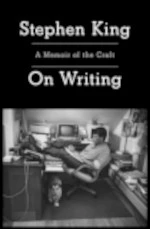
One of my favorite books on writing is On Writing: A Memoir of the Craft by Stephen King. In the book, King says, “Wherever your vocabulary is at today is fine. There’s no need to learn more words or different words. Whatever words you know right now, you use. This will help you develop your voice and sound unique.”

Is using big words in a story a good idea? In my opinion, the answer is yes—as long as the writer chooses words whose meaning and context is easily understood. A thesaurus is a great tool, but don’t use it to come up with words you think sound cool and sophisticated. Readers have a wide range of word knowledge but even those with an impressive vocabulary feel that showing it off is pretentious.

To sum it up: use your best judgment.

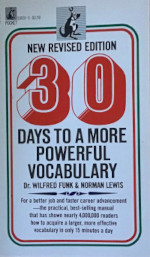
In the meantime, I’ll hang on to my precious dog-eared copy of 30 Days to a More Powerful Vocabulary and see how many of the words I learn end up in my writing. Ceraunophobia, anyone?

To swear or not to swear?


Do your characters swear? Do they swear too much? Not enough? Should they swear at all?

Personally, I don’t get exercised over swearing. Let’s face it, people swear—some a little, some a lot, some only when “necessary.” Swearing can add a touch of realism to our writing (after all, what does one say when tripping over a dead body?). We’ve all known colorful folks who liberally season their conversations with salty words. For one story, I created a character loosely based on a former co-worker who never felt the need to censor her speech. Not a word of it.

But my readers object to profanity and I must respect their wishes. There are ways to suggest swearing and author Naomi Hirahara is so skilled at this that you know the exact word she’s not using. Another author, F.M. Meredith, has this to say about the lack of salty language in her Rocky Bluff P.D. series: “Oh, the characters do cuss, I just don’t quote them.”

Here are ways I’ve suggested swearing in my stories: She shrieked a litany of curse words; She continued to scream and curse …; He included a few four-letter words of a sexist nature; Donna slurred a few non-PG13 adjectives to describe her feelings for her ex; Kat cursed a blue streak (I wouldn’t choose this one again, as it’s a cliché that sneaked past me and my editor).

On several occasions I’ve presented a seminar/webinar on dialogue and tackled the question of profanity. This is how I answered the question “To swear or not to swear?”:

• Know your reader and your genre. Cursing and four-letter words are more acceptable in a thriller than in a romance or a cozy mystery.
• Refrain from profanity in narrative, but an occasional expletive in dialogue is acceptable (depending, of course, on genre).
• Realize that profanity is more noticeable in a novel than it is in real-life conversation.

Again, use your best judgment. And ask your beta readers for feedback.

Your thoughts?

SPRING INTO WRITING

by Miko Johnston

Ah, what a year it’s been, beginning with a harsh and, in some places, treacherous winter. So far, spring has not been much better or safer in many parts of the country. It took a long while to arrive and settle down on the West Coast. Hubby and I took a last-minute vacation to sunny Sicily to escape the cold and gloom for a few weeks and postponed our annual winter trip to LA for months until we could travel around by car instead of rowboat. Both escapes kept me away from writing for a while.

I’ve always enjoyed spring, a time of renewal, and probably more so this year after the winter we’ve been through. Thoughts turn from shoveling snow to shoveling dirt in the garden, from watching the overflowing rivers subside to marveling at the regeneration of fauna and flora.

Part of that rejoicing can include a return to writing.  Here are some suggestions to inspire you.

I           Change it up

If you’re finding it difficult to focus on your manuscript, or daunting to consider starting one, then don’t. Think about other things to write: short stories, flash fiction, a travel memoir, a chapter from your life. Perhaps a letter – yes, snail mail – to a long lost friend or relative. Buy (or make) some blank-inside cards and create your own birthday, anniversary, get well, and sympathy messages.

In short, forget about your WIP for now, but don’t stop putting words on the page. As we always say, writing is writing.

II         Revisit

If you’re writing in more than one point of view and your WIP isn’t going forward, you may have the wrong character in the driver’s seat.

I recently critiqued pages from a romantic suspense novel which had two protagonists. One chapter felt stodgy IMO, and the female came off as cold and unkind. The author had written the scenes in the male character’s point of view, so he only got to observe her behavior. I suggested redoing the chapter in the female’s POV, since she was undergoing the emotional upheaval. I felt if the reader understood what led to her bad behavior, they would find her more sympathetic.

If you get stuck, try rewriting the troublesome scene in another character’s POV.

III        Revise

One of my favorite quotes about writing has always been: “Books aren’t written – they’re re-written”. Not everyone accepts or believes that.

Some writers tend to think it’s permanent once you’ve written something. We forget that until a manuscript is published, it can always be changed. In my last book, I introduced new characters whom I barely knew. I stopped writing when Covid hit before returning to the partial manuscript a year and a half later. As the story developed I got to “know” the new characters better. With my first draft complete, I went back to their first appearance to find vague conversations and a lack of detail. Using my more intimate knowledge of these characters, I sharpened their dialogue and expanded their descriptions.

If your characters are flat and generic, get to know them better. If your opening doesn’t grab the reader’s attention, your middle sags, or your ending falls flat, rework that section until you’ve solved the problem (for suggestions and tips, search through our archives, including my BACK TO BASICS: WRITER’S BOOT CAMP series).

IV        Forget about Perfection

The opposite problem is to get locked into revisions, snipping away or changing words, sometimes back and forth, all in an attempt to make the manuscript flawless. It won’t happen. It never happens. Finish it. Polish it. Then hire a good editor who will clean up your grammar as well as plot holes. Lastly, find a beta reader, or readers, to give you an unbiased opinion. Do the best work you can, and then let it go.

Trust me, I understand how difficult it can be to carve out time to write, especially if we have no pressing need (such as a deadline from our publisher) to do it. However, remember this: you can’t call yourself a writer if you don’t write.

Now please excuse me, I have a novel to finish.

##

Miko Johnston, a founding member of The Writers in Residence, is the author of the historical fiction series, “A Petal in the Wind”, as well as a contributor to several anthologies including the about-t0-be-released “Whidbey Island: An Insider’s Guide”. Miko lives in Washington (the big one) with her rocket scientist husband. Contact her at mikojohnstonauthor@gmail.com

Saying Goodbye is Hard To Do.

By  Marilyn Meredith, guest blogger

In this case, it’s saying goodbye to two whole sets of characters who’ve been living in my head for many years. First it was the all the police officers and their families who live in the beach town of Rocky Bluff, as well as many of their citizens. This is the first series I wrote and the first published. Reversal of Fortune is number 17, and the last one. I am going to miss the Rocky Bluff P.D.  (I wrote this series using the author name F. M. Meredith.)

When I moved to Springville, I learned we lived near the Tule River Indian Reservation and I became friends with a Native woman who grew up on the rez. I love the little town where I now live and incorporated a lot of my surroundings in the Deputy Tempe Crabtree series. I’m certainly going to miss Tempe and her husband, Hutch, a pastor, and their good friend, Nick Two John. The latest book is #20,
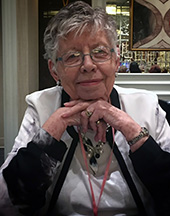
The hardest part is that I know all these people so well—even knowing how they think, and how each one will act in any situation. In many ways, it’s like losing good friends.

I’ve been asked several questions about this decision. Was I tired of the characters and the settings? Absolutely not. I loved the folks who lived in Rocky Bluff, especially the men and women of the RBPD. The beach community of Rocky Bluff only existed in my imagination, but reflected much of the area where I once lived and other small towns along the coast.

Those who lived in Bear Creek and the surrounding area are near and dear to me since I live in the community that inspired it, with some minor changes. I’ve used much of what is here in many different books in the Deputy Tempe Crabtree series: the small river that sometimes floods as it did this year, the Inn as it was in earlier years, and the surrounding mountains. I’m staying where I am, but Tempe and Hutch are moving on.

Another question was had I run out of ideas? No, that wasn’t the problem. With the Rocky Bluff series policing is changing so fast, I didn’t think I was able to keep up with the changes. With the Tempe Crabtree series, I knew in my heart it was time—20 books was enough

So what will I do now? I have another cook book on the back burner—this one with camping recipes. I plan to update one I wrote when I was a Camp Fire Girl leader and we went on many camping trips.

I’m also planning to write either a young adult mystery series set during World War II in Los Angeles, or a memoir. Haven’t really decided yet. My childhood and early teen years were during that period. I have lots of memories during a time that was much different than now.

Like the characters in my books, my life has made some major changes and I am changing along with them.

Marilyn Meredith aka F.M. Meredith

Visit me at http://fictionforyou.com/  

Blog: https://marilynmeredith.blogspot.com/

.

Marilyn’s article was posted by member, Jackie Houchin

Why I Read Short and Long

by Jackie Houchin

I read a lot of print books and listen to a great many audiobooks each year. I do not read anthologies or collections of short stories unless they contain several stories by authors that have a track record I enjoy.

Recently, I have been “reading” (I will use that word whether I use my eyes or ears) a good many short prequels to book series. If the book turns out to be so-so, I haven’t wasted much time. If I like it, I’ll consider the series. Also, more authors are writing their stories as novellas, which I enjoy too.  For me “shorter is better.”

Except!

Except when I read authors that I KNOW will come through with an outstanding story. Then I will read longer. Sometimes much longer.  I’m currently reading CITY SPIES by James Ponti. It has 378 print pages and I LOVE it. I eat it up. I can’t get enough, even when my eyes are stinging. I’m already looking for the next in the series. (Okay, yes, it’s geared to 10-12 year-olds, but I’m a kid at heart, and it really IS written well.)

In general, for LONG reading, I like fascinating, immersive, tightly-written books, with unique plots and hooks and plenty of jaw-dropping moments. And the characters better resonate with me.  I enjoy relevant back-story told well and within the plot.  In mysteries, I don’t want to easily figure out who is the villain or how he did the crime. I want to follow the author step by cleverly contrived step to the WOW ending, which, on second thought, makes perfect sense. I want a story that stays with me for a while.

Charles Todd is one of those authors. His Ian Rutledge historical mysteries are top notch. Here are my reviews of two of those books. You can see why I love them and will READ LONG.

A Pale Horse

A Deadly Loyalty

Historical Novels and Mysteries need to be believable and take me right to that setting and hold me there. If they do, I’ll READ LONG.  Here are three I reviewed that did that.

The Ghost Map by Steven Johnson

The Girl in The Painting by Tea Cooper

A Brilliant Night of Stars and Ice by Rebecca Connolly

In a LONG READ novel, I want to be carried along with astonishing characters, vivid settings, and heart-wrenching but hopeful story telling. Here are two I loved.

The Bronte Plot by Katherine Reay

Light on Bone by Kathryn Lasky

Here’s one dual-time plot that is outstanding and innovative and that I gladly READ VERY LONG.

When The Day Comes by Gabrielle Meyer

And I could name more.  I totally enjoy reading Charles Martin (long & intense), Connie Berry (intricate plots), Katie Gayle (addictive), A.J. Pearce (Historical), Spencer Quinn (Humor, a dog’s POV), and my all-time favorite Mary Stewart, which I read and listen to over and over.

All these books are well written and enjoyable. If these authors keep on writing, and others like them, I think there is hope for readers. (At least in my life time.)

NOTE: I hope you don’t mind the blatant self-promoting of my Words and Reviews blog!

..

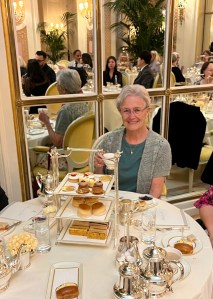
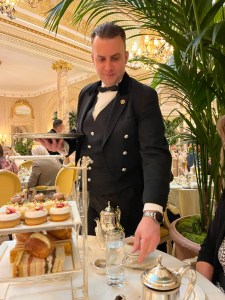
And a few fun shots of Jolly Ole England – Afternoon Tea at the Ritz with lovely piano music, 150 Picadilly, London.


Buckingham Palace and Big Ben


The Most Fun Thing About Writing

By Linda O. Johnson

Hey, our blog is still here, and I couldn’t be more delighted. I was pondering what to write about now, and came up with what I hope is a fun topic: my thoughts about the most fun thing about writing.

Do I know yet? No! But I’ve gotten a lot of ideas. And I’ve been writing for a long time.

My thoughts? First, even if I set a story somewhere real, near me, the fun thing about it is figuring out what can be different, and what my protagonist can learn about it—and tell me! For one thing, since most of what I write are mysteries and romantic suspense, people can get hurt or even killed in those environments I find fairly safe in real life. So where’s a good place to murder someone where the mystery can be resolved well and quickly enough in a story? A real place? A fictional place?

Even more important is those characters, especially my protagonists. They’re not me, but they contain some of my characteristics. The character closest to me was in my first mystery series, the Kendra Ballantyne, Pet-Sitter Mysteries. Kendra was a lawyer who lived in the Hollywood Hills with her Cavalier King Charles Spaniel Lexie. At the time I was writing about her, I was a practicing lawyer, and one of my Cavaliers was named Lexie. And yes, I live in the Hollywood Hills.

Other protagonists aren’t quite as close, but still had characteristics I like and admire. The spinoff series from Kendra was the Pet Rescue Mysteries, which of course contained dogs and other animals—and I was volunteering a lot at local rescue organizations when I wrote it. In my Barkery & Biscuits Mysteries, my protagonist owned a bakery for dog treats—and was owned by a dog named Biscuit. In my Superstition Mysteries, my protagonist owned a dog named Pluckie. And currently, in my Alaska Untamed Mysteries under my first pseudonym, Lark O. Jensen, the protagonist, a naturalist, introduces tourists to all sorts of wonderful Alaskan wildlife, including seals and bears and wolves—and yes, she brings her own dog Sasha along on her tour boats.

And in the Harlequin Romantic Suspense stories in the various series I create, yes, dogs are involved. All my stories do contain suspense, whether they’re mysteries or not, and even those I’m asked to write when I can’t always include dogs. And they contain at least a touch of romance, often more.

So… setting is fun. Characters are fun. Killing people vicariously, and not for real, of course,  can be fun. And creating romances can be fun.

Plus, various animals are fun. Dogs are fun.

Hey, for me, maybe the most fun thing about writing involves one of the most fun things in my life: dogs.

So what’s the most fun thing about writing for you?

Photo by Austin Kirk on Unsplash