A DILEMMA OF BOOKS… 

by Rosemary Lord

There I was, puffing and panting in the 90-degree sun, lugging box after box of books out to the car….

But I’m getting ahead of myself.

I have always felt that one can tell a dedicated writer by the books with which they surround themselves. Although I know that nowadays, if you’re technically and digitally proficient, you can do and find everything on your computer or even on your phone.

But it’s not the same. Not for real writers! You need to READ books to be able to WRITE books. Real, actual books, that is – with carefully designed crisp paper pages, glued and sewn together – or however they do the spines now. Enticingly designed covers, beautifully matched colors, and perfect fonts. There’s a lot of work that goes into every book.

Many of those who dedicate themselves to the magical world of writing have fascinating, eclectic book collections.

I recently culled 432 books from my overwhelming assortment. And I still have many left!

How did it ever come to this?

In my defense, as a book lover, I began with just a few small (only 6”x4”) volumes I brought with me when I moved here from England: ‘Poetical Works of Tennyson,’ some Edgar Allan Poe tales, Poems of Elizabeth Barrett Browning, and a worn 1915 printing of Gene Stratton Porter’s Girl of the Limberlost, that I knew would not take up much space.

Over the years of attending so many writers’ conferences all over North America, I kept those heavy bags filled with the new books publishers gave us.

To support my fellow writers, I loyally bought the latest book by the authors I knew.

I’m a sucker for an appealing jacket cover, too – especially when Amazon made special offers so affordable, as a way to discover new writers.

I still buy books for my writing research. I have a great collection of books on Old Hollywood. And then there was my late husband, Rick’s, assortment of books on motor racing, motorbikes, animals, snakes (don’t ask!), music, finances, and the Stock Market.

And so my library grew.

But my small apartment didn’t.

I had seven tall bookcases crammed, with more books stacked on the floor in front of them.

Time for a serious cull.

I kept books that fellow writers had inscribed to me. I boxed up Rick’s books. I found several duplicate copies of paperback mysteries and ‘cozies.’  Out they go.

Of course, I kept my rare and special Hollywood books. But I was strong in my intent.

No, it’s not: ‘make room for more books,’ I tell myself!

But then, knee deep in book piles, I realized they had to go somewhere.  Most of the charity shops where I donate clothes or household items are not taking any more books.

Hmmm. Where?…

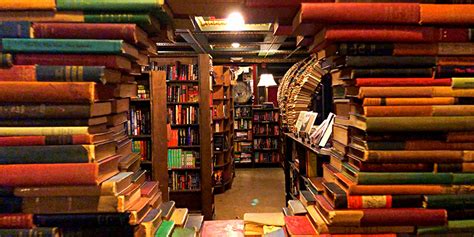
Then I remembered The Last Bookstore. Years ago, my brother and I had schlepped half a dozen bags of books there to donate. It is downtown Los Angeles, at 453 Spring Street in an old bank building with marble columns and vaults filled with vintage books.  Owner Josh Spenser has created an intriguing world of not just shelves and stacks of books, but enthralling shapes – a tunnel of books, higgledy-piggledy towers of hardbacks and paperbacks, with comfy armchairs and leather couches to sit and gaze and get inspired by the fantastical displays of books, vinyl records, gargoyles, and dolls.

The Last Bookstore has a free community service called Re-Book It: to ensure that books don’t end up in landfills. They will pick up your unwanted books and find new homes for them, dispersing books to schools, charities, hospitals, and retirement homes. Currently, they’re focusing on getting books into the hands of children and families who lost homes in the L.A. fires.

“Hooray!” I had found such a great solution. Then came the fun task of packing the books in boxes and bags, counting and labeling them. Of course, lots of lifting is involved, squatting and bending, too. Quite tough on the knees and the back! But I reminded myself that I was getting a free workout! And lots of empty apartment space.

The 432 books packed into 24 boxes and bags were amassed by the front door, ready for collection. Then, I learned that Re-Book It was short-staffed and could not complete the pick-up that day.

“Why don’t you bring it to our store on Lankersham?”

“Okay,” I foolishly agreed, anxious to complete this project.

It was about 8 boxes in that I began to regret my fervor of “I can do this!”  The books were VERY heavy to carry across the patio, to the front lobby, and then outside to my car. What was I thinking?  And it was the hottest day of the year – of course. Over 90 degrees.

I had to stop every so often, sit down with a large glass of water, and cool off in front of a fan.

But once my car was overstuffed with boxes and bags of books, I made it safely to the Valley location of The Last Bookstore on Lankersham Boulevard, just past Universal Studios.

Just as the Downtown store was a magical, mystical store – so is this one. Odd, beautiful old doors, parts of wonderful, vintage walls surrounded by an eclectic mix of books and, well, just fascinating ‘things’ to look at, curios to examine. And, of course, books: from best sellers to first editions. A book-lover’s treasure hunt. Had I not been so exhausted carrying all those books earlier, I could have easily spent an hour or three browsing there.

I was very happy that my books were going to such a lovely new home. And I returned to my apartment happy I had made more space, promising myself not to fill it back up with more books. I wonder how long that promise will last!

So, this is where we came in. My exhausting but therapeutic adventures in book culling ….

Have you ever tried culling your book collections?

…………………….

A LOOK INSIDE IN-PERSON SELLING

By Bonnie Schroeder.

When I moved from California to Idaho in 2018, I also transitioned to being a self-published author. Until then, I’d had the benefit of a wonderful publisher, Champlain Avenue Books, behind me.

Alas, they closed their doors soon after my relocation, and I went solo. I’d done a handful of in-person selling events in SoCal, but I confess to being a lazy self-marketer. In SoCal my experience with those events mostly took place in libraries, and all I had to do was show up with my books and hope readers would buy them.

In Idaho, however, with three self-published books on my resumé, I realized I needed to be more proactive in getting those books into readers’ hands. One way to sell books in person is through trade shows known variously as craft fairs, book festivals, holiday bazaars, and a few other names (some of which I shall not print here.)

There are many book fairs in libraries here in Idaho, but there are also a lot of general craft fairs, big and small, all over—in parks, high schools, even specialty grocery stores. And many of those events take place outdoors—which, in Idaho, means contending with weather extremes. I’ve done festivals where I had to pull my luggage cart full of books through snow, and others in a field where the daytime temperatures grazed 108 degrees.

Weather conditions are only part of the fun. I also learned that I needed to supply my own “equipment”—i.e. tables, chairs, signs, decorations, and, in summer, canopies, shade walls, and a battery-powered fan. Another essential is a means of transporting my supplies—a sturdy folding hand truck for use on pavement, and a collapsible fabric wagon for other terrain.

I had the good fortune of connecting with two other “local authors,” Laura Jenski and Julie Howard who are pros at this, and they generously let me learn from them and shared tables and chairs with me as I began selling my books in person.

Laura has often recruited her husband to help transport tables and chairs to some events. She and Julie have also provided canopies for many events, and even when I brought the canopy, they assembled it while I parked my car.

I’ve done a few solo events as well, and I finally figured out I needed a checklist of supplies to bring, rather than searching through my memory every time:

  • Water (!) and food (!!)
  • Credit card reader (e.g., Square)
  • A supply of small bills to make change
  • Pens to sign books
  • Price list
  • Bookmarks, postcards, or other promotional material
  • The aforementioned decorations and/or a bowl of candy to lure potential buyers to our “booth.”
  • And oh yes—in Idaho (as in many states, including California,) one must secure a sellers’ permit to track, report, and pay sales tax to the state. Ironically, I learned that Idaho’s sales tax process is way more complicated than California’s.
  • Following Laura’s and Julie’s lead, I also realized I needed a large-ish poster with a picture of me and my books. My website and book designer Paula Johnson created the artwork, and my local Staples made the sign. I confess to feeling a surge of legitimacy at the result.

You know that saying, “It takes a village ….?” It is so true! In addition to help from the folks mentioned above, I send a thank-you to Heather Ames, a powerhouse on the festival circuit in Oregon. She sends me critiques of my table layouts, along with encouragement and examples, and I emulate her as much as I can without committing outright piracy.

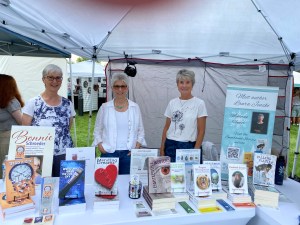
This photo shows my comrades Laura and Julie with me at one of our events, and it truly is crucial to have a support network at these things. Some writers, me included, are not especially outgoing, and it’s a challenge to attract and engage with visitors at the festivals.

Some are interested and kind, while others are dismissive—masters at avoiding eye contact. Now and then, however, a visitor will show up who bought one of our books at a previous event and liked it well enough to seek out the author and buy more. This truly makes our day when it happens.

What the photo doesn’t show is all the hours, days, weeks, even months of prep work involved in getting us to this smiling display—things like replenishing our inventory, posting on social media, packing supplies, hauling boxes of those books to the venue, and showing up sometimes before sunrise to set up the tables and arrange the display.

There are still festivals happening in Idaho, but I’m done for the year—saving my energy for the spring. I just registered for a book fair at a nearby library in April. Library events are the best, because you have a built-in audience, and this one is no exception.

So all you authors out there, whether traditionally or indie published, I hope you get a few ideas from this post. Get out and show the world your books, because—especially for indie authors—that’s an important way to grow your readership. Best of luck to you all.

I GOTTA NEW GIG!

by ROSEMARY LORD

It’s about twenty years since I was hired to write my first non-fiction book, Los Angeles Then and Now. Hollywood Then and Now followed. It was for a small London publisher. Both books were a huge success and on the Best Sellers’ list. Great for the publishers; however, as I was a writer-for-hire and they had the copyright on all the Then and Now books, I don’t receive royalties. But it was a tremendous boost for my writing career and a good ‘calling card.’ I did a lot of publicity and promotion, so I learned a lot on the publishers’ dime.

It got my name out there.

Over the years, after the first flush of success, I did the occasional book signing and promotional appearance. I continued to lecture on the history of Hollywood and attend charity events, so it kept my name out there. These books really have ‘legs’! Like the Energizer Bunny, they go on and on. Every so often, the publishers would ask me to write updates and additions for the new editions.

But then, a couple of weeks ago, I received an email from Harper Collins, one of the ‘Big Five’ publishers in London. They had bought Pavilion Publishing and bought my Then and Now books.  “Would you be interested,” they wrote, “in writing a completely new updated version of Los Angeles Then and Now?”

Let me think… um…er….   “Yes!” I cooly responded: “I’ll move my schedule around.”

And so, my fiction writing and novels will be cast aside for a while as I focus on this enormous task. I won’t totally abandon them, but for a while, they will take a back seat.

The original contract was quite daunting: selecting 77 sites representing Los Angeles. Because it is such a sprawling city in search of an identity, I started downtown at its origins in Olvera Street, then drew a line going west to the beach at Malibu, illuminating sites along the way. That was (and is) my plot line. The money was not great, but the opportunity was.

Over the next year, I will be updating the existing 77 sites throughout Los Angeles, giving a fresh view of the history. I will be changing about 15 of them, removing sites that may not be of such great interest and adding those I consider more fascinating. I get to select new sites with greater appeal for today’s readers. As well as researching new, previously hidden facts to give each history a new look, I will be sourcing archive photos and new, updated photos of all the sites. I will also take a new approach to writing the main history of Los Angeles that comes at the front of the book.

There is so much history to write about, examining different aspects of what went before, and the myriad of characters and how they built up this amazing city from scrubland in the desert with no water and very few people. The main challenge is to condense it all, keeping the most salient points. The publishers have very strict word counts on every page.

It’s very easy for me to wax lyrical about each place’s history and the colorful individuals involved, and if I’m not careful, I can write on forever. The skill with this assignment is to give “Just the facts, ma’am,” but keep it interesting.

And I really do have to rearrange my life to focus on this job. I always seem to have several writing things on the go at once, with research books, clippings, and files everywhere – as well as the Woman’s Club work that still lingers. My workspace is always busy. But this task is large, so everything else must be put away for now.

I’m Yack Shaving again! (That’s when you get sidetracked and taken on a circuitous route, with multiple small tasks that need to be completed before you can accomplish your main, original goal.)

I have a couple of mesh-sided carts on wheels that hold hanging files that I use for specific projects. I’ve cleaned these out of copious miscellaneous papers, ready for the 77 separate new files for each of the Los Angeles sites, plus the main history and archive photographs.

I’m going through boxes of old research files, culling as needed, making room for new information. I can’t wait to get back into investigating at some of the old libraries and hidden private collections to discover newly unearthed tidbits of history that so often get overlooked. Research is where I can spend far too much distracted time.

Many of my handwritten notes have faded, and as I struggle to read the pencil-scribbled file tags, I realize I need to dig out my label maker – and borrow a five-year-old to show me how to use it!

Lately, I’m getting really good at organizing my files. I recall the late Professor Randy Pausch complaining that his wife thought he was way too compulsive, filing everything alphabetically and neatly. “Because,” he decided, “that was so much better than searching for something in a panic, saying, “I know it was blue, and I was eating something when I had it.”

And of course, I’ll be driving all over Los Angeles to check on old and new sites, taking copious photographs and notes along the way. So, I have to fit that into my schedule.

But now, I have a stack of new notepads and pencils, a pencil sharpener and erasers, my Thesaurus, and OED at the ready. A clean, empty desk awaits.

I’m ready for my next literary adventure.…

How do you prepare for your next big writing project?

A New & Short Mystery!

by Guest Writer Alice Zogg

Hello friends, readers, and fellow authors,

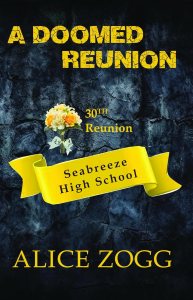
I penned another stand-alone mystery.   A DOOMED REUNION is fresh off the press and available in hardcover, paperback, and e-book editions.

This one is short (170 pages).  Either I have learned to get my point across with fewer words or have become lazy. (haha)

As to the location, I invented a fictional town called Seabreeze and placed it along the California coastline between Del Mar and La Jolla.

People with old school ties attend a 30th high school reunion and are shocked to hear one of the attendees say he knows who murdered a classmate years earlier. That knowledge gets him killed.

Can Detective Scharfkopf with the San Diego County Sheriff’s Department piece together what happened back then to catch the person who has lived with this secret all these years… before another body is added to the list?

Happy reading,

www.alicezogg.com

A Doomed Reunion on Amazon

Alice Zogg was born and raised in Switzerland. She met her husband, a fellow Swiss, in New York City, and the two made their home in the United States. The family relocated to Southern California in 1967, where they have resided. She is an avid traveler and plays racquetball and golf. She has written over 20 books. 

###

BOOK REVIEW – I read Alice Zogg’s new book. Yes, it is short, but the crime, plotting, and investigation are complete.  You don’t feel cheated at all.  The murder happens after a high school class reunion when one person blatantly claims to know the murderer of an unpopular student 30 years previously.  Does he?  Someone believes him and, in unusual circumstances “offs” the guy.  The detective is charged with solving not one but two murders.  The questioning, deduction, and final moments of revelation are well-plotted and written. I enjoyed reading it!  ~~~ Jackie Houchin


Why I Read Short and Long

by Jackie Houchin

I read a lot of print books and listen to a great many audiobooks each year. I do not read anthologies or collections of short stories unless they contain several stories by authors that have a track record I enjoy.

Recently, I have been “reading” (I will use that word whether I use my eyes or ears) a good many short prequels to book series. If the book turns out to be so-so, I haven’t wasted much time. If I like it, I’ll consider the series. Also, more authors are writing their stories as novellas, which I enjoy too.  For me “shorter is better.”

Except!

Except when I read authors that I KNOW will come through with an outstanding story. Then I will read longer. Sometimes much longer.  I’m currently reading CITY SPIES by James Ponti. It has 378 print pages and I LOVE it. I eat it up. I can’t get enough, even when my eyes are stinging. I’m already looking for the next in the series. (Okay, yes, it’s geared to 10-12 year-olds, but I’m a kid at heart, and it really IS written well.)

In general, for LONG reading, I like fascinating, immersive, tightly-written books, with unique plots and hooks and plenty of jaw-dropping moments. And the characters better resonate with me.  I enjoy relevant back-story told well and within the plot.  In mysteries, I don’t want to easily figure out who is the villain or how he did the crime. I want to follow the author step by cleverly contrived step to the WOW ending, which, on second thought, makes perfect sense. I want a story that stays with me for a while.

Charles Todd is one of those authors. His Ian Rutledge historical mysteries are top notch. Here are my reviews of two of those books. You can see why I love them and will READ LONG.

A Pale Horse

A Deadly Loyalty

Historical Novels and Mysteries need to be believable and take me right to that setting and hold me there. If they do, I’ll READ LONG.  Here are three I reviewed that did that.

The Ghost Map by Steven Johnson

The Girl in The Painting by Tea Cooper

A Brilliant Night of Stars and Ice by Rebecca Connolly

In a LONG READ novel, I want to be carried along with astonishing characters, vivid settings, and heart-wrenching but hopeful story telling. Here are two I loved.

The Bronte Plot by Katherine Reay

Light on Bone by Kathryn Lasky

Here’s one dual-time plot that is outstanding and innovative and that I gladly READ VERY LONG.

When The Day Comes by Gabrielle Meyer

And I could name more.  I totally enjoy reading Charles Martin (long & intense), Connie Berry (intricate plots), Katie Gayle (addictive), A.J. Pearce (Historical), Spencer Quinn (Humor, a dog’s POV), and my all-time favorite Mary Stewart, which I read and listen to over and over.

All these books are well written and enjoyable. If these authors keep on writing, and others like them, I think there is hope for readers. (At least in my life time.)

NOTE: I hope you don’t mind the blatant self-promoting of my Words and Reviews blog!

..

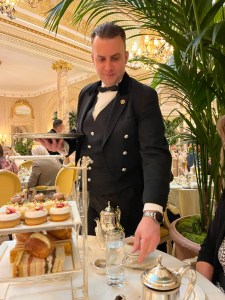
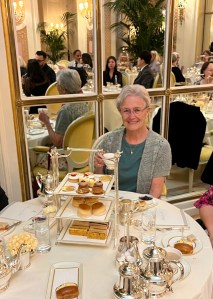
And a few fun shots of Jolly Ole England – Afternoon Tea at the Ritz with lovely piano music, 150 Picadilly, London.


Buckingham Palace and Big Ben


Book Choices and Choice Books

by Linda O. Johnston

A couple of weeks ago, Hannah Dennison wrote a post here about “So Many Books! So Little Time!” I certainly agree with that concept. I’m always writing, of course, and I’m also always reading. Like many writers, and readers, I collect a lot of books.

How do I decide which to buy? Well, I’ve been pondering that, and the results don’t surprise me. And I suspect that’s true with a lot of others who love to read.

First, I write romantic suspense stories these days for Harlequin Romantic Suspense, as well as mysteries for Crooked Lane. Guess what. Among the books I read the most are Harlequin Romantic Suspense books, and mysteries. For one thing, I am writing books for the vast and long-lasting Colton stories for HRS. I have one being published in December that’s the eleventh in the year-long Coltons of New York mini-series. It should come as no surprise, therefore, that I’ve been reading the earlier ones in that series this year. And I’ve done the same thing with the other Colton series I’ve written for in previous years.

I also have my own HRS miniseries about a Shelter of Secrets, where a very special animal shelter also shelters people in trouble. I do read other HRS books, especially those that also contain dogs. And yes, I read other Harlequin books, too, many of which contain dogs.

And that’s something else. I’m a dog nut, so I’ll also pick up a lot of books that are stories including dogs, even if they’re not romantic suspense or mysteries.

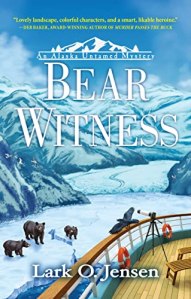
My mystery series for Crooked Lane is the Alaska Untamed series, under my first pseudonym, Lark O. Jensen. It has wildlife, and dogs, in it. I like to read many kinds of mysteries, and those that take place in Alaska also intrigue me, especially if they have dogs. And other stories in Alaska also get my attention. Plus other mysteries…primarily with dogs.

Anyway, you get the idea. I’ve got some particular interests and love to read stories containing those subjects. Do I also read other books, including best sellers? Sure, especially if they’re recommended by friends. But I have to figure out my time first.

How about you? How do you select the kinds of stories you read?

What’s On YOUR Bookshelf?

by Jill amadio

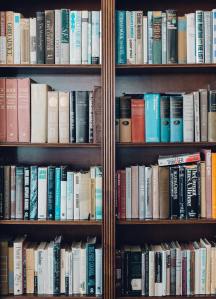
Books, books, books.  Does the possession of them denote one’s mental state, intelligence, or expertise? I have often been forced to come to some conclusion when I have watched pundits and talking heads expound on television, especially during Zoom interviews during the pandemic. Invariably they place themselves in a chair in front a bulging bookcase. Who tells them to do this?

The bookshelves appear to be mostly Ikea white and perhaps hastily purchased when asked to appear on TV from home. Do these people rush out to second-hand bookstores to load up books with which to fill the shelves? Leading, of course, to viewers wanting to know, “What are you reading?”

One pundit had his books arranged by spine color and seemed particularly attracted to blue with three shelves of them. Another, a doctor, had a stethoscope dangling from the top shelf. A female psychiatrist had a full shelf of Very Large Tomes behind her head, and a couple of attorneys stood in front of their office law libraries while being interviewed. I haven’t seen a chef interviewed unless he was in the kitchen and I imagine he’d never sink so low as to stand in front of other chefs’ cookbooks. The exception, of course, would be his own recipe book but usually cooks teach by showing rather than telling; the same advice impressed upon authors.

Writers, of course, have more sense. They place their books full frontal on the shelf unless they have only a single book so far. A handful of years ago I went to the Barnes and Noble bookstore in the South Bay where my friend, Christopher J. Lynch, was signing his biography of “Leave It to Beaver” star, Ken Osmond. The store manager had commandeered an entire wall of bookshelves, and filled them with copies of the books facing out. It was a stunning display for an author.

Many writers I know run out of bookshelf space and begin piling books on the floor or finding nooks and crannies to fill. One client for whom I ghostwrote a biography kept a small shelf of paperbacks in her bathroom as many people do. I spotted another who had a penchant for refusing to return library books and not even bothering to removing their old category tags.

Sol Stein, of Stein and Day publishing, invited me to lunch at his baronial estate on the Hudson River in New York. He led me through four rooms completely occupied by books, piled precariously halfway up the walls and all over the floor. Most of them were not new editions from his company but appeared to be his lust for reading. His book, “Stein on Writing” is still my bible when I get stuck trying to figure out plot points and character.

Since my move to Connecticut I haven’t been invited into anyone’s home yet as people here tend to meet at cafes, parks, or the beach. Just as well. We really shouldn’t judge a person by their books.  I have brought many of my books with me and I will cling to them forever, especially the how-to-murder manuals and other crime research books. My favorites include “The Secret Service” which inexplicably details their crime-fighting methods; how the witness protection program works, and their training sessions. Another is “The Writer’s Complete Crime reference Book,” and a well-thumbed edition of an 11-lb. book describing just about every opera ever composed, debuted, and by whom sung.

It’s no secret that many authors find titles from the classics including poetry on their bookshelves. Shakespeare’s works are a prime target for this kind of research. I used my extremely heavy “The Oxford Dictionary of Quotations,” published in 1953, to find the title for my latest book, “In Terror’s Deadly Clasp,” within a poem by John Donne.

Although Google and other online search engines have replaced the need for consulting hard copies and trips to the library, reading a print book for ideas can often lead to more ideas if you happen to turn to the wrong page and discover a piece of information you can use in your writing. As I grow older I find myself more frequently reading “A Thematic Dictionary.” It is a ‘discriptionary’ with cross-references three different ways for those of us who know what something is but not what it is called, although it may be just on the tip of the tongue. The section on lungs is fascinating for its explanation of devil’s grip and goblet cells.

Perhaps paying a visit to your own bookshelves will reveal a treasure you had forgotten. I wish I had bought a book I found at an airport gift shop in Jakarta. It was bound in beautiful red leather and titled “Sukarno.” I opened it up and every page was blank. I guess the publisher wanted to titillate buyers before the Indonesian leader passed away and there would be no repercussions about his controversial reign while he still lived.

Bookshelves and their contents are food for thought. What is on yours?

.

Photo by Dakota Corbin on Unsplash
Photo by Florencia Viadana on Unsplash

Hey, I’ve Been There!!

by Jackie Houchin

Hi all. Are you ready for a tome? (I don’t mind if you skim this post!) If you hate reading about vacation itineraries, I hope you won’t cringe as you begin this. But it really IS about books & reading.

I’m bouncing off my fellow Writer in Residence friend, Gayle Bartos-Pool who wrote that wonderful post last week about how reading fired and inspired her own successful writing history. Her last words “Read On!” were terrific.

I am a prolific reader. I LOVE to read or listen to books. A while back, I wrote about The 52 Bookclub Reading Challenge that I’ve been in for three years now. Each of the 52 books must match a book category that the moderators come up with each year. So far, I’ve met the challenges. For this year I have but 14 of the 52 yet to read, and it’s just June. 52 bookclub page

However, I’ve read many, many other books in 2022. And when I say read, I include print books, eBooks, and audiobooks. Non-fiction, novels, inspirational books, study books, and children’s books fill in the gaps around my favorite genre – mystery.

So, when my husband and I went on a 23-day cruise in the Mediterranean and Aegean Seas, I decided to read a book set in every country we visited, including the ship itself, and a jet plane.  What fun!  I’ve read 13 and have about 6 left to read.
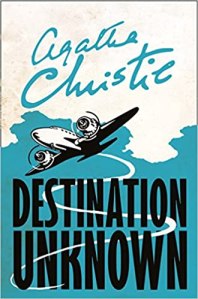
 I began this quest waiting at LAX for the flight that would take us to Portugal to meet our ship (with a stop in Montreal). I started with Agatha Christie’s DESTINATION UNKNOWN. (We knew where we were headed, but hey, you never know – as the protagonist in that book soon found out!)

We spent so little time in Lisbon, Portugal, that I haven’t considered a book set there, but I just recently came across 300 DAYS IN THE SUN by Deborah Lawrenson or A SMALL DEATH IN LISBON by Robert Wilson. Not sure I will get to them. They are a bit long. But who knows, maybe.

 As for that 4-hour stop in Montreal, I chose A DISAPPEARANCE AT THE BONNE NUIT HOTEL by Dominique Daoust, about a young female newspaper reporter who goes to Montreal in search of that “big story.”  It’s the first book of a trilogy.

(This is yet to be read.)
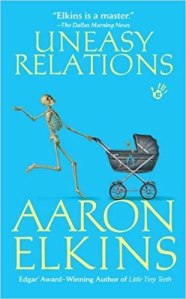
Our ship docked in five ports in Spain, with a stop at Gibraltar (a British Overseas Territory) after the first. I read Aaron Elkins, UNEASY RELATIONS, set in and on that famous rock. Wow, what fun to follow Gideon Oliver, the bone detective, up the cable car to the top for a really scary view, and then inside to St. Michael’s cave where stalactites come together to form of figure of an angel. There is a lecture hall beside it and Gideon spoke there!  It totally makes a difference reading a book when you have BEEN THERE!

 I read A FATALITY IN SPAIN by Blake Pierce, which is set in Barcelona (also in Pamplona). Oh, yes, I definitely remember that weird Antoni Gaudi modernistic church in town! And the dancing “giants” with the wooden heads!  Reading the story…I was there too, hearing, seeing, smelling. (Although we chose to wear a mask there because of the packed crowds in the streets.)
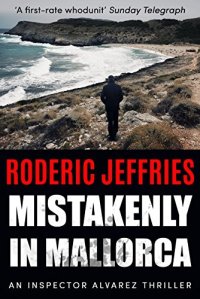
I am currently reading MISTAKENLY IN MALLORCA by Roderic Jeffries, an Inspector Alvarez mystery. It’s number one of 37! (And perhaps I’ll also read HOTEL MALLORCA; AN ELAINE PEARSON MYSTERY by Susan Linden Emde, if I finish the rest in good time.  It looks very interesting.

We also docked in Seville, Malaga and Cartagena, Spain, but I’ll maybe be happy with the two books I have already for that country.

By the way, I am also reviewing each book I read on my new and very simple WordPress blog – Words and Reviews blog.
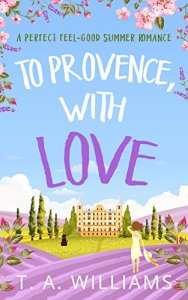
 At Marseilles, France, we took a bus an hour inland to Avignon, France.  Since high school French classes, I’ve always dreamed of “dancing on the Bridge of Avignon” as the children’s song goes. Finally, after 50 years – I did it!   To remember that beautiful time in Provence, with everything lavender, I read, TO PROVENCE, WITH LOVE by T.A. Williams. More of a light romance than mystery, the protagonist is a writer and teacher, who came from England to write the biography of an elderly Hollywood film star. (Rosemary Lord, you would like this one!)

 ONE SUMMER IN MONTE CARLO by Jennifer Bohnet is a sort-of mystery and again a light romance, set in the Principality of Monaco.  It featured a lot of action and information about the F-1 Auto Racing circuit. While we were there, they indeed were setting up grandstands, pitstops, and pilon curve barriers for the race that would happen two weeks after we left.
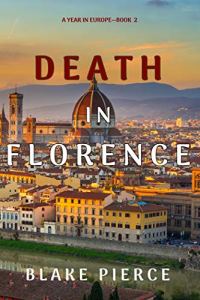
 I was able to take my husband to Florence, Italy – a city I’d visited on my own three times before. Sadly, we were not able to go out into Tuscany for a visit to a vineyard and chateau. (Excursion cancelled.) But I was able to show him around one of my favorite cities, eat gelato, have spaghetti Bolognaise at my favorite café.  (Sigh) I’ve chosen A DEATH IN FLORENCE by Blake Pierce, or DREAMING OF FLORENCE by T.A. Williams.  I’ve read books by both of these authors (A Fatality, and To Provence), so I’m hoping for a different one.  Any Suggestions?

 I read AUNTIE POLDI AND THE SICILIAN LIONS by Mario Giordano, while in Sicily, and we actually took a private taxi to Taormino because of that book. We didn’t have an excursion booked there, and, well, why not?  It only cost E100.00 for the 30-minute trip each way, and a patient driver while we toured the town for a couple hours.  It made the book more real, although we did NOT visit Palermo, where the “mob” lived in the book. Hahaha.
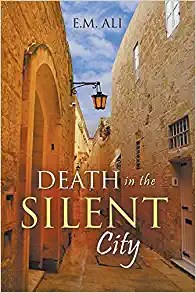
 I have yet to begin DEATH IN THE SILENT CITY by E.M. Ali, but I can’t wait.  I loved Malta from the moment we first docked.  And indeed, the old city has red-stone walls protecting houses in the narrow winding streets just like on the cover. We entered one of those bolted doors with our tour guide, and into a beautiful studio where he was restoring stained glass windows they’d found buried after World War II. I always thought Malta was a part of Italy, but it is a country on its own.
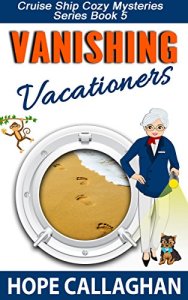
 We had only two “at sea” days between distant ports, so I read two cruise ship mysteries. VANISHING VACATIONERS by Hope Callaghan and PINEAPPLE CRUISE by Amy Vansant.

Both settings in staterooms, dining rooms, decks, lounges, pool, etc., were so very familiar as I roamed our ship – the Nautilus, er, I mean, Oceania’s Nautica.

 Ah, Greece! I finally got to visit the setting of my all-time favorite book by Mary Stewart – THIS ROUGH MAGIC.  It is set on the Isle of Corfu in the beautiful Aegean Sea.  A romantic-suspense mystery that I first read when I was about 13 or 14. I’m sure I’ve reread it a dozen or more times since. I love it.  And now, I’ve seen those lovely clear-water coves and sandy beaches, the castle-like homes way up on the steep mountainside, the winding dirt roads suitable only for a motorbike, the enchanting Corfu Town and the harbor. (sighhh)

I read A CRUISE TO DIE FOR by Charlotte & Aaron Elkins, an art-forgery mystery set on a fantastic mega-yacht, on Corfu, and in Athens.

It reminded me of that sleek, black super-sailing yacht, The Maltese Falcon, docked near our ship in Corfu harbor. Oh, my, what an uber-expensive 180-foot beauty!  Seriously, “Google” this super-yacht by name and you will be aghast!

 I just finished the most fun, interesting, and un-put-downable audio book that I have listened to in a long time. SACRED GAMES by Gary Corby is set in ancient Olympia, Greece in 460 BC. The still-active archeological dig that we visited and loved is portrayed so clearly in this book (the author must also have visited the old Olympic Games site) that I was sharing bits of it here and there with my husband. “Oh, yeah! I remember that!” he would say.  The book is a murder mystery that takes place during the games, and a young Athenian man is the investigator. He has 4 days to find the murderer before the Games end and his best friend is executed. The action, intrigue, fast pace, brutality of the sports, and the setting, well, it was like walking there in person again.

Have you ever done this?  I mean read your favorite genre set in the places you have visited, be they in another part of the world, or nearby?  It’s amazing. It makes reading so much richer. Can you think of a book right now that is set in the last place you vacationed or visited?  Think hard, then go buy or rent it and READ IT.

I can’t believe I actually found a book – another light romance – set in Croatia (and part of it actually in Split, where we visited)!  CLUELESS IN CROATIA by Joy Skye was a fun book, and the scenes in the harbor, in the city of Split, even a mention of the cruise ships there was fun.

After Croatia we cruised across the Aegean Sea to the East side of Italy for a 1-hour long trip into Ravenna to see the glorious mosaics there. It was an eyes and mouth open wide to see all that fine work. But alas, I’ve found no mystery/ romance books set in this smallish, inland city, or any with Italian mosaics. Do YOU know of any?

Our last port of call was again across the Aegean, in Koper, Slovenia. As I said, I haven’t found a book set in Slovenia  yet. It was a beautiful town as we strolled through it. We bought a wood craft that I hope my hubby can duplicate for gifts for Christmas. We ate gelato, sat by an unusual fountain that reminded me of a dandelion puff! And we strolled by the small sunshine-bathed beach. I bought a little cup at a souvenier shop with the LOVE emphasized in the country’s name sLOVEnia.

Neither have I founda mystery set in Trieste, Italy where we disembarked.  At Trieste when we got off the ship with our luggage, VERY early in the morning, the Nautica was surrounded in the water by shimmering, semi-transparent jelly fish!  It was amazing!

 I hope to read A GIRL FROM VENICE by Siobhan Daiko, or maybe Jennifer S. Alderson’s DEATH BY GONDOLA, or maybe even one of Donna Leon’s more recent Commissario Brunetti mysteries, set in the floating city. We were not able to visit Venice – I really cried about that – but itineraries change and we make do. We did bus to Venice from Trieste and fly out of the Marco Polo Airport to Heathrow on our way home.

 For the UK, I read Victoria Tait’s book two in her new Dotty Sayers antiques mysteries VALUED FOR MURDER set in the CotswoldsAnd I read another UK book since we had that glitch in the British Airways jet – did you hear about that?

An hour out from London to LAX, the plane abruptly turned around, dumped fuel, and hi-tailed it back to Heathrow. It seems the captain was very ill with extreme lower-abdominal pain (appendicitis?) and had to return. Back at Heathrow, we all waited patiently till the paramedics took him off the plane.

THEN – after hours and hours we were bussed to a hotel for a free over-night stay in London, free dinner and breakfast, and then back to Heathrow for another try at LAX the next morning. Because of the additional day in the UK, I read THE CURIOUS CASE OF THE COPPER CORPSE, a Flavia de Luce novella by Alan Bradley set in England.
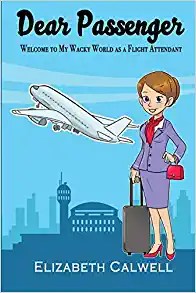
And finally, I will read DEAR PASSENGER: WELCOME TO MY WACKY WORLD AS A FLIGHT ATTENDANT by Elizabeth Calwell. It’s a very short, humorous little book and will top off my vacation reading adventure.

Okay, this is a really long post I know, and if you skimmed or stopped reading a quarter of the way down, that’s fine.  But, tell me, have you ever done what I did? Not the cruise, but read books set in places you’ve traveled (either before or right after).  Did it make the books better? More fun to read? Can you do it this summer?

And let me know if you know of a mystery/adventure/light romance book set in Ravenna, Italy (or mosaics), Slovenia, or Trieste, Italy!

What Makes a Good Mystery Series for the Author and the Reader?

While Jackie Houchin is on vacation (in Spain or France now) we have another Guest Author. (Thank-you, Elaine!)  Jackie hopes to return with her next scheduled post of June 8, 2022. 

by Elaine L.  Orr

Like most writers, I put words on paper because if they don’t get out that way I risk screaming on a street corner. I get those words into print because I think others would enjoy them.

When readers like the characters, they may clamor for more. Even if they don’t initially, we think they will. I consider several things when I start a new mystery series.

  • Is the setting or main topic interesting enough to keep exploring? My first series (the now twelve-book Jolie Gentil series) is set at the Jersey shore because I love small, east coast beach towns.
  • Can I connect to the characters enough that readers can too? This doesn’t mean does an author like the characters. Some of the most relatable ones are the evil ones.
  • Is the life of the main character part of a profession or hobby that makes discovering a lot of big problems (or bodies) realistic? Jolie is a real estate appraiser and runs a food pantry, both things that bring her into contact with many people in varied settings.
  • Is there a plan to have the characters evolve over time? If lead characters have the same strength and foibles in every book, they become predictable. That sameness can lead to reader (and writer) boredom.
  • Is the plan to write a certain number of books, culminating in a big event or life transition? Or can stories continue as long as the author has ideas?

I’ve used the Jolie Gentil Series as the example, so I’ll do it one more time. I envisioned three books, with the third being called Justice for Scoobie, a childhood friend she reconnects with as an adult. Wrong. He’s the favorite character. Couldn’t bump him off and have Jolie solve that crime!


My primary hobby is researching family history, a natural one seeing that I like U.S. history and finding my families’ links to it. Why did I never make that an important focus of a series? Beats me. It is now.

The Family History Mystery Series has the fourth book underway. And that tells me something. My other two series (River’s Edge and Logland) have three books each. I may start fourth books, but why not jump into them immediately after the third?

Did I not think through the first four questions above? I did, and I have more ideas. What was missing? Passion. Hard to define, but it’s another key component of writing. You have to REALLY want those characters’ lives to continue if they appear in a series.

Have you noticed I didn’t use the word plot once in this piece? All good stories need more than a beginning, middle and end. They need a compelling story and conflict, which doesn’t necessarily mean action. In mysteries, there are a myriad of criteria. For example, if the villain pops up at the end with very little role or foreshadowing, reviews may not be kind.

As in all books, plot matters in a series. But the characters (and their evolution) matter most. Main and even ancillary characters need to contribute to the story and have a clear purpose.

Reader reactions matter, but they can’t determine how your characters develop. They can, however, inform what you do after book one. Take them seriously, but don’t make them your guide.

Finally, enjoy writing the series. If you don’t, the series could meet an untimely demise.

###


Elaine L. Orr writes four mystery series, blogs, keeps in touch with lots of family and friends, and tromps cemeteries looking for long-dead ancestors.

To learn more, visit https://www.elaineorr.com.


A Revelation and a Lesson in Reality

Moving from California to Connecticut, coast-to-coast, during the first months of the COVID pandemic resulted in flying out of an airport almost devoid of staff and passengers. I sailed through Security with only two other people in line. In fact, the airport was a ghost town, as was LaGuardia when I reached New York. No coffee shops or stores were open, but, warned ahead of time, I’d brought my own travel cup and, of course, my kindle loaded with eBooks.

It had been 23 years since I had lived in CT and discovered that I knew not a soul any longer except for my son and daughter. I searched the Obituaries pages for news of long-lost friends and called up a newspaper I used to work for but no one had heard of my fellow reporters from so long ago.

Needing to get back into the writing community I joined the New York chapters of Mystery Writers of America, Sisters in Crime, and renewed my Authors Guild membership, but there were no actual meetings scheduled except for Zoom. Like most writers I thrive on in-person contact where we have an opportunity to pick up characteristics of other humans, locales, and other, often small, details we put to use in our books.

I cast around for any group related to writing that met in person and this month, lo and behold, I was told of a women’s book club that was actually meeting at a coffee shop. There was also a memoir group at someone’s home. I’d been to several book clubs in California as their speaker when one of my books was the subject of discussion but what would it be like sitting on the other side of the table? I’d been treated with great respect, gentleness, and politeness each time with questions that were easy to answer and expected the same for this author and his work.

Instead, it was a revelation and a lesson in reality.

The book under discussion was a pretty hefty novel by a renowned author.  I was struck the most by everyone’s intensity, enthusiasm, and deep knowledge of each character and their supposed intent; the proposed meaning of every scene, and talk about the author’s hidden message on almost every page even if there were none. It was fascinating to hear that three members said they were in disagreement with the author because one character didn’t really mean what he said and other members backed her up. Another lady said a character should not have done what she did and offered an alternative to what the author wrote, and yet another lady said two of the characters should never have had the argument they did if only they had done so-and-so.

Wow!

Suggesting rewriting parts of an important classic to suit varying ideas about where the plot and its people should have gone gave me an introspective that I knew was impossible to achieve. There are a couple of classics wherein the author addresses the reader as “dear reader,” in his/her books but I doubt it is a plea for understanding the book’s intent. Authors cannot please everyone, and occasionally cannot please themselves when they re-read a book they wrote years earlier, perhaps, and see one or two parts they’d like to edit.

I enjoyed the back and forth between the ladies who were diplomatic in their critiques despite opposing opinions. One tended to hog the limelight by going on and on until the group leader gently cut her off. I was surprised that 4 or 5 of the 14 in the group remained mute the entire time but the others made up for their silence with well-articulated points of view, albeit wishing the author had written some scenes a bit differently.

As the newcomer I mostly listened and didn’t reveal I was an author.  Maybe it wouldn’t have mattered but I was there to discuss someone else’s work.  Only at the end did I disagree with the general conclusion that the main character had redeemed herself by her ringing endorsement of a couple in love rather than try to split them apart as she had earlier in a book-long fit of jealousy. One member asked if the author wished readers to come to like his previously nasty main character at the end by having her do a complete turn-about of herself.

My take was that she was self-serving by pretending to have changed in order to receive everyone’s good wishes instead of their usual disparaging remarks when she dissed them ad nauseum. She was congratulated and basked in their comments, but to me she was still living up to her me-me-me attitude. My statement was then discussed and agreed to by a slim majority of members, while others said they hadn’t thought of it that way but, yes, it made sense.

Perhaps had the author been at this meeting he would have been flabbergasted at the suggestions for changes, as sensible as they were, and probably even a little daunted at the thought but, all in all, I liked the fact that these book clubbers genuinely loved books and discussing them in depth was important to their lives. I am glad I joined and plan to attend every month.

Should I take a lesson from the discussion? Yes, very much so except I am still writing what I want to write. If a reader finds problems in a book that is fictional the author can be excused. What have been your book club experiences?

###

Jill Amadio is a ghostwriter and cozy mystery writer. This is her new novel.

A leggy wildflower of a girl, teenage Sofia runs away from rural Oregon to big city Portland where she meets and marries a charismatic Saudi Arabian later known as 9/11 hijacker #13. While a slumbering America embraces feng sui and pizza she is present when terrorist sleeper cells are organized in her home, maps of landmark buildings, airports, and bridges are studied, and teams of recruits take flying lessons.

IN TERROR’S DEADLY CLASP, a novel, is based on her true story, providing a rare, chilling glimpse under the radar of the terrorists’ daily lives as they enjoy strip clubs, fast food, and freedom from their religious rules. After warning the FBI of the Arabs’ photo sessions, driving several men into America illegally from Mexico, and other suspicious activities, she goes undercover for U.S. intelligence agencies with deadly consequences.