Teach A Writing Class?

by Jill Amadio

Teach a writing class? I have enough trouble getting myself to work on my next mystery, of which I only have one-third finished. However, I am working full-speed on my new career as a writing coach.

Westport, CT has more than its share of elderly, I was told at the town’s country-club-style senior center where I use their gym. The executive director figured many of the members would love to write their life story if only they knew how.

Interesting, I thought, because I have been looking for a paying job. I’ve written four biographies under my own name and a few as co-author. My greatest contribution to assist another person’s attempt to get their autobiography on the page has been as a ghostwriter. I’ve written 15 for clients. This is the kind of book you can write with no repercussions tied your own fragile persona. No one can take pot shots at you for you putting on the published page swipes or dislike for certain relatives, remembered experiences that showed others as fools, or perhaps an opportunity to lay bare your absolute hatred of your cousin’s prize poodle. I do, however, urge a client’s caution and I try to appeal to their good nature, if they have one.

So, did I want to take up the challenge of teaching some old fogies like myself how to write their memoir? The idea appealed to me. I had never taught anyone anything in my whole life. Well, maybe a few table manners to my kids.   So, yes, I accepted the challenge to help anyone over 65 jot down their life story in presentable and publishable form.

Creating a curriculum was my first worry. What would I teach? The elements of style came immediately to mind. I’d want to know how to structure a book, create my personal style, and how to write down my thoughts and feelings.  I’d want to know how to describe places and people, events and experiences that had made up my world since birth, and was still occupying my psyche both physically and mentally.

For the first class I asked my students to create a Timeline, a list of each year of their life with a significant note, a few words, to mark why it was memorable.

I decided that handouts were important because I had always loved receiving them at writers conferences, so I found Rudy Vallee’s timeline I’d created back in 1989, as well as a champion cowboy’s timeline that chronicled his trek across America from coast to coast on horseback. One handout was a list of 106 descriptive verbs I’ve used for years.

In addition to the Timeline, I also mapped out writing techniques and elements for the following classes. In addition to Structure, Style, and Context I added how to write Characters, Flashbacks, Settings, Cliffhangers, Editing, Beginnings and Endings, Publishing, and Marketing.  I became so enamored of my advice I began to inspect my own WIP and made changes. I dredged up a few tips and notes I’d taken at various conferences and thus was able to flesh out my curriculum.

An observation about the students. They were exreremely keen to learn how to write their memoirs. It was clear some of them had been thinking about writing such a tome for a few years but had no idea how to go about it. By the homework I gave them, i.e. the Timeline, they returned to class time and time again more enthusiastic than ever. I told them to always interrupt me any time with questions, hoping that my fear they’d forget them before the end of class was not apparent.

Among these senior students, limited to 12,  were a school bus driver, a poet, an attorney, an ad saleswoman, a lady from Germany who escaped the Nazis, a couple of teachers, a financier, and an accountant. One gentleman dropped out after lesson #2 because he said now that he was about to describe his life he found it too painful to do so. Another gentleman said he doubted he would continue because as a reporter he was trained to write lean, and that was the antithesis of writing a book. I told him I’d initially experienced the same hesitation when I was first approached about ghostwriting. My editor at the magazine I wrote for said that a CEO had called asking for a referral to a writer for his business book. Before calling him back with a recommendation she sked me if I’d be interested.

“A book? A whole book? No way!” I said.  “I enjoy writing the 3,000-word articles for the magazine but 70,000 words? Forget it.”

“Think of it this way,” the editor said. “Approach each chapter is an article. And the pay is really good.”

“Oh. Okay, I’ll do it.”

After that first book I received many referrals and became a ghostwriter, a few people contacting me through my website, www.ghostwritingpro.com.  One client, a banker, asked me to ghostwrite her novel about a financial fraud.

“Hmm,” I said. “Sounds a bit boring. How about we add a murder to spice it up?”

“Yes! How many murders can we have?”

The publishing of that book inspired me to create my own Tosca Trevant mystery series while I continued to ghostwrite as my main source of income.

Back to my seniors’ class. The atmosphere was informal, friendly, and focused. I showed them several of my memoirs, and said that although we only had eight hours in total with which to cover the subject, at least it would get them started thinking and planning.

By lesson #4 we all felt comfortable with each other reading aloud the homework. One lady was writing her memoir only for her grandchildren and refused to share with us but everyone else was eager for everyone’s critique. The lawyer fella incorporated funny poems into his memoir, and someone else brought us to chuckles with her descriptions of working in a donut shop as a teenager. The German lady brought us to tears with her childhood memories of fleeing the Nazis

That first 8-hour course was popular enough to be repeated, and later in the spring I shall be teaching How to Write a Short Story or Essay. Luckily, when I lived in Laguna Woods, California, several of my stories were published in the community’s anthologies over the years although I can’t remember ever writing an essay. Tips for my seniors, anyone?

Teaching a Writing Class?

by Jill Amadio

Teach a writing class? I have enough trouble getting myself to work on my next mystery, of which I only have one-third finished. However, I am working full-speed on my new career as a writing coach.

Westport, CT, has more than its share of elderly, I was told at the town’s country-club-style senior center where I use their gym. The executive director figured many of the members would love to write their life story if only they knew how.

Interesting, I thought, because I have been looking for a paying job. I’ve written four biographies under my own name and a few as co-author. My greatest contribution to assisting another person’s attempt to get their autobiography on the page has been as a ghostwriter. I’ve written 15 for clients. This is the kind of book you can write with no repercussions tied to your own fragile persona. No one can take potshots at you for you putting on the published page swipes or dislikes for certain relatives, remembered experiences that showed others as fools, or perhaps an opportunity to lay bare your absolute hatred of your cousin’s prize poodle. I do, however, urge a client’s caution, and I try to appeal to their good nature if they have one.

So, did I want to take up the challenge of teaching some old fogies like myself how to write their memoirs? The idea appealed to me. I had never taught anyone anything in my whole life. Well, maybe a few table manners to my kids.  So, yes, I accepted the challenge to help anyone over 65 jot down their life story in presentable and publishable form.

Creating a curriculum was my first worry. What would I teach? The elements of style came immediately to mind. I’d want to know how to structure a book, create my personal style, and how to write down my thoughts and feelings.  I’d want to know how to describe places and people, events and experiences that had made up my world since birth and were still occupying my psyche both physically and mentally.

For the first class, I asked my students to create a Timeline, a list of each year of their life with a significant note, and a few words to mark why it was memorable.

 I decided that handouts were important because I had always loved receiving them at writers’ conferences, so I found Rudy Vallee’s timeline I’d created back in 1989, as well as a champion cowboy’s timeline that chronicled his trek across America from coast to coast on horseback. One handout was a list of 106 descriptive verbs I’ve used for years.

In addition to the Timeline, I also mapped out writing techniques and elements for the following classes. In addition to Structure, Style, and Context, I added how to write Characters, Flashbacks, Settings, Cliffhangers, Editing, Beginnings and Endings, Publishing, and Marketing.  I became so enamored of my advice I began to inspect my own WIP and make changes. I dredged up a few tips and notes I’d taken at various conferences and thus was able to flesh out my curriculum.

An observation about the students. They were extremely keen to learn how to write their memoirs. It was clear some of them had been thinking about writing such a tome for a few years but had no idea how to do it. By the homework I gave them, i.e. the Timeline, they returned to class time and time again more enthusiastic than ever. I told them to always interrupt me any time with questions, hoping that my fear they’d forget them before the end of class was not apparent.

Among these senior students, limited to 12,  were a school bus driver, a poet, an attorney, an ad saleswoman, a lady from Germany who escaped the Nazis, a couple of teachers, a financier, and an accountant. One gentleman dropped out after lesson #2 because he said now that he was about to describe his life, he found it too painful to do so. Another gentleman said he doubted he would continue because as a reporter, he was trained to write lean, and that was the antithesis of writing a book. I told him I’d initially experienced the same hesitation when I was first approached about ghostwriting. My editor at the magazine I wrote for said that a CEO had called asking for a referral to a writer for his business book. Before calling him back with a recommendation, she asked me if I’d be interested.

“A book? A whole book? No way!” I said.  “I enjoy writing the 3,000-word articles for the magazine, but 70,000 words? Forget it.”

“Think of it this way,” the editor said. “Approach each chapter as an article. And the pay is really good.”

“Oh. Okay, I’ll do it.”

After that first book, I received many referrals and became a ghostwriter. A few people contacted me through my website, www.ghostwritingpro.com.  One client, a banker, asked me to ghostwrite her novel about financial fraud.

“Hmm,” I said. “Sounds a bit boring. How about we add a murder to spice it up?”

“Yes! How many murders can we have?”

The publishing of that book inspired me to create my own Tosca Trevant mystery series while I continued to ghostwrite as my main source of income.

Back to my seniors’ class. The atmosphere was informal, friendly, and focused. I showed them several of my memoirs and said that although we only had eight hours in total with which to cover the subject, it at least would get them started thinking and planning.

By lesson #4, we all felt comfortable with each other reading aloud the homework. One lady was writing her memoir only for her grandchildren and refused to share it with us. But everyone else was eager for everyone’s critique. The lawyer fella incorporated funny poems into his memoir, and someone else brought us to chuckles with her descriptions of working in a donut shop as a teenager. The German lady brought us to tears with her childhood memories of fleeing the Nazis

That first 8-hour course was popular enough to be repeated, and later in the spring, I shall be teaching How to Write a Short Story or Essay. Luckily, when I lived in Laguna Woods, CA several of my stories were published in the community’s anthologies over the years, although I can’t remember ever writing an essay. Tips for my seniors, anyone?  

.

Jill’s article was posted by Jackie Houchin

THE PRESSURE TO PROMPT

By Jill Amadio

Quick, write a sentence containing the word ‘shallow.’ Or ‘camel.’ Maybe your creativity freezes at the first word but gushes forth at the second.

The urge to prompt is overtaking the writing community, both fiction and non-fiction.

What is a prompt? A suggested word, phrase, or sentence on which to build a paragraph or two during a specified time period. Prompt and their answers can include half sentences and are all the rage these days. Indeed, dozens of books and workbooks have been written on the subject of prompts and to the why, where, how, and when to engage in this mental exercise.

Many writers love prompts as a way to get started writing of a sterile morning, to fire up the imagination, and even to provide satisfaction that you are actually working at writing something, anything, although, in fact, it has no relevance to your WIP. However, you could stick the finished prompt into your WIP folder for use somewhere if you feel your words are immortal and need to be recorded for posterity.

Frankly, I am not a fan pf the prompt phenomenon. I believe that if you are going to spend time writing, why not work on your book, article, or blog? Why spend the time fiddling around with a piece of prose you may never use, that has no relation whatsoever to your current project, and that can send you off on a tangent to which you may find it difficult to return?

Ah, say prompt fans, prompting gets you typing. It puts pressure on you to come up with some words to fit the suggestion and actually make sense. The closest I have come to prompts lately is writing a Grocery and a To-Do list. The former is boring, the latter daunting but I have a couple of writer friends who salivate at the prospect of attacking their morning prompt.

One definition of a prompt I found online, posted by Karen Frazier, notes that a writing prompt is a statement usually followed by questions. I also found a very large collection of books on amazon.com devoted to the subject including titles such as Polyvagal Prompts, Writing Prompts Balance, The Writing Prompts for Seasons workbook, Writing Prompts for the Apocalypse, and The Art of Prompt Engineering. Not sure about that last one but it was amidst the others so I assume one needs something of a mechanical mindset to tackle it.

Some prompt books include journaling pages, and vice versa. Another offering is in the form of prompt notecards in a pretty box– a nice gift and not too insulting.

The books are directed at both fiction and non-fiction writers as well as adults, children, and humans (who or what else writes?). Also targeted are genres such as poetry, fantasy, art, drawing, songwriting, and truly interesting:  for dinosaur enthusiasts.  I haven’t seen a prompt book for AI robots yet but one could be in the works. Or already on sale.

I certainly honor those who need and enjoy a prompt to spark their creativity but as my years advance I need as much time as possible to compete the third book in my “Digging…” mystery series, and beyond.

Could a prompt, if one writes sufficient words, be considered a short story? It could surely lead to one and that is a good thing. How about prompts for birthday and Christmas cards? They can be written in advance and stored on your computer for future use.

So, where does the pressure to prompt com in? We are urged to start writing as fast and as furiously as we can as soon as we clap eyes on the prompt. Now, that is pressure par excellence. No time to consult a thesaurus. Is reviewing and editing allowed afterwards or during?  I did try prompting once and sent myself off into daydreaming, my laptop forgotten as I imagined myself back in Bangkok.

I heartily endorse the claim that writing prompts can help create characters and other elements and that, too, is a good thing. Prompts can also build writing skills, craft, and techniques as well as become story starters.

This entire subject of defining prompts has kept me away from working on my WIP. In the past four weeks I have only come up with a new title. However, part of it could be considered a prompt. Here’s a clue: Dangling Participle.

Writers Collaborating: How does it work?

By Jill Amadio

Co-authors, such as the several collaborators who write with bestselling James Patterson, are freely acknowledged by the thriller writer, and he gives them public credit for their work. Is there also an increasing trend for mystery writers to team up? One successful couple, Greg Wands and Elizabeth ‘Liz’ Keenan, are finding their books more and more popular, and sell in twelve languages. Here they explain how their writing process works:

What are your writing backgrounds? Were you published before collaborating?

Greg: Liz and I both wrote short fiction separately for many years, and I tried my hand at screenwriting. While we were early readers and supporters of each other’s work, it wasn’t until our debut, The Woman Inside, in 2019 that either of us became published authors, and it was a real thrill to be able to do it together!

How did you decide to collaborate and why crime?

Greg: We’d been discussing the idea of collaborating on a project together in the abstract for many years when we both suffered separate tragedies: my father passing away from cancer and Liz having a long-term relationship unravel in heartbreaking fashion. While supporting each other through the grief and trauma, we cooked up the seed of the idea that became our debut novel. A crime story seemed like the proper genre, as we were interested in exploring the more clandestine aspects of the human condition and the capacity people have for secrecy and deception.

What system do you use to organize and collaborate?

Greg: We write in Google Docs, which allows both of us to work on the manuscript simultaneously. As a duo, this helps when we’re in the revision or copy edit phases and often need to tackle separate plot points in a complementary fashion.

Which strengths and weaknesses do you each bring to the writing?

Greg: Liz is wonderful at scene setting, character development, and creating a visceral experience for the reader through the use of a specific image, textural description, or the like. And she’s marvelous with a turn of phrase! I enjoy writing dialogue, and would like to think I’m good at creating atmosphere. I think we’re also both skilled at being able to nudge the other in the right direction when one of us starts to lose the thread of the plot or makes a narrative decision that feels untrue to a character.

How have you changed or adjusted your system as you wrote more books?

Greg: We fell into our routine fairly organically, by volleying chapters back and forth with only a loose framework in place. This seemed to give the work an improvisatory energy that kept each of us–and by extension, the reader–on their toes. Thankfully, we’ve been able to keep our formula reasonably intact, which works well for us. With a couple of the books, the publisher has requested a more comprehensive breakdown, but we still find ways to surprise and confound one another on the page, to our mutual delight.

Which obstacles/pitfalls/challenges did you face in the writing of the books? Arguments? Agreements?

Greg: It can be a bit of a challenge having two separate brains tackling one story, mostly from a logistical point of view: keeping timelines straight, having slightly different ideas behind character motivations, and trying to foresee where your writing partner might take the plot of the book. But the uncertainty can also be thrilling, and lend to the feeling of discovery and surprise that makes for an engaging writing experience.

Do you think having two writers can shorten the length it takes to write a book?

Greg: Because we write in a back-and-forth style, with one author penning a chapter and then kicking it over to the other, it takes about the same amount of time to finish a draft as it would a solo writer. The advantage we have is that our method allows for extra time in between chapters to clean up the text and to find places where we may have slipped into some inconsistency or other in the plotting of the story.

Your separate backgrounds appear tailor-made for a collaboration. Have your experiences in publishing and screenwriting helped you write, publish, and market your books?

Liz: Our respective backgrounds have given us several useful tools. Our experiences in the film and publishing industries have informed our understanding of effective storytelling, audience, and the publishing process. For marketing, our past experience has helped us to succinctly pitch our books and connect with influencers and other writers in and out of our genre, as well as our understanding of how much authors have to be entrepreneurial when it comes to marketing their books.

Who does the research?

Liz: Since we typically split up the characters in writing our novels, we research our designated parts and their history, professions, passions, etc. For the broader story elements like forensic and legal procedures, we also split research and share our findings, which often spur new story elements in our plotting. We pick themes and story elements we are interested in learning more about, knowing we’ll spend six months to a year immersing ourselves in these topics.

What is your publishing history?

Liz: Our first novel, The Woman Inside came out in January (2019), and the following year, In Case of Emergency was published (2020), and The Rule of Three was released in 2022. We have a fourth novel publishing in 2024. Our books are all published by Dutton, an imprint of Penguin Random House

Either of you writing other books, fiction or non-fiction,  that are non-collaborative?

 Liz: Yes! We are both working on novels separately in between our collaborative projects. They are in various degrees of completion; Greg is further along than I am!

Which of your books did you have the most enjoyment writing?

Liz: Each of our novels has brought immense joy in the writing process in different ways. If I had to pick one, I think The Woman Inside was the most exhilarating to write since it was the first, the most personally motivated, and we were doing something completely new.

 Most effective marketing strategy?

Liz: This is a hard one since effective marketing is so elusive. However, the approach with the most ‘legs’ is personal recommendations from fellow thriller writers and bookstagrammers of our books when they are released. The trust of readers that these well-read influencers and writers have fostered is priceless and effective in spreading the word about our work, and we are eternally grateful to the people who support us in that way. We aim to do the same with all of the incredible books that are published each month!

Advice for budding collaborators?

 Liz: Like any healthy relationship, creative collaborators should focus on the foundation of the partnership as much (if not more) than the creative output. Communication, trust, and encouragement are vital to keeping momentum when things get creatively challenging. Making the work an extension of the friendship is the core of our collaboration; we write for the amusement and shock of the other, which keeps us motivated. Laughter is essential, too.

###

..

This interview by Jill Amadio was posted by Jackie Houchin.

Teaching Seniors to Write A Memoir

by Jill Amadio

Invited to give as class on How to Write Your Memoir at the Westport, CT senior center, I agreed, somewhat reluctantly. It would be six 1-hour sessions and limited to 10 people. I almost wrote ‘students’ which, I suppose, they are, but somehow the idea of a group of elderlies didn’t seem to fit.

Having written what I now regard as a rather staggering number of biographies and autobiographies when I pulled all 18 of them from my bookshelves to show the class and let them know I felt confident to consider myself qualified to a certain extent, I realized that no matter how young or old such students would be, I had over the years accumulated the knowledge and experience to write and be published. Thus I would share my insights as an instructor. Of course, six hours is a laughably insufficient time to teach someone how to write their life story but I decided that covering the basics could start them on their journey.

All but six of my books were ghostwritten. The remainder were authored by me or co-authored – often a surprise as my contracts specifically identified me as the ghostwriter and thus hidden and forbidden to reveal who actually wrote the story. I am usually mentioned at the end of the ‘author’s’ Acknowledgements page, with a simple ‘Thank you to Jill Amadio.’ I am still waiting for a client to add – ‘for writing my book for me.’

One traditional publisher insister I be listed as co-author, much to the chagrin of the client’s boyfriend, and a UK publisher graced another book with my name as co-author without asking my permission. Quibble? Ha! It was a delightful surprise which earned me author talks at area locations including to a large group of auto racing drivers and vintage car collectors.

However, this first teaching gig to seniors gave me a few pre-class jitters. Would I have to speak very loudly if they were hard of hearing? Would they be able to read the handouts, meaning I’d probably have to print them in 18-point font? Would they find me boring and self-serving by passing around my hoard of books to establish my credentials?

I need not have worried. The first class was a group of extremely enthusiastic six women and two gentlemen who sat at our conference table with pens and pads ready to jot down my golden advice. I’d created a syllabus, and explained the subject matter each of the six sessions would cover. I also told everyone that they could interrupt me at any time with questions. I thought that if they held their questions until afterwards they might forget them.

All went well and I was bombarded with queries about all aspects of writing, not just memoirs. By the way, I had decided to lump the telling of life stories under the term ‘memoir’ because these days it appears to include biographies and autobiographies, and to my mind has a more important ring to it. Time was when ‘memoir’ meant a telling of a slice of one’s life, a particular incident, but these days many media outlets, for example, have called Prince Harry’s whiny-fest book, ‘Spare,’ by that description (whiny-fest is my own opinion)

My only admonition to the class was that they should not give in to temptation and use their book as a bludgeon against relatives, friends, employers, or others who have, perhaps, wronged the writer at one time or another. I hope they will remember this advice from Omar Khayyam’s poem, “The moving finger writes, and having writ, moves on. Nor all your piety nor wit shall lure it back to cancel half a line, nor all your tears wash out a word of it.”

As I prepare for my second class, next week, I will explain that bringing in several elements of mystery writing can lift a life story by adding tension and suspense, to name a few. Settings and characters can be enhanced with the addition of the writer’s detailed emotions, feelings, and personal point of view. I had told the class about the rhythm of writing and the very next day there was Tammy Walker’s excellent post on our site!

While researching my subject I came across a marvelous list of more than a hundred descriptive verbs. Using them is a great way to bring a scene alive – as we do in our mystery and thriller writing.

Interestingly, as a final note, there was a general consensus from the class when I announced there would be no prompts to be written. Many writing classes include a prompt at each class, whereby students are given a subject, a phrase, or a sentence, and must write a page around it. To my mind, this is a waste of time that can be better employed writing your book. Everyone agreed with me! However, I do encourage journaling as one way to loosen up that creative s spirit.

Do any of my fellow Writers in Residence have any relevant tips?

##


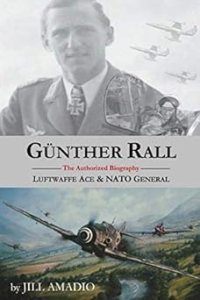
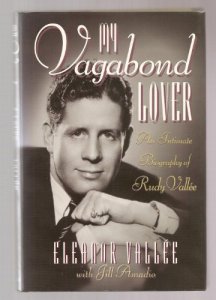
A few of Jill Amadio’s ghostwritten biographies.

An Interview with Wendy Walker

by Jill Amadio

Sometimes, as writers, we flounder around seeking ideas, whether from our own lives, others’, and from the daily grind we read about in the media. One author I greatly admire is Wendy Walker. I interviewed her recently, and am sharing her impressive insights here. Her multi-faceted career has included commercial litigation, investment banking, and world business. She lives in Connecticut and writes novels, thrillers, and audio originals.

  What is your background? Has it provided material for you?

I’ve worn many hats in my life! Once an aspiring figure skater, I redirected that energy to get a job at Goldman Sachs in mergers and acquisitions just after college. At the time, I never thought about being a writer. From there, I went to law school and worked in corporate litigation, and later family law. I was a stay at home mom for several years, and it was then I started to write. It took seventeen years to make this a sustainable career, and I have been a full time writer ever since! I use all of my experiences in my work – from legal knowledge, to finance, to parenting, and especially the psychology I learned while being a family law attorney.

Any characters based on you, as your alter ego

I think there are parts of me in all my characters. But the one I drew most closely for is Molly from “Don’t Look For Me.” While the character was eventually given some very difficult situations, including the loss off a child, which I do share, the initial spark for her and the book came from a moment I had one afternoon when I felt overwhelmed by life and my responsibilities as a mother. Her love for her children and the heartache that love can bring, are deeply explored in the book.

When did you decide to become a suspense writer, and why?

After publishing two novels that were general fiction I almost gave up on writing. The books didn’t do very well and I was no longer able to juggle writing, being a lawyer, and a single mother with three children. I asked my agent at the time what I could write that would be more marketable and she said, “the next ‘Gone Girl’.” I had heard of the book but didn’t really know what was different about it. When I looked at the genre of psychological suspense, I knew I had found the perfect home for my interest, skills, and knowledge.’’

Where do you get your inspiration?

Book idea comes from everywhere. I think once you know you need to find them, you begin to see them in every aspect of life. From news stories, to things I hear about people, and experience myself, ideas are sparked. My philosophy is this – if something catches my eye ad makes me curious, then it will probably be the same for others. I make a mental note of it and then ask questions about what made me take notice and what could be the story behind it. Not all of these moments lead to as book idea, but many do.

What is your writing process, routine, if any?

I have to write first thing in the morning. Staring at a blank page is very difficult for me. I find that I will do almost anything to avoid it. Even tasks that I normally would not look forward to will pull me away from sitting down to write. I will usually find a place away from my desk that feels less like doing work. I like to put my feet up, I have my laptop on my lap over a blanket, with a cup of coffee and some little treats nearby. That way, I feel like I’m not working, but having a luxurious morning.

How important are minor characters?

All characters in a book are important. I think of them as scaffolding for the main characters and the plot. Through minor characters, I can challenge, explore, and deeply develop the other characters that are more central to the book. Sometimes, the minor characters will become so interesting to me that I will bump them up to major characters and give them more page space.

How do you do your research?

I rely very heavily on the Internet and also specialists in different fields for my research. I will usually start online to get a rough idea of the topic and then find someone who works in the field or has personal knowledge of the aspect of the book that I’m researching.  People are remarkably generous with their knowledge  and time. I always feel a little bit nervous when I reach out to them and explain my plots. Sometimes they will just laugh, and other times they will come up with plot twists that they have thought of themselves. It’s fascinating!

How did you become editor of some of the Chicken of the Soul books?

After my first two novels were published and I realized that I had not established a financially sustainable career, I began to look for all kinds of work as a writer. At the time I had not practiced law for several years while I was staying home with my kids. I still wanted flexibility to be with them after school, so I was reluctant to go back into that field. As it turned out a local business group had purchased the business of Chicken Soup for the Soul. They asked me to edit a book about being a stay-at-home mom, I ended up doing three books with them and it was a wonderful experience.

Do any suspense authors inspire you? If so, why?

I find inspiration in almost every book that I read in this genre. Whether it’s a particular plot twist that took my breath away or the depth of a character, or a writing style, each book is unique and has something to offer in terms of learning to be a better writer myself. I look at writing as both creative and technical. I need to have idea and character, but I also need a box of tools that I can use to tell the story. It’s wonderful to have so many talented people in the field to draw inspiration from.

Favorite settings?

Most of my books are not dependent on the setting. I like to explore my characters’ minds. For me, that is the setting hat I like to be in when I’m writing. Some of my books do not even give the names of the towns where they take place. Of course, it’s important to have some context for the characters in the world they live in. I make sure to sketch those out, but many books tend to be very light on setting and deep on the emotional lives of my characters.

Are you an outliner or seat-of-pants?

 I outline everything. In fact, I have a lot of trouble writing without a very detailed outline for every chapter. This is because my books tend to have complex plots  where many pieces that need to fit together. I start with a basic plot sketch, and then I make a list of disclosures that have to be made throughout the story so that the reader will be intrigued and the twists can be developed properly. From there, I create a detailed plot outline where each disclosure is added. This make it much easier for me to dive into the more creative aspects of the process, because I know that the technical pieces have been taken care of.

If your characters ‘talk’ to you, what is the experience like?

I’ve never noticed a particular moment when a character is ‘talking’ to me. But I definitely try to get into the head of my characters when writing their internal thoughts and dialogue. I tend to write in the point of view of the character and I love writing in first person. This allows me to really become the character while I’m writing, and live vicariously through them. From detectives to criminals to mothers and daughters, it’s a lot of fun to be different people every day.

Which is the most difficult part of writing suspense for you?

The hardest part about writing crime suspense is coming up with a plot twist that hasn’t been done, or that a reader  won’t see coming. The genre of psychological suspense is known for its twists that are not just the reveal of the good guys and bad guys. They are twists that are more based on assumptions made by the readers about timeline and characters’ intentions. Readers have become very savvy. And coming up with twists is not something that can be forced. All of mine have come when I have been doing other things away from my computer. But when they do come, it’s really extraordinary.

Publishing history?

In 2008 and 2009 I published books that were in general fiction. They were stories about women in the suburbs. I was interested in exploring the dynamics that exist between husbands and wives and also the impact of wealth on communities. When those books did not establish my career, I went back to practicing law. At the time, I found work as a family law attorney. I kept writing and eventually found my way to the genre of psychological suspense. I was going to write one last book before giving up altogether and I wanted to make it as practical as I could from a business standpoint. I got the great  advice to write a thriller and it turned out to be the perfect home for me. I wrote “All Is Not Forgotten” in the spring of 2015 and it sold in July at a five-way auction! Since then I have written five more thrillers, plus three audio originals. I am very grateful for this career.

Your marketing plan, or does the publisher handle it all?

More and more authors need to be their own publicist. While the publishing houses do a great job at promoting books, so much is done on social media now. I had a book coming out in June (2023) and I spend most of my time these days organizing my event schedule, creating content for social media, posting to social media, and providing content for blogs and other media outlets. Every author will tell you that this is now a central part of our career.

Which book was the most enjoyable to write?

Every book I’ve written has been enjoyable and in different ways. If I had to choose one, it would be my first thriller, “All Is Not Forgotten”. Because the book was not under contract, and because it was my first time writing a psychological thriller, I had a freedom in writing that was really wonderful. I was able to put on the page whatever I felt was relevant and important to the story. Ad I was also able to create a plot and characters that I felt attached to. There’s a purity to the process that is impossible to re-create when others are weighing in on every aspect of the book from a marketing standpoint. And I am grateful for that because it’s so important to having continuing success in this career. But I will always cherish that experience.

Do you scare yourself with your plots/characters/settings?

That’s a great question! The only time I was scared was after writing a plot for a book that’s coming out in 2024. It involves a serial killer and I wrote one point of view that takes the reader through the attempted murder of a woman in her house. I ended up using the layout of my own house because it was just easier to visualize as I was writing. I wasn’t scared at the time but about a month, after I finished the book, my house alarm went off in the middle of the night. It turned out to be a door that swung open but in that moment my mind was turning to those chapters. It was very embarrassing when the people showed up!

Any tips for first-time crime writers?

My best advice is to gather as many tools as you can. Many people come up with great plot ideas and characters. But being able to put that story onto the page requires a lot of skill that has to be learned. When I wrote my first novel I did not have the skills. It was a legal thriller that was never published and probably never will be. I had a great idea and thought that my writing skill as a lawyer would be sufficient. I read a lot of books in the genre and tried to understand how they were written. It was not until I worked with a writing professor that I realized the specific tools that are utilized in this process. It was a big mistake that I made and I wish I had taken a class or worked with a professional before I sat down to write my novel.

Your current WIP?

I am now writing two pieces of work every year. One is a traditional printed novel of psychological suspense. The second is an audio original that is fully scripted. At the moment I am about to begin drafting another audio play that will likely be out in 2025. I also have the audio play that I just finished coming out in 2024 that is called “Mad Love”. So I am very busy! But I love it.


“YOU SAY POTATOE…”

by Jill Amadio

As a Brit I put up with a lot of ribbing in America. Some friends take me to task for pronunciation. Well, I can’t help it if I have a very slight West Country accent as I am from Cornwall. As a writer, though, the ribbing can give me indigestion.

The main problem is spelling. I am warned by colleagues that editors at U.S. publishing houses come down hard if you keep inserting a “u” into words like behaviour,  colour, and honour, or substitute a ”z’ for an “s”. Other minefields include using “ae” rather than “e,” as in “aeon” and “eon”.  Maybe it’s a matter of simplicity. Americans pare as many ells and u’s as possible while Brits love double ells, such as “levelling” versus “leveling.”

My books are published here first but habits die hard and I usually claim that Brits use the correct spellings. They only got chopped when they arrived in America where unnecessary (to whom?) letters are summarily killed off. Flautists are called flutists, and gaol is jail. Obviously what it comes down to is pronunciation. Americans spell words as they are spoken although it escapes me why tyre is spelled tire.

It’s a huge temptation to some authors who have leapt across the pond to use British spelling, perhaps as a sly signal to agents and publishers they are querying that the writer is a Brit – a sort of literary snobbism one occasionally encounters at conferences.

Then there’s the grammar. Collective nouns in particular give me pause. Is a group, say a government, singular or plural?  I have a page from the Associated Press Stylebook permanently stuck to my printer to remind me which to use.

Figuring out past particles is always fun. For instance, Brits say “pleaded” Yanks say “pled”. Oh, and the very, very worst word I hate to see changed is “hanged”. To my mind it should refer only to someone at the loop end of a rope, giving the action a far heftier meaning than the word “hung” as used here. People are not paintings.

Punctuation. I don’t worry about it although when I send in my column to the UK magazine I write for I make sure I place the comma and full stop after the quotes, not before.  What else? “Have” and “take” always flummox me. Am I going to take a bath? Or, am I going to have a bath? I read somewhere that this is an example of a delexical verb, which I’m not even going to touch.

While writing my first mystery my beta readers caught another mistake. I wrote, “He drove her to hospital.” Wrong. I was told there should be a “the” in front of “hospital.”  I’m sure there’s some kind of diabolical rule about this but I think it’s fine to give an in-house editor something to mark up to justify his/her salary.  As for tenses, the past participle in the U.S. for “got” is “gotten,” an ugly word that makes me shudder enough to want to write a thriller entitled “The Dangling Participle and the Dark, Dark Pluperfect”.

While writing the first in my crime series based in Newport Beach, California, whose amateur sleuth is a disgraced Cornishwoman exiled by the palace for discovering a scandal (what, again?), I had to learn the police rankings and figure out who was a sheriff and who was a police officer. Having worked with a reporter at the good old rag, the Sunday Dispatch, I decided to have my sleuth simplify her confusion (and mine) and re-affirm her “foreignness” by using British titles. When caught speeding she addresses a California Highway Patrol (CHiP) officer as “Chief Superintendent,” and calls the Chief of Police, “ Constable.”  I am, however, very pleased that sheriffs and policemen can be lumped into a group collectively referred to as “cops”.

When I mention a British pastime such as a pasty-throwing contest, blank stares are common. I talked about nighthawking the other day and no one had a clue as to its meaning. I’m giving the nasty habit to a character in my WIP although I know the explanation could be tedious unless you’re a nighthawker yourself. Both of these words are giving my Spellcheck nightmares.

Even the four seasons can be a challenge. Seeking representation for my first mystery I scoured the agent lists and was rejected by 65 of them. I knew small presses can be approached directly and I found one with whose name I fell totally in love: Mainly Murder Press. However, the website declared, NO SUBMISSIONS UNTIL LATE SPRING!

Ha. I immediately sent in my query along with a note: “Dear MMP, I live in Southern California and although it is only January according to the calendar, and snowing where you are, it is already late spring here. You should see the roses!”

I received an email back within three hours, asking me to send chapters. Which I did. Obviously the publisher was not off in Tahiti but still on the East Coast. Then came a request for the manuscript. By the end of a week I had signed a contract for three books. MMP publishes only 12-14 books a year, but who could resist the name? Sadly, MMP went belly-up before I could finish my third mystery.

So my advice is to go ahead and break the rules, lay it on thick, and change the climate. Worked for me.

Lewk and Other Odd, Ugly New Words

by Jill Amadio

Would you write this in your next mystery: “He awoke woke as usual, wondering if he might be roofied, kettled or lewked today. Then, as he threw back the bedcovers, he remembered it was his turn to rizz.”

How many readers and writers can figure out the meaning of these phrases? I wonder also how these new words translate into French, Italian, or the Baltic languages. Did you know that lollipop is a slang word for money in Britain, Australia, and New Zealand although the word lolly has been in use as referring to money in the UK for a long time.

Fortunately, I have yet to read a modern mystery that includes any of the above, although a recent read did include the work “hacked” to mean a fairly decent way to dispose of a body rather than hacking into someone’s computer (although it is sometimes tempting to want to snatch up a machete and aim it at my screen).

Gaslighting is common these days but to me the word “deceve” has a far more evil connotation due to its hard “e.” How about being roofied? No, not a new roof on one’s house but a slang word for the drug Rohypnol which, in itself sounds rather boring compared to its new version. I must confess I am rather partial to the word “dox” as it sounds medieval but I don’t write historicals so I would have to use it for its modern meaning, which is cyber-bullying, maliciously publicizing private, personal information about someone, and usually posting it online via social media.

Dox is similar to pox so maybe that is the connection. Medieval slang, or descriptive words, were and are scattered throughout historical novels and plays, especially by Shakespeare who wrote in The Tempest: “a pox o’ your throat, you bawling, blasphemous, incharitable dog!” Yeah! That told ‘em. The bard also used the word “cotton” to refer to a lower-ranking peasant. One wonders if peasants were considered lewk back then because of their wearing of cotton garments that distinguished them instead of costly fabrics.

Acronyms are showing up, too, and turning into daily use as words in their own right. For examples, “lewk.” The letters were all at one time written in upper case and stand for Loitering Electronic Warfare Killer. Now, the first and last words, loitering and killer are understandable and fitting for mystery writers. However, the four uppercase letters together refer to, perhaps, a war machine waiting for the signal to attack, such as an army tank.  In lower case, the letters form a word meaning a person’s individual fashion style by which he/she/them/their is instantly recognizable. I’d venture a guess that Sherlock Holmes and his deerstalker hat was the first of his generation to be lewk.

Here are a few of my own suggestions for slang in a murder mystery:

Tompt = a double-bladed dental tool for extracting teeth

Willabot = bird seed for large sparrows

Seso = blood-stained blue underwear

Atikul = a cell phone smashed in four places, a vital clue

Culik = a pearl-handled pistol

Daawtul = a female murder victim

Obviously, not a single one of the above, however specific, makes any sense but does lewk or dox? 

Are we free to invent new words with the hope that readers can easily gauge the writer’s intent?  That would be like writing a mystery within a mystery, and require a glossary like a list of characters at the front of a book as a few of the Golden Era mystery writers, like Agatha Christie, sometimes added.

What’s your opinion of the new additions to our language? Should they taught in writing workshops?

##

Jill Amadio is a mystery writer, novelist, journalist, and ghostwriter.  Her standalone thriller, “In Terror’s Deadly Clasp,” is based on a true 9/11 story. Her award-winning mystery series features an amateur sleuth from Cornwall, UK, Amadio’s former residence before relocating to California and Connecticut. 

Time

by Jill Amadio

Having celebrated the New Year a few days ago I am still curious about one of its major symbols, Father Time.

Appearing in books, paintings, music, film, television, and even as industry logos, Father Time is often depicted as a character with his murderous scythe and/or an hourglass. Such images have been used to remind a reader that Time is a potential murder weapon with the hours running out for a victim, or signifying an imminent arrest.

Time.

It rolls along inexorably despite any means we employ to stop it. But wait! Writers sometimes change Time not only in their fiction but even in non-fiction that one expects to be factual and pure.

How often have you read, “Within three short weeks the memoir was finished.” or “It was the longest hour she had ever spent in his company.” What do these Time phrases mean? What is a short hour, 44 minutes? Or a long year, 15 months? How about this recently published mystery wherein the author blithely bent the passage of Time with: “She knew the hours would pass more quickly if she went to a movie…” How could this be? Obviously, it was her perception in play but seconds, minutes, weeks, months, years, and decades pass at their own pace despite anything we can do to speed it up or slow it down.

In his Rubaiyat, Omar Khayyam wrote one of the most dire warnings about Time: “The moving finger writes, and having writ, moves on. Nor all the piety nor wit can lure it back to cancel half a line, nor all they tears wash out a word of it.”   However, a clever writer can give the reader an impression of a faster or slower passage of Time through tension, the building of a scene, or a change in writing style with short sentences, even a single word.

In my favorite, faithful much-thumbed 1,350-page Roget’s International Thesaurus, of which I receive the latest edition every five years as a Christmas gift, there are pages and pages devoted to definitions for Time including Duration, Instantaneousness, Perpetuity, Interim, Anachronism, Infinity, Transience, and, rather oddly, Regularity of Recurrences, and a section devoted to for Previousness (Roget’s heading, not mine, which my Spellcheck rejects), plus many more. In fact, a cornucopia of ways to express how Time moves along at its prescribed pace in any situation and circumstance.

How do we live in borrowed Time – what does that mean? We cannot borrow, stretch, shorten, nor cut Time in its literal sense yet we bandy about this commodity as if it were taffy.

Shakespeare took liberties with Time in dozens of plays and called it a “common arbitrator” and, “a bald cheater’ which I prefer to read in its literal sense although he didn’t intend it that way. The Bard was also the first, I believe, to coin the phrase that Britain’s prime minister, Neville Chamberlain borrowed centuries later when he intoned in 1938 there would be “peace for our time.”

How about this one: ‘Time is of the essence.’ Taken verbatim causes one to wonder, which essence? Frankincense, rose water, or perhaps orange peel?  Or do we wish to convey that Time is urgent? If so, why not say so with description to match the action.

Metaphors are wonderful but sometimes they can convey a meaning that the author did not intend, or missed an opportunity to raise the stakes. How often have you read, “Time and again she pulled on the chain/rope/handcuffs.…”  Would the reader enter into a precise Time frame more personally and feel the victim’s agony and persistence more clearly if the sentence read “after six desperate attempts pulling on the chain, she…

All of which reminds us to remain disciplined because – Time is honestly and truly running out! Do you have a secret method for trying to cheat Time?

Happy New Year, everyone! Do not waste a minute of this brand new year. Write!

#

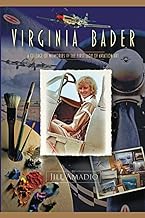
Jill Amadio is a mystery writer, novelist, journalist, and ghostwriter. She writes a column for the UK-based Mystery People magazine. Her standalone thriller, “In Terror’s Deadly Clasp,” is based on a true 9/11 story, and her memoir of Virginia Bader chronicles the pioneering of the aviation art movement in America. Amadio co-authored a posthumous biography of the singer Rudy Vallee, and ghostwrote a crime novel. She was a reporter for the Bangkok Post, Gannett Newspapers in New York, and the L.A. Daily News, and has written for Conde Nast, Newsweek, the Los Angeles Times Sunday Magazine, Motor Trend, Air Classics, and other publications. Her award-winning mystery series features an amateur sleuth from Cornwall, UK, Amadio’s former residence before relocating to California and Connecticut. She is a member of Sisters in Crime, Mystery Writers of America, and the Authors Guild. Visit Jill’s Website 

Mind-numbing Numbers

by JILL AMADIO

What is it like to sell 10 million copies of your books? I found it mind-boggling until I recently watched the Jackie Collins documentary. She sold 500 million copies of her 32 novels. But, hold on, Barbara Cartland wrote 723 romances and sold over a billion of them.

I recently interviewed Jane Green, who wrote a chick lit book “for fun” and went on to pen 20 more romance novels. She’s the author who sold the 10 million copies, and every title was a New York Times bestseller. I guess the numbing numbers are all relative when you consider that many other writers’ sales are up in the stratosphere, too.

The way the book business is these days sudden fame and fortune can appear out of nowhere, even after you’ve given up hope.  J.K. Rowling wrote and self-published two books, one a Harry Potter, that went nowhere until a publisher picked it up from a bin in a secondhand bookstore as something to read on the train, as the story goes.

Fifty Shades by EL James, was also self-published as an eBook on an obscure Australian online blog site, The Writer’s Coffee Shop, until the novel was scooped up by traditional publisher Random House. The erotic novel subsequently sold 15.2 million copies. It is now a trilogy. Back in 2016 the original online publishers, two ladies, were fighting over royalties of the books in a Texas courthouse. It appears to be a tangled web as the plaintiff was a school teacher who claimed she was “done wrong” as Eliza would say, regarding her share of royalties. Which begs the question: why should the Coffee Shop blog owners receive royalties rather than a one-time fee?  My research failed to answer such questions, especially one on how Texas and the Coffee Shop, based in a Sydney suburb, became embroiled in a lawsuit in the U.S.  It sure sounds like a jolly interesting plot for a murder mystery.

Do I find it daunting to read about such sales? Do you? Should these figures encourage us to keep writing? Happily, I feel neither jealousy nor resentment. The more people are reading, the more they will buy books, although one is tempted to throw a few sex scenes into the mix.

Since moving to Connecticut and just an hour from New York City that throbs with best-selling authors, I feel inspired to keep going and in fact, I am resurrecting the Tosca mysteries between marketing the memoir I just published. It will be great to get back to creating a chilling murder after writing about aviation art.

There are book clubs galore here along the Eastern seaboard with Very Earnest Members, although I am still searching for one that discusses crime novels. Sisters In Crime Conneticut is a start.  I know there are some book clubs online but after two years locked up I am relishing attending meetings in person.

As for book sales, I think of the tortoise and the hare and I plod along, blessed by the fact that I am able to write as freely as I wish without worrying about numbers or having a publisher breathing down my neck. A local writer said his Big Five publisher made him change his POV twice, and another writer confessed she was forced to rewrite her ending to suit the Highly Important Editor. Thomas Wolfe is famous for arguing incessantly with his editor, Maxwell Perkins, about cutting his classic Look Homeward, Angel down to a reasonable word count from the 333,000 words Wolfe is said to have written, but it worked and the result was magnificent. It continues to sell today. As it should.

Your thoughts on the big bucks?


.

Image by kalhh from Pixabay