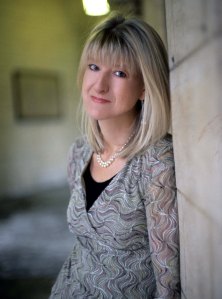
An Interview with Author, Maureen Jennings

By Jill Amadio

It hasn’t yet run as long as Agatha Christie’s “Mousetrap” in the West End, the theater district of London, U.K.,  but Maureen Jennings’ Detective Murdoch television series is well on its way to a record fourteenth year for the mystery author. A “Brummie” from Birmingham in the north of  England who emigrated to Canada as a 17-year-old and now lives in Toronto, she lends her British roots to one of her three series, the World War II DCI Tom Tyler cases, setting the books in the market town of Ludlow, in the Shropshires, U.K.

“I visit Ludlow annually”, she said a few days after being honored at the 2019 Left Coast Crime conference in Vancouver, British Columbia. “I love being in Ludlow. I wanted to write the Tyler series there because of the war years, which affected people so deeply.”

Her first foray into creative writing was three stage plays, all of which were produced, although she says, at very small theaters. She then turned to books.

As one of the top and most popular mystery authors in Canada, the Jennings’ Murdoch Mysteries (titled The Artful Detective in the US) was brought to the viewing public first as three Movies of the Week and then as a television series. Set in Toronto in Victorian days, ‘When people tended to be much more aware of good manners and polite behavior,’ the crime novels number eight so far, although the TV episodes number many more. A team of six writers creates the scripts, with Maureen writing one show a season and acting as creative consultant for the others.

After ensuring that the Murdoch books were pretty well established, but still writing a couple more later, Maureen launched the private investigator Christine Morris series. Although its future as a film is currently in limbo, she notes.

Another project, a drama titled  ‘Bomb Girls,’ was a concept derived from a Tom Tyler mystery and has become a TV series, written by Maureen with a partner. Thus, Maureen successfully mixes stage, screen, and literature. Indeed, she is regarded as a national treasure in Canada and has won so many literary awards in North America and in other countries, that it staggers the mind. The Toronto Star newspaper named her as one of 180 people who have influenced the history of their city through her mysteries.

So who is Maureen Jennings?

Married to photographer Iden Ford, who is also her literary agent, she has a constant reminder (at her feet) of her fictional Toronto detective. A dog called Murdoch. ‘He requires a daily morning walk, and that sets me up beautifully. I come back and can get going. In the evenings, I have less energy and usually use that time to read and do research.

As regards the books, I wanted to commune with ghosts of the past in Toronto, which has largely disappeared, and [back then] it was easier to include forensics, which was not as advanced as it is now.’

All the Brits from the Golden Age were and still are her inspiration, especially Arthur Conan Doyle and John Le Carré.  ‘I have always loved reading mysteries. Fell in love with Sherlock, still am. I like the notion of two-for-one, that is, you get a good story and learn something at the same time. For me, that’s typically history, which I love,’ she said.

Maureen calls getting her first book published a stroke of luck when Ruth Calvin at St Martin’s Press took a look at her manuscript at the urging of a friend, and bought it. Since then, she has mastered just about every writing discipline: books, scripts, short stories, and poetry. Yet this woman who streams so many, many words didn’t start out to be a writer. She studied psychology and philosophy at the University of Windsor and received an M.A. in English Literature at the University of Toronto.

She turned to teaching at Ryerson Polytechnic Institute, then practiced as a psychotherapist. Maureen believes that her expertise in that field has helped her create characters that are believable and their motives credible, although keeping them straight requires making careful notes. Her latest is the PI Charlotte Frayne series, starting with ‘The Heat Wave,’ which launched in March 2019 and brings the character into contact with Murdoch’s police detective son.

Her writing process involves outlining in detail. ‘That might change in small ways as the book grows, but I have found that if I don’t do that, I waste a terrible amount of time. I know some writers say they just start off, but I couldn’t imagine that. It would be like getting in the car and saying I’m going to drive somewhere now, but I don’t know where exactly. I’m not that kind of traveler. I have to have the hotel booked.’

A lover of history and a meticulous researcher, Maureen delves into primary sources, including newspapers and Coroner and Chief Constable reports, bringing her skills in particular to one of her latest mysteries, ‘A Journeyman to Grief,’ a recounting of life in the small black community in 19th century Toronto, much of it unknown to most of the city’s present residents.

Maureen’s biggest challenge?

‘Making sure Tyler didn’t look and sound like Murdoch. As for themes, they sort of come to me unbidden as I am researching. For instance, I was recently reading about Safety in the Workplace and how late that was in being established. That immediately became the focus of my next book, which is set in 1936.’

Any advice for first-time writers?

‘Oh dear. I know how hard it can be and how easy it is to get discouraged. But I absolutely believe that passion plus preparation leads to opportunity. I love horse racing and often think of it as a metaphor. Most of the horses and jockeys are more or less of equal ability, but the ones that win do so because they seize the opportunity when the gap opens up ahead of them and they gallop through. They’re ready. They’ve done their homework.

Also, I don’t think you should ever stop studying the craft, whether it be novels or theatre or film.’

AI as a Beta-Reader?

by Jill Amadio

Many of my writer friends are “gung-ho enthusiasts” of Artificial Intelligence,  or AI. They run their projects through, often chapter by chapter, to test their writing skills.

When the results come through, there is great interest in what the non-human synthetic experts have to say. While AI is a huge help, I suppose, if we need to be assured that our style and other fundamentals of our writing are up to par, does AI also diminish our confidence in our creativity?

Why do we trust an automatic machine to judge our writing rather than a person with a brain, a soul, and emotions, muddled as they may be? Why do writers believe that feelings expressed by AI have more depth and provide more compelling characters than those from human intelligence?

Certainly, we often feel a need for support when we aren’t sure we are on the right path with our plots and settings, but research can frequently send us on fascinating journeys when we use that old-fashioned tool.

Then, too, a friend might shoot down our joy by criticizing work we’ve spent weeks creating, but at least we can open a debate with said friend to challenge their viewpoint.

I read online that writers should not wait until a first draft is completed before checking it through AI. One should pass our writing chapter by chapter or paragraph by paragraph if we want our books to sell well.

However, brainstorming with AI can be a revolving door if we rely solely on it to give us feedback with which we disagree. We already have Spell Check in our Word program, and there are also grammar sites if we are unsure. Yet, do we want that advice?

I recently edited a book for a client from Liverpool, U.K., who writes in the way he speaks, a style that is occasionally ungrammatical but beautifully reflects his upbringing in a poverty-stricken family. He writes honestly and in detail about his criminal activities before reforming and brings the reader into his world in a personal, delightfully unself-conscious and un-generated-by-AI manner. His style takes us into heartfelt statements about his culture, his bitterness growing up, and how he turned his life around.

His book doesn’t flow strategically or logically. Instead, it takes us on a journey most of us could not imagine but feel compelled to follow to its happy ending. Would AI have come up with anything as mind-blowing as this man’s true story? Granted, AI is consulted mostly for its judgment of our writing, even its relevance to a central theme, but it seems to create doubt rather than determination to follow our own path.

All of which leads to the question of who is actually writing AI’s advice and training AI, and who is instructing us with strategic decisions we are told to make. Perhaps the AI originators are best-selling authors. Maybe they are paid a royalty for each bit of AI advice activated.

I read that AI can be biased and can misrepresent your writing style. It can tell you to make changes with which you disagree, but you can’t help believing that AI knows best.

Seems to me that human creativity is one of the most perfect parts of our mind, albeit for good or evil, and that if AI flags it, then we follow patterns and look twice at what we are thinking.

It also appears that AI can figure out if you are falling into the trap of writing patterns that annoy readers or structures that don’t make sense. All of which leads us to wonder if we could be accused of plagiarism if two or three writers receive the same rewriting from AI. Maybe we need to become our own amateur detectives to discover such an activity, and instead of fact-checkers, we need to become text-checkers for artificial intelligence.

I admit that AI is an excellent tool for writers who dither and are unsure of their characters, plots, and settings. It is normal to want an outside opinion, but there can be a nagging worry that AI cannot truly understand where our plot is going, or how characters can change as we write. Taking the guesswork out of our plots, sub-pots, and themes can lose us readers for future books in our series, and perhaps even prompt an admission that we used AI as an assistant to write the book in a Disclaimer or Introduction.

In conclusion, I am honestly pleased that some of my writer friends enjoy a foray into AI. I just ask them to be transparent and honest about it.

GROUP QUESTION #3 – Settings & Research, Where & How Much?

By WinR members & guests

  1. Where & when do you set your stories? 
  2.  How much research do you do on that time & place?

MIKO JOHNSTON: I’ve done extensive research for my historical fiction series, set primarily in and around Prague during the first half of the 20th Century, to give it authenticity. That includes using real places, people, events – even moon cycles accurate to the day – alongside my fictional characters. Some information has been unobtainable (at least in English), so when I can’t make it accurate, I aim for plausible. 

*

G. B. POOL (Gayle):  The setting I use in my novels or short stories depends on what the story is. So many of my private detective stories are set in Los Angeles because that city is known for its “high crimes and misdemeanors,” as we saw in these old black and white detective movies from the 40s and the great TV detective series from the 60s and 70s. I watched them all. I like having my contemporary private detectives walk that same turf. My spy novels are set in various countries during WWII, the Cold War, and into the later part of the last century. That might sound like a long time ago, but I lived through part of that time, so I know the later era.

As for how I write about those other times before I came on the scene, I watch a lot of old B&W movies and see what places looked like back when they filmed them and how they dressed. It’s a great way to “see” history when you didn’t live through it.

*

JACKIE HOUCHIN:  My dozen stories for 4th to 6th grade kids are set in present-day Malawi, Africa. However, many of the people in the surrounding areas still live in very primitive circumstances.  My goal in these stories was to show upper elementary kids in America how a missionary family (with 6 children) would live among and interact with less than modern circumstances, and still have fun. (And get into trouble!)

Most of the research I did was hands-on.  I visited Malawi five times, spending a couple of weeks each. I went into villages, watched kids doing chores, caring for babies and animals, and playing primitive games.  I ate the food and learned a few words. I cringed at the sight of humongous insects and scary witch doctors. I lived with a missionary family each time, seeing how they “made do.” I had lots of fun, asked questions, and took copious notes!  I also never caught malaria, meningitis, typhoid, or HIV. Whew!

*

DIANE ASCROFT (Guest): My Century Cottage Cozy Mysteries are set in Fenwater, a fictional small town in Canada, during the 1980s. The place is far from where I now live in Northern Ireland, but I grew up in Toronto, Canada, and often visited the real town of Fergus that Fenwater is inspired by. I loved the place and thought it would be a great setting for my stories.

For my series, I wanted to create a place that beckons readers to step in and stay a while, so a fictional version of Fergus was perfect. Setting my books in Canada during the 1980s is also a nostalgic journey back to my homeland. It was forty years ago when I was a young woman, so it’s a pleasure to spend time writing about the place.

*

JILL AMADIO:  I set my contemporary mystery series on Balboa Island, Newport Beach, CA. My amateur sleuth is a British gossip columnist banished for a year at the request of the royal family, tired of her perceptive comments. She is from the fishing village of St. Ives, Cornwall, my own hometown, which allows me to recall its pub built in 1310, my school, the beaches, my father’s pharmacy, my mother’s dance academy, and the pantomimes she produced every Christmas.

My research to jog my memory is a delight as I have several travel books on the British Isles, reminding me, too, of London, where I was a newspaper reporter. I also keep up with the news in Cornwall.

*

ROSEMARY LORD:  I have been writing mostly about Hollywood in the 1920s and 1930s.  I’ve always been fascinated with this era, and learned a lot more when researching my non-fiction books, Hollywood Then and Now and Los Angeles Then and Now.

I do a lot of research, which I find fascinating, and sometimes get far too carried away with that!  I love to show how either simple or how difficult life was one hundred years ago,  compared with today’s world.

I must confess that writing mysteries set today, when crimes may be solved using cell phones and today’s technology rather than old-fashioned “gum-shoe” sleuthing, leaves me cold!

*

MAGGIE KING:  My stories are set in Virginia in the present day. Most take place in Richmond, the state capital. It’s a city rich in history and culture, and it boasts two major universities. Many of the residents, myself included, moved here from other parts of the country and the world.

Charlottesville and Fredericksburg are also Virginia cities featured in my work. A few months ago, I posted here about a research trip I took to Charlottesville. It’s important to get the details right!

To date, I’ve been content to set my stories in contemporary times. But contemporary times are distressing, so I’m tempted to try my hand at something historical that will involve significant research.

*

LINDA JOHNSTON:  These days, I set all my stories in the present, although I used to also write time travel romances. But these days. my romances, romantic suspense, and mystery stories are set today, since I now enjoy the present more than the past. 

I’m currently writing mostly romantic suspense stories, in my own successive miniseries for Harlequin Romantic Suspense. They’re all set primarily in fictional towns, so my characters can get into different kinds of trouble with the law and get out of it without my stepping on real law enforcement toes. My recent mysteries, though, were set in real areas in Alaska, for fun. And of course, I’d visited Alaska.

*

Thank you, ladies! 

Delving Into Everyone’s Life But My Own

by Jill Amadio

Last week, I was sorely tempted to slip back into a non-fiction writing career that has sustained me when my mystery book sales faltered. I gave a proposed project a few hours thought. Then, I came to the decision that my ghostwriting years were definitely gone with the wind, as vanished as the ghost I had become.

Ghostwriting popped up in my life when I least expected, and it was certainly not sought. In fact, I was barely aware of someone writing someone else’s life story for them. It seemed the height of hubris both from the viewpoint of the writer and that of the subject. I believe I thought, when I first heard of ghostwriting, that if you couldn’t write your own story, then forget it.

However, during a particularly “dry” period when my finances were almost non-existent, I held my breath and agreed to at least investigate what was involved. I was writing a business column for Entrepreneur magazine, and one day, the editor told me that a reader called, asking if they could recommend a writer to write their business book for them

“What? Be a fake writer? And on top of that, write a whole book?” I squeaked. “No way! I hardly manage to squeeze out 3,000 words for my column. How can I write a hundred times that number?  No way.”

“Jill, look at it this way. Approach each chapter as an article. Besides, it pays well.”

When the editor mentioned the sum of money I could earn, I no longer resisted. Ghostwriting, here I come!

Since then, I have ghosted 19 memoirs and enjoyed the process immensely. I met a fascinating group of clients who took me into the realms of several diverse worlds. I wrote books for a champion cowboy, a nuclear physicist, and just about everyone in between.

After I finished the business book and was telling a friend at the local TV station about it, she passed the word around. I soon received a referral that sent me to Hollywood to meet Ellie, the fourth wife of singer Rudy Vallee. She was one of those larger-than-life ladies who called everyone “Darling.” We clicked right away.

Ellie sent me to the Simi Valley Library, which had bought Rudy’s archives after he died. Five hundred boxes. I spent weeks delving through clippings, photos, contracts, reviews, personal letters, and marriage certificates. The material was rich with wonderfully intimate biographical pieces of Rudy’s rollercoaster life and career. The publisher decided that rather than following the usual process of hiding the ghostwriter, I should be named as the co-author of the book. A great and much-appreciated surprise.

During her book tour in Las Vegas, Ellie had lunch with the owner of the many taxi companies in town, who promptly contracted with me to write her own memoir.  I interviewed many of the cab drivers and collected some surprising stories of famous celebrity passengers. However, the cab owner decided to only publish enough books for her immediate family and friends. Thus, those stories remain undercover.

Another memoir (each of the 19 I ghostwrote was by referral, happily) was more of a revenge publication against no fewer than a dozen attorneys for malpractice. My client owned a small business, which soon expanded into selling one of the nation’s leading entertainment devices. However, the clients had hired what she and her husband called “incompetent” lawyers. Soon, there were lawsuits initiated by my clients all over the place. The book was to name each one and detail their transgressions. I knew a little about the law and told my clients we needed to give those lawyers false names or be sued ourselves.

Some of the names we came up with included Mack E. Avelly, Mal Lingerer,  Jep Ardy, Rack E. Teering, and an Ignorentia Legis (translation: ignorance of the law).

Several of the memoirs I wrote were written in the first person, from the client’s point of view. A favorite of mine was about Monterey, CA’s first policewomen in the 1950s. The lead female cop rode a Harley to patrol the streets and, occasionally seeing a fellow cop’s car outside another cop’s house whom she knew was working, discovered several love affairs taking place during her tenure.

One client hired me to write a mystery. She’d always wanted to write about a financial scam that victimized her father. It sounded boring, so I suggested we add a murder into the mix to jazz it up. She agreed wholeheartedly and asked how many murders we could include. I talked her down to two.

Some clients decide to write their memoirs after changing their lives. One of these was a model, international actress, and recently divorced mother of two who decided to leave her luxury life in New Jersey and move to California. I met her at her home, where she showed me the minivan they’d be traveling in for the cross-country trek. I was surprised that the SUV was pretty stinky compared to the shiny Rolls-Royce parked nearby. She said she wanted a completely fresh start. She got one when she met and married a California billionaire after arriving in Laguna Beach. Then she moved to Italy, where she bought a villa.

Before COVID struck and I moved back to Connecticut, I received a call from a cowboy in southern California. He had recently completed a humanitarian project: riding horseback across America from California to Florida. The mission was to raise money for an orphanage for disabled children. The book was fun to write, covering how he,  the seven horses, and a one-eyed mule he needed completed the journey.

One memoir I wrote on my own was the life story of the first lady of aviation art. A British artist, Virginia Bader, ran a gallery of paintings on both coasts devoted to World War II scenes, dogfights, and heroes such as General Jimmy Doolittle, Air Vice Marshal Johnnie Johnson, and many fighter aces from both sides of the conflict.  Her efforts helped establish the careers of the now top aviation artists in their field, such as Nicholas Trudgian, John Shaw, and Sam Lyons.

I wrote three other memoirs as my own client because I became fascinated with the subjects’ stories. One I was asked by the publisher to write about was Gunther Rall, the third-highest fighter ace of World War II and a General in the Luftwaffe. It was published in 2003 and continues sells worldwide.

Research Can Be Dangerous: A Cautionary Tale

By Maggie King

The Confederate statues on Monument Avenue in Richmond, Virginia came tumbling down. For this author, that meant a scene rewrite and a research trip. I didn’t expect the trip to end in the ER.

In my recently released story, Laughing Can Kill You, Hazel Rose investigates the murder of an obnoxious writer given to laughing at others’ expense. In one scene, Hazel and her cousin Lucy attend the victim’s memorial service, hoping to ferret out who killed the man. The service is held in one of the stately homes on Richmond’s Monument Avenue.

Here’s my thumbnail description of the area:

Statues memorializing notable players in the Confederacy punctuated Richmonds Monument Avenue. The statue paying homage to African-American tennis star Arthur Ashe lent an incongruous note to the lineup of Civil War monuments. Various groups clamored for the removal of the monuments that they considered reminders of slavery and racism; other groups believed removing them was tantamount to erasing history. A grassy mall divided the wide avenue, lined with trees and architecturally-significant houses.

If you’ve kept up with events of recent years, you know that the statues (except for the Arthur Ashe one) were taken down in 2020 and 2021, amid a flurry of protests, acts of vandalism, and government orders. But Laughing Can Kill You is set in 2018, when the statues were still in place. So I was okay? Right?

Maybe not. Would my readers be aware it was 2018? While it was clear to me, it may not be to them. Plus, the statues were still a hot-button topic, regardless of one’s position. I’m not looking to get readers riled, I simply want to give them an enjoyable story.

Monument Avenue was not important to the plot, but I could hardly feature it in a scene without mentioning the famous statues that give it its name. Talk about the proverbial elephant in the room. Street, rather. So I needed a different, but similar, location. It didn’t take long to come up with a Plan B: Richmond’s Northside, just ten minutes from Monument Avenue.

Here’s the description that replaced the Monument Avenue one:

The Hermitage Road Historic District on Richmonds Northside started life as a streetcar suburb in the late 19th century. Developing the area north of the city to solve the housing problems caused by a rapidly growing city population became possible with the invention of the electric streetcar. The trolley line ran down the middle of Hermitage Road. At some point, a wide, grassy median replaced the line.

As I drove along the historic stretch lined with trees and architecturally significant houses …

It was a beautiful Saturday in May of 2021 when I drove to the Northside to scope out the area for sights, sounds, traffic patterns, etc. to add authentic detail to my story. I had a house in mind, a Colonial Revival I’d visited on a long-ago walking tour of the area. It was similar to the Monument Avenue house and I could use the same interior details.

This image has an empty alt attribute; its file name is colonial-revival-house.png

I walked down Hermitage Road and what did I see in front of the house? A “For Sale” sign!

I started to cross the street, thinking I’d get a better picture of the place from a distance. I hesitate to take pictures of people’s houses, feeling I’m invading their privacy. If challenged, I could say I knew a prospective buyer. Or I could offer a copy of Laughing Can Kill You when it came out. That should certainly appease them.

I looked around at the other houses, at the trees, flowers, taking in the scene, framing photo shots.

No photos were taken. With all my looking around, I didn’t look where I was walking. In an instant, I fell off the curb, landing splat on my shoulder.

When I picked myself up, my arm felt fairly useless. Thinking, hoping, that I’d only suffered a bruise, I decided to go home and ice my arm. But some persistent voice buzzing in my ear said “Go to the ER.” My guardian angel? Where had she been a moment before? Why hadn’t she grabbed me by the hair and pulled me back from that nasty asphalt? Oh well, God and angels work in mysterious ways.

At St. Mary’s Hospital (incidentally, it’s on Monument Avenue), I learned that I had a fractured shoulder. I went home with a spiffy sling that accessorized my wardrobe for six weeks. Luckily, it was my right shoulder and I’m left-handed.

Back to my rudely interrupted research trip. As the Colonial Revival was on the market, there were plenty of pictures of it online. The owners were asking a cool million. I bet you know what I’m going to say next—-that I purchased the place! Um, no, but I did find lots of beautiful interior and exterior pictures.

Shortly before this unfortunate incident, I’d written a scene where Hazel trips over a crack in a sidewalk and uses balance skills she didn’t know she had, avoiding a spill. Hazel is like me in some ways (except I don’t investigate murders) but apparently I’ve given her better balance and coordination skills.

My original plan was to end the research trip with a latte at Crossroads, a fun and funky coffeehouse on Richmond’s Southside. Hazel and Lucy got to enjoy that treat after the memorial service (although I named the place The Beanery in the story). They needed to compare notes on what was becoming an intriguing investigation.

By the end of a summer spent in PT, my shoulder was declared healed.

Laughing Can Kill You was published just after Thanksgiving of 2021.

There you have it: my cautionary tale on the perils of research.

Originally published in Kings River Life Magazine, January 5, 2022

HOW I FOUND MYSELF WORKING AS A WRITER IN RESIDENCE OF A HIGH-SECURITY MALE PRISON

by Hannah Dennison

I’m excited to introduce our special guest today Sunday Times bestselling thriller author Jane Corry. As you’ll soon learn, Jane’s writer-in-residence experience is quite simply extraordinary.

Jane – welcome! 

My novelist career took off when I went from being a features writer on a well-known women’s magazine to prison.
I’m not joking. But I should add that I was a writer in residence at a prison rather than being a prisoner myself.

My story started the month I got divorced from my first husband after 27 years of marriage. Two weeks later, my weekly magazine column ended due to a staff shake-up. Although I had maintenance, I found myself in need of extra income in order to bring up my three children.

After moving house, my new neighbor suggested that I look in the papers for work. I hadn’t applied for a job for 27 years—I’d been a freelancer since my children were born. But there it was—an advert saying, ‘Wanted! A writer in residence of a high-security male prison.’

Frankly, I didn’t think I had a chance. After all, I didn’t have any experience of prison, either from the outside or in.  Indeed, the only crime I’d ever committed was to park on a double yellow line.

But the money they offered was exactly what I needed to pay my mortgage – to a penny.

My sister and friends didn’t think I should apply. In fact, they thought I was crazy even to consider it.  I was, as they pointed out, in a bad place emotionally. How was it going to help me to work in a prison? I like to think it helped both me and my students, but I’ll come onto that in a moment.

I was very surprised to get an interview and not at all surprised to fluff it up. The governor asked what I would do if a prison officer came into the room where I was running a writing class and told everyone to get out. I said that I would get them to stop in the middle of the sentence so it would make it easier for them to come back to it – it’s a good writing technique. He looked at me, his eyebrows raised. ‘And by that stage,’ he pointed out drily, ‘half the prison would have escaped.’

He had a point. From that moment, I relaxed because I knew I’d blown it. So you can imagine his surprise when he rang that evening and offered me the job.

On my first day, I was given the keys to the prison. To be precise, I was handed a key belt and told that I had to lock any doors that I unlocked and went through, otherwise I’d be out on my heels. I also had to make sure that I signed in every night and handed the key back.

My role was to be a sort of literary Pied Piper. I wasn’t part of the education department, where people had to come to my lessons. I had to woo them in through notices which I put up round the prison.  I printed them out with titles such as ‘Come and join my workshop to write a letter, novel, short story, life story.’

Life stories were particularly popular. I learnt more about crime than I care to talk about. I will say, however, that I was reduced to tears of shock and horror by one man’s story. He then apologized for upsetting me and I told him he should be apologizing to the people he had held up and threatened with death.

I entered his life story for the Koestler Awards, given to men and women for art and writing in prison and he won a silver. His behaviour immediately changed for the better and the guards said that it was due to his new-found story telling skills. He told me that if he hadn’t expressed his remorse on paper, he might have banged his head against the wall.

On the whole, I was treated very well in the prison, although there were times when I was scared. I was followed around at one point by a man who – when I looked up his crime – had tried to kill his girlfriend. I didn’t look up any crimes after that apart from the former accountant who had been a rapist. I don’t want to go into that. He seemed such a nice man.

One night, the governor asked if I would spend the night in the prison for a charity drive. I would have turned down the invitation but the money was going to help pay for my next year at the prison. So I felt obliged. It was terrifying being locked in. There was a bowl under the bed for my business. I spent all night typing. The gov had allowed me to bring my typewriter in. In the middle of the night, an officer knocked on my door and asked what I was doing. I told him I had permission to write and reluctantly he went away.

On other occasions, I brought in writer friends to talk, including Colin Dexter. The men asked him how he got his inspiration. He told them that it was a large bottle of malt whiskey. This didn’t go down well with the officers, but the men thought he was wonderful.

When I started my prison job, I was told that the men either spent their leisure  time in the gym or in the chapel. That stayed in my mind. Then as I walked past the gym, with sounds of machinery pounding, a title fell into my head. The Book Of Uncommon Prayer. So I asked both the men and the staff to write down sayings that helped them through life. I’d written something similar for the women’s magazine earlier. It seemed to go down well and also improve relations between some staff and men.

My two year contract was extended to 3 years. They then asked me to stay for a fourth but I thought that I might never leave. By then I’d got married again so I said goodbye but I volunteered to be a judge for the Koestler Awards and have done so now for the past ten years. Every summer, I go up to Wormwood Scrubs and leaf through entries. The winners’ work is displayed at the Southbank in London every autumn.

I gave up romantic fiction and began writing gritty suspense novels about families who’d been affected by crime, either as aggressors or victims. I changed agents and my new one sold me to Penguin. I’ve since had eight top ten Sunday Times best-sellers.

People sometimes ask if I miss my old life. Actually, it haunts me.  You can take the girl out of the prison. But you can’t take the prison out of the girl.

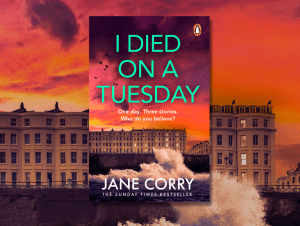
You can buy my new novel ‘I DIED ON A TUESDAY’ in supermarkets, shops and   https://bit.ly/3SE8UVi. Thank you. You can also find out more about my books at www.janecorryauthor.com,   

The book on Amazon

Missing Author Found!

Missing Mystery Authors … whatever happened to your favorites? Do you ever ask yourself that question? I sure do. That’s what prompted the “Missing Author” series that I launched several years ago on my blog. It always drew traffic and prompted readers to ask about their own favorites who, for whatever reason, hadn’t published in a while.

While finding information for some authors wasn’t difficult, it was for others. Fortunately, many weren’t technically “missing.” They maintained websites and were active on social media, so I could contact them. Often life circumstances put her or his writing on hold—illness, care giving, changing job responsibilities are a few examples—but some made a comeback with a new series or picked up an old one. Earlene Fowler made things easy: she wrote on her website that she retired from writing when social media started taking over and she didn’t care to participate.

Others stopped writing altogether when publishers dropped their series or their agents retired. Sadly, some passed on.

Others have seemingly vanished. Does that spark story ideas for anyone?

How did the Missing Authors series start? I was a big fan of Rochelle Krich and have read just about everything she ever wrote. In 2003, she came to Richmond, Virginia and I took off work to hear her speak at the local Jewish Community Center. She last published in 2005. I’ve not been able to learn a reason for her retreat from the writing community. I don’t hunt down these authors, I don’t pry, and don’t publish anything without their permission. I had to let Rochelle go.

The same held true for many other authors. But I made some great connections. I found and became email pals with Corinne Holt Sawyer, Connie Archer (I’m interviewing her for my June newsletter), and Judith Van Gieson (sadly, she passed away few years ago). Author and blogger Charlotte Rains Dixon, who was also searching for Gabrielle Kraft, told me about a memorable writing class Ms. Kraft presented years ago in Portland, Oregon. Charlotte details the class here. To date, neither of us has located Ms. Kraft.

Readers of my blog participated with either information on the authors, or with requests about the whereabouts of their own favorites. They introduced me to some great new-to-me authors.

You can visit my blog and read the posts. I’ll list the links below. I started the series featuring one missing author per post. When requests started flooding my inbox, I included several authors per post. But I haven’t pursued this project in recent years (you may have noticed my use of the past tense), so you won’t find current information on the authors–but if you have any, please share.

This brings me to what prompted today’s post about the missing authors: I found one! A couple of weeks ago, author John J. Lamb, who I posted about in 2014, contacted me out of the blue.

John J. Lamb was a homicide detective and hostage negotiator in Southern California before retiring to Virginia’s Shenandoah Valley where he and his wife became teddy bear collectors. John also penned a series of mysteries featuring a homicide detective who retires to Virginia and collects teddy bears.

I met John several times, at book signings, when he led a writers’ workshop, and when he spoke to our local Sisters in Crime chapter. He gave me good advice about realistically depicting an amateur detective interacting with the police. He was kind, funny, irreverent, and loved sharing stories of his law enforcement career.

Then poof—he became one of those vanishing authors. He took down his website, and the email address on the card he had given me bounced.

On April 7, to my surprise and delight, I found the following message from John in my inbox (by the way, I have his permission to publish this exchange):

Good Morning, Maggie,

It’s been a long time and I hope you are well. I was taking a digital stroll down memory lane and came upon an old website posting where you wondered why I’d vanished. The abbreviated answer is:
a) Berkeley didn’t want any more Teddy books and my agent was unable to sell a standalone thriller.

b) Heart attack, from which I fully recovered.
c) Needing health insurance, I returned to work as a civilian evidence custodian at a large Shenandoah Valley PD.
d) My wife is battling Parkinson’s Disease, which takes up a great deal of my time.

I think that covers it. Anyway, I’m glad so see that you are still writing.

Take Care,
John Lamb

Excerpt from the resulting message thread:
I’m writing my memoirs of my life as a cop. I finished the first volume (Entitled: Service With a Sneer) of what I anticipate will be four books. My original intent was to make this anecdotal history available to my grandchildren, but only after they’re adults because this is definitely not cozy mystery territory. But my test readers have convinced me to try once more to get published. So, I’ve been querying agents and have actually received a couple of nice personal rejections.

Another excerpt from the thread:
Service With a Sneer covers my time as a USAF cop and deputy sheriff in the desert near Palm Springs. I’m at work on Beach Blanket Bedlam, which covers my first two years as a patrol cop in Oceanside. Next comes Bring Out Your Dead, recounting my history as a homicide detective. The final volume will be Three Stripes, Yer Out, which alludes to my terminal rank of sergeant. Not that I wanted to promote to a higher rank. I was always worried about surgical scars from the frontal lobotomy required for collar brass.

John’s books, including his standalones, are available on Amazon and at libraries.

The Missing Authors series has been fun and, as you can see, often rewarding. If there’s an author you’ve been missing, let me know in the comments. I could be persuaded to resurrect the series.

Here are the links to the series:

Missing Rochelle Krich

Discovering a Lost Author: John J. Lamb

Whatever Happened to Gabrielle Kraft?

Whatever Happened to (Name an Author)?

In Memory of My Favorite Mystery Authors (And Maybe Yours)

Those Missing Authors: An Update

Missing Author Found!

Missing Authors: Update 2

“Missing Authors: Update 3”

“Missing Authors: Update 4”

“Missing Authors: Update 5”

“Missing Authors: Update 6”

“Missing Authors: Update 7”

NEW IDEAS, PAST AND PRESENT

by Miko Johnston

We’re barely two months into the new year, but as I contemplate what we’ll write about in the future, and what will inspire us to keep at it, I’ve found some of my answers to those questions in our posts from the previous year.

Hannah wrote about overthinking. How many of us are guilty of getting obsessive about our writing? Characters, plots and background have to be thought out, but we also must keep it all in balance. That has become harder for me to achieve, partly because age has undermined my ability to multitask and partly because my priorities have shifted. I still enjoy writing and am committed to finishing at least two more books, but I’m reminded of Madeline’s piece on Writing Scared, and the idea of switching up the type of writing you do. I’ve done that in the past, so now I’m adding a new avocation – photography.

Years of writing has given me a sense of what works and what doesn’t, and while I still rely on critiques from fellow writers, I often can figure out problems in my manuscript on my own. Not so with my new hobby. I look at a photo and I may like it, but I don’t know why, exactly, nor can I be certain it’s any good. I’ve joined a photography club and have been invited to participate in their biannual exhibit. I’m going to need a lot of critique and advice before I select which pictures I want to use.

Linda’s piece on attending writers conferences reminded me that many more may be held this year as the risk from the recent pandemic fades from our memory, if not from our lives. Will these events be successful, or will the attendance habit, having been interrupted, be broken? Costs, from registration to travel to hotels and meals, will likely be higher than we remember. I can see where some will be very selective about which they’ll attend while others choose not to register for conferences at all.

Gayle’s piece on The Future of the Written Word really resonated with me. I’m often puzzled, even shocked, by how many words have been usurped and had their meanings altered, some with additions, some with subtractions. Regardless, these 2.0 definitions have led to divisions. A lack of clarification, or precision, makes the word’s meaning, well, meaningless. I suspect if any of the worst offenders of this phenomenon were reading this, they would have stopped at usurped (insert my sarcastic smirk here).

And speaking of the written word, Jill contributed a post on a similar, if lighter, topic – the subtle differences between American and British English. With three Brits in our WinR group and many others within our writing circle, it can be a challenge.

Rosemary’s Collecting Memories touched me. While clearing out closets and shelves in anticipation of a thorough spring cleaning, I’ve uncovered a trove of precious mementos – cards, notes and letters from family and friends, some going back to my birth. Programs from bar/bat mitzvas, funerals, and other events. Menus from private supper clubs, conference galas and corporate dinners at restaurants. Each find brought back wonderful memories of the people and places I’ve enjoyed over the years. That included a copy of the dedication that went into the L.A. Library’s copy of Rosemary’s book, “Hollywood Then and Now”, in memory of her beloved husband Rick. Her post reminded me that these keepsakes – all comprised of words – and the memories they invoke, are precious, something Maggie explained so eloquently in her post based on the “a reason, a season, or a lifetime” quote.

Jackie’s interviews with writers as well as all the fabulous guest posts she’d arranged added dimension to our blog, and her piece on naming characters had many solid tips I’ve come to rely on. And I’ll add a special shout-out for all the technical help she’s provided to us, especially a technical “muggle” like me.

There are many more posts from my co-WinRs that have and continue to inspire me. I can only hope I might have had the same effect on them, as well as our readers.

Miko Johnston, a founding member of The Writers in Residence, is the author of the historical fiction series, “A Petal in the Wind”, as well as a contributor to several anthologies including the about-t0-be-released “Whidbey Island: An Insider’s Guide”. Miko lives in Washington (the big one) with her rocket scientist husband. Contact her at mikojohnstonauthor@gmail.com

When A Series SPINS OFF: the Maisie Frobisher Mysteries

A Guest Post by Liz Hedgecock

I didn’t so much decide to write the Maisie Frobisher books. It was more that Maisie Frobisher decided she ought to have her own series!

Let me explain.

The Maisie Frobisher books are actually a spinoff series: the series they sprang from is the Caster and Fleet Mysteries. I co-wrote Caster and Fleet with another writer who is now a good friend, Paula Harmon.

When we began writing the books, Paula and I hadn’t actually met in real life – only via a Facebook writing group. We were already online friends, we liked each other’s writing styles, and we both wrote historical mystery (among other things). We’re not sure who first suggested writing a book together, but we’re very glad they did!

Maisie is a very minor character in the Caster and Fleet world until she has more of a starring role in book 4, The Case of the Masquerade Mob, which is a romp involving masked balls and all sorts of skulduggery. At the end of the book, poor Maisie, who has had rather a rough time, decides to travel the world and forget about men for a while. That was my jumping-off point, because I’d grown to like Maisie very much and I didn’t want to let her go.

My friend Paula also has a spinoff series of her own, set in the run-up to World War I, which follows the younger sister of one of our protagonists, Margaret Demeray.

I had many reasons to set the Maisie series abroad. Firstly, at the end of Masquerade Mob Maisie was going travelling, and I couldn’t go back on that! Secondly, in the 1890s, when the series is set, the world was opening up. Bigger and more luxurious cruise ships, faster journeys, and more capacity to travel for pleasure. I chose India because it was a well-known destination, the route was interesting, and also because of the opportunity to look at the British in India in the time of the Raj.

I try not to get too bogged down in historical research, though there are all sorts of opportunities to get lost down research rabbit holes! One advantage is that I have a Master’s degree in Victorian literature, so I’m fairly well grounded in some aspects. While I want to make the stories accurate, I don’t want to spoil a story for the sake of including every historical fact I’ve discovered. Probably a tenth of the things I’ve read about make it into the final book.

I didn’t choose the late Victorian period just because I knew a bit about it, though. It’s also fascinating because of what was going on at the time. Women were fighting for their rights, the ‘New Woman’ had arrived, and inventions like the safety bicycle meant that women’s mobility could increase.

The Maisie books are also special to me because they mark a change in the way I write. Up to that point, I had always written at my computer. With Maisie, I had the urge to try something different. In the first book in the series, All at Sea, Maisie is on a ship which is always moving, and she must solve the mystery before the ship reaches port. With that sense of urgency in mind, I tried an experiment. I took my phone for a walk and dictated the book’s opening: a letter from Maisie to her mother, followed by a rather different diary entry on the same subject. The words seemed to flow. Ever since then, I’ve dictated my fiction rather than writing it. The result needs correction and editing, of course, but it’s a really good way to get into the flow, get that first draft down, and spend time walking rather than sitting.

If you do try the first Maisie book, All at Sea, or indeed, the first in the Caster and Fleet series, The Case of the Black Tulips, I hope you enjoy them!

#

Liz Hedgecock grew up in London, England, did an English degree, and then took forever to start writing.  Now Liz travels between the nineteenth and twenty-first centuries, murdering people. To be fair, she does usually clean up after herself.

Liz lives in Cheshire with her husband and two sons, and when she’s not writing you can usually find her reading, on a walk, messing about on social media or cooing over stuff in museums and art galleries. That’s her story, anyway, and she’s sticking to it.

Website: http://lizhedgecock.wordpress.com

Facebook: http://www.facebook.com/LizHedgecockWrites

Twitter: http://twitter.com/lizhedgecock

Amazon author page (global link): http://author.to/LizH

###

Note from Jackie Houchin: I began the Maisie Frobisher series – All at Sea – while on a cruise. (I could so identify with Maisie!)  But I got so attached to her sense of adventure and fearless deeds of daring, that I bought the second one (Off The Map). Of course I had to buy that third book with the magnificent Leopard on the cover (Gone to Ground). I’m now reading the fourth one and Maisie is back in London, but still involved in mystery and intrigue. (In Plain Sight)

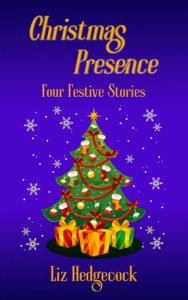
A character from the Maisie books appears in one of the four Christmas short stories in Liz Hedgecock’s Christmas Presence, Four Festive Stories. It’s a perfect way to sample Liz’s work and to gift for the Holidays!

.

This article was posted by member, Jackie Houchin

.

How I Set A Mystery In The Galapagos

By Guest Blogger, Sharon Marchisello

For as long as I can remember, I had three goals in life: become a bestselling author, meet and marry the love of my life, and travel the world together. And I always figured I’d do them in that order. Although I achieved my dream of being a published author, I’m still working on that “bestselling” part.  

When I graduated from the University of Southern California with a master’s degree in professional writing, I realized I’d have to get a “real” job. Not only was I not making a living as a writer; I wasn’t even published. Should I go for an opportunity that involved writing but might drain my talent and energy? Or should I look for something mindless that would pay the bills, so I could focus on my stories during off hours? Then a position as a reservations agent at Western Airlines fell into my lap.  

My roommate had a friend who worked there, and one day the friend called to say Western Airlines was hiring. I was the first person to listen to the message on our answering machine and begged to go to the interview too.  

The woman who interviewed me said, “You’re overqualified for this job. You just want it for the travel perks, and I know you’ll quit after a year or so. But I won’t stand in your way.” I stayed with the company for twenty-seven years; my roommate left after six months.  

But she was right about me wanting the travel benefits, and my first few years, I was on a plane every time I had a day off. I met my future husband at the Los Angeles airport, and together we’ve taken 65 cruises and visited over 100 countries on all seven continents.  

Although I kept writing fiction and even published a few travel articles, I never set a story in one of the destinations I’d traveled to. Until the Galapagos.  

If you’re looking for the Galapagos on the map, it’s a group of islands straddling the equator, approximately 600 miles off the Pacific Coast of Ecuador. I never planned to set a book there, either, but six months later, I remembered an experience from our cruise that I thought would make a great opening scene for a mystery.  

Normally, the guides were conscientious about counting heads and watching over all the passengers in their charge whenever we were away from the ship. In an archipelago comprising 97% national park containing flora and fauna found nowhere else on earth, tourists must be carefully supervised.

But one day, my husband and I left another activity to join a snorkeling excursion already in progress, and neither of the guides assumed responsibility for us.  

We were swimming along, marveling at the vast array of colorful underwater life, when I surfaced to see both Zodiac boats motoring back to the ship—without us! I can still feel the panic of being left alone in the middle of the ocean, treading water off the shore of an island populated only by sea lions and blue-footed boobies.  

I waved and screamed, bobbing up and down like a spyhopping whale, and fortunately, someone spotted me. One of the boats turned around and came back to pick me up. I didn’t see my husband right away but told the guide he was still out there. In a moment, he’d swum up and climbed aboard. All was well.  

But what if… What if my protagonist’s companion didn’t get picked up? And what if the person was left behind on purpose?  

I had a great time writing the book, reliving our trip through photos and program notes, plus doing a lot of supplemental research on the internet.  

When Secrets of the Galapagos begins, my heroine, Giovanna Rogers, is snorkeling with her new friend, tortoise researcher Laurel Pardo. The two get separated from the group, and Laurel disappears. No one on the ship will acknowledge that Laurel didn’t make it back.  

To determine a motive, I recalled a conversation I’d had with one of our guides during a visit to the Charles Darwin Research Station in Puerto Ayora, the largest town on Santa Cruz (one of only four inhabited islands in the chain). “I know a secret about Lonesome George,” he said. “But if I tell you, I’ll have to kill you.”

Lonesome George was a Galapagos giant tortoise made famous for being the sole survivor of the Pinta Island species. Unfortunately, efforts to breed George were unsuccessful, and the ancient tortoise passed away in 2012 without an heir.  

But what if someone discovered another giant tortoise from a different subspecies also thought to be extinct? And then a tortoise researcher unearthed information about the animal that the tourist industry didn’t want released?  

You’ll have to read Secrets of the Galapagos to find out what happens next.  

Blurb:  

Shattered by a broken engagement and a business venture derailed by Jerome Haddad, her unscrupulous partner, Giovanna Rogers goes on a luxury Galapagos cruise with her grandmother to decompress. At least that’s what her grandmother thinks. Giovanna is determined to make Jerome pay for what he’s done, and she has a tip he’s headed for the Galapagos.  

While snorkeling in Gardner Bay off the coast of Española Island, Giovanna and another cruise passenger, tortoise researcher Laurel Pardo, become separated from the group, and Laurel is left behind. No one on the ship will acknowledge Laurel is missing, and Giovanna suspects a cover-up.  

When the police come on board to investigate a death, Giovanna assumes the victim is Laurel. She’s anxious to give her testimony to the attractive local detective assigned to the case. Instead, she learns someone else is dead, and she’s a person of interest.  

Resolved to keep searching for Laurel and make sense of her disappearance, Giovanna learns several people on board the ship have reasons to want Laurel gone. One is a scam involving Tio Armando, the famous Galapagos giant tortoise and a major tourist attraction in the archipelago. And Jerome Haddad has a hand in it. Thinking she’s the cat in this game, Giovanna gets too involved and becomes the mouse, putting her life in jeopardy. But if she doesn’t stop him, Jerome will go on to ruin others.

AMAZON 

SUNBURY PRESS

Bio:  

Sharon Marchisello is the author of two mysteries published by Sunbury Press—Going Home (2014) and Secrets of the Galapagos (2019). She has written short stories, a nonfiction book about finance, training manuals, screenplays, a blog, and book reviews. She earned a Master’s in Professional Writing from the University of Southern California and has been an active member of Sisters in Crime since 1995, currently serving as treasurer of the Atlanta chapter. Retired from a 27-year career with Delta Air Lines, she now lives in Peachtree City, Georgia, and volunteers for the Fayette Humane Society.  

Website: sharonmarchisello.com (https://smarchisello.wordpress.com/)  

##

This article was posted by member, Jackie Houchin. If you’d like to read my review of the audiobook version of  SECRETS OF THE GALAPAGOS, click here.