An Interesting Year Already

by Linda O. Johnston

           Hey, it’s only the third week of January 2025, and a lot has happened that we writers in Los Angeles could use as subjects or backgrounds in our writing for the rest of the year.

What’s happened?

Well, those terrible fires that apparently made the news everywhere. Rosemary did a wonderful job of describing them last week. And I certainly identified with a lot she was saying. But with all that happened, I just found myself focusing on it when I started to do my post for this week. So here we are again.

 I was one of the fortunate people who had fires start not too far away but not come very close. The winds were strong, and the air quality became terrible. But I didn’t even see any of the fires anywhere nearby.

Writers often take things that happen around us and make them subjects of our writing. Will I do that?

Maybe, and maybe not. I’m currently working on a new mini-series for Harlequin Romantic Suspense, and although I do have the stories set in the Los Angeles area, I’m not sure about working the fires into them.

I hope that all of you reading this remain safe, from fires and every other disaster that might occur wherever you are.

And I hope you all have a wonderful 2025.

OUR BIG FAT JANUARY SURPRISE!

by Rosemary Lord

And so, a new year begins, filled with expectations and promises of magical things to come.

But then, Mother Nature had a different idea for Los Angeles.

We held our collective breath as we watched a hungry fire race through the SoCal shoreline, devouring parts of Malibu and the picturesque town of Pacific Palisades. House after house on street after street. The ferocious winds carried the flames through acres of unfettered dry brush and vegetation, erasing entire homes, lives and neighborhood shops, schools and businesses.

In just moments so many lives were changed forever. Not just the wealthy, not just the celebrities, many of whom have called this part of Paradise home for decades, but the working people who have lived there for generations, living everyday lives with everyday jobs. They, too, lost everything in an instant.  

This swathe of destruction was not limited to Pacific Palisades, which took the brunt of it. Malibu, Santa Monica and on the other side of Los Angeles, Pasadena, Altadena and environs became engulfed. Altadena suffered desperately for days. That was where the awful death toll was greatest. This is a lovely, peaceful area with lovely houses.  Just good, honest hardworking residents; many multi-generational family homes were lost.

 Everywhere, the sky was a dull yellow and thick with smoke, as the sun kept trying to peek through. And in the middle of LA, even Hollywood was caught in the crossfire.

 The rumor is that arsonists set the Runyon Canyon fire behind the Woman’s Club, which was evacuated. Nearby, Laurel Canyon, where I live, was set alight. Our buildings were evacuated. These were the Sunset Fires.

I first received an alarm on the Woman’s Club cellphone to “be prepared” and then the order to evacuate the area. Minutes later a similar alarm sounded on the phones throughout my building. Neighbors were gathering on the patio, with bags already packed.

And so I quickly grabbed a bag and stuffed my lockbox that held vital papers, passports etc. in it and, with my hands shaking at the enormity of what was happening, reached for my laptop: iPad, charging cords, several writing files and notebooks followed. I picked up thumb-drives, recent bills and my checkbook. After a couple of deep breaths to calm myself so I could think rationally, I selected a few photographs, a small carving my dad had done, my late-husband’s great aunt’s small 1918 diary of her time in WWI Paris.

Clothes! I’d forgotten about that. So, I darted into the bedroom, found a wheely-case and threw in shoes, a sweater, shirt, jeans, nightie and a handful of undies, plus moisturizer, mascara, lip balm. My toothbrush, I threw that in along with my hairbrush – and some English Tea-bags. All the essentials! I loaded them in my car, then returned to my apartment where my neighbor Tyler was following all the reports on his phone. My other neighbor Sharon had joined me, waiting for instructions. We were then told the roads were gridlocked, so we should shelter in place. Some of our neighbors had left earlier as they had family or friends nearby.

But where was I to go? My family are in England!

Sharon said we could go to her sister in Agoura, about 50 minutes away. Then, I was very touched to get calls from friends offering shelter in their homes. People were so kind. We were told our Evacuation Centre was at Hollywood High School. I envisioned us in the huge auditorium, with rows of cot-beds, trying to sleep…

 We decided to stay in my living room, watching ongoing reports on tv. They showed the police cars, fire trucks and barricades at the end of our street. We felt a bit safer, knowing everyone was watching out for encroaching flames. Tyler regularly walked outside, checking progress from the street to the canyon and checked for evacuation updates.

I regularly checked the security cameras covering the Woman’s Club property after the evacuation order. All looked calm. Except – suddenly it looked as if it was raining. Then I heard the drone of additional helicopters overhead. It was the wonderful, brave Fire Fighters, getting water from the Hollywood Reservoir and dropping it on the fires in Runyon Canyon behind the Woman’s Club and on the Laurel Canyon fires behind our apartment building. There was a collective sigh of relief as we learned they were successful at putting out the majority of those fires, while ground-crew battled the stubborn embers blown around creating new fires in unexpected spots throughout the night and next day. 

So, we waited, listening to updated reports. Eventually, close to 10 pm, we felt safe enough to declare, “that’s it. We’re staying!”

I retrieved my case from my car. Some of our other neighbors were doing the same thing, dragging bags and suitcases back indoors. Sharon went back to her apartment and Tyler assured us he would be on guard all night and alert us if anything changed.

I think we all slept fitfully that night, packed bags by the front door, everything ready.

The next morning, things were eerily quiet. Slowly traffic appeared along Laurel Canyon once police had removed the blockades. I dressed hurriedly, prepared for a sudden departure. False Evacuation alarms from the city went off over the next couple of days. “Sorry! Mistake!” messages followed. Raw nerves everywhere. But the winds died down.

People had a respite to check on friends, family, survey the damage, start to clean up.

God bless those Firefighters, Police, First Responders and volunteers. Heroes, all of them.

Almost a week later, things have quietened down, although we are currently on alert for a new High Winds forecast. So ,I remain vigilant. We all do.

Eventually I unpacked my bags, knowing now exactly what to take, important papers in a ‘go-bag’ at my feet as I type. But I cannot find that toothbrush anywhere! Never mind, I have others…

Life really is bigger than fiction, I recognized. And we have had time to reflect on what really are the important things to save, once you know that people around you are safe. What really matters. And to count our blessings every day.

If you were given 10 minutes to pack for evacuation – what would you take?

…………………………….

ANOTHER YEAR IN REVIEW

by Miko Johnston

As we enter 2025, the end of the first quarter of this century, I want to look back to the past year and share with our readers some of the great writing, advice and tips I’ve found on this blog.

Posts by Rosemary always have such an intimacy to them I feel like I’m reading her diary. She always brings her life and inner thoughts to everything she writes in an articulate and enlightening way. Even so, I found Let Go and Live… particularly poignant. I truly hope she takes her words and turns them into actions.

Jill’s musing on verbal laziness in “She is going, you know, to…” reminded me of how often we hear that when we speak with people. It clarifies the reason why dialog must sound natural but without all the unnecessary filler often used in real world conversations. Imagine reading a book filled with verbal speed bumps. Boring.

One of the best books on writing is The Writer’s Journey by Christopher Vogler, in which he synthesizes narrative patterns of literature from the academic research of Joseph Campbell. Jackie’s piece, Seven Story Plots, edited those patterns into helpful, easy to remember summaries.

Linda’s piece on Choosing a Theme reminded me of how important it is to carry through something meaningful to you, whether you love it or hate it, in all your writing. It can bring in like-minded readers who’ll cheer or jeer along with your characters.

Libraries are a gift to the world, as Maggie’s post, September is Library Card Sign-Up Month! illustrated so well. At one time in my life I could boast I had four library cards to different systems in two states.

I’ve long said Gayle’s posts are like mini lessons in writing, but I found even more in Acting Class 101. I’ve known Gayle for many years, but I learned more about her life in this piece. She exemplifies a writer who pushes herself to improve, and continually does, as well as shares what she’s learned with others.

Oh, the places you’ll go as a writer. That never rang truer than when I read How I Found Myself Working as a Writer in Residence of a High-Security Male Prison by guest blogger Jane Corey. A fascinating experience, only topped by her own story arc of how the job changed her in multiple ways.

Guest blogger Renee Le Verrier discussed awareness in body as it connects to our writing in What’s the Point of Resistance?, illustrating all of her points with her own words. A good reminder to not only consider that connection, but to get out of the chair occasionally and stretch!

Lastly, I submitting my post, Exercising Your Vocabulary, which detailed my use of word games to keep my verbal skills active during and after Covid lockdown. It ended with the challenge to come up with as many words as you could that began with the letters BR— (I came up with 202).


If the piece seemed incomplete, it was – only half of it went live. So here is the rest:

 To mix it up, I added more challenges. How many words could I list that end with S but are not plural – double points for any that end in a single S. I also revived a childhood school game. I’d take a long word, like PRESIDENTIAL, and see how many words I could make with the letters, but without using the letters more than once. Back then I allowed three-letter words. Now I restrict it to at least four letters and no pluralizing.

Why should this matter to you? The pandemic may be over, but many of us, particularly those of us of a certain age, may need extra stimulation of the brain to keep it fully functional. Also, many folks live alone and if they work from home, they’ve lost the camaraderie of the office. Even without lockdown, I don’t get out and around people as much as I used to, and frankly, my conversation skills aren’t as sharp as they once were. Sometimes the only complex words I use when talking with friends are medical terms, as we seem to spend a great deal of time discussing our health. My husband and I have taken three international trips this year, which has forced us to communicate in more than one language. Normally a break in one’s routine can make for a good topic of conversation, but only if you can discuss it in a way to make it interesting.

Storytelling skills rely in part on vocabulary, knowing the right word to use in a situation, as well as how to compose those words into interesting dialogue or background. The same holds true for conversation. Sharpening my skills will not only improve my ability to communicate with others verbally, but also what gets on the page.

I had an opportunity to use my revived skills at my granddaughter’s baby shower last August. I wrote a love letter to her and her husband, which I dubbed “A Sweet Mad-Libs Proclamation”. I substituted blank spaces for several words and inserted a number in their place. Each number referred to a sweet treat. Here’s a sample:

We eagerly await the birth of your –1– Florence.

We have –2– doubts you will be great parents,

because you’re blessed with common sense and love.

#1 was a Baby (Ruth) bar; #2 was a Zero candy bar. The proclamation ended with Love and  –7–  – I bet you guessed it: a bag of Kisses. (P.S. Florence made her appearance two weeks early, on September 4; happy, healthy and perfect!)

I’m finishing the final novel in my series, so having easy access to the vocabulary I’d built over a lifetime will strengthen the prose. During the holiday season, I send out cards with notes to family and friends, near and far. I’ve also entered the time in my life when sadly, I frequently have to write notes of support for serious illness and letters of condolence. However, many joyous occasions still happen, such as the birth of my great-granddaughter and a forthcoming marriage in the family. All of this will be more readily accomplished, now that my vocabulary is out of lockdown. 

How are you keeping your communication skills active?

###


Miko Johnston, a founding member of The Writers in Residence, is the author of the historical fiction series, “A Petal in the Wind”, as well as a contributor to several anthologies including the about-t0-be-released “Whidbey Island: An Insider’s Guide”. Miko lives in Washington (the big one) with her rocket scientist husband. Contact her at mikojohnstonauthor@gmail.com

.


Christmas in Bangkok & Hong Kong

by Jill Amadio

I looked forward to spending Christmas in Bangkok, Thailand. We’d moved there four months earlier when my husband was posted to Saigon, and I landed a job as a reporter for the Bangkok Post.

Writing about an Asian Christmas energized me, and I eagerly looked around the local shopping districts for gifts, decorations, and seasonal goodies for the kitchen. Writing features and pointing out the differences between our holiday in England and America and our current home seemed like endless discovery.

Alas, none of these visions came to a realization. Thailand, like most other Southeast Asian countries, does not celebrate Christmas because it is Buddhist. With three children expecting to wake up early on The Big Day and rush downstairs to open their gifts, what to do?

Ah! Got it! We’d spend the holiday in Hong Kong, just an hour’s flight away. At the time, the colony was highly attuned to British customs, and the big hotels, I was assured, displayed a splendid farang (foreign) Christmas that would enthrall any Westerner. In addition to enjoying the holiday, I planned to interview hotel guests, locals, market stall owners, and tourists. Among the latter I encountered, were Swiss, German, Swedish, and Australians.

I’d visited Hong Kong several times due to assignments and visited the island of Macau to cover auto racing. There were always a plethora of stories worth reporting for the newspaper in Bangkok but I was eager to experience how stupendous this Christmas adventure would surely prove to be.

My husband and I decided it would be silly to take wrapped gifts with us, so we planned to take the kids shopping to choose their own. My editor agreed that I would write about the trip, sending in daily reports and photos taken with my Polaroid camera before we skipped New Year’s Eve and returned to Bangkok. As our last day drew near and we were anxious to return home, we booked an earlier flight.

Big mistake.

It turned out that December 31 was always a massive celebration for both Brits and Chinese, a richness of reporting I decided to cover, even though I had plenty of stories of our own excursions in Hong Kong. Besides, who wanted to miss the turn of a century in this historic city at the southern tip of China?

Our children had never been in a toy store because two were born in Spain, where Christmas was essentially a religious holiday. Our third child was born in the U.S. during a quick turnaround trip to New York and back to Thailand to ensure her American citizenship by being born in the States. My son was already pledged to fight, at 18, in any war that Spain became involved in because he was born in Madrid, but his second sister was registered as American, as by then, I had received my own U.S. citizenship.

Our shopping trip was a great success with many changes of mind as we, as parents, pointed out the mounting cost of their decisions. Finally, having selected their toys and new clothes, and I had talked to several shoppers from various countries, we returned to our hotel. It was my turn to choose a gift. My husband wanted to go out alone and buy me a watch. I told him I’d like a Patek Phillipe, please. Off he went but returned rather quickly.

“Are you insane?” he asked. “Do you know what those watches cost? No way. You’re going to have to settle for a Rolex.”

At the time, Hong Kong was turning out fake Rolexes by the thousands. Most had wristbands that looked like gold but were, in fact, made from anything but that precious metal. Aha! Another good story! In fact, the bona fide Rolex dealer pointed out our mistake when we showed him the watch we’d bought elsewhere. Never mind. The band looked authentic, and the watch itself was confirmed as the real McCoy.

The festive air in the colony extended everywhere we went through the perpetually crowded streets. I knew that more than 7 million people lived in the small British enclave, and they invaded every restaurant, bar, and all the shopping districts in sight. Antique stores added red ribbons to their vintage wares, and the buildings were ablaze with Christmas lights. Even the hotel’s small office for guest use had a small Christmas tree. Laptops didn’t exist back then, but the electric typewriters fit the bill for typing up my interviews.

After a great New Year’s Eve, the hotel manager asked if we planned to stay on for January 6, the Chinese New Year, but by then, we’d had our fill of festivities.

I returned to Bangkok with a new satchel filled with notes and an extra suitcase for the kids’ toys and outfits. In Bangkok, we had to have our clothes tailor-made as there were no ready-made stores. The upside was that a dressmaker charged $5 or $6 to create a dress, a blouse, or a skirt. I’d simply bring in the fabric, show her a Chanel photo in Vogue or another magazine, and she’d copy it.

We left Hong Kong after two glorious weeks and enough material for several follow-up feature stories in the Bangkok Post.

Now, permanently living in America, with stores brimming with seasonal cheer, I wish my dear friends and readers at The Writers in Residence a Happy Hanukah, a Merry Christmas, and a Happy New Year!

A LOOK INSIDE IN-PERSON SELLING

By Bonnie Schroeder.

When I moved from California to Idaho in 2018, I also transitioned to being a self-published author. Until then, I’d had the benefit of a wonderful publisher, Champlain Avenue Books, behind me.

Alas, they closed their doors soon after my relocation, and I went solo. I’d done a handful of in-person selling events in SoCal, but I confess to being a lazy self-marketer. In SoCal my experience with those events mostly took place in libraries, and all I had to do was show up with my books and hope readers would buy them.

In Idaho, however, with three self-published books on my resumé, I realized I needed to be more proactive in getting those books into readers’ hands. One way to sell books in person is through trade shows known variously as craft fairs, book festivals, holiday bazaars, and a few other names (some of which I shall not print here.)

There are many book fairs in libraries here in Idaho, but there are also a lot of general craft fairs, big and small, all over—in parks, high schools, even specialty grocery stores. And many of those events take place outdoors—which, in Idaho, means contending with weather extremes. I’ve done festivals where I had to pull my luggage cart full of books through snow, and others in a field where the daytime temperatures grazed 108 degrees.

Weather conditions are only part of the fun. I also learned that I needed to supply my own “equipment”—i.e. tables, chairs, signs, decorations, and, in summer, canopies, shade walls, and a battery-powered fan. Another essential is a means of transporting my supplies—a sturdy folding hand truck for use on pavement, and a collapsible fabric wagon for other terrain.

I had the good fortune of connecting with two other “local authors,” Laura Jenski and Julie Howard who are pros at this, and they generously let me learn from them and shared tables and chairs with me as I began selling my books in person.

Laura has often recruited her husband to help transport tables and chairs to some events. She and Julie have also provided canopies for many events, and even when I brought the canopy, they assembled it while I parked my car.

I’ve done a few solo events as well, and I finally figured out I needed a checklist of supplies to bring, rather than searching through my memory every time:

  • Water (!) and food (!!)
  • Credit card reader (e.g., Square)
  • A supply of small bills to make change
  • Pens to sign books
  • Price list
  • Bookmarks, postcards, or other promotional material
  • The aforementioned decorations and/or a bowl of candy to lure potential buyers to our “booth.”
  • And oh yes—in Idaho (as in many states, including California,) one must secure a sellers’ permit to track, report, and pay sales tax to the state. Ironically, I learned that Idaho’s sales tax process is way more complicated than California’s.
  • Following Laura’s and Julie’s lead, I also realized I needed a large-ish poster with a picture of me and my books. My website and book designer Paula Johnson created the artwork, and my local Staples made the sign. I confess to feeling a surge of legitimacy at the result.

You know that saying, “It takes a village ….?” It is so true! In addition to help from the folks mentioned above, I send a thank-you to Heather Ames, a powerhouse on the festival circuit in Oregon. She sends me critiques of my table layouts, along with encouragement and examples, and I emulate her as much as I can without committing outright piracy.

This photo shows my comrades Laura and Julie with me at one of our events, and it truly is crucial to have a support network at these things. Some writers, me included, are not especially outgoing, and it’s a challenge to attract and engage with visitors at the festivals.

Some are interested and kind, while others are dismissive—masters at avoiding eye contact. Now and then, however, a visitor will show up who bought one of our books at a previous event and liked it well enough to seek out the author and buy more. This truly makes our day when it happens.

What the photo doesn’t show is all the hours, days, weeks, even months of prep work involved in getting us to this smiling display—things like replenishing our inventory, posting on social media, packing supplies, hauling boxes of those books to the venue, and showing up sometimes before sunrise to set up the tables and arrange the display.

There are still festivals happening in Idaho, but I’m done for the year—saving my energy for the spring. I just registered for a book fair at a nearby library in April. Library events are the best, because you have a built-in audience, and this one is no exception.

So all you authors out there, whether traditionally or indie published, I hope you get a few ideas from this post. Get out and show the world your books, because—especially for indie authors—that’s an important way to grow your readership. Best of luck to you all.

What’s The Point of Resistance?

by Guest Blogger, Renee Le Verrier, E-RYT*

When the writing gets tough, the tough stay in the chair.

When the writing gets tough, I slide off the chair onto a yoga mat.

I begin a class with a short reading once everyone gets settled on their mats. On one particular morning, Greta, an eighty-something with a sunny smile who never missed a session, cleared her throat.

She leaned closer to me. “May I ask you something?”

I nodded.

“If you could define yoga in one word, what would it be?”

I didn’t hesitate.

“Awareness,” I said

Greta sat upright and seemed to be considering my response. “That could apply to nearly everything, that awareness thing,” she said.

That’s the day I went home and unrolled a mat beside my writing desk. So closely related, I wanted to practice each near the other.

Yoga, in a longer definition, is more a meditation in motion than it is bending into poses. Similarly, writing is more than the number of words on a page on any given day. The craft moves characters forward or back, into twists in a kind of motion of imaginative meditation. When my mind is with me, not off planning what’s for dinner, present with my pose or in a scene, both my yoga and my writing deepen.

The word yoga derives from Sanskrit meaning ‘linking together’—as in yoking—the mind and body. Awareness connects the two. When I take notice, the continuous chatter in my brain—that’s busy, busy making mental remember-to lists—fades. What’s opened up makes room to be attentive.

In writing, I focus on how and where the words affect me physically. If my typing resembles an air drum solo, I’m on a roll. If I’m in the middle of crafting a fight between two characters I’m breathing easy and my toes aren’t curled, something is off. It might not tell me what is awry but I’m aware I need to edit.

If I can’t connect with my body, I pause and take a detour to my face to take inventory there. Are my jaws clenched? Lips squeezed tight like a zipper?  Eyebrows furled?

Toggling from body to expression has revealed an assortment of secrets. In yoga, I may believe that I’m relaxed while my cheeks and lips form a frowny face.  In writing, I’ve been delighted with myself for a stellar phrase, yet the computer screen reflecting back at me is unsmiling. These scowls indicate dissatisfaction and point me to a needed revision.

Awareness isn’t skin deep, recognizing only pain or pleasure. In yoga, my mind is reading my body and reporting back, yes. But stretching only to the first sense of pushback doesn’t allow much room for lengthening or release. I instruct the class to go as far into the pose that they get to the point of ooh, ow, ow.  But don’t stay there. Know where that point is, then ease back to where the stretch first meets resistance, to just ooh.. From there, try to coax the line of opposition into backing away.

In writing, we reach points of resistance in our plotlines, our narrators, our characters—fictional or non. The story arc banks on opposition—without it, there’d be no conflict, no resolution, no growth. I look for the far edge of that resistance. It may be too intense, unbearable, so I take it back to the point where it feels right. Just like when I’m on the mat.

Greta was right about that awareness thing.

* An E-RYT (Experienced Registered Yoga Teacher) has documented over 2,000 teaching hours and attended at least 500 hours of training as a student.

.

BIO for Renee Le Verrier

Renee Le Verrier enjoys being surrounded by books, painting supplies, dog toys and yoga. The author of Yoga for Movement Disorders and Travels with Tommy (featuring a very special Great Dane), she has been awarded Best in Show in local juried art shows but mostly fills up the walls in her office. She has been teaching and presenting on yoga throughout the US and UK for eighteen years. She writes from an island off the coast of Washington where she lives with her husband and another Great Dane. She’s currently working on a YA novel, which also means she’s practicing yoga regularly. Visit her at http://www.leverrier.com

Copy Work: What is it? Why do it?

by Jackie Houchin

If you are an avid reader, you know that the best writers pull you into their worlds. Their words become images in your imagination as soon as you read them. The writing itself becomes invisible. (Or at least it should.)

That is a problem when reading to learn how the author did it. Instead of paying attention to the sentence structure, you are immersed in the story.

That is where copy work comes in.

What is Copy Work?

It is the practice of exactly copying another writer’s words, omitting no punctuation mark or capitalization, usually done with a pen.

Who even does this?

Jack London trained himself to be a better writer by copying out (in longhand) passages from Rudyard Kipling’s work.

Other writers have used Ernest Hemingway’s writings or copied out “The Great Gatsby” by F. Scott Fitzgerald. (A short novel)

Morgan O’Hara copied the U. S. Constitution by hand, word by word.

Greg Digneo, on SmartBlogger, tells the story of salesman Dan Kennedy, who copied a two-foot stack of sales letters by hand. Twice!  He wanted to become the best in this field.  Today, you would have to pay him $100,000 to write a sales letter for you. And he would get a commission on every sale you make.

What is the goal of copy work for writers?

The goal is to understand how authors write and express their ideas. What makes their writing work and flow? How do they structure their paragraphs and sentences? How do they create compelling characters?

Copy work helps you identify bad writing habits, like passive voice, stale metaphors, repeated words, etc.  It will help you with good punctuation and grammar, spelling and vocabulary, pacing, scene description, and using dialog tags.  It will help you write more precisely, with fresher, more original words.

Seriously!

Artists copy the Masters to improve their skills. If you want to be a better writer, copy great writers. 

How do you make the most of your copy work?

  1. Choose a writer you love, the book(s) you could not put down.
  2. Set aside time to do your copy work daily (20-30 minutes for handwriting, 10-15 for typing). Use a timer.
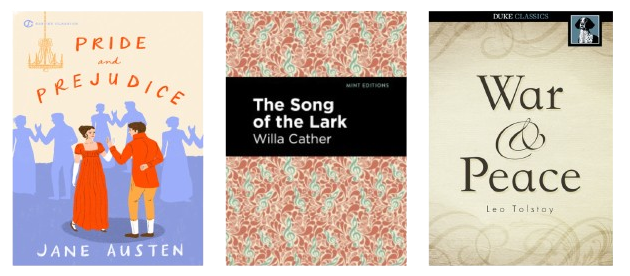
  3. Select a moderate-sized chunk of text. (Not War & Peace, but also not a Haiku)
  4. When you finish copying one story, pick another one to work on. Keep going for at least 90 days. (The magic of copy work happens through repetition.)
  5. Don’t stick to a single author. The goal is to learn writing techniques, not imitate one author.
  6. Mix genres: nonfiction to fiction, fantasy, science fiction, mystery, poetry, film scripts. (They all teach different writing methods, scene structures, dialogue, setup, etc.)
  7. Practice daily, if you can
  8. At the end of each session, review the passage you copied and add notes. Reflect on what you liked and what you learned.
  9. Follow copy work by moving into your regular writing. You are all primed to go.

By doing copy work every day, you will be writing every day. It will train your brain to see writing as a no-stress, no-pressure practice. It will make it easier to turn to your own writing.  If you are having writer’s block or just can’t come up with a new idea for a project, story, or book, you can still do your copy work to keep that daily writing habit going. You know, seat of your pants in a chair…. etc.

What do you NOT do with your copy work?

You will not publish your copied text or try to pass it off as your own. Copy work is for your eyes only. It’s a writing exercise. It is not plagiarism.

Need some suggestions? Try copying out these.

Have YOU ever tried COPY WORK?  Did it help you?  How?  If not, will you give it a try?  If you can’t comment below, drop me an email at Photojaq@aol.com. 

CONFESSION: Years ago, I read that I could become a great writer if I could copy a book I admired in its entirety. Yes, the WHOLE book.  I thought that sounded too good to be true. But, as I admired Rosamunde Pilcher and loved THE SHELL SEEKERS, I thought I’d try that book.  (The paperback edition is 656 pages!)  I think I got to page 35. I wasn’t becoming a great writer. I was getting bored, and my hand was cramping.  I quit. 

But now, after this research (short sessions, consistency, review and take notes), I’m willing to try again. I may not become great, but I think I’ll improve my writing skills.  I have another book in mind to copy. 

Perhaps in my next rotation post, I’ll tell you what I learned from the experience.

##

  • And thanks to the following for their insights on this “cool” topic. 
  • RADEK, founder of Writing Analytics
  • ELIOT CHAN – Eliotchan.com, April 14, 2020 
  • MATTHEW ENCINA – thefutur.com, July 13, 2020
  • JULIA HESS – craftyourcontent.com, May 17, 2018
  • LORRAINE THOMPSON – marketcopywriterblog.com, March 14, 2012
  • ANN KROEKER – Annkroeker.com, June 27, 2017

The Week I Rose Before Dawn to Write

My title is a bit misleading. In the days leading up to Election Day, I did rise in the wee hours and did write. I’m not a morning person, but for years I’ve known writers who worked on their stories before sunrise. There are certainly advantages: it’s quiet, the rest of the (sensible) world sleeps, word counts soar. But it was the election that prompted this deviation from my normal schedule.

In a moment of patriotism, I had volunteered to work at the polls as an Officer of Election (OOE) on Election Day, 5am-7pm and beyond. Yikes! I needed to “train” my system to endure such a radical change to my schedule, and that meant early to bed, early to rise. As long as I was at it, I would write.

Starting on Tuesday, October 29, I rose at 6 am for two days, 5am for two days, and 4 am for three days. I enjoyed coffee, my cat’s companionship, and worked on a short story. I read book on writing, touted as a how-to book on craft (we can always learn about craft); in reality, it was a commentary on writing, delivered in a lofty tone. It required a focus that kept me awake. I did not check my email or anything else on my computer (I wrote in longhand).

Bedtime ranged from 9-10pm, and I had no trouble falling asleep—until the night before the big day when I didn’t get to sleep until 12:30pm. That meant I had three hours and ten minutes of shuteye. Would I be able to make it through the day? As Frank Sinatra crooned, “I’m in the autumn of the year” (in more ways than one).

I did make it through, and enjoyed myself. I worked with a nice group of volunteers and the day was incident-free. The voters were pleasant and cheerful, a diverse group representing a range of ages and cultures. Interesting dress and hair styles as well. A writer’s paradise! I mainly helped them scan their ballots and handed out “I Voted” stickers. Many children accompanied their parents and enjoyed the  “Future  Voter” stickers. I also worked the floor, directing voters to booths, the ballot scanner, and occasionally the restrooms. Voting is at the heart of democracy and I appreciated taking a part in the process.

Would I do it again? Not likely, but it may be too soon to decide. Early voting holds more appeal, as the volunteers work in shifts, a much kinder arrangement. And it would still offer a way to pay tribute to my mother, who worked at the polls for decades.

My feelings about rising early to write: I liked seeing the sun rise and the light growing brighter and brighter. But I found it quite lonely, especially on the 4am days. The quiet was very, well, quiet. I can see the appeal, but it’s not for me.

Happy writing, whenever and wherever you string those words together. And thank you for voting!