
I’ve supported many worthy causes throughout my life. In addition to monetary donations to charities, I’ve baked elaborate pastries to be auctioned off at a scholarship dinner, left canned tuna, dried beans and boxes of pasta for my local food bank, and brought gently used clothing and household goods to thrift stores. However, this year I made a new donation – myself – to what I believe is a very worthy cause. I began a volunteer program for students at a local high school.
It began when a teacher who offers a creative writing class at the school contacted my writers group. Several of her students wanted to pursue writing, either as a passion or a career path. However, they needed guidance and she asked if we could help.
I took the helm and gathered several writers, all published authors with years of experience, to begin a mentor program. Students in the class send us pages to critique and we supply feedback, guidance, and (I hope) encouragement. We began the program with a class presentation, where each of the volunteers had seven minutes to discuss some aspect of writing. I will share my contribution with you:
Miko Johnston: THREE HABITS ALL WRITERS MUST DEVELOP
Writers may differ in how and what they write, but most will agree to that be successful, all writers must know some basic principles. Here are three key ones:
I Develop the writing habit:
Write and keep writing. Too often, writers will get a few pages or a chapter written and then go back and tweak them, over and over, until they have it ‘right.’ Or they’ll stare at a blank page, waiting for inspiration. Resist the temptation. Keep going, even if it isn’t perfect, or brilliant. Even if it isn’t good. Things may change as you progress in the story, but you won’t know that until you have more, or all of it, written. It’s why many writers begin with a ‘vomit’ draft, where you get it all out now and clean it up later. Remember: it doesn’t matter what you start out with, only what you’ve got when you’re finished. That’s what rewriting is all about. Develop the writing habit and practice it regularly. Finish what you’ve started, then begin again.
II Develop the grammar habit:
Master the rules of writing. Learn how to use grammar and punctuation, because once you do, you can consciously break the rules without it seeming like you don’t know what you’re doing. To learn how todo it right, get a dictionary, thesaurus, and style guide.Then pick a style, any style, and stick to it. There are many ‘right’ ways to write. You can debate over whether to write 2017 or twenty seventeen, if a comma is needed after the next-to-last word in a list, or whether next to last should be hyphenated. For example, the current trend is to leave out commas except when they’re needed to make the point clear (“Time to eat, Dad” vs. “Time to eat Dad”) or put a pause in a sentence. Which style you use matters less than whether you’re consistent about it.
III Develop the fearless habit:
There’s a tendency to keep your work private. However, you won’t know how people will react to your work unless you have the courage to share it with them. Join a critique group or find like-minded writers to form your own group. Meet with people who’ll read your work and offer genuine critique, which is different from criticism. You will do the same with their writing. You’ll be amazed at how much you will learn from evaluating others’ work. If you’re reluctant or afraid to show your work to others, don’t be. You might think that having someone read your work and tell you it’s bad would be the worst thing to hear, and you’re right. However, it’s not because their comment is hurtful, but unhelpful. What’s bad about it? If someone can point out what isn’t working in your story, and how to fix it, that isn’t negative. As for useless comments like, “It stinks”, ignore them.
**** ******* ****
It’s been such a pleasure working with these students. They’re anxious to learn and receptive to our feedback. I can see marked improvement in their work already. We’re on summer hiatus now, but all of my volunteers are looking forward to resuming the program this fall. A few of the students have real potential. Perhaps in the future, after they’ve been published, some of them will pay it forward and help a new generation of young writers.
If any of you are interested in starting a mentorship program for young writers, there are many opportunities to help in your community. Check with your local public or private schools. Community organizations like the Boys And Girls Clubs, Big Brothers/Big Sisters, and other youth groups might welcome your help as well. You’ll be amazed by how much you’ll learn through teaching others.
You’re welcome to contact me at mikojohnstonauthor@gmail.com for more information.
Miko Johnston first contemplated a career as a poet at age six. That notion ended four years later when she found no ‘help wanted’ ads for poets in the classified section, but her desire to write persisted. After graduating from New York University, she headed west to pursue a career as a television and print journalist before deciding she preferred the more believable realm of fiction. She is the author of the A Petal in the Wind series as well as several short stories. Miko is currently working on the fourth Petal novel as well as a mystery set in a library. Contact her at: mikojohnstonauthor@gmail.com

 We’re always seeking new ways to
 The Society has a newsletter that reports on various goings-on in Cornwall and on ex-pats. One delicious news item that caught my eye was that the Duchy of Cornwall (as we call provinces) was contemplating opening up an embassy in London now that the Cornish are finally recognized as an official minority! Tosca can have fun with that in her next book in the series, I thought. Then, lo and behold, I noted that the newsletter also ran book reviews. Well, icing on the cake. The review and a blurb of my book appeared in the next issue. I noted, too, that with the Society holding events all over the U.S they provide signing opportunities. When I attended the international Gathering of the Cornish Bards in Milwaukee, Wisconsin I had a book table, and quickly sold out.
 Are your settings on your web site? On mine,
  Another avenue for publicity came from a friend in New York, a leading classical music critic. He writes an internationally-syndicated column for ConcertoNet.com distributed in the U.S., Europe, Asia, and on the island of Karguella for all I know. He’d helped me with research for the music in both my mysteries and my current WIP, and surprised me with a lengthy review. After it appeared in the Bangkok Post, Thailand I heard from a reporter I worked there with years ago. She now owns a specialty music museum that I’ll include in a future book. Again, grist for the mill.
 I used to write an automotive column and sent my book, which features a vintage Austin-Healey, to my pals at car magazines. Alumni and club publications, too, welcome notices of new books of grads and members. Hit them up for a talk and write on their blog.
 novels. Her current literary focus is Route 66 as it traverses California’s Mojave Desert in her “Rhodes” series. Madeline is a lifetime lover of mysteries, and besides reading and writing, is also an occasional potter. She lives with her husband and assorted canines in the High Desert. Visit her
 Happy word-painting trails!
 Hanna Rhys Barnes is one of those people with an evenly balanced right and left brain. She has a BA in English but retired as a high school math teacher.
 A member of RWA’s national organization and of several local chapters, she currently lives and works on Whidbey Island in the beautiful Pacific Northwest. Hanna’s historical romances, Widow’s Peak and A Knight’s Kiss are currently available from the Wild Rose Press.


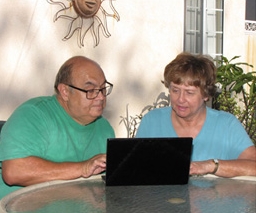 It has worked well for us. But many want to know exactly how this is done. Do we alternate chapters? Does one write and the other edit? Do you write in the same room with one looking over the other person’s shoulder? One person even said, “I don’t see how this could work. Why haven’t you killed each other?”
 Writing with a partner is not for everyone. A problem can arise if your writing styles are different. For instance, Janet is an “outliner” extraordinaire, while Will has always been a “seat of the pants” writer or “pantser.”
 When editing, the challenge of giving up scenes one of us puts time, energy, sweat and blood into may have to be cut. The standard answer for each partner is: “It’s for the good of the story”, or “We want to write a good story, right?” It’s these reminders that help the partnership move forward rather than having arguments about whether or not one scene out of hundreds should stay in.
 Published authors Will Zeilinger and Janet Lynn write individually until they got together and created the Skylar Drake Mystery series. These hard-boiled tales are based in old Hollywood of 1955. Janet has published seven mystery novels and two short stories. Will has published three novels plus three short stories. Their world travels have sparked several ideas for murder and crime stories. This creative couple is married and live in Southern California.




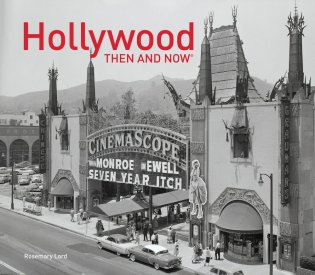
 The Magic of Hollywood

 There are so many specialist magazines that have an eclectic assortment of articles or adverts. I never know where I will find something curious or interesting. Family Tree Magazine is a great source of genealogy, with articles on so many professions of yesterday, town histories, and letters from readers trying to trace their great-great grandparents and long-lost relatives.


 I was going to write this post on “how to make $1 million on your first book” and follow the story of paranormal-romance writer Amanda Hocking who actually sold 1.5 million eBooks in 2010 and made $2.5 million. “All by her lonesome self. Not a single book agent or publishing house or sales force or marketing manager or bookshop anywhere in sight.”
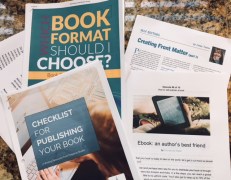 As I began to read blogs about self-publishing and downloaded PDFs like “Checklist for Publishing Your Book” and “Which Format Should I Choose” and followed marketing blogs with tips on using social media, launching your book, advertising, newsletters, and websites, I discovered there’s a lot more to consider.
 I bought and read “How to Self Publish Your Book” by Craig Gibb, which details about titles, pen names, and blurbs, as well as editing, cover designs, formatting, promoting and marketing options.
 “Word by Word, An Editor Guides Writers in the Self-Editing Process” by Linda Taylor describes in detail the process of content and copy editing, proofreading, formatting, and all the front and back matter I would need to write for a complete “up-loadable manuscript package.”

 The Writers in Residence
You must be logged in to post a comment.