We here at The Writers-in-Residence wish you all a Very Happy New Year. We have an entire new year to do good things, get things done, and make each other happy along the way. Oh, if you’re a writer… WRITE ON!

We are a group of published writers who come here weekly to entertain, inform, and encourage you in your writing and your reading journey. Grab a cup of coffee, get comfortable, and join us.

We here at The Writers-in-Residence wish you all a Very Happy New Year. We have an entire new year to do good things, get things done, and make each other happy along the way. Oh, if you’re a writer… WRITE ON!
from the Writers-in-Residence Blog
All of us writers here on the WinR blog wish you a Very Merry Christmas. Enjoy this holiday, savor the moments, love your family and friends, and consider writing about not only this holiday, but the other ones you have celebrated. The memories are priceless and fleeting if you don’t write them down. And remember: We all have a story or two in each of us.
These pictures might get you in the mood to capture your precious moments.


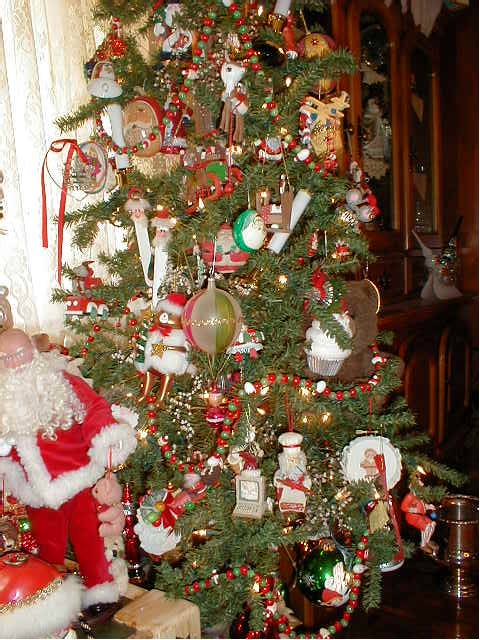


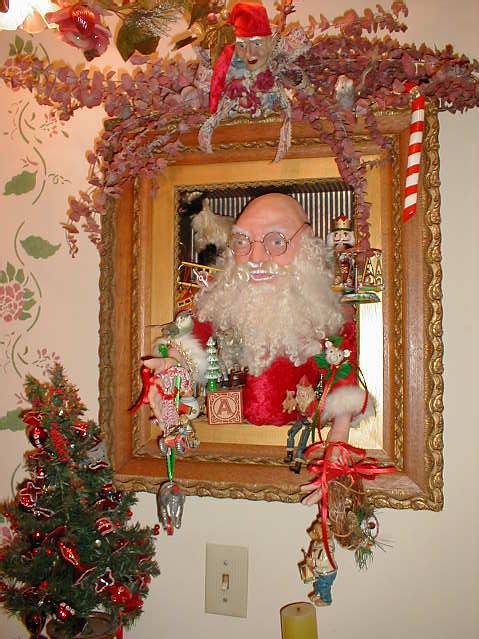


by Gayle Bartos-Pool

We here at The Writers-in-Residence are writers. Whether it’s a novel, short story, news article, play, movie script, or even a How-To book on writing, words are our life and love and sometimes our nemesis because it can be hard to get those words on the page when life gets in the way. But we have all had our work published and know how hard it is to get that done. Whether it’s more than fifty books in print like our Linda O. Johnston or a few books like some of us or newspaper articles like Jackie Houchin, we have gotten those words out.
I have taught writing classes and have spoken to numerous people in my daily life who wanted to write, but they didn’t know exactly how to go about it. I’m very sure they actually knew how to write. We all learned to do just that in the first grade, at least we learned how to get a few words down on that wide-lined paper way back in the Dark Ages before computers. I would ask these folks who wanted to be writers what had they written so far and over half said nothing. Not a chapter, an opening paragraph, an outline or even a concept. Nothing. They have a long way to go, but perhaps they are more interested in the “idea” of writing rather than have an idea of what to write.
I remember speaking with a nurse in a hospital lunchroom when Richard was ill. I had mentioned that I was a writer and she said she wanted to write. I told her that everybody had a story or two in them whether it was a fiction tale or the story of one’s own life. She started telling me some of her family’s stories. They were fascinating. This gal had a story in her that should be written even if only her family reads it, but the way she told those few tidbits, lots of people would enjoy reading about her life. I wished her well.

But talking doesn’t get those words on paper. Whether writing it in longhand like Ray Bradbury did with every single book he ever wrote including The Martian Chronicles and Fahrenheit 451 which he wrote with a pen, he got those stories written down. Don’t get mesmerized by the “idea” of writing, or the “fame” (that’s only if you sell a million copies the first week your book is in print), or the “money” you’ll make (authors usually get a small percentage of the cover price after the publisher and the distributor and the bookstore get their cut; sorry, that’s the reality unless you have sold that previous million copies). Don’t let that stop you from writing. Write.
Do you have a story you want to tell? After these past two years being basically isolated due to the flu that has kept most of us living in solitary confinement, you just might have something you were tossing around in your head or maybe even you got a chapter or two written or an outline dashed off so you wouldn’t forget the story line. I can tell you from personal experience, if you don’t write it down, you will definitely forget it. Dear Bonnie Schroeder, a fellow scribe, gave me a notepad that hangs up in the shower along with a pencil that allows one to write down that elusive idea that pops into your head while the hot water is calming you and you are free to let those creative juices flow. Write.

You can always run an idea past a friend to see how it sounds. If you belong to a writers’ group, you might toss the idea out during a meeting and see what the group thinks. They might have some suggestions to help you focus your story. If they shred your idea like a head of cabbage, perhaps join another group. I’m serious about this. Some groups aren’t there to help. But then again, you might get a good story out of the fact the group was all wrong because of the hidden agendas of the other members of said group. Hey, ideas are everywhere. Write.
Nevertheless, if you actually have an idea for a story, write that outline. Who are the characters in the story? Don’t have a cast of thousands. Readers won’t be able to follow Who’s on First. Next, where does the story take place? Location, location, location. They do that all the time in the movies. Where do you want your small cast of characters to be situated? You’ll get to describe the place. Don’t make it a travelogue, but make it interesting. Visual. Maybe even astonishing. The moon, a sinking ship, a haunted house. A jail cell. Write.
When your characters speak do they have something to say? Again, I’m serious. Make whatever they say part of the story. If their dialogue doesn’t add anything to the story, cut it. And make a character or two colorful in his or her speech. It adds to the flavor. Write.
Then of course you have to have a plot. Why are those interesting characters in that interesting place saying those interesting things? That is your story. You have had this idea running around in your head; what is it? You will realize (hopefully) that the story you are telling has a point to make. You might think that the story is the point. Ask Aristotle about that. Since he’s busy, let me say this: After someone reads your story and has gotten to know your characters and has visualized that intriguing setting and has listened to the witty dialogue your characters are saying while the story progresses, when the reader gets to the end of your story they need to be able to say, “Ah! That was a story about Man against Nature or Woman against Society or Man Struggling against Himself.” That’s the point of the story, not the plot.
Say you want to tell a story about Man against Himself. Now you have a goal to come up with a story that centers on that Theme. The man keeps setting up roadblocks to stop himself from doing something he really wants to do. You must construct that plot. You will define those roadblocks and his excuses to not do what he needs to do to fulfill himself, to reach his goal. You create the characters that both help and hinder him. You design a setting that either lulls him into complacency or he thinks is above his lot in life. And you write the dialogue that has him expressing his dreams and desires along with those who tell him can or can’t achieve his goal. And Voilà, you have that story. And you might actually realize that the stubborn character you are creating is really you and then get more of those words on the page.
We are finishing up one hell of a year, actually two. Soon a New Year will open up those dreams you have buried because you keep telling yourself you’ll write that story later. It is later. Write it. What do you want to say? Get those words on the page. Write it.
Have a Merry Christmas and a Happy New Year! Write on!

by Will Zeilinger and Janet Elizabeth Lynn
We are a husband and wife team who write together as well as individually. When the Pandemic hit, we were as shocked and confused as everyone else. Not only by the world’s sad state of affairs, but we missed our friends. It took a few months to realize that the Pandemic was going to take some time to resolve. So, we decided to launch a YouTube channel, “Chatting with Authors.” We produce casual interview programs via Zoom and air them on YouTube.
This is the second of a two-part series that discusses the ins and outs of making it work and some pitfalls to avoid.
Once you have all of your technical details worked out and, most important, are comfortable using them, next comes the talent (people you want to interview).
INITIAL CONTACT- First, we sent an initial letter to inform authors of the program, what it was going to involve and asked if they were interested in being on the program. Surprisingly, we had little response to the idea. We set up three Zoom recordings of those who were interested. After editing them and scheduling them on YouTube, we were able to refer the authors to the three programs. That’s when the flood gates opened!

FOLLOW UP- We scheduled two to three Zoom recording sessions per day. We found that any more, and we were getting too “punchy” toward the end. The best was two or three. Once the talent was scheduled for recording, we asked them to send a headshot, website address, short bio, and five questions they would like us to ask them on the show. Once we received their information, we scheduled a phone interview a week before their Zoom session. This is where we discussed the procedure and went through the bio and questions (we usually had to edit the bios and questions to fit in the 30-minute recording session).
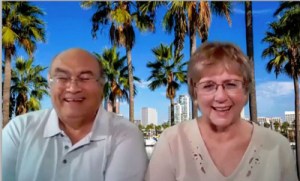
DURING ZOOM RECORDING- We discovered gremlins in the internet that can cause all sorts of problems, especially when interviewing people in different countries or the east coast (we are in California). So it is best to schedule an hour even though our show is 30 minutes. Once you get them online, check audio and visual. Remedy any problems, like echoes, before you begin recording.
Be sure to keep the talent on after the recording is finished to discuss any problems that may have occurred during the session, i.e., visual static, audio blank spots, lights falling (it happens!!), and decide if you need to redo the interview at another time. This happened only twice out of 64 shows.
AFTER THE SESSION- Immediately after the recording session, summarize the interview for your PR for the show. We have a specific logo we use and superimposed their headshot on it. When we schedule our airings on the various platforms, we use that summary and logo.
A week before we air their program, we send them a notification of day and time, a copy of the logo, address, and summary we are using.

IMPORTANT! Always ask them to confirm that they received the information. Always!
DRESS-be sure what you wear will not disappear into the background. And council your talent to be careful if they are using a green screen or a background. We had a few people who were armless and faceless or bodiless until they changed their clothing.
THE STUDIO- We record from a corner of our office, early in the morning every Thursday. So, each Wednesday evening, we set up the studio and take it down every Thursday afternoon. It may seem like a pain, but it does get easier as you do it. 
Things to watch out for:
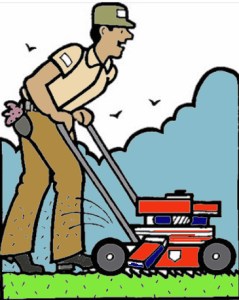
—If you are recording on your premises (home, garage, outside), be sure you know when the gardeners, carpenter, cement workers, trash pickup, etc., are coming anywhere in the neighborhood. It can get embarrassingly loud!
—Be sure your lights are soundly taped down or strapped. One of our lights managed to stay put during the first two interviews of the day but came crashing down on the third one. We acknowledged it but kept the interview going.

—During the phone interview prior to recording, you will get a feel for the nervous state of the talent. If they have never done this before, they can get pretty frazzled. So encourage them as you record their interview.

With much planning and practice before your first recording, you will have a blast doing interviews with friends, meeting new people, and, most of all, making connections. We have written five books and recorded 64 shows together, and yes…we are still married!
(For questions and/or information on how YOU and your writing can be hosted on “Chatting With Authors” please contact them at: lynnslp@earthlink.net )
This blog was posted for Will Zeilinger and Janet Elizabeth Lynn by Jackie Houchin
We are a husband and wife writing team who write individually, as well as co-write several books. We were shocked and confused, like many of our fellow authors when the pandemic hit.
Because the nation was given the “stay at home” orders at the onset of the pandemic, all live meetings, in-person book signings and book launches, speaking engagements and appearances in panel discussions came to an abrupt halt. As writers, our marketing and promotion plans were put on hold.
One day we saw a YouTube interview with a musician that was recorded via Zoom, the online video meeting app. The interviewer and guest were shown side by side on the screen. After we watched several different examples of these YouTube interview videos, we had a brainstorm… why not conduct our interviews via Zoom on our computer? We learned that doing this was not complicated at all. The result was our YouTube channel, “Chatting with Authors.” We interview authors of all genres about their work and life outside writing.
This is part one of a two-part series that discusses the ins and outs of making it work and tips on how to avoid some of the pitfalls.
What was needed:
(1) YouTube account (free) Go to YouTube.com and sign on. 
(2) Zoom account (free) Go to Zoom.com and sign up. 
(3) 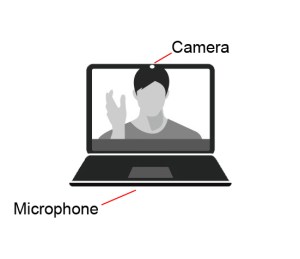 Computer (laptop/notebook, desktop, or tablet) with a built-in camera and microphone.
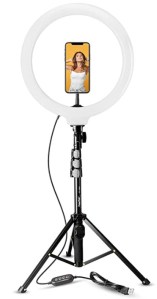
(Some people use their smartphones on a stand with a “ring light,” but it can be very difficult to monitor what is happening when the screen is small and far away from you.)
 If you do not have a built-in camera, you may be able to connect a DSLR (digital reflex camera) to your computer. Ask for help from a tech-savvy friend if this is getting too complicated
(4)  Make sure you have good lighting. Use a couple of lights (position them on either side of your computer.) They don’t have to be fancy lights, even table lamps will work. (Try not to sit with a window behind you.)
(5)  A pleasant, but not distracting, room for your background. If you don’t have a suitable space, try a solid, blank wall. Zoom provides digital backgrounds or you can use your own.
 If you don’t have one, purchase “greenscreen” fabric on-line.
(6) A good Internet connection.
(7) Decide how long your interview will be (30 minutes, 1 hour, or longer) then schedule a meeting with your guest and be sure to set record while you chat on Zoom. When you are finished, upload your program to YouTube and tell your audience about it. That’s all there is to it.
(8) An opening title graphic or photo. You can create one yourself, use a template (available online,) or have someone create one for you…as well as a sign off.
(9) Before you decide to “go live” with your YouTube program, do a few “test interviews” and upload them to YouTube. You may delete them after you’ve viewed them. When you are satisfied with the lighting, background, clothing, hair (and make-up), and running time, you are ready to do your first interview.
(Continued next week with Part 2)
(Posted for Will & Janet by Photojaq)
By Linda O. Johnston
 If you’re a writer, how do you decide what to write?
Often, it’s the kind of story you love to read: romance, mystery, paranormal, historical fiction, whatever. That makes sense.
Or maybe something you believe others will want to read, so it’ll sell well. But that’s not something totally predicable. So I go with what I enjoy.
With me, my preferences have changed over the years. Oh, I’ve always enjoyed romances, romantic suspense and mysteries. I’m not as much into historical stories as I used to be. Same regarding paranormal stories.
But you could probably tell what my favorite stuff was at any time of my life in the past many years by seeing what I’ve written!
My first published fiction was a short story in Ellery Queen’s Mystery Magazine, and I won the Robert L. Fish Award for first published short story! Yes, it was a mystery of sorts, a humorous one: “Different Drummers.”
My first published novels consisted of time travel romance, and most revolved around places or things I particularly liked. For example, one of them, Point in Time, took place in Pittsburgh, where I grew up. Another took place in Alaska, in the Klondike, and I’ve always loved visiting there: The Ballad of Jack O’Dair. And of course there’s Once a Cavalier, featuring my babies, Cavalier King Charles Spaniels.
I wrote other paranormal romances too, including Stranger on the Mountain, and the Alpha Force miniseries I created for Harlequin Nocturne, about a military unit of shapeshifters.
I loved paranormal romance! But notice that’s in the past tense. So is my focus on paranormal stories. I still read some, but I’m not writing any now.
I’d always enjoyed mysteries and romantic suspense. I still do—and that’s in the present tense!
That’s why I write them both: romantic suspense for Harlequin Romantic Suspense—and formerly for Harlequin Intrigue—and mysteries, over time, for multiple publishers including Berkley and Midnight Ink, and—upcoming!—Crooked Lane. Most of the mysteries, and as many romantic suspense as possible, include animals, especially dogs. I love to write about dogs. Why? Because I love dogs!.
So that’s how I decide what to write: again, what I love to read. But also what I most enjoy writing about.
How do other authors decide? Based on conversations with fellow writers, I gather they, too, mostly figure out something they enjoy, then pounce on it and pour out a story they love.
It’d be hard, after all, to write a story if you didn’t like its subject or genre.
Those writers who are reading this blog, I’d love to hear in comments where your ideas originate and how you decide to write about them. And how you enjoy writing about them!

By Rosemary Lord
Many of us get very reflective around this time of year, as we look forward to spending Thanksgiving with friends and loved ones. I love this American tradition. As a transplanted, naturalized American, over the years, I have spent this annual celebration in so many different places, with many different people. I’ve listened to memories of childhood Thanksgivings, of different family traditions across the nation, handed downfrom great grandparents to sons and daughters and then to their offspring, in due course.
Frankly, I envy these traditions. And I just love the importance of all the special family dishes that are served. The recipes handed down through the generations have their ownstories. And the simple custom, at so many tables, of each person sharing what they are thankful for. It’s a wonderful time when everything else stops for a while, and people from different generations, different religions and all walks of life get together to simply say “Thank you.”
After such a strange couple of years, I think many of us realize we have a lot to be thankful for. Maybe for things that we previously had taken for granted. Such as walking out in public bare-faced and exchanging smiles with strangers… an impulsive stop by your favorite family-run café – that is still in business. Or simply – hugs with friends.
As writers, we are more easily able to notice these little things that have come to mean so much. And as writers, we are especially fortunate that, whatever external restrictions the dastardly Covid plague inflicted on so many people, for us scribes, we could just keep on writing.
However, so often we get our story ideas from a chance remark in a casual conversation overheard – or eavesdropping (‘ear-wigging’ is the more colorful informal English term.) I would often make up my own version of the end of some snippet I’d heard and that would sometimes turn into a whole story.
But during these cloistered times, we’ve missed out on overhearing strangers’ conversations.
The Covid situation affected people differently. All around us, some were having meltdowns, dramas, or ‘wobblies’ – as in “She/he’s having a wobblie” – a charming current English phrase. Others found a strength and a fortitude they hadn’t realized they possessed. They found a new purpose, as they stepped into the fray to help the home-bound, the elderly living alone, or the children without an open school to attend. They volunteered wherever they were needed. Many new friendships were created. Everyday heroes emerged, as people found innovative and creative ways to handle the situations we all found ourselves thrust into – and along the way, found ways to improve other people’s lives.
For writers, fascinating tales appeared for our writing brain to feed on. People stories.
These interminable lock-downs have given many people the chance to write that novel they always felt they had in them – but never had the time to pursue. For the uninitiated, they had their first crack at completing that novel. For us old-timers, it was the opportunity to maybe write outside our normal field. (Did I tell you I have a quarter of a noir, dark and creepy contemporary novel done? Who knew I could write that?) And for writers at every level, the burgeoning self-publishing market has been a boon and a blessing.
I have discovered so many new writers from all over the world – especially when I can get the bargain price of a used book, I don’t feel so guilty if I don’t like it. Plus, I have a whole slew of new books to read on my Kindle.
I must confess that my own, personal reading, at the end of a long day wrestling with Woman’s Club administrative ‘stuff’ is more and more escapist. Often tales of a newly widowed or newly divorced woman who decides to start a new life on the other side of the world and open a bakery or her own winery. I’m re-reading my Rosamunde Pilcher favorites and re-discovering what a good, simple, nuanced writer she was. Her books are inspiring – usually about starting again, uncovering deep family secrets that lead to wonderful, happy endings. I like a happy ending. Especially these days.
I think I have a life of unfinished things…. That’s what it seems like to me at the moment. Some painting and fixing things around my apartment. Some sewing bits and pieces. But mostly unfinished novels and stories, which is a good thing, because I have started some new writing projects and my busy mind keeps thinking of more. Not so good because I haven’t had time to complete them. And the characters in my stories are still whispering, nay yelling, in my head to share them with the world…
But I’m thankful for every moment when I am able to write – and plan that “next year it will be different. Promise!” Hmm, I think I’ve said that a time or two before. But I really, really mean it this time!
………………………………………………
by Miko Johnston
In my contributions to this blog, I’ve written about descriptions several times. Describing, or as Jackie likes to say, illustrating in our writing has always presented a challenge to me. Part of it is how much? and is this necessary? There’s also how well…? – am I using fresh word pairings and metaphors that impress, not impede? Will readers not only ‘see’ it, but believe it?
All writing needs description to bring the story to life, but contemporary fiction usually depends on what we see around us. Science fiction, fantasy and, to a lesser extent, alt-reality requires more description as the reader can’t assume anything in a newly created world. So does the procedures of a character with an unusual or highly technical occupation, or day to day life in historical fiction to avoid anachronisms.
Writing historical fiction, as I do, requires a great deal of research, not only of history but images that represent the time. Clothing, hairstyles, machinery and tools, art and architecture infuse the story with the flavor of authenticity. In managing the word count, one picture can truly be worth a thousand words – if you find the right words.
I faced an insurmountable challenge in my latest novel. I wanted a character to wear a dress I’d seen illustrated in a period catalogue, a flamboyant style from the early 1920s. Today I’d describe it as having a side hooped (pannier) skirt with rolls of fabric resembling vertical soda can stackers hanging from each hip. However, that would not be time-appropriate for the era I write in and I couldn’t come up with a better way to depict the dress. It forced me to change her garment into something equally ridiculous but more describable, something Little Bo Peep might have worn.
That wasn’t the first time I’ve had trouble describing something in a way that a reader could visualize it. I envy writers who have that knack. I recently read a piece by Eric Asimov, who writes the Wine column for the New York Times, describing the ideal corkscrew, sometimes referred to as a waiter’s friend. He writes:
“It’s essentially a knifelike handle with a spiral worm for inserting into the cork, a double-hinged fulcrum for resistance and a small, folding blade for cutting the foil that protects the cork.”
Brilliantly descriptive and clear. You can not only see it, but see how it’s used.
Another challenge is trying to describe a situation that many have gone through; for example, pregnancy and labor. If you’ve given birth, you would probably rely on your personal recollections. If not, you’d research what others have endured, like I did. Either way, some readers will tell you that’s not what they experienced. In my first literary pregnancy, I was so concerned about the birth that I left that scene ‘off the page’; my character leaves town a month before her due date and returns with babe in arms.
Now several of my characters have gone through pregnancy and childbirth. I’ve gotten more controversial feedback on that subject than any other, and always from mothers. Certain suggestions, such as those little moments you could never envision unless you were ‘there’, helped. Other comments were less beneficial, for although there is much commonality in the experience, little of it is universal. “That’s not how it was for me,” they’d say, and I’d tell them “Okay, but that’s how it was for my character.”
* * *
As I’ve recently finished my fourth novel in a series, I’ve reviewed the manuscript multiple times and also reread sections of the earlier books. In doing so I learned something about my method of describing. The more important an element is, the more I’ll usually describe it. For instance, in my second book, my character meets a family that will play a prominent role in the rest of the series. It’s my young protagonist’s first impression of them, so I devote at least a full paragraph to the description of each person, I’ve augmented the descriptions as time passed to show how they’ve changed with age. Minor characters, such as the housekeeper, merit a phrase, enough to picture the woman when she returns later in the story. Thanks to Gayle’s tutelage, I’ve learned a title – waiter, shopkeeper – often suffices for ‘walk-on’ characters, though I might include a glimpse to set the scene, such as the wizened mother-in-law of a black marketeer, opulent earrings hanging from her lobes like chandeliers.
The character’s perspective also plays a role. My heroine, Lala, is introduced as a child, “almost eight”, who grew up poor. Her thoughts and observations had to be filtered by her age and experience, which is why it took me weeks to come up with a way for her to ‘describe’ a terrazzo floor (…like flat pebbles floating in a sea of cream). As she matured, so did her perceptions and understanding of human nature. Whatever captures her interest, or she feels passionate about, will inspire a more detailed description.
I approach themes in the same way. In my most recent novel, I chose to represent the political and social turmoil of post-WWI Europe with an image I found in my research. Lala, now married with child, observes it while stuck in traffic:
She perused the art work, most of it propaganda celebrating the recent wave of Communist Party member assassinations in Germany. One placard illustrated a macabre street scene in Hungary, judging by the uniforms worn by a line of soldiers hanging from gallows. Wives and children wept at the dead men’s feet while, standing in the middle of the road, a Bolshevik in uniform observed the carnage with a haughty air of satisfaction. The caption read, Erzet Harcoltunk? – ‘This is what we fought for?’…The artist had placed the smug-looking Bolshevik in the foreground, hands on hips, an unkempt uniform wrapped around his fat middle. Skinny legs stuffed into unpolished boots. Thin arms as well, implying physical weakness…Then she noticed the slight alteration of the Bolshevik’s cap, a subtle nod to a trait he shared with many of the political assassination victims.
The gold star affixed above the brim did not have five points, but six.
Rather than rely on the headlines of the day, I chose to let the reader “see” what she’s describing and understand the meaning behind the images.
This method works for me. What techniques do you rely on to get the right balance of description and imagery in your writing?
###
Miko Johnston, a founding member of The Writers In Residence, is the author of the historical fiction saga A PETAL IN THE WIND, as well as a contributor to anthologies, including LAst Exit to Murder. She has recently completed the fourth book in her series. Miko lives in Washington (the big one) with her rocket scientist husband. Contact her at mikojohnstonauthor@gmail.com
How short can you write a story? If you are doing NaNoWriMo this month, your goal is 50,000 words, about a 175-page book. How about only 10,000 words, or 5,000? 2,000?
In Writer’s Digest, the September/October issue, author Ran Walker wrote a very interesting article titled “10 Reasons to Write a 100-Word Story.” Say, what? 100 words? Yes! In his article he describes the benefits of writing “the smallest stories.” I hope to borrow from his wonderful piece, and write a story…right here…right now…in only 100 words (including the title)!
Here, briefly, are the reasons Ran Walker gives for trying your hand at a 100-word story.
Okay, here goes: It was a dark and stormy night… No, no, no!
Okay, again: Last night Wesley dreamed he saw a floating lantern coming towards his bed. It seemed to beckon him to follow. In pajamas, sans slippers or robe, he wafted clumsily out the open window pursuing the light. “How could this be?” he thought, “I’m not Peter Pan!” Wesley looked at his dog far below, barking soundlessly, and threw her a biscuit from his pocket. (No, no no, on that last part. No doggie biscuit.)
Again: …barking soundlessly. A white owl flew by and winked at Wesley.
Good grief! I’m at 64 words without a villain, climax, denouement, or the title!! This is harder than I thought. I’d better get to the suspense and the ending!
A note drifted from the beak of the owl and Wesley caught it. He bent forward to read it by the lantern light. ‘Don’t forget to feed the dog. I’m working tonight. Love, Mom.’ “Oh, no!” thought Wesley. “Poor Maddie!” Suddenly the lantern disappeared and Wesley began falling, falling. Something caught his foot, but he landed with an “Ooof!” On his bedroom floor, foot tangled in a nappy blanket, Wesley felt the happy wet tongue of Maddie on his cheek. “Finally,” she woofed.
This can’t be! It’s at 148 words! And what should the title be? Lantern Flight? Owl’s note? Falling? Ooof? I definitely need to do some editing, but that’s Ran Walker’s 7th point.
2. You are not tied to the traditional “Hero’s Journey” or Freytag Plot Arc.
Hmm, I didn’t have series of obstacles or a narrative arc, but I did have “rising” action, climax, and “falling” action. And a little denouement lick.
3. You can let your inner poet come out.
Not only pretty words and/or rhyme, I must make every. word. count. I’ll consider that when I go back to edit out “my darlings’.
4. You can experiment with different genres without worrying about how it will affect your brand.
Well, my Wesley story is a kids’ story, so that matches my “cough, cough” brand. It’s a bit of a fantasy genre however.
5. The focus on a specific word count forces you to think about your story differently.
Boy, is that ever right. Let’s see if I can chuck a few words right now. 100 is a stern taskmaster. “Sans slippers or robe” has to go. “He saw” can go as well. And “it seemed to” also. Hey, this is fun. That’s NINE WORDS excised.
6. You can focus more on movement within a single scene.
I think I have movement – floating, wafted, pursuing, flew by, drifted, falling, falling….. whoa, I’m getting dizzy!
7. It’s an excellent way to learn how to edit.
Walker says, “If each word was a dollar word, would you be getting maximum value for your $100? Why write ten words when five will do?”
8. It forces you to refocus your story and choose only what is important.
He adds, “And keeps you from going off in tangents.”
9. It allows you to really pay attention to grammar and punctuation.
10. It’s something you can do for fun, even if your intention is to write longer works.
Walker says, “The added incentive is that if you like the ‘rush’ you get from finishing a story, you will receive that feeling much faster with a 100-word story. At a time when people are wrestling to carve out time to read and to write, it is nice to know there is a writing form that lends itself to being consumed in minutes (versus weeks) and to being written in a single setting. Why not try one today?”
Okay, here is my edited version: (I had to cut out 49 words, then rearrange and substitute what was left.)
“REMINDER”
Last night Wesley dreamed a lantern beckoned to him out his open window. Clad only in pajamas, he floated after it.
He saw his dog far below, barking soundlessly. An owl flew by and dropped a note from its beak. Wesley caught it and angled it toward the light.
“Don’t forget to feed the dog. I’m working late tonight. Love, Mom.”
“Oh, poor Maddie!”
The lantern disappeared. Wesley began falling. Something caught at his foot and he landed softly. On his bedroom floor, tangled in a blanket, Wesley felt Maddie’s warm, wet tongue on his cheek.
“Finally!” she woofed.
Well, what do you think? Does it work?
#
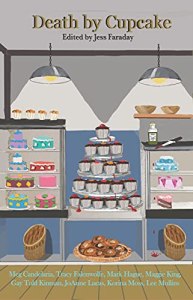 I also got a few tips from author, Maggie King (MaggieKing.com) about writing regular length short stories. Her “Cupcakes and Emeralds” is featured in the new mystery anthology DEATH BY CUPCAKE, published by Elm Books.
She answered my questions, “There has to be a cupcake in the story, so first I come up with a story idea. I love revenge tales, but who is seeking revenge against whom, and why? Once I figure that out, I can decide on plot, characters, red herrings, and setting. I must decide if cupcakes will be part of the plot, or a mere prop. The “body” is found in a church – my unexpected aspect – but is the church another red herring? At the end I like to circle back to the beginning. “
Thanks Maggie, if anyone wants to check out her story and the other seven in the anthology, the link on Amazon is Death by Cupcake.
# # #
 Ran Walker (RanWalker.com) is the award-winning author of 23 books. He teaches creative writing at Hampton University and lives in Virginia with his wife and daughter.
His latest book, KEEP IT 100, a collection of one hundred 100-word stories is now available everywhere. The link on Amazon: KEEP IT 100
##
Quote by crime novelist Jo Nesbo,
“When you write a novel, it’s like steering a supertanker. You have to plan; you have to have a route; you can’t just go left and right.
I started writing lyrics and the challenge was to write a story in three verses and a refrain. For me, a short story is like writing songs. You can sit down and write and you can quickly tell whether it’s working or not. And if it works, it may already be finished. That’s a real good feeling, to go to bed at night having written a story.
Also, you don’t have to explain a short story. When you write a novel, you have to think, “What is this really about?” A short story can just have a feeling and that’s OK.”
Are YOU ready to write ONE HUNDRED words?

For me this year “On the writing road” has been a character exploring and development kind of journey. (How) our characters can be the readers eyes when it comes to exploring and—
Part of my interest in these character rest stops is a past tendency to lean on narrative explanation to develop many aspects of my tale. Now working on my characters doing more of the work!
Today, I’m pondering further down the “What” path, as in what’s next in terms of actual plot development. Not writing the next scene or plot development because I think it’s a good idea—but “what” my protagonist thinks would be a good idea.
Here’s an example of what I’m trying to say. The current Rhodes novel I’m working on, of course, takes place in Shiné. And at several locations. And in the beginning, early one morning Leiv needs to visit four spots to get the basic setting, background events, and murder situation in the reader’s mind. I’ve spent several months changing my mind, back and forth, flitting around on who, and in what order the first scenes should go. Duh! I asked Leiv “What” did his senses tell him was the next scene, based on his mental processes.
This approach may be already quite obvious to other writers—let Leiv tell the story. But I like writing in third person, so there hasn’t been the “I” POV in my tales from the start of my writing journey. So my excuse is, that starting as an outside narrator blinded me as to my protagonist actually leading plot scene exposition.
So, continuing as the third person story teller in my latest, I moved from an outside scene, to an inside scene, to outside again. However Leiv’s mind plot evolution started outside, where he remembered an inside bookstore scene, then another inside office scene, then another inside junkyard scene…
I’m exaggerating the distinction I’m making to make the point—my recent writing-improvement path is still characters—and on all levels and perspectives. There are elements in my tales that my protagonist doesn’t know about, and for those, scenes, the reader is stuck with me, the narrator.
Indeed, my characters have captured me…but I’m not sending out an SOS yet. (smile)
Bottom line for the writing nugget in this post, I think–is no matter your POV(but especially in third person), it is for your characters to bring your reader in (because we like or are interested in them), where we can then see the world through their eyes, and then they can lead us forward through story happenings based on what they see, feel, and need to know. Seems pretty obvious now that I’ve laid it out in writing…


You must be logged in to post a comment.