Where Fact and Fiction Meet…or Collide

by Gayle Bartos-Pool

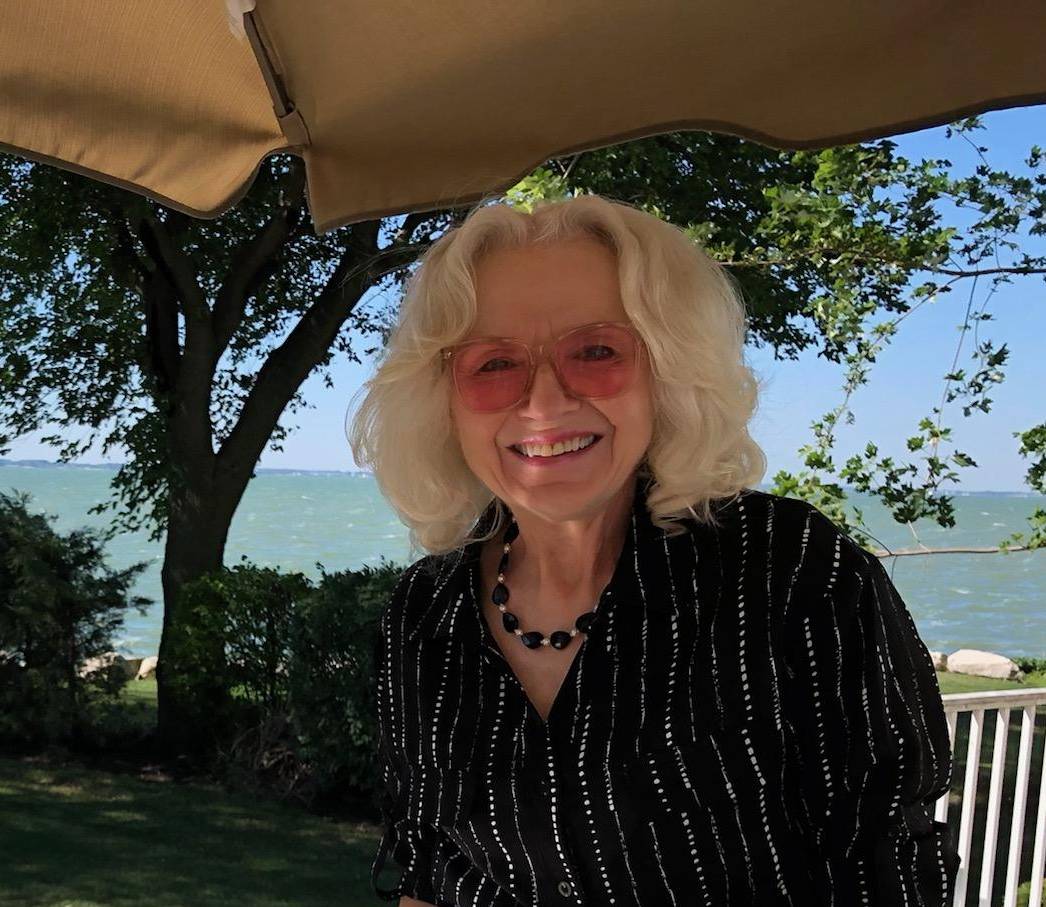
Gayle at Bill's House Sept 2022 cropped

There was a saying once upon a time that newspapers were only good to wrap fish or garbage in or perhaps line a bird cage. Now that we have TV News and the Internet, most people don’t even get a newspaper, so the acquiring of news today is a different animal. The quality of that news remains the same: Questionable.

But ripping a story from the headlines in order to write something comes with baggage. The baggage is the “truth” of that story. Is it true? Is it hype? Is it garbage? As for me, I prefer stories that create their own world. Maybe a dollop of flavor from the headlines, but I want my stories to have a life of their own. I want the reader to see something new, not something they are bombarded with on TV, Facebook, Instagram or X.

The old movie The Three Faces of Eve was supposed to be a true story about a gal with multiple personalities. Years later it turned out the patient lied. I wonder what else I read or hear is a lie.

If I take a story from the headlines, I use the “What If?” approach and see what would happen IF that headline was turned inside out and upside down and I created something totally new. I might follow a paved road for a while, but before long I take that detour to something entirely different.

A fellow writer, friend, and someone we lost several years ago, Paul D. Marks, wrote an article on this topic on a website called Criminal Element back on October 19, 2018.  The title of his article was Fiction Is The Lie Through Which We Tell The Truth. The title itself has been attributed to Albert Camus, but if you look it up, people aren’t sure Camus even wrote it. Fact or fiction strikes again.

My comments at the beginning of this blog are more or less what I wrote in response to Paul’s very good article. The pull quote from Paul’s piece was this:

The best writing makes you think, but it doesn’t tell you what to think. A crime writer can illuminate aspects of society, good and bad, without being preachy or moralistic.” Paul D. Marks

I responded to a comment Paul made on his post by pointing out: “Your White Heat novel did just that, Paul. You took a real time in history, but wrote totally your own story around it. It’s that world I like to read about, not one that’s on TV 24/7. Truth might be stranger than fiction, but fiction, if it’s done right, is far more entertaining. And it doesn’t leave a bad taste in your mouth. It is exactly what you said about Sullivan’s Travels. Sometimes people just want to be entertained.”

After re-reading Paul’s post recently, I wondered had anything changed. After all, that was over five years ago. What has changed? The news on all the available media sources have gotten stranger, more dire, sometimes just plain scary. In fact, some are so odd I have to laugh. Then there are those news stories that change from day to day. Not a different subject, just the “facts” in the first version we heard wasn’t exactly accurate, so they had to retell the story. You could conceivably call the first story a lie, so maybe we can just call it “fiction,” even if it was on a news channel. We all know when something earth-shattering happens the facts aren’t really known right away, and the story has to be verified by several sources until the actual facts are known. We just hope those “facts” are really true.

That’s why I prefer a good book or an old movie. That’s also why I write fiction to tell a story with a point and good characters to entertain the reader, not indoctrinate the reading public with something I saw on the Internet or heard on the news that might turn out to be even stranger fiction than Abbott and Costello Go To Mars. That’s a movie about a couple of guys who accidentally launch a spaceship and think they are heading to Mars, only to land in New Orleans during Mardi Gras. They think they are really on Mars since everybody is in costume. Two bad guys chase them back to the spaceship and they head off again only to land on Venus that’s populated entirely by women who hate men. (That sounds as goofy as news reports today, doesn’t it?) Well, the guys are sent back to earth, but frankly, the 1953 movie isn’t any odder than some reports saying American astronauts didn’t really land on the moon. (Scotty, Beam me up!) Or how about the one about life on earth will end in ten years? They’ve been saying that for fifty years. Can anybody trust the news?

Fiction is more fun, and I can write my own ending. I like my characters better than some of the real people I see on the news, and I can render a fitting end to the bad guys I write into my stories. So what if I live in a fictional world… Wouldn’t it be nice if the real world was like some of the books we read?

And remember, some people are rewriting the actual history we have lived through…Sound familiar? George Orwell wrote that story in his book, 1984 back in 1948. His book was fiction…or was it a blueprint for what lies ahead in today’s world? Brave New World, Fahrenheit 451, and Animal Farm have some thought-provoking themes as well. Maybe we should write books that show how we want the world to be in the future…Hope they have a happy ending. At least my books have the main characters fighting for that better world. How about you?

Write On!

Choosing a Theme

by Linda O Johnston

Every writer writes what they know and what they love—at least, hopefully. Sometimes, it’s also a specific genre or genres.

Of course we can go all sorts of directions in our writing as well as in our lives.

But me? It’ll come as no surprise to those of you who know me or read my stuff that I love dogs. And they’re not only important in my life. They’re important in my writing. And they’re the general theme of my writing.

I have had sixty-two novels published so far, with the sixty-second, my fourth Shelter of Secrets story for Harlequin Romantic Suspense, available starting now. It’s CANINE PROTECTION. Yes, canine. And number sixty-three, the fifth in my Shelter of Secrets series, CANINE REFUGE, will be published next year. I can’t tell you offhand how many of my books have featured dogs, but the great majority of them have.

Why? Well, they always say to write what you know, and I know dogs, and yes, I love them. My first mystery series, the Kendra Ballantyne, Pet-Sitter Mysteries, featured a tricolor Cavalier King Charles Spaniel named Lexie—the same name as one of the Cavaliers I owned when I wrote those stories. And Kendra was a lawyer who lived in the Hollywood Hills with Lexie. Yes, I was a practicing lawyer then, living in the Hollywood Hills, writing what I knew, kind of.

And right now, my first ruby Cavalier, Roxie, is staring at me as I write this. Her tricolor sister Cari is sleeping somewhere else, but she very often snoozes under my computer desk as I write.

 Yes, I’m hooked on Cavaliers, but I don’t write much about them since I don’t want to overdo it with my readers. But other dogs, including service dogs, K-9s, and even pets—yes!

And including shelter dogs, like those in my Shelter of Secrets series which is ending next year. I’ve started writing the first book in a new series. And surprise, it also features dogs!

I’m always fascinated to learn why other writers write what they do—and if they also have ongoing themes in what they write.

So please comment here, you writers who are reading this. Do your stories contain any ongoing themes, and if so, what—and how did you decide to feature them?

.

.

Image by Ermir Kolonja from Pixabay

DANCING IN THE RAIN….   

By ROSEMARY LORD

1.08RoseSignCrop (1)

“Life is not about waiting for the storm to pass, but learning to dance in the rain…” Vivian Greene’s quote has been oft repeated.

Well, I think I’ve been waiting for the storm to pass for a long time now. Too long.

And the storms kept coming. It seems the clouds would part briefly and the sun shone brilliantly again. But then those dreaded clouds crept back across my horizon…

I’m poised in the wings of Life. Waiting. Now? I ask. Is it my turn NOW?

Oops. No. Someone else’s drama needs attention. And I step back into the shadows, ready to help.

I’d been writing articles about Hollywood for all my adult life. I came to Hollywood and met and interviewed the real movie stars. I’d been a Senior Unit Publicist at Columbia Studios. Then I was asked to write two books on Hollywood history, complete with authentic archive photos. After the success of those two non-fiction books, Hollywood Then and Now and Los Angeles Then and Now I ventured into the world of fiction. Mystery fiction. 

I had met Maisie Dobbs author Jacquie Winspear when we were both honored by the Southern California Independent Book Sellers. We would meet up in Westwood where she was doing a writers’ course at UCLA, encouraging me to do the same. I did. As I waxed lyrical about Hollywood’s rich history, Jacquie encouraged me to write a mystery story set in Old Hollywood. Maisie Dobbs was her first mystery novel. She said that if she can do it, so can I!

I was scared. Me, a mystery writer – you mean like Aggie Christie? Me? But after completing novel and mystery writing courses at UCLA, I was invited to join Mystery Writers of America and Sisters in Crime and attended their workshops and conferences. I LOVED this new world of mystery writers. They’re the best! I thoroughly enjoyed the gruesome forensic workshops and was enthralled listening to the successful novelists share their wisdom and encouragement.

And so I learned – and I wrote. 

I met Gayle Bartos-Pool, Jackie Houchin and Miko Johnson at those conferences. Now lifelong friends, we started our own writers’ group, Writers-In-Residence and met at the Burbank library to share pages of our writing projects, critiquing, discussing and encouraging each other. This Blog came later.

In the midst of all this, I was taking care of my ailing mother-in-law until she passed, and a domestically-hopeless-but-wonderful, hard-working husband, Rick.

I had completed my first mystery novel and was gathering notes for the second and third in the series “Lottie Topaz Hollywood Mysteries.” I had my list of potential literary agents ready. I started sending my submissions out to the most obvious agents, then was working my way down the list. I had sort of designed my new website for the launch of my first mystery novel. I had mock-ups of cover designs. My new brief bio was written. I was ready.

But then, without warning, my darling husband Rick died of a heart attack. I was at my desk, sending another ten pages to an agent when he cried out and collapsed.

Obviously, my world stopped. I was shattered. I had no idea who I was any longer. I loved being Rick’s wife. Now I wasn’t. What was I? Who was I?

That storm lingered a lot longer than I ever could have imagined.

It was shortly after that that the Woman’s Club of Hollywood asked for my help. Numb, I said yes. I buried myself in saving that historic club as I worked through my grief. And, boy, was that a never-ending can of worms at the Woman’s Club! There’s a whole book in all the shenanigans that can go on in those historic buildings. Don’t get me started on the ghosts that linger from the days when Jean Harlow (as Harlean Carpenter) attended school there with Douglas Fairbanks Junior. Although, having grown up in England, lots of places have ghosts, so I’m used to them. But that’s a whole other tale…

For the longest time I could not even look at my Lottie Topaz manuscript. It’s what I was doing when Rick died. I made every excuse under the sun. But, like the mustard seed that needs watering in order to grow into a huge tree, we have to feed our writer’s mind, that writer’s soul.

I neglected my writing brain for too long. But this Writers’ Blog helped me work my way back as a writer. Word by word, blog by blog.

The encouragement from Gayle, Jackie, Miko and all of you really helped me tiptoe out from under that dark storm cloud. I began working on another story I had started ages ago.

Step by step, I got my writing legs back. I found the music in my life again.

And now I am on Lottie’s case once more. Her Book Two is under way. And Book Three is forming in my head. I have copious notes and old news clippings to peruse. I will find a home for Lottie’s debut novel. It took longer than I thought, but – hey – I’m not afraid of those storms. I’ve learned to dance in the rain and love it!

………………………….

A TRIBUTE TO WORDS AND WRITING

By Miko Johnston

My late father co-founded a non-profit organization dedicated to Scandinavian philately. In addition to translating and publishing educational books on the subject, the group held monthly meetings as well as annual exhibitions where members could present their best work. Dad served as their president for many years; his name and phone number appeared on all contact sources.

He wasn’t home the day a young man called for more information about the organization. I offered to answer as much as I could. His first question: “Can you join if you’re under eighteen?” Yes, I told him, there is no age limit. “Can I bring another guy to the meetings?” Sure, I said, but something told me he had something, um, different in mind. I then said, “You do realize that philately is stamp collecting.”

“Oh.” He promptly hung up.

We spend a great deal of time writing about words on this blog. If you hunt through our archives, you’ll find many posts on the topic, which should come as no surprise. Words are the most important tool in a writer’s toolbox. We think about them, which one to use in any situation, whether a particular word or one of its cousins (aka synonyms) would be more precise, more distinctive. Can we convert that verb/adverb pairing into one verb? How many descriptives can we edit out without losing the image, the rhythm, or the voice of a character?

Words convey and put into context images, thoughts and ideas, especially when they’re carefully selected. We have non-verbal ways of communicating as well, but unless there’s some established pattern to it, such as sign language or Morse code, their subtlety makes them less effective for interpretation – is she slouching because she’s humiliated, or her back hurts?

Whether spoken or written, signed or signaled, we rely on words as the basis of communication. Misinterpretations may cause embarrassment, as my earlier story shows, but in the right hands they surprise in an entertaining way. Writers can inform the reader without the character’s knowledge, a technique I relied upon in my first novel, when my protagonist was a child. Or they can make the reader wait – ideally with keen anticipation – for information the character already knows.

We can use words to assure clarity of thought, or to deliberately deceive. Red herrings in mysteries fall into the latter category, as do ambiguous phrases meant to mislead the reader into thinking something the author intends to prove wrong later. I’ve done this so often in my writing it might be a hallmark of my style.

Words have the power to calm and reassure, to encourage and inspire, or to agitate and inflame. Think of all the influential speeches you’ve heard or read, or the memorable phrases culled from them. Whether by actors reading from a script, politicians addressing their constituents, or activists crusading for their cause, their words, carefully chosen with deliberation, hold the power to move people. To bolster their spirits, or shock them. Convince them they’re right, or maybe, just maybe, they’re not.

All have one thing in common: Someone, or some ones, wrote those words.

Not to equate a frothy page-turner with The Gettysburg Address, but I celebrate writers who celebrate the written word. I commiserate with writers who agonize over the best way to express their or their characters’, thoughts. I respect writers for what they try to accomplish whenever they put pen to paper or fingers on the keyboard.

That’s why we deserve a formal representation for what we do.

The practice of medicine has a symbol – a caduceus with two snakes coiled around it. The symbol of law is the scales of justice. No formal symbol of writing exists, although if you Google it you’ll find cartoons of a hand holding a pencil or pen.

What do you think would make an apt symbol for writers?

Miko Johnston, a founding member of The Writers in Residence, is the author of the historical fiction series, “A Petal in the Wind”, as well as a contributor to several anthologies including the recently released “Whidbey Island: An Insider’s Guide”. Miko lives in Washington (the big one) with her rocket scientist husband. Contact her at mikojohnstonauthor@gmail.com

Big Words, Bad Words

By Maggie King

Many years ago I read a mystery with so many words I didn’t know that I had to keep my dictionary close at hand. As I enjoy learning new words I liked the experience the popular author provided. But when I mentioned it to a couple of friends, they said, “Not me. I’d have put that book down, and fast. I want to read words I already know.”

I’ve always had a love of words. I fondly remember vocabulary lists in high school: perspicacious, truculent, vapid, loquacious, polemic, specious, logy. With all those big words swirling through my brain, you’d think my SAT scores would have been more impressive than they were.

When I presented my manuscript for Murder at the Book Group (my debut, published in 2014) to a long-ago critique group, the members advised me to ditch the big words. “What big words?” I asked, bewildered. They named a few but the one that stuck with me was “diatribe.” I didn’t consider diatribe a big word and it would surely be understood in context, as in “Arthur ignored his mother and carried on with his diatribe against Evan.”

The upshot was that I kept diatribe, but changed some of the other “big” words.

A word I recall from reading Nancy Drew was “elated,” as in “Nancy was elated by the news.” The context wasn’t clear, so I ran to the dictionary and learned that Nancy was ecstatically happy by the news. Elated is a wonderful word to teach a ten-year-old.

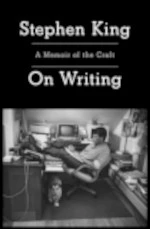
One of my favorite books on writing is On Writing: A Memoir of the Craft by Stephen King. In the book, King says, “Wherever your vocabulary is at today is fine. There’s no need to learn more words or different words. Whatever words you know right now, you use. This will help you develop your voice and sound unique.”

Is using big words in a story a good idea? In my opinion, the answer is yes—as long as the writer chooses words whose meaning and context is easily understood. A thesaurus is a great tool, but don’t use it to come up with words you think sound cool and sophisticated. Readers have a wide range of word knowledge but even those with an impressive vocabulary feel that showing it off is pretentious.

To sum it up: use your best judgment.

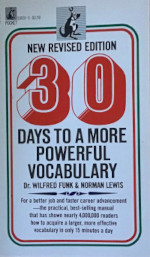
In the meantime, I’ll hang on to my precious dog-eared copy of 30 Days to a More Powerful Vocabulary and see how many of the words I learn end up in my writing. Ceraunophobia, anyone?

To swear or not to swear?


Do your characters swear? Do they swear too much? Not enough? Should they swear at all?

Personally, I don’t get exercised over swearing. Let’s face it, people swear—some a little, some a lot, some only when “necessary.” Swearing can add a touch of realism to our writing (after all, what does one say when tripping over a dead body?). We’ve all known colorful folks who liberally season their conversations with salty words. For one story, I created a character loosely based on a former co-worker who never felt the need to censor her speech. Not a word of it.

But my readers object to profanity and I must respect their wishes. There are ways to suggest swearing and author Naomi Hirahara is so skilled at this that you know the exact word she’s not using. Another author, F.M. Meredith, has this to say about the lack of salty language in her Rocky Bluff P.D. series: “Oh, the characters do cuss, I just don’t quote them.”

Here are ways I’ve suggested swearing in my stories: She shrieked a litany of curse words; She continued to scream and curse …; He included a few four-letter words of a sexist nature; Donna slurred a few non-PG13 adjectives to describe her feelings for her ex; Kat cursed a blue streak (I wouldn’t choose this one again, as it’s a cliché that sneaked past me and my editor).

On several occasions I’ve presented a seminar/webinar on dialogue and tackled the question of profanity. This is how I answered the question “To swear or not to swear?”:

• Know your reader and your genre. Cursing and four-letter words are more acceptable in a thriller than in a romance or a cozy mystery.
• Refrain from profanity in narrative, but an occasional expletive in dialogue is acceptable (depending, of course, on genre).
• Realize that profanity is more noticeable in a novel than it is in real-life conversation.

Again, use your best judgment. And ask your beta readers for feedback.

Your thoughts?

Giving Back

by Gayle Bartos-Pool

Gayle at Bill's House Sept 2022 cropped

I’ve learned a lot from other writers. This blog has allowed me to gain knowledge about what we need to do to get those words on paper or into our computers. We might have a few different technical methods for getting that story actually written down, but many times I’ve noticed that we use similar ways to come up with the narrative.

Many writers actually let their characters “talk” to them so they can craft a unique person in their story. I’ve done it so often that I rely on that connection with those characters when I’m writing.

When I first had the idea for my Johnny Casino books, I sat down and basically let Johnny give me a two-page monologue about who he was. That “chat” ended up being the opening pages of my first book about Mr. Casino.

I learned about creating a biography for a character when I took acting classes from a terrific actor named Rudy Solari. He told us when we were doing a scene from a play to write out a short bio about the character we were playing. The script might have the words and the actions of our character, but Rudy wanted us to know more about the person we were playing like their education, where they grew up, and how they viewed the world so we would know who our character really was when we first stepped onto the stage and delivered our lines.

I use that method when I write my characters in my short stories and novels. When I start crafting the story, I jot down the name, age, general attitude and some special characteristic of that person so I can keep track of him or her throughout the story. I don’t want a 25 year-old blonde named Mary to turn into a 45 year-old red head named Mildred later on in the book because I forgot who she was supposed to be.

1.19VroGayl+sleuths

That lesson from acting class has stayed with me for over fifty years. It works. I learned a few other things from actors, other writers, and by just honing my craft. But for many years I thought I should share this stuff I was learning with other writers, so when I became Speakers Bureau Director for Sisters-in-Crime/Los Angeles, I thought I would put on a few classes to let other writers know how I got words on paper.

Simi2

This “giving back” to fellow writers became something I have done for years. Not everybody can give money to groups and causes they endorse, but we can give of ourselves. I’ve done this by speaking at women’s clubs, libraries, and to other writer groups. And the times I’ve been on a writers’ panel has always been fun, because I learn new things, too.

Something else I try to do is to encourage people, not just somebody wanting to write that first novel, but to regular people who have lives that are frankly extremely interesting. I tell them to try writing their own autobiography so they can share their life experiences with their family and friends and maybe a whole bunch of other people who learn that this person they just met has a book out there about their incredibly interesting life. That just might prompt the next guy or gal to jot down a few of their own memories for a book of their own. But somebody else learns from that memoir – the writer. They learn things about themselves. Nothing wrong with that.

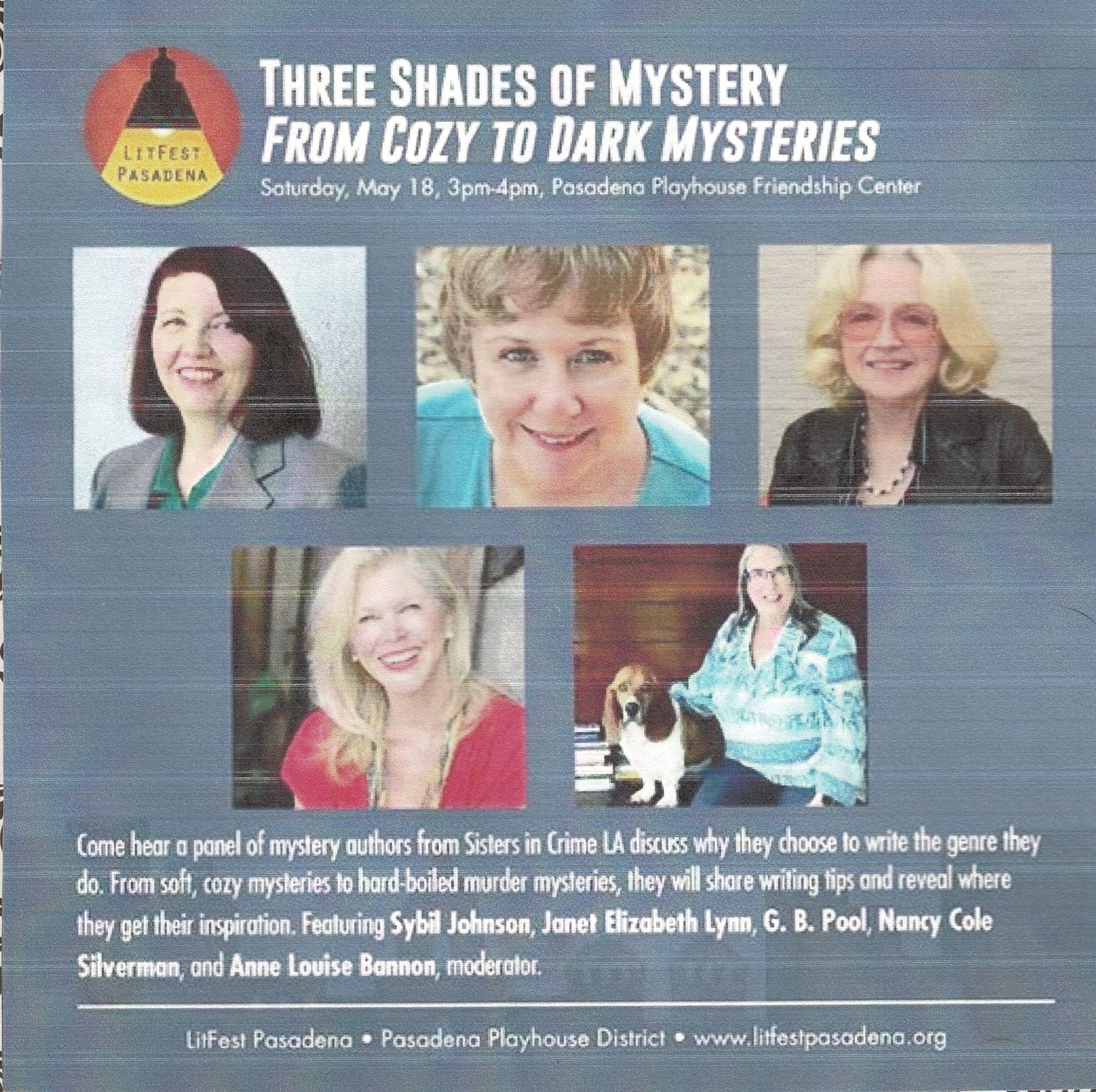
Pasadena LitFest Panel

I want to encourage people to write and to read. Both are becoming a lost art. Look at the handwriting of kids and even young adults nowadays. It looks like a first grader. Ask a teenager what was the last book they read. You’ll be lucky if they ever read a book outside the classroom.

By encouraging people to write, we might get a few more words on paper, a few more ideas in print, and a few more interesting stories to keep people company when the Internet is down. People might actually see there really is a world out there and they are an interesting part of it and they have a few stories to tell as well.

Read On, Write On, and Teach Others!

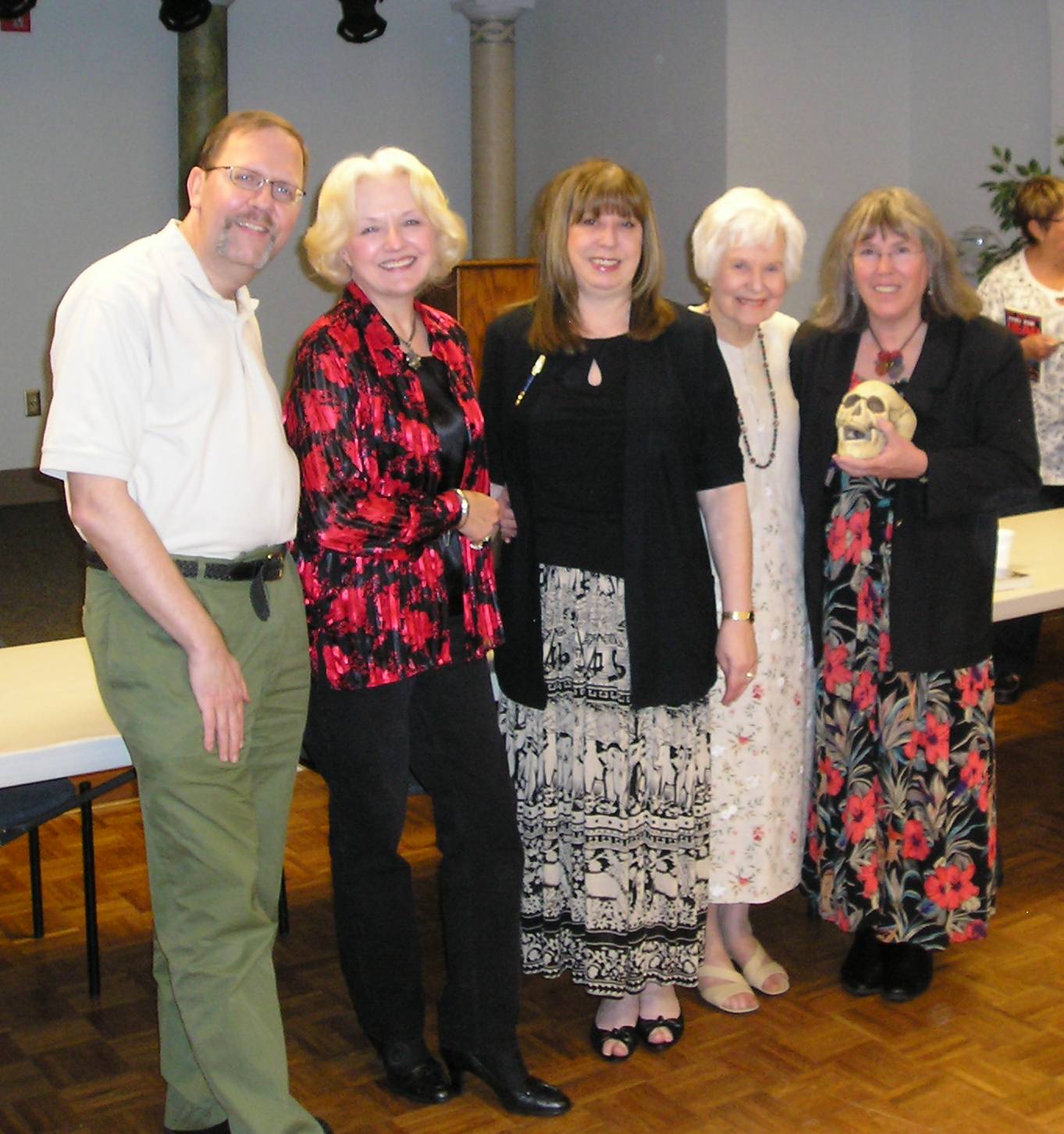
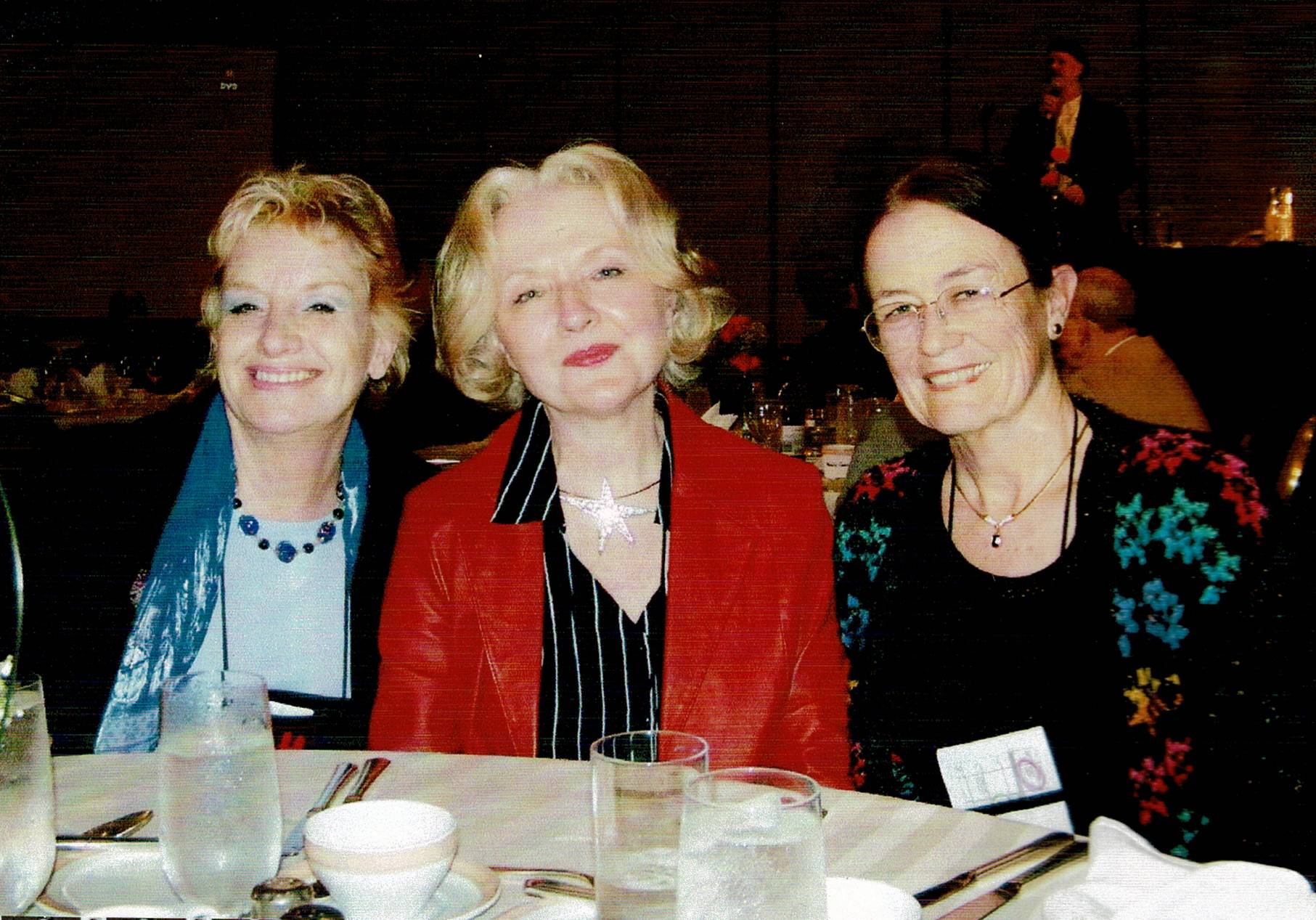
Here are a few of us Writers-in-Residence at one of the writers conventions.

Rosemary, me and Jackie

Left Coast Crime trio

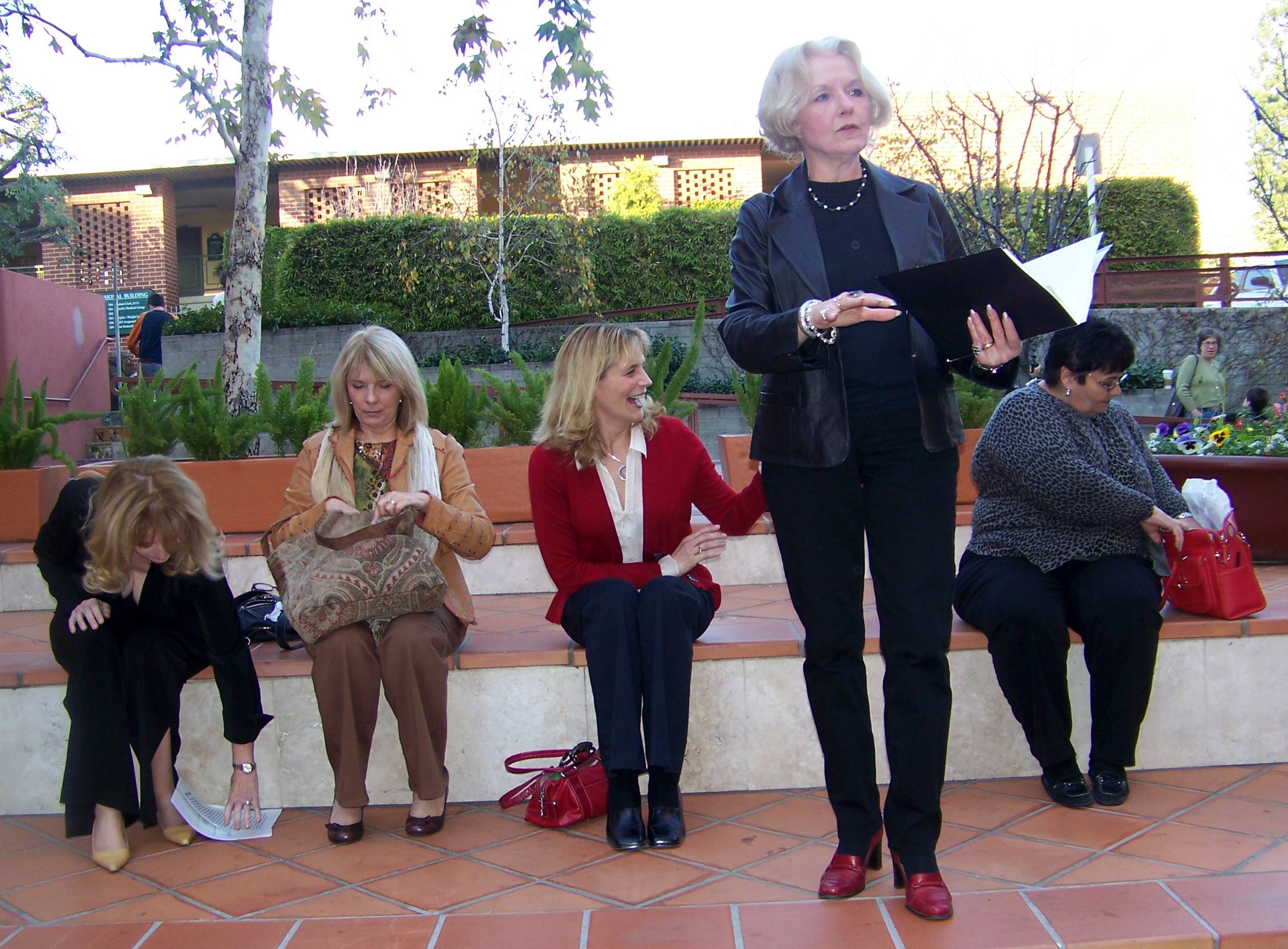
Or how about one of the panels I put on at the Burbank Library. It was a Total Hollywood moment…And yeah, I had fun doing those events.

HollyGylB1236

Why write?

by Linda O Johnston

As I’ve said before, writers write. But why? 

I’m sure we each have our own reasons for wanting to write and to get our work out there in various ways for others to read. 

Sometimes it’s because we have things to say that we want the world to know about, right, you writers out there? That’s one reason I write. Anything good about dogs is best for me. 

But why else do I write? 

Well, it’s who I am. I started writing as a child. I even had a story about a couple of kids who got together to travel to see the world. My mother saved what I wrote, and I think I have a copy—although I’d have to hunt around to find it. 

And after? For one thing, I loved my English classes, learning spelling and grammar and how to write. I still have an affection for grammar, although it’s changed over the years. Who would have thought that? 

In high school, I got into advanced English. And then, when I went to undergraduate school at Penn State, I majored in journalism with an advertising option. That helped since I also did some writing and editing for my dad, who had an advertising and public relations agency, and I eventually became his employee. Before I became full-time there, I wrote articles for a small newspaper, making use of my undergraduate degree in journalism. But while I worked for my dad, I met the guy who became my husband and he got me interested in law school. And yes, although that involved a lot of reading and studying of law cases, there was writing involved there too. 

When I eventually started practicing law, I did write some legal briefs, then became a transactional attorney. And I’ve always said that contracts are just another form of fiction! 

As I practiced law and before, I also started writing actual fiction, and started getting it published–including winning the Robert L. Fish Memorial Award for the best first short story of the year for my first published story—and so it continued. 

Why? Because I loved it. Still do. I like trying different forms of fiction, though now I’m concentrating on romantic suspense and mystery. 

How about you? How and why did you start writing? Did you always like it? Do you like it now? 

Write on! 

LET GO AND LIVE….

by Rosemary Lord   


I went to the zoo. London Zoo. With my brother Ted. We took a picnic.

It was a lovely sunny day in May, shortly after my birthday, as we sat by the fountain enjoying our sandwiches. Just like we had done as small children – just yesterday!

Oh, the pleasure of revisiting such childhood memories.

Since then, the London Zoo has improved greatly, totally remodeled with expansive, imaginative new areas for the animals with the Global Wildlife Conservation programs. We saw the wonderful abandoned 1950s Indian railway station that is now The Land of Lions, complete with abandoned luggage, old handcarts and peeling, vintage Bollywood movie posters, to make these endangered Asiatic Lions feel they are still in Gujurat, India. The Sumatran tigers have their own roaming wilderness, as do the wild African rhinos. All endangered species, now thriving in this spacious conservation program. Even the butterflies have their own newly designed habitat. Each sanctuary was as fascinating as the last. It was an educational joyride.

Yes, I was in England visiting my family for the gathering of the Lord clan. After London, my siblings and I went back to the small fishing village in Greece that we’ve been returning to for several years. Not telling you where or it will get overrun with tourists! This is where we enjoyed leisurely dinners in the harbor, overlooking the small fishing boats. Souvlaki (chicken skewers) and moussaka still favorites – at around $14 a head including lots of wine and other dishes! We spoke of books and writers. We always come back to books and writers. Richard Osman’s Thursday Murder Club was much discussed as a well-thought-out Agatha Christie-style mystery. Also on the reading menu were Mick Herron’s Slow Horses, Victoria Hislop’s latest, The Figurine, and Sinclair McKay’s intriguing book about The Secret Life of Bletchley Park. I love those World War II books. And am fascinated to learn more about the young women at Bletchley Park, who, having signed the Official Secrets Act, never spoke of their heroic work.  

We wondered whether today’s kids will be as voracious readers as we were and still are…

We spent a couple of days in the delightful waterside town of Nafplio, an hour south of Athens. More delicious Greek food and friendly Greek hospitality.

Back in England, our wonderful, long-suffering brother-in-law, Peter, drove us to Broadstairs, in Kent – next to Ramsgate. What fun! It’s a lovely, old-fashioned ‘seaside’ town. It was one of Charles Dickens haunts. Bleak House stands on the top of the cliffs overlooking the expansive beaches. It’s a leisurely mix of old and new. The Edwardian and Victorian architecture, the Kent and Sussex painted wooden beach huts and wooden fishing and boat structures at the waters edge, unspoiled, next to charming new buildings. Beachside shops selling souvenirs, buckets and spades and saucy postcards. Fish and chips for lunch, of course. Perfect!

This was my much-needed escape from Hollywood and all the dramas of the Woman’s Club. To my jaded eyes, it seemed so much easier to be a writer in London now. Lots of cozy cafes in which to write the next best-seller and to swap literary tales with aspiring and established writers. They are everywhere in London.  Cafes and writers, that is. And there are endless magazines to read, too. Several have selections of short stories.  Where did the American writers’ magazines go?

And this time away gave me the chance to take a look at what I had been doing with my time and where I was going.

I read a piece by DJ Adams on ‘Letting Go of Expectations…’

She’s right.  As writers and artists – how perfect do we want to be? And who decides what is perfect? “To fully embrace your creative artists or muse,” she writes, “You must learn to let go. Let go of who you think you are, releasing your idea of what your creative gift is and what you expect to achieve. This is so contrary to everything we’ve been taught in order to be successful. So instead of holding on to who you think you are (noir novelist, oil paint artist, songwriter) stand back and observe your abilities. Just like our personalities are ever changing, so our muse has many faces. Our creative consciousness absorbs. Let yourself go. Experiment without considering the outcome. Stephen King said ‘Good writing is often about letting go of fear and affectation…’ Let go – to grow!”

Sounds good to me.

“It’s not where you start – it’s where you finish…” wrote Dorothy Fields, lyricist for the Broadway musical Seesaw, “It’s not how you go, it’s how you land.”

And Ralph Waldo Emerson put it another way: “Life is a journey, not a destination.”

And so, as I flew back to my Hollywood home, I thought a lot about those words.

I think many of us are still working with the adjustments forced on us by the Covid nightmare. And all of those challenges that crept up on us. Life is different now. Reading and writing habits have changed, too.

Now, I decided –  I wanna be FREE! I wanna be ME! I have so many untold books and stories in me, I feel I’m bursting at the seams. I gotta lotta writing to do!!

So, I’m ready for new horizons. I’m ready to let go. Not sure where or when. Not even sure who I am anymore. Just one big leap of faith into an amazing creative future.

Who do you think you are today? What do you expect of yourself? Or do you like where you are now? Eh?

Teach A Writing Class?

by Jill Amadio

Teach a writing class? I have enough trouble getting myself to work on my next mystery, of which I only have one-third finished. However, I am working full-speed on my new career as a writing coach.

Westport, CT has more than its share of elderly, I was told at the town’s country-club-style senior center where I use their gym. The executive director figured many of the members would love to write their life story if only they knew how.

Interesting, I thought, because I have been looking for a paying job. I’ve written four biographies under my own name and a few as co-author. My greatest contribution to assist another person’s attempt to get their autobiography on the page has been as a ghostwriter. I’ve written 15 for clients. This is the kind of book you can write with no repercussions tied your own fragile persona. No one can take pot shots at you for you putting on the published page swipes or dislike for certain relatives, remembered experiences that showed others as fools, or perhaps an opportunity to lay bare your absolute hatred of your cousin’s prize poodle. I do, however, urge a client’s caution and I try to appeal to their good nature, if they have one.

So, did I want to take up the challenge of teaching some old fogies like myself how to write their memoir? The idea appealed to me. I had never taught anyone anything in my whole life. Well, maybe a few table manners to my kids.   So, yes, I accepted the challenge to help anyone over 65 jot down their life story in presentable and publishable form.

Creating a curriculum was my first worry. What would I teach? The elements of style came immediately to mind. I’d want to know how to structure a book, create my personal style, and how to write down my thoughts and feelings.  I’d want to know how to describe places and people, events and experiences that had made up my world since birth, and was still occupying my psyche both physically and mentally.

For the first class I asked my students to create a Timeline, a list of each year of their life with a significant note, a few words, to mark why it was memorable.

I decided that handouts were important because I had always loved receiving them at writers conferences, so I found Rudy Vallee’s timeline I’d created back in 1989, as well as a champion cowboy’s timeline that chronicled his trek across America from coast to coast on horseback. One handout was a list of 106 descriptive verbs I’ve used for years.

In addition to the Timeline, I also mapped out writing techniques and elements for the following classes. In addition to Structure, Style, and Context I added how to write Characters, Flashbacks, Settings, Cliffhangers, Editing, Beginnings and Endings, Publishing, and Marketing.  I became so enamored of my advice I began to inspect my own WIP and made changes. I dredged up a few tips and notes I’d taken at various conferences and thus was able to flesh out my curriculum.

An observation about the students. They were exreremely keen to learn how to write their memoirs. It was clear some of them had been thinking about writing such a tome for a few years but had no idea how to go about it. By the homework I gave them, i.e. the Timeline, they returned to class time and time again more enthusiastic than ever. I told them to always interrupt me any time with questions, hoping that my fear they’d forget them before the end of class was not apparent.

Among these senior students, limited to 12,  were a school bus driver, a poet, an attorney, an ad saleswoman, a lady from Germany who escaped the Nazis, a couple of teachers, a financier, and an accountant. One gentleman dropped out after lesson #2 because he said now that he was about to describe his life he found it too painful to do so. Another gentleman said he doubted he would continue because as a reporter he was trained to write lean, and that was the antithesis of writing a book. I told him I’d initially experienced the same hesitation when I was first approached about ghostwriting. My editor at the magazine I wrote for said that a CEO had called asking for a referral to a writer for his business book. Before calling him back with a recommendation she sked me if I’d be interested.

“A book? A whole book? No way!” I said.  “I enjoy writing the 3,000-word articles for the magazine but 70,000 words? Forget it.”

“Think of it this way,” the editor said. “Approach each chapter is an article. And the pay is really good.”

“Oh. Okay, I’ll do it.”

After that first book I received many referrals and became a ghostwriter, a few people contacting me through my website, www.ghostwritingpro.com.  One client, a banker, asked me to ghostwrite her novel about a financial fraud.

“Hmm,” I said. “Sounds a bit boring. How about we add a murder to spice it up?”

“Yes! How many murders can we have?”

The publishing of that book inspired me to create my own Tosca Trevant mystery series while I continued to ghostwrite as my main source of income.

Back to my seniors’ class. The atmosphere was informal, friendly, and focused. I showed them several of my memoirs, and said that although we only had eight hours in total with which to cover the subject, at least it would get them started thinking and planning.

By lesson #4 we all felt comfortable with each other reading aloud the homework. One lady was writing her memoir only for her grandchildren and refused to share with us but everyone else was eager for everyone’s critique. The lawyer fella incorporated funny poems into his memoir, and someone else brought us to chuckles with her descriptions of working in a donut shop as a teenager. The German lady brought us to tears with her childhood memories of fleeing the Nazis

That first 8-hour course was popular enough to be repeated, and later in the spring I shall be teaching How to Write a Short Story or Essay. Luckily, when I lived in Laguna Woods, California, several of my stories were published in the community’s anthologies over the years although I can’t remember ever writing an essay. Tips for my seniors, anyone?