
 Linda O. Johnston, a former lawyer who is now a full-time writer, currently writes two mystery series for Midnight Ink involving dogs: the Barkery and Biscuits Mysteries, and the Superstition Mysteries. She has also written the Pet Rescue Mystery Series, a spinoff from her Kendra Ballantyne, Pet-Sitter mysteries for Berkley Prime Crime and also currently writes for Harlequin Romantic Suspense as well as the Alpha Force paranormal romance miniseries about shapeshifters for Harlequin Nocturne. Her most recent release is her 44th published novel, with more to come.
* * *
I have been a writer for a long time, and love it. And one of the things that I find particularly valuable to me and to my writing is joining writers groups.
If you’re a writer and you don’t belong to any kind of writers group, I highly suggest that you find one or more to join. They provide knowledge, support, friendship and more.
I’m using the term writers group very generally here, to include all kinds of groups and organizations where writers, whether published or not, join together because they are writers. The groups have various backgrounds and purposes–and so do their members.
One basic kind is a critique group. I belonged to a wonderful one for twenty years or so before it disbanded. Around four to six of us at a time got together often to read portions of our own work aloud and critique each other’s stories and writing. The value was in learning what other people thought of something we’d written so we could determine if any changes were needed before submitting it to an agent or publisher. Plus, there was a lot of value in simply getting together with friends whose actual day-job careers were different but who all loved something we each treasured: writing.
I also belonged to a couple of critique groups at different times where a number of people paid a published, sometimes noted author to belong to the group. In one, we each could get a critique every time we met. In another, we would each schedule when our critiques would occur and submit copies of several pages of our work at the session before our critique. We received comments from each other, but also from the skilled and noted author, again providing help in what we were doing.
Those weren’t my only critique groups, either. Some lasted a long time, but most others were only for a few weeks before they either disbanded because we didn’t gel right, or I simply withdrew because I didn’t get what I’d hoped for out of it.
Another kind of writers group that I value is belonging to organizations where members also love and promote a particular genre. I currently belong to Romance Writers of America, Mystery Writers of America, and Sisters in Crime, as well as chapters of those organizations that are local to my home in Los Angeles. I enjoy them all! I used to always suggest that everyone I knew who wrote fiction should join RWA because of the general writing support it provided, but lately it has narrowed its focus to–what else?–romance writing and reading. It remains a wonderful organization but it’s not for everyone. MWA and SinC are for those who write mysteries of any kind. Sisters in Crime was started years ago when there was less support and regard for women who wrote mysteries. That has changed over time but the organization goes on–and now there are also “mister sisters.” And oh, yes. I also belong to the Dog Writers Association of America.
There are also more general writing groups which members join because of what they do and proximity to where they live, not necessarily because they write the same kinds of things. Some of them are fairly large and have monthly meetings where members can hear speakers and schmooze as they eat and discuss what they’re up to in their writing. That includes the Independent Writers Club of Southern California (IWCSC). I’ve attended some of their meetings now and then but am not a regular member.
Then there are wonderful, supportive groups like Writers in Residence, which I was privileged enough to join recently. It’s a group composed of delightful, caring and smart women who get together to discuss where we’re all going in our writing careers and support one another–in our discussions and online on social media and more. Some of us write in similar genres but not everyone. We’re all at different stages of our writing careers. And I feel very fortunate and happy now to be a member!
There are probably plenty of kinds of writing groups I didn’t mention here–but feel free to add them in a comment.

 Rosemary wrote her first book when she was ten years old – for her little brother. She also illustrated it herself. It was later rejected by Random House!


 Seldom do I put together a new year resolution list, or a last year in retrospect list. Something about lists, I guess… Yet, this post might fall into the latter category—sort of. This n’ that are the “ones” which got away. The snatches of thought which weren’t quite big enough for a full post. Or “ones” I thought at the time were of dubious value. Every seven weeks I strive to come up with a post that might make a difference to someone regarding their writing; and during the process and quest for nuggets, over this year of ideas—“many” have flitted through my mind, only to be sent to the “not-quite” slush pile.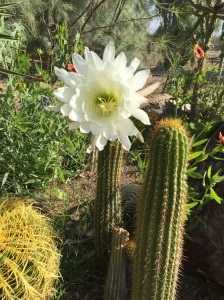


 My fellow fish in the sea of writing, Writers In Residence in particular, have finished products that are enduring; books bound in soft or hard covers, given as gifts, re-read, treasured, shared among friends, and at the very least, end up on Friends of Library book shelves or even at yard sales at discounted prices to be bought and re-read again.
 About being the odd man (woman) out…I actually feel comfortable among my book writing and selling sisters. And if I can promote them, inspire them, write about them or their books, I will. (Look forward in the next months for some blog posts in which I feature these WWWs, or WIRs – you know, the talented, passionate, fun, interesting friends in our little lake of scribes.)

 If you ever come to my house you will see small notebooks all over the place that I can grab and jot down an idea if it drops out of the sky. And they do on occasion. My fellow author, Bonnie Schroeder, gave all us Writers-in-Residence ladies a notebook and pencil set for the shower that writes in the wet. What a concept. So I am covered wherever an idea strikes.
 Stories are everywhere. The writer just has to see the possibilities. But remember, as a writer, you control your world and you can twist the story into something unique if you try. Just try not to twist it into something that doesn’t make any sense. More and more TV shows are turning into pretzels that barely make sense. That’s why I read more books than watch television.
 Now how about the middle? There it sits. Is it a big, hulking middle that the reader has to push around the dance floor with no music or is it thin and bony with no rhythm at all? This middle section is where the reader learns all the little things that hold the story together. Some backstory and some character traits are sprinkled in along with the bulk of the plot. Whether it’s on the high-calorie side with lots of detail or maybe a diet plate with most of the fat is trimmed off, you have to make the middle tasty.
 Editing happens here. Add a little to enhance the story. Cut some off to make the pages turn faster toward the climax. Sweeten it with some good dialogue. Add some choice settings to give it flavor.


 my hands trembled; and my previously well-organized thoughts scattered like dandelion fluff. I could tell from the pitying looks on my colleagues’ faces that my talk was a total disaster.
 g Dreams, I was able to jump right in and pitch my novel to the group, and their enthusiasm and encouragement carried me through the launch and on into a string of other appearances. Several of the club members even came to the book launch to show their support. The group has become a treasured part of my writing life.
 , I realized I’m not scared anymore, and that awareness was the same kind of high I get when the solution to a thorny story problem suddenly comes clear.
 ng to make your words heard, you can focus on more important issues. I used to be afraid of microphones, until I realized how much easier they made things. Take whatever’s available—and if you’re using a hand-held mike, clamp that arm to your side and keep it there; gestures are great, but you don’t want to be waving that mike all over the place.
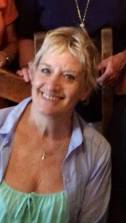 Rosemary wrote her first book when she was ten years old – for her little brother. She also illustrated it herself. It was later rejected by Random House! She has been writing ever since.
 time with my siblings (there are five of us), their kids and our cousins. This is a new commitment I have made since I lost my wonderful husband, Rick.

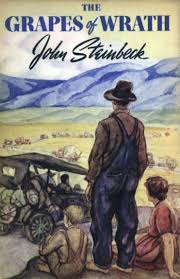 adbury’s Fahrenheit 451 or George Orwell’s 1984: “In light of a Supreme Court which has ruled that money is a form of speech instead of property and that corporations are entitled to the same rights as are human beings, a similar work might present a country which has become an oligarchy entirely controlled by the wealthy.” Another would be “the approach John Steinbeck took in The Grapes of Wrath, which was a very realistic exploration of the lives of people left behind by economic change…(and) a third approach might be satirical novels about the wealthy, in the vein of Kurt Vonnegut’s God Bless You, Mr. Rosewater or, earlier, Mark Twain and Charles Dudley Warner’s The Gilded Age.”
 The Writers in Residence
You must be logged in to post a comment.