By Jackie Houchin
 “A boost up”….when someone holds their clasped hands together next to a horse, and you put your foot in like a stirrup, and they propel you upward into the saddle.
#
Sometimes a beginner (or lazy) writer needs a boost up into the writing saddle. That’s where The Write Practice came into the picture for me. (I’m one of those lazy ones!)
The Write Practice
”If you want to become a better writer, you need to practice,” says Joe Bunting, creator of The Write Practice organization and blog. What’s involved? Fifteen minutes a day, five days a week, practicing with fresh writing prompts, unique lessons on technique, and getting feedback from a supportive community.
There are over 1000 practice exercises and lessons on the blog in such categories as; better writing, genre & format, characterization, grammar, journalism, plot & story, writers block, inspirational writing, publishing, and blogging. And it’s free. http://thewritepractice.com/about/
I’ve attempted two lessons so far in the Short Story category. The first lesson was to read at least six short stories from the many magazine links supplied. The second lesson was to free-write for at least 15 minutes, post what you wrote in the comments section, read three of what other people wrote, and give them brief feedback. Simple as that; practice writing and give feedback. It’s really the basis for everything Bunting does.
I wrote a short ditty on ‘Pig, Porcupine & Pineapple.’ It was totally fun! Now to see with my fellow writers say about it
The Becoming Writer Community & Challenge
If you are ready to go to the next level and start writing finished pieces (and get published), then the Becoming Writer community is the next step. Bunting compares this with what the “Inklings were for Tolkien and C.S. Lewis, the expats in Paris were for Hemingway, and the Bloomsbury group was for Woolf.”
I discovered Becoming Writer because membership in it (yes, it does cost a little) was a requirement to submit to The Write Practice’s quarterly short story writing contest. But what you get with membership is a lot more than the contest.
Like the free practice lessons above, you share your writing with a community of writers to get and give feedback. Actually giving feedback on another’s work helps you when it comes time to edit your own piece.
The Challenge is to write ONE piece EACH WEEK, submitted on Fridays. It can be a short story, blog post, poem, essay, or a chapter in a book. This is what us “lazy” writers call accountability.
And finally, besides actually finishing your pieces (Yay!), you get opportunities to submit to magazines like Short Fiction Break, Wordhaus and others.
The feedback on my first piece, an essay I wrote about Africa, brought a suggestion for submission to a specific online magazine. I submitted it and am waiting to hear. http://thewritepractice.com/members/join
The Fall Contest
This is what caught my attention at first, a writing contest that promised cash prizes, free books, and publication. The theme was “Let’s Fall in Love.” Stories had to contain the two elements FALL and LOVE and be no longer than 1,500 words. I told myself, “I can do that.”
The name “Autumn Gold” sprang to my mind and I quizzed my writer friends on Facebook as to how a girl with that name might look. The first answer – a stripper – caused me to cringe because that’s not what I had in mind. But when another person confirmed what he said, it left no doubt.
The story I eventually wrote keeps the title “Autumn Gold,” but the girl’s name is Audrey Gould. I wrote an outline of sorts, showed it to a friend for her opinion, and then pounded out a story about LOVE that takes place in AUTUMN. It was 1,948 words. Lots of cuts and edits later, I submitted it to the Becoming Writer Contest community.
For the contest (548 entrants) the community is divided into ten groups, A–J, with about 40-50 writers in each. I landed in Group D. There are 46 of us, and we’ve become a close-knit group.
I’ve gotten about nine feedbacks on “Autumn Gold,” and I’ve given at least many more on other stories. Some are VERY good! Others will need some work. Reading my story’s feedback and the feedback on the other stories has opened my eyes to what works and what doesn’t, and what readers “get” from what you write, even if it’s not what you intended.
Invaluable!
I’m considering rewriting the ending and running it past them one more time. The final deadline to submit the story to the judges is September 4.
Other Programs
The Write Practice offers other programs for writers and authors on building a platform, publishing & marketing, Twitter, and the 100 Day Book challenge. http://thewritepractice.com/products
#
Now I’m up in the saddle. I’m trotting around and loving it. I can’t wait to press my calves against my steed’s sides and rise into a canter. I needed that boost up. Do you? Perhaps you should consider a writing community.
I suggest The Writing Practice. Take advantage of the discipline and the getting and giving of feedback. Pick the lessons you are interested in and go for it. They are free! You might also consider Becoming Writer.
Or join a critique group and begin giving your work over to new eyes and opinions.
Get up there and get galloping!
###
Currently the Becoming Writer and the 100 Day Book programs are closed until next semester. Future contests in Becoming Writer will be on Flash Fiction, Essay writing, Novels, and Poetry.



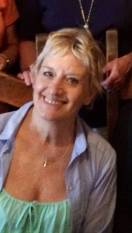


 Jacqueline Vick is the author of over twenty published short stories, novelettes and mystery novels. Her April 2010 article for Fido Friendly Magazine, “Calling Canine Clairvoyants”, led to the first Frankie Chandler Pet Psychic mystery, Barking Mad About Murder. To find out more, visit her website at
  Sally Carpenter put out a post about her new book The Quirky Quiz Show Caper. I saw it on Facebook. (Hint: Don’t be afraid to promote your books, gently, on social media.) I immediately downloaded a copy, realized I hadn’t read the previous book, and downloaded that one, too. (See? Promotion pays off!)
 back together at 38 after drying out. The choices available to him at this point in his career are pretty cheesy, but as grandma used to say, beggars can’t be choosers.
 I’m glad I did, because I wouldn’t have wanted to miss the excitement. Samantha and Nick Taylor just may move their relationship to a new level, but will the handsome photographer Dante get in the way? And what’s Dante doing hanging around Samantha at Christmas anyway? He’s lending brotherly support to his sister Cat whose husband has just been murdered. Did I mention Cat is eight months pregnant? If you think it sounds like a soap opera, you’re right. Twists and surprises galore but without the annoying “scene hold” before commercial break.
 I’ll have to wait until October for the next Ellen Byron novel, A Cajun Christmas Killing, and I’ve been to several bookstores looking for Ashley Weaver’s The Essence of Malice. Ooh! Did I just see an Amory Ames Kindle Single? Another for the pile!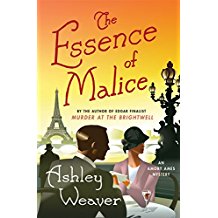

 questions were, “Where do you get your ideas?” and “How do you know all that stuff?”
 But then recently at the Vons grocery store, a lovely lady traveling on Route 66 from Illinois to Santa Monica came up to me, and said “I know you!” I had on a Route 66 T-shirt, and as it turned out, it was mistaken identity–she thought I was a “Roadie” she’d met elsewhere in another state.


 After writing my first three published short stories, something happened: Readers responded favorably to one of my characters. They liked this guy’s personality.


 And to add one more thing to this blog, Johnny Casino isn’t the only short story character to be in a book of his own. Chance McCoy arrived this year. His first book is called Second Chance. There are more stories to come. And there is a second short story anthology called Only in Hollywood coming out next year. The book consists of various stand-alone stories, but one features a guy named Charles Miro, a former TV actor turned private eye. He works for a younger woman who owns the detective firm. There are several stories about these two coming up. You see, even a short story can magically turn itself into a book if you try.


 t, I copy posts from this blog onto my Goodreads blog, so I get extra mileage from it. When you have an “author event,” you can promote it on Goodreads. And unlike certain other websites that are mighty picky about who can and cannot review books, Goodreads lets you review your own books and give them five stars if you want to. What’s not to love about Goodreads?
 ons. Book clubs are a terrific way to get your book noticed, but you can’t just wander in to any old club and ask them to read your book. You need to build a relationship first—but that’s half the fun! There are book clubs at most libraries and independent bookstores, and if you don’t find one, consider starting one yourself. Readers are everywhere; might as well make them potential readers of your books.

 Linda O. Johnston, a former lawyer who is now a full-time writer, currently writes one mystery series for


You must be logged in to post a comment.