
Ireland
Ahh… out here in the Mojave, yet able to visit Ireland, via BBC Radio 4, and “Maeve and Me”—What could be better?
At home, trying to write, but with low mental and physical energy, combined with a mindset not completely in tune with writing—and—on the other side of the possibilities pendulum, not inclined to do household chores of any kind.
Most fortunately, I had Maeve Binchy’s “Dublin 4”[i] on the t op of one of my stacks of beloved books—ready for the right moment! And with my trusty Kindle at my side, as it often is, loaded with yet to be read or heard kindle and audio book offerings, I’ve been in couch-potato heaven. I did think about writing—but not about doing improvement tasks, or dusting “write your name in it” dust laden furniture, or any of the other neglected household items, or heaven forbid—donning a mask and going out into 2020’s real world. The “thinking” about writing part prompted this post…
Here’s the rambling part of this post that hopefully will end later with a writing tidbit/thought/adventure. Thru Amazon/Audible I first listened to a  BBC Radio 4 Broadcast of Charles Paris, played by Bill Nighby, then there was Rumpole, played by Julian Rhind-Tutt, and now I’m finishing up Father Paolo Baldi played by David Threlfall. (I’m mentioning the actors names because I think they have great voices in case you want to give any of them a try) My current listening, Paolo Baldi, has taken me to his Ireland, including traveling around a bit, and I love his mystery focused adventures, and the Ireland he sees.
 The next stop on my rambling writing road is Maeve Binchy and her book. I’m in a wonderful book club, and periodically, each of us have to come up with a selection. Fellow Writer in Residence, Rosemary Lord, mentioned Maeve Binchy in one of her posts,[ii] and I thought at the time, one of her books might be a good idea for book club. So I decided to buy a used one[iii] from Amazon, and have fallen in love with her Ireland.
So how does this all come together? After several years of listening to BBC radio, my reading-self finally realized, that through the spoken-word only, I was hearing and putting together a whole story—location, action, clues, scenery, characters…all through dialogue. There are a few side-effects like a phone ringing, and stomping feet—but the story is carried completely through dialogue. Could I do that? Definitely not.
Then Maeve, who takes you to Ireland up close and personal, with lovely characters and situations–does so much of her story telling through dialogue. You get to know her characters, the setting, motivations, emotions, often via what they say. Can I do that? Definitely not.
Clearly, dialogue can do it all if done right, and I need to learn much more when it comes to writing dialogue, and I plan to definitely enhance my writing along that line. Once again, I’m sharing what’s going on with me with the hope it will help you in your writing. Although, I’m rather reticent it took me soooooo long to realize I needed to enhance my dialogue skills! Sigh. And even though I haven’t spent “enough” time at my computer (per my writing-conscience), I do think I’m going to be working on moving more of my story telling into dialogue.
I’m also thinking this will NOT be easy…
Happy Writing Trails

[i] It’s an old used copy I bought through Amazon from a book store across the country. It has the “feel” of being loved by many. Maeve Binchy on wikipedia https://en.wikipedia.org/wiki/Maeve_Binchy
[ii] https://thewritersinresidence.com/2016/11/02/a-quick-escape/
[iii] Didn’t notice until after I took the picture, London 4’s cover title is the exact same fuchsia color as my Kindle cover. Eerie.




 After I joined Sisters-in-Crime/Los Angeles, I was asked to join the board. I started out as Speakers Bureau Director. I set up writers’ panels all over the area. I first went through the roster of members, located websites for those members with one, learned what they wrote, and got an idea what types of panels I could offer local libraries based on the types of books these folks wrote. I did cozy panels, Noir, mysteries with a travel theme. 80 panels later, I pretty well know who wrote what.

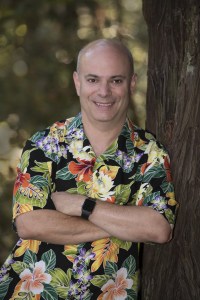 Marc Jedel writes humorous murder mysteries. He credits his years of marketing leadership positions in Silicon Valley for honing his writing skills. While his high-tech marketing roles involved crafting plenty of fiction, these were just called emails, ads, and marketing collateral.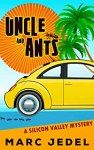


 Yes, this is The Writers in Residence blog. And what am I posting about here today? Writers in residence.
 So most often these days, I assume we’re writers in residence. We all have homes–houses, apartments, condos or whatever–although maybe there are some homeless people out there who write, too. In any case, we reside somewhere. And write.
 Oh, and by the way, I was very impressed by our last Writers in Residence blog, written by Rosemary Lord–focusing on independent bookstores near us in Southern California. It’s a great idea to buy books from them, probably online and either have them shipped or pick them up outside the store. And it’s not only the independents doing that now. I’ve picked up several books from outside my nearby Bookstar, which is part of Barnes & Noble. I want that store, and the entire company, to survive, and the indies, too!


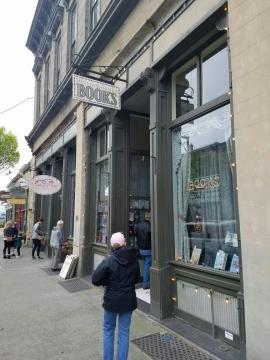 As writers and readers, one of our easiest ways to help can be to support the small businesses that are straining to survive while closed to foot-traffic. Especially the small bookshops, that have been struggling desperately in the new world of online literature. These small bookshops welcome writers, help us launch our new books, promote our work with book-signings and author events. I found a few where we have a chance to give a little something back. (I have been buying a book or two, including my own books, online from them.) Let us know if you have ‘hidden gems’ in the bookstore world that we can also help.
 The most famous small bookshop in Hollywood is
 In Pasadena, one of the landmarks is
  In West Hollywood,
  Over in Hancock Park,
  But a very specialized small bookstore on the west side in Culver City is


 Turned out I had grabbed a paperback I’d bought second-hand years ago and never got around to reading, Irving Wallace’s “The Writing of One Novel.’ It relates the all-absorbing 16 years he spent researching, traveling for settings, and finally writing his bestseller, “The Prize.” In meticulous detail Wallace describes his exhausting, frustrating, and determined journey into the background of the Nobel Prize. He interviewed dozens of judges, winners, losers, and journalists who covered the event. He kept daily journals and diaries of his efforts to get behind the politics, drama, and the decisions, all of which resulted in “The Prize” being almost non-fiction. Wallace discovered facts, regarded as explosive and titillating at the time, about all those involved over the years. Most of the characters were a combination of the real person and the author’s creativity but they were so obvious that the country of origin of the Nobel Prize, Sweden, refused to publish or distribute the book.
 That aside, the tattered paperback I was reading, yellowed with age – it was published in 1951 – was the most honest and revealing of any author’s how-I-wrote-it book I have come across. It is more than a fascinating peek into Wallace’s writing process and method of research. He lays bare the heart, mind, and soul of a writer’s inner workings. Would reading this book turn off a new writer? It’s a daunting task that Wallace set for himself because he wanted to know everything, and as he dove deeper and deeper into the history of the Nobel Prize he uncovered real data that he could not resist including in his novel. Luckily today we are armchair researchers, although I find that visiting locales can’t be beat for sniffing the atmosphere.
 Interestingly, Wallace’s “The Writing of One Novel” mentioned another author who wrote a tell-all of his writing process. I immediately downloaded Thomas Wolfe’s “The Story of a Novel.”
 “Look Homeward, Angel.” Wolfe dredged up so many childhood and young adult personal experiences that the novel is considered practically autobiographical. His first draft was over one million words! Happily, Scribner’s genius editor, Max Perkins, sorted it all out and gave us Thomas Wolfe in all his glory. Perkins probably also heavily edited “The Story of a Novel” because Wolf admits at one point that all he did when writing it was jot down a few random notes.
 Both memoirs put me in mind of Graham Greene’s despondent “The End of the Affair,” another heart-breaker that makes one wonder how much of the author’s life it reveals. Faulkner called the book “true and moving.”

 My post today is more of an exclamation point to recent excellent posts by fellow authors here, and elsewhere. Ideas were suggested/promoted by other authors that started me thinking—as they hoped they would do—kudos all. Also,
  and expectedly, with our stay-at-home circumstances, I’ve been reading a lot, sometimes at the expense of writing(smile.) Consequently, given several of these mentioned recent posts, and my plethora of recently read books, I’ve been thinking anew about point of view.
 In taking the perspective of what I like to read—not genre, but style–indeed, in our book club, we read lots of books, most by famous authors, and selected based on the preferences of our members, whose tastes are luckily quiet eclectic, which is why I like book club so much. Many, many, books I’ve enjoyed reading, especially since I know I wouldn’t have read if it wasn’t the selection of the month. So, I’ve had many chances to evaluate and critique many styles of writing. And since most are quite famous and big time, my critiques are worthless analysis


 The Writers in Residence
You must be logged in to post a comment.