Why? And What?

Once again, as I’m traveling down my winding writing road, my book club happenings have started me thinking on several fronts. And as before, I’m posting my thoughts here in the hope they will help readers understand what goes into an author’s mind in getting a book out there, and maybe a few other writers might be having similar thoughts of their own? And I’m also publically airing a tad of self-pity (smile.)

Why do I read a book? These days, mainly because my book club tells me to! This month’s selection was a book I would not have thought of as a reading selection on my own, but that’s one of the great parts about book club—to read outside our own readings “ruts.” My rut, of course is mysteries. Well this month, our book was How I Killed Pluto and Why It Had It Coming, by Mike Brown. Not a book that would have crossed my reading horizon by itself—and I loved it! Even ended up doing Google research and further reading. The topic, the writer, the style, the information—all were wonderful!

From there my mind went to other sources of reading suggestions, like author reader/author posts (Of course Writers in Residence suggestions are the best!), recommendations from friends and relatives, bookstore promotions, social media platforms like Facebook, and in the far past, even grocery store checkout displays.

All of this is leading to the big questions in my post here—why would anyone want to read my books, or said a different way, what would entice a reader to want to read my book? My past answer to these questions has often been—Location – Such as, what is the Pacific Northwest like? What is the Mojave Desert like? Why are these characters living there? And why does “what and why” matter to me right now? Well, besides being an interesting writing knowledge topic in itself—which always interest me, my book sales are very low and I want to fix that. If I can(smile)

But there’s more, and not about me. It’s partly about the concept of reading is a wonderful “thing” in itself, and also that there is a “twinkling something” in a reader and writer’s mental world. That “something” that causes us to recommend a book to a friend. Brings a smile to our faces.

Is it the title? What I’m working on now is tentatively titled Mojave Gateau. A chocolate gateau certainly gets me salivating…but is it enough to buy a book? I’m thinking not.

So what and where are my meanderings leading me to so far? Well, as I have tended to think in the past about location, the desert does still tickle the fancy, but it’s not enough. I’m also still clinging to the concepts that characters and scenery are the keys to good writers. And that might still be true, for me at least. But, what’s the good of a great story that no one reads? Is it enough I’ve written the darn thing and my editor, even a publisher or two think it was worth the effort? Hmmm???…

Maybe there is no magic bullet. Just a lot of good hits on multiple fronts? Paid publicity, titles, word of mouth, cover, implied adventure, puzzle solving???…All thoughts are welcome!

Happy Writing Trails

Metaphors by a Kingly Author

by Jackie Houchin

How many of you have ever read the Book (or parts of the book) of Ecclesiastes in the Bible? It’s in the Old Testament, right after Psalms and Proverbs (other excellent books to read!).

Ecclesiastes is written by King Soloman (the wise) toward the end of his life. He’s thinking back on all the “things” he has accumulated and accomplished. He calls them futile, useless, and vanity. It’s a bit depressing, however true.

Then in the last chapter he writes a fantastic – and rather gruesome – metaphor on aging, with a brilliant comment at the end. If you use metaphor in your writing, you will really appreciate it. If you are older and things about your body are “wearing out” (hearing, eyesight, energy, knees, memory) like me, you will maybe get a rueful kick out of it as well.

Here is King Solomon…

1Remember your Creator

in the days of your youth,

before the days of trouble come

and the years approach when you will say,

“I find no pleasure in them”—

..

2before the sun and the light

and the moon and the stars grow dark,

and the clouds return after the rain;

..

3when the keepers of the house tremble,

and the strong men stoop,

when the grinders cease because they are few,

and those looking through the windows grow dim;

..

4when the doors to the street are closed

and the sound of grinding fades;

when people rise up at the sound of birds,

but all their songs grow faint;

..

5when people are afraid of heights

and of dangers in the streets;

when the almond tree blossoms

and the grasshopper drags itself along

and desire no longer is stirred.

Then people go to their eternal home

and mourners go about the streets.

..

6Remember Him—before the silver cord is severed,

and the golden bowl is broken;

before the pitcher is shattered at the spring,

and the wheel broken at the well,

..

7and the dust returns to the ground it came from,

and the spirit returns to God who gave it.

..

How many of those metaphors did you catch?  I know personally about the diming vision and fading hearing, and definitely the white “almond blossom” hair!  So far, my “grinders” are still in fair shape, but I know about energy lagging with that old grasshopper.

And then in conclusion the wise old king writes…

..

12But, my child, let me give you some further advice: Be careful, for writing books is endless, and much study wears you out.

13That’s the whole story. Here now is my final conclusion: Fear God and obey his commands, for this is everyone’s duty. 14God will judge us for everything we do, including every secret thing, whether good or bad.

..

#

How have you used metaphors recently in your writing?  Do you enjoy reading them when other writers use these methods…sparingly, of course?

**** If you want to learn more about Metaphors, Similes, Analogies, Allegories and Idioms to use in your writing, check out this article in  The Free Dictionary for explanations and samples of each.

..

Photo by Matt Bennett on Unsplash

Holy Bible, New International Version®, NIV® Copyright © 1973, 1978, 1984, 2011 by Biblica, Inc.®.

Now About that Memoir…

By Gayle Bartos-Pool

GlendaleEvent2018cropped

Several of us on The Writers-in-Residence blog have been mentioning writing a memoir recently. Maybe you’re thinking that it must be associated with people “of a certain age,” but frankly, younger people haven’t lived through nearly as many adventures, ups, downs, and life in general as we folks in that upper age bracket, so we do have more to write about, but that doesn’t mean you can’t start writing your own memoir now and keep adding to it.

But it is true that older folks have survived it all, the good, the bad, and what life threw in our path to make us who we are. And you want to know something else? We all learn from those things. I’m sure you all have stories to tell. So why not let others laugh and cry and say Wow! along with you? Your friends and family will enjoy reading about your life because they weren’t with you every step of the way unless you’re a Siamese twin. Younger people can actually learn things when they read how you became you.

And there is a bonus in there, too. You will start to understand who you are as well. There will be some things that you recall, maybe some that have been buried for a while, that will let you reevaluate your life and see that you were and still are a very interesting person. You won’t be able to change the past, but you can see what you did along the way. If there were problems in your life, what did you do to overcome them? Not everybody starts out a Rockefeller.

As for John D. Rockefeller, the head of one of the wealthiest families in America, he started out as a bookkeeper at sixteen in Cleveland in 1855. He sold and moved produce during the Civil War to the Union Army. He was an abolitionist, voted for Lincoln, and after the war when the need arose switched from food stuffs to oil. An oil glut had some refiners dump the excess in rivers and streams, J.D. used the surplus to run his refineries and turned the rest into other by-products. He wasn’t going to pollute the waterways or waste all that product. He founded Standard Oil. The guy had a philosophy: He said God had provided the opportunity to earn all the money he had made; J.D. didn’t mind making it. He also wanted to save as much as he could and give away as much as he could. He was a philanthropist and considered one of the richest men ever in American history. There were downsides to his businesses, but he did a lot of good in his life. But that is what makes people so interesting no matter what they have in the bank. The good, the bad and the interesting.

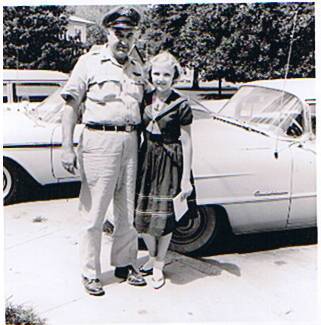
dad-and-meI had the opportunity to have a father in the United States Air Force. We lived on the island of Okinawa when I was 5-7 and in France when I was a teenager. I went to a boarding school that provided an education that exceeded my first year in college in Memphis. I switched schools because I wanted to actually learn something. To pay for my college education, my wonderful dad sold some of the French clocks he and my mom had collected while we lived in France. I worked a year between my sophomore and junior years in college as a private detective to earn money myself and to see what the world was all about. That was probably as important as the four years in college. After I graduated from Rhodes College in Memphis and worked another year to earn money, I moved to California. I took acting lessons so I could learn about the movie industry and especially how to write dialogue because I wanted to write for TV or the movies. I had a few scripts looked at, but none sold. I decided to write mystery novels instead. There is even a story in how that came about, but you’ll have to read my upcoming memoir to see how that happened. It’s a good story. Oh, I went on to write 24 books. I guess all this preparation in life laid the groundwork for that little endeavor.

I have a little saying that I wrote a while back:

It doesn’t matter what you don’t have; It’s what you do with what you have.

OLYMPUS DIGITAL CAMERA

I have been working on my memoir for nearly a year. I have over 40 scrapbooks with bits and pieces of my life from the time I was born to today. I even have my mom’s family album that I redid when it started to fall apart that has the family’s history in pictures. What a joy to look through it now with my niece and her kids. My brother and I still recall old stories and some of them are in the book. It’s full of pictures and memorabilia and stories of my family and me. It shows how I became who I am.

So when you are writing your memoir, even if it takes you a few years to go through your scrapbooks or diaries or old photographs or spend a few holidays with family and talk about old times, discover who you are and share it with others. We all have a story to tell. Frankly, we are all interesting. Write On!

From PI to Mystery Writer

I’M READY FOR MY TAKE OFF…

by ROSEMARY LORD

Of course, first I scrubbed the kitchen sink, did a load of laundry, sent belated birthday cards, and read a “Be Kind to your Kidneys” article. All essential stuff – when you’re supposed to be writing your current book…

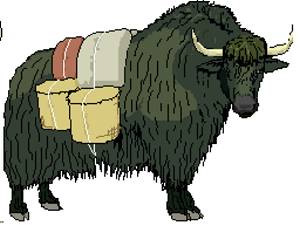
YakIs it ‘Yak Shaving’ again? For those of you who weren’t there: ‘Yak Shaving’ is when you find yourself doing something as irrelevant as shaving a yak (don’t ask!), instead of the goal you set out to accomplish. MIT student Carlin Vieri invented the term and blogger Seth Gordon, explained, “the seemingly unrelated, endless series of small tasks that have to be completed before the next step in a project can move forward.” Hmmm.

Don’t get me wrong. I have increased my writing accomplishments ten-fold.

I started a strange mystery about a young, dark-haired girl (so not autobiographical!) in London climbing out of a window to escape… you get the gist. I’ve written many pages of another new mystery set in a small, Greek coastal village. A 60-year-old widow returns to the site of her honeymoon, hoping to find some direction in her life – but finds mayhem instead…I wonder where that ideal came from? Perhaps I should go back and do some more research in that village. What a great idea! Then there’s a World War Two mystery – only six pages done on that one. I’m also still fiddling with my Lottie Topaz Book Two. I’ve written several chapters, know where I’m going – I thought. But the rest is still foggy. So, I took Jackie Vick’s advice and moved away from that book to focus on another project. All these other new storylines. She’s right about the insights you get as you write the draft of another book. Answers to the one you were stuck on filter through whilst writing the next.

As you can see, I’m all over the place. I share this with my fellow writers and readers, not as a cry for help. Well maybe a smidge. More as a warning. Don’t do as I do!

When I see what fellow blogger Linda Johnson accomplishes – she’s a prolific novelist, meeting deadlines with her strict writing schedules. Gayle Pool, Jill Amadio and Miko Johnson all do it. And Jacki H. continues to promote all of us and write children’s stories, as well.

I ask myself, what is wrong with me? I know better. I think I’m missing a gene…

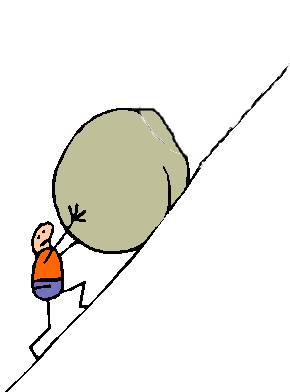
Pushing RockSometimes I feel like  Sisyphus – the Greek Mythology, evil sinner Sisyphus was condemned to an eternity of pushing a boulder up a mountain. Once he got to the top, the weight of the boulder forced it to start rolling down to the bottom, wherein he had to start again.  According to Albert Camus, the Greek gods felt that there is no more dreadful punishment than this futile and hopeless labor for Sisyphus. Hmmm.

So,  I’ll stop whining! I think this is the way writers’ lives go – seasons of fruitfulness and seasons of distractions.

Stephen King said of writers: “Talent is cheaper than table salt. What separates the talented individual from the successful one is a lot of hard work.” And I’m certainly not afraid of hard work. Just sometimes need a push in the right direction to get over that hump!

When you think of it, we’re really lucky. This is what we choose to do: write. Yes, most of us have ‘day jobs’ – other ways to survive, whilst we feed our muses. Or they feed us. I think most of us have managed several careers – often simultaneously. Which become wonderful sources of material for our writing. And I can’t complain.

It’s not as if we have to study for years, as doctors, nurses and medical professionals do in order to improve and save people’s lives. Or go through really tough, brutal training and then, literally, put ones’ life on the line every day as our police officers and military do, in order to protect us all.

Computer filesWe sit at our computers – or with pad and pen – and spill our imaginations onto the page. We aim to entertain, to educate, to inspire, to elevate people’s lives and show them different possibilities – escape into other worlds. Or perhaps just to make them laugh. Everyone needs to laugh. Charlie Chaplin said, “A day without laughter is a day wasted.”  And then some of us write because we just want to.

And so I get back to the writing. To the completion of writing. Of getting unstuck and moving forward with all the storylines and characters coursing through my brain and – sometimes – tumbling out onto the written page. Hooray!

Fortunately, I’m not alone. As very successful and prolific author M.C. Beaton  – author of the Hamish Macbeth and the Agatha Raisin series – once said when asked her worst habit – “Procrastination!” she replied. Yay! There’s hope for me yet! The interview continued with her philosophy: “Stop projecting. Tomorrow’s a mystery. This is not a rehearsal. I’m on stage now.”  Although my favorite was her answer was to the question, “What do you collect?” M.C.’s immediate response: “Dust. I’m a lousy housekeeper.”

Thankfully, after this cathartic Blog, I’m ready to get going again. Move to the next stage. Be disciplined. Finish one book before moving on to the next. Get going.

Someone once said, “Move forward. Aim high. Plan a takeoff. Don’t just sit on the runway and hope someone will come along and push the airplane. It simply won’t happen. Change your attitude and gain some altitude. Believe me, you’ll love it up here. “

I’m ready for my take off. How do you get unstuck and move forward?      

Rosie and sister 2 cropped……………………………

Character Immortality

Recently, I’ve been thinking about character immortality. Not just in regards to my reading, but my writing too. Indeed, I don’t think I’ve ever killed off a “good guy” main character that readers have gotten to know, and hopefully like, in any of my books—so why and how did I get here in my meanderings?

Here’s the trail that got me started on character mortality thinking…. G.B. Pool and Jackie Houchin recently delved into the importance, scope, and all around “goodness” of reading. Then—once again—a book club happening moved my thoughts further on. That’s what reading will do for you, make you think! And thirdly, while mentally contemplating a chapter I’m currently working on, my writing-brain wished a character wasn’t there. Should I kill him off? Flashed across my thoughts. No. Was my answer. But, why not?

Starting with the reading part—if I know from the beginning a lead and/or beloved character is going to be killed off—I seldom will read the book. “But you’re always killing off people,” my hubby (a non mystery-genre reader) would probably point out. To explain the difference between a “plot-revolving-around” murder victim, and a key “on-stage” character is hard to explain to him—but for me, there definitely is a big difference.

On to Book Club. Members pick the books that go on our list, mainly I think, because it’s a book by an author they like, or it’s a book they’ve already read and think everyone else will like. The Hamish MacBeth series written by M. C. Beaton (Marion Chesney) is one of my favorites—and having read many of Hamish’s adventures—I put one on our list. In the book I recommended, a character I really liked died, and it soured me on the whole book. Why, I asked myself?

I’m a bleeding-heart-nitwit was my answer. not an “answer” befitting my mystery writer/reader ego. But in fact, I’ve never read/or watched a Morse or Poirot outing where either protagonist got seriously ill, much less die. Avoided on purpose. Indeed, I guess I want me literary heroes to be immortal. Aging is okay, but you can’t go too far.

But time does pass in our stories. As it does in life, and one can only squeeze so much activity in a storytelling year! You have to adopt either a false conceit about time, or ?? Then when it comes to animals, even worse—sigh. I was told by a relative—that even as a child (this was way back when in the dark ages!) when leaving the movie theater after watching “Bambi” I proclaimed I’d never watch another movie like that again in my whole life.

This winding and contradictory mortality thinking road is snaking back and forth for me… For example, in my Rhodes series, it all starts with LC Rhodes setting everything in motion for Leiv’s adventures on his deathbed. And throughout the few books I’ve subsequently written in the series, Leiv often talks to his deceased grandfather, LC.

Clearly, my ramblings here have not brought me a clear understanding—or even a “why”—when it comes to immortality for some, and not for others? Indeed, in my writing reality conundrum mentioned earlier, I’m not killing off one of Leiv’s compadres, but decided to make him fit in. This time. But why?  I’m currently leaning toward considerations such as, “what kind of character are they?” Main, supporting, likable, gender, looks, age… I haven’t sorted it out yet.

And why am I continuing down this character immortality road—despite the lack of a clear answer? I didn’t like not liking one of my favorite author’s books! Indeed, Marion Chesney was(still is) very much a guiding-light “STAR” for me. Consequently, I would very much prefer that–not enjoying this particular offering–has to do with wrong-headed thinking on my part!

All thoughts on character mortality are definitely welcome…because as I’ve so often jabbered on about before —I think characters and scenery are the essence of good storytelling. And a key character’s mortality, is probably pretty important to good character development.

Happy Writing Trails!

Hey, I’ve Been There!!

by Jackie Houchin

Hi all. Are you ready for a tome? (I don’t mind if you skim this post!) If you hate reading about vacation itineraries, I hope you won’t cringe as you begin this. But it really IS about books & reading.

I’m bouncing off my fellow Writer in Residence friend, Gayle Bartos-Pool who wrote that wonderful post last week about how reading fired and inspired her own successful writing history. Her last words “Read On!” were terrific.

I am a prolific reader. I LOVE to read or listen to books. A while back, I wrote about The 52 Bookclub Reading Challenge that I’ve been in for three years now. Each of the 52 books must match a book category that the moderators come up with each year. So far, I’ve met the challenges. For this year I have but 14 of the 52 yet to read, and it’s just June. 52 bookclub page

However, I’ve read many, many other books in 2022. And when I say read, I include print books, eBooks, and audiobooks. Non-fiction, novels, inspirational books, study books, and children’s books fill in the gaps around my favorite genre – mystery.

So, when my husband and I went on a 23-day cruise in the Mediterranean and Aegean Seas, I decided to read a book set in every country we visited, including the ship itself, and a jet plane.  What fun!  I’ve read 13 and have about 6 left to read.
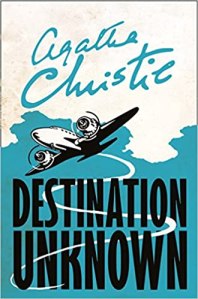
 I began this quest waiting at LAX for the flight that would take us to Portugal to meet our ship (with a stop in Montreal). I started with Agatha Christie’s DESTINATION UNKNOWN. (We knew where we were headed, but hey, you never know – as the protagonist in that book soon found out!)

We spent so little time in Lisbon, Portugal, that I haven’t considered a book set there, but I just recently came across 300 DAYS IN THE SUN by Deborah Lawrenson or A SMALL DEATH IN LISBON by Robert Wilson. Not sure I will get to them. They are a bit long. But who knows, maybe.

 As for that 4-hour stop in Montreal, I chose A DISAPPEARANCE AT THE BONNE NUIT HOTEL by Dominique Daoust, about a young female newspaper reporter who goes to Montreal in search of that “big story.”  It’s the first book of a trilogy.

(This is yet to be read.)
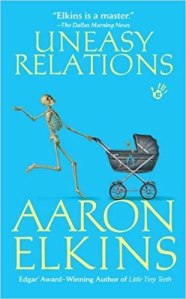
Our ship docked in five ports in Spain, with a stop at Gibraltar (a British Overseas Territory) after the first. I read Aaron Elkins, UNEASY RELATIONS, set in and on that famous rock. Wow, what fun to follow Gideon Oliver, the bone detective, up the cable car to the top for a really scary view, and then inside to St. Michael’s cave where stalactites come together to form of figure of an angel. There is a lecture hall beside it and Gideon spoke there!  It totally makes a difference reading a book when you have BEEN THERE!

 I read A FATALITY IN SPAIN by Blake Pierce, which is set in Barcelona (also in Pamplona). Oh, yes, I definitely remember that weird Antoni Gaudi modernistic church in town! And the dancing “giants” with the wooden heads!  Reading the story…I was there too, hearing, seeing, smelling. (Although we chose to wear a mask there because of the packed crowds in the streets.)
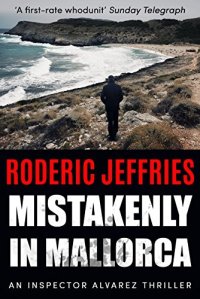
I am currently reading MISTAKENLY IN MALLORCA by Roderic Jeffries, an Inspector Alvarez mystery. It’s number one of 37! (And perhaps I’ll also read HOTEL MALLORCA; AN ELAINE PEARSON MYSTERY by Susan Linden Emde, if I finish the rest in good time.  It looks very interesting.

We also docked in Seville, Malaga and Cartagena, Spain, but I’ll maybe be happy with the two books I have already for that country.

By the way, I am also reviewing each book I read on my new and very simple WordPress blog – Words and Reviews blog.
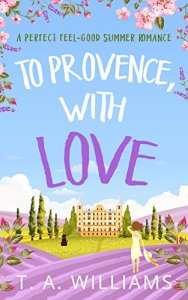
 At Marseilles, France, we took a bus an hour inland to Avignon, France.  Since high school French classes, I’ve always dreamed of “dancing on the Bridge of Avignon” as the children’s song goes. Finally, after 50 years – I did it!   To remember that beautiful time in Provence, with everything lavender, I read, TO PROVENCE, WITH LOVE by T.A. Williams. More of a light romance than mystery, the protagonist is a writer and teacher, who came from England to write the biography of an elderly Hollywood film star. (Rosemary Lord, you would like this one!)

 ONE SUMMER IN MONTE CARLO by Jennifer Bohnet is a sort-of mystery and again a light romance, set in the Principality of Monaco.  It featured a lot of action and information about the F-1 Auto Racing circuit. While we were there, they indeed were setting up grandstands, pitstops, and pilon curve barriers for the race that would happen two weeks after we left.
 I was able to take my husband to Florence, Italy – a city I’d visited on my own three times before. Sadly, we were not able to go out into Tuscany for a visit to a vineyard and chateau. (Excursion cancelled.) But I was able to show him around one of my favorite cities, eat gelato, have spaghetti Bolognaise at my favorite café.  (Sigh) I’ve chosen A DEATH IN FLORENCE by Blake Pierce, or DREAMING OF FLORENCE by T.A. Williams.  I’ve read books by both of these authors (A Fatality, and To Provence), so I’m hoping for a different one.  Any Suggestions?

 I read AUNTIE POLDI AND THE SICILIAN LIONS by Mario Giordano, while in Sicily, and we actually took a private taxi to Taormino because of that book. We didn’t have an excursion booked there, and, well, why not?  It only cost E100.00 for the 30-minute trip each way, and a patient driver while we toured the town for a couple hours.  It made the book more real, although we did NOT visit Palermo, where the “mob” lived in the book. Hahaha.
 I have yet to begin DEATH IN THE SILENT CITY by E.M. Ali, but I can’t wait.  I loved Malta from the moment we first docked.  And indeed, the old city has red-stone walls protecting houses in the narrow winding streets just like on the cover. We entered one of those bolted doors with our tour guide, and into a beautiful studio where he was restoring stained glass windows they’d found buried after World War II. I always thought Malta was a part of Italy, but it is a country on its own.
 We had only two “at sea” days between distant ports, so I read two cruise ship mysteries. VANISHING VACATIONERS by Hope Callaghan and PINEAPPLE CRUISE by Amy Vansant.

Both settings in staterooms, dining rooms, decks, lounges, pool, etc., were so very familiar as I roamed our ship – the Nautilus, er, I mean, Oceania’s Nautica.

 Ah, Greece! I finally got to visit the setting of my all-time favorite book by Mary Stewart – THIS ROUGH MAGIC.  It is set on the Isle of Corfu in the beautiful Aegean Sea.  A romantic-suspense mystery that I first read when I was about 13 or 14. I’m sure I’ve reread it a dozen or more times since. I love it.  And now, I’ve seen those lovely clear-water coves and sandy beaches, the castle-like homes way up on the steep mountainside, the winding dirt roads suitable only for a motorbike, the enchanting Corfu Town and the harbor. (sighhh)

I read A CRUISE TO DIE FOR by Charlotte & Aaron Elkins, an art-forgery mystery set on a fantastic mega-yacht, on Corfu, and in Athens.

It reminded me of that sleek, black super-sailing yacht, The Maltese Falcon, docked near our ship in Corfu harbor. Oh, my, what an uber-expensive 180-foot beauty!  Seriously, “Google” this super-yacht by name and you will be aghast!

 I just finished the most fun, interesting, and un-put-downable audio book that I have listened to in a long time. SACRED GAMES by Gary Corby is set in ancient Olympia, Greece in 460 BC. The still-active archeological dig that we visited and loved is portrayed so clearly in this book (the author must also have visited the old Olympic Games site) that I was sharing bits of it here and there with my husband. “Oh, yeah! I remember that!” he would say.  The book is a murder mystery that takes place during the games, and a young Athenian man is the investigator. He has 4 days to find the murderer before the Games end and his best friend is executed. The action, intrigue, fast pace, brutality of the sports, and the setting, well, it was like walking there in person again.

Have you ever done this?  I mean read your favorite genre set in the places you have visited, be they in another part of the world, or nearby?  It’s amazing. It makes reading so much richer. Can you think of a book right now that is set in the last place you vacationed or visited?  Think hard, then go buy or rent it and READ IT.

I can’t believe I actually found a book – another light romance – set in Croatia (and part of it actually in Split, where we visited)!  CLUELESS IN CROATIA by Joy Skye was a fun book, and the scenes in the harbor, in the city of Split, even a mention of the cruise ships there was fun.

After Croatia we cruised across the Aegean Sea to the East side of Italy for a 1-hour long trip into Ravenna to see the glorious mosaics there. It was an eyes and mouth open wide to see all that fine work. But alas, I’ve found no mystery/ romance books set in this smallish, inland city, or any with Italian mosaics. Do YOU know of any?

Our last port of call was again across the Aegean, in Koper, Slovenia. As I said, I haven’t found a book set in Slovenia  yet. It was a beautiful town as we strolled through it. We bought a wood craft that I hope my hubby can duplicate for gifts for Christmas. We ate gelato, sat by an unusual fountain that reminded me of a dandelion puff! And we strolled by the small sunshine-bathed beach. I bought a little cup at a souvenier shop with the LOVE emphasized in the country’s name sLOVEnia.

Neither have I founda mystery set in Trieste, Italy where we disembarked.  At Trieste when we got off the ship with our luggage, VERY early in the morning, the Nautica was surrounded in the water by shimmering, semi-transparent jelly fish!  It was amazing!

 I hope to read A GIRL FROM VENICE by Siobhan Daiko, or maybe Jennifer S. Alderson’s DEATH BY GONDOLA, or maybe even one of Donna Leon’s more recent Commissario Brunetti mysteries, set in the floating city. We were not able to visit Venice – I really cried about that – but itineraries change and we make do. We did bus to Venice from Trieste and fly out of the Marco Polo Airport to Heathrow on our way home.

 For the UK, I read Victoria Tait’s book two in her new Dotty Sayers antiques mysteries VALUED FOR MURDER set in the CotswoldsAnd I read another UK book since we had that glitch in the British Airways jet – did you hear about that?

An hour out from London to LAX, the plane abruptly turned around, dumped fuel, and hi-tailed it back to Heathrow. It seems the captain was very ill with extreme lower-abdominal pain (appendicitis?) and had to return. Back at Heathrow, we all waited patiently till the paramedics took him off the plane.

THEN – after hours and hours we were bussed to a hotel for a free over-night stay in London, free dinner and breakfast, and then back to Heathrow for another try at LAX the next morning. Because of the additional day in the UK, I read THE CURIOUS CASE OF THE COPPER CORPSE, a Flavia de Luce novella by Alan Bradley set in England.
And finally, I will read DEAR PASSENGER: WELCOME TO MY WACKY WORLD AS A FLIGHT ATTENDANT by Elizabeth Calwell. It’s a very short, humorous little book and will top off my vacation reading adventure.

Okay, this is a really long post I know, and if you skimmed or stopped reading a quarter of the way down, that’s fine.  But, tell me, have you ever done what I did? Not the cruise, but read books set in places you’ve traveled (either before or right after).  Did it make the books better? More fun to read? Can you do it this summer?

And let me know if you know of a mystery/adventure/light romance book set in Ravenna, Italy (or mosaics), Slovenia, or Trieste, Italy!


Here’s a Novel Idea: Read a Book

By Gayle Bartos-Pool

The first person whoever wrote a book didn’t have libraries and bookstores full of previously penned tomes to read and enjoy and from which to get inspiration to perhaps write their own story. They had a story to tell and wrote it. We, centuries later, don’t have any excuses. We not only have books, but plays, movies, and television shows overflowing with plots, characters, scenery, and dialogue to stir our imagination. Not that writers can’t get ideas from life around them, but sometimes actually reading something from another writer lets us know it can be done. Even a lousy book can inspire a would-be writer to say: “Hey. I can do better than that.” And they do just that every day. But first we have to pick up a book.

You might have friends or family members who recommend a particular favorite. You can always go to a bookstore, if there are any left, and ask the bookseller to point out a few books in a particular genre. Long ago I worked at a Waldonbooks in the Glendale Galleria in California. People were always asking where a particular section was. Mysteries, romance, kid’s books, self-help, religion. At times I would point out a favorite of mine. The store would set out best-selling books on tables in the front of the store complete with advertising paraphernalia from the publisher. We didn’t have to do that with the romance novels. They sold like hotcakes and we would sell down to the wall by month’s end. Unfortunately, the book chain decided they didn’t want to carry lots of books in all kinds of genres, only the top selling books. Obviously they didn’t know avid readers liked to pick out a ton of books of their choosing, old titles, newer ones, or try something different. Oh well. Management must have been more interested in their bottom line than their customers. I love capitalism, but I also love books.

But what can a writer or would-be writer do to get inspiration? They need to ask the one person who will have the most influence on their work what they prefer reading? And who is this veritable font of information? Themselves. Writers usually write what they like to read. But they need to read other writers in their chosen genre to see what’s out there. This means the good, the bad, and the: “Oh, God! That’s the best thing I ever read.” kind of book.

Now I might have loved mystery books and mystery shows on TV, but the first book I wrote, though it took a while to get published, was a disaster novel, CAVERNS. Then I spent ten years writing a spy trilogy, but that wasn’t finding a publisher, either. Then my wonderful husband, Richard, said these immortal words: “You used to be a private detective. Why don’t you write a mystery novel?” Ah!

But what did I know about writing a mystery? My spy novels were based on History and a bit about my dad’s life in the Air Force. I added a ton of facts and made up the rest. But a mystery. I needed to know more about the genre since mystery writing wasn’t like a stand-alone novel where the writer defined the parameters. What did I do? First, I joined Sisters-in-Crime in Los Angeles and Mystery Writers of America so I could hear what other mystery writers did. Those two groups had many famous speakers at their meetings who talked about their writing. I read their books and the books of some of the members of both groups. I was learning.

Since a writer needs a place in which to set a story, a few came up. First, I got called to jury duty. Then Richard got called. He went to downtown Los Angeles the same day the O.J. Simpson jurors were called. He came home and told me about the media circus down there with news cameras, helicopters, and microphones. My first Gin Caulfield book was called Media Justice about a high-profile case, the media’s influence, and Gin gets called to jury duty.

Next, Richard and I got free tickets to the Santa Anita Race Track. That became the opening of the second mystery in the Gin Caulfield Mystery Series, Hedge Bet. But then something else happened. I read another book.

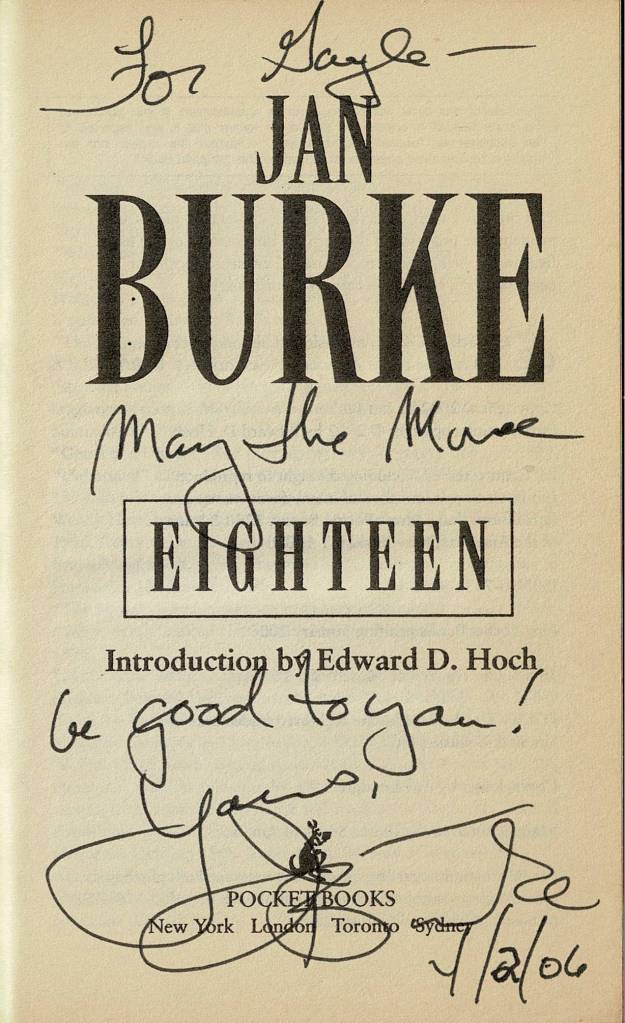
This book was Eighteen by Jan Burke. Jan was a member of Sisters-in-Crime and I picked up her book of short stories. I loved the book and the idea of writing a short story. So I wrote one about an ex-mobster turned private detective. Then I wrote another one about the same guy. Then Sisters-in-Crime announced their latest anthology and asked for submissions. The theme of the anthology was landmarks in Los Angeles. I had to write another story, but it just so happened Richard invited me downtown for lunch one day and we went to the Bonaventure Hotel. That landmark ended up being the one I used in my story and the story got in the anthology. I thanked Jan for her inspiration.

Now I had three stories with the same character. The reviews for my story in the anthology were good, so I wanted to write more with him as the lead. So I wrote a couple more, but can you do a book of short stories all about the same guy?

Then I met another writer. I had read a lot of his books as a teenager and read even more after I met him. His name: Ray Bradbury. Jackie Houchin, a fellow Writers-in-Residence member and good friend, and I went to the opening of his play Fahrenheit 451 since Jackie reviewed plays for a local newspaper as well as an on-line paper. She got to bring a guest, me, but I thought I should review the play, too, since we got in free. On Opening Night Mr. Bradbury mentioned the time he had a batch of short stories he wanted to have published so he asked his publisher what he should do with them. The publisher told Ray to link the stories together which he did and The Martian Chronicles was published. So I had my answer from a writer who got the job done. I linked the Johnny Casino short stories together like a TV series.

I have three books in the Johnny Casino Casebook Series out there now thanks to inspiration from my husband, a book by Jan Burke, some advice from one of the best writers in history, Ray Bradbury, a chance to review Ray’s play because of a friend, and the fact I liked mysteries and wanted to write them.

Ninety present of the books I read are mysteries. I have learned a lot from each one: What to do and what not to do. And also what I can do better. But reading sure made a difference in my writing. If you are a writer: Read On!

A Jump On June

Yes, it’s June already. The beginning of the sixth month of the year. 

As always, this year is going fast. And also as always, I think about what I have accomplished so far. 

Is that something you do too?

 If you’re a writer, how much have you written? 

You’re probably a reader to be checking in on this blog site, so how much have you read so far? 

What else do you have planned for this year? How far along are you now—where you wanted to be? 

For me, it’s been a good year so far. I’ve had two new books published, both in May: my first Alaska Untamed Mystery for Crooked Lane Books, BEAR WITNESS, under my first pseudonym, Lark O. Jensen, and my Harlequin Romantic Suspense second Shelter of Secrets story, GUARDIAN K-9 ON CALL. I’ve got another scheduled for later this year and one that’s not yet scheduled. And I’m working on another for which I’m on deadline, making progress.

 As a reader—well, I’m always reading. Because my time is sometimes limited I wish I could be reading more, but at least I’m enjoying the books I’ve started and finished. 

Other stuff? Well, we have a new puppy so part of my plans include training and playing, which I do a lot. And making sure she gets along with our older pup, which has been working out fine. 

More plans? Well, we have some trips coming up to see family, always fun. 

So, I feel as if I’m doing fine this year though I hope to do even more. 

How about you?

MY GREEK SOJOURN….

 By ROSEMARY LORD

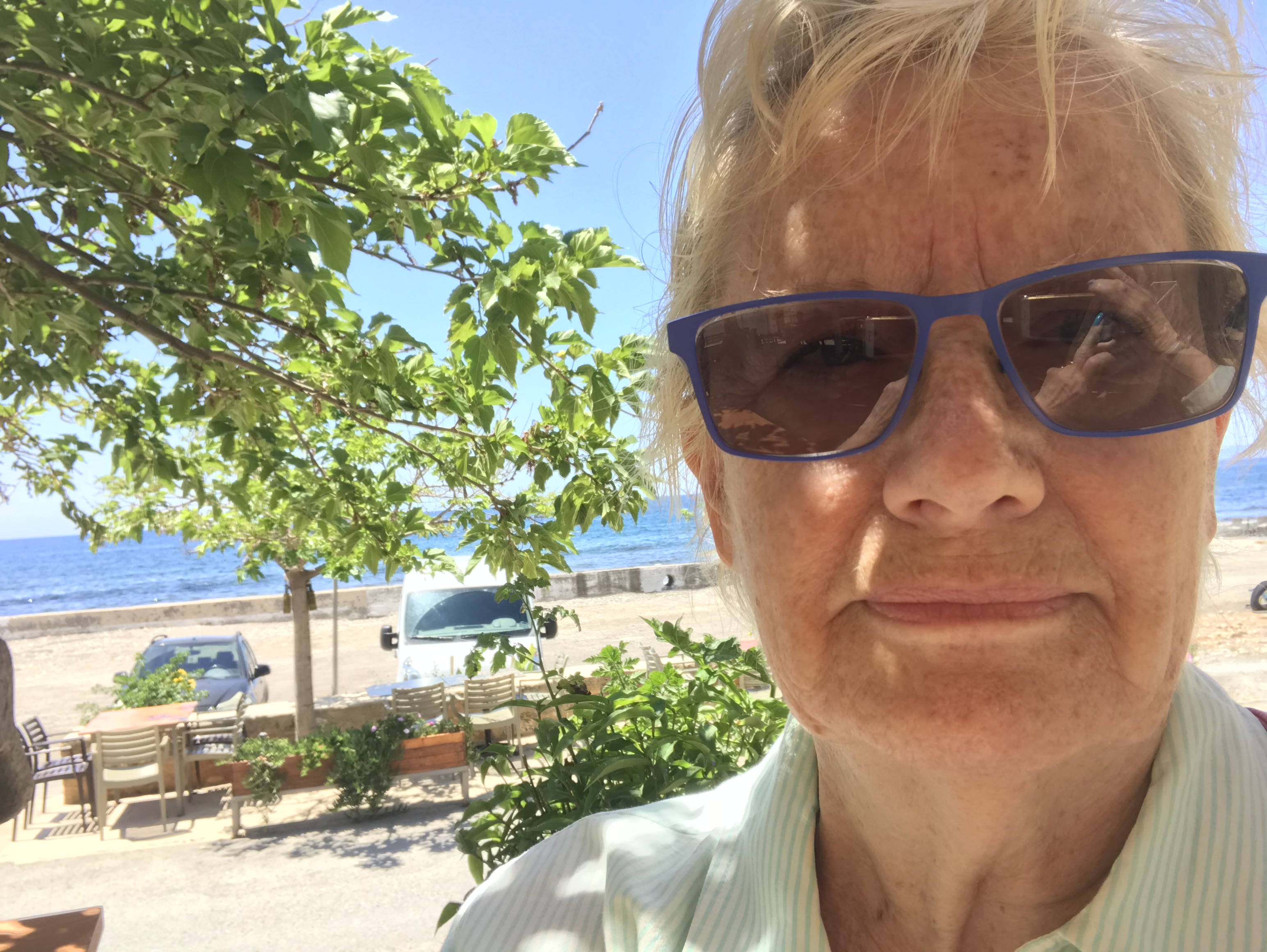
Rosie Selfie

I love to see the writing trends and what’s being read in different locales. So here I am doing my research in far away Greece. Well, someone has to do it!

You see, my older brother, Ted, is undergoing treatment for prostate cancer and my sister Angela – an ex-dancer – is recovering from knee surgery. So, the best idea was to scoop everyone up and retreat to this sleepy village on the Greek coast, where we can do family healing and recouping – and where I can get a proper break from running the Woman’s Club of Hollywood.

It seemed like a good idea at the time, during those cold winter months.

And, as I sit on my balcony in the afternoon sun, while my siblings take a siesta, I concluded that this was indeed a very good idea!

Rosie in Greece 2

Behind me, the Taygata Mountains shield us from the rest of Greece. In front I can see the waves of the Ionian Sea rolling in, then rhythmically retreating. Olive trees and the occasional lemon tree fill in everywhere else, colored by a profusion of wildflowers wherever one looks. The birds – chaffinches, sparrows, house martins and the constantly-cooing doves – provide the background music. With the occasional bleat from a stray goat, or a distant dog bark.

Not many distractions for industrious writers here.

Rosie and sister 2 croppedAnd there are small writers’ groups in the little villages. Especially poetry writers. Mostly American, German and English ex-pats, who escaped the cold winters of their homelands to have a fresh start here.

An ideal place for writers – except that it’s very hard to get work done in such an idyllic surrounding. It was in the next village that Nicholas Kazantzakis wrote about the legendary local man, Zorba the Greek – the black-and-white film of the book had the iconic music as Alan Bates and Anthony Quinn danced on the local beach. Ernest Hemingway, Lawrence Durrell, Dorothy Parker and other writers would stay nearby at the home of British writer and war hero, Patrick Leigh Fermor. His home has recently been turned into a writers’ retreat, with programs through UCLA and the New York and the British Library. We watched it being restored over recent years and toured the light and airy library and living and writing rooms. A magical place.

But, back to today’s writing. In the small local Katerina supermarkets, I always head for the book stands to see what’s being read. Jeffrey Deaver, Lee Childs and James Patterson head the English-language shelves, with Danielle Steele and Mary Higgins Clarke perennial favorites for holiday reading. The same titles printed in Greek and in German occupy the next shelves. Victoria Hislop’s beautifully written and researched sagas based on Greek and Spanish civil wars are prevalent and, on a lighter note, Joanna Trollop, Lucida Riley, Leah Fleming and, still, Agatha Christie paperbacks remain popular purchases. At one of the nearby cafes there is a “bring one/take one” wall of books, where one can swap a book you’ve finished and read something different.

Rosie and Sister

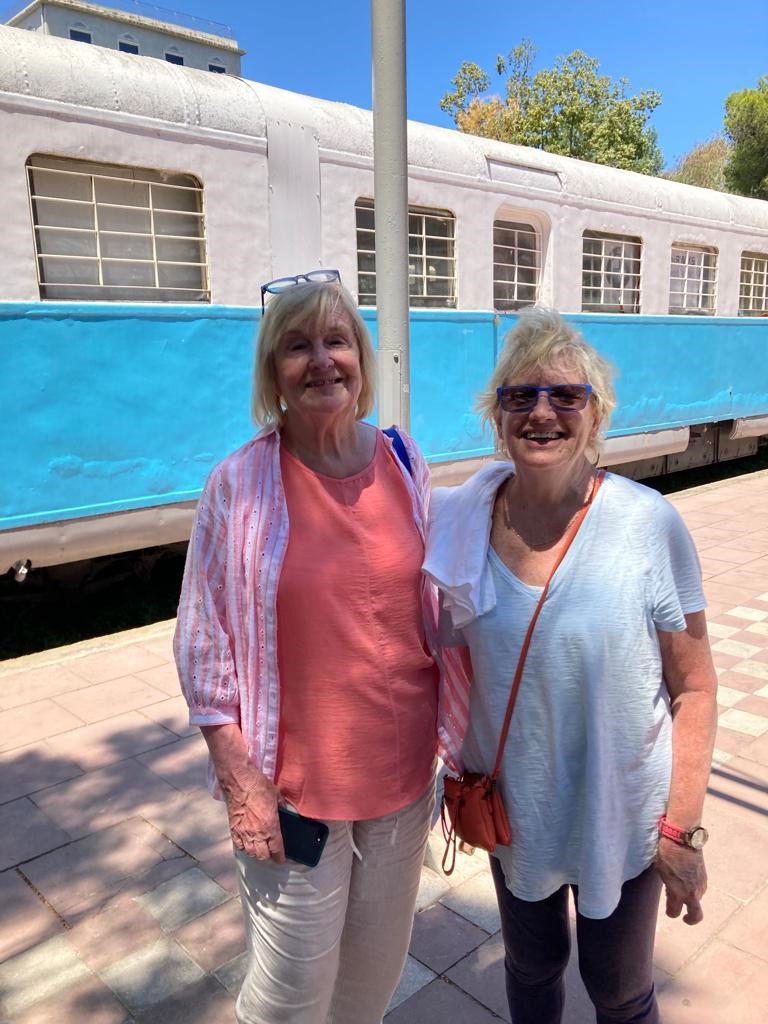
Here I am with my sister Annie.

There’s a lot of sitting in the shade of the olive trees or under an umbrella on the beach and reading done here. Forget about TV in this part of the world – so there’s a lot of reading and writing going on. Until you nod off, that is, and awaken 40 minutes later, wondering where you are and what you’re supposed to be doing! I have done that many times since being back here! I’m catching up on lost sleep!

But getting away from one’s normal routine can be very productive. As Marcel Proust pointed out: “The real voyage of discovery consists not in seeking new landscapes, but in seeing with new eyes.”

Looking at one’s life and work from afar brings new perspectives.

I have long been working on a book of the history of the Woman’s Club of Hollywood that has occupied my life for lo these many years. Here, I have been able to attack it with a different, fresh approach. I have also taken a different slant with two of my other half-finished novels that really need to be ‘out there.’ And I’ve been sketching a new mystery set in these parts.

I picked up an interesting idea from the prolific Lee Goldberg (who wrote the “Monk” television series, “Diagnosis Murder,” and recently Hallmark’s “Mystery 101”) on my recent trip to the Left Coast Crime Writers’ Conference, where we were fellow panelists.

Lee explained that script writing was much easier and quicker for him than all the novels he had written. Novels take him many months to write. Scripts could be done in a matter of weeks – often due to the pressing time allowed by the studios. So now he does a simple script of his new novel first. In the script, he said, he writes the step by step ‘what happened.’ No back-story and scant descriptions. Because, in a TV or film production, all the other departments fill this in.

The Casting Department bring in the actors whose personality, looks and ability provide the story’s characters. The Costume designers create the clothes for everyone, based on their view of the script they have read. The Production Designer designs the sets and, with the Art Department, select the locations and the back-drops. The Prop Master decides all the bits and pieces that fill the set, bringing it further to life. It’s a collaborative effort. They all meet up and discuss their ideas, along with the Cinematographer, Lighting and sound people. They each add their own talents and experience, orchestrated by the Director and the Producer. Writing the script, Lee says, is the simple part. He may not agree with or recognize the end-product on the screen, but, as long as the check didn’t bounce, he’s okay with this.

And so, he uses that basis for his novels now. He says it’s quicker than the old outline route. He writes the basic storyline as he would a script. With this, he can see if there is a part of the mystery or plot that doesn’t work, or something left unfinished. Once he knows he has the story worked out, he will go back in and fill in the character details, the background, the setting. This is the stage where he adds in any research he has undertaken and adds the touches of flavor and nuances. Whatever that particular novel needs to bring it to life.

And so, as the sun begins to sink behind the olive trees, I have re-assessed my various writing projects with fresh, ‘new’ eyes. Would fresh, ‘new eyes’ change your current writing?

                  Love from Greece,

                              Rosemary

Rosie in Greece 3

Words, Words, Words

by Jill Amadio

Capture (1)For the past several months I have often wondered when I would succumb to the inevitable and find that one morning I have woken up woke.

If so, what would it mean? When would the barrage of new phrases and words all find their way into my mysteries?  That alone is a mystery, one of wonderment as I ponder the problem. The main issue, I assume, is finding the correct context for such slang as “snowflakes” when I am writing about my main character, Tosca Trevant, as she sunbathes in Newport Beach, California. Turns out that calling someone a snowflake is an insult. The connotation is beyond me but I can just imagine her whispering furiously in denial as I write.

Perhaps I should send her “catfishing” after having a “glow-up” as part of the plot. Translated, catfishing appears to mean using a fake ID, and glow-up refers to using make-up in order to make oneself more attractive, although it can also refer to using cocaine. I should confess here that the British phrase, “nighthawking” has been around forever in the UK and widely used in books and film. It was recently used in the TV detective series, “Midsummer Murders,” and means poaching, trespassing to hunt rabbits and wild life illegally at night.

What about “gaslighting?” To my mind the expression would necessitate sending Tosca back in time to that glorious era when gas lit our street lights, lamps, and stoves. Ah, but I was able to understood it quite easily when I remembered how the dastardly Charles Boyer would alternately lower and then raise the gas to make Ingrid Berman think she was going crazy.

The word “doxed,” however, had me baffled until I Googled it and found it means luring someone into a relationship, usually with malicious intent, and using an online dating service. Now, doesn’t the word “lure” conjure up a far more sinister image than dox? I also think that anything beginning with “dox” sounds like something Shakespeare would write, or thundered aloud by King Henry VIII, and is akin to “pox.”

According to my trusty Roget’s Thesaurus, under the reference for “doxology,” there are many meanings, almost all relating to religion and one to “malicious intent.” This term has a far more ominous foreboding to it than dox. Even using it in context in conversation would, I think, raise eyebrows.Office clutter 1

Which brings me to “shadow banning,” and its offshoot, “stealth banning.” The first version is weird but the second phrase is much more clear. But both well and truly stumped me, even when I took them separately. How was I to use the phrase in a book unless, perhaps, I was writing a ghost story? Would the plot require me to ban shadows? I once wrote a magazine series about a ghost-hunting couple who went on to have a TV show, but I know for a fact they were seeking what they believed were real ghosts, not shadows. This week, defining the phrase resulted in my learning that shadow banning means blocking someone from using their social media page without their knowledge.

How about “cancel culture?” Seems as if all these new words have negative meanings. I suppose that cancel culture means boycotting someone’s ideas and beliefs, or their culture and replacing it with something more acceptable – although I ask who is making those decisions?

Reviewing all of these slang words, most of which have not yet been added to my computer’s Spelling program, I wonder how long before they will be replaced with others, and how can writers keep up? I scoured a few of the latest mysteries recently released and could find none of the above, just old-fashioned, familiar words that can be understood by readers, as they have been for centuries.

Will we be left behind if we don’t keep up with the new language? Will publishers need to pull our mysteries and re-edit to replace the offending words we have lovingly crafted and insert instead the current phraseology? Or should we wait awhile for the truly latest? Only on television have I heard any of the above weirdo words used, mostly by news broadcasters with woke as their favorite. One last note, some of the slang has now been translated into other languages, including Urdu.

What is your favorite gripe, if any, about our new English language? Are you planning to use it in your mysteries and thrillers? Perhaps we should include a glossary at the beginning or back of the book. Or not. Either way, I am off to get a glow up, do a little catfishing, and dox my landlord.

Switch3