How I Set A Mystery In The Galapagos

By Guest Blogger, Sharon Marchisello

For as long as I can remember, I had three goals in life: become a bestselling author, meet and marry the love of my life, and travel the world together. And I always figured I’d do them in that order. Although I achieved my dream of being a published author, I’m still working on that “bestselling” part.  

When I graduated from the University of Southern California with a master’s degree in professional writing, I realized I’d have to get a “real” job. Not only was I not making a living as a writer; I wasn’t even published. Should I go for an opportunity that involved writing but might drain my talent and energy? Or should I look for something mindless that would pay the bills, so I could focus on my stories during off hours? Then a position as a reservations agent at Western Airlines fell into my lap.  

My roommate had a friend who worked there, and one day the friend called to say Western Airlines was hiring. I was the first person to listen to the message on our answering machine and begged to go to the interview too.  

The woman who interviewed me said, “You’re overqualified for this job. You just want it for the travel perks, and I know you’ll quit after a year or so. But I won’t stand in your way.” I stayed with the company for twenty-seven years; my roommate left after six months.  

But she was right about me wanting the travel benefits, and my first few years, I was on a plane every time I had a day off. I met my future husband at the Los Angeles airport, and together we’ve taken 65 cruises and visited over 100 countries on all seven continents.  

Although I kept writing fiction and even published a few travel articles, I never set a story in one of the destinations I’d traveled to. Until the Galapagos.  

If you’re looking for the Galapagos on the map, it’s a group of islands straddling the equator, approximately 600 miles off the Pacific Coast of Ecuador. I never planned to set a book there, either, but six months later, I remembered an experience from our cruise that I thought would make a great opening scene for a mystery.  

Normally, the guides were conscientious about counting heads and watching over all the passengers in their charge whenever we were away from the ship. In an archipelago comprising 97% national park containing flora and fauna found nowhere else on earth, tourists must be carefully supervised.

But one day, my husband and I left another activity to join a snorkeling excursion already in progress, and neither of the guides assumed responsibility for us.  

We were swimming along, marveling at the vast array of colorful underwater life, when I surfaced to see both Zodiac boats motoring back to the ship—without us! I can still feel the panic of being left alone in the middle of the ocean, treading water off the shore of an island populated only by sea lions and blue-footed boobies.  

I waved and screamed, bobbing up and down like a spyhopping whale, and fortunately, someone spotted me. One of the boats turned around and came back to pick me up. I didn’t see my husband right away but told the guide he was still out there. In a moment, he’d swum up and climbed aboard. All was well.  

But what if… What if my protagonist’s companion didn’t get picked up? And what if the person was left behind on purpose?  

I had a great time writing the book, reliving our trip through photos and program notes, plus doing a lot of supplemental research on the internet.  

When Secrets of the Galapagos begins, my heroine, Giovanna Rogers, is snorkeling with her new friend, tortoise researcher Laurel Pardo. The two get separated from the group, and Laurel disappears. No one on the ship will acknowledge that Laurel didn’t make it back.  

To determine a motive, I recalled a conversation I’d had with one of our guides during a visit to the Charles Darwin Research Station in Puerto Ayora, the largest town on Santa Cruz (one of only four inhabited islands in the chain). “I know a secret about Lonesome George,” he said. “But if I tell you, I’ll have to kill you.”

Lonesome George was a Galapagos giant tortoise made famous for being the sole survivor of the Pinta Island species. Unfortunately, efforts to breed George were unsuccessful, and the ancient tortoise passed away in 2012 without an heir.  

But what if someone discovered another giant tortoise from a different subspecies also thought to be extinct? And then a tortoise researcher unearthed information about the animal that the tourist industry didn’t want released?  

You’ll have to read Secrets of the Galapagos to find out what happens next.  

Blurb:  

Shattered by a broken engagement and a business venture derailed by Jerome Haddad, her unscrupulous partner, Giovanna Rogers goes on a luxury Galapagos cruise with her grandmother to decompress. At least that’s what her grandmother thinks. Giovanna is determined to make Jerome pay for what he’s done, and she has a tip he’s headed for the Galapagos.  

While snorkeling in Gardner Bay off the coast of Española Island, Giovanna and another cruise passenger, tortoise researcher Laurel Pardo, become separated from the group, and Laurel is left behind. No one on the ship will acknowledge Laurel is missing, and Giovanna suspects a cover-up.  

When the police come on board to investigate a death, Giovanna assumes the victim is Laurel. She’s anxious to give her testimony to the attractive local detective assigned to the case. Instead, she learns someone else is dead, and she’s a person of interest.  

Resolved to keep searching for Laurel and make sense of her disappearance, Giovanna learns several people on board the ship have reasons to want Laurel gone. One is a scam involving Tio Armando, the famous Galapagos giant tortoise and a major tourist attraction in the archipelago. And Jerome Haddad has a hand in it. Thinking she’s the cat in this game, Giovanna gets too involved and becomes the mouse, putting her life in jeopardy. But if she doesn’t stop him, Jerome will go on to ruin others.

AMAZON 

SUNBURY PRESS

Bio:  

Sharon Marchisello is the author of two mysteries published by Sunbury Press—Going Home (2014) and Secrets of the Galapagos (2019). She has written short stories, a nonfiction book about finance, training manuals, screenplays, a blog, and book reviews. She earned a Master’s in Professional Writing from the University of Southern California and has been an active member of Sisters in Crime since 1995, currently serving as treasurer of the Atlanta chapter. Retired from a 27-year career with Delta Air Lines, she now lives in Peachtree City, Georgia, and volunteers for the Fayette Humane Society.  

Website: sharonmarchisello.com (https://smarchisello.wordpress.com/)  

##

This article was posted by member, Jackie Houchin. If you’d like to read my review of the audiobook version of  SECRETS OF THE GALAPAGOS, click here.   


“Letters From Afar”

An Interview by Jackie Houchin

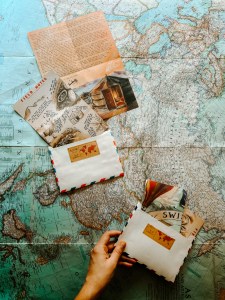
For about a year and a half, I have been receiving by subscription ‘LETTERS FROM AFAR’ through the (snail) mail. They are stories about real places written by the “fearless explorer” Isabelle. I am an avid traveler myself, and these letters feed my wanderlust in between my trips. As a writer, I got curious about who wrote the letters, how they got started and a bit of the process. Was Isabelle really her name? Did she actually travel to these places?

I read up on it on the LETTERS FROM AFAR website, but I wanted more. As writers and readers, I thought YOU might be interested too, so I interviewed the gracious gal and she responded with lots of interesting and encouraging facts.

Jackie – I love your “fearless explorer” Isabelle and her history, but what is your actual name and history?

My name is Shawnee Mills. I’m originally from Texas, but have lived in New Mexico, Colorado, Kentucky (where I met my husband), North Carolina, and now New York City. I was homeschooled from the second grade and attended college early at age 14. From there, I decided to pursue cosmetology, and I worked as a stylist for 8 years. Throughout my career, my true passion was always creating art and traveling as often as possible.

Jackie – Tell me about your family. I know you have a husband, but do you have children and pets?

I’m the middle of 3 girls. My parents chose quite a different pathway for us, and I firmly believe it’s led to my current career and lifestyle. When I was nine, my parents decided to sell everything they owned and begin living off the grid in Colorado. My father built our home (a log cabin), and my sisters and I spent our days exploring, pursuing our own unique interests, and avoiding our daily lessons as much as possible. 😉

After that adventure was over, we again sold everything we owned, bought an RV, and traveled the country on a year-long quest to find our next home base. We eventually settled on Kentucky, where I began my adult life and career as a stylist and met my husband, Palmer.

Palmer and I do not have any children, only of the furry variety 🙂 Our two dogs’ names are Izzy and Bronco.

 Jackie – What did you do before the LETTERS FROM AFAR?  Did you travel for business? Was the painting for pleasure or business?

When Palmer and I decided to sell everything we own (see the theme here? ;)) and move from Kentucky to North Carolina, I left my job as a stylist behind. I decided to dive right in and attempt to make it as a full-time artist…. Which was daunting, to say the least.

My medium of choice back then was oil painting, and peddling my works in local coffee shops and art markets was not panning out as planned. After doing a lot of research on profitable business models, I decided to try to find a way to blend my passions for art and travel into the world of subscriptions.

While I had traveled the United States extensively, I had never actually left the country. In a roundabout way, creating LETTERS FROM AFAR manifested my current life of travel and adventure. My actual life and my business fuel each other.

Jackie –   How did the idea come to you for the letters? Was it an “Aha” moment? A passing suggestion from someone?  Your hubby or your muse?  Which painting were you doing? Were you sitting in a café in Bangladesh?

 One day, I was brainstorming and jotting down ideas in my journal. It was a scorching day in July, and I was sitting on the beach on a random weekday.

I had no job, and after my failed attempts at selling my artworks, also had no money. Around that time, I had been reading a fiction novel (cannot remember the name of it), and the main character was traveling and writing a letter to her mother. The idea hit me hard and fast…. Write letters about faraway places, include illustrations of the location, and send the letters to readers on a monthly basis!

I drove home so quickly, and excitedly told my husband all about my idea. His exact words were, “I love the idea. Go for it… if it even pays the water bill, it’ll be worth it.” 😉

Jackie – What was the process from that first idea, to the actual addressing and mailing out the letters?  Did you imagine it would spread so widely around the world?

That same day, I pulled out my dusty and rarely used watercolors and a piece of paper and hopped onto my computer to learn as much as I possibly could about Marrakesh, Morocco.

I had never been but had always dreamed of going. After researching, I wrote a letter from the perspective of someone who was there. The character was telling their friend all about the sights, smells, and wonders. At the bottom of the page, I sketched out a scene of Marrakesh and added a splash of color with my watercolor paints. Voila! The very first LETTER FROM AFAR was born. I made copies of the original, folded them with care, and prepared them to be mailed to my future readers

We decided to name the fictional writer of the letters Isabelle. My dad came up with the name. She’s inspired by the real-life Isabella Bird, an explorer that lived in the 19th century and bravely traveled solo.

I created an Instagram page and a website and began advertising my little idea. That first week, five people subscribed to receive my monthly letters. I’ll never forget the feeling. It paid for the water bill in just seven days.

The letters have come a long way since then in terms of style and skill… but this very first letter was and is very special to me. Even then, it somehow felt like the start of something big…. Not in terms of finances but in the idea that I was on my way to “making it.” AKA, truly doing what I love.

Jackie – How many subscribers received the first letters, and about what is your readership now?  How did you go about building your mailing list?

We were very fortunate that LETTERS FROM AFAR basically grew on its own. Through word of mouth and occasional posting on social media, it grew to over 1000 subscribers in the first year. 3000 by the second year. My husband was able to quit his job to help full-time. And the third year? That’s when covid hit.
Like many small business owners, I was in sheer panic when the world shut down. Would my little company survive? Would the postal system even be able to deliver my letters? To our complete shock, the pandemic was the catalyst that skyrocketed our monthly readership.

While everyone was stuck at home and no longer able to travel, my letters became a small way to see the world without having to leave. In 2020, our readership grew to over 8000, and in 2021, to 10,000. It’s steadily continued to grow each year since.

Today, we grow and maintain our readership by continuing to post on social media and doing some light paid advertising.

Jackie – I personally began with the letter about Predjama Castle in Slovenia.  How many letters came before this one?  (I see on your website; you can order past letters. How would a person go about that, and how much would they cost?)

I’ve created a new letter each month since July of 2017. In short, there are many, many letters! Some of them are out of print, and some are still available in our “archives.” The previous letters can be purchased for $7 on www.pastlettersafar.com.

Jackie – Do you write and illustrate ALL of the LETTERS FROM AFAR yourself?

I research, hand illustrate, and write each monthly letter. The process is long, but it’s my favorite part of this whole endeavor. My goal is for the colors of the letter and the story told to portray the true magic of each location.

In the beginning, I started each letter by heavily researching each location. Nowadays, I’m so happy to say that some of the letters are written on location. The eventual goal is for all of them to be written on location. That means a LOT of traveling, the idea of which makes me smile.

Jackie – What gave you the idea to hide objects in the letters for readers to find? (Very clever and fun!)  I like the Field Notes and the actual map too.  Why did you decide to include that extra insert?

From day one, our audience has been mixed. While half of our readers are children and homeschooling families, the other half are adults who simply love to travel and learn about new places! I added the “hidden images” to entertain my littlest readers. 🙂

I decided to start including the field notes insert so I could be sure to include as much information as possible. LETTERS FROM AFAR is inspired by old-world exploration, and I imagine an explorer would always carry their trusty journal to jot down interesting facts or “field notes” from the journey. It’s just a way to make it a touch more special, in my opinion.

Jackie – I like that you help (with a portion of all sales) to sponsor education in Third World Countries through ‘Pencils of Promise’. A perfect charity for explorers. Thank you.

You’re welcome! I’ve always wanted this project to have some sort of an impact, so I was happy to partner with them.

Jackie – Thank you for joining us today, Shawnee. It’s been fascinating to learn about what you have accomplished in “doing what you love” through the LETTERS FROM AFAR.  I look forward to the monthly LETTERS, and when I see that yellow airmail envelope with the golden seal, I open it first, find a comfy chair, and dive into whatever new place you are taking me to.

You are welcome. Thank you and have a great week!

Links:

Website to subscribe – LETTERS FROM AFAR

About – Idea/Destinations/Process

Isabelle – Meet your new Pen Pal

Instagram – letters.from.afar

Facebook – Letters From Afar

.

Writers on the Road

by Linda O. Johnston

Well, not literally on the road necessarily, but traveling. On vacation. 

Is there such a thing as a vacation for a writer? Yes… and no.

Wherever we are, whatever we’re doing, our minds are busy.  Never mind whether we’re sitting at a computer churning out whatever story we are working on. That might not happen as much while we are out of our usual environment.

But yes, we’re writing when we’re not writing. Our minds are at work, observing what’s around us, the environment, the people including possibly our families but also those who are there on vacation too, or locals, or those who are taking care of us at whatever hotels or resorts we might be visiting or cruises we’re on.

It’s all inspiration! No matter what we might be writing at the moment or planning to write in the near future, we’re always open to new ideas that we might head for in the future.

Yes, last time I was here I wrote about a life of strange inspirations. But what about inspirations that aren’t strange, but fun?

So why am I addressing this? Well, last week I was on a family trip at a resort in Cancun. Oh, yes, it was fun. I loved being with family, and the environment was amazing. Extremely windy when we were there, but the brilliant blue water beyond the white sand beach at the place we were staying was beautiful. A lot of generous service from the resort staff. Multi-level swimming pools. Vast buildings around areas where outside entertainment was provided. Even fireworks!

I had mixed emotions about some of it. We’d been to that resort before, and they have a couple of large pools containing dolphins that appear to be well treated considering where they are, but having such smart animals that are originally from vast sea environments contained like that… Well, I’ve researched dolphins. They’re wonderful beings. As smart as humans in their environment. Am I inspired to write about them? I’ve always been inspired to write about them, but definitely not in situations like that—unless they can find a way out and get revenge!

See! My mind was at work while I was relaxing and enjoying my vacation.

How about you? Does traveling inspire you to develop new ideas, new stories, different kinds of things?

By the way, this subject is so vital to me that I’m incorporating it into the three blogs I’m posting on the same day this month. I’m addressing it somewhat differently, but it’s definitely on my mind. Along with my writing.

###

Photo by Leon Overweel on Unsplash

“Write What You Know” : An Author’s Experience of Living in Africa

by Guest Author, Victoria Tait

SONY DSC
SONY DSC

A common piece of advice given to school children and new authors alike is “Write what you know”.  But many established authors dismiss the principle.  Ken Kesey, author of One Flew Over The Cuckoo’s Nest, told The New York Times, “One of the dumbest things you were ever taught was to write what you know.   Because what you know is usually dull.”

So where does an aspiring writer begin?  Unlike most authors, I had no lifelong desire to write a book and only considered it as a potential career two years ago.  We moved back to the UK from Kenya so my husband could begin training for his next military posting in Sarajevo, in Bosnia and Herzegovina.  I realised that as I didn’t speak Bosnian, and the country had a high unemployment rate, I was unlikely to find a job.

Further, as a family we would be moving around the UK, and potentially the world, for at least the next eight years.  I needed to keep myself busy and engaged, but not with a physical business like the farm shop I had set up in Kenya.  My new venture needed to be portable and flexible to work around the demands of my family.

I first considered writing as a method to convey the incredible experience I’d had living in Kenya, in Eastern Africa.  I’m not sure if moving to Kenya or returning to the UK was more of a culture shock.  In Kenya I’d become used to a way of life lived at a slower pace, with no judgement of what people wore or what car they drove, and far less emphasis on the material side of life.

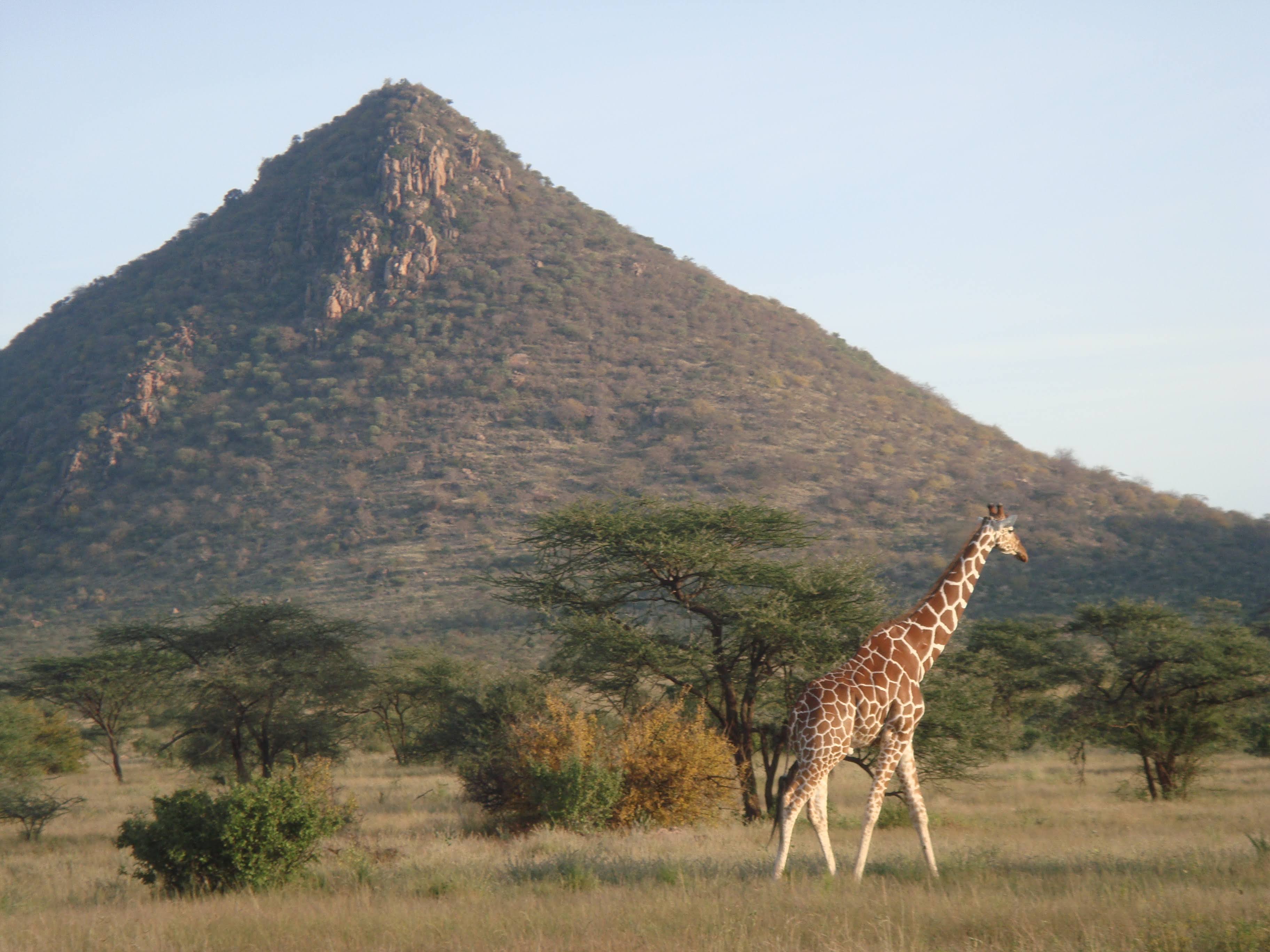
Giraffe samburuIn Africa, the first priority is to survive and so each day, and certainly every birthday, is celebrated.  After that come friendships and community and, of course, enjoying the glorious sunshine, fantastic scenery and amazing wildlife that Kenya is famous for.

P.D. James wrote in her “10 Tips for writing novels” for the BBC, “You absolutely should write about what you know.  There are all sorts of small things that you store up and use, nothing is lost as a writer.  You have to learn to stand outside yourself.  All experience, whether it is painful or whether is is happy is somehow stored up and sooner or later it’s used.”

My Kenya Kanga Mystery Series is set in Nanyuki, a small market town three hours north of Nairobi, Kenya’s capital.   It is dominated by the often snow-capped Mount Kenya which, at over 17,000 ft, is the second highest mountain in Africa.  This is where I lived for six years, and it’s the perfect setting for a cozy mystery series.

Mkt St SceneIn my books I’ve used actual locations, such as Dormans, a town centre coffee shop and a hub of gossip, and the relaxed garden location of Cape Chestnut restaurant.  Other places, such as the Mount Kenya Resort and Spa, are recognisable as being based on real settings which I’ve altered to suit my stories.

Small towns in cozy mystery series can develop the “Cabot Cove” syndrome; if Cabot Cove existed in real life it would top a number of categories of the FBI’s national crime statistics. 

To avoid this phenomenon, I themed the second and subsequent books around actual events.  These include an important elephant focused wildlife summit, a 4×4 off-road charity event in the Maasai Mara and, in the book I am releasing in May, a marathon in a UNESCO World Heritage wildlife reserve.

Elephant Mother & Child PuddleA sense of place is important to me and my writing.  Has a certain smell or the call of a bird transported you back to a memorable location? I try to convey the smells, sounds and sights of the individual settings and it does help that I’ve visited most of them.  And if I haven’t, as P.D. James said, I can use snippets of other places that I have stored up to successfully create them.
The characters are another aspect of my books which I’ve developed as I’ve expanded my writing craft.  Mama Rose is based on an incredible friend of mine, now in her 80s, who is a community vet, a staunch catholic and a member of various committees.  The help and assistance she has given, and continues to provide, those less fortunate than herself can not be fully conveyed in my books. But is it important to recognise, and remember, that there are still people who put others before themselves and work for what is morally right and just in life.

The other characters have developed from meeting people and observing situations in Kenya: the interaction of customers and stall holders at the local vegetable market, street sellers trying to persuade tourists and visitors to buy their wares, and the ability of a charismatic priest to captivate his audience in a town centre park.

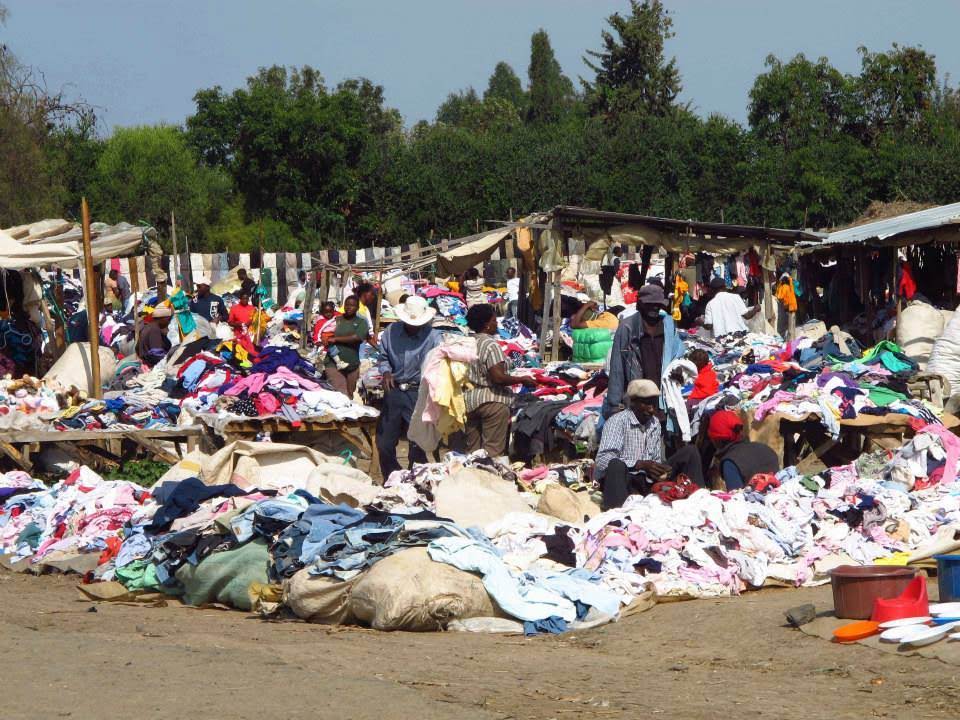
A snippet I have woven into one of my books occurred when I took my young children to mitumba; a large jumble sale of donated thrift clothes, and other items, from first world countries which are shipped to Kenya and sold in makeshift markets.

Mitumba 3Two raggedly dressed, and shoeless, children tentatively approached our car holding out their hands in a begging gesture.  I remembered two squares of jam sandwich which my boys hadn’t eaten.  I handed the pieces to the children expecting them to stuff them into their mouths, but instead they just stood and waited.   Slowly they were joined by a group of similarly attired children, and those who had the sandwiches carefully divided them up until every child had a small morsel to eat. 

This was an incredibly humbling experience.  So perhaps it is not necessarily “write what you know” but “write what you feel”. After all, as writers we strive to elicit an emotional response in our readers’ minds.

Finally, Dan Brown said, “You should write something that you need to go and learn about.”  As writers we do need to expand our knowledge, and understanding, and researching is one of my favourite area in the writing process.  I have learnt so much more about Kenya than I knew, or understood, when I lived there.

RHINO CHARGERhino Charge, my third book, has many Kenyan Indian characters.  It evolves around events at a 4×4 vehicle off-road event which is popular amongst the Kenyan Indian community.  Whilst I had Indian friends, I wasn’t aware of how, or why, their ancestors had settled in Kenya.  Researching this aspect of the Kenyan culture was fascinating.  I learnt that Indians came to Kenya with the British and supported the creation of the East African Protectorate, which became Kenya, as clerks, accountants and police officers.

Two and a half thousand Indian labourers died during the construction of the Mombasa to Uganda railway line, including those killed by the infamous man-eating lions of Tsavo.  The rupee was the first currency used in the colony which was ruled using an extension of Indian law.  On the 22nd July 2017, President Kenyatta officially recognised the Indian community as the 44th tribe of Kenya.  Researching and learning this extended my knowledge and increased the depth of Rhino Charge.

Not all authors are luckily enough to live in extraordinary locations such as Kenya, or Bosnia and Herzegovina, but small towns still have their own customs and query characters. 

I’m currently planning my next series which will be set in areas of the UK I have lived in and visited. The theme is antiques, of which I have no knowledge.  I enjoyed, and was fascinated by, auctions which I attended on my return to the UK, to buy furniture for our house.  And I observed some fantastic people for the basis of my characters.  I’ll research collectibles, antiques and related crimes to build interesting stories with “can’t put down” plots.

Mostar, HerzigovinaWhen I can finally move freely around Sarajevo, and Bosnia and Herzegovina, I will begin researching for a future series.  I’ve already discovered that everyone here has a story to tell from the devastating war and various sieges, including the longest in modern history in Sarajevo.  As I search for potential locations, characters and stories my attention will be more focused as I learn to observe and record even the smallest incidents.  Who knows what snippets will make into future books.


Author Links

You can find Victoria at https://www.victoriatait.com/ or on Facebook at https://www.facebook.com/VictoriaTait

Blog/News: https://victoriatait.com/news/

GoodReads: https://www.goodreads.com/author/show/20373879.Victoria_Tait

Pinterest: https://www.pinterest.co.uk/vataitauthor/

Purchase Links – Amazon – B&N – Kobo – 


JH

How I Use Nonfiction and Fiction for Research and Inspiration

By Guest Author,  Sara Rosett

Some writers can sit down at their computer with no idea of what they will write about and launch into the first draft of their book. They find the blank screen and the infinite possibilities exciting and inspiring. I’m not one of those writers. I must have an idea of where the story is going before I begin writing. Otherwise, the blank screen paralyzes me. Before I begin a book, I spend a lot of time researching and thinking about the story. I’ve discovered that both nonfiction and fiction inspire different aspects of the story for me.

Nonfiction

I like to dig into nonfiction as I brainstorm my historical mystery plots. Here are a few of the resources I’ve found most helpful:

Newspaper Archives—My historical series is set in early 1920s England, so the online British Newspaper Archive has been an invaluable resource. I scoured the Positions Available section, what we’d call the Help Wanted section today, which gave me an insight into the jobs were available, the qualifications required, and the salaries that were paid. The British Newspaper Archive has magazines in addition to newspapers, and those are wonderful for getting a feel for what people read in their leisure time. One delightful surprise came as I flipped through an issue of the Sketch. I came across the first publication of Agatha Christie’s short story, The Adventure of the Egyptian Tomb with Poirot and Hastings.

Magazine and newspaper advertisements are also helpful for researching clothing and fashion as well as helping me keep in mind the attitudes of the time. Ads for fur coats and smoking tobacco seem a bit jarring to me as a modern reader, but browsing the ads helps me keep in mind the typical mindset of someone who lived in the early 1920s.

Nonfiction books—Once I have a general idea of the direction of the story, I search out nonfiction books related to the theme of the novel. I’ve read all sorts of books—everything from books on the English country house to code breaking during World War I. I find nonfiction is an excellent source for clues and red herrings. Nonfiction books have even inspired a complete plot. The second book in my historical series is about an author who keeps her gender secret from everyone—including her publisher. A real-life author who did the same thing inspired that story idea.

While researching the Egyptomania that gripped the world after the discovery of King Tut’s tomb, I ran across a story of a British nobleman who had been connected to the excavation and committed suicide. That incident became the jumping off point for the third book in my series, The Egyptian Antiquities Murder.

Memoirs—One of the most valuable resources I’ve found for getting inside the heads of my historical characters are memoirs and biographies. The Bright Young People of the 1920s were a prolific and literary bunch. It’s easy to find information about them, and reading about their midnight scavenger hunts and paper chases across London as well as their extravagant themed parties meant that I had plenty of ideas for a book set in London among the high society set when it came time to write An Old Money Murder in Mayfair. In addition to story ideas, I also cull clues in red herrings from memoirs. I note down the things that people hid from their families or feared would become public knowledge.

Video clips—I didn’t realize how much video is available from the early 1920s. YouTube and stock image sites have quite a bit from that time. I’ve watched videos of people strolling in Trafalgar Square, dancing in nightclubs, as well as an informational video from the 1920s on how the brakes work on an early motorcar, which was critical when plotting how a certain murder was committed.

Vintage clothing auction sites—My readers want to imagine the characters wearing flapper dresses and elegant evening gowns. I need to know about the fabric, cut, and embellishments of the dresses. With multiple images of individual clothing items, auction listings of vintage clothes are a good source of detailed information about the materials and construction of the clothes of the era. Another great source for clothing details and inspiration is the Metropolitan Museum of Art’s Costume Institute with its extensive online collection.

Fiction

I was a fan of Golden Age mysteries, but I’d always read them for pleasure, not research. When I decided to write a historical mystery, I began reading and rereading my old favorites as well as seeking out new authors from the era. I read the books in a different way and found that they gave me a first-hand view of day-to-day life in the time. I used my fiction-reading to glean small details that gave my stories the feel of the time.

Dialogue—Writing dialogue is one of my favorite parts of writing a High Society Lady Detective series. Much of the verbiage is inspired by my reading of Golden age fiction. Terms like old bean, old thing, topping, and that’s not cricket are common in Golden Age mysteries. The posh set was fond of their adjectives and adverbs, so I use those types of words in conversation in my historical books in a way that I wouldn’t do in a contemporary novel. Everything was ghastly, frightful or screamingly. I sprinkle those terms throughout conversation to give it a feel of the 1920s.

Culture—As I read Golden Age fiction, I made mental notes of how the characters’ lifestyles: the size of their houses, whether or not they had telephones, what they ate for meals, as well as what types of cars they drove—even if they had a car. Another thing I noticed was the formality of conversation and address. People rarely used their first names when they spoke to each other unless they were well acquainted. I fold all those details into my stories.

I’ve learned to allow some time to delve into research before I begin a book. I gather these all these details and ideas, then let them brew in my mind for a while. By the time I sit down to actually begin writing, I have a pretty good idea of the direction I want to go and some of the clues and red herrings I’ll use. If I take the time to absorb ideas from both nonfiction and fiction that blank screen isn’t as intimating and my writing goes much faster.


###

Sara Rosett Author Photo 2016 Headshot 1500 copyUSA Today bestselling author Sara Rosett writes lighthearted mysteries for readers who enjoy atmospheric settings, fun characters, and puzzling whodunits. She loves reading Golden Age mysteries, watching Jane Austen adaptions, and travel. Publishers Weekly called Sara’s books “enchanting,” “well-executed,” and “sparkling.”

She is the author of the High Society Lady Detective historical mystery series as well as three contemporary cozy series: the Murder on Location series, the On the Run series, and the Ellie Avery series. Sara also teaches an online course, How to Outline A Cozy Mystery, and is the author of How to Write a Series. Sara’s latest release is An Old Money Murder in Mayfair. Find out more at SaraRosett.com.

Social Media Links:


###


This article was posted for Sara Rosett by Jackie Houchin (Photojaq)

Never a “Sense”less Moment – Writing the Big FIVE.

What is your favorite sense to write with?  Use the senses God gave you to SHOW your readers how you feel.  They’ll love you for it.

Jackie Houchin

I just returned home from a two-week trip to Torino (Turin) Italy.  If you want to experience your five senses with GUSTO, this is one of the countries you should visit.

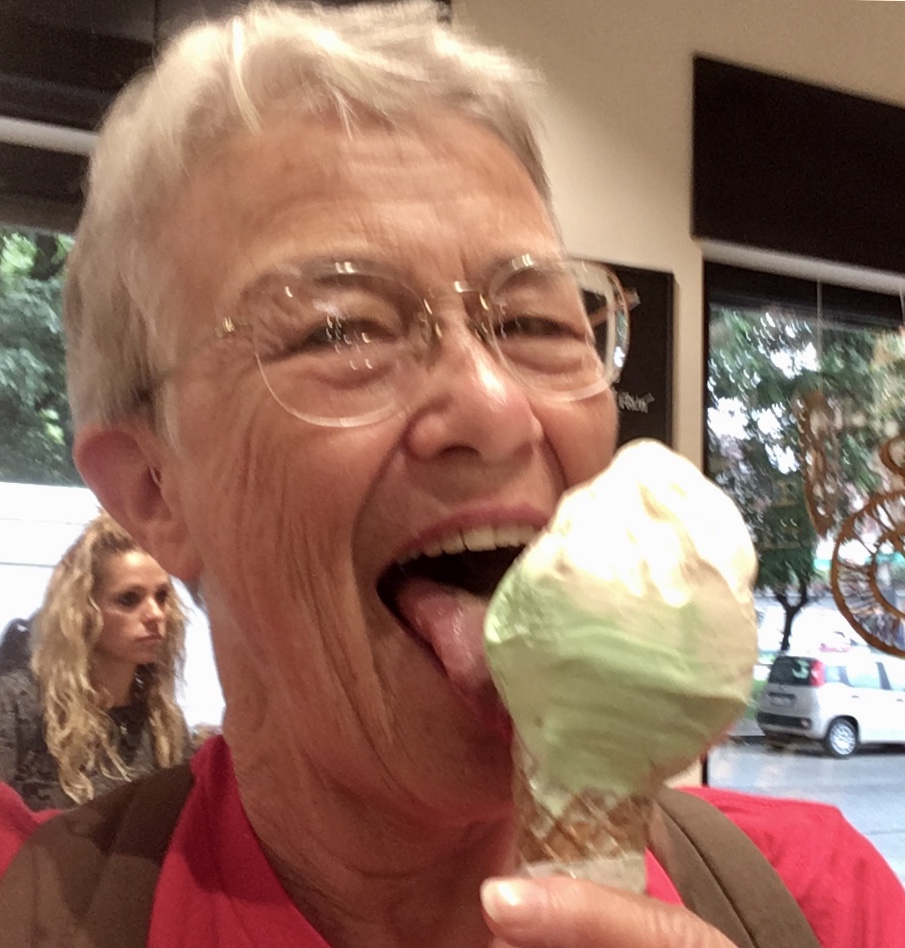
IMG_3496 (Edited)I TASTED the cool creamy sweetness of real Italian Gelato, bit into crusty (salt-free) Tuscan bread piled high with fresh-made tomato Bruschetta and drizzled with first-press virgin olive oil from an orchard that covered the nearby rolling hills.  I sipped a frosty pale green menta (mint) icy that tingled my taste buds and sent shivers of coolness through my mouth and throat…on a baking-hot humid day.
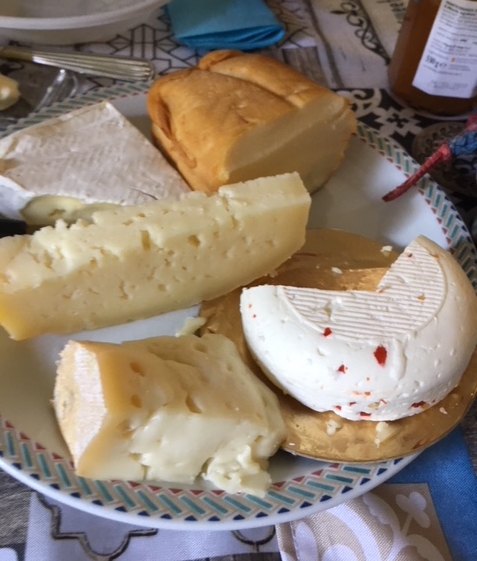
IMG_1367I sampled a vast array of Italian cheeses (said to outshine France’s), from wedges of soft, creamy whites, protected by powdery rinds, to the mellow, medium-soft, large-holed varieties (not Swiss), that were delicious in a salty-sweet way with a dollop of apricot jam on top, to the hard, net-wrapped aged cheeses that take a good strong knife to slice, and a hunk of soft Italian bread to eat it with to even out the sharpness.

An expensive treat reserved for special occasions are the tiny balls of fresh Mozzarella floating in whey and filled with rich sweet cream that oozes into your mouth when you eat them. Magnifico!

What of the pastas (hardly ever spaghetti) in rich tomato sauces with melted cheese (and occasionally chopped hard boiled eggs), or made with basil-green home-made pesto?

Italy18 Hot Choc. Fresh whip cream What about a decadent hot chocolate so thick and rich that it looks like Hershey’s Chocolate Topping, but more delicious, served with a scoop of freshly whipped cream so thick you could eat it with a fork.Italy18 Hot Choc.

Aromas tease your nose when you walk past pizzerias or pastry shops. Sweets and Savories. Or sniff the meaty goodness of rows of whole chickens roasting on a rotisserie, dripping their goodness onto large chunks of peeled potatoes below.

Old Roman style streets of small cobblestones or large rectangle blocks make for uneven walking and leg strain…but offer a “rubbery warbling” from the tires of cars passing by…if you listen.  Horns honk continuously as Italian drivers in tiny cars dart in front of you, whiz by you, or fume impatiently behind you. “Romantic” Italian is spoken everywhere, quickly, rolling from the tongue with unfamiliar consonant and vowel endings, sometimes staccato, sometimes lyrical.

Italy18 Torino fountainMove through wet heat that causes limp hair, sticky skin, and clothes that cling. And then come upon an arched metal fountain in a park or piazza in the shape of a bull’s head (honoring “Torino”) that flows with cool sweet entirely drinkable water from its mouth. Hold out an empty water bottle, or cup your hands to catch the coolness, or even bend your head and drink freely.
Italian greetings surprise you, not with impersonal nods or stodgy handshakes, but with full frontal hugs, kissing (or air-kissing) on each side of the cheeks (always beginning on the right side!), a hearty pat or two on the back and a warm smile and verbal “Ciao.”

Italy18 Sibling hugsKids walk down the streets holding hands and they hug their siblings freely, unembarrassed.
You will see women (entirely “straight”) strolling arm in arm or hand in hand.

Sometimes men too. (Seriously!)

Ah, Italy.


Vibrant with the five senses!

What about your writing? Are you taking advantage of the “Big Five?”

SMELL

Exercise: Smell is the only sense that has a direct pathway to the memory center of your brain. What smells brings up unexpected memories for you? (Grandma’s house, your husband’s pajamas, Plumaria flowers, frying bacon, a certain spiced tea, wood polish, month-old laundry, cinnamon rolls warm out of the oven….a dead rat?  Describe a few of these using your sense of smell.

Hint: Read wine or perfume sites to build your smell vocabulary.

SOUND

Exercise: How would you describe the sounds around you right now? Pause and listen! Describe how fire sounds in a fireplace… in a forest fire. What’s the sound of water in a pool, a creek, an ocean? Make up a few new onomatopoeia sounds.

TOUCH

Exercise: Describe something fluffy, icy, pliable, jagged, papery, leathery, or slick. What do things vibrating or painful feel like?

TASTE

Exercise: Describe what something tastes like using a metaphor. (Comedian, Tim Hawkins, compares the taste and texture of a Krispy Kreme donut to “eating a baby angel.”  Think about that!)  What makes your mouth “water?” What makes you gag?  What does blood taste like when you bite the inside of your cheek? Have you tasted tears? Mother’s milk? Can you describe them?

Extra Credit Exercise. Buy a Bean Boozled Spinner Game and play several rounds with a friend. Describe the tastes of the Jelly Belly beans your pointer chooses for you. Flavors include Buttered Popcorn, Peach, Carmel Corn, Chocolate Fudge, and Rotten Egg, Dead Fish, Lawn Clippings and Barf.  I DARE YOU!!  Find a game here: https://amzn.to/2v4snUc

SIGHT

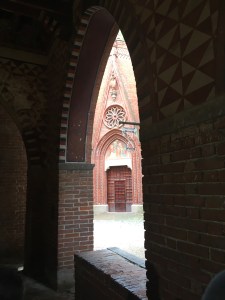
Exercise: Describe places you love. Describes different kinds of light, different shapes, perspective, illusion. Truly see a person passing by and tell what each aspect of his clothing, skin hue, walk, manner, and speed could mean. Use metaphors to describe a few of your favorite colors.

Italy18 checkered hall  Italy18 Castle shapes

Italy18 Lucky clover  IMG_3828 (Edited)

Close your eyes. Imagine one of your favorite places: a local coffee shop, the beach, a small bakery in Paris… anywhere. Take a few minutes to describe this place.

What is your favorite sense to write with?  Use the senses God gave you to SHOW your readers how you feel.  They’ll love you for it.