Writing Short Stories: A Mini Course by Kate Thornton Part II

Kate Thornton is a retired US Army officer who enjoys writing both mysteries and science fiction. With over 100 short stories in print, she teaches a short story class and is currently working on a series of romantic suspense novels. She divides her time between Southern California and Tucson, Arizona.

Today, Kate continues with the second part of a mini course on writing short fiction, beginning with marketing.

Marketing your finished work

1. Know your genre. Do you write mystery? Science fiction? Romance? Contemporary literary? I write mostly mystery and science fiction, but I firmly believe that if you can write, you can write anything you want to. Look at your story and figure out where it might belong. Chances are, it could fit into more than one category.

2. Research your markets. Know what they want. Every magazine, anthology or contest has submission guidelines. Read them carefully and give them what they want. If they say under 1000 words, don’t send 1001. If they say snail mail only, get out those envelopes. If they say no vampires, robots, brunettes, or cats, don’t send your epic space opera vampire story about the furry dark robot cats. Keep on looking for a market that fits – or revise your story to fit the market. Either way works.

3. Polish your story again. Give it one more read, made sure it looks great and is in the right format.

4. Submit. Go on, do it. And keep a record of your submissions. A simple Word or handwritten document giving title, market, date of submission and date/type of response is perfect. That way you don’t miss a market or submit the same thing twice to the same market.

A note about cover letters.

Short stories are usually sent with a short cover letter (not a query letter, which is something else entirely.) Cover letters usually say something like this:

Dear Editor,

Attached (or in the body of this email) please find my original 750 word short story, “Lost in the Woods.”

I am an avid reader of your magazine, and have had work published in “Sewage Monthly,” “Cat Lovers USA,” and “Coal Digest” (or leave credits out if don’t have any – it won’t matter if you don’t have any.)

I look forward to hearing from you.

Sincerely,

Avid J. Reader
123 Writer Lane
New York, NY 10000
(212) 555-5555
avidjreader@wtf.com (Your name, address, phone number & email are important!)

Then you wait. But while you are waiting, write something else. Keep on doing that.

Where? Where do I submit?

Here are the links to 2 of my favorite online market guides.

Ralan (look over on the far right for market listings)
Publishing…And Other Forms of Insanity

There are others, of course. And if you post to any writers’ forums (or fora for you linguistic purists) you will also find market info. Here’s one I like:

Absolute Write

Happy writing!

That’s the quick and easy of short stories. Time to write one!

I Know it was Blue – Thoughts on Organizing Memories by Author Rosemary Lord

Rosemary Lord wrote her first book when she was ten years old – for her little brother. She also illustrated it herself. It was later rejected by Random House!
She has been writing ever since.

The author of Best Sellers Hollywood Then and Now and Los Angeles Then and Now, English born Rosemary Lord has lived in Hollywood for over 25 years. An actress, a former journalist (interviewing Cary Grant, James Stewart, Tony Hopkins, John Huston amongst others) and a Senior Publicist at Columbia Pictures, she lectures on Hollywood history. Rosemary is currently writing the second in a series of murder mysteries set in the 1920s Jazz Age Hollywood featuring Lottie Topaz, an extra in silent movies.


I Know It Was Blue

I was de-cluttering. Anything to delay writing the next part of my new book. Many writers have clean, tidy fridges for this very same reason…

I was going through an old box of scraps of paper that needed purging. “Cary Grant: 11 am, Tuesday,” I had long ago written on the back of an envelope. As you do.

Then I picked up a tariff from the Hotel Aguadulce in Almeria, Spain. “Yul Brynner – top floor, Charles Bronson, Raquel Welch –” scribbled on the top. A tattered Boarding Pass LA – New York. The name ‘Richard Dreyfuss’ was in pencil. A metro ticket from Paris with Charles Aznavour’s name on it. My souvenirs all told a story.

Goodness, I realized, my writing has taken me all over the place. What fun. In those days I earned my living writing for various magazines, interviewing movie stars (the real sort) and writing about people in the film industry, especially Old Hollywood. A receipt from the Palm Bay Beach Club in Miami was next. Columbia Pictures had flown me there to interview Muhammad Ali and also James “Jimmy” Stewart. Both were making movies in Florida. I had my portable Olivetti typewriter, a small tape-recorder and a passport. ‘Have typewriter – will travel’ was my theme.

I’d forgotten about this part of my life. I remember I was almost always broke, as we were paid peanuts for such interesting work. But you usually got fed. That was a priority. Otherwise I lived on a diet of spaghetti (very cheap) with grated parmesan cheese.

After a while, racing from one appointment to another, running for a train somewhere, the typewriter got left at home. I had created my own short hand in which to hand-write my pieces. I still have the typewriter and a large box of tapes of those interviews. I realize that one day I should attempt to de-clutter these, too. Big sigh. Not sure if I could ever part with them or the stack of well-thumbed notebooks filled with quotes and notes.

Today – I harrumph – journalists have the ease of minuscule, assorted recording devises that even type up the spoken word. But I would not swap my ‘journalistic clutter’ or the memories of those struggles, frustrations, fun, exciting and sometimes dangerous adventures, for anything.

But I digress: the scraps of paper that I should be clearing out. Focus, Rosemary!

You see, I have a habit of writing notes on the nearest things to hand. Paper napkins, paper tablecloths, the most obvious. Old receipts, used envelopes are a favorite, too.

Friends are used to seeing me with an array of paper scraps on my desk as I pull together some semblance of a story or article. (You should see my desk right now. Please, no! At least I have a desk these days.)

I do have a good selection of notebooks – even beautiful, leather-bound books – with pages of eventually published pieces and several yet-to-be published stories. Yet, when my ever-busy mind comes up with another great idea, or a solution to a scene I am writing, the notebooks are not usually close enough. So I dig in my pockets and bags for anything to write on. My challenge is to collect those scraps of literary pearls and to transfer them to the notebooks and ultimately onto my computer – where I can cut-and-paste to my hearts’ content. I am getting much better, but still not efficient enough for my own demands.

Dare I ask my fellow bloggers and readers if they have any similar organizational challenges? Any ‘helpful hints’ are welcome! Or must I remain drowning in a sea of scraps of paper?

I love a quote from the late Professor Randy Pausch’s wise little book, The Last Lecture. Knowing he had not long to live, he wanted to develop a good filing system, in alphabetical order. But his wife, Jai, felt this way too compulsive. He told her:

“Filing in alphabetical order is better than running around and saying, ‘I know it was blue and I know I was eating something when I had it.”

I confess I still spend a lot of my time muttering to myself, “I know it was blue and I was eating something….” Help!!

From Screen to Page, Part 3 by Miko Johnston

Miko Johnston is the author of Petals in the Wind.  
She first first contemplated a writing career as a poet at age six. That notion ended four years later when she found no ‘help wanted’ ads for poets in the Sunday NY Times classified section, but her desire to write persisted. After graduating from NY University, she headed west to pursue a career as a journalist before switching to fiction. Miko lives on Whidbey Island in Washington. You can find out more about her books and follow her for her latest releases at Amazon.


FROM SCREEN TO PAGE, Part 3


Today we wrap up our discussion about the basic rules of screenplays that would benefit fiction writers. We’ve already covered the four story questions every writer must be able to answer (see post from September 9), and how your protagonist must undergo a transformation (see post from November 4. And now the final point:


ü  Use the three-act structure in novels


Most plays and films are written in three acts. It’s a time-proven method to follow when writing any long form fiction, including books, because it provides structure without limiting creativity.


In a novel, Act I begins with Once upon a time and ends around the first crisis, or inciting incident – the event that launches the story. Act II follows and is often divided into two scenes with a second crisis point in the middle. This mid-point crisis lifts up the middle of the story and raises the stakes. Act II ends around the final crisis point, the story’s climax. Act III resolves the climax and takes us to the story’s resolution and ideally, a satisfying ending.  


Here is a simple diagram illustrating the three act structure as it appears in novels:


The four segments represent the acts and scenes, divided by vertical lines denoting the three major crisis points, each higher than the previous one. The peaks and valleys track tension, and the horizontal line at the bottom represents the story synopsis.


As the diagram shows, if you write your novel with the three-act structure in mind, it creates a solid foundation, a floor on which to build your novel –the protagonist’s arc, the plot – and a firm base to plant your crisis points. The structure provides guidance in finding where the story needs to be cut and where it needs to be fleshed out. If you want to create well-defined crises, steadily increase the tension throughout, and avoid the dreaded ‘middle act slump’ that dooms so many tales, use the three-act diagram like a map to lay out your first draft or direct you through a revision.


One way to see if your novel fits into the three-act structure is to take a sheet of paper, fold it in half twice lengthwise and twice widthwise. Open it; you’ve created sixteen crease boxes on your paper. See if you can summarize your novel in the sixteen boxes. Ideally the first row would cover the beginning through the inciting incident, the second row would end at the mid-point crisis, the third row would end at the climax, and the fourth row would include the story’s resolution and end. You can see by this exercise that Act II, or the middle of your story should be approximately the same length as the beginning and the end combined. If one section is bloated and another is skimpy, it can indicate your pacing is out of balance. Maybe the beginning drags, or you rushed the ending, or the middle isn’t developed enough. The crease box exercise works like GPS to identify problems in your manuscript.


A related screenplay rule that is especially relevant to short form fiction writers is: Keep the story simple. Unlike novels, where you must have at least three crisis points, in short form fiction there are only two – the inciting incident that launches your story, followed by a steady build-up to the climax and resolution. Don’t overcrowd your flash fiction or short story with too much plot or sub-plot, too many extraneous characters or locations. Instead, add complexity with multifaceted characters, crisp dialogue that drips with subtext, and vivid bites of description. Very short pieces can consist of a single scene – think of a standout commercial on TV as a visual form of flash-fiction.


Here’s a bonus: If you have scraps of ideas floating around but nothing firm enough to write about yet, try planting the idea on the diagram above. Often, when you decide where the idea should fall in the story structure, you ground it enough to work out more details and launch a story concept.


*     *     *     *     *


If you have found this series helpful, we Writers in Residence would like to hear from you. If you didn’t, let us know that as well.


The Birth of a Book

Jacqueline Vick is the author of over twenty published short stories, novelettes and mystery novels. Her April 2010 article for Fido Friendly Magazine, “Calling Canine Clairvoyants”, led to the Frankie Chandler Pet Psychic mysteries, Barking Mad About Murder, and A Bird’s Eye View of Murder.  Her latest mystery, Civility Rules, comes out this February. To find out more, visit her website at http://www.jacquelinevick.com. 

THE BIRTH OF A BOOK

I’ve never had the privilege of giving birth, so I can’t speak from personal experience, but I think the event has been captured in enough books/movies/conversations that I don’t feel unqualified to compare the novel-writing process with a that of a full-term pregnancy. Both are exercises only attempted by the delusional, and the mistakes made along the way range from comical to painful, but the results are original and, one way or another, extraordinary.

I will make the author in my example female because writing “his or her” and “he or she” over and over again is a pain in the side.

The Spark of Life 

BABY: The minute the couple finds out they are expecting a baby, joyful laughter follows them wherever they go, because they are telling anyone who will listen that they are having a child with the expectation that the good news will bring forth reactions of awe and wonder. In their excitement, they seem to forget that billions of people have accomplished this same goal.

BOOK: When the author comes up with a killer idea, her first instinct is to share the idea, though often with more reticence than the happy couple. The author might toss out the idea to a group of friends or a writer’s group with the hope that her peers will be stunned into speechless envy. In her excitement, she forgets there is no such thing as a completely original idea and that her writer friends have probably have had similar ideas and tossed them out.

The Excitement Grows

BABY: Lacking sense, the happy couple will NOT keep their dreams for their child to themselves. For example, Uncle Sam, who once had hopes of becoming an All-Star baseball player until he tore his rotator cuff, won’t appreciate hearing over and over how this little wonder will someday be a member of the Hall of Fame. Foolish comparisons are made. “He’s going to be an athlete, just like his father,” even though the only reason the patriarch of the family wears sweats is because they have an elastic waste band. Mom will pipe in that their little girl will surely be at the top of her class, because Mom is still proud of the passing score she received on her dissertation about the effects of cow flatulence on the ozone. Then, to ensure their child receives a good head start, they will immediately apply at an elite preschool.

BOOK: The author, still under the delusion that her idea is original, witty, and worth millions, will start preparing her acceptance speech for the Academy, because, naturally, producers will fight to put her best-selling book on the screen. She has clear ideas of who should play her lead character. This taints her selection process of agents to whom she plans to submit her finished manuscript (which she hasn’t started writing), causing her to narrow the field to representatives of New York Times best-sellers.

The Feedback 

BABY: They asked for it. After turning every conversation  back to the subject of their upcoming child, and even flashing pictures of the ultrasound at startled relatives, the couple is surprised when their listeners fight back. They begin to receive advice, and their every movement is monitored. Subject that were formerly considered private are now everyone’s business, from gastrointestinal difficulties to their lovemaking habits.

BOOK: Everyone’s a writer! After testing out ideas, plot points, and characters on strangers in the grocery store line, the author is surprised when her listeners fight back. Advice ranges from suggestions that she include graphic sex scenes to an insistence that she pepper the story with zombies, even though she’s writing historical fiction.

The Hard Work

BABY: Morning sickness. Back pain. Strangers asking,  When are you due?  The mother’s overwhelming desire to have this alien life form removed from her body.

BOOK: Writer’s block. Grammar errors. Strangers asking, When does the book come out? And will there be a cheaper ebook available? The overwhelming desire to delete the entire  manuscript from the author’s computer hard drive.

The Final Push

BABY: This baby is coming. After nine months, the mother finally reclaims her body, but the next 18 years are booked. I’ll never do this again!

BOOK: The book is finished.  After nine months, the author types THE END. Now it’s time to market the manuscript. Maybe I can get a job as a receptionist at the car dealership.

Change, Mack, P.D. James, Book Clubs, & Continuity

Madeline (M.M.) Gornell is the author of six award-winning mystery novels. Her current literary focus is Route 66 as it traverses California’s Mojave Desert. Madeline is a lifetime lover of mysteries, and besides reading and writing, is also a potter. She lives with her husband and assorted canines in the High Desert. For more information, visit her website or Amazon Author Page.

 
Adler “Mack” Jones thinks, A whole year has passed, and I didn’t even notice. Or see it go by? Or feel it go by? And who the heck is Mack, you ask? The protagonist in a book I just started (600 words written! (smile)) The whole idea for Mack, his friends, and this Mojave story came to me contemplating this blog, an email from Jacqueline Vick, and from Facebook posts by Paul D. Marks on TCM movies. I know, story ideas sometimes come via a convoluted path. But my point for mentioning is; what Mack is thinking, I’m also thinking this early January week of 2016.
My life so far, seems to be broken into chunks, often in ten-year or so groups, punctuated by change. Twenty-sixteen numerically marks the end/beginning of one of those periods—and like Mack, it’s hard to accept 2015 is over? The change has come, but I certainly wasn’t ready for it.
P.D. James advised to “Read widely and with discrimination.” Ha! Easier wanting to do versus actually doing. Give me a good mystery, and I’m set. At the beginning of my last 10 year swatch of time, we’d just recently moved to the high desert. Before that, in Puget Sound I’d been a member of a wonderful book club. And I sure missed it. Fortunately, in not too long of a time (end of 2005) we had a local book club up and going. It is through their wonderful selections I can follow P.D.’s advice. (If you know me, you know P.D. is my “rock star” author.) Here’s an old picture of some of the first members at one of our early initial potlucks at my house. As you might notice, after the book we read, food was an important aspect! We even called ourselves “Books and Cooks.” And how this fits in, besides enabling P.D.’s advice to read widely, is in relation to change and time flying by. (An aside note about time and change—the shelves in back of us are now covered with stuff accumulated over ten or so years! Jeez.)
Which brings me to the writing part of this meandering. Even though I write fiction, it is the “stuff of our lives” that forms, or at a minimum, colors and influences the tales we tell. And no matter what I might literarily imagine, what location I might want to visit in my writing, what intrigue I might want to weave—it’s everyday life, friendships, connections, happenings that take me there.
The personalnugget here—I’m powerless to stop change and time. And that is good—moves me forward! But for some other things, continuity is so important. For example, sharing reading adventures in a book club.
 And, the writing nugget here is; somehow, and I’m not really sure if you can make it happen, or precisely how—but opening our minds and emotions to the serendipitousness of change, while simultaneously holding on to the things in our lives that matter, is what brings richness and depth to our writing. Now, that’s a mouthful! But it’s what Mack is thinking about. What I’m writing about.
Indeed, even writing this post has turned me from, golly where did last year go and why haven’t I finished another novel—to looking forward to the start of a new wonderful year, full of change and continuity from last year—with endless possibilities for Mack!
Happy New Year!

The Best and Worst of Christmas Presents

All the way back to childhood, this is the season when most of us expect to receive gifts, whether wrapped in green and red for Christmas, blue and silver for Hanukkah, or black, red and green for Kwanzaa. Sometimes those gifts are amazing. Sometimes they are…surprising. And sometimes they are intangible items that can’t be wrapped in paper and bows. We’ve pulled out some of our WinR memories to share with you.

One of the best, or most memorable, Christmas presents I have received was my first Christmas after I moved to Los Angeles from London. I was house-sitting on my own in a half-finished house – just basically one unfinished room – no dry wall yet installed – with a camping-cot. I was also working as a waitress and had the Christmas Day shift. Phone calls home to my mum were VERY expensive in those days, but I spoke briefly to her before I went to work. When I got back, there was a parcel from one of my new-found British friends, who clearly understand my situation. The parcel contained a stack of airmail envelopes, writing paper, pens and international postage stamps (expensive for me) – so I could write to my family in England. Plus…. a bottle of vodka and a bottle of tonic!!! I spent the rest of the day writing letters home – and enjoying a plastic cup of vodka-tonic, no ice.

                                                                
                                                                                         – Rosemary Lord

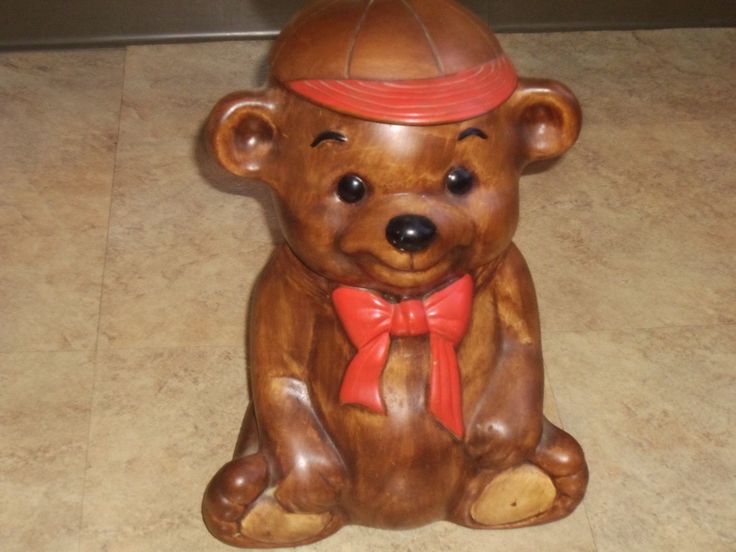
The worst Christmas gift I ever received was a cookie jar: a big ceramic thing in the shape of a grinning brown bear, given to me by a family friend, a kindly lady who’d known me most of my life.

What’s so awful about that? Well, here’s what happened: I was a newlywed that year, in a low-rent apartment with the world’s smallest kitchen. No room for cookie jars, so I stashed the gift in a closet. I didn’t bake back then anyway—my culinary specialty was spaghetti.

Fast forward several months: my best friend Susie got engaged, and of course I had to get a gift for her bridal shower. Susie was quite the baker, and I thought of that cookie jar, gathering dust in the dark closet. My husband was still in school so we were subsisting, barely, on my tiny salary as a secretary for a small company. Therefore, I thought, it made sense to “re-gift” that cookie jar, which had never been used. Two problems solved: I had little money for a gift, and it seemed a shame to let the cookie jar go to waste.

It would have gone over just fine, except . . . Susie unwrapped the gift and laughed at the smiling bear. Then she lifted the lid. The well-meaning lady who gave me the jar had also given me a bag full of home-made oatmeal cookies, but I didn’t know it because I’d never looked inside the jar. Those cookies had been sitting there, turning to rocks, all that time.

I saw Susie’s bewildered expression as she held up the bag of cookie-rocks, and before I lost my nerve, I snatched the cookies and muttered something about my husband being a practical joker. I’m sure my face was scarlet, but my remark got a laugh at least.

Susie and I are still friends after all these years, and I’m sometimes tempted to ask her if she believed my fib back then. Most days, though, I’d rather not know.

The morals of this story: (1) if you ever recycle a gift, be sure to look inside first. You never know what you might find. (2) when in doubt, blame the husband.


                                                          – Bonnie Schroeder


I can only think of one gift that I knew instantly I would never use. It was a satiny pink blouse with a huge bow at the neck. Not my style, color, or fabric. It was the type matronly ladies wore at the time. I was 27. It made me look like a clown. My brother’s wife had picked it out. It was actually a designer label. She didn’t know my tastes at all since she lived in Ohio and I was in California. But my elderly landlady looked terrific in it. She got two gifts that year.

                                                                         – G.B. Pool


I have a huge extended family, and therefore, we pulled names for Christmas. The first year, my uncle, who was my age, forgot about me. That night, when they pulled names, I was forgotten. He came up to me later and gave me twenty bucks! The next year, my aunt, who was in college at the time, forgot me again. She sent me a pair of Saluki sweats that I lived in for the next few years. I loved those sweats, and the twenty bucks came in handy. Sometimes, being forgotten isn’t all that bad.

                                                                        – Jacqueline Vick 


May you all have a wonderful holiday season!

Where Do Writers Get Ideas? 
by Jackie Houchin
In a recent post on Marilyn Meredith’s blog titled “Field Trips for Writers,” I wrote about exciting trips we “WinRs” have taken and how they tickled (or tricked) our muses into action. I also suggested a bunch more for her readers. Check them out; you may glean a story idea too. (http://bit.ly/1PIYv3o).

Any little sight, sound, or experience can generate ideas for your writing. A few crows pestering my Maine Coon cat in our back yard inspired me to write “The Crows Know” about a planned murder that went awry. 
The glassy-smooth feel on my fingertips as I ran them down the side of a newly polished sports car inspired a story about a murderous duo in “Sweet Ride.”  
A longing for a certain left-over item in my fridge after a harried day of shopping the malls, led to my dark flash fiction story “The Perilous Pizza.”
A newspaper story about a 1932 dam about to be renovated, inspired fellow WinR writer, Gayle Bartos-Pool, to write “Damning Evidence,” the third in her Gin Caulfield mysteries.
Then there’s that newspaper clipping about the body of an elderly family member found wedged behind an upright piano months after she went missing. It intrigues me.  How did she get there? Was there no noise of a struggle? No odor? It’s mind boggling and “ripe” for a story. Go ahead, be my guest!
Every wonder where the writer came up with a man-eating plant who falls in love with him after reaching gigantic proportions (Little Shop of Horrors), or an astronaut who grows potatoes in outer space (The Martian), or a love story with a woman who lived 50 or 100 years before him (Somewhere in Time/Time after Time), or who lived before AND after him (The Time-Traveler’s Wife). 

Something sparked those ideas; I wonder what it was…? (Take a second just now to ponder them. Really. Do it!)
Here are a few places you can look to get your “juices” flowing:
1. Pick up a newspaper (any section) and read a tiny story.
2. Glance in the gutter of a busy street (A kid found $600 in a paper bag doing that!).
3. Look at signs and posters in the windows of stores or apartments or the post office.
4. Look at want-ads or items for sale, or personal notices.
5. Peer over your neighbor’s fence. 
6. Peruse the items in your fridge… your car’s trunk…or your jewelry box.
7. Thumb through an old family album with murder, vice, or a caper in mind. 
8. Thumb through an old family album with…a memoir in mind.
9. Join (or maybe just watch) a protest march.
10. Choose a parable and twist it or “pastiche” it. 
11. Search out writers’ prompts from hundreds of websites.
12. Delve into a thesaurus or encyclopedia (use the old “close-your-eyes, open-the-page, and point-to-a-word” technique).
13. Google a random date.
14. Google a prescription medicine that you take.
15. Google your grandmother’s maiden name.
15. Drip food coloring into a saucer of milk, then add a touch of dish soap…and be amazed. What comes to mind first?
There are ideas all around us and you can turn them into stories with a little diabolical imagination! 
All it takes is… a character or two, a problem or three, several adversaries or a block wall that can’t be scaled, a terrifying time table, a heart-stopping climax, and a shocking, satisfying, humorous, or thought-provoking conclusion. Voila!  You’ve got a story. (Of course it needs massaged, edited, critiqued, and rewritten! But we’re talking ideas here.)
CHALLENGE: Pick one suggestion from anywhere in this post. Let your imagination roam and see if you can come up with a story idea – at least the kernel of one – then throw it into a hot popper and see what happens! 

And please let me know if you find one! (A story idea, that is!)

The Time, the Place, and the Story by G.B. Pool

The Time, the Place, and the Story
As a writer, I am often asked, “Where do you get your ideas?” I have to tell them ideas fall out of the sky into neat little baskets, neatly typed out… Who believes that? Nobody. But ideas do come out of the blue or sometimes from a newspaper article or maybe while driving to work or maybe right before you fall asleep.
I remember watching a movie once and as I usually do, I was trying to guess where the movie was going. My idea ended up not being anything like the movie, so I wrote my own story. It turned into Eddie Buick’s Last Case.  

One of my fellow Writers-in-Residence members, Jackie Houchin, used to write for our local newspaper. She did an article about the dam near us. Jackie took some great pictures of that eerie place before they retrofitted it. One of those pictures now graces the cover of Damning Evidence, a book about a local dam and murders that happen around it and my private detective, Gin Caulfield, who deals with that problem in the third book in the series.

See, ideas do come from lots of places.
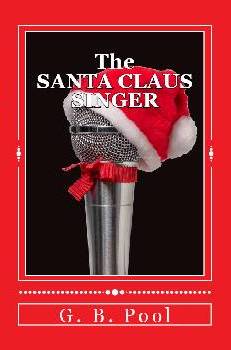
Now it’s the Christmas Season. There are a lot of holiday books out there… and movies, too. I have seen most of the movies and read a lot of the holiday stories. I’m what you call a “holiday-aholic.” I collect Santas. 3500 and counting to be exact. I knew someday I would write a Christmas story, but about what?
I didn’t want to write a children’s story with twenty pages and big drawings. I wanted one that grownups would like. And not a retelling of A Christmas Carol or It’s a Wonderful Life. It’s been done and frankly, I like the original versions just the way they are.
Several years ago I was walking through the Glendale Galleria here in California just as the stores had finished decking themselves out in tinsel and holly. I heard someone singing. He was using a microphone. The guy had a great voice. And he was wearing a Santa Claus suit. An idea exploded in my head as I stood there listening to him.
Now for a location. I might not live in Las Vegas, but I went to my 30th high school reunion there. I went to a boarding school in France for children of American military personnel and Vegas was a nice central location for us military brats. And what better place to locate my guy than in a place with one heck of a reputation.
Frankie Madison isn’t a big-time singer, so I put him in an out-of-the-way dive off the Strip. He loses his job, but his agent, who runs an employment agency, not a talent agency, gets him a gig singing Sinatra songs in another dive. It doesn’t go well. Then Frankie gets hit by a taxi. The driver is going to play an important part in the singer’s life.
Then Frankie’s agent calls. The only job left in town during the holidays is at the mall. What kind of singing gig is there in a mall? And he has to wear this suit… a red suit… a Santa Claus suit, but he can sing if he wants. And he does.
Frankie gets noticed by the female clerks in nearby shops and they like his voice. So does a young girl in a wheelchair. She loves Santa. And her father is a BIG TALENT AGENT.
Frankie finally gets another chance to sing, but this time it isn’t what he expects… it’s worse. And there is another problem. As Santa, he makes a promise to the young girl. And he makes another promise to the big talent agent as the struggling singer he really is. But this is his BIG CHANCE. Maybe his last chance. What does a guy do on Christmas Eve? And remember… this isn’t a kid’s fairy tale… or is it?
The Santa Claus Singer was my first Christmas story, but not my only one.
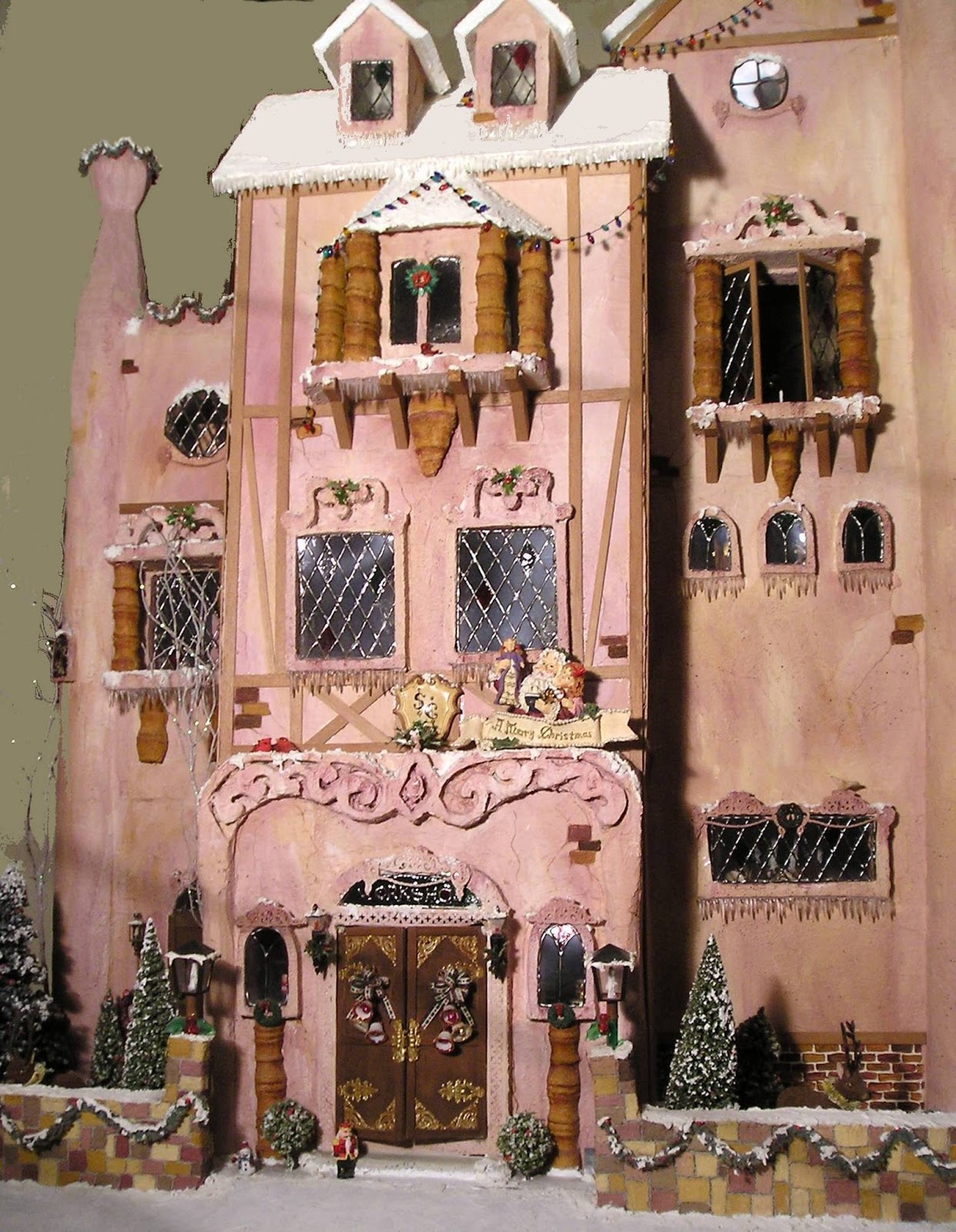
When I first moved to California many years ago, I worked in a miniature store where we sold dollhouses and we also had a holiday room filled with decorations for each season. During Christmas, I was surrounded by Santas and decorations and holiday magic. I came up with an idea for a story about a Polar bear. I drew up plans for a Santa castle where he and Santa live. Years later I wrote the story, Bearnard’s Christmas, then I had to build the castle…


   And make all the characters who live there…
You see how this happens? You get an idea and it carries you away. So whenever you wonder where writers get their ideas, just look around. Ideas are everywhere. A very Merry Christmas to you all.

Writing Short Stories: A Mini Course by Kate Thornton Part I

Kate Thornton is a retired US Army officer who enjoys writing both mysteries and science fiction. With over 100 short stories in print, she teaches a short story class and is currently working on a series of romantic suspense novels. She divides her time between Southern California and Tucson, Arizona.

Today, Kate presents the first part of a mini course, in a question and answer format, on writing short fiction.


WRITING SHORT STORIES: A MINI COURSE PART I by Kate Thornton

How long is a short story?


Here are the official lengths from the Short Mystery Fiction Society (the folks who award the Derringer prizes each year)

Flash Story Up to 500 words
Short-short Story 501 to 2000 words
Mid-length Short Story 2001 to 6000 words
Longer Short Story 6001 to 15,000 words

Remember: every venue in which you wish to publish will have their own idea of what lengths they will accept.

What makes it different from a chapter of a novel?

A short story has a beginning, a middle, and an end. It is limited to one main plot point and the cast of characters is of necessity short. It tells a complete story with a resolution or revelation of some sort at the end.

A written scene without these completing elements is a snapshot or vignette, not a short story.

You may certainly use characters, settings, chapters or scenes from your novel in a short story, but your short story must stand alone as a complete story all by itself. It must have an ending, even if you – or the reader! – do not agree with the denouement or ending.

What’s more important, setting, plot or characters?

They are all important. But while you may have the luxury of exploring settings in great detail in a novel, using multiple plot twists and turns, and an array of characters right out of Cecil B. DeMille, in a short story you must narrow your focus. The shorter your story, the more important it is to write concisely and to keep the telling of your tale simple while retaining its color, premise, style and voice.

First person? Third person? Omniscient Narrator?

Whatever works for your story. I have read beautifully-written short stories comprised entirely of dialogue. Beware when using a narration technique that you do not just dump the story on the reader by telling, not showing. Even a very short story must be interesting enough to hold the reader’s attention. I like the way first person makes the reader an immediate part of the story. But I like the way third person omniscient can make the reader privy to every secret, every action as it unfolds.

I want to write a short story. Where do I get ideas?

Good – let’s try writing a short story. Ideas come from everywhere, but I find that themed contests and exercises (“Write a story based on this picture!” or “Write a story about sheep!” or “Write a story with a lemon, a goat and an alien princess in it!”) can be very good jump-starters.

Other ideas can be a childhood incident or other real-life event. Remember you are writing a piece of fiction, not a memoir, so make sure you have that old beginning, middle and end.

One of the best exercises you can do if you want to write short stories is read them. Read in the genres in which you want to write – and the ones you don’t. Read the masters: O. Henry, Saki, Sommerset Maugham, Edgar Allen Poe. Read Guy de Maupassant, Ambrose Bierce, Shirley Jackson. Go here for some great classics

You will not only get ideas, you will get a feel for the short story form. You will also see how language has changed over the last hundred years or so.

Now read some contemporary shorts: Ed Hoch, Stephen King, Raymond Carver, (here’s a link to one of his, “Vitamins” in Granta) Jhumpa Lahiri, Alice Munro, T. Coraghessan Boyle, Michael Chabon, Annie Proulx, Lorrie Moore.

Look at the differences, but more importantly, look at what is the same. Look at the “bones” of the story, the structure as well as the sheer reader’s delight of total immersion in a good story.

Now, try to write a short story of your own. Don’t hesitate – start writing now. Write until you have all three elements (beginning, middle, end.)

Tinker with that first sentence until it makes you want to read more. This is your “hook” – hook those readers up front. Remember those classic stories?

Help! I wrote a story, but…

Congratulations on writing a story – now let’s tighten it up. Every first draft of a story can use some improvement. Take your newly-finished work and put it away for a few days. Write something else in the meantime. Remember – there is no limit to what you can write.

Some time later, take it out and read it aloud. You’ll probably find a few things you need to fix right away.

Here’s how I tighten a story – I have been known to successfully reduce a rambling 2,000 word story to a succinct 500 word short-short – without losing the essence of the story. I go through it and take out all the -ly words first. Adverbs are not your friends. (Okay, maybe I leave in one or two. But what do they contribute to the story?) Next, I look at the dialogue tags – the “he said, she saids.” Do they make sense? Are they monotonous? Too colorful? Confusing?

Next, I read for extraneous phrases which do not advance the story. They may be beautifully-written pieces of deathless prose, but if they do not advance the story, out they go.

Finally, I read for pacing and continuity. Does the story unfold smoothly and at the right pace? Does stuff happen in the right order? Did I forget a name, change a hair color by mistake, forget that it was night in one part and day in the other? Do I need to change a few sentences around to make them clearer, smoother, more readable? Do I need to ditch a sentence or two entirely? And why did I name the heroine Gypsophylla when Lisa is a better fit? (Yippee for find-and-replace!)

With any luck, skill & effort, your story is now a better one.


Tune in on February 10 for the rest of the Mini Course, beginning with Marketing!

What the Writers in Residence are Grateful for this Thanksgiving


Yes, yes, I am grateful for all the usual stuff – all the stuff we should be grateful for. But I am grateful for Pain and Loss, too. When the Bad Stuff is there, the balance is there, and the balance is what keeps us on an even keel in a world that doesn’t always make sense. 

I am grateful for Pain.

When I was in the Army, the Marines used to tell us that pain was weakness leaving the body. Nice idea, but that only applied to exercise and physical endurance. Real pain, the kind you feel in your body when there is something terribly wrong, is a constant reminder that you are alive and need to do something to alleviate that pain. See a doctor, take your medication, do all you can to feel better so you can really live. Do distracting things, like helping others, to get your mind off any pain that your doctor cannot fix.

Real pain of the other kind, the broken-heart kind, also reminds you that you are alive and human. You only feel that kind of pain when you have a depth of feeling which is in itself a gift. Tears can help you through it, but recognize it for what it is: a common experience which binds us together and reinforces our humanity. Pain shared is pain lessened.

I am also grateful for Loss.

Loss teaches us the value of – and fleeting nature of – all things. All things. Our loved ones, ourselves, our world, everything. How many times must loss teach us the same lesson? Every day we learn it over again. Live each day fully, appreciate each moment, live without regret. Know that Loss will touch you as it touches everyone, so be ready. Live with sincere love and caring every day, and don’t be afraid to show it.

I am grateful for Inconvenience.

Inconvenience is the niggling teacher of patience. A little patience can go a long way in overcoming Pain and Loss, so embrace it as a way to slow down and see the very real wonder of this world.

Moderation is key to appreciating Pain, Loss and Inconvenience. There is nothing at all to be gained from wallowing in them. But remember their useful qualities the next time you must experience them. And be grateful you are able to feel. It means you are alive and human, which is a very good thing.

                                                          Kate Thornton


I’m grateful for so many things, but to me, the “basics” are very important, and are the foundation that enables me to write. Very thankful I was born in The United States of American during this era, with all it offers on every level, have decent health, and people and animals with whom to share love and experiences. It is with that support I am able to write.        
                             Madeline (M.M.) Gornell


I am grateful that I was taught how to read; reading sparked my interest in writing. I often take it for granted, but there are many places in the world where people don’t have this skill. The work of other writers, in all its variety, is one of the best writing teachers in the world.

Bonnie Schroeder

For me, I truly believe that any talent I have to write, whether seriously or tongue-in-cheek is God-given. I’m also thankful for curiosity and nosiness, which helped me as a newspaper writer, and the love of reading which helped me build a good vocabulary.

Jackie Houchin

I am thankful for the rich inheritance I received from my family which includes: a smattering of my father’s witty sarcasm, some of my mother’s artistic talent, my grandfather’s love of history, my grandmother’s stubbornness (when it counts), my Aunt Mollie’s love of writing, and a pinch of sewing prowess from Aunt Dottie. I hope everyone has a few people from whom they learned wonderful things.

Gayle Bartos-Pool


I’m grateful for my husband

                       and family,

                                my friends

                                             and good neighbors.


                                                             Miko Johnston


I am grateful for the ability to be grateful. Many people have gifts and blessings, but they are unable to recognize them. That is what makes Kate Thornton’s post above so beautiful. It’s easy to be grateful for the good stuff, but it takes an open heart to find the redeemable qualities in the poop. Gratitude means getting out from under the weight of entitlement and embracing the fact that I don’t deserve anything, but that the Bon Dieu (as Hercule Poirot would say it) has seen fit to grace me. And then saying Thank You. 

                                      Jacqueline Vick


Goodness, I have so much to be thankful for this Thanksgiving. Where do I start?

Without the friendship and encouragement of my fellow Bloggists (is that a word?) my world would be bleak. We really do laugh together and cry together. They inspire me. Our monthly luncheons are a treasured time to talk of writing, of our home-lives, of cabbages and kings. The time goes by far too fast before we scurry off in our different directions.
I am thankful for the fascinating people and wonderful friends I have made since I found my new life in this ‘land of the free and the home of the brave.’


For the amazing adventures life has thrown at me. For the strength and ability to survive.
I am also truly thankful to have my loving family in England. My big sister Annie, my brothers Ted, Phil and Peter, my cousins, nieces and nephews. Although we may be thousands of miles apart, we are very close, speak often and meet up whenever we can – and still giggle together like a bunch of five-year-olds.

I am eternally thankful for the many years I had with my darling Rick, my late husband, who I feel watches over me still. He taught me so much and always helped me to laugh at life’s adversities. I think I am most grateful for the gift of laughter: the ability to laugh with others, to laugh at myself and at life’s absurdities.

And I am most grateful to have this Blog, that gives me the opportunity to formulate and share my thoughts…
                                                           Rosemary Lord