
Hosted by Jackie Houchin
Once every 2 months or so, we ask our writers a group question. Those who can, reply below for your reading pleasure. Let’s see what they said this week.
G. B. (Gayle) Pool:
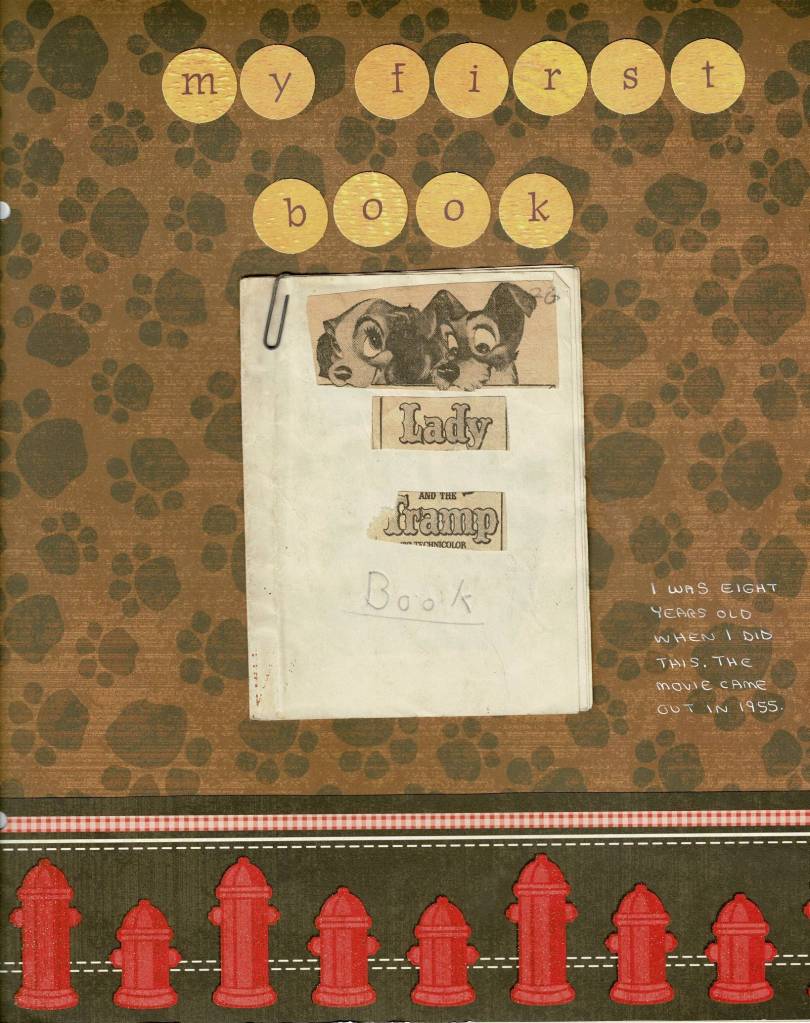
Even before I told everybody that I wanted to be a writer at age 12, I wrote stuff. When I was 8 years old, I stapled together newspaper clippings about the movie Lady and the Tramp. My mother kept it, and I still have it. It was technically my first book. But I kept writing things – poems, stories, ideas. It might have taken a while, but I finally completed a book when I was in my thirties. But I never stopped writing until that time. A little while after I wrote the book, though it hadn’t been published yet, I spoke to a kid who said he was a writer. I asked him what he had written. He said, so far, he hadn’t written anything. He was just thinking about it. Well, technically, he wasn’t a writer…yet. Because you have to write to be a writer. So write…something, anything. Put those words and ideas on paper. Hold onto them because they might be the basis of a book or two later on. But if the words don’t appear on paper or in your computer, you aren’t a writer. Writers write. Write On!
My first “clippings” book.
.
Jackie Houchin:
Younger self (or mid-life ladies): get an MFA degree (Master of Fine Arts) focusing on Creative Writing (or Journalism, communications, etc.), at a local college (or online) if at all possible. I wish I had, instead of just plunging in “by the seat of my pants,” and writing this and that, making mistakes, giving up, then beginning again. I took a few free or low-cost courses and learned a little. I joined critique groups (like Writers in Residence used to be), and I wrote stories for myself that never saw the light of day. And I even wrote for a couple of local newspapers for a few years (That was fun – maybe I should have studied journalism!). I learned things along the way by trial and error. BUT I COULD HAVE learned them at the beginning, and become a Great American Novel Writer, or a Pulitzer Prize Winner by now. And so today … I’ve never published a book. (I did have a short story published after entering it in a contest, but that’s as far as it got). ***** DO BETTER, younger self!
.
Maggie King:
- Read, read, read, especially the type of stories you plan to write.
- Don’t let anyone discourage you. That includes YOU!
- Later in life is a wonderful time to write. Think of all the experiences you’ve had, the insights you’ve gained, the stories you’ve read.
- Above all, WRITE!
.
Miko Johnston:
I can answer that: I’d tell my younger self to ask more questions of family and friends, engage more with strangers in social situations, and especially to discreetly listen to others’ public conversations (much easier today in our cell-phone world). Having that ability can generate lots of character background, quotable dialog, and plot ideas.
Years ago, a friend had a brief but oddly humorous conversation with a woman in a SoCal movie theater restroom. Two years later, she heard that conversation used verbatim in the movie “Independence Day.”
..
..
..
.And that’s it for this time!
.
Share this:


The advice I’d give is write as much as you can
LikeLiked by 1 person
If you don’t write something, you will never be a writer. A good education is nice because it will give you the basics. Reading a lot lets you see what writing is all about. But then you have to put those words and ideas on paper because that is the only way to become a writer.
LikeLiked by 1 person
Sorry I didn’t have a chance to contribute to this, but my answer is: Write. Just do it. Any time. All the time! That’s a good way to learn to be a writer and to improve your writing.
LikeLike