
by Rosemary Lord
 “The time has come,” the Walrus said, “to talk of many things: Of shoes and ships and sealing wax – and cabbages and kings…” So wrote Lewis Carroll.
And as I have been in Europe, travelling around with my siblings, my mind has been darting all over the place; seeing new and old places, marveling at new sights, meeting new people. A hundred new story ideas, new characters, new snippets of conversations and odd words have been buzzing around my head.
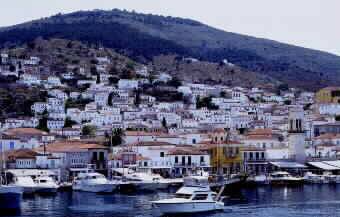 I was recently chatting with my family over coffee in a little taverna in southern Greece – as you do… “What’s the positive of disgruntled, disheveled and dismayed?” came up. We don’t say “She was gruntled – or “I looked sheveled…” After spilling lots of coffee with our bursts of laughter and giggles, we couldn’t solve that one, but went on to marvel at the intricacies and rather bizarre vocabulary of our amazing language.
 Where do these words originate? Most of them we can trace to Latin, Old English or European origins – but there are others that leave us baffled as we delve back into history for a clue. There are so many delicious words for writers to paint a myriad of pictures with. Our language is so rich and colorful when used by good writers and orators.
Not just fiction and non-fiction writers, but poets and song-writers. When you think of the moods created by Henry Mancini’s Moon River lyrics, or Smoke Gets in Your Eyes, the cheery Oklahoma theme, or He Ain’t Heavy, He’s My Brother and Paul McCartney’s poignant Eleanor Rigby – to Y.M.C.A. and Get Me To The Church on Time. All these present such different stories, different moods – using the same English language. Clever writers. Beautiful language.
I wonder how today’s kids, who rapidly text for seemingly hour after hour, will find the opportunity to explore the wonders of our language if their thumbs are trained to only to write “thx, OMG and LOL.” Thumbs may get a workout but what about their imaginations?
 Speaking of imaginations: We went to see the stage version of the children’s classic The Railway Children, by A.E. Nesbitt. I’m clearly still a little kid and absolutely loved it. Such an imaginative way to portray the story of the children who watched the trains go by their house every day, and decided to enlist the help of one of the regular passengers they had spotted (a Rich Old Gentleman) to find out what happened to their father who had disappeared. It turns out their father had wrongly been jailed for embezzlement and the Rich Old Gentleman helps clear his name. The book had long ago been turned into a film starring Jenny Agutter. So the stage production had the challenge of dealing with a real train as the central character. The imaginative designers used a portion of the real, working railway tracks at London’s King’s Cross Station with a real steam engine waiting in the wings.
The story is set over one hundred years ago, and the show starts the minute you walk in from the box office into the old-fashioned station waiting room, instead of a theatre lobby. The theatre staff are all dressed in the railway uniforms of that period. We are ushered through the door onto the station platform. The seats are either side of the real railway tracks, audience facing each other. The cast, all dressed in their Edwardian costumes, wander onto the platform, luggage in hand and greet the audience as if we are all fellow travelers. “Are you travelling far today?” and so on. Then, slowly, the play begins. A small square stage area, with tables and chairs for a dining room scene, is pushed along the rails by costumed railway porters and stops in front of the audience as the actors take their places and begin the scene. The set is moved off at the end and another scene appears. Scenic changes are created with spectacular lighting effects and sleights of hand. The whole thing moves along very quickly and the huge climax at the end when the real engine chuffs into place, whistles blowing and people cheering is very moving for kids and adults alike. Words written over one hundred years ago mixed with 21st century technology, amazing designer talents and wonderful imagination all come together to create a happy, moving experience.
 Of course I came back from my travels with more books in my suitcases. A nice habit I have noticed in England and Greece is the book-exchange. Charming little cafes have walls lined with used books and signs such as “Take one and leave one…” So people bring in the books they have read and swap them for another. Although writers may not benefit financially, it’s a great way to discover new authors. Then I head for Foyle’s bookstore in Charing Cross Road or the Owl Bookstore in Kentish Town to stock up on new authors. No wonder my luggage gets heavier and heavier. The English tea and custard powder I bring back doesn’t way much. But I am a happy girl, anticipating all the new books I have to read – and even more happy and inspired at the books I am about to write – about cabbages and kings and all sorts of things.


 The 17h century English poet Andrew Marvell wrote the line,
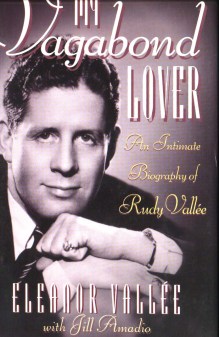 and the discipline is still embedded in my bones, which helps me with setting up and meeting deadlines today, especially for my column in the UK magazine, Mystery People. When I began to write books after settling in America I discovered I need privacy to write my books. Plus perfect silence, a fine view, classical music, and endless cups of tea. I need my files that are always brimming with notes, press clips, drafts, character bios, settings, maps, and travel guides. When I wrote the Rudy Vallee biography I had close to 86 separate folders, one for each year of his life (he died watching television as President Reagan presided over the centennial in New York harbor.
 Like many writers, I jot down notes while travelling or dictate into a digital recorder if I’m visiting settings in my books, luckily all local so far. I also love eavesdropping. Restaurants and airport terminals are great places for this. But for writing crime-ridden scenes no other place beats sitting in front of my laptop at home.
  Last year I picked up Catriona McPherson at the Orange County airport. She was the main speaker at a conference. When I arrived she was sitting on a bench in baggage claim tapping merrily away upon her computer, oblivious to the crowds coming and going. A few days later we were early for her return flight. I went into the café for some tea. When I brought it over to her, there she was again, still tapping away.
 In the spring of 2018, I organized a volunteer program at a local high school. Together with three other writers, we mentor students in a
  Each time we begin a new round of submissions, we, too anxiously await the material, hoping to find both familiar names and new ones. Having worked with the class for over a year, including several students who’ve been in the program since it began, I’m delighted to see a steady improvement in their work.
 (Student), I am stopping my critique here, since this is where your words end and the essay you copied and pasted from (organization’s website) begins. What continues below is called plagiarism – taking someone else’s work and passing it off as your own. Aside from being illegal and dishonorable, you’ve weakened your message.
 On a recent short-term mission trip to Malawi for my church, I had the opportunity to teach Writing classes to two groups of home schooled MKs (Missionary Kids). These were children from American, Canadian and South African families. There were nine in the 3rd-4th grade group and seven in the 5th grade and up group.
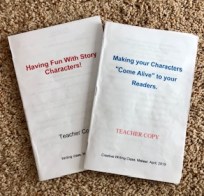 After reviewing the stories and talking to the other home school teachers, we all agreed that the kids needed help in character development. The action was amazing; the worlds they created were vivid, but the heroes, helpers, and villains were flat and hard to imagine.
 Before I arrived I asked that the kids (both classes) bring the first several paragraphs of a story they had written to class. In class, I had them each read their paragraphs aloud. There were Captain Jack, Commander of a Starship, twin girls named Peace and Harmony, and a 20-year old girl named Ella who wanted to become a princess (and a dozen others).
 For the younger class, I had them draw in their workbooks a circle for a face, then slowly add features (eyes, nose, mouth, ears, hair) and write a description of each as they went. Next they drew bodies with any kinds of clothes and shoes (or not) they wished. I had them write why these “characters” were smiling, wearing… glasses, a soccer jersey, a swim suit, a long dress, a tutu, and had on sandals or swim fins. They began to see how to show what their story characters looked like by writing descriptions, and in the process developed more interesting information about them. (I could see “light” dawning in their eyes!)
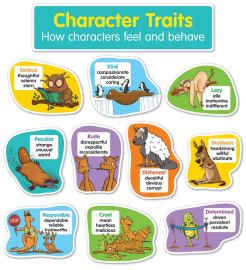 Next, we had fun with thirty-six
 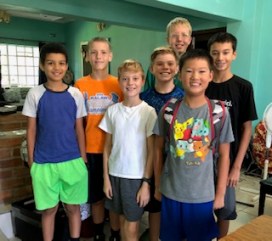 For the older class (all boys, and most writing sci-fi or fantasy) we delved a bit deeper into making their characters memorable by using various ways to describe physical as well as personality traits. They practiced describing a character in an action scene (showing fear or bravery without actually using those words) and played around with using an occasional quirk, flaw, or unconscious mannerism to reveal hidden traits.


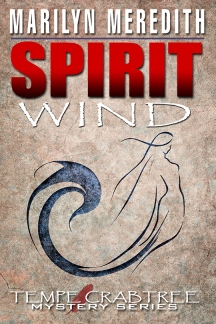

 The “This” in my current title (I’ve used a similar title before) refers to BBC audio-book plays. The “That,” is my name being used in a novel. I don’t think the two are connected, though I’ve experienced writing ideas and connections coming at me from surprising directions. As I found out with my current WIP.
 path of—how the essence of the character, the basics of the plot, and setting, are all capsulated into two-to-four hours of narration with a few sound effects to produce a really enjoyable play/radio adaptation. Though I’m still thinking about this particular tightrope, I have noticed in my latest edit of my latest WIP my “what’s necessary” filter seems heightened. Of course, there are items not crucial for a “hearing” experience, that I still think are necessary to the reading experience to enable escape to/into a different world through a character’s eyes. Indeed, both well done BBC plays I’ve heard, and many loverly novels I’ve read exemplify story-telling at its best–but from different perspectives.
 WIP that I just didn’t like! I changed a name, and with that simple revision the “underlying” plot fix popped right out—A change of character emphasis, and whose mind to start the darned thing in. Now I’m back to Rhodes The Caretakers rewrite/editing. Hope to have out by July…
 The Writers in Residence
You must be logged in to post a comment.