IT WAS THE DEAD BODY IN THE LADIES’ ROOM…

by Rosemary Lord

She was enjoying such a lovely holiday exploring the English Devon Coast, the charming fishing village and the cream-teas that were to die for. But it was the dead body she found in the Ladies’ Room of the church hall that made her pause. It was most inconvenient…

How come my mind goes to those bizarre ideas – and gruesome murders – or at least a simple dead body… I mean, it’s not like I am a mass-murderer – or that I even killed just one person – not that I recall….

Maybe I should have continued that opening as a sweet and charming Cozy. I do write Cozies, too. I’m not always weird.

Perhaps, I should be writing some ladylike Regency, Jane Austen style romance, or a simple bodice-ripper. Or a sci-fi marvel. Or a very clever spy thriller or possibly a police procedural. Or perhaps not.

But my writer’s mind just goes there. My sister thought it was because our grandpa was a police detective. Could be…  So, it’s probably a good thing grandpa wasn’t an insurance salesman. I mean, even a door-to-door salesman would have more interesting tales to inspire a writer.  

But where would we be without our writing, without our amazing world of imagination to escape in to. I often think how lucky we writers are. When life gets really tough, when things around us are going haywire, (like today!) when we’ve had more than just a ‘bad-hair-day,’ when we think that Life has given up on us – we have our writing to retreat to.

Make a nice mug of coffee or tea, settle down in our comfy office chair, a blank page in front of us and away we go. Whether it’s with pencil and pad or the familiar clacking of the computer keys – we are transported to another world. Our Writer’s World.

Tough to explain to anyone who doesn’t write. But suddenly we’re galloping across the Sahara Desert or sneaking through the back streets of Charles Dickens’ London or stretching out lazily aboard a luxurious yacht.  How about enjoying a gourmet meal in a super-posh Paris restaurant, swimming in the Mediterranean – or walking across Regent’s Park, hearing the elephants at London Zoo in the background. Or climbing Mount Everest – if that’s where your mind goes…

You see how endless a writer’s imagination can be? And what a wonderful diversion from the tough times in the Life-of-Hard-Knocks, a distraction from everyday humdrum, or just a brief diversion from today’s offering.

Mark Twain said, “write what you know.” Which is sometimes very useful. But I find it much more fun to write about a world that I never inhabited. Besides, I absolutely love researching. I devour all the books, articles, newspaper clipping to do with whatever I am writing about. I especially love reading the 1910 or 1918 Sears & Roebuck Catalogues. Just like the adverts in old magazines, one can tell so much about life in those times when you see what they wore, household items they used and the hobbies they had. There are endless opportunities for stories in those pages. Even looking at the world around us today. The Farmers’ Almanac in Kentucky will have advertisements that spark an idea, or a fishing magazine in Finland, a local paper in New Zealand or the Scottish Highland Times – all sources of tidbits of ideas that, like Topsy, will grow. I find the Obituaries in these far-off places fascinating – apart from providing me with a cornucopia of character names to use.

What other profession gives one the opportunity to snoop, eavesdrop and blatantly plagiarize another’s life? The snooping is most fun!

And we get to add historical figures into our mix. Where else could one throw in a vision of the evil sinner Sisyphus, condemned to an eternity of pushing a boulder up a mountain, only to be thwarted once he got to the top, when the weight of the boulder forced it to start rolling downhill. So, he had to start again. And again. Or how about our use of oft-quoted characters from Shakespeare? You see – we get to use it all if we want.

So, after an extremely busy, stressful day at work, I retreat into my world of writing – this Blog being way overdue. And somewhere in my brain I am now thinking of taking that opening paragraph and running with it. Murder and mayhem in Devon anyone?

            Whatever odd twists and turns my writer’s brain takes, I always feel so relaxed and satisfied when I can print out a new page or three. So maybe it’s a good thing to have that weird streak? I just know how lucky we writers are to have that Writers’ Place to go to.

Do You Really Want to Be a Writer?

by Jacqueline Vick

Lots of people dream about writing. And writing for yourself and your family is great. Recording memories. Journaling for fun and self-awareness. These are all wonderful, creative pastimes that I encourage. In fact, if you write, you are a writer.

I suspect what most people mean when they say they want to be writers is that they want to make a lot of money doing something they enjoy. And that’s an honorable goal. But there will be challenges.

One thing that stands out from my time with the Sisters in Crime Los Angeles Speakers Bureau is the number of people in the audience who asked published writers for tips and then rejected them.

Audience Member: How do you find time to write a book?

Writer: You need to write every chance to get. On the train or bus if you commute. During your lunch hour. Or get up early.

AM: I drive to work. My lunch hour is too short. I have enough trouble getting up for work. I have no time.

Audience Member 2: How do I sell my book?

Writer: You have to put yourself out there to meet other writers and readers. Meet with book clubs. Do library or bookstore events.

AM2: I’m too shy. And I don’t have a car.

Writer: If in-person events are a problem, there are many online opportunities available.

AM2: I don’t have internet access.

Writer: You could do paid advertising.

AM2: I have no money.

Based on those conversations, I thought I’d give aspiring writers a reality check in the most loving way possible.

If you want to write for a living, you will run into obstacles. You will either find a way over them or around them, but, if you’re serious, you will move forward.

There are many paths to publication.

Online zines publish short stories, and some of them pay. Competition is high.

Traditional publishers will most likely require you to have an agent submit your book, which means having a clean, edited copy of your manuscript along with a polished query letter. Check with each agent for their requirements. (Or the publishers, for those who accept direct submissions.)

Self-publishing. You will need to have a professionally edited book and a professionally designed cover. After that, everything falls under your responsibility: submission to the markets, marketing the book, and handling all business decisions and finances.

My point is not to scare you but to prepare you.

I spend my typical day writing AND marketing. At this point, probably 40% of my time is working on marketing, whether that is appearances on websites or blogs, testing creatives for ads, testing headlines for ads, testing primary text for ads, keeping up with trends, watching my ads and making adjustments, such as killing the ones that aren’t working and adding ones I hope will work better. And so on.

I also spend hours each week in marketing groups as well as writer’s groups.

Part of my budget is spent on tools that help make me a better writer and marketer. ProWritingAid for grammar. Fictionary for story development. Unbounce, Mouseflow, and Shopify for marketing and direct sales. And the plugins to make Shopify perform better. Not to mention the thousands of dollars I spend on ads each month.

Usually, I come out ahead, but there are no guarantees. Some months, especially when Facebook makes a change that affects the algorithms, I don’t. But it’s a growing and learning process. You need to hang in there.

If that sounds like something that interests you, I suggest you join a writer’s group that focuses on your genre. Sisters in Crime, Romance Writers of America, and Society of Children’s Book Writers and Illustrators are a few. They often have great resources.

Follow authors you like, especially those who write in the same genre, on social media. See what they’re doing. Study their Amazon book pages, author pages, or, more popular now, their direct sales shops.

And don’t expect overnight success.

If that sounds appealing to you—or at least it doesn’t scare you—good luck. May you have a long and fruitful career ahead of you.

###


Litters of Letters

by Jill Amadio

Were there ten fewer consonants and only three vowels in the English alphabet, here’s how two of the Bard’s indelible lines would have been written:

“Fr n mr th het f th sn…”  

“Th ly’s th  thg…”

Much of our English is derived from other languages, including Latin, French, Greek,  Italian, German and the aliens for all we know. In fact, our precious alphabet initially descended from the Egyptian Pro-Sinaitic alphabet around 1,800 B.C. The Phoenicians took it up, followed by the Greeks, then the Romans, who brought it to the British Isles during their disgraceful occupation, only to be shunted aside by the bloodthirsty Anglo-Saxons.  By the 13th century, we are told, the “modern English alphabet had emerged from the Old English alphabet.”

Earlier, the Chinese, other Asians, and Russians had invented their own enigmatic images to represent words, adding to our confusion. The strokes used to appear to bear no relation to letters as we know them, but then the vice-versa is also true.

Some writers are rather taken by the French influence whereby we tend to add acute and grave accents over certain letters, and also by the German umlaut of two tiny dots placed over specific vowels.

My keyboard doesn’t provide any of these extra  elegant little marks although to the left of my number 1 in the top row there is a funny little squiggle that resembles a drunken letter N: ~. I am sure it has great significance but the meaning escapes me sand I have never felt compelled to use it, even as an April Fool’s Day joke.

So, by the 13th century the Normans generously presented the Brits with their very own alphabet, and many of the world’s most remarkable English writers went full-tilt into turning out their extraordinary literature.

In my Oxford Dictionary of Quotations, a 1,000-page tome, there is only a single reference to the alphabet. It is from Charles Dickens’  The Pickwick Papers. He had one of his characters, Samievel, being advised that although “there were many things you don’t understand now, but…as the charity boy said when he got to the end of the alphabet, it’s a matter of taste.“

I think Dickens was indicating that knowing the alphabet was a choice but something a poor person may not have the opportunity to learn, if, indeed, he could even read English.

That should be the end of this saga but I became fascinated with my research. It turns out that we have been cheated. There were originally 29 letters in the English alphabet although three other letters were left out entirely: J, U, and W. I also  read that NATO  has its own phonetic alphabet to help members pronounce  English words during their lifelong luxury residence in America.

What’s so interesting now is how our words have come to mean something else entirely, such as “swatting,” “hacking,” and many others.

I wonder how these words translate into other languages, and if the message changes with the wind. Their double meanings will undoubtedly show up in dictionaries although the editors might want to wait a couple of years in case an even different and additional meaning pops up.

At least we still have our five vowels and 21 consonants with which to create characters, settings, plots, and strategies.

My Reading Life in Classics

by Maggie King

My love affair with the classics took off in 1989. Why 1989? That was when I started a job in downtown Los Angeles. One day at lunch a co-worker asked if I wanted to go to the library. Surprised, I said, “Sure!” I’d never worked with anyone who spent her lunch hour at the library.

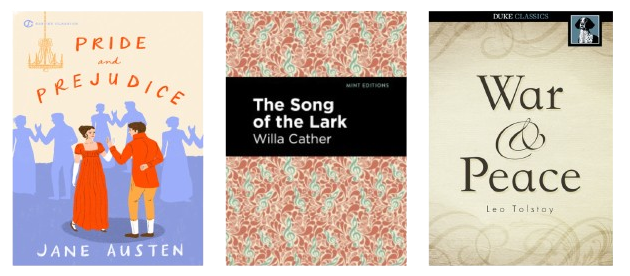
We walked to the Los Angeles Public Library and I checked out Jane Eyre. I had a vague memory of reading Charlotte Bronte’s tome in high school and decided to try it again. Over the next few years, I read—in many cases revisiting my high school reading list—works by Jane Austen, the Bronte sisters, Willa Cather, Theodore Dreiser, F. Scott Fitzgerald, Gustav Flaubert, Thomas Hardy, Nathaniel Hawthorne, Washington Irving, D. H. Lawrence, Sinclair Lewis, W. Somerset Maugham, Ayn Rand, Robert Lewis Stevenson, Leo Tolstoy, Mark Twain, Edith Wharton, and Virginia Woolf, among others.

Many I loved, with a few being okay. Sad to say, I didn’t like Wuthering Heights any better in the early nineties than I had in high school. Heathcliff was just too dark (funny reaction from a crime writer, but there you have it). For many years, Jane Eyre topped my list of favorite classics. But a year ago, I picked it up for the third time and didn’t even finish it. Jane Eyre was given to monologues! Apparently that didn’t bother me thirty-plus years ago.

In 1993 I joined a mystery group and became obsessed with that genre, classic and contemporary. Up to that point, I’d read many Agatha Christie mysteries, but few by other authors. It wasn’t long before I started penning my own.

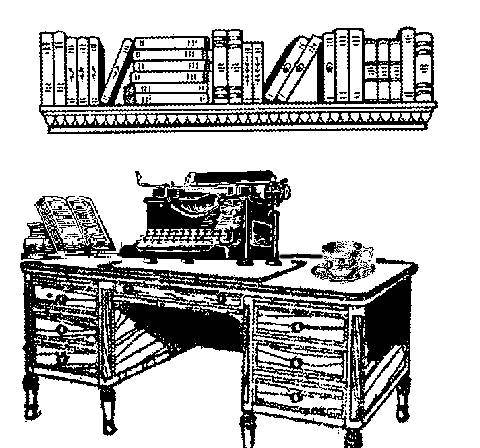
I try to read at least one classic a year, and sometimes it’s a mystery. A favorite is Wilkie Collins’s early example of detective fiction, Woman in White. I read the epics Brothers Karamazov and War and Peace from start to finish and lived to tell it! I finally got to Little Women a few years ago. I had seen countless film versions but never actually read the delightful autobiographical novel by Louisa May Alcott. David Copperfield was wonderful but populated with characters who, like Jane Eyre, spoke at great length.

Why do I love the classics? They have a timeless quality and universal appeal, essential traits that make a classic a classic. Little Women—despite the lack of texting and social media—could be a contemporary coming-of-age novel.

The classics are known for well-drawn characters and compelling storylines. That said, it can take time for a classic story to be compelling. Contemporary books have to grab the reader on page one; classics require more patience, but are worth the wait. My friend who took me to the LAPL and I started Middlemarch together. Several times I was ready to close the book for good but, being a faster reader, my friend assured me that the story would pick up. Sure enough, George Eliot’s masterpiece became a page turner.

What’s my next classic? Many of my author friends rave about The Count of Monte Cristo by Alexandre Dumas. And I’ve had Elizabeth Gaskell’s Wives and Daughters on my TBR list for some time.

Would reading the classics benefit writers? Absolutely! Have they improved my writing? As an optimist, I want to think so—but such a belief is hard to verify. This post on KindredGrace, “5 Reasons Why Every Serious Writer Should Read Classic Literature”, is worth reading. I especially like #4: Classic literature expands our knowledge base for literary allusions.

Renowned author Joyce Carol Oates suggests that writers read Ulysses by James Joyce. According to her, our vocabulary will improve (or, if nothing else, we’ll want our vocabulary to improve). I take Ms. Oates’s point, but will pass on Ulysses (I managed to get through one chapter).

Back to where the classics began for me: here’s a photo of the beautiful and impressive Los Angeles Public Library. During my stint working downtown, this building was closed for renovations due to two fires, and the collection was temporarily housed on South Spring St. By the time the original building reopened in 1993, I was working elsewhere, but occasionally returned to visit this stunning structure. If you can visit, do so, but you can read about it here.

Closing thoughts: what contemporary novels will become classics? Any of our own? Perhaps works by Margaret Atwood, Toni Morrison, and Joyce Carol Oates will stand the test of time. As for contemporary crime novels, would any make the cut? As much as I enjoy them, they lack the timeless quality—even the historical ones. I’d love to be proved wrong. In the meantime, we have Arthur Conan Doyle, Wilkie Collins, Anna Katharine Green, Agatha Christie, Dashiell Hammett, and many others.

A big thanks to Alison, my long ago library pal!

AI Can Make Mistakes Too

by Gayle Bartos-Pool

Editing is a major endeavor for any writer. Even if you hire it done or your publisher actually provides one, you need to go over your work a few times to make sure the story you thought you were telling made it to the page.

Before I published my first novel, I hired a professional editor. Back then, most publishers were dropping their editors at an alarming rate because they thought the writer would do a good enough job and the cost of an editor on staff was too much for the publisher, so they were let go.

The editor I hired had worked at a large publishing firm. She’s the one who told me about all the layoffs. I paid a tidy sum and expected her work to be good, if not excellent. I got back my manuscript and happened to ask my sister-in-law who worked as an editor on a large newspaper in Orange County California if she would mind going over the pages. She said yes, did the job, and found numerous errors the overrated editor hadn’t found. I paid my sister-in-law $50 just to be nice. I had paid the “professional” $1800.00. This was back in 1996, even though it took eight years before I got that book into print.

I did my own editing after that. I know there were errors in my subsequent books, but like I say: Only God is perfect.

Recently, I happened to pick up one of my spy novels and decided to read it. I wanted to send a copy to someone whose book I had read and wanted to make sure the book wasn’t too full of errors. I did find a few mistakes during that quick read, but they might be overlooked if the reader didn’t pay too close attention to every comma.

I enjoyed reading my book after all these years and decided to read one of the other books in the spygame series, but this time I let my computer read it aloud to me. I was still watching the screen as it was reading my words, but that’s when I started seeing Spell Check underline a word or two…then it wanted me to add a comma here or delete another comma there or change a phrase or use a different word. I actually agreed with a few of those changes, but I was having a problem with the computer wanting me to add way more commas than we were told to do back in 9th grade English. I didn’t remember old Mrs. York telling us not to use a comma before a “but” in a sentence,,, but the new Spell Check didn’t want the comma.

There were some words that had an obvious typo, but I was surprised I hadn’t caught them myself, but then again, when we read our own work, we know what we were going to say and we “read” it even if it’s not there. That’s why in my newer books I do have the computer read my work back to me so I can hear what I wrote. Many times, I would find a typo that I hadn’t seen when I read through the first draft of the book in actual printed form. When I wrote my first few books which included the three spy novels, I didn’t have the luxury of that audio editor to help me.

So, flash forward several decades and all those computer tools have made the editing somewhat better. I still have errors in my books, but hopefully fewer.

But wait! Sometimes the computer program might be a stickler for “correct English” when you want your words to have more of a regional accent or colorful flair. I continued letting the new Spell Check go over those old words and I started finding things it wanted me to change like in the phrase “everything was socked in” referring to the weather, but AI came up with “shocked in.” Then there was my word “noose,” and it wanted “nose.” Or “chicken coop” was changed to “chicken cop.” “Sliver” to “silver.” “Antiaircraft flak” to “flake.”

“Houston, we have a problem…”

There were dozens more of these stupid mistakes the AI “genius” was making. They weren’t just possible words you might want to use which more or less meant the same thing. These were totally incorrect.

Fortunately, the AI Spell Checker wasn’t making these changes without my Okay like it does on my cell phone or Kindle Tablet, so I didn’t let it have free reign. And as I was making the changes I thought were correct, I still had the WORD program read back my words because hearing them still allowed me to make sure that’s what I wanted to say. I re-edited those three spy books and reissued them this year. Hopefully most of the mistakes were corrected…even with all the blasted commas.

So, be aware of the little goblins hiding in your computer. They might have less education than you do. In fact, I never saw an AI sitting in one of my English classes in high school or college. But I certainly discovered that these AI creatures aren’t writers, because a computer program has no imagination. If you don’t believe me, sit in front of your computer without touching the keypad and tell it to write a novel. Without the human element, human imagination or human touch, or without Internet access to hundreds, if not thousands, of books already written by humans, that conglomeration of motherboard, CPU, GPU, RAM, SSD and HDD can create nothing. Try unplugging your computer with its AI capability and see what it can do by itself. I don’t need to be plugged in or have my batteries replaced in order to tell a story. And my stories are the ones I created, not by a machine that cobbles together bits and pieces of other work and then mashes it all together in an incoherent jumble.

A computer helps, but the human heart, brain and talent will always be better.

  Write On!

MAKING THINGS FIT….     

By Rosemary Lord

Whether it’s time or words – it’s an ongoing challenge for me.

Not having the luxury of a 30-hour day, I’m always trying to squeeze things in, so that, apart from ‘work’, I can have some sort of personal life, family time and of course writing time. As I struggle to transfer my workload at the Woman’s Club of Hollywood to a new dedicated crew, it’s taking a lot longer than I anticipated – and about 6 new people to do the work I’ve been doing on my own for so long!

But – I will make it all fit.

I designated Sunday as MY day, when I will not deal with any Woman’s Club work and only speak with family, friends, potter, catch up on housework and fit in some writing time, too. My ‘work phone’ is switched off. This is the only way I’ve been able to catch up on my personal life, finding serenity, make things fit – and even make time to paint my nails – a pale blue this week! I cherish my Sundays.

I envy some of my friends who retired early and travel all the time. I just can’t fit that in now!

 And then there’s making things fit in my writing. I have three major writing assignments at the moment.  A non-fiction, 144-page coffee-table history book, an historical novel and a memoir. So far, I’ve not had the time – or the mental focus – to sit for hour after hour, day after day, as I used to, to complete one of them. I tend to fit in the odd hour or two and peck away at one of my projects. Although my mind is always working overtime thinking about them.

First, in fiction, especially in mysteries, I have to get the right name for my characters.  I have to make the name fit.

I mean, you can’t really have an exotic, sultry siren called Mary or Jane, could you? Sophia or Camille, maybe. Or a tall, hunky, sun-bronzed hero called Arthur or Reginald, doesn’t really work, does it? The names have to fit the character, the story, the era, the background, in order to be believable.

Although one of my pet peeves as a reader is to have the characters all having a similar sounding name, especially in the same scene: Fin, Tim, Dick, Nick, Rick – or Jim, Jon, Jan, Jen, Janey, Jed and so on. I make a point of making sure the names differ in sound and length. You’re not going to get confused when characters names are specific for the storyline and sound different. Such as a Jim, Stephen, Montgomery, Drew and Samuel. Or Roberta, Annie, Pamela, Sue, Gwendoline and Florence. Different lengths and starting with different consonants. Easier for the reader (and me, the writer) to keep track of.

I always feel challenged with the word-counts we’re given. Tough to fit all I want to say within their limits. Should my work be a short-story, a novella, a novel – or a War and Peace tome? My storyline has to fit into the right category.

Then I (hopefully) unobtrusively, fit in the clues and red herrings. Remembering the villain needs to be seen, fleetingly, very early on in the story. Almost hidden, with no big flashing neon signs. So that at the end, when all is uncovered, I haven’t cheated my readers by suddenly announcing: “By the way, the Butler, whom you’ve never seen before, did it.” As a reader I like to think I know ‘Who Dunnit,’ but I’m not sure and I keep trying to work it out. Then the satisfaction at the end of saying “of course!” and retracing the steps to figure it all out for myself. So, I have to make sure that it all fits in.

And I have to fit in the adversity, the challenges, the processes my characters go through, without the reader aware of what I’m doing.  Static stories are boring. My characters need to lose something – or fear losing it. They must process crisis – large & small – then recover and carry on obliviously enjoying life, until another surprise stops them in their tracks from an unexpected source. Unseen forces. Another deadly trap.

It was Raymond Chandler who said, “there’s no trap so deadly as the trap you set yourself.”

Whatever that means. But then it was Mark Twain who said: “write what you know.”  So, between the two, I should have a story somewhere!

And somehow, I will fit in the time to make it all happen.

Writing anything is a challenge, but writing mysteries is a unique adventure, unraveling the human mind. It’s like designing a large jigsaw puzzle, making all the pieces fit.

So, I’ve become very proficient at making things – time and words – fit. How about you?

Deadlines, Deadlines, Dead Lines

by Jill Amadio

Whether you self-impose a deadline or your publisher sets one for you, a looming deadline (pardon the cliché) for writers can send terror racing through our veins, to say nothing of a scramble for inspiration for that perfect ending to our story.

Time as a concept rules our lives but little comes as close to engendering fright as an editor’s reminder, if any, that you have three days to send in your manuscript.

Idioms that refer to time are many but the word ‘deadline’ has few competitors for sheer panic, leading to writer’s block. Mine was so pronounced a couple of years ago that instead of diligently finishing editing my mystery prior to submission, I took off for a lecture on The Hidden Infrastructure of Waterways.

The deadline effect can strike as early as signing a publisher’s contract to write a book, with the due date blithely ignored in order not to spoil the moment.  

If we separate the word into ‘dead’ and ‘line’ we can carry on without another thought. ‘Dead’ is, of course, a wonderful word for crime writers. It finds its way into titles, sub-titles, true crime, novels, and non-fiction. It is often overworked, but there are some great substitutes that have a satisfying, final ring to them. Even time itself cannot escape its fatal meaning when we talk of ‘killing time.’ As for ‘line,’ it can refer to the last line of your book or, my favorite, The End.

I remember talking to Michael Connolly at the Los Angeles Festival of Books one year when we were suddenly interrupted. I assumed he was urged away by one of his publisher’s staff for more book signings with the threat of ‘we have a deadline before the store closes..’ 

Escaping one’s deadline can become quite a game. We can close the document and play online Solitaire; dig into more research; meet a friend for coffee; walk the dog, or read someone else’s book and envy the author  who made their deadline and is subsequently well-published and a much-in-demand panelist at writers conferences.

It is easy for creative people to bristle at a deadline but without one, would we ever finish a book? Many deadlines hang over our heads such as filing taxes by April 15, but it doesn’t seem to make us feel pressured as we fall into line without protest or ask for a delay.

Self-published writers, of course, have the luxury of ignoring any deadline they may initially give themselves,  but adhering to a disciplined writing life points to a professional approach to one’s career. 

Often, we use the word ‘deadline’ as an excuse to avoid doing something, seeing someone, or simply to justify lazing around claiming we are mentally sorting out a plot, a character trait, or a setting.  

Throwing out the word has its own resonance. We sound important. It surrounds writers with an aura of being special when uttering it, often with a fake facial expression begging sympathy.

I wonder if a deadline has the same time limit if it were to fit into a short or a long day, month, or year. Does the deadline contract or expand with these descriptions depending on our individual sense of time? When push comes to shove, do we tend to interpret a deadline one way while its dreaded imposer means it in an entirely different context?

As a reporter, I was always under deadline, which I credit for bringing me to heel and making it easy to comply with my traditional publishers’ edict. But once released from their tyranny,  plunging into self-publishing, and receiving monthly royalties I discovered how simple it was to let the world go by with no deadlines to obey.

Roget’s Thesaurus has zillions of ways to describe a deadline, not the least of which include  crunch time, point of no return, and my favorite, kairotic. What? Oh, that means time-sensitive.

I once read that a character ‘insisted on killing time before his deadline.’ Is that an oxymoron?    

Finally, there is an upside to a deadline: it can get writers into the chair and tapping the keyboard. Perhaps my colleagues on this blog have a secret way to beat a deadline. Care to share?

The AI Concept Isn’t New…And It Isn’t Necessarily Good

Gayle at Bill's House Sept 2022 cropped

I’m a writer. I usually write fiction. I also read a lot of books. There are some classics that I read as a youth and have reread recently just to see if I got a different reaction in this new century. The same goes for old movies. Some were old when I first watched them, so now, fifty years later, they are most interesting to watch again just to see how they hold up. Most do quite well. What I found astonishing was the fact that some of the old books as well as a few of the classic movies could have been written today because their underlying themes were basically stories torn right out of today’s headlines.

What I find troubling is the fact that an awful lot of what’s reported on the nightly news sounds like some of these old movies and books. But what if the non-fiction news is really fiction written… by a machine?

Robo Man

Having a machine, as it were, spit out information or data or even a fairy tale using bits and pieces of things already out there in the “ethosphere” has been a concept used for centuries. Verbal stories were passed around by cave dwellers before people had a written language. You can bet one caveman’s story was retold from caveman to caveman in between the hunting and gathering they did back then.

Fast forward to the late Sixteenth-Early Seventeenth Centuries when Bill Shakespeare wrote his plays. There are those who say he took his ideas from other people. His name’s on the Playbill, so he did more with the idea than anybody else around at the time, so he gets credit for those memorable plays.

A century later, books were filling the shelves of private libraries and people who could read, read them. As more and more people learned to read, more books came out. The printing press helped enormously since those scribes in monasteries who were giving us copies of the Holy Bible could only do so much. God Bless them. But a basic education gives people even in the lower economic brackets a chance to learn things. Books worked.

Jump to the Twentieth Century and we get that invention that rocked the world, at least a world with electricity and an antenna to pick up television signals from a local broadcaster. People turned away from books and started watching stories come to life in their own living rooms on a twelve-inch screen. 

 Now you ask, where does this AI stuff come in today? You ever watch Murder She Wrote or Columbo or any of the many Hallmark Channel cutesy mystery/romance stuff? The plots vary only in which actor plays any particular role. Murder She Wrote always had an older, yet famous, actor or actress play the villain, or the person accused of the killing, and Jessica Fletcher would always solve the case after remembering one little clue we all saw about eight minutes into the show and which she remembers when she reveals the bad guy in the final few minutes of the program.

In Columbo, he was onto the villain, also a once popular TV or movie actor who was now doing guest bits on TV, from the beginning of the show. Most of the time it didn’t ring plausible, but people liked the show, so the plot remained basically the same for ten seasons.

The Hallmark movies are very formulaic, whether it’s the scene where the two who end up in love by the end of the movie throw snowballs at each other or the scene where the girl totally misunderstands the handsome guy’s motives and tells him to get lost only to learn the truth and they kiss in the last scene. They’re all the same. That doesn’t mean people don’t watch them. I do, but I also watch to see how many of those routines they use in each episode. If I did it as a “drinking game,” I’d be drunk about eighteen minutes into the show.

A lot of this redundancy is done by design. Back in the early-Eighties I got myself an agent, Ivan Green, and he tried to sell a few of my scripts to Aaron Spelling and Leonard Goldberg who were producing TV shows like The Love Boat, The Mod Squad, and Charlie’s Angels. My agent submitted a few of my scripts to Fantasy Island that the pair also produced. One of my scripts about an angel who goes to the island was liked by Goldberg, but just as he was ready to accept it, Spelling decided he was only going to use the small group of writers who had been writing for the series for a while. Spelling didn’t want anything new. The series went a few more years, then ended in 1984.

Lots of television series must use the same team of writers because their episodes are so much alike. And different television shows are quite similar to others on TV, just like some books published by major publishing companies are like many other books also on their shelves. It’s been said for decades in television, motion pictures and books, if people like it, keep writing the same thing until the public gets sick of it. Publishers and producers seldom take anything, book or script, that’s different because they don’t want to rock the boat until something sneaks in under the tent and all of a sudden there is a new game in town and everybody uses that new theme for a decade or two. Vampires and the living dead have both had a long run. The “end of the world theme” keeps popping up. I’ve seen enough buildings blown up and car chases that should have killed half a city’s population along with the obligatory diabolical corporation owner or evil space alien who wants to conquer the world to last me two lifetimes. Today, it’s a lot of teen fantasy stories or some things that used to be considered X-rated back in my youth that’s perfectly Okay to show on major networks.

But isn’t that what AI does? It uses ideas already out there. It cuts and pastes stuff that’s sort of acceptable just enough to seem like a slightly different animal and then pushes it as something new that everybody should enjoy. That’s why I haven’t been to a movie in about thirty years, and I hardly watch anything new on TV.

Okay, let the AI machines watch and read the stuff they write. I’d prefer something different written by a human who really understands life as a living, breathing being does. Some newer books and TV series from smaller studios have themes that aren’t all that bad. I think a human wrote them, but I wouldn’t put money on it. I would really like to know there was actually a person with a mind and a soul who penned those stories.

If AI can aid science, great, as long as there is a human somewhere in the picture who can check the results and make sure we aren’t going down one of those paths we see in the apocalyptic movies where the world ends because a machine pushes the wrong button.

So, humans, why don’t you write the books and the movies. Now I just have to find a way to prove a human really did write the stuff I’m reading and watching… And by the way…no machine, other than my fingers typing on my computer, wrote this blog. Honest.

An Interesting Year Already

by Linda O. Johnston

           Hey, it’s only the third week of January 2025, and a lot has happened that we writers in Los Angeles could use as subjects or backgrounds in our writing for the rest of the year.

What’s happened?

Well, those terrible fires that apparently made the news everywhere. Rosemary did a wonderful job of describing them last week. And I certainly identified with a lot she was saying. But with all that happened, I just found myself focusing on it when I started to do my post for this week. So here we are again.

 I was one of the fortunate people who had fires start not too far away but not come very close. The winds were strong, and the air quality became terrible. But I didn’t even see any of the fires anywhere nearby.

Writers often take things that happen around us and make them subjects of our writing. Will I do that?

Maybe, and maybe not. I’m currently working on a new mini-series for Harlequin Romantic Suspense, and although I do have the stories set in the Los Angeles area, I’m not sure about working the fires into them.

I hope that all of you reading this remain safe, from fires and every other disaster that might occur wherever you are.

And I hope you all have a wonderful 2025.

Christmas in Bangkok & Hong Kong

by Jill Amadio

I looked forward to spending Christmas in Bangkok, Thailand. We’d moved there four months earlier when my husband was posted to Saigon, and I landed a job as a reporter for the Bangkok Post.

Writing about an Asian Christmas energized me, and I eagerly looked around the local shopping districts for gifts, decorations, and seasonal goodies for the kitchen. Writing features and pointing out the differences between our holiday in England and America and our current home seemed like endless discovery.

Alas, none of these visions came to a realization. Thailand, like most other Southeast Asian countries, does not celebrate Christmas because it is Buddhist. With three children expecting to wake up early on The Big Day and rush downstairs to open their gifts, what to do?

Ah! Got it! We’d spend the holiday in Hong Kong, just an hour’s flight away. At the time, the colony was highly attuned to British customs, and the big hotels, I was assured, displayed a splendid farang (foreign) Christmas that would enthrall any Westerner. In addition to enjoying the holiday, I planned to interview hotel guests, locals, market stall owners, and tourists. Among the latter I encountered, were Swiss, German, Swedish, and Australians.

I’d visited Hong Kong several times due to assignments and visited the island of Macau to cover auto racing. There were always a plethora of stories worth reporting for the newspaper in Bangkok but I was eager to experience how stupendous this Christmas adventure would surely prove to be.

My husband and I decided it would be silly to take wrapped gifts with us, so we planned to take the kids shopping to choose their own. My editor agreed that I would write about the trip, sending in daily reports and photos taken with my Polaroid camera before we skipped New Year’s Eve and returned to Bangkok. As our last day drew near and we were anxious to return home, we booked an earlier flight.

Big mistake.

It turned out that December 31 was always a massive celebration for both Brits and Chinese, a richness of reporting I decided to cover, even though I had plenty of stories of our own excursions in Hong Kong. Besides, who wanted to miss the turn of a century in this historic city at the southern tip of China?

Our children had never been in a toy store because two were born in Spain, where Christmas was essentially a religious holiday. Our third child was born in the U.S. during a quick turnaround trip to New York and back to Thailand to ensure her American citizenship by being born in the States. My son was already pledged to fight, at 18, in any war that Spain became involved in because he was born in Madrid, but his second sister was registered as American, as by then, I had received my own U.S. citizenship.

Our shopping trip was a great success with many changes of mind as we, as parents, pointed out the mounting cost of their decisions. Finally, having selected their toys and new clothes, and I had talked to several shoppers from various countries, we returned to our hotel. It was my turn to choose a gift. My husband wanted to go out alone and buy me a watch. I told him I’d like a Patek Phillipe, please. Off he went but returned rather quickly.

“Are you insane?” he asked. “Do you know what those watches cost? No way. You’re going to have to settle for a Rolex.”

At the time, Hong Kong was turning out fake Rolexes by the thousands. Most had wristbands that looked like gold but were, in fact, made from anything but that precious metal. Aha! Another good story! In fact, the bona fide Rolex dealer pointed out our mistake when we showed him the watch we’d bought elsewhere. Never mind. The band looked authentic, and the watch itself was confirmed as the real McCoy.

The festive air in the colony extended everywhere we went through the perpetually crowded streets. I knew that more than 7 million people lived in the small British enclave, and they invaded every restaurant, bar, and all the shopping districts in sight. Antique stores added red ribbons to their vintage wares, and the buildings were ablaze with Christmas lights. Even the hotel’s small office for guest use had a small Christmas tree. Laptops didn’t exist back then, but the electric typewriters fit the bill for typing up my interviews.

After a great New Year’s Eve, the hotel manager asked if we planned to stay on for January 6, the Chinese New Year, but by then, we’d had our fill of festivities.

I returned to Bangkok with a new satchel filled with notes and an extra suitcase for the kids’ toys and outfits. In Bangkok, we had to have our clothes tailor-made as there were no ready-made stores. The upside was that a dressmaker charged $5 or $6 to create a dress, a blouse, or a skirt. I’d simply bring in the fabric, show her a Chanel photo in Vogue or another magazine, and she’d copy it.

We left Hong Kong after two glorious weeks and enough material for several follow-up feature stories in the Bangkok Post.

Now, permanently living in America, with stores brimming with seasonal cheer, I wish my dear friends and readers at The Writers in Residence a Happy Hanukah, a Merry Christmas, and a Happy New Year!