by Jackie Houchin
How short can you write a story? If you are doing NaNoWriMo this month, your goal is 50,000 words, about a 175-page book. How about only 10,000 words, or 5,000? 2,000?
In Writer’s Digest, the September/October issue, author Ran Walker wrote a very interesting article titled “10 Reasons to Write a 100-Word Story.” Say, what? 100 words? Yes! In his article he describes the benefits of writing “the smallest stories.” I hope to borrow from his wonderful piece, and write a story…right here…right now…in only 100 words (including the title)!
Here, briefly, are the reasons Ran Walker gives for trying your hand at a 100-word story.
- “The initial drafts of your stories don’t take nearly as long to write.”
Okay, here goes: It was a dark and stormy night… No, no, no!
Okay, again: Last night Wesley dreamed he saw a floating lantern coming towards his bed. It seemed to beckon him to follow. In pajamas, sans slippers or robe, he wafted clumsily out the open window pursuing the light. “How could this be?” he thought, “I’m not Peter Pan!” Wesley looked at his dog far below, barking soundlessly, and threw her a biscuit from his pocket. (No, no no, on that last part. No doggie biscuit.)
Again: …barking soundlessly. A white owl flew by and winked at Wesley.
Good grief! I’m at 64 words without a villain, climax, denouement, or the title!! This is harder than I thought. I’d better get to the suspense and the ending!
A note drifted from the beak of the owl and Wesley caught it. He bent forward to read it by the lantern light. ‘Don’t forget to feed the dog. I’m working tonight. Love, Mom.’ “Oh, no!” thought Wesley. “Poor Maddie!” Suddenly the lantern disappeared and Wesley began falling, falling. Something caught his foot, but he landed with an “Ooof!” On his bedroom floor, foot tangled in a nappy blanket, Wesley felt the happy wet tongue of Maddie on his cheek. “Finally,” she woofed.
This can’t be! It’s at 148 words! And what should the title be? Lantern Flight? Owl’s note? Falling? Ooof? I definitely need to do some editing, but that’s Ran Walker’s 7th point.
2. You are not tied to the traditional “Hero’s Journey” or Freytag Plot Arc.
Hmm, I didn’t have series of obstacles or a narrative arc, but I did have “rising” action, climax, and “falling” action. And a little denouement lick.
3. You can let your inner poet come out.
Not only pretty words and/or rhyme, I must make every. word. count. I’ll consider that when I go back to edit out “my darlings’.
4. You can experiment with different genres without worrying about how it will affect your brand.
Well, my Wesley story is a kids’ story, so that matches my “cough, cough” brand. It’s a bit of a fantasy genre however.
5. The focus on a specific word count forces you to think about your story differently.
Boy, is that ever right. Let’s see if I can chuck a few words right now. 100 is a stern taskmaster. “Sans slippers or robe” has to go. “He saw” can go as well. And “it seemed to” also. Hey, this is fun. That’s NINE WORDS excised.
6. You can focus more on movement within a single scene.
I think I have movement – floating, wafted, pursuing, flew by, drifted, falling, falling….. whoa, I’m getting dizzy!
7. It’s an excellent way to learn how to edit.
Walker says, “If each word was a dollar word, would you be getting maximum value for your $100? Why write ten words when five will do?”
8. It forces you to refocus your story and choose only what is important.
He adds, “And keeps you from going off in tangents.”
9. It allows you to really pay attention to grammar and punctuation.
10. It’s something you can do for fun, even if your intention is to write longer works.
Walker says, “The added incentive is that if you like the ‘rush’ you get from finishing a story, you will receive that feeling much faster with a 100-word story. At a time when people are wrestling to carve out time to read and to write, it is nice to know there is a writing form that lends itself to being consumed in minutes (versus weeks) and to being written in a single setting. Why not try one today?”
Okay, here is my edited version: (I had to cut out 49 words, then rearrange and substitute what was left.)
“REMINDER”
Last night Wesley dreamed a lantern beckoned to him out his open window. Clad only in pajamas, he floated after it.
He saw his dog far below, barking soundlessly. An owl flew by and dropped a note from its beak. Wesley caught it and angled it toward the light.
“Don’t forget to feed the dog. I’m working late tonight. Love, Mom.”
“Oh, poor Maddie!”
The lantern disappeared. Wesley began falling. Something caught at his foot and he landed softly. On his bedroom floor, tangled in a blanket, Wesley felt Maddie’s warm, wet tongue on his cheek.
“Finally!” she woofed.
Well, what do you think? Does it work?
#
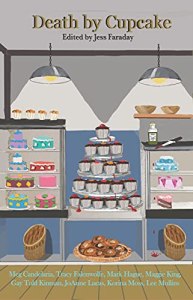 I also got a few tips from author, Maggie King (MaggieKing.com) about writing regular length short stories. Her “Cupcakes and Emeralds” is featured in the new mystery anthology DEATH BY CUPCAKE, published by Elm Books.
She answered my questions, “There has to be a cupcake in the story, so first I come up with a story idea. I love revenge tales, but who is seeking revenge against whom, and why? Once I figure that out, I can decide on plot, characters, red herrings, and setting. I must decide if cupcakes will be part of the plot, or a mere prop. The “body” is found in a church – my unexpected aspect – but is the church another red herring? At the end I like to circle back to the beginning. “
Thanks Maggie, if anyone wants to check out her story and the other seven in the anthology, the link on Amazon is Death by Cupcake.
# # #
 Ran Walker (RanWalker.com) is the award-winning author of 23 books. He teaches creative writing at Hampton University and lives in Virginia with his wife and daughter.
His latest book, KEEP IT 100, a collection of one hundred 100-word stories is now available everywhere. The link on Amazon: KEEP IT 100
##
Quote by crime novelist Jo Nesbo,
“When you write a novel, it’s like steering a supertanker. You have to plan; you have to have a route; you can’t just go left and right.
I started writing lyrics and the challenge was to write a story in three verses and a refrain. For me, a short story is like writing songs. You can sit down and write and you can quickly tell whether it’s working or not. And if it works, it may already be finished. That’s a real good feeling, to go to bed at night having written a story.
Also, you don’t have to explain a short story. When you write a novel, you have to think, “What is this really about?” A short story can just have a feeling and that’s OK.”
Are YOU ready to write ONE HUNDRED words?




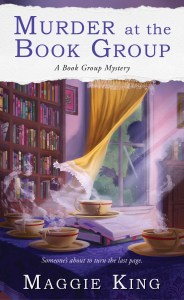 But it wasn’t until 1996 when I moved to Virginia and took a creative writing course at the University of Virginia that I started writing in earnest. I didn’t forget those nice women—or were they?—from the Santa Clarita book group. I gave them backstories and they became the story prototypes for Murder at the Book Group, my debut mystery featuring Hazel Rose.

 For lovers, every day is Valentine’s Day. But February 14 is the official day when Cupid’s arrow strikes and big business rakes in billions spent on candy, flowers, jewelry, and fine dining.
 In Murder at the Book Group, the series debut, Hazel describes Vince as her on-again, off-again lover. She attributes their sporadic relationship to their inability to get along. She doesn’t offer details as to why they don’t get along but the reader can guess that the real problem is Hazel’s cold feet about committing to a permanent relationship. She’s been married four times and isn’t eager to make a fifth trip to the altar, only for the relationship to sour soon afterwards. Does she love Vince? She doesn’t want to commit to that either, but she definitely has a soft spot for him.
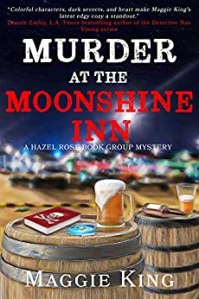 If you read #2 in the series, Murder at the Moonshine Inn, you will know the answer is “yes.” They married in beautiful Costa Rica. Hazel becomes a successful romance writer. The very name Hazel Rose conjures romance.
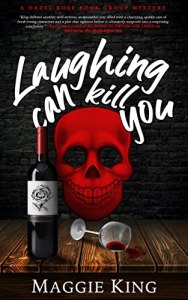 The book group members don’t fare as well as Hazel and Vince in the romance department:
 Maggie King is the author of the Hazel Rose Book Group mysteries and short stories set in Virginia. Her story, “The Last Laugh,” appears in the recently-released Virginia is for Mysteries III anthology.

 The Writers in Residence
You must be logged in to post a comment.