To Outline or Not to Outline…Is That the Question?

“Do you use an outline when you write?”
Every time I’ve gone to a writing seminar I hear this question, which puzzles me because I don’t believe it’s what the asker really wants to know. What is really being asked is if writers should use some system to structure their work, whether it’s an outline, software, poster board with index cards, or any other method.I asked several authors, including my co-WinRs, if and how they organize their writing.
Madeline Gornell doesn’t outline or use any formal system beyond a character list. “I ‘wing it,’ develop, build, and go back to fill in as I go.”
Andrea Hurst, author of The Guestbook, Always With You, and the soon-to-be-released Tea and Comfort(in addition to several works of non-fiction), varies her approach with each novel according to what she feels is needed.  “On my first book I knew the beginning and the end and did deep character and setting work. On my second book I knew only the very beginning and end and it just poured out. On my third and current book, I have outlined in detail the scene points and overall plot ahead of time and it seems to work well.”
Gayle Bartos Pool favors some organizing techniques, but adapts them to each project. “I have used an outline before and it worked fine, but I usually just write as I go. I do maintain a timeline to keep the action straight and it keeps the characters from bumping into each other unless I want them to do that. And I do write biographies for my main characters.”
Bonnie Schroeder works with ‘The Snowflake System’. Although she didn’t purchase the software, she follows the general approach. “You start with the germ of an idea and gradually flesh it out through several iterations, including detailed chapter and character summaries. The most valuable thing I got from this was the ‘Scene Spreadsheet’, which has really helped me see where everything happens and where there’s no conflict, etc.” For more details, go to: www.advancedfictionwriting.com/articles/snowflake-method/
Rowena Williamson juggles two historical fiction series – Castle Caorann and Ryan and the Redhead – and is working on a sequel to her popular YA book, Escape To The Highlands. Despite her substantial workload, Rowena doesn’t use any system. “I can’t really plot without getting feedback from my characters.”
“I outline my stories in my head and I always know where I’m going,” said Audrey Mackaman, author of two YA fiction series, Murder Most Magic and The Dream Cycle.
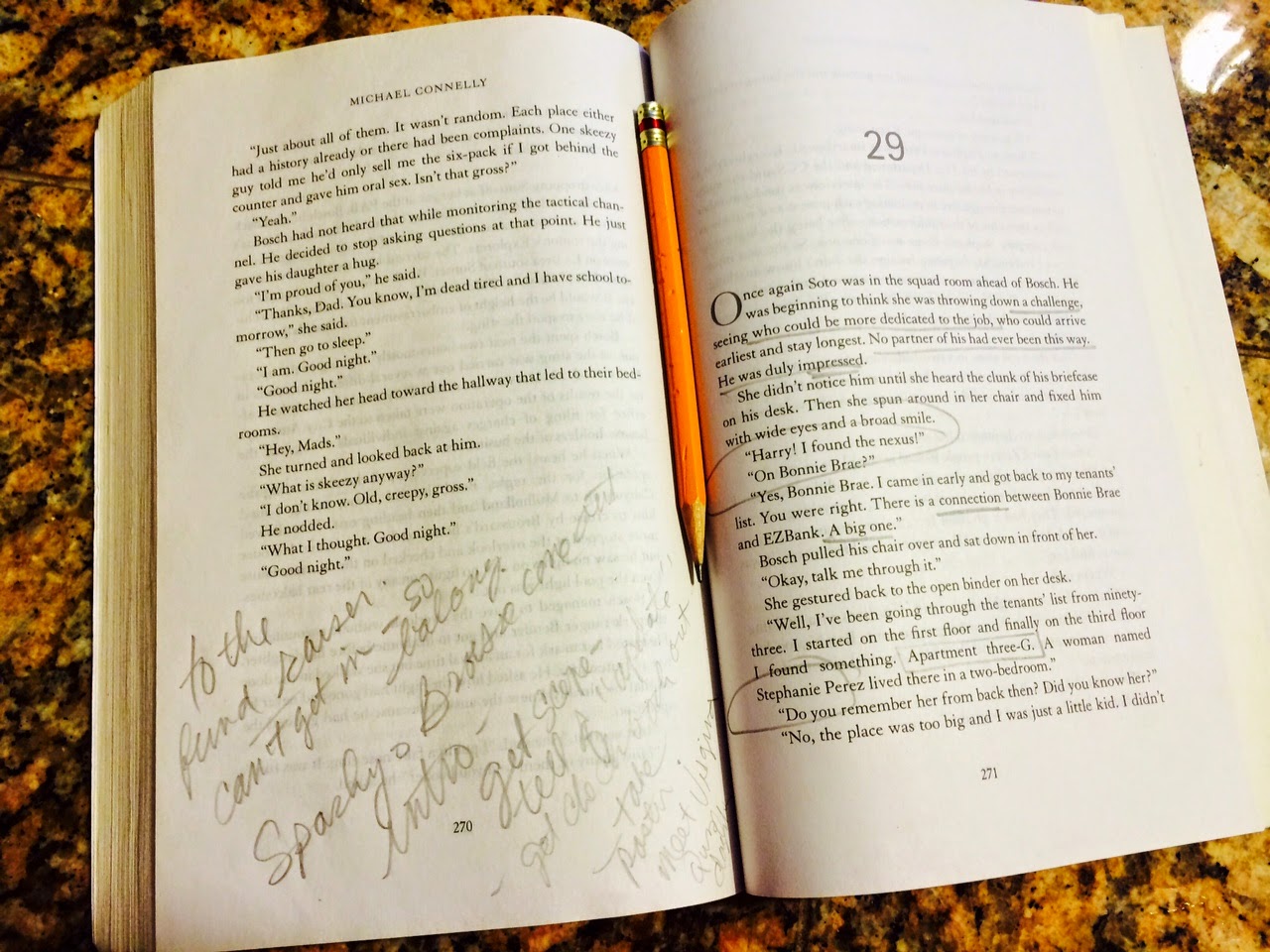
Jacqueline Vick always uses an outline. “With a mystery, there is too much backtracking to clean up clues etc. without one. And it’s too easy to go off on tangents and get away from the plot.” She begins by taking notes and making up a style sheet – a quick reference tool for things she always needs to look up.  “It helps keep track of names, places, grammar problems that pop up for me personally, hard to spell words, etc.” Although this system has worked for her in the past, she is currently trying out Scrivener software. “I’m going to give that a shot with the next mystery I write. It’s gotten good reviews!”  For more information about Scrivener, go to www.literatureandlatte.com/scrivener.php   
I think it’s very individual, this writing process,” said Heather Ames, whose publications include the romantic suspense All That Glitters, contemporary romance The Sweetest Song and Indelible, the first in her mystery/suspense series. She tried using an outline to give her writing group an idea of where Swift Justice (the sequel to Indelible) was going, but the story strayed in another direction. I’ve never used any of the writing programs. I’m a freewheeler.” 
What about me? I began writing my first novel with the idea of seeing if I could do it. I had no plan or outline, just a character, an incident, and a vague sense of the plot. I’m pleased with it now, but it took over a decade to finish. I’ve often thought outlines would speed up the writing process and now begin each book with a synopsis of the story, but I rarely stick to it. I rebel against micromanagement, even self-imposed. My second novel took only four years to complete, so I guess I’m getting faster.
From this small sampling, it appears there is no consensus. Some writers deem systems necessary to keep them on track. Others find them inhibiting; they prefer to let the story flow. Many hybridize the process; they use timelines and biographies to keep the details straight, or work with a beginning and an end, and let their creative instincts fill in the rest. And a few do whatever they find works best for a particular project. Maybe that’s what draws us to writing stories that appeal to us. We prefer having the freedom to follow our muse and only use organizational tools if we need help with our characters or plotting. Or as Rowena Williamson put it, “I couldn’t hold to a book-a-year schedule. My books would go downhill if I did that.”

Do the Details Matter in Series Writing?

I admit I’ve run into this scenario. I used bolero instead of bolo for a tie description. I didn’t catch it. The editor didn’t catch it. Three proofreaders didn’t catch it. But one reader caught it and left a nasty note on Amazon reviews. He said I was “just sloppy”. I immediately changed it and uploaded the revision, but I couldn’t thank the guy who had caught my mistake because he didn’t leave contact information. So, it does happens.

However, I would like put up an argument that, if readers love the books, they aren’t going to stop reading if they catch an inconsistency, and as my example, I’ll use Rex Stout, author of the Nero Wolf/Archie Goodwin novels.

In the course of reading every novel, novella and short he ever wrote, I’ve discovered many contradictions. Archie Goodwin smokes in one novel and says that he doesn’t smoke in another. He also says that he’s never seen  Inspector Cramer actually light his cigar, yet in earlier stories, Cramer puffs away.  The list goes on.

It gives me a giggle to be so immersed in his world that I catch these things. It seems as if Mr. Stout was so involved in the world of his current story that what came before (or might come after) didn’t hit his radar. I don’t consider them sloppy mistakes. They just feel like one more eccentricity of the characters coming down through the author.

One of the reasons that these changing details don’t bother me is that they don’t affect the core of the characters. Archie still complains about Wolf, while at the same time admiring him. He easily falls for females, makes smart-mouthed comments, and loves being the right-hand man of the smartest detective around. Wolf is still an Immovable Object  (Archie’s words, not mine), and he continues to take delight in cuisine and no delight women. (Though he claims to be neutral in the latter.)

I’ve put a disclaimer in the beginning of my Frankie Chandler, pet psychic, novels.  Breeds are not always capitalized, and grammar  aficionados would be quick to jump on how I capitalize all breeds. I do it intentionally out of love and respect for my furry characters.  I wouldn’t recommend that writers ignore the details, but if the world they create and the characters who inhabit that world are intriguing enough, I think that readers will let the occasional slip-up slide.

If your memory is a sieve (it will happen eventually to most of us), you can always keep those details in order by using a chart, or a style sheet. In fact, I recommend that you do. Track locations, names, dates, and anything else that you’ll need to refer to at a later date. If you have the skill of Rex Stout, discrepancies can be charming. For the rest of us, well, we might be considered “just sloppy”!

Men vs. Women Writers–They are Not Always Seeking the Same Audience

If someone said: “Nothing against women writers, but all of my favorite crime fiction authors happen to be men,” how would you respond?
My response would be the same if I heard a woman say she preferred women writers to male ones. Read what you want. Some people like self-help books. Some like science fiction. Some like romance. Some people don’t read at all. My response to the latter would be hand-over-the-mouth screaming to myself: How can you not read? But, let’s face it, some people don’t read.
I can’t visualize a truck driver curled up reading a cozy, but I can see a woman reading a thriller. Women write thrillers. Men have written romance novels. But if someone, let’s say a man, says he won’tread a book – let’s say a thriller – written by a woman, then he has a problem living in the real world. If it’s a literary agent or publisher who says he or she won’t consider a thriller written by a woman then a lot more people have a problem. Many good writers won’t get published and subsequently enjoyed if that is the company policy. But it happens.
In the past twenty-five years women writers have gotten book deals writing cozies and chic-lit novels as well as standard detective novels and thrillers. The over-whelming majority of women writers I know write cozies. The reading public assumes that if you are female you will be writing that type of book just because of the vast number of those types of books on the shelves. Reviewers are going to think the same thing. They have seen years and years of top selling books, written by men, winning prizes. They will gravitate toward what is familiar and accepted when it comes time to reviewing books. Everybody wants to be around the popular kids in school or go see the hot new movie. But if our, meaning the females in the crowd, if our first response is to whine, then pardon me for saying this, but snap out of it, honey. Nobody owes you a review.
But there are things you can try.
Ladies, try sending a review of your book to women’s magazines and see if they will print it. Send them a copy of the book, too. You will have to write your own review. This is basically the Press Release you should already have in your press kit. Not every review in a publication is written by an impartial reviewer. Your review should be a short blurb about your book. It is roughly the synopsis you sent in your query letter minus the conclusion of the book. Include the log line-elevator pitch that you should have for every book you write. It will grab the reader.
I worked in a bookstore for a year and a half many moons ago (1979-1980). Our romance section was just as large as our mainline fiction section. We sold down to the wall in the romance section most months, not so for the fiction section. The mystery section was fairly small at the time. Obviously women were buying women’s books. I don’t remember hearing men whine about only females getting to write romance novels.
What women should try to do is get known in a smaller pond first. And remember, you drop a pebble in a pond and there is a ripple effect. You make enough splash and the folks in the big publishing yachts will take notice. Or even Hollywood.
Some men write Gothic romance novels under a pseudonym. A man’s name on the cover of a throbbing romance novel would probably be bad marketing. The same thing goes for a man’s name on a cozy novel, but occasionally it has been successfully done. Men can be held back just like women, but many of them consider the marketing aspect and use a female pen name.
I use my initials rather than my first name to obscure my sex. My books aren’t cozies nor are they dripping in blood. I thought initials made my pen name recognizable but it didn’t put me in a box. Agents and publishers actually thought a man wrote the Johnny Casino Casebooks. They read the book before they read my biography. That’s what I wanted.
Know the market where you want to sell the most books. If you are a niche mystery writer and write about knitting or cooking while solving a crime, try sending a copy of your book with a small review to a publication that features that hobby or skill. They might publish it. See if a local store will let you do a book signing. A knit shop might let you do an event if you are a local writer.
If you write a more traditional mystery and can’t get any traction, see if your local paper will run a small review or maybe they have a reporter who would like to interview you. Even if you are published by a large publishing house, you might have to do all the publicity yourself.
Let me introduce you to Anna Katharine Green. She started writing very intricate plots with clever details and sleuthing techniques. She wrote stories about a young debutante who solved crimes, a young man who analyzed a crime scene down to the lint in the victim’s pockets, and a spinster lady who helped out the local police in solving crimes. If this sounds a little too much like Nancy Drew or a young Sherlock Holmes or a Miss Marple, Anna Katharine Green was born in 1846. Her books predated these other great writers. She is considered the mother of the detective novel. Women weren’t writing much more than poetry back then and there were very few male writers of fiction, much less mysteries. She had to discover new territories and did it unbelievably well. She did get reviews. In fact, the Pennsylvania Senate debated whether or not a woman could have actually have written her first book, The Leavenworth Case, her first success. 
She wrote it and 39 more stories!

 So write your book. Others did it and overcame some pretty big hurtles. Be creative in seeking out reviewers or venues for your work. And remember, nobody owes you a review, but you owe it to yourself to give it your best effort. And don’t whine. Men don’t.

AN ALMOST PERFECT NOVEL
 

“As God is my witness, I’m never going to be hungry again.”

That’s not a Weight Watchers commercial: it’s a line midway through Margaret Mitchell’s magnificent historical novel, Gone with the Wind.
 
GWTW, as many abbreviate it, is one of my favorite novels, and I have plenty of company. According to a recent Harris poll, GWTW is second only to the Bible in popularity among Americans. And there are a lot of reasons for that: it’s a great story, an easily-digested history lesson, and, for writers, it’s like a master class in storytelling.
First off, consider the storyline and the clear, linear structure: it’s not just a story about a spoiled Southern Belle, or the devastation of war, or the hardships of Reconstruction after the Civil War, or a woman struggling to preserve her family’s legacy. It’s all that—and more.
GWTW carries a timeless theme. In Margaret Mitchell’s own words, “If the novel has a theme it is that of survival. What makes some people able to come through catastrophes and others, apparently just as able, strong and brave, go under? It happens in every upheaval. Some people survive; others don’t. What qualities are in those who fight their way through triumphantly that are lacking in those who go under…? I only know that the survivors used to call that quality ‘gumption.’ So I wrote about the people who had gumption and the people who didn’t.”
And did she ever write about people with gumption! Not only that, she created a cast of complex, fascinating characters. When we first meet main character Scarlett O’Hara, we’re told right off the bat that she’s not beautiful, but “men seldom realized it when caught by her charm. . .” What a way to introduce a character! Scarlett is a study in contradictions: she’s vain, foolish and selfish, but she’s also smart, strong and brave.
Her counterpart, Rhett Butler, comes on the scene as a scalawag, a scoundrel and a cynic. However, as we get to know him, we learn he’s also an idealist, a romantic, and—who’d have guessed it?—a patriot.
GWTW is also a superb history lesson, and Ms. Mitchell delivers it in small, vivid bites, full of specific sensory detail. Writers are advised to “show, don’t tell,” and Ms. Mitchell demonstrates that repeatedly. Readers can almost feel the heat of the flames as Atlanta burns and the clench of starvation that Scarlett endures. The details feel authentic, and they probably are. Margaret Mitchell was born in 1900, and her family lived in Atlanta. Her parents and grandparents probably witnessed the Civil War firsthand and no doubt shared stories with young Margaret.
GWTW is also a spectacular model of what a love story can be. It doesn’t just have a romantic triangle; it has trapezoids and rectangles all over the place, and these are played out in a fascinating narrative.
GWTW is also the model for a modern ending. Not every complication is resolved and tied up with a tidy little bow. Ms. Mitchell left plenty of room for audience participation and interpretation. Did Rhett really not “give a damn?” Will Scarlett get him back? Theories abound.
The novel has a few flaws, of course. The language and style seem out of sync with today’s writing, and some of the dialogue is overblown and even clunky. When Sidney Howard wrote the screenplay, he shortened that famous line I quoted at the start; he removed two words, and Vivien Leigh vowed, “As God is my witness, I’ll never be hungry again.” Much more punch in that one.


But none of this detracts from the novel’s power to cast a spell. Almost 80 years later, people still care about the book and its characters, and the ambiguous ending sparks many a spirited discussion. What more could an author hope for?

The Nine-Letter Word—Rewriting!


The Nine-Letter Word–Rewriting!


I thought I’d take my first opportunity to post on Writers in Residence to talk about rewriting—I know—boring, possibly even a turnoff. But it’s what I’m in the midst of right now, and how I feel about rewriting continues to evolve. I’ve even decided to call it a different name—Polishing—still nine letters but nicer sounding to my ear.

Some of the “things” I’ve heard other authors talk about, and do myself, under the rewriting banner are:

        In-process rewriting of scenes, chapters, etc.,
         Going back through and editing a completed first draft before or after editorial review
         Final polishing before going to a reviewer or publisher.

Only recently have I realized how important rewriting is to my total writing experience and process—I’m no longer seeing rewriting as an activity separate from writing, but an essential ingredient. It is where all the bits and pieces actually come together. Where I tighten and refine my prose and story. Rewriting is now one of the good parts of writing. But it’s been a journey getting to this point.

Incorrect spelling, grammar, punctuation are one thing—but how could it be that my first written thoughts, ideas, characters, and story arc are not perfect? With my current project, I’m having to deal with a lot of missteps with character expositions and storytelling!

Sure, there have been many times when I kept looking for the perfect word—the one with just the right connotation—even if it feels like it’s taking forever. And if I can’t find the right word, or phrase? DELETE. Hard at first—easy now. And thinking back, what I’ve left out has always been for the better—sometimes that’s been pages, even a whole scene.

But DELETEing major sections, moving activities around, changing motivations—well, I’m doing it—hating at first—but feeling better about it now. Why? Because I’ve realized in the “polishing” adventure, I want my darn books to be the best they can possibly be. And that’s not a bad thing.

On a final philosophical note, polishing is one of the few times in life I can “take back” what I’ve said or done. Indeed, in the real-world, there have been soooo many times I’ve wished for that “do-over” capability!

Thoughts from Madeline (M.M. Gornell)…

Writing Resolutions for 2015

There is something about the new year for writers. It’s like opening up a blank notebook (or a blank screen, if you prefer) and knowing that you can write your own life story for 2015. Creative types are naturally optimistic and, yes, a bit indomitable, and that spurs us on to think we can do even better in next twelve months, no matter how successfully we tackled the previous year. 

Here are the 2015 Writing Resolutions from the WinRs. We hope they encourage and inspire you to do the same. Share your own writing resolutions in the comments!


My #1 resolution is to complete my “famous artist’s ex-wife novel!”

                                              Bonnie Schroeder

I remember a speaker at an AWG meeting saying that everything changes when you go from being a “talented amateur” to a professional. Now that I’ve been published, my writing resolution is to work, think, and act like a professional writer.

                                               Miko Johnston


Actually, I did make a New Years resolution–something I seldom do. It’s to keep in mind (remind myself on a daily basis!) that life is short. Do it now, tomorrow is not guaranteed.


                                                M.M. Gornell


As 2015 opens its doors, I have several things I want to do. I want to publish some of the first books I wrote and I also want to work on a new project. This one is about a dead detective who gets a second chance. Second Chance is the title. The character won’t leave me alone, so I guess I have to write more. Happy New Year, Everybody.


                                                     G.B. Pool


My writing resolution is actually just my own common-sense reinforcement of what has become a very good way to start each day. Write something every day. For me, first thing in the morning works best. It doesn’t have to be a slog on your Great American Novel or an award-winning short story right out of the gate. Just write. 


After all, you can always go back and fix what you have written, but the only way to fix a blank page is to write something on it.
                                                   Kate Thornton


Mine would be to be more consistent in posting on my two personal blogs.

                                                  Jackie Houchin


Sometimes writers forget that writing is a business. I want to put on my left-brained cap more often when it comes to scheduling and keeping deadlines. It’s too easy to get distracted by new ideas! 

                                                      Jacqueline Vick


I pulled out my Lottie files and started some notes for the next literary agent who will get the chance to read about Lottie, so I guess I have my New Year’s resolution!

                                                     Rosemary Lord


Catching Up with Rosemary Lord!


Late to the party, as usual – but I have just returned from visiting my family in England.

            During our earlier Blogs I was away much of the time, in Kentucky, where my husband Rick and I were going back and forth, taking care of my ailing mother-in-law – until she finally passed away.
            The thing that kept me sane during that time was the support of my WinR writer friends.
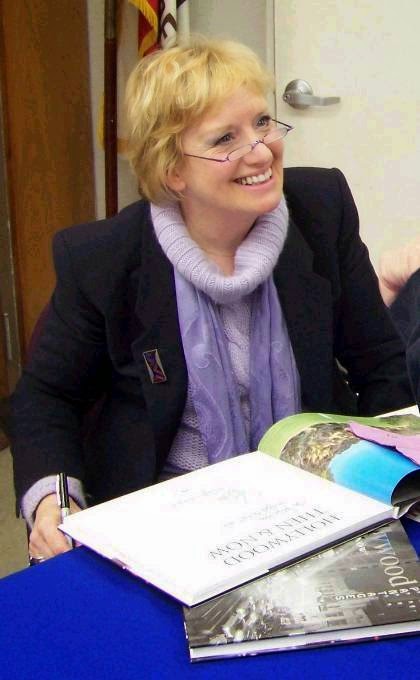
            They encouraged me to keep going with my first mystery novel. After years working as an actress and a journalist, I was now the author of two non-fiction history books:


Hollywood Then and Now and Los Angeles Then and Now. I really wasn’t sure that I could ever complete a mystery novel: what did I know about this genre?  And so I tentatively started, “Lottie,”  about an English girl who works as an extra in silent movies in 1925 Hollywood. After her best friend is murdered Lottie vows to find the killer.  I lost myself in the world of Hollywoodduring Prohibition and fell in love with the characters that appeared on the pages.  In our WinR group we read each others pages and gave feed-back.  I felt way behind the other girls, as Gayle, Jackie and Miriam were already onto their next books, but I kept going.
            In between my seemingly endless trips to Kentucky- little by little, with their encouragement, I worked my way through 400 pages until I finally wrote “The End.” We celebrated at The Rose Tree Cottage with a proper English Tea.
            Now the next step was to get an agent and sell it. Harder than I had imagined, I researched, networked and submitted my novel and got positive responses, but no contract yet. As my mother-in-law had died, I had more time to work and so I began to write the second in the series, “Seven For a Secret…”

* * * * *

            Then, without warning, my darling husband Rick Cameron died of a massive heart attack. My world stopped. My WinR friends rallied round me once again.
            I did not have the heart to continue writing about Lottie. I could not even face submitting her to agents and publishers. I had a contract and a deadline to write the updated, revised versions of my Hollywoodhistory books. I plowed through this as it was dates, facts, research and not as emotional as my fiction writing on my novel.
            A welcome distraction, I became consumed in saving a Hollywoodhistoric building, The Woman’s Club of Hollywood, from being turned into condos.
            But still I could not bring myself to return to my novel “Lottie.” Meanwhile, our WinR group now had two wonderful additions, Kate Thornton and Madeline Gornell and we had decided to revive our Blog.
            I retreated back to Englandto spend healing time with my brothers and sister and their children. They reminded me how proud Rick was of my writing – and especially of my Lottie Topaz novel.

            My dear WinR friends have been very patient waiting for me to emerge from my dark cocoon. Without them I would not be writing this, the first step back. And today I pulled out my Lottie files and started some notes for the next literary agent who will get the chance to read about Lottie. So I guess I have my New Year’s resolution …….

Catching Up with Miko Johnston

I can honestly say writing has changed my life.
Shortly before the Writers in Residence blog folded, I decided to submit a short story to Sisters in Crime LA for publication in their 2010 anthology, Murder in La-La Land. The story was rejected, which devastated me. I resolved to get published in the next anthology and I’m pleased to say that two years later, my story, “By Anonymous” was included in LAst Exit to Murder.
Meanwhile I began polishing the novel I’d written, A Petal In The Wind, the first book in my series of three historical novels. While finishing the second book, two of my characters defied my attempts to keep them apart, which forced the need for a fourth novel to complete the series. After I finished book two, I intended to self publish the series. However, my Writers in Residence friends urged me to try traditional publishing first. Both Madeline and Bonnie recommended Champlain Avenue Books, so I queried the publisher regarding my first novel, mentioning I’d finished the second book and was writing number three. I’m thrilled to announce that on July 4th, Champlain offered me a two-book contract with options on the rest of the series. A Petal In The Wind was released in November; A Petal In The Wind II will be published in 2015.
Last year my husband and I moved from Southern California to Washington (the big one) and now live on Whidbey Island. We still have our house in SoCal, which we visit several times a year. I schedule our trips to LA so I can join my Writers in Residence friends for our monthly lunch date. I’ve been fortunate to meet gifted writers in my new hometown who’ve become dear friends over the past year as well. As they say, “New friends and old, silver and gold”, which is why writing has truly changed my life.