A Contrarian View of Cozies

by Miko Johnston

A diva actress infuriates everyone with her demands. A rich businessman takes pride, even joy, out of snookering his customers. A domineering tycoon sets ultimatums for his relatives lest they be cut out of the will. They’re spoiled, stingy, slick, or just plain mean, and the next thing you know, they’ve been murdered. News spreads, often through a small town filled with quirky folks, and soon a person with no experience in criminology (beyond, perhaps, reading or writing mystery novels, or selling them in their charming bookshop) takes an interest in the murder and decides to investigate. They may not have access to the minutiae of crime scene investigations or forensic reports, but thanks to a police force with little skill or interest in solving the mystery, they unmask the perpetrator.

Welcome to the world of cozy mysteries, where life can be pleasant, eccentric, and even humorous in the face of death. Where someone’s humdrum existence can be invigorated by a murder.

A sub-genre of cozies takes crime more seriously, dealing with social issues such as addiction, abuse, homelessness, and trafficking, however peripherally. Others feature amateur sleuths who partner with the real investigators – police detectives – sometimes literally; many have spouses on the force.

Bearing those exceptions in mind, please don’t hate me for what I’m about to say – I do not, and will not, read cozy mysteries that involve murder, for one simple reason: the punishment rarely fits the crime.

People kill or get killed for a variety of reasons.  Some killings are justified, as in self-defense or on the battlefield. And don’t confuse the broader legal term, homicide, with murder, as the former includes the accidental and the justifiable killing of another. The law defines murder as a deliberate act, targeting a person with the “intent to kill,” “cause grievous bodily harm,” or “a depraved indifference to human life”. This does not sound very “cozy” to me. Nor does killing someone simply because they’re not nice, or did something mean-spirited or even ruinous (short of murder) sound justifiable.

Some cozy murders occur “off the page”. I’ll grant the more grisly details of murder can be the exception to the “show, don’t tell” rule,  but even so a murder has been committed. I’ve also heard cozy murders described as bloodless, or even “painless”, but is there such a thing? Any police officer who’s been to a crime scene, or EMT who tried unsuccessfully to save the victim, will tell you NO. Most poisons cause pain, convulsions and organ collapse. And what about other methods, such as strangulation, drowning and suffocation? I feel miserable when I’m congested with a cold. I can’t accept being deprived of oxygen as anything less than cruel and unusual. Even if the crime is violent, such as a gunshot, the description sidesteps the gory details. Really? Please tell me how a gunshot wound wouldn’t be gruesome to an average person. And don’t get me started on humorous murder mysteries. I’ve seen farces that involve a dead body where the death occurred from natural causes, or an accident due to the victim’s stupidity, silly but harmless. However, a murder victim’s body crosses the line for me.

I have two other reasons for not reading cozies. I lived in New York during the crime-riddled seventies. I knew two people who had dear ones murdered. A co-worker’s boyfriend was shot to death in a case of mistaken identity, and a gang of robbers murdered my friend’s nineteen-year-old cousin as he was unloading a delivery truck. Fifty years may have passed, but I still recall the anguish in their faces, the tremble in their voices when they told me what happened. They never witnessed the crime in progress, nor saw the bloody crime scene, but from the moment the police notified them, their lives changed. Forever.

I get it. A mystery can be enjoyable without forensic-level descriptions of crime scenes, as is trying to put the clues together and solve the puzzle. Of course, if that’s what readers want, then there’s no reason to include murder, rape or kidnapping – a non-violent crime would allow the reader to solve the case along with the sleuth. Why does it have to be murder? Apparently, having a cozy revolve around a high crime raises the stakes, and the level of interest, beyond lesser crimes. Making the victim as unsympathetic as possible makes us feel less guilty as we focus on the clues and not on the tragedy.

This is just my opinion, and I don’t expect others to share it. Yet I can’t help but think no matter how horrible, difficult or mean the victim is, and even if the characters in your story aren’t upset by the murder, somewhere in the world beyond your pages is someone who will care, who’ll mourn the loss and be devastated by the cruelty of it.

Miko Johnston, a founding member of The Writers in Residence, is the author of the historical fiction series, “A Petal in the Wind”, as well as a contributor to several anthologies including the recently released “Whidbey Island: An Insider’s Guide”. Miko lives in Washington (the big one) with her rocket scientist husband. Contact her at mikojohnstonauthor@gmail.com

Do You Really Want to Be a Writer?

by Jacqueline Vick

Lots of people dream about writing. And writing for yourself and your family is great. Recording memories. Journaling for fun and self-awareness. These are all wonderful, creative pastimes that I encourage. In fact, if you write, you are a writer.

I suspect what most people mean when they say they want to be writers is that they want to make a lot of money doing something they enjoy. And that’s an honorable goal. But there will be challenges.

One thing that stands out from my time with the Sisters in Crime Los Angeles Speakers Bureau is the number of people in the audience who asked published writers for tips and then rejected them.

Audience Member: How do you find time to write a book?

Writer: You need to write every chance to get. On the train or bus if you commute. During your lunch hour. Or get up early.

AM: I drive to work. My lunch hour is too short. I have enough trouble getting up for work. I have no time.

Audience Member 2: How do I sell my book?

Writer: You have to put yourself out there to meet other writers and readers. Meet with book clubs. Do library or bookstore events.

AM2: I’m too shy. And I don’t have a car.

Writer: If in-person events are a problem, there are many online opportunities available.

AM2: I don’t have internet access.

Writer: You could do paid advertising.

AM2: I have no money.

Based on those conversations, I thought I’d give aspiring writers a reality check in the most loving way possible.

If you want to write for a living, you will run into obstacles. You will either find a way over them or around them, but, if you’re serious, you will move forward.

There are many paths to publication.

Online zines publish short stories, and some of them pay. Competition is high.

Traditional publishers will most likely require you to have an agent submit your book, which means having a clean, edited copy of your manuscript along with a polished query letter. Check with each agent for their requirements. (Or the publishers, for those who accept direct submissions.)

Self-publishing. You will need to have a professionally edited book and a professionally designed cover. After that, everything falls under your responsibility: submission to the markets, marketing the book, and handling all business decisions and finances.

My point is not to scare you but to prepare you.

I spend my typical day writing AND marketing. At this point, probably 40% of my time is working on marketing, whether that is appearances on websites or blogs, testing creatives for ads, testing headlines for ads, testing primary text for ads, keeping up with trends, watching my ads and making adjustments, such as killing the ones that aren’t working and adding ones I hope will work better. And so on.

I also spend hours each week in marketing groups as well as writer’s groups.

Part of my budget is spent on tools that help make me a better writer and marketer. ProWritingAid for grammar. Fictionary for story development. Unbounce, Mouseflow, and Shopify for marketing and direct sales. And the plugins to make Shopify perform better. Not to mention the thousands of dollars I spend on ads each month.

Usually, I come out ahead, but there are no guarantees. Some months, especially when Facebook makes a change that affects the algorithms, I don’t. But it’s a growing and learning process. You need to hang in there.

If that sounds like something that interests you, I suggest you join a writer’s group that focuses on your genre. Sisters in Crime, Romance Writers of America, and Society of Children’s Book Writers and Illustrators are a few. They often have great resources.

Follow authors you like, especially those who write in the same genre, on social media. See what they’re doing. Study their Amazon book pages, author pages, or, more popular now, their direct sales shops.

And don’t expect overnight success.

If that sounds appealing to you—or at least it doesn’t scare you—good luck. May you have a long and fruitful career ahead of you.

###


What to Write When You Don’t Know What to Write.

by Jackie Houchin

  • Prompts help.
  • Other people’s ideas help.
  • Daydreaming out the window helps.
  • Deadlines help.
  • Contests help.
  • Tragedies or celebrations MAY help.
  • Anger MAY help if directed.
  • Copywork MAY help.
  • Unfinished manuscripts MAY help.
  • Praying (if so inclined) MAY help.

But what WORKS?  What can get your thoughts sparking and your fingers flying. What can set you on a course from A to B (with subpoints) or from Inciting incident to Denouement?  

Threats? Muses? Overdue bills?  Screaming? Pulling out hair? Ai? 

Wait….Ai?

Okay, I’m going to ask a ChatGPT assistant that question. I easily signed up, familiarized myself with a couple short questions, and then posed my dilemma.

(Oh, and I thought I needed to name my Assistant if I was going to use it. How about Charlie?) 

Meet Charlie.  

He’s not the sharpest pencil in the holder. He basically told me most of the things I’ve written above in a slightly different way. 

Here’s “Charlie’s” list of “helps”.

1. Free Writing:

  • Set a timer for 10-15 minutes and write continuously without worrying about grammar or structure. Let your thoughts flow freely; often, this can spark ideas you weren’t consciously considering.

2. Prompts and Ideas:

  • Use writing prompts to kickstart your creativity. For example, websites and books offer daily writing prompts, or you might start with “What if…?” scenarios that encourage imaginative thinking.

3. Mind Mapping:

  • Create a mind map around a central theme or topic that interests you. Branch out with related ideas, characters, or themes that come to mind. This visual representation can help organize your thoughts.

4. Write About Your Passion:

  • Reflect on topics or hobbies you’re passionate about. A blog can focus on your expertise, a hobby, or experiences you want to share. Writing about what you love can inspire authentic content.

5. Read Widely:

  • Read articles, books, and blogs in various genres. Exposure to different styles and topics can ignite new ideas or give you insight into what resonates with you.

6. Explore Personal Experiences:

  • Consider your own life experiences, emotions, or challenges you’ve faced. Personal stories often resonate with others and can be a rich source for blog posts, articles, or fiction.

7. Observe Your Surroundings:

  • Take time to observe the world around you—people, places, situations. Noticing everyday life can inspire ideas for fictional characters, settings, or events.

8. Set Goals:

  • Define what you want to achieve with your writing. If it’s a blog post, think about the message you want to convey. If it’s a short story, consider the theme or moral you want to explore.

9. Experiment with Different Genres:

  • If you’re unsure, try writing different genres or formats—a poem, a letter, or even dialogue. Experimenting can help you find your voice and lead to ideas for longer pieces.

10. Join Writing Groups or Workshops:

  • Engage with other writers in workshops, online forums, or book clubs. Sharing ideas and feedback can help stimulate creativity and lead to collaboration.

11. Create an Outline:

  • If you have a vague idea or concept, outline the main points or plot. This structure can act as a guide and make it easier to expand on your thoughts.

12. Give Yourself Permission to Write Badly:

  • Allow yourself to write poorly without judgment. The first draft doesn’t have to be perfect. Just get your ideas down; you can refine them later.

By using these strategies, you can overcome writer’s block and find inspiration for your blog, articles, stories, or any other writing project. Don’t forget to enjoy the process—exploration and creativity are key to finding your unique voice!

Well, not very creative.  I asked Charlie for MORE suggestions.  Here’s what he gave me this time.

.

If you’re looking for ways to ignite your creativity and really get your writing flowing, here are some more active and engaging techniques to help you spark ideas and motivation:

1. Change Your Environment:

  • Sometimes a change of scenery can help. Try writing in a different location – a café, park, library, or even a different room in your home. New surroundings can stimulate fresh thoughts.

2. Engage in a Creative Activity:

  • Participate in activities that aren’t directly related to writing, such as drawing, painting, or crafting. This can help free your mind and lead to unexpected inspiration.

3. Use Music or Soundscapes:

  • Create a playlist that suits the tone of what you’re writing or listen to soundscapes that inspire a mood (like rain, ocean waves, or bustling city sounds). Music can enhance creativity and help set the scene for your writing.

4. Set a Writing Challenge:

  • Challenge yourself with quick writing exercises, such as composing a short story in 10 minutes or writing a poem from a random word generator. Short time constraints can boost creativity.

5. Visual Inspiration:

  • Browse through images on platforms like Pinterest or Unsplash. Find a picture that resonates with you and write a scene or story inspired by it.

6. Interactive Writing Prompts:

  • Find interactive storytelling games or writing prompts that require you to make quick decisions or choose paths (like “Choose Your Own Adventure” games). This can stimulate your imaginative side.

7. Use Creative Apps or Tools:

  • Explore writing tools or apps designed to prompt creativity, such as “The Most Dangerous Writing App,” which encourages you to keep typing without stopping.

8. Engage Your Senses:

  • Take a moment to close your eyes and focus on each of your senses. What do you hear, smell, feel, or taste? Write a descriptive paragraph based on your sensory exploration.

9. Flash Fiction:

  • Write a complete story in 100 words or less. This constraint can force you to focus and be intentional with your word choices, leading to new ideas.

10. Interview Your Characters:

  • If you’re working on fiction, write down interview questions for your characters and answer them in their voice. This can deepen your understanding and lead to new plot ideas.

11. Use ‘What If?’ Exercises:

  • Take a mundane situation and apply a ‘What If?’ scenario. For example, “What if someone found a hidden letter in their attic?” This can help you explore unexpected plot twists or themes.

12. Journaling:

  • Keep a dedicated writing journal where you jot down random thoughts, dreams, or observations daily. This habit can lead you to uncover hidden ideas over time.

13. Connect with Other Writers:

  • Have a brainstorming session with a writing buddy. Discuss ideas, trade prompts, or even start a writing sprint together, encouraging each other in real-time.

14. Limit Distractions:

  • Turn off notifications and clear your workspace of distractions. Sometimes a focused environment can help ideas flow more freely.

Finding your flow might take some experimentation with different methods until you find what resonates with you. Don’t be afraid to try out various techniques and see what gets your creativity sparking and fingers flying across the keyboard!

..
 
 
Again….. 
 
Not quite the help I wanted. (They tell me the better ways I ASK for help, the better RESPONSES I’ll get, so I guess I need practice there.) 


Readers, how do YOU decide what to write?   (Please share your secrets!)
 
Have YOU ever tried Ai?  (If so, how? And are you happy with the experience?)


My Reading Life in Classics

by Maggie King

My love affair with the classics took off in 1989. Why 1989? That was when I started a job in downtown Los Angeles. One day at lunch a co-worker asked if I wanted to go to the library. Surprised, I said, “Sure!” I’d never worked with anyone who spent her lunch hour at the library.

We walked to the Los Angeles Public Library and I checked out Jane Eyre. I had a vague memory of reading Charlotte Bronte’s tome in high school and decided to try it again. Over the next few years, I read—in many cases revisiting my high school reading list—works by Jane Austen, the Bronte sisters, Willa Cather, Theodore Dreiser, F. Scott Fitzgerald, Gustav Flaubert, Thomas Hardy, Nathaniel Hawthorne, Washington Irving, D. H. Lawrence, Sinclair Lewis, W. Somerset Maugham, Ayn Rand, Robert Lewis Stevenson, Leo Tolstoy, Mark Twain, Edith Wharton, and Virginia Woolf, among others.

Many I loved, with a few being okay. Sad to say, I didn’t like Wuthering Heights any better in the early nineties than I had in high school. Heathcliff was just too dark (funny reaction from a crime writer, but there you have it). For many years, Jane Eyre topped my list of favorite classics. But a year ago, I picked it up for the third time and didn’t even finish it. Jane Eyre was given to monologues! Apparently that didn’t bother me thirty-plus years ago.

In 1993 I joined a mystery group and became obsessed with that genre, classic and contemporary. Up to that point, I’d read many Agatha Christie mysteries, but few by other authors. It wasn’t long before I started penning my own.

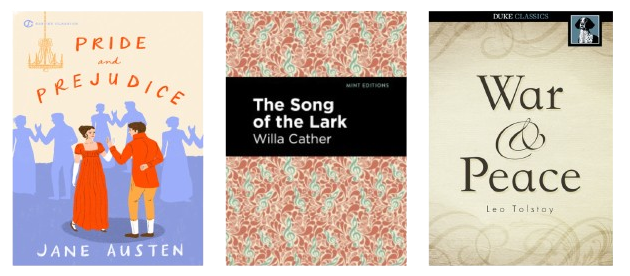
I try to read at least one classic a year, and sometimes it’s a mystery. A favorite is Wilkie Collins’s early example of detective fiction, Woman in White. I read the epics Brothers Karamazov and War and Peace from start to finish and lived to tell it! I finally got to Little Women a few years ago. I had seen countless film versions but never actually read the delightful autobiographical novel by Louisa May Alcott. David Copperfield was wonderful but populated with characters who, like Jane Eyre, spoke at great length.

Why do I love the classics? They have a timeless quality and universal appeal, essential traits that make a classic a classic. Little Women—despite the lack of texting and social media—could be a contemporary coming-of-age novel.

The classics are known for well-drawn characters and compelling storylines. That said, it can take time for a classic story to be compelling. Contemporary books have to grab the reader on page one; classics require more patience, but are worth the wait. My friend who took me to the LAPL and I started Middlemarch together. Several times I was ready to close the book for good but, being a faster reader, my friend assured me that the story would pick up. Sure enough, George Eliot’s masterpiece became a page turner.

What’s my next classic? Many of my author friends rave about The Count of Monte Cristo by Alexandre Dumas. And I’ve had Elizabeth Gaskell’s Wives and Daughters on my TBR list for some time.

Would reading the classics benefit writers? Absolutely! Have they improved my writing? As an optimist, I want to think so—but such a belief is hard to verify. This post on KindredGrace, “5 Reasons Why Every Serious Writer Should Read Classic Literature”, is worth reading. I especially like #4: Classic literature expands our knowledge base for literary allusions.

Renowned author Joyce Carol Oates suggests that writers read Ulysses by James Joyce. According to her, our vocabulary will improve (or, if nothing else, we’ll want our vocabulary to improve). I take Ms. Oates’s point, but will pass on Ulysses (I managed to get through one chapter).

Back to where the classics began for me: here’s a photo of the beautiful and impressive Los Angeles Public Library. During my stint working downtown, this building was closed for renovations due to two fires, and the collection was temporarily housed on South Spring St. By the time the original building reopened in 1993, I was working elsewhere, but occasionally returned to visit this stunning structure. If you can visit, do so, but you can read about it here.

Closing thoughts: what contemporary novels will become classics? Any of our own? Perhaps works by Margaret Atwood, Toni Morrison, and Joyce Carol Oates will stand the test of time. As for contemporary crime novels, would any make the cut? As much as I enjoy them, they lack the timeless quality—even the historical ones. I’d love to be proved wrong. In the meantime, we have Arthur Conan Doyle, Wilkie Collins, Anna Katharine Green, Agatha Christie, Dashiell Hammett, and many others.

A big thanks to Alison, my long ago library pal!

AI Can Make Mistakes Too

by Gayle Bartos-Pool

Editing is a major endeavor for any writer. Even if you hire it done or your publisher actually provides one, you need to go over your work a few times to make sure the story you thought you were telling made it to the page.

Before I published my first novel, I hired a professional editor. Back then, most publishers were dropping their editors at an alarming rate because they thought the writer would do a good enough job and the cost of an editor on staff was too much for the publisher, so they were let go.

The editor I hired had worked at a large publishing firm. She’s the one who told me about all the layoffs. I paid a tidy sum and expected her work to be good, if not excellent. I got back my manuscript and happened to ask my sister-in-law who worked as an editor on a large newspaper in Orange County California if she would mind going over the pages. She said yes, did the job, and found numerous errors the overrated editor hadn’t found. I paid my sister-in-law $50 just to be nice. I had paid the “professional” $1800.00. This was back in 1996, even though it took eight years before I got that book into print.

I did my own editing after that. I know there were errors in my subsequent books, but like I say: Only God is perfect.

Recently, I happened to pick up one of my spy novels and decided to read it. I wanted to send a copy to someone whose book I had read and wanted to make sure the book wasn’t too full of errors. I did find a few mistakes during that quick read, but they might be overlooked if the reader didn’t pay too close attention to every comma.

I enjoyed reading my book after all these years and decided to read one of the other books in the spygame series, but this time I let my computer read it aloud to me. I was still watching the screen as it was reading my words, but that’s when I started seeing Spell Check underline a word or two…then it wanted me to add a comma here or delete another comma there or change a phrase or use a different word. I actually agreed with a few of those changes, but I was having a problem with the computer wanting me to add way more commas than we were told to do back in 9th grade English. I didn’t remember old Mrs. York telling us not to use a comma before a “but” in a sentence,,, but the new Spell Check didn’t want the comma.

There were some words that had an obvious typo, but I was surprised I hadn’t caught them myself, but then again, when we read our own work, we know what we were going to say and we “read” it even if it’s not there. That’s why in my newer books I do have the computer read my work back to me so I can hear what I wrote. Many times, I would find a typo that I hadn’t seen when I read through the first draft of the book in actual printed form. When I wrote my first few books which included the three spy novels, I didn’t have the luxury of that audio editor to help me.

So, flash forward several decades and all those computer tools have made the editing somewhat better. I still have errors in my books, but hopefully fewer.

But wait! Sometimes the computer program might be a stickler for “correct English” when you want your words to have more of a regional accent or colorful flair. I continued letting the new Spell Check go over those old words and I started finding things it wanted me to change like in the phrase “everything was socked in” referring to the weather, but AI came up with “shocked in.” Then there was my word “noose,” and it wanted “nose.” Or “chicken coop” was changed to “chicken cop.” “Sliver” to “silver.” “Antiaircraft flak” to “flake.”

“Houston, we have a problem…”

There were dozens more of these stupid mistakes the AI “genius” was making. They weren’t just possible words you might want to use which more or less meant the same thing. These were totally incorrect.

Fortunately, the AI Spell Checker wasn’t making these changes without my Okay like it does on my cell phone or Kindle Tablet, so I didn’t let it have free reign. And as I was making the changes I thought were correct, I still had the WORD program read back my words because hearing them still allowed me to make sure that’s what I wanted to say. I re-edited those three spy books and reissued them this year. Hopefully most of the mistakes were corrected…even with all the blasted commas.

So, be aware of the little goblins hiding in your computer. They might have less education than you do. In fact, I never saw an AI sitting in one of my English classes in high school or college. But I certainly discovered that these AI creatures aren’t writers, because a computer program has no imagination. If you don’t believe me, sit in front of your computer without touching the keypad and tell it to write a novel. Without the human element, human imagination or human touch, or without Internet access to hundreds, if not thousands, of books already written by humans, that conglomeration of motherboard, CPU, GPU, RAM, SSD and HDD can create nothing. Try unplugging your computer with its AI capability and see what it can do by itself. I don’t need to be plugged in or have my batteries replaced in order to tell a story. And my stories are the ones I created, not by a machine that cobbles together bits and pieces of other work and then mashes it all together in an incoherent jumble.

A computer helps, but the human heart, brain and talent will always be better.

  Write On!

MAKING THINGS FIT….     

By Rosemary Lord

Whether it’s time or words – it’s an ongoing challenge for me.

Not having the luxury of a 30-hour day, I’m always trying to squeeze things in, so that, apart from ‘work’, I can have some sort of personal life, family time and of course writing time. As I struggle to transfer my workload at the Woman’s Club of Hollywood to a new dedicated crew, it’s taking a lot longer than I anticipated – and about 6 new people to do the work I’ve been doing on my own for so long!

But – I will make it all fit.

I designated Sunday as MY day, when I will not deal with any Woman’s Club work and only speak with family, friends, potter, catch up on housework and fit in some writing time, too. My ‘work phone’ is switched off. This is the only way I’ve been able to catch up on my personal life, finding serenity, make things fit – and even make time to paint my nails – a pale blue this week! I cherish my Sundays.

I envy some of my friends who retired early and travel all the time. I just can’t fit that in now!

 And then there’s making things fit in my writing. I have three major writing assignments at the moment.  A non-fiction, 144-page coffee-table history book, an historical novel and a memoir. So far, I’ve not had the time – or the mental focus – to sit for hour after hour, day after day, as I used to, to complete one of them. I tend to fit in the odd hour or two and peck away at one of my projects. Although my mind is always working overtime thinking about them.

First, in fiction, especially in mysteries, I have to get the right name for my characters.  I have to make the name fit.

I mean, you can’t really have an exotic, sultry siren called Mary or Jane, could you? Sophia or Camille, maybe. Or a tall, hunky, sun-bronzed hero called Arthur or Reginald, doesn’t really work, does it? The names have to fit the character, the story, the era, the background, in order to be believable.

Although one of my pet peeves as a reader is to have the characters all having a similar sounding name, especially in the same scene: Fin, Tim, Dick, Nick, Rick – or Jim, Jon, Jan, Jen, Janey, Jed and so on. I make a point of making sure the names differ in sound and length. You’re not going to get confused when characters names are specific for the storyline and sound different. Such as a Jim, Stephen, Montgomery, Drew and Samuel. Or Roberta, Annie, Pamela, Sue, Gwendoline and Florence. Different lengths and starting with different consonants. Easier for the reader (and me, the writer) to keep track of.

I always feel challenged with the word-counts we’re given. Tough to fit all I want to say within their limits. Should my work be a short-story, a novella, a novel – or a War and Peace tome? My storyline has to fit into the right category.

Then I (hopefully) unobtrusively, fit in the clues and red herrings. Remembering the villain needs to be seen, fleetingly, very early on in the story. Almost hidden, with no big flashing neon signs. So that at the end, when all is uncovered, I haven’t cheated my readers by suddenly announcing: “By the way, the Butler, whom you’ve never seen before, did it.” As a reader I like to think I know ‘Who Dunnit,’ but I’m not sure and I keep trying to work it out. Then the satisfaction at the end of saying “of course!” and retracing the steps to figure it all out for myself. So, I have to make sure that it all fits in.

And I have to fit in the adversity, the challenges, the processes my characters go through, without the reader aware of what I’m doing.  Static stories are boring. My characters need to lose something – or fear losing it. They must process crisis – large & small – then recover and carry on obliviously enjoying life, until another surprise stops them in their tracks from an unexpected source. Unseen forces. Another deadly trap.

It was Raymond Chandler who said, “there’s no trap so deadly as the trap you set yourself.”

Whatever that means. But then it was Mark Twain who said: “write what you know.”  So, between the two, I should have a story somewhere!

And somehow, I will fit in the time to make it all happen.

Writing anything is a challenge, but writing mysteries is a unique adventure, unraveling the human mind. It’s like designing a large jigsaw puzzle, making all the pieces fit.

So, I’ve become very proficient at making things – time and words – fit. How about you?

How Do Writers Choose the Titles for Their Books & Stories?

This week the Writers In Residence members answered a “group question.” 

How do you choose the titles for your books or stories?

1.  Rosemary Lord:   For me, titles flow as part of whatever I am writing at the time. Sometimes, the title comes first, maybe snatched from a song title or a poem. But the titles have to fit the setting, period, and essence. The title has to match the “inside” and be intriguing or evocative because it is the first thing that catches the reader’s attention. 

Once, I thought a writer friend’s book titles were heavy and pretentious, a bit “off-putting.” I felt bad for her as I thought her big publisher chose them. I was going to make a “diplomatic” suggestion.  Then she said SHE had come up with all her titles!  Oops!

.

2. Maggie King:  There are so many ways to choose a title. It’s not my strong suit, so I often collaborate with others. For Murder at the Book Group, my agent helped. When I re-released MABG as Death Turns the Page, my songwriter husband helped. I don’t recall how the title for Laughing Can Kill You came about, but I think “I” thought of it.  For Murder at the Moonshine Inn, I brainstormed with a friend and her son. The son suggested the title based on his many visits to redneck bars (much to his mom’s surprise).

I had an easier time coming up with the titles for my short stories on my own. Maybe being “short” made the titles more apparent.

.

3.  Madeline Gornell:  I’m not being flippant, but they seem to come to me out of the blue. Maybe from dreams?  Or TV?   I say, don’t worry about it, they just come.”  Hmmm.

.

4.  Miko Johnston:  For me, a good title hints at the theme and tone of the piece before it’s read and summarizes it afterward. Some titles came easily, like calling my short story, featuring a nameless protagonist who creates “art” By Anonymous. Others took a while to find the right title – years in the case of my series A Petal in the Wind – a perfect metaphor for my character.

.

5.  Linda O. Johnston:  I generally consider titles for any new series and the book I’ll next be working on as I’m starting to plot them.  I jot them down, often on the computer, and modify them as new ideas come to me. And, of course, I anticipate that my editors will most likely modify them again once I submit them, although I do get to approve any new ones.

.

6.  G. B. Pool:  This is a fun question. When I’m pondering a new book or short story, the title almost always comes right as I’m coming up with the plot. I couldn’t tell you which came first. This is when I’m actually writing the story, not just tossing around ideas.

I have had a title before I had a plot. I mention this fact in the book of short stories I’m working on right now, called  Bits and Pieces. This book is the result of several folders I keep of story ideas I’ve written down, newspaper articles I have saved, or ones a friend like Jackie Houchin has sent me over many years. These “bits and pieces” of ideas just might prompt a story. These are all fragments of an idea, and most have no title listed.

I have changed the title of a story once or twice, but that comes about only if I totally redirect the plot into something entirely different and the title just doesn’t work anymore.

One title I came across in a folder that I haven’t used yet is: “Just Shoot the Archbishop and Pass the Brandy.” All I have is the title. No story. A story may never come of it, but I mention it in this upcoming short story collection just to show how writers work. But I do think the title has to fit the story, the two coming as Siamese twins seems to work.  

.

7.  Jackie Houchin:   It’s never been published, but a “woman’s fiction” book I wrote had the title of Sister Secrets. It’s about three women who have the same mother but different fathers. They each have a long-standing “secret” that has returned to haunt them. As the story unfolds, each sister’s strengths and talents help unravel and resolve the secret that is keeping another sister captive.

In my children’s short stories set in Africa I tried to make the titles be “teasers” for stories that middle-grade kids would enjoy.   Dead Mice,   The Eyes in the Well,  and  Deek’s Wild Ride were a few.

All my titles come to mind in the process of writing the story. They just fit.

###

READERS:  If you enjoy these “Group Questions” and have one YOU would like to ask us, please mention it in a comment below or forward it to me at Photojaq@aol.com 

Remember, if you comment, first click above on the TITLE of this post. (How do writers….)

.

THE WEIGHT OF WORDS

 by Miko Johnston

Words have become a frequent topic for my posts. I often say they’re a primary tool in the writer’s toolbox, and like all tools they need to be kept sharp as well as up-to-date.

When I read, I’ll occasionally come across a word I don’t know or might be unsure of its meaning, whether in English or another language. Whether plots or articles, writing that includes corporations or government agencies and bureaus often use acronyms, and thanks to texting, so does modern fiction. We all know FBI, CEO, LOL. If the mystery is set in the fictional Gotham City, we can figure out what GCPD stands for. When the unfamiliar term is foreign, an acronym or other modern slang I’ll search for it online. I don’t mind doing this, as I enjoy learning new words, terms and expressions to expand my vocabulary, even if I never use them.

I used to keep my dictionary and thesaurus handy when I write. Now, I prefer to look up words online when I’m not sure of the proper meaning, or if they’ve changed over time. I google “(language) to English” if I need a translation, or the reverse if I need the word or phrase in another language. If I’m uncertain if a word I want to use is best or if another would be clearer, I check the thesaurus. I often understand the meaning better from similar examples than dictionary descriptions. If the synonyms don’t relate to what I want to express I delete the word and find another. You could say the dictionary “tells” me the meaning while the thesaurus “shows” it.

My thesaurus also comes in handy when I need a substitute for an overused word, or if I can’t think of the right one to use. However, it’s old and doesn’t reflect modern speech. If I want the language to be au courant, I google the word, or the idea I want to express, and add synonym. The results help me decide whether to stick with my original word, choose a better one from the list, or pick a different word that more closely expresses what I want to say. 

I also search for the etymology of words, phrases and expressions. As a writer of historical fiction, I must know when they came into usage to avoid anachronisms. The reverse is true as well. A word or phrase that brings authenticity to a period in history would sound ridiculous spoken out of time – who says 23 skidoo, groovy, or gag me with a spoon anymore? Then, I consider who will use the word. For example, I wouldn’t have a fusty old person use hipster (for the time) jargon, or vice versa.

Sometimes I must use an obscure word. When it’s foreign or an historical reference, I often describe it in the sentence following its usage. Sometimes the meaning can be gleaned by context, such as when my characters lit a yahrzeit candle to commemorate a loved one’s death. However, some terms can’t be explained without a dictionary-like entry – for example, plastron, which I used in my first novel, set in 1899. I expect most readers had to look that word up to find it meant “an ornamental front of a woman’s bodice or shirt consisting of colorful material with lace or embroidery, fashionable in the late 19th century”. Hardly something that could evolve naturally in dialogue. Certain genres, such as historical fiction and hard sci-fi, as well as unique careers and hobbies of the characters, give the writer some leeway for the occasional obscure term. So does a post on a writer’s blog.

Even so, I sometimes question the use of vocabulary that may be unfamiliar to the average reader, like etymology or anachronisms. I don’t want to oversimplify the subject, nor do I want to write over the reader’s head. I wonder – should I find another way to express myself? Is there a better way that won’t send readers rushing for their dictionary? Or is that necessarily a bad thing?

Some believe using more complex terminology – what we used to call “hundred dollar words” – makes them sound smart, while others find it pompous and pretentious. A wise person can explain complex ideas in complex terms, but a wiser person can do the same using plain language. I wouldn’t consider that “dumbing down.”  I’d call it making the information more accessible to more people. Even so, the best word may be foreign to some, including me. As a reader, I will look up a word I don’t know or am unsure of its meaning in the context of what’s on the page. If I have to do that once or twice, I will, but too many unfamiliar words put me off.

Some writers must use foreign words, terminology, slang, or acronyms related to the time period, profession, or avocations of their characters. How do you handle challenging vocabulary as a writer and as a reader?

.

Miko Johnston, a founding member of The Writers in Residence, is the author of the historical fiction series “A Petal in the Wind” as well as a contributor to several anthologies, including the about-t0-be-released “Whidbey Island: An Insider’s Guide”. Miko lives in Washington (the big one) with her rocket scientist husband. Contact her at mikojohnstonauthor@gmail.com

Mystery Books to TV Series

by Jackie Houchin

After reading Maggie King’s intriguing post last week about writers and an old movie, I realized that many of the mysteries we watch on cable (Acorn and others) are based on books by mystery writers.

We have watched many of The Murdoch Mysteries, set in late 1800s Toronto. The original writer of the books is British Canadian author Maureen Jennings. Her most recent book (2019) is HEAT WAVE, which introduces Murdoch’s son as a police detective in 1936. It has not been made into a TV show (as yet.) She is 86.

We enjoy most of the episodes, and although they have evolved into semi-comedic, some are absolutely silly. We stopped watching them for a while! 

How much can an author control content once the series is bought? (Probably none.)

.

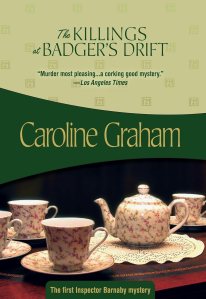
We have also enjoyed many, many episodes of The Midsomer Murders. Caroline Graham is the British author of the Inspector Barnaby mysteries. Her first five Barnaby books formed the basis of the Midsomer episodes.

The plots are complex and sometimes dark but have a touch of comedy, primarily as Barnaby interacts with his wife, dog, and sergeant. As of Oct. 2024, Graham was still alive at age 93.

Can an author still write books after her books are bought for television?  Would they automatically be a part of the filmed series? Hmm.

.

P.D. James is the author of the darker Adam Dalgleish mystery series, which has 14 books and a few TV episodes we have just begun watching. She (Phyllis Dorothy James) was an English Baroness. She wrote 14 books about the Poet/Detective and was planning a 15th when she died at age 94.

If you have watched them, have you ever noticed how they frame his face with a peculiar expression for the last few seconds of the episode?  I like it.

.

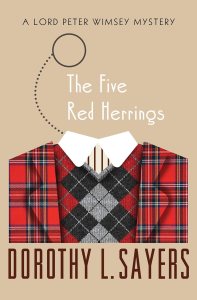
Of course, Dorothy L. Sayers wrote the clever and popular Lord Peter Whimsey novels adapted into a TV series. Along with mystery, there was the added pleasure of a romance. (Such a handsome and wealthy sleuth!) Sayers lived 64 years.

My absolute favorite Lord Peter Whimsy book was THE NINE TAILORS. I wonder if it was ever made into a TV episode or film?

.

Very recently on PBS, we watched the 4-season adaptation of Frank Tallis’ book, Death in Vienna, the diary of Dr. Max Liebermann (based on Sigmund Freud), a fictional Viennese crime solver, with his pal Detective Oskar Rheinhardt, in the series Vienna Blood.

They were well-written, had strong plots and vivid characters, and were very cinematic. The setting (Vienna and Istanbul) was gorgeous.

They say there will not be another season because the story in Tallis’s book is finished.  Hey, that didn’t stop Midsummer Murders…. 

.

Two more present-day shows follow.

Dark Winds is a new series on Acorn (4 episodes so far) based on Tony Hillerman’s Leaphorn and Chee novels.

It is on my list to begin watching. I’ve read many of Hillerman’s mysteries, so I hope these are good.

.

And lastly, we have also tried the new series on Acorn, Case Histories, based on Kate Atkinson’s Jackson Brodie private investigator books, also set in England.

The first one was pretty good. Brodie investigated and unraveled several cases, either distinct or entwined with each other. There was a sex scene, however, which I didn’t enjoy watching.

We will try another and decide.

.

Of course, we have watched many old and newer adaptations of Agatha Christie’s and Arthur Conan Doyle’s  Hercule Poirot, Miss Marple, and Sherlock Holmes novels.

And I know YOU can name many more shows that you watch.

.

My first question is, which do you enjoy more, books or screen adaptations?  And what is the “why?” for your choice?

I enjoy the books, but I must admit that my decreasing vision makes reading fine print daunting these days. I get more involved in watching the actors (especially the settings) in the series’ episodes.  

My second question for authors is, other than the monetary reward, why would you like (or dislike) to have your books made into a TV series?

Double Indemnity: A Crime Writers Film

By Maggie King

“How could I have known that murder could sometimes smell like honeysuckle?”

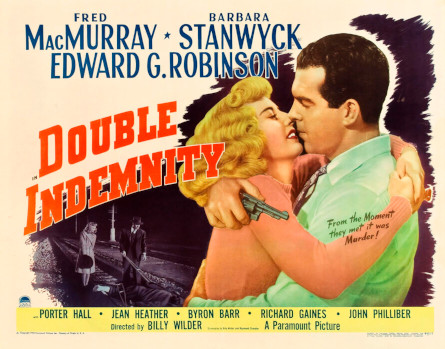
One of many memorable lines from Double Indemnity (1944), a film I never tire of watching—even after the fifth or sixth time! It’s a film I urge all crime writers to study—whether you’re writing cozies or hard-boiled detective stories. The superb dialogue, with its emphasis on double entendres and provocative banter, not only entertains but moves the plot along. The use of light and shadow create a virtual underworld that emphasizes the unsavoriness of the characters and plot. It is film perfection.

Double Indemnity is the ultimate film noir—it’s dark, steamy, loaded with atmosphere, and the characters are sleazy as all get out. In this story, originally penned by James M. Cain and adapted for the silver screen by Billy Wilder and Raymond Chandler, discontented housewife Phyllis Dietrichson (Barbara Stanwyck) bewitches insurance salesman Walter Neff (Fred McMurray) into killing her husband. Together, she promises, they will collect on a double indemnity insurance clause.

Phyllis is film noir’s classic femme fatale, luring a man whose brain goes on hiatus the moment he sees her. Walter seems like a good guy, but he’s no match for the lovely and smoldering Phyllis. She doesn’t even seem good—she’s evil to the core. Since he’s only marginally good, ensnaring him in her web is child’s play. Indeed, Double Indemnity’s best lesson for writers may be its showing how easily someone can be led astray by promises of a lifetime of riches and passion.

Writers are frequently advised to show, not tell. Double Indemnity follows this advice to good effect in its depictions of the life styles of Phyllis and Walter. Phyllis lives in an elegant Spanish house in the hills overlooking the Loz Feliz section of Los Angeles. Walter spends his days selling insurance, operating out of a ubiquitous office building in downtown LA, where the worker bees toil in a pre-cubicle bullpen desk arrangement (I worked in a few bullpen set-ups myself). Evening comes and Walter returns to his cramped apartment not far from his office. The contrast of life styles is stark, but never verbalized, only shown.

When it comes to sex scenes, the censorship of the day forced writers to show without telling, allowing them to achieve higher levels of creativity. Sex was left to the imagination, using suggestive dialogue and longing looks. A scene in Walter’s apartment hints that Walter and Phyllis had just been intimate. You don’t know for sure … but you’re pretty sure.

Elements of Alfred Hitchcock are evident in Double Indemnity. You don’t see the murder but you know it’s happening just out of camera range. Phyllis’s satisfied look and the gleam in her eye are what tell you that her husband is now thoroughly dead.

So … no sex, no violence, no profanity. Sounds like a modern day cozy. Not a chance! Double Indemnity is far from a cozy, and a current version of it would include all three no-nos. Body Heat (1981) is an example.

And there’s the creative way the senses are incorporated into the narration: “How could I have known that murder could sometimes smell like honeysuckle?” and “I couldn’t hear my own footsteps. It was the walk of a dead man.” There are many such quotes in Double Indemnity.

Here’s a quote that sums up the film in a nutshell: “I killed him for money and for a woman. I didn’t get the money. And I didn’t get the woman.”

You can almost feel sorry for Walter—after all, if you go to all the trouble of murdering your lover’s husband, shouldn’t you reap some of the benefits? Perhaps the film’s best lesson for writers is showing how easily someone can be led astray by promises of a lifetime of riches and passion. It makes you wonder how many of us are just a whisper away from evil.

After the murder, things go downhill. For one thing, Walter’s boss, Barton Keyes (Edward G. Robinson), is highly suspicious of Phyllis’s double indemnity claim and investigates it like a dog with ten bones. And Walter and Phyllis grow to distrust each other (no surprise there). By the time Walter realizes that murdering Mr. Dietrichson wasn’t such a good idea, it’s too late. But is he sorry that he killed the man? Or does he only regret that he’s left with nothing to show for his efforts beyond a bullet in his shoulder?

Often when I re-watch a movie, or re-read a book, I start finding flaws and turn critical. Not so with Double Indemnity. But I will notice something new with each viewing. Like how Barton Keyes never has a match, and Walter Neff has to light his cigar. But in the last scene, it’s Mr. Keyes who lights a cigarette for Mr. Neff (there’s that bullet in his shoulder). An unexpected touching moment.


James M. Cain took his inspiration for Double Indemnity from a real life case. In 1927 a New York woman named Ruth Snyder persuaded her lover, a corset salesman named Judd Gray, to kill her husband. She had recently convinced her spouse to take out a $48,000 insurance policy with a double indemnity clause. For more information on the case, read this Wikipedia article.