

Complete confidence is not a common trait among writers. I assume that statement applies to people who work in any creative field. It’s not that we’re neurotic. Usually. We are often charming people if you can drag us out into public. Did I mention that we are typically introverts who prefer the company of animals?
So, why the lack of confidence?
When a writer brings a character to life, builds a world, and plots out an entire novel, it’s personal. The character’s thoughts, words, and actions are driven by the author, so they are a peek into that person’s mind. Not necessarily an expression of his or her own thoughts on a subject, but what he or she is capable of thinking about a subject. Writing is an act of exposure, and there is always the fear that someone will—wittingly or unwittingly—cause harm.
When a wolf exposes its belly to the pack, no other wolf will touch it, not even a pup. The same can’t be said of the reading public. Once that short story, essay or novel is out there, it becomes fair game for comments, criticism, and the dreaded internet trolls.
Sometimes the criticism is correct.
I’ve looked up the spelling of names and words when writing only to find they are spelled wrong in the final draft. How does this happen??? It’s a mystery, but it does happen. And I once referred to a shoe string necktie tie as a bolero rather than a bolo. Never mind that an editor and four proof readers missed it as well. When the book came out, a sharp-eyed reader caught it and left a scathing review on Amazon. I immediately corrected it, and I would have reached out and thanked the reviewer had it been possible to contact him.
Sometimes people will simply disagree with you.
In my second pet psychic mystery, A Bird’s Eye View of Murder, Frankie Chandler’s Aunt Gertrude is visiting from Arizona. Auntie can be overbearing at times, which made for some funny situations. Don’t we all have relatives who test our patience? A reader commented that Frankie was just another weak female character because she put up with her aunt and didn’t tell the old lady off. I don’t think self-control and respecting one’s elders are signs of weakness, so I moved on.
The natural response to a fear of making mistakes is to never, ever publish, and this may be why completed manuscripts still languish on some writers’ computers.
Recently, I was lamenting the results of a new jewelry technique I wanted to master. An artist friend told me Better done than perfect.
What a freeing thought.
This doesn’t mean an author should send out a submission or post a book on Kindle without a thorough proofread. (Note: You are your own worst proofreader, because you will fill in the blanks as you read with what you wanted to say. Find an expert if you can afford it. If not, remain friends with former classmates who delighted in comma usage.) It also doesn’t mean that half-baked efforts are okay. It’s only a first draft, but I really want to get it published. Someone will like it.
What it does mean is that after you’ve done your best, after you’ve taken all necessary steps to ensure mistakes are fixed and formatting meets industry standards, you need to let it go and move on to the next project.
Every time you reread a page, you will think of a new and—possibly–better way to say it. Know that and decide to end the loop. You will never stop learning new techniques and tips. Your style will develop, and you will become a better writer, but only if you keep writing. (And not the same thing over and over.)
Once you complete a few projects and let them go, you may even see an increase in confidence. It’s not a guarantee. Those niggling thoughts may always follow you around. Is the finished product perfect? Are the clues too obvious? Did I misspell mononucleosis? Just remember, you’re in charge. You can ignore those thoughts, do your best, and move on.
Do you suffer from paralysis by analysis? Give us some examples. Sharing your demons and having a laugh over them destroys their power!


 d that “perfect” word that will conjure up a particular image in the reader’s mind. At a minimum when stuck, adding peripheral-props, like a style of dress, or a slump of the shoulders, type of build, a turn of the head or other unconscious character mannerisms–even the type of car the character drives; instead of skin color, exact features, type of hair, or how the character “looks” in a mirror. Hopefully you get my drift even though these aren’t great examples. A starting “impression” a reader can create a real character from using their past life encounters.
 of electronic gadgets like Smartphones, Kindles, IPods, etc. From somewhere in that discussion, audio books came up and I spouted-off about how much I liked them and what narrators I liked listening to.
 And yes—unfortunately or fortunately—depending on your writing-style perspective, a lot of visualizing my latest cast of characters is left up to the reader without lengthy descriptions from me. Nonetheless, that night I so enjoyed listening to my latest audio book, a very long-winded character description in Margery Allingham’s The Fashion in Shrouds– brought to life by narrator Francis Matthews. I’m not sure if I saw the person(s) Margery wanted me to see, or if somehow, a key word(s) she used triggered in my memory a real person I’ve known or met? But Georgia Wells and others were very real. Hmmm. Dueling perspectives—even goals?
 neither easy, nor as linear as it at first might seem. The often given writing advice, “show not tell,” can definitely also be applied to character description–but it’s not the whole story either. I don’t think it’s easy—yet another writing goal ha! But an aspect of writing well worth being thought about when you’re doing that last draft. And asking the questions, “How will the reader picture XXXX in their mind’s eye? Have I given enough clues? Not enough description? Too much description?”
 I wrote a 1,500 word short story titled AUTUMN GOLD about a couple of young artists having a hard time making ends meet when a huge “windfall” arrives (literally) at their feet. What they conspire to do about it is the gist of the story, with the climax happening on the first day of fall five years later.
 Two weeks later I was informed that AUTUMN GOLD was among the five Honorable Mentions (after first, second, and third places). I was totally surprised. Wow. A week later they featured it – with the other winners – in their online magazine, Short Fiction Break with a jacket cover that, well, didn’t quite show what I had in mind, but which brought many readers and good comments.
 What I came up with is a story with two points of view on an upcoming wedding ceremony. One person gleefully anticipates the event, thinking the time drags at a snail’s pace, while the other person desperately dreads the act and sees the time flying by way too quickly.

 7. The Opening should hint at, but not necessarily give away, the ending. A good example where this is done well is the opening from the movie Sunset Boulevard. (There is a dead body floating in a pool. It is narrating the story. How he got that way is the plot.)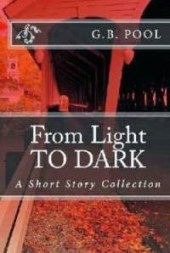

 Some months ago there was an unbelievable news story on TV. The gist was that some teachers no longer wanted to teach the classics. Unlike my reaction to other things I have heard on TV news shows (or the Internet), I actually believed the report. My snarky first reaction was that the teachers probably couldn’t read themselves and didn’t want their students to know they were illiterate. I’m still tossing around that idea.

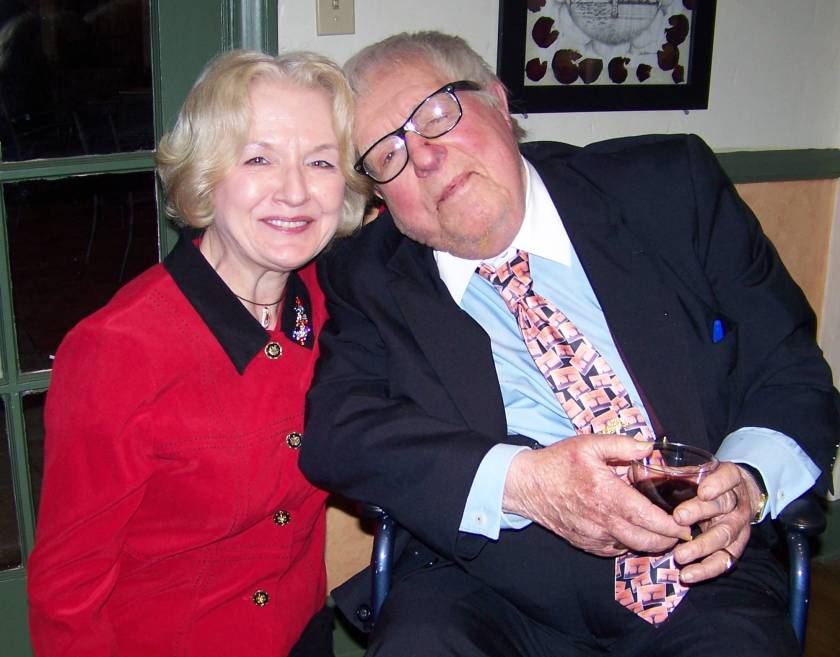






 Jacqueline Vick is the author of over twenty published short stories, novelettes and mystery novels. Her April 2010 article for Fido Friendly Magazine, “Calling Canine Clairvoyants”, led to the first Frankie Chandler Pet Psychic mystery, Barking Mad About Murder. To find out more, visit her website at
  Sally Carpenter put out a post about her new book The Quirky Quiz Show Caper. I saw it on Facebook. (Hint: Don’t be afraid to promote your books, gently, on social media.) I immediately downloaded a copy, realized I hadn’t read the previous book, and downloaded that one, too. (See? Promotion pays off!)
 back together at 38 after drying out. The choices available to him at this point in his career are pretty cheesy, but as grandma used to say, beggars can’t be choosers.
 I’m glad I did, because I wouldn’t have wanted to miss the excitement. Samantha and Nick Taylor just may move their relationship to a new level, but will the handsome photographer Dante get in the way? And what’s Dante doing hanging around Samantha at Christmas anyway? He’s lending brotherly support to his sister Cat whose husband has just been murdered. Did I mention Cat is eight months pregnant? If you think it sounds like a soap opera, you’re right. Twists and surprises galore but without the annoying “scene hold” before commercial break.
 I’ll have to wait until October for the next Ellen Byron novel, A Cajun Christmas Killing, and I’ve been to several bookstores looking for Ashley Weaver’s The Essence of Malice. Ooh! Did I just see an Amory Ames Kindle Single? Another for the pile!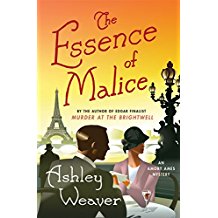

 The Writers in Residence
You must be logged in to post a comment.