Inspiration? by Linda O. Johnston

What inspires a writer to write?

Money


Money?  Maybe.  But unless you’re a best seller,earnings aren’t necessarily inspirational.


Fun Clown

Fun?  A lot of writers consider what they’re doing to be enjoyable, and who doesn’t like finding a way to amuse oneself?


learning

Learning something?  Maybe.  Depending on what you’re writing, it nearly always helps to do some research to ensure that what you say makes sense–or that you find a way of explaining it if it doesn’t.


TeacherTeaching something? Sure.  Whatever your subject, you may know a lot more about it than your reader, or at least you know more about your angle on it.  Let readers know what your story and its contents are all about.


Then there’s “just because.”  And I think that’s what motivates me.

Just because I enjoy it, letting my mind wander a lot of the time coming up with ideas that maybe someday can be crafted on the computer into a story.

Just because I can.  I used to be a full-time lawyer and a part-time writer who scooped an hour out of every morning before waking husband and kids and eventually heading to work.  Now, I can write full time.

Just because that’s now who I am–a writer. Typewriter and desk

So my inspiration is a bit unsolved.  I’m inspired by everything I do, everyone I know, everything I learn, to let my mind figure out what can be used in stories… and then write them.

Thomas Alva Edison is said to have come up with the now renowned quote “Genius is one percent inspiration, ninety-nine percent perspiration.”  So am I a genius? Not literally. Yes, I grab onto inspiration. I admit to not perspiring much at my computer since I have an air conditioner nearby. But figuratively–I do spend a lot of time at it, and that can be considered a kind of perspiration.

Still, I’m no genius, but I am a writer who’s addicted to what she does.

And maybe I’ll even use this blog post to inspire me to start another mystery or romance one of these days…


Linda O. Johnston, a former lawyer who is now a full-time writer, writes the Barkery and Biscuits Mysteries for Midnight Ink. She has also written the Superstition Mysteries for Midnight Ink as well as the Pet Rescue Mystery Series, a spin-off from her Kendra Ballantyne, Pet-Sitter mysteries for Berkley Prime Crime.  She additionally currently writes the K-9 Ranch Rescue miniseries for Harlequin Romantic Suspense about a ranch where dogs are trained, as well as the Alpha Force paranormal romance miniseries about shapeshifters for Harlequin Nocturne.  And yes, they all involve dogs. Her most recent release is her 48th published novel, with more to come…soon.

Recent publications:

Pick and Chews  Second Chance Soldier

LEADING MYSELF ASTRAY…by Rosemary Lord

06694-rosemaryatburbanklibraryjpg

“How come you know all that?” people sometimes ask, after reading my history-based books. I’m not sure. I mean, at school I didn’t find history that interesting: reciting dates of dead kings and assorted battles.  Instead, I’d gazed out of the window as the rain drizzled down, recalling some old Hollywood movie I’d seen on television – trying to figure out how I could possibly ever live in Tinsel Town.


Hollywood


So I certainly didn’t catch the history bug in school. Although, once I left school and started travelling, I became fascinated by the history of the old buildings in London that Charles Dickens wrote about, or Paris and Victor Hugo’s world. I’d caught the bug.

Travel

And when, after more travelling, I was finally living in Hollywood, California, I became captivated by the history of this movie town, where I found myself working at Warner Brothers, Paramount Studios, and Universal Studios. I drive by Charlie Chaplin’s old studio often and think about his early days there.


LipstickThe Magic of Hollywood had been in my blood all my life. I recall my mum’s stories of when she was little and she would pore over the Hollywood movie magazines. She remembered the adverts for ‘eye black’ and the little round tubs of Bourjois rouge, and other cosmetics that movie stars Clara Bow or Jean Harlow bought – allegedly. I used a lot of this information in my Lottie Topaz novels about Hollywood in the 1920s.


Funnily enough, only last year, I met Jean Harlow’s hairdresser. At a Jean Harlow Celebration at the Woman’s Club of Hollywood, I had invited Alfred Pagano to speak to the enthralled audience. Alfred was 100 years old – still charming and dapper.  He had turned the young Jean Harlow’s hair that legendary peroxide blond, helping to create the first Blond Bombshell. He explained that he had experimented and used household bleach mixed with Lux soap flakes to create that color!  So I filed that tidbit, and many other things he shared with me, away for my writing research.


I realized that this is how I know all this ‘stuff.’ Not from sitting in a classroom, but by being ‘out-and-about’ and talking with people. Listening to older people’s stories is a great source of inspiration for me. We get clues and ideas from asking family members. The older generations are a font of information and memories for us to mine.  Family storytelling is becoming a lost art that we really must encourage and revive.

Mind you, I have spent hours in various libraries, looking at archive records and especially photos. They tell us so much. A picture really is worth a thousand words when you study the background, what people are wearing, how they were living.


Computer Devils

I do, of course, “Google” people, places and things. It’s so easy to do. Although I learned that Google tracks and follows every key stroke you make. Then I get those annoying adverts all over the place from prior searches of mine. I feel like I’m being followed. I am. Bing.com is a good alternative – and a newer search engine called DuckDuckGo.com that was started by Gabriel Weinberg in 2008. These two search engines say they value your privacy and  don’t sell you information, so your search gets you the information you’re looking for, not what the top payers want you to see.


ResearchOld magazines and newspapers are a great source of ideas and research. I look for old magazines in Thrift Shops. It’s amazing what people get rid of. Skimming through articles in 1940s magazines can result in some nugget of information that triggers my imagination for a new story. Then I follow the clues; names of old organizations that have archive libraries, old department stores that have long been razed and replaced by anonymous concrete towers. Going back into their history, one finds odd little stories of people that lived or worked there. Bits of information that most would consider irrelevant, but that spark a story idea.


Theatre PosterThere are so many specialist magazines that have an eclectic assortment of articles or adverts. I never know where I will find something curious or interesting. Family Tree Magazine is a great source of genealogy, with articles on so many professions of yesterday, town histories, and letters from readers trying to trace their great-great grandparents and long-lost relatives.

I sometimes envy writer friends working on contemporary stories. They don’t have to research, unless there is some special skill involved.  It’s much easier to write things set in present day, because we write about our every day life without even thinking about it.Typewriter and desk

But the journeys I am taken on, once I start researching something, are true adventures. It’s easy to get side-tracked by a notice in the paper or an old advert. Obituaries are wonderful sources for inspiration, when you read of a life encapsulated.  I could spend my entire day doing research, without ever writing a word. It takes discipline not to get led astray and back on that yak-shaving train…….


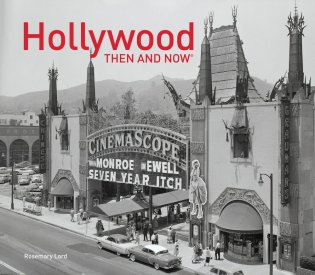
Hollywood Then and Nowa4305-la2bthen2band2bnow

YOU CAN’T EAT A BOOK, BUT…. By Miko Johnston

Spring has finally arrived. The season of renewal. Rebirth. Intensive house cleaning. Today I’m cleaning out the attic, a.k.a. my brain. Feel free to take what you want from the pile. 

I’ve been so impressed with my fellow WinRs. Jackie Houchin bravely entering the world of book publishing. Jill Amadeo sacrificing personal glory to ghostwrite someone else’s story. Gayle’s generosity in sharing her excellent writing tips. Linda’s encouraging words about writers’ groups. Then there’s Rosemary’s wonderful “Yak Shavings” and the heartfelt way she shares her life with readers. And Madeline’s musings on writing always inspire me.

In fact, Madeline’s recent post sparked an idea, which I promise I’ll get to eventually. I’m about to lose the cooking channel from my cable subscription, so I’ve been semi-binging on my favorite competition shows. I often hear contestants stress the importance of passion in cooking. To me, passion is fine, even helpful if you want to work in the food industry, but it doesn’t make the cut for the top three criteria of a good cook. I’ve known plenty of people who are passionate about cooking and aren’t very good at it, while others who have no passion for it are quite good.

In my opinion, the three most important qualities needed to be a good cook are:

1 – An understanding of the ingredients. Anyone can go into a store and buy food, whether an apple or a piece of fish. Knowing how to distinguish quality, and which variety will be best for its intended purpose, is the beginning of good cooking.

2 – A knowledge of cooking techniques. You can start with good ingredients, but they’ll be wasted if you don’t know what to do with them. Knowing how to use those ingredients, season and prepare them, is fundamental. This knowledge can often salvage less than pristine ingredients, like that fish you forgot about for a few days.

3 – (This may be the most important of all, although I never hear it mentioned.) You have to eat good food. Good food doesn’t necessarily mean haute cuisine or the latest “it” dish. It can be burgers, branzino, or blini. It’s food that’s prepared with skill and care, whether in a Michelin starred restaurant, the corner diner, or Grandma’s kitchen.

Which brings me back to Madeline’s post about reading books by great authors and learning from them. If you’ve read my earlier posts, you know I’ve frequently recommended re-reading the authors who’ve inspired you to write, writers whom you’d like to emulate. It bears a similarity to sitting down to a great meal in a restaurant, or watching a talented chef prepare a dish on TV. You learn from theirskill and care. Like cooking, writing requires the same three qualities: an understanding of the ‘ingredients’ that make a good story, a knowledge of the techniques of good writing, and most importantly, reading good books. Much like eating a fine meal inspires us to cook something wonderful, reading a superbly written book or re-reading one by an author we admire, to paraphrase Madeline, teaches, inspires, and rejuvenates us.

Yum.


Miko first contemplated a writing career as a poet at age six. That notion ended four years later when she found no ‘help wanted’ ads for poets in the classified section, but her desire to write persisted. After graduating from New York University, she headed west to pursue a career as a journalist before switching to fiction. She is the author of the A Petal In The Wind Series, including recently released Book III – The Great War .  Miko lives on Whidbey Island in Washington.


How To Earn $1 Million on Your First Book… or NOT!

Jackie Houchin

bag of moneyI was going to write this post on “how to make $1 million on your first book” and follow the story of paranormal-romance writer Amanda Hocking who actually sold 1.5 million eBooks in 2010 and made $2.5 million. “All by her lonesome self. Not a single book agent or publishing house or sales force or marketing manager or bookshop anywhere in sight.”

Following tips she’d gleaned from the blog of JA Konrath (an internet self-publishing pioneer, who boasted of making $100,000 in three weeks), she also uploaded to Smashwords to gain access to the Nook, Sony eReader and iBook markets.  “It wasn’t that difficult. A couple of hours of formatting, and it was done.”

Then… she got a $2 million contract from St Martin’s Press and… yada, yada, yada.   Here’sHerStory

Today the self-published book market is flooded with books, and unfortunately a lot of them are inferior in quality in one way or another.  Authors in a rush to publish don’t take time to write a quality story, edit, format, proofread, and design a cover professionally. And less than half of them make even $500.

So what’s a newbie author like me to do?

I’m currently working on a middle grade children’s book manuscript. It is a collection of twelve stories from the POV of seven kids who are the children of Missionaries in Africa. The kids take turns writing emails to their friends back home, telling of adventures, mishaps, mysteries, and lessons learned. In the process they reveal amazing bits of African culture, as well as showing how kids anywhere can use the Bible to help them in life.

Because it is unabashedly a Christian book and might be difficult to market, I decided to self-publish.  I’m also determined to make it the best possible book I can.

Okay. No problem.

I’m a journalist and a reviewer. I’ve written tons of stories for my granddaughters over the years. And these twelve stories have been “kid tested” to more than a dozen children at my church. (They loved them.)

So all I have to do is a minor rework so they fit together smoothly, check for typos and grammar errors, and ask a friend to help me upload it to Kindle and Createspace. Right?

WRONG!

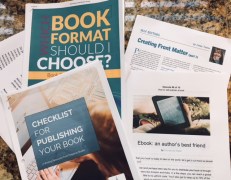
IMG_3243As I began to read blogs about self-publishing and downloaded PDFs like “Checklist for Publishing Your Book” and “Which Format Should I Choose” and followed marketing blogs with tips on using  social media, launching your book, advertising, newsletters, and websites, I discovered there’s a lot more to consider.

How to self publish your bookI bought and read “How to Self Publish Your Book” by Craig Gibb, which details about titles, pen names, and blurbs, as well as editing, cover designs, formatting, promoting and marketing options.

Word by Word Editing“Word by Word, An Editor Guides Writers in the Self-Editing Process” by Linda Taylor describes in detail the process of content and copy editing, proofreading, formatting, and all the front and back matter I would need to write for a complete “up-loadable manuscript package.”


My take away, if I am determined enough to do it:

  1. Write/rewrite my stories so they are polished to a mirror shine and have a kid-compelling first chapter.
  2. Get my manuscript professionally edited. (I sent in a sample 750 words to be edited free to one publisher, and was aghast at all the track changes suggested!) A proofreader is also high on my list.
  3. Get professional help in formatting my manuscript for the various eBook and print options. (There are just too many things that can go wrong, and I know from a dear friend on this blog that the learning curve is steep.) This is especially important because I want to include photos or illustrations.
  4. Get a cover designer/illustrator who can format for both eBook and Print, and who can portray the vision I have for the stories.

How much is this going to cost me?  A lot.

Can a middle grade children’s book with a Bible slant recoup that in sales?  Only God knows. I’m really NOT out to earn $millions. Any profit I make will be channeled back into the Africa ministries that I love.

But… I DO have a person who has promised to read the book and write a foreward for it. He’s worked with Wycliffe Bible Translators and travels the world as a Partnership Facilitator. He’s been to Malawi many times.  Who knows where THAT contact might lead.

And YOU might even know a 7-12-year-old who thinks it would be fun to grow up in deepest, darkest Africa!  And want to read my book.

IMG_3208

Becalmed…

     Madeline (M.M.) Gornell is the author of seven award-winning mystery novels. Her current literary focus is Route 66 as it traverses California’s Mojave Desert in her “Rhodes” series. Madeline is a lifetime lover of mysteries, and besides reading and writing, is also an occasional potter. She lives with her husband and assorted canines in the High Desert. Visit her website and Amazon Author Page.


Despite my post-title, I’m not a sailboat person. Know little about them—and the several sailing adventures I did have, made me queasy, both when actually sailing, and even when just sitting there on the water barely rocking back and forth. So why the title? I like the word, both its sound and emotional connotation. And for me, it’s more of an accurate description for those times when I’m not in the “mood” to write, than the often used phrase “writer’s block.” Becalmed feels and sounds for more appropriate for what I feel those periods of time.

But why share my current becalmed circumstance and affinity for the word? Because the trail from thinking about the word led me to a possible value in sharing what I actually do to get my “writing-wind” back a-blowing.  Another tool to consider adding to one’s writing toolbox?

I’m pretty sure I’ve listed somewhere in one of my posts the mistresses of crime I love and rely upon for guidance—what I’ve dubbed, my “oldies but goodies.” In particular, Agatha Christie, Ngaio(Nye-oh) Marsh, Margery Allingham, and more recently, P.D. James. And what I do, is go over what in particular I like about their writing, and what I have learned, or want to continue learning from them. My writing-goals in the sky kind of thing. Usually, by the time I’m midway through my list-of-writing loves, I start moving forward again, e.g., new story ideas, or changes to something I’ve already written pop into my mind. I catch a breeze.

So starting with my most recent influence first, Ngaio Marsh(1), and with homage to her:

  • I’ve allowed myself to ignore recent conventional knowledge on the importance of short sentences, and using more dialogue. Funny thing is, I love reading novels in that style–but for writing them, I’m stuck. It was hard, but allowing myself to ignore focusing on dialogue and continuous action has been very freeing for me. But the nugget here, is not to argue the point of right or wrong styles, or what’s a better or not approach—but that Ngaio showed me it was “okay” to write in a way I like and in line with stories I want to tell.  She did it, why can’t I? I have permission from one of the greats…
  • Also, using long-winded sentences, conveying several layers of meaning and complex thoughts is acceptable. Tedious sometimes, and that’s the trick—long but sustaining interest (and combined with short to the point sentences before and after in a melody to achieve what I’ve in the past called lyricism.)
  • Multitudinous characters—like in our real lives—some important, some seemingly not so much, and at different times viewed from different perspectives, but all layering the fabric of our lives–and for me, my stories. I’m very fond of Ngaio’s Inspector Roderick Alleyn(especially when played by Patrick Malahide on video), but often, the other characters take the lead, set the scene, even tell much of the “what happened” part of the story. Not everyone likes that, I know—but I love that in her writing.
  • Also, Ngaio Marsh showed me you can write (have as a goal) many complex literary like tomes, not just one “great novel.” Diligence and tenacity.
  • And then, when I think about her settings, her scenery descriptions, especially in her New Zealand tales, re-envisioning usually gets me going again. Scenery/location/local color and culture can be integral in bringing a story alive–and to my point here--starting the wind back a-blowing.
Sailing with your writing-wind

Now that I’m at the wrap-up part of this post, my hoped for take-away is–reading well(2) and revisiting what you have read, are not only crucial keys to writing well, but can also get a good wind started when you might need one.

Hoping the writing-wind is at your back right now—and I think I feel a breeze coming my way…


Ngaio Marsh – Public Domain Image

(1)http://christchurchcitylibraries.com/Heritage/Photos/Topics/People/MarshNgaio/ https://commons.wikimedia.org  

https://en.wikipedia.org/wiki/Ngaio_Marsh

(2) P.D. James is quoted as saying “Read widely and with discrimination. Bad writing is contagious.”

Ghostwriter

by Jill Amadio*

Ghostwriting2Many authors need a day job until our books earn enough royalties and renown to quit working for someone else. One day job that grew and grew into an almost full-blown career for me began with a ghostwriting stint. It also led to writing my own mystery series.

I first turned into several alternate personae when a magazine editor informed me that a reader was looking for a ghostwriter to churn out a business book.

“A whole book? Impossible,” I said. “Too many words.”

“Imagine each chapter as an article,” she suggested. After she told me the average payment I was hooked.

Since then, I’ve ghostwritten more than a dozen memoirs, autobiographies, and business books that required transforming myself into a U.S. ambassador, a Las Vegas croupier, a Texas oilman, a Las Vegas taxicab fleet owner, a motivational speaker, a triathlete, and sundry others. I also ghosted two true crimes. For two of the books I was promoted to co-author half-way though.

Eventually a friend referred Jonathan to me to ghostwrite a crime novel. It turned out during my initial visit to his Beverly Hills mansion that he had always wanted a book with his name on it to display “right here,” he said, patting an enormous Italian marble coffee table. His dilemma was that he had no idea how to write. Reminded me of the time I was at an airport shop in Indonesia and picked up President Sukarno’s biography, a heavy red leather hardcover akin to a family Bible only to find it full of blank pages (he was still living at the time).

Initially, Jonathan envisioned a family drama about a typical insurance scam of which his father had been a victim. A little tame, I said, and persuaded him we should add a couple of murders to spice up the story. He agreed and said the characters must include his parents, two brothers, six ex-wives, four mistresses, and three daughters. I told him, No, no, far too many. I would take three wives, two mistresses, and two daughters, all the while struggling to explain to him that in the book they’d be fictional and would not resemble the real people. He stopped complaining when I asked which of his family he’d like to be the killer.

Occasionally during the writing my client threw a spanner into the works such as calling from Belize or Paris and asking me to add even more murders to the mix now he’d got into the swing of things. Luckily, he was pleased with the various twists and turns, especially when I included thugs from a Bel Air branch of the Russian Mafia (honestly, it really exists) as part of the plot.  I gave the murderer my great-grandfather’s revered Scottish name for some inexplicable reason, honored Keats by sprinkling quotes throughout, and withheld adding Cornish cuss words although sorely tempted. Instead, I saved them for my mystery series that features a younger Miss Marple from Cornwall.

I enjoyed creating a fictional forensic accountant on someone else’s generous dime and planned to develop the book into a series. I had grown fond of the sleuth but Jonathan owns copyright so my brilliant idea died an early death.

An inveterate traveler on both business and pleasure, Jonathan was absent a lot. In fact, most of the time. He told me to basically just carry on, and he’d read the book after it was finished. As it turned out, he preferred me to read it aloud to him, which I did, leading to another unexpected part-time career in voice-over and narrating audiobooks.

Jonathan pronounced himself satisfied. But then he said his third daughter was going to be very upset that I’d left her out. He insisted on her inclusion. Fearing my final fee in jeopardy I had her join the Peace Corps in Chapter One and whisked her off to Somalia, never to be heard from again.

However, when it came time to querying agents Jonathan refused to spend longer than two weeks on the search and quickly self-published with an expensive hardcover POD press. For which I was grateful, nevertheless. Even though I had to watch him signing my book, my bank balance was healthy,

We soon had a book signing at Dutton’s. Jonathan was having a grand old time chatting to the two hundred or so friends and neighbors he’d invited to congratulate him. As his eyes kept darting to the door to see who was arriving I just knew he was hoping for a Hollywood producer, a director or an actor who’d slap an option offer on the table within the next three days. He’d begun to like this author thing. I decided to phone a film producer friend and invite him over to put Jonathan out of his misery.

“Hi, Brandon, how about coming along to a book signing right now? It’s not far from your place”.

“Who’s the author?”

“Oh, no one you know”.

“So why would I come?”

“Well, I wrote it”.

“Why didn’t you say it’s your book signing?”

“It isn’t”.

He snorted and hung up.

Since then I have continued to ghostwrite books, present how-to workshops, and assist other writers in entering the field. In fact, Kelly James-Enger wrote a book on ghostwriting and spent weeks interviewing me. Happily, she credits me for each quote spread over five pages, and thanked me in the Acknowledgements.

I like helping someone realize their dream of creating a family history so that their descendants can learn of their heritage. The joy on their faces when they hold that published book in their hands almost matches my own.


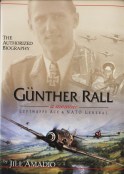
gunther (1)My biography of a World War II pilot, “Gunther Rall: Fighter Ace and NATO General” was a bestseller and is an eBook on Amazon and Smashwords. I have ghostwritten 14 memoirs and other books for clients including a true crime and a thriller.  jill valle book

I co-authored the Rudy Vallee memoir, “My Vagabond Lover”


Capture (1)About the Author

Like Tosca Trevant, the amateur sleuth in her crime series, DIGGING TOO DEEP and DIGGING UP THE DEAD, Jill Amadio hails from Cornwall, UK. But she is nowhere near as grumpy or unwittingly hilarious as her main character, a younger Miss Marple. Jill wrote two true crimes, and ghostwrote a crime novel. She has written 14 biographies.  She was a reporter in Spain, Thailand, Colombia and the United States.  She wrote for Rolls-Royce Magazine, the London Sunday Dispatch, Conde Nast, the Los Angeles Times, the Westport News, and was a reporter and syndicated columnist for Gannett Newspapers in New York. For 12 years she wrote a column for Entrepreneur magazine. Jill writes a monthly column for the UK-based MysteryPeople ezine, and freelances for My Cornwall magazine.

Visit Jill Amadio at:  jillamadiomysteries.com

Mystery books by Jill Amadio:

Digging too deep_533x800-e1383673499772   Digging Too Deep

DiggingDeadCover-375x600  Digging Up The Dead

~~~~~~~~~~~~~~~~~~~~~~~~~

*This article by Jill Amadia was posted by Jackie Houchin.

Who Was That Guy? by G.B. Pool

Dapper Dog“There are no small parts, only small actors.”

The truth in this Hollywood line is that any actor can make his part better by bringing out every ounce of character in the role. Thelma Ritter did it in spades in roles like she had in All About Eve and Rear Window. Her presence and personality did a lot for the part, but let’s also give some credit to the playwright. And in a book or short story, you have to give ALL the credit to the author… or the blame if he or she doesn’t make every character work, large or small.

But what about those minor characters?


  • They bring the background to life. Example: regulars in a cheap dive bring out the seedier side of life while diners at the Ritz show us how the other half lives.
  • They provide information about the surroundings and specifics. They can run in and tell us the bridge is out or mention that so-and-so’s nutty sister is still in the institution or just got out of the slammer.
  • They add mood and comic relief. Example: Joe Pesci in a Mel Gibson movie.
  • They can be places the hero might not be able to be. This works especially well in a first person narrative. The main character can’t be everywhere, so Old Clem can fill our hero in on what’s happening somewhere else.

Gas pump

  • They can advance the plot. Sometimes you need to dump information without making it sound like an information dump. When the old lady down the street can tell our hero every move of the mysterious guy who rents the small house on the corner, get out of the way and let her blab.
  • In mysteries, Secondary Characters are called suspects… or victims.


Flat vs. Round Characters (Amongst our Minor Players)


Flat characters can be described in one or two sentences. They fit their surroundings, sometimes the way they dress tells us if we are in the city or a rural environment. Since they have a minor part, often they don’t need a name because they aren’t on stage or the page very long.


Example: The butler, with the demeanor of an undertaker, escorted the police detective and the other officer to the business wing of the large house with solemnity befitting a funeral procession. It was slow and wordless, like a bizarre pantomime. The men were ushered inside the large workroom and the door firmly shut behind them.     From “A Perfect Alibi” in From Light TO DARK by G.B. Pool


The term “butler” alone says we aren’t in a flop house in the Bowery. If you are writing a short story you can eliminate a lot of unnecessary words by dropping in a character who fits a particular situation.


Round characters are those who have something to say about the situation. They inform the reader and/or the main character of facts not readily available.


Example: She stood there, all five foot-one of her, petite, platinum hair, looking up at me through glasses thicker than the bottom of a shot glass. She must have been eighty-five. Why did I seem to attract folks lingering in God’s waiting room?

“You’re Johnny Casino, aren’t you?” she said, her faded blue eyes squinting at me, sizing me up. “You came to my house when you were looking for that dead girl, didn’t you? She wasn’t dead, was she?”

I managed a “no,” but that was all.

“I told you I heard their voices. All those dead girls. They’re still there, you know?”

I remembered her, all right. She looked like Ruth Gordon in that Clint Eastwood movie with the orangutan. Just another nutty old lady who sees things that aren’t there and hears things that were never said. She swore she could feel the vibes from scores of dead girls buried in her backyard.

“Have you talked to the sheriff?” I said, resuming my quest for the perfect cold brew.

“He thinks I’m crazy.” She tugged my sleeve. “But I’m not.”

“We found the missing girl,” I said over my shoulder. “She wasn’t dead. You don’t need to worry anymore.”

“These girls are dead. I can feel it. I hear them screaming, ‘Stop! Stop! You’re killing me, or am I already dead?’”

From “The Snuff That Dreams Are Made Of” in The Johnny Casino Casebook 2 by G.B. Pool


The fact that this is an old lady is slowly revealed one word at a time until we get to the thick glasses part. She adds to her part by not letting the detective get a word in edge-wise. The old lady gives Johnny information that he needs to solve this case. And she has personality up the wazoo.

 Typewriter Vintage

Here’s a brief exercise to work those creative muscles of yours.


Minor Character WorksheetDescribe a lumberjack or deep sea fisherman who is a minor character in a story.


____________________________________________________________

____________________________________________________________


NOTE: Okay, this was a trick… If you wrote out more than a word or two about either the fisherman or the lumberjack, you were working too hard. The very fact both of these occupations come with a built-in look, all you had to do was mention that occupation. Most readers will assume you mean the guy with the yellow slicker and wading boots on a fishing boat or the big guy with the plaid shirt and an ax over his shoulder in the woods. You needn’t go much further than that unless there is something unique about the guy like maybe one is three-feet tall or one had a peg leg. Stock characters are just that. A mention of their occupation or places they frequent tells the reader all he or she needs to know. Save your word count for something important.


Without a handful of great characters, all you have is a travel guide. Readers want someone to care about and be willing to travel with, but in a short story you will have fewer people to go along for the ride. In your novel, you can have a few more of these folks to carry your story along.

But remember this, if the character has no purpose, if he isn’t imparting valuable information or if she isn’t describing the surroundings, eliminate them. You can also combine several of your walk-ons into one character so you don’t have too many folks populating your story.


PeopleAlso, if you have too many minor characters, they will start to clutter up your story. Your reader won’t know if he is supposed to remember this character or if the person is just an information-dropping entity.


If you don’t give the minor character a name, it will be assumed they aren’t a major player. That might help. But most of all make sure they have a reason for being there. Remember, there are no small parts…


Do Writers Write Alone? by Linda O. Johnston

typewriter

Do writers write alone? 

The answer is yes… and no.

Just look at The Writers in Residence.  This group is composed of several women who love to write, and do write extensively.  Our writing takes place alone, since actual writing is generally a solitary pursuit.

But then there is this group.  As many of us as possible get together for lunch monthly as well as blogging here on a schedule, and keeping in touch via email about what’s going on in our writing.

So though we generally write alone, being in communication with each other is also important to us.  And The Writers in Residence is far from being the only writing organization.

books-on-shelfIn fact, when I meet someone who’s a new writer, or who wants to write, and would like my advice on how to proceed, my first response is generally to tell them to join a writing organization.  A general writing organization is fine, but if they happen to write in a genre, then that organization should focus on whatever genre it is.

Why?  Writers enjoy helping other writers.  We encourage others to write and give advice on how to write and how to sell and promote what we’ve written.  Newbies can learn a lot from organizations and talks that are given there and meeting new people with similar interests and… well, a lot of ways.

So me?  In addition to The Writers in Residence, I belong to the Mystery Writers of America and Sisters in Crime, including their Los Angeles chapters.  That’s because I write mysteries.  I additionally belong to the Romance Writers of America and its Los Angeles, Orange County and Santa Clarita chapters–because I also write romances, mostly romantic suspense.  Then there is the International Thriller Writers.  Yes, I’m considering writing a thriller.  There’s also the Dog Writers of America.  And as any of you who are reading this and are aware of my writing know, nearly everything I write these days has dogs in it!

I also attend quite a few writing conferences.  This year, that will include Malice Domestic, which is all about cozy mysteries, as well as the Romance Writers of America National Conference.

notebookI enjoy interacting with other writers, learning from them and informing them of anything I know that might be helpful to them.   Plus, I love hearing their writing information and suggestions.  I know I’m not alone in that.  So if any of you reading this are writers who want to learn more–and what writer doesn’t want to learn more about our craft and related topics–then join a writers organization or a writers group, or more than one!

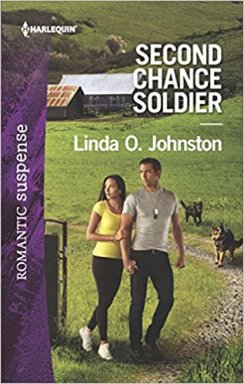
AnSecond Chance Soldierd by the way, I’m delighted to say that my first book to be published this year, Second Chance Soldier, is currently available.  It’s the first in my new K-9 Ranch Rescue miniseries for Harlequin Romantic Suspense, and it’s all about dog training, mystery solving and, yes, romance!

Linda O. Johnston, a former lawyer who is now a full-time writer, writes the Barkery and Biscuits Mysteries for Midnight Ink. She has also written the Superstition Mysteries for Midnight Ink as well as the Pet Rescue Mystery Series, a spin-off from her Kendra Ballantyne, Pet-Sitter mysteries for Berkley Prime Crime.  She additionally currently writes the K-9 Ranch Rescue miniseries for Harlequin Romantic Suspense about a ranch where dogs are trained, as well as the Alpha Force paranormal romance miniseries about shapeshifters for Harlequin Nocturne.  And yes, they all involve dogs. Her most recent release is her 47th published novel, with more to come…soon.


YAK SHAVING REVISITED…. by Rosemary Lord

Candy                    Well, it all started because of the chocolate. You know – all that extra chocolate that abounds over the holidays. You can’t leave it sitting there. It has to be eaten. It would be rude not to.

But then, in the cruel light of day, you realize that your clothes really, really shrunk in the wash – especially around the middle…  Then, it was that late-night infomercial for exercise equipment that beckoned. Just what I need, I told myself. And it was on sale.

Problem was, that when stretched out to start my work-out, the equipment was over 8 feet long. This is where the Yak Shaving kicked in again. (For those who missed it, I wrote about ‘Yak Shaving 101’ in the April 2017 Blog on this site. It’s the system of the many unintentional, side-tracking steps one goes through to achieve one’s original goal.)

In order to make room for this work-out equipment, so I could use it in the living-room – several things needed to be removed. Best place for those boxes of files, DVDs and things left there ‘to deal with later,’ was in my office cupboard. Yak Shaving fully in gear, I had to clear out the office cupboard first.

Boxes

Over the next two days, I got rid of six large bags of trash, shredded two large bags of financial papers and gave a car-load of things to the local Cancer Discovery Thrift Shop.

I really didn’t need those four reams of assorted colored copy paper, six unopened boxes of Sharpies, when one would suffice – stacks of used folders with names scribbled all over them, and plastic bags. What was I saving Barnes and Noble plastic bags for?

A whole shelf was filled with pay-slips from acting jobs and residuals going back too many years to own up to. I pulled out a few important ones, just as reminders of what I had once done. The rest got shredded.

But the other side of this challenge reaped all sorts of rewards. Apart from loads of empty space, I even found a $100-bill in an old note-book!

I went through boxes of my old photos from shows and films I had worked on, before I quit acting to focus on my writing-career. I had forgotten many of the great adventures I had in my life – some reckless moments that had me wincing, as I came across plane, train and boat tickets. Did I really go there alone at such a young age? Crazy! A lot of “what was I thinking?” moments, too.


As Guardian in Dr. Who

But I sure met a lot of interesting people in my travels. And, of course, the movie premieres I attended, visits to the Cannes Film Festival when the real movie stars and legendary directors, producers, composers were still around. I found notes from a flying lesson. (What? Where? Why?) And the myriad of odd jobs I have done since I left school so early to pursue my dreams. (Photo from Rosie’s performance in Dr. Who)

I also came across a couple of Trader Joe’s chocolate bars – too old to eat, alas. How did they get in there? Probably hidden from my late-husband, Rick, who would devour chocolate if he saw it – and either he was on a diet and should not eat it, or more likely because I wanted to eat it and I knew the chocolate bars would not remain if Rick came across them. (It’s an old, married thing – for those singletons out there.)
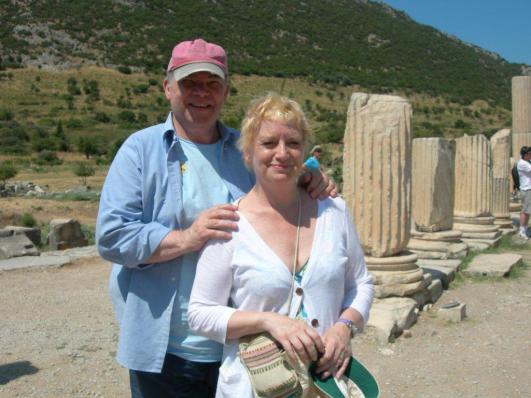
Trip of a Lifetime 2009 240

I found some very special mementos from Rick, incidentally. Notes we had written each other, more birthday, Christmas and Valentines cards. Re-reading those simultaneously brought a big grin to my face, warmth to my heart – and a lump in my throat. I remind myself constantly how lucky I was to have loved and been loved by my husband.

In so many adventures along the way, I learned new skills: like turtle-catching, for one. The horse-back riding lessons were not quite so successful. But I can dance a mean Charleston, and cook up a tasty meal from left-overs with a recipe Cary Grant told me he got from Doris Day. I can still cut a basic sewing pattern from my days in Fashion Design, (carefully) handle snakes, write a good Press Release and can tell you lots about the early history of Hollywood. Until this enforced de-cluttering, I had forgotten the many roads I traveled.

I started making notes, as I uncovered more treasures: another splendid Yak-Shaving side-step. But the memories I noted, the dates, the forgotten names recovered, were all heading in one direction. More writing projects.


Yak

This Yak Shaving has its good points. I am delighted to open my office cupboard door to see so much space. Those boxes that had to be moved into said cupboard in order to make space to use the new exercise machine? Well, once I focused on the de-cluttering and asked those required questions: “Do I love this object, do I need this, does it bring me joy?” The answer was “no” all round. So I got rid of those boxes, too.

Shelves

And as I now have the space to do all the push-ups, pull-ups, leg and stomach exercises I want – I can contemplate the new stories, articles and books I intend to write as I work out.

As I look through those recovered memories, would I do things differently, given the chance? Sometimes, yes. But mostly ‘no.’ I wouldn’t be where am I am now and I like where I am. Yak-shaving complete – and surprisingly successful.

If you dig back through your own past – would you do things differently? And if so, what? Hmmm, Food for thought – as long as it’s not chocolate.


Rosemary Lord

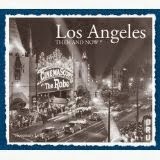
The author of Best Sellers Hollywood Then and Now and Los Angeles Then and Now, English born ROSEMARY LORD has lived in Hollywood for over 30 years. As an actress, her credits include Monty Python, Rivals of Sherlock Holmes, Days of Our Lives, L.A. Heat and more. She did voice-work on Titanic, Star Trek, Shakespeare In Love, The Holiday and Pirates of the Caribbean amongst others.

Also a former journalist, she wrote about Hollywood’s Golden Age, interviewing such luminaries as Cary Grant, James Stewart, Tony Hopkins, John Huston. She was a Senior Publicist at Columbia Pictures.

Rosemary lectures on Hollywood history and is the President of the Woman’s Club of Hollywood. She is a member of MWA and Sisters-in-Crime.

She is currently writing a series of murder mysteries set in the 1920’s Jazz Age Hollywood featuring Lottie Topaz, an extra in silent movies.


DEDICATION by Miko Johnston

Miko first contemplated a writing career as a poet at age six. That notion ended four years later when she found no ‘help wanted’ ads for poets in the classified section, but her desire to write persisted. After graduating from New York University, she headed west to pursue a career as a journalist before switching to fiction. She is the author of the A Petal In The Wind Series, including recently released Book III – The Great War .  Miko lives on Whidbey Island in Washington.


As I begin the fourth book in my Petal In The Wind series, the only thing I know for sure is the novel will be dedicated to my father, George.

He was born in a province of Germany in July 1919. Do the math – his mother gave birth to him about nine months after Armistice Day. Not a unique event in Germany, or any nation involved in World War I. Add eighteen years to that and you get a new generation of men ready to fight in 1937. Within a year German expansion had begun with the annexation of Austria and the Sudetenland of Czechoslovakia. World War II loomed. Being Jewish set my father on a very different path.

*      *      *

When you face something monumental, seemingly impossible to get through, you can do one of three things. You can retreat. You can plow through no matter the obstacles or odds. Or you can detour around it. When it came to difficult conversations, my father picked number three. Always.


He talked to people, including my brother and me, in a kind of code. When he couldn’t be direct or graphic about something, he’d use humor or quote American isms to elucidate. He’d occasionally fall back on a childhood joke or expression. We learned, over time, that he was what is called a Holocaust survivor, an unfortunate victim-label. To ensure we understood what happened, he spoke to us about that time in his life, but never about the worst of it in highly descriptive words. He kept that burden to himself.


My education on the subject began simply enough with a question that was dealt with in an equally simplified manner. When I asked at age three about the numbers tattooed on my father’s arm, he told me it was his phone number.  As a kindergartener, I asked him about an orange book, missing its dust jacket, shelved in our bookcase. It fascinated me with its odd-looking letters dancing along the spine – I thought it was Chinese. My father told me I could read the book when I was old enough to read the title.


Several years later I looked at the orange hardcover’s spine and suddenly the fancy font letters had transformed into English words. I brought the book to my father and said, “It’s called, The Tiger Beneath the Skin”. I began to read it that night.


Today I would describe the book as a selection of tales about Jewish experiences during Nazi occupation with a hint of paranormal, like a cross between an anthology of parables and episodes of “The Twilight Zone”. I recently saw a copy on Amazon, wearing a dust jacket, and learned for the first time that the book has a subtitle: “Stories and Parables about the Years of Death.” At the time I read it, some of the stories sent chills up my spine and some intrigued me. I’m sure many went over my head, which is why I can’t remember them all, but a few were unforgettable. The stories all had a peculiarly uplifting message, whether of the Nazi officer driven insane by his murder of a blind Rabbi, or the man who brought a sense of calmness and dignity to a trainload of Jews walking into the gas chamber.  Something of a selective chronical of events, the book gave me an inkling of what had happened. It also began my quest for knowledge about that period of history, and my father’s life.


My curiosity ripened by the time I’d reached my teens. I questioned my father about everything, and he answered my questions in his inimitable style. He had a knack for getting the information across in a way that wouldn’t lead to nightmares. Part of it was his own attitude. Despite everything he went through, he still maintained a positive look on life and could find humor in the darkest situations. He once hosted a reunion with fellow Auschwitz survivors. I heard the three of them laughing at one story. When the men left I asked my father what was so funny. He explained that one man, who’d been charged with filling “holes dug in the ground” with rocks, was so weak that he fell into the hole with the rock. Of course, he never said why the holes were dug, or what they contained.


I often gravitated to people who had survivor parents, thinking we’d have something in common, but we often didn’t. My friends’ parents always seemed more damaged than my father. They held onto that terror and sense of danger all their lives and passed that fear onto their children. My father’s biggest mishegas (craziness) was stockpiling non-perishable food in the house. That my father survived physically was remarkable, but that he survived mentally was absolutely miraculous.


*          *          *


I went to Berlin in September 2003 to visit the villa known as the Wannsee-Conference House, headquarters of the infamous SS during the Nazi era. It’s where my father had been kept in slave labor until the Wannsee Conference in January 1942, when fifteen Nazi officials drew up a doctrine known as the Final Solution of the Jewish Question.  The answer was total annihilation; all remaining Jews were to be sent to concentration camps, including my father. In 1992, the building became a memorial and educational site. My father had worked with the museum’s curator and Berlin’s mayor to create a permanent exhibit dedicated to slave labor during the Nazi era; his picture still hangs on the wall. Unfortunately, he never got to see it. He passed away six weeks before the exhibit opened in January 2003, so my husband and I went in his place.


We both found the museum very moving, especially the Final Solution exhibit, but I didn’t fully sense my father’s presence there due to his verbal detours. Oddly, it took a stop at a local hotel to bring me to tears. I stood in front of the building, staring at a large empty banquet room with a wooden floor and picture windows overlooking Lake Wannsee. One night, my ‘slave’ father had snuck out of the villa and went to this hotel when they held a dance. The SS guards in attendance, who knew who he was, sat and laughed as he danced with several clueless fräuleine. Standing there, I could vividly picture the story my father had told me forty years earlier, and wept.


The fourth book in my saga moves into the 1930s. I can’t help but think of my father and what he endured. He may be gone, but his story lives on and will continue to do so, thanks to what I’ve written and will continue to write. That is why the book will be dedicated to him.