

Miko Johnston is the author of A Petal in the Wind and the newly released A Petal in the Wind II: Lala Hafstein.
She first first contemplated a writing career as a poet at age six. That notion ended four years later when she found no ‘help wanted’ ads for poets in the Sunday NY Times classified section, but her desire to write persisted. After graduating from NY University, she headed west to pursue a career as a journalist before switching to fiction. Miko lives on Whidbey Island in Washington. You can find out more about her books and follow her for her latest releases at Amazon.
* * *
This blog is not about politics, but unless you’ve been comatose for a year, you’re aware of the recent U.S. presidential election and its outcome. It’s fair to say many are unhappy with the result, although it would be equally fair to say that it would be the case no matter which candidate won. Still, it’s hard to deny that this election represents a significant shift in direction for our nation, leaving many unsure and apprehensive of what’s to come.
Again, this isn’t about politics; it’s about writing. Major events have always influenced our culture, from books to visual and now social media. I wonder what trends and influences the new administration will have on writing in the future.
Biographies of the President-elect and the candidate formerly known as the presumptive President should be forthcoming, as will analyses of the incoming administration. It’s also safe to forecast non-fiction works devoted to the election, the mood of the voters that led to the results, and what the change in leadership portends for the country.
Let’s consider fiction. What sorts of themes will become popular and what will fall out of favor? I’ve asked several writers for their opinions.
Author and blogger Terry Carr predicts there will…“be less futuristic fiction”, instead we’ll have more “fiction that goes back to a simpler time… my kind of escapism.”
Gordon Labuhn, whose books range from mysteries to memoirs, suspects there will be more graphic sex and language than before as barriers to what had been taboo are lowered. He sees a trend toward attacking and weakening the media for any negative coverage of the new White House. However, when I asked him if this would put a chill on writing anything that might be viewed as unfavorable toward the President-elect, Labuhn was noncommittal.
Several writers I spoke with who prefer to remain anonymous agree that some people will turn to nostalgia and the safety of the past for escape from the present, as Carr suggests. And still others will lose themselves in lightweight comedies and mindless action as a distraction from the reality of here and now. I confess I did just that, on an overseas flight home, the day after the election.
One of the most considered responses came from writing instructor and fiction author Wayne Ude, who surmises, “Some may focus on what unites us as human beings; others on what unites us as Americans—not necessarily the same thing…(and) others will surely focus on what divides us.” He thinks one approach would be akin to Ray Br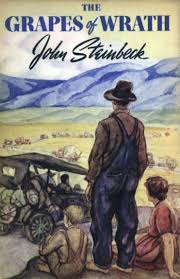 adbury’s Fahrenheit 451 or George Orwell’s 1984: “In light of a Supreme Court which has ruled that money is a form of speech instead of property and that corporations are entitled to the same rights as are human beings, a similar work might present a country which has become an oligarchy entirely controlled by the wealthy.” Another would be “the approach John Steinbeck took in The Grapes of Wrath, which was a very realistic exploration of the lives of people left behind by economic change…(and) a third approach might be satirical novels about the wealthy, in the vein of Kurt Vonnegut’s God Bless You, Mr. Rosewater or, earlier, Mark Twain and Charles Dudley Warner’s The Gilded Age.”
I agree with Ude regarding political and social satire, which has long been part of our culture. I believe it will become more caustic now, and that debate will erupt over whether a liberal bias in the media or the words and actions of the new administration is the cause. This will create a more fluid divide between legitimate news and parody, which itself straddles fiction and reality. And while, like Ude, I expect big institutions that exploit the downtrodden will continue to be vilified, I hope we don’t begin seeing the downtrodden portrayed, not as heroes like in The Grapes of Wrath, but as villains. Casting certain groups as scapegoats during unsure times has occurred for centuries, but what’s different now is that it would effectively kill political correctness. I’ve never been a P.C. fan; I believe it creates a false impression of civility and holds its own biases. However imperfect it has been in balancing freedom of speech and protection from hate speech, why destroy it when you have nothing better to replace it with?
A clue to where we’re headed came in a recent news story. Executives at several television networks have decided to break with tradition and not take questions from critics at their semi-annual press conferences. Many networks have come under fire for their lack of racial and cultural diversity, both on and behind the screen, as well as their depiction of violence, particularly against women. This is not new. Neither is the overrepresentation of well off, educated professionals as primary characters on most scripted programs. However I do think these concerns will go unchallenged by the new administration.
Will any of these scenarios come to pass? Ultimately it depends on how we writers decide to react to the new political reality. We can be cautious, or courageous. We can block out the real world and focus on the worlds we build in our stories, or we can bring some of that reality into our characters’ lives, no matter where they live, or when. As we are about to enter a new era, I’m asking writers: What trends in fiction do you foresee in the future? Will the change in leadership have any effect on what you choose to write about? And if so, how?


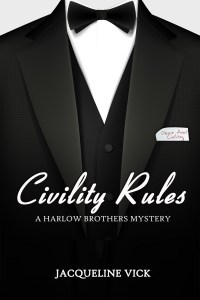
 Jacqueline Vick is the author of over twenty short stories, novelettes and mystery novels. Her April 2010 article for Fido Friendly Magazine, “Calling Canine Clairvoyants”, led to the first Frankie Chandler Pet Psychic mystery, Barking Mad At Murder, followed by A Bird’s Eye View of Murder. Her first Harlow Brothers’ mystery, Civility Rules, is out in ebook format and paperback. To find out more, visit her website at
  Dave Rosenfeld brings us the Andy Carpenter mysteries. His character is a defense attorney who inherited a pile of wealth, so he spends most of his free time with the Tara Foundation, a dog rescue. The rescue is the launching point for the mystery, such as when a dog is stolen from the foundation only to turn up next to a corpse in Who Let the Dog Out? And yes, I do plan to purchase The Twelve Dogs of Christmas for my holiday reading list.
 picked up Ashley Weaver’s Death Wears a Mask based solely on the cover, so I guess good covers do matter. I found a fun world that revolved around Amory Ames and her playboy husband, Milo. The back cover described it as Agatha Christie updated, and I thought it came close. This is the second book in the series, so I’ll have to go back and start with number one.
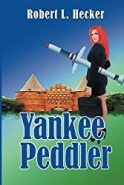 L. Hecker’s Yankee Peddler is more of a farcical social commentary than a mystery, but it’s so funny I had to include it. Ambassador Elizabeth Sullivan Wexford Adams sets out to sell the Litanians on “The American Way.” Hard to do when these isolated islanders have never heard of the USA.


 Later, as the more intriguing aspects of taking Buster to a psychic began to settle in, I thought I could make up some of my expenses if I could interest a magazine in running an article. I sent out queries and scheduled two appointments for my dog.

 Kate Thornton is a retired US Army officer who enjoys writing both mysteries and science fiction. With over 100 short stories in print, she teaches a short story class and is currently working on a series of romantic suspense novels. She divides her time between Southern California and Tucson, Arizona.
 Jacqueline Vick is the author of over twenty published short stories, novelettes and mystery novels. Her April 2010 article for Fido Friendly Magazine, “Calling Canine Clairvoyants”, led to the first Frankie Chandler Pet Psychic mystery, Barking Mad About Murder. To find out more, visit her website at
  ial representative
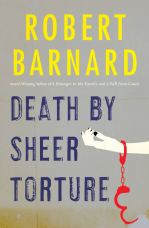 e mysteries throw an average person into a mix of lunatics. It’s that duck-out-of-water aspect that makes for big laughs. Take Death by Sheer Torture by Robert Barnard. A perfectly respectable police detective must return to his family home (which he’s avoided for almost 20 years) where he’s surrounded by the suspects–his family members. These include a slob cousin who married the daughter of Italian mafia and their brood of Squealies (the children), a cheerful aunt who collects and admires Nazi memorabilia, and his very real memories of the corpse, his own father, who died in embarrassing circumstances. What more could you want?
 Rosemary wrote her first book when she was ten years old – for her little brother. She also illustrated it herself. It was later rejected by Random House!

 Miko Johnston is the author of

 The Writers in Residence
You must be logged in to post a comment.