
 A former private detective and once a reporter for a small weekly newspaper, Gayle Bartos-Pool (G.B. Pool) writes the Johnny Casino Casebook Series and the Gin Caulfield P.I. Mysteries. She also wrote the SPYGAME Trilogy: The Odd Man, Dry Bones, and Star Power; Caverns, Eddie Buick’s Last Case, The Santa Claus Singer, Bearnard’s Christmas and The Santa Claus Machine. She teaches writing classes: “The Anatomy of a Short Story” (which is also in workbook form), “How to Write Convincing Dialogue” and “How to Write a Killer Opening.” Website: http://www.gbpool.com.
“Hi. My name is Johnny Casino. I’m a retired P.I. with a past. I just hope it doesn’t catch up with me. That’s how I was introduced in the first book about yours truly. It was fun reading about my exploits. I guess when you’re in the middle of it; you don’t see what’s happening around you. But the stories in The Johnny Casino Casebook 1 – Past Imperfect do a pretty good job telling part of my life story.
“Since the book is about pasts, mine and a few other people I bumped into along the way, it gives you a pretty good idea who I am. Anyway I thought so when I read it. But sometimes what you think you know isn’t the truth. I found that out the hard way.
“You see, I grew up in a Mob family in New Jersey. Nothing like having a father who is the consigliere for one of the top Mob families in the country. And my darling mother was the daughter of another Mob boss right outta Chicago. What a pedigree. My name was Johnny Cassini back then.
“Me and my brother were raised thinking this was the only life there was. But after a while I got tired of it. Maybe that’s because I watched a lot of old movies while waiting for protection money to be dropped off at my hotel room in those days. These were Black & White films on the movie channel. But a steady diet of Bogie, Cagney, and Edward G. Robinson opened my eyes. And it wasn’t just seeing them splattered on the pavement. Sometimes these tough men played the good guys. That’s when I started seeing a different side of things.
“So I fled to Miami and joined another Mob. I know that didn’t exactly remove me from the life I was starting to hate, but I was seeing it from a different perspective. I worked on a gambling ship and met a lady who changed my life. She wasn’t the only one. Not by a long shot, but this gal was the wife of the Mob boss in Miami. She was steering me away from her daughter who was even more trouble. And then everything went to hell.
“A dealer on that gambling ship went overboard one night, literally, so I switched identities with him and then hightailed it to Los Angeles. So Johnny Cassini died and Johnny Casino was born. But the story didn’t end there. I was having a hard time shaking my life of crime and got myself into some hot water when I was working for this guy in L.A. He had me kidnap this lady. She’s the one who really changed my life.”
“Let me take over from there, Johnny. Hi, my name is Ginger Caulfield. I’m a private detective, too. I was on a case and ran into Johnny during his crime wave here in Los Angeles. It was an odd meeting to say the least. He kidnapped me, but I could tell the guy had something, so when the case was over I told him to look me up sometime because I might have a job for him. He did.
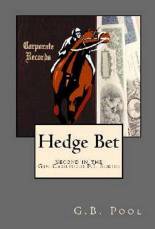
 “Johnny worked for me several years until he had enough P.I. hours under his belt to go out on his own. I hated to see him go, but I knew he worked better alone. Most of the time I do my work solo like the case at the racetrack in Hedge Bet. I should amend that statement because I got my husband, Fred, to do some work for me. His trip to Mexico to bring back a witness led to a few choice words from him, mostly unprintable. But the guy’s a natural P.I.
“I had been in the detective business for a while and knew good people like Johnny when I saw them. In fact I knew a few things about Johnny that he didn’t know, but I have a reason. You see my uncle is a spy. His name is Robert Mackenzie and he has had some incredible exploits around the world ever since World War II. His story, at least the parts that can be told, are in a series called The SPYGAME Trilogy documented by a writer who I got to know through the years. She’ll explain this next part.”
“Hello, folks. My name is Elaine Barton. My dad was involved in Colonel Mackenzie’s exploits and I got caught up in a few exciting adventures in books like The Odd Man, Dry Bones, and Star Power. The trilogy covers about fifty years and follows not only Mac’s life but also my father’s Air Force career. Parts of my life got caught up in this tale, too, and I put it all in book form. Though you’ll see in the books, some of it almost didn’t get written.”


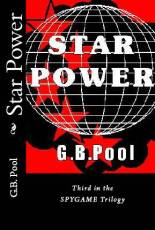
“Thanks, Elaine. Since I knew my Uncle Mac had ways of checking on people, I had him check out Johnny Casino. I learned his real name, 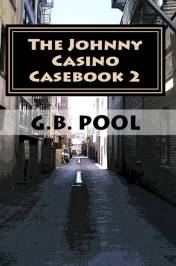 or at least I thought it was his real name, until another story in the Johnny Casino Casebook series uncovered something that even Johnny didn’t know. It changed everything for him. It’s in The Johnny Casino Casebook 2 – Looking for Johnny Nobody. That’s when I started seeing a pattern.”
“Hey, Gin. Johnny here. You aren’t the only one who is starting to see a pattern. When I had a case in Las Vegas, I met one of the biggest headliners in the world, Jack Lynn. He turned up in two of my stories, but then I noticed he was also in The Santa Claus Singer about a lounge singer called Frankie Madison. He met Jack, too.”
“I’ve got another one for you, Johnny. One of the guys I trained after you went out on your own, Chance McCoy, has a story about him and me in the upcoming short story collection called Second Chance. Chance is a special guy. You see, he got killed on a case, but his story doesn’t end there. Not by a long shot.”
“I can give you another one, Gin.”
“Lay it on us, Elaine.”
“I’ve heard a rumor that there is a particular elf, yes, I did say elf, who is thinking about starting his own private detective agency to help ‘the little guy.’ How does something like this happen?”
“Maybe we should ask the author of all our books. Hey, G.B. What goes? The ladies and I want to know.”
“Okay, Johnny. I’ll confess. When I started creating this fictional world I had no idea you all knew each other, but as this world grew I saw connections between all of you. First it was Johnny knowing Ginger Caulfield. Then I wondered how Gin knew so much about Johnny’s past and I realized her uncle was Mac Mackenzie. Who else would have access to all that secret stuff?
“As for Chance McCoy, he told me a bunch of his stories and when he needed a fellow P.I. to help him out in a case, it just happened to be Gin Caulfield.
“Did I say ‘he told me’? Yes, I did. If any of you readers have ever been to an author panel, I bet half of those writers mentioned that when they write their stories, especially the dialogue, they just sit back and let their characters speak because those people really do talk to us. That doesn’t mean we are ready for the padded cell… yet.
“We do ‘hear’ those voices if we have created a character with a past and a personality. And by that I mean that you should try writing a biography of your main characters and even for a few of the other people who play an important part in the story.
“You, as the writer, need to know as much as you can about the character you are working with. If you know where he or she was born, their education or even lack there of, or maybe even their desires or hates, you will be able to craft a character with depth. And maybe, just maybe, you will discover something about a character that they didn’t know. That’s what happened when I found out something about Johnny that shocked him and me.
“I can’t explain it, but by knowing who my characters are, I hear their voices and I basically transcribe what is being said in my ear. On top of that, I marvel at the fact that some of my characters actually know each other, but the small world I created is only a part of the larger world around us. I sometimes wonder if any of my other characters know or have run into these people sometime or somewhere. Anything is possible in fiction… if it is fiction. Or maybe there is a parallel universe where they all live—”
Knock, knock, knock.
“Excuse me; somebody is at the door. I think it’s the guys from the asylum. They tracked me down and they are going to take me back so I can do some more writing.
Catch you later.”


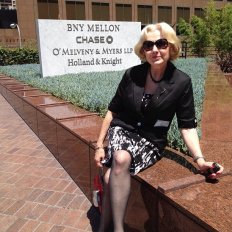
 If you ever come to my house you will see small notebooks all over the place that I can grab and jot down an idea if it drops out of the sky. And they do on occasion. My fellow author, Bonnie Schroeder, gave all us Writers-in-Residence ladies a notebook and pencil set for the shower that writes in the wet. What a concept. So I am covered wherever an idea strikes.
 Stories are everywhere. The writer just has to see the possibilities. But remember, as a writer, you control your world and you can twist the story into something unique if you try. Just try not to twist it into something that doesn’t make any sense. More and more TV shows are turning into pretzels that barely make sense. That’s why I read more books than watch television.
 Now how about the middle? There it sits. Is it a big, hulking middle that the reader has to push around the dance floor with no music or is it thin and bony with no rhythm at all? This middle section is where the reader learns all the little things that hold the story together. Some backstory and some character traits are sprinkled in along with the bulk of the plot. Whether it’s on the high-calorie side with lots of detail or maybe a diet plate with most of the fat is trimmed off, you have to make the middle tasty.
 Editing happens here. Add a little to enhance the story. Cut some off to make the pages turn faster toward the climax. Sweeten it with some good dialogue. Add some choice settings to give it flavor.

 by G.B. Pool
 Or how about A Christmas Carol? Kids might like the Ghost of Christmas Past and Present and maybe even the Ghost of Christmas Yet to Come, but it will take a while before they understand what the story means on a more adult level.

 Years ago I worked at Walden Books in the Glendale Galleria. At the beginning of the holiday season the mall had a Santa who sang songs when he wasn’t talking to kids. I moved the Santa to Las Vegas in the book The Santa Claus Singer and made him a lounge singer who gets laid off and who ends up playing Santa at the mall and sings to the customers. He meets a young girl who is need of an operation. He is just the right blood type and he volunteers for the gig. At the same time, he gets a job singing in one of the hot night spots on Christmas Eve. A once in a lifetime opportunity. Only thing is, he promised to visit the young girl that same night. And then his car breaks down…
 The newest book is called The Santa Claus Machine. I got the idea from a Christmas card. In order to modernize his image, Santa builds a series of Santa robots that are sent to stores around the world. They are programmed to tell Santa’s stories and record children’s wishes. An unscrupulous sales manager at the largest department store chain in America, along with their computer engineer, kidnap the real Santa and hide him in an ice cave. They reprogram all the Santa Claus Machines to encourage children to ask for more and more toys. When Santa learns about the change, he becomes disheartened and thinks he might have to cancel Christmas.
 And I have been working on a new story for next year. The idea came when I bought a Christmas ornament, a small dragon. I found a tiny wreath on the sidewalk while walking one of the dogs and slipped it over the dragon’s head. Then I set him on the roof of the Santa castle and said, “Every Castle Needs a Dragon.” That’s the name of the book. I bet you don’t know that dragons are the protectors of something very precious in the world. If they have the wrong champion, they can go astray and do great damage, but if they are taught well, they do nothing but good. Now someone wants to capture this one particular dragon… You will get to read the rest of the story next Christmas.
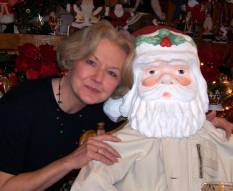 A former private detective and once a reporter for a small weekly newspaper, Gayle Bartos-Pool (G.B. Pool) writes the Johnny Casino Casebook Series and the Gin Caulfield P.I. Mysteries. She also wrote the SPYGAME Trilogy: The Odd Man, Dry Bones, and Star Power; Caverns, Eddie Buick’s Last Case, The Santa Claus Singer, Bearnard’s Christmas and The Santa Claus Machine. She teaches writing classes: “The Anatomy of a Short Story” (which is also in workbook form), “How to Write Convincing Dialogue” and “How to Write a Killer Opening.” Website:




 A former private detective and once a reporter for a small weekly newspaper, Gayle Bartos-Pool (G.B. Pool) writes the Johnny Casino Casebook Series and the Gin Caulfield P.I. Mysteries. She also wrote the SPYGAME Trilogy, Caverns, Eddie Buick’s Last Case, The Santa Claus Singer, Bearnard’s Christmas and The Santa Claus Machine. She teaches writing classes: “Anatomy of a Short Story” (which is also in book form), “How to Write Convincing Dialogue” and “How to Write a Killer Opening.” Website:
 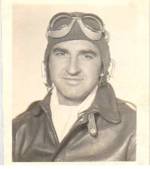 My father was in the Air Force. We traveled a lot. I lived on Okinawa and in France as well as in Memphis (near Elvis) and here in California. There were a few other military bases along the way and many of these places turn up in my SPYGAME Trilogy. I used some of my father’s experiences as a pilot during World War II and afterwards, as well as my imagination, to concoct an intriguing set of stories. The first one, The Odd Man, deals mostly with WWII and the Bay of Pigs. I went to a boarding school in France and that place finds a home in book two, Dry Bones. Book three, Star Power, wraps up the trilogy by bringing back characters from books one and two for a climax ending up in Southern California with some Hollywood stars tossed in for fun, though some are positively deadly.


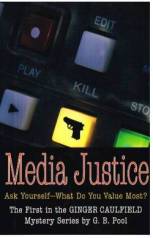
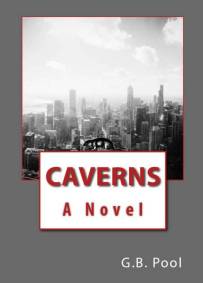 Here’s another story. When I was on assignment in Chicago as a P.I., I lived in an apartment near Lake Michigan. It was February. A brutal winter. I had to take the subway and a bus to the job at night. I worked from 5 p.m. until 2 in the morning. I survived Chicago. Years later I heard a story from a co-worker in California about a police officer in New York City who ran across something rummaging around in garbage cans down an alley. He shot it. It was a rat. It weighed in at 105 pounds. I moved the rat and his friends to snowy Chicago and I have them eating away the garbage on which a large area of The Windy City was built after the Great Fire. This was near the lake. Huge caverns have been carved out under the condos around the lake. Disaster looms. That book is Caverns.
 started making my own and making vignettes. I had an idea for a Christmas castle that I designed. I still have the sketch. I decided to write a story to go along with the idea of this castle. Then I decided to build the castle and make the figures that went with the story. Then I published the book. The first one was Bearnard’s Christmas.

 A former private detective and reporter for a small weekly newspaper, G.B.Pool writes the Johnny Casino Casebook Series and the Gin Caulfield P.I. Mysteries. She teaches writing classes: “Anatomy of a Short Story,” “How To Write Convincing Dialogue” and “Writing a Killer Opening Line.”
 This takes me to Anna Katharine Green and Mary Roberts Rinehart. These two ladies lived a hundred years ago. Anna Katharine Green wrote her Amelia Butterworth character in 1897, well before Agatha Christie wrote The Murder at the Vicarage (1930) featuring Miss Marple. Christie acknowledges Green as her inspiration. Green also wrote about a young female amateur sleuth, Violet Strange, years before the first Nancy Drew stories hit the bookstore shelves.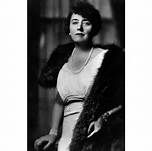
 he is considered the source for the term: “The butler did it.” She didn’t use that exact phrase, but the butler was the culprit. She even has a series of stories centered around World War I. She was a trained nurse and married a doctor; so much of what she writes has facts behind it. She even served as a war correspondent during World War I in Belgium and toured the front lines, so the visuals are based on things she saw firsthand. Not all her stories are mysteries, but they are all good, solid stories, some even slightly romantic, but nothing even remotely lurid. How refreshing.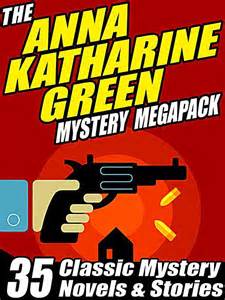



 natomy of a Short Story Workbook will be out this summer on Amazon. It’s a great way to analyze your story whether it’s a novel, screenplay or short story. It will help with your Opening and your Ending and everything in between.
 The Writers in Residence
You must be logged in to post a comment.