Open Your Story with a BANG! PART TWO by G.B. Pool

OLYMPUS DIGITAL CAMERA


A while back I posted Part One of this Blog. Here’s the rest of the story…

There are a few other things to think about while you are writing that OPENING to your story. Remember, it might be the only thing an agent or editor reads. Make him or her want to read the rest of it.

AristotleHow To Open a Great Short Story using the 5 Basic Elements covered in Aristotle’s The Poetics: Plot, Character, Dialogue, Setting, and the General Theme or Point of Your Story (Man Against Nature Man Against Man; Man Against Himself; Love Conquers All, etc.)
The perfect plot is simple, not complex. Aristotle from The Poetics
1. The Plot in a Short Story especially, but most stories in general should –
a. Have a beginning, middle, and an end, but start in the middle of the beginning. This makes the reader want to see what he missed so he keeps turning those pages. EXAMPLE: “I already told you. I met the guy in a bar. We got to talking. Somehow he knew I’d been in trouble with the law before.” (Something bad has already taken place and this guy is explaining it.)


b. Get to the point with very little, if any, backstory. You can add that later. EXAMPLE: “But you’re married, Janice.” (Obviously something has elicited this reaction. Now the reader will want to know what Janice has been up to.)

 
c. Hook the reader with a compelling reason to continue reading; an “out-of-whack” event; something that changes the protagonist’s world profoundly and the reader just has to know what happens next. EXAMPLE: “How long has he been in the water?” I asked, knowing by the bloated, blue body it was too long. What was left of the corpse’s clothes had shredded, exposing large masses of distended flesh. – From Damning Evidence – by G.B. Pool – (Obviously our private detective will have another murder to solve.)

 
d. A story-worthy problem or situation is the heart and soul of your story; your annual Christmas letter doesn’t cut it, neither does just a series of bad things happening to someone; there has to be some extenuating circumstances that brought about this calamity.

 
e. Or have something that changes the protagonist’s world profoundly and the reader just has to know what happens next: EXAMPLE: John Smith didn’t know he was an amnesiac. He discovered that and the fact he was married to two women when one of them turned up dead.

 
f. Make sure the Opening Scene has some relevance to the rest of the story, whether it actually figures into the plot or echoes the theme. Opening in a beautiful flower garden better reveal a dead body in the posies. Or hearing about a long ago train wreck better foretell another “train wreck.”


2. Characters
a. Don’t introduce all your characters at once, but begin with an important one.
b. Don’t over describe your characters at first; leave some traits for later, but start with something compelling like the smoking gun in her hand.
c.. And remember, actions always speak louder than words, so have your character do something or see something right away.

3. Dialogue: It gets you into the story fast and moves the story along even faster than merely telling the story.
a. Dialogue can set the stage (EXAMPLE: “The bridge is out!”), define a character’s education level or regional origin by their accent (EXAMPLE: “Honey, did y’all get another dawg?”) or get into a character’s personality (EXAMPLE: “I loathe you,” she said, grinding her cigarette into the back of his hand. “Have a nice day.”)
b. Dialogue, whether it’s an internal monologue or between two people, performs a major function. (If it doesn’t, rewrite it.)
i. Dialogue with occasional body language enhances (describes) the character; (EXAMPLE: ““Go ahead. Date my ex-wife,” he said and then slammed his fist into the wall.)
ii. Dialogue advances the plot (EXAMPLE: My name is Johnny Casino. I’m a retired P.I. with a past. I just hope it doesn’t catch up with me. Before I went legit, I ran numbers in Jersey for Big Louie “Fingers” D’Abruzzo and then busted heads in Miami for Big Eddie “Mambo” Fontaine. But at the ripe old age of twenty-four, Little Johnny beat a hasty retreat to L.A. when somebody slipped the cops a hot tip and all of a sudden, I became the fall guy for the Mob.) FROM THE JOHNNY CASINO CASEBOOK 1 – PAST IMPERFECT BY G.B. POOL
iii. And dialogue gets you up close and personal as if you were eavesdropping on the conversation; EXAMPLE: Before Donald got out of his chair to greet me, I launched. “Are you out of your freaking mind? Marrying somebody before you even buried your wife! Do you want me to save your butt or direct traffic to your hanging?” I was speaking in a crescendo, starting around contralto, and ending somewhere in the soprano range.
“I never loved my wife!” he declared in clear basso profundo.
“Did you kill her?” I yelled.
“No!” he shot back.
Note: As the dialogue gets more intense, the fewer words are used.)
4. Have a terrific Setting or Sense of Place.
You want to set the stage whether it’s an attic room or a ballroom, a secluded path or a desert vista. Paint that background and then get out of the way and let your characters experience it.
EXAMPLE: It was going to be the hottest damn day of the year. Those Santa Anas were kicking up, turning the L.A. basin into a blast furnace. If it didn’t cool off, half the state would catch fire. From “Heat” G.B. Pool

 
5. The Point of the Story
Reread your story and ask yourself: Does this make sense? Does your opening tie in with the ending? Does the Title fit the story?
The Opening: I couldn’t believe they found Brad’s body. I thought I buried him deeper. FROM “A ROLE TO DIE FOR” BY G.B.POOL

The Closing: “They think an animal killed him, dug a shallow trench to hide his kill for later, and must have forgotten where it was buried.” He walked closer and put his warm hand on my arm. “It was ruled…death by cougar.”
Aaron smashed the plastic bag containing the vodka bottle against the fireplace and the glass shattered. Then he took my hand and led me upstairs.
I’ll always wonder if he ever read that “cougar” book, but I’ll never ask. Lovers have to have some secrets. FROM “A ROLE TO DIE FOR” BY G.B.POOL

(FROM THE OPENING, Our protagonist obviously had something to do with Brad’s death. At the Closing, her boyfriend must know it, too, but they will both postpone the inevitable until later.)
As for the TITLE, “A Role to Die For,” several people died while she was securing those roles. That’s showbiz…

In Conclusion: This might be a lot to think about, but opening your story well will have readers follow it to the end… and maybe read your next story. Write On…

Short Story Workshop

Join Mike Befeler and G.B. Pool (Gayle Bartos-Pool) at the Glendale Central Downtown Library (222 E. Harvard Street, Glendale, CA) this coming Saturday, January 20, from 11 a.m. until 2 p.m. when they teach a short story workshop for all you writers out there.  anatomy-book-cover

If you aren’t in the area, you can find Gayle’s book, Anatomy of a Short Story Workbook, on Amazon. It covers even more than the class and has oodles of examples.

Hope to see you there!


Gayle and Mike

’Tis the Season


OLYMPUS DIGITAL CAMERA

It’s that time of year when the hustle and bustle of the holidays fills your heart with dread and anticipation… Did I say dread? Yep. The dread of what to get some of those people on your Christmas List.


If that significant other or friends or relatives gave you a Wish List, you’re lucky. But a lot of us are left panicking at the last moment about what to give somebody on our gift list.


Might I give you a suggestion?


How about a book?

books-on-shelf

The Writers-in-Residence ladies have a few new books out this year, but I’m not going to limit this pitch to just our tomes (even though they are listed at the end of this article). There are a lot of other books available. Of course, I recommend the classics. But some good books are from new writers. Some are the next book in a favorite series that you might have enjoyed and now might want to share with friends.


But there is another reason for me mentioning BOOKS. People aren’t reading as much anymore. WHY? Some schools think the classics are passe and sometimes their reading list leaves a lot to be desired. Here in the Los Angeles area, many of my favorite bookstores have closed. Amazon might have taken away customers, but those stores were a great place to browse and they will be missed. After all, it’s hard to browse through the “shelves” at Amazon. But you can get a book in a day or two delivered to your door. That’s nice. Or the Kindle version is available instantly. But why aren’t people, adults and children, reading as much anymore?


No imagination.


Movies with car chases and explosions don’t stimulate the imagination. They just drag you along for the ride. The viewer doesn’t bring anything to the party, as it were. As for video games, maybe you get to blow things up or destroy another dozen zombies or a peasant village, but when the game is finished you can start again and do roughly the same thing over and over and over. Boring. These games without a story or characters behind them actually go nowhere.


OLYMPUS DIGITAL CAMERA

That brings me back to BOOKS. They can take you places. They introduce you to new worlds and exciting people. They stimulate your imagination to, dare I say it… dream about things. They can help kids set goals in life. They can help adults get their lives in order in case they are going through a rough patch. Or they can just entertain. Nothing wrong with that.


Let me introduce you to a little fellow who turns up in a particular Christmas book that I can highly recommend. His name is Orville. He starts out as an egg left under the seat of Santa’s sleigh on Christmas Eve. The egg was left by a wizard with a note saying: Take care of this egg. DO NOT EAT. When the egg hatches, Orville, who happens to be a dragon, has come into the world on a mission. Orville is a special dragon. You see, he is what lights the fire of imagination under people when they READ.

OLYMPUS DIGITAL CAMERA

Young Orville learns a few lessons as he is growing up. He learns the value of the information in books and also about what the world would be like if there were no books… What a horrible thought.


This is why we here at The Writers-in-Residence introduce you to new books, both ours and others, just to stimulate your imagination. If you are a parent or have children on your gift giving list, think about giving them a book this year. Something to light that fire under those growing minds before they forget how to dream. And maybe your friends might like something to sooth them during trying times or spur them on when they need a little push in the right direction.


It’s the imagination that created every invention, opened frontiers, and let people realize there are others in this world who matter, too. Books stimulate the imagination. READ ON.


Have a very Happy Holiday, Merry Christmas, Happy Hanukkah.


These are a few of our most recent books.

Autumn-Gold, SFB cover photoFBRTMMFront300dpi1200pixFrontCoverOnly300dpi (002)An Almost Perfect MurderHollywood Then and NowBad to the BonePetal in the Wind III

Second Chance Book CoverEvery Castle Needs a Dragon


REMEMBER, REMEMBER…

Thanksgiving card

Goodness – November already! November is the month we have an abundance of remembrances.

“Remember, remember, the fifth of November: gunpowder, treason and plot…” – so begins the children’s rhyme about the failed gunpowder plot of 1605 by Guy Fawkes, who tried to blow up the Houses of Parliament in London. Traditionally, on chilly November 5th evenings, we celebrated with bonfires in the garden where, as kids, we burned effigies of Guy Fawkes (simply known as ‘guys’), roasted jacket potatoes in the fire and drank steaming mugs of hot cocoa in the dark, as the grown-ups set off fire-works. For days prior to this, young children would parade their ‘guys’ around the streets on carts, asking for “a penny for the guy” – to earn money to buy the fireworks. Somehow, I don’t think this happens today… but it was fun while it lasted.


Every third Thursday of the eleventh month, Americans celebrate Thanksgiving, when we remember how thankful we are for living in America. We recall the many people and things we have to be thankful for and remember those brave pioneers, the Pilgrims and the early settlers who paved the way for us. In America, this is the biggest family holiday when we celebrate with turkey, pumpkin pie and all the trimmings.

And there is Remembrance Day: at the eleventh hour of the eleventh day of the eleventh month, Great Britain and allied and Commonwealth countries observe two minutes silence to honor those fallen in combat. November 11th marked the end of World War One in 1918 and November eleventh is still honored to this day. Also known as ‘Poppy Day,’ The British Legion sells red poppies that are worn in the days preceding November 11th, as a mark of respect, and wreaths of poppies are placed on public monuments.

In the United States, November 11th is Veterans’ Day – formerly called Armistice Day – and honors all those who served in the military in various conflicts. (In America, Memorial Day at the end of May, honors all those who lost their lives in these conflicts.)

This Remembrance, or Veterans’ Day, I was in London, viewing the seas of red poppies wherever I looked. So forgive me if I share once again, the comments I had written a couple of years ago, on the occasion of this solemn, yet so very proud, moving, tradition:

EaglesUp

We honor all those ordinary – yet extraordinary – folk who have stood between us and harm’s way throughout the ages. They sacrificed their lives so that we could have the freedom to live on.

In England we call November 11th Remembrance Day, when we remember all those who lost their lives in various conflicts. The Remembrance Poppy was inspired by the poem “In Flanders Field” written in May 1915 by Lieutenant Colonel John McCrae, after he noticed all the red poppies that had grown over the graves where so many soldiers, nurses and others were buried in that far off Belgian field in the first World War.

Since 1919, our fallen ones have been commemorated in England with two minutes silence at the 11th hour, of the eleventh day, of the eleventh month. This marks the end of World War One, known as The Great War, in 1918.

Since then, time stands still in Britain for these two minutes. In London, as Big Ben rings the last stroke, traffic comes to a stand-still. Red London buses, black taxi-cabs and delivery vans come to a halt in central London and throughout the country. Pedestrians stop, many bow their heads as a sign of respect for all those who have fallen in conflicts since then. So much is said in that two minutes silence.

In their honor we wear artificial red poppies in the days leading up to Remembrance or Armistice Day – known as Veterans Day in America – as we all unite in paying our respects to those who sacrificed so much to give us our freedom.

And I am truly humbled and embarrassed that I had been moaning about my too-busy life and not having enough time to write. Those we remember on this day would love to have lived long enough to have such simple problems.

We remember and honor the fallen today, as the tradition says, LEST WE FORGET.

Sky Flag

Rosemary Lord 2017

(Rosemary is out of the country visiting relatives so I put up her post today, but these are her thoughts and words, my friends. But I, too, share her wishes for a Happy Thanksgiving.)


Open Your Story with a BANG!

Gayle will be at the Buena Vista Branch of the Burbank Library on Saturday, October 21, from 1-4 P.M. Drop by and say hello!


PART ONE

by Gayle Bartos-Pool

OLYMPUS DIGITAL CAMERA

Whether you are writing a novel, short story or screenplay, you use the same basic literary tools. If you want to give yourself a better chance to have your short story or novel picked up by an agent and then a publisher, you have to get their attention. If you are lucky, an agent/publisher will read your first chapter. Usually they will just read the first few pages or maybe only the first paragraph. This holds true for a short story that you might submit to a contest. They have 50-100 manuscripts stacked up and they are looking for any excuse to toss your work into the round file. You want to make your opening a grabber.


What exactly does an Opening Line/Paragraph/Scene in a Short Story, Novel or Screenplay do? I will explain using the Short Story, but much of this pertains to novels or screenplays as well.


  1. The Opening Line sets the TONE (funny/tragic/etc.), identifies the sub-genre of the story (Noir/cozy/sassy sleuth), states the problem, and hints at the solution. Put one or two of these in that opening line or paragraph.

How do you write a good Opening?

2. The Opening should get the reader’s attention:

Example: I couldn’t believe they found Brad’s body. I thought I buried him deeper. From “A Role To Die For” by G.B. Pool

3. Avoid the clichéd opening. EXAMPLE: Instead of: It seemed like a good idea at the time… or This was the worst day of my life…try: The two-by-four smacked me in the head. And here I thought the guy with the gun was my problem. (It’s the unexpected that grabs attention.)

4. The Opening should establish the RULES of the story; they must be consistent; you can’t start out as a comedy and end up with a philosophical think piece.

5. One way of setting the Tone in a short story is with a Very Strong Voice. You do this by either writing in First Person or using a strong Narrator (Third Person) describing the main character or the problem at hand. The voice will propel the short story. Whereas in a novel you can be more emotional and flowery in your delivery. A strong voice tells the reader what type of story he is reading, is more one-on-one, and holds the reader’s attention. The Omniscient Voice is colder, more remote, and unemotional. Third Person Close is more personal.

EXAMPLE: Archie Wright’s the name. Dishing dirt’s the game. My sandbox: Hollywood. The most glamorous and glitzy, vicious, and venomous playground in the world. If you come for a visit, bring your sunscreen and your shark repellent. If you come to stay, let me warn you, Tinsel Town eats up and spits out a hundred just like you every day. Sometimes it isn’t pretty, but it’s my job to chronicle the ebb and flow of the hopeful, the helpless, and the hapless. My best stories come from the dark side of Glitzville. From “Glitzville” by G.B. Pool

6. The Opening should allude to the ending or the Payoff, so you come full circle when you get to the end.

EXAMPLE – The Opening: “I already told you. I met the guy in a bar. We got to talking. Somehow he knew I’d been in trouble with the law before.”

****

EXAMPLE – The Closing: “Perhaps you would like to speak to a lawyer now, Mr. Harrison?” said the cop. From “The Big Payoff” by G.B. Pool (The poor shlub at the beginning has been confessing to a cop. This isn’t known until the end.)


As An Exercise: Compile Beginnings and Endings of Short Stories or Chapters in a novel. Use yours or the masters. It’s eye-opening.

Open Door7. The Opening should hint at, but not necessarily give away, the ending. A good example where this is done well is the opening from the movie Sunset Boulevard. (There is a dead body floating in a pool. It is narrating the story. How he got that way is the plot.)
 

Part Two will be up in a few weeks to continue this theme… Openings are important, my friends.

The Play’s the Thing – Plot is Everything - Some thoughts by Gayle Bartos-Pool

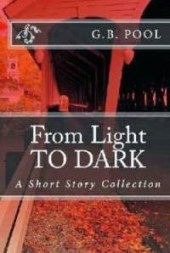
Most of the examples used are from my short story collection: From Light TO DARK.

Past, Present, and Future

by Gayle Bartos-Pool

books-on-shelfSome months ago there was an unbelievable news story on TV. The gist was that some teachers no longer wanted to teach the classics. Unlike my reaction to other things I have heard on TV news shows (or the Internet), I actually believed the report. My snarky first reaction was that the teachers probably couldn’t read themselves and didn’t want their students to know they were illiterate. I’m still tossing around that idea.
 

The problem is: that story won’t go away. I tried to analyze the reasoning behind the decision to ban the classics and came to the conclusion that there is no reasoning involved. It’s stupid. I wrote a blog back then starting with this same premise and then went on to sing the praises of two female authors, Mary Roberts Rinehart and Anna Katharine Green who were both born in the mid-to-late1800s. I love their work.


So now I am going to introduce you to a few more gems that you might not know, or if you know them, you might not have read them. Paul D. Marks mentioned this particular book in one of his recent blogs, so there must be something in going back and reading the classics.

The Count of Monte Cristo bookThe Count of Monte Cristo movie

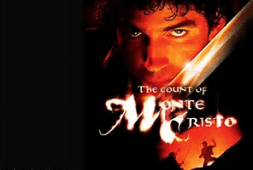
First is Alexandre Dumas (Pere). The book I recently finished was The Count of Monte Cristo. If you have seen the recent movie, you saw a very nice production, but it veered from the original story like the car chase in Bullitt. The writer/director of the movie had to cut it down to size because there are 117 chapters. That’s a lot of cutting. They rewrote the ending, too. There was so much in the book; I was breathless after finishing it. And I loved it.


The book evolved in basically a series of short stories that slowly pieced together the main character’s life. There was a lot of life there. The writing shows us contemporary authors what character development can be if you know your character. No shallow, two-dimensional guy here. There were layers and nuances and glimpses inside this guy that made him real. The story unfolded like a beautiful flower opening.


But even Shakespeare (1564-1616) is more than readable. His stories have been contemporized, but the plots and characters are solid. They even set Romeo and Juliet to music in Westside Story. The plot was universal.


Mark Twain (1835-1910) turned out books that both kids and adults can enjoy. I read him as a kid and when I read him again as an adult I saw even more things in those pages.


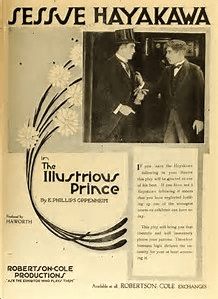
Recently I have been reading E. Phillips Oppenheim (1866-1946). He was known as the Prince of Storytellers. He wrote a hundred novels and numerous short stories. Many of his works were turned into silent movies. What stuns me is how contemporary his work is. They might deal with a time long ago, but the feeling and the thoughts could have been written today. True, there are no car chases or throbbing sex scenes, but there is a story, a plot, stuff happening. And no filler.


We were just watching the movie Youngblood Hawke (1964) about a hot-shot new writer hitting the New York literary scene. The guy’s first book was sensational, his second book was trash. During the launch party, a famed reviewer said how the margins were too wide, the type too large, and the story filled with padding. He said it should have been a novella.


Lots of contemporary books are written with superfluous stuff. Too many sequels to fairly nice books are filled with redundancy. The characters are strictly stock with not much personality, and those are often the main characters. These books by the Old Masters don’t have filling or padding or fluff. Not even in the 117 chapters in The Count of Monte Cristo.


Phillips Oppenheim, a British author, filled his pages with new things on every page. In Peter Ruff and the Double-Four, a collection of short stories about the same character, his main character starts out as a very shady guy who decides to use his criminal expertise to sometimes thwart the bad guys and sometimes help them see the error of their ways. The character is dead clever and is marvelously one step ahead, even when you don’t see it coming.

The Illustrious Prince Book.pngThe Illustrious Prince movie

In both The Devil’s Paw and The Illustrious Prince, he brings some brilliant insights to spying during the early part of the Great War. The 1923 movie made from The Illustrious Prince totally rewrote the story, but maybe it was a good movie. Havoc was a pre-war tome as well. But each gives the reader not only an interesting story, but also a glimpse of the times in which they were written. Dare I say: the history of those times, lest it be forgotten.

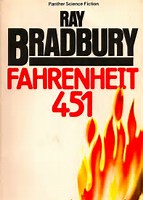
Fahrenheit 451

Even Ray Bradbury’s science fiction novels and stories give a look at the thinking during his brilliant literary career. We all know science fiction is just a way of telling what is happening now and how it might manifest itself in the future. His Fahrenheit 451 is about book burning in the future, a time when the classics were banned. Sound familiar?


One of the reasons I have so enjoyed these older works is because they are so damn well written. I read contemporary stuff. Many of my writer-friends turn out some darn good work and they recommend other authors to me. Some are good, some aren’t. Sometimes it’s just a matter of taste. Sometimes they just stink. At my age, I will actually put down a book never to pick it up again because I have better things to do with my time if the book has absolutely nothing to offer.


Contemporary authors occasionally write historical stories. A good author does a ton of research and if they do the job well, it shows. Sometimes the dialogue might be more modern, but unless you want your reader to carry a large dictionary with them, you keep the words fairly current.


While reading these older works, I was amazed how contemporary the words and phrases were. I do understand that publishers revise many of the classics to make them more readable, but still, some of these are 70-100-150 years old. A few words might be archaic, but the meaning that comes through is very clear. Most of these books have themes that sound like they were written today. That is the mark of a very good writer. Some themes are universal and timeless.


But mostly their work endures… as long as people can still find them somewhere. I have a CD collection with 10,000 books on it. That’s where I have been reading these classics. At least they are safe for a while. Read on.


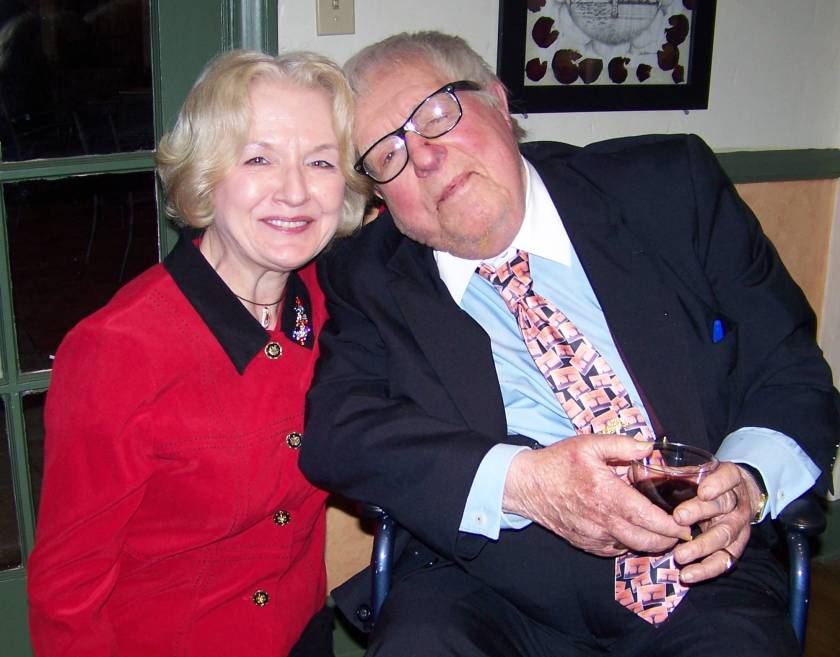
The picture below is me with the inimitable Ray Bradbury. God Bless him. (The picture was taken by our very own Jackie Houchin.)

RayGayleClose

The Long and Short of the Short Story

by Gayle Bartos-Pool


typewriterAfter writing my first three published short stories, something happened: Readers responded favorably to one of my characters. They liked this guy’s personality.


Of course a writer is supposed to craft memorable characters, but those are usually found in a novel. A writer has more room to flesh out characters in a 300-page novel, not a 25-50 page short story. But something was happening with my “Johnny Casino” character. His personality was too big to stay within 28 pages.


That’s when I realized I had more Johnny Casino stories in me. In fact, by the time I was finished, I had nine stories and 388 pages. That’s called a book. I had turned a one-shot story into what is basically a series.


But the journey was also a learning experience.


I wrote a batch of these stories and showed them to my agent. She liked them, but…she wanted more information about Johnny. She thought the stories needed a love interest, but I didn’t want the short stories bogged down with schmaltz. That wasn’t what I envisioned for my character. But I hadn’t written any reason why Johnny didn’t have a woman in his life, so I wrote a backstory. That’s when I learned a lot of new things about him. It was so detailed; it turned into the second story in the first collection, The Johnny Casino Casebook 1 – Past Imperfect.past-imperfect-cover-12

The backstory also gave me a different view of Johnny. He had his dark side as well as his sarcastic side. He was becoming a three-dimensional person. I started learning so much about him, more stories popped up. One was so compelling; it became the focal point of the second collection, The Johnny Casino Casebook 2 – Looking for Johnny Nobody.

bookcoverpreviewcropped

Since I had created a past for Johnny, I could write stories about him when he worked for the mob back in New Jersey when he was younger; after all, I had discovered that his father was a high ranking guy in the D’Abruzzo crime family. I could also do a story explaining how he became a private detective after he fled to California.


And here’s a heads up for all you multi-tasking short story/novel writers. The character I created who taught Johnny how to be a first class P.I. is the heroine in another mystery series I have been writing. I figured, if people like Johnny, they just might like the novel featuring Gin Caulfield. She is now in three novels, not short stories in this case.


The last thing I learned on this journey is that there is a different kind of short story out there. In classes I teach about The Anatomy of a Short Story I mention a short story is like an hors d’oeuvre. It consists of a few really good things served up in a small bite. Whether it’s a handful of cool characters in a terrific location involved in a catchy plot, the short story gets you to one location in the fastest way possible.


In contrast, a novel can take you far and wide with a cast of thousands with sub-plots and bits of interesting background stuff just for the fun of it, and the writer can use 300 to 400 pages to accomplish the task. But the short story writer has to chop out unnecessary characters, places, plot twists and trim down the description to its bare bones and do it in 10 to 25 pages, give or take. Or does he?


I think there is a new home for the short story. The Short Story Novel. The length of each individual story can be anywhere from 25 to 70 pages, but the main thing is to have a single set of characters, or in my case, one main character, in every story. Several characters make repeat appearances, and I mention one sub-plot in several of the earlier stories in any given collection that is resolved in a story of its own. Each story reveals more and more about my main character and the final story in Book One ends with a haunting question that will be answered in Book Two.


If this sounds like a television series, you betcha. I called it a “series” earlier in this blog and that is exactly how I visualize The Johnny Casino Casebook, whether it stays in book form or hits the TV screen. His stories might be in the “short story” format, but his entire life is a novel.


And for those of you who prefer to create something completely stand-alone in each short story you write, those individual tales can always be put into your own collection and published. I did just that in From Light TO DARK.

The Play’s the Thing – Plot is Everything - Some thoughts by Gayle Bartos-Pool

Second Chance Book CoverAnd to add one more thing to this blog, Johnny Casino isn’t the only short story character to be in a book of his own. Chance McCoy arrived this year. His first book is called Second Chance. There are more stories to come. And there is a second short story anthology called Only in Hollywood coming out next year. The book consists of various stand-alone stories, but one features a guy named Charles Miro, a former TV actor turned private eye. He works for a younger woman who owns the detective firm. There are several stories about these two coming up. You see, even a short story can magically turn itself into a book if you try.

Write on.

Only in Hollywood cover 2


Mapping Your Mayhem by G.B. Pool

typewriterWhen I was asked to teach a writing course for Sisters-in-Crime/Los Angeles, I decided I better evaluate how I wrote a story first. I write novels as well as short stories and figured there were similar fundamentals all writers use in both endeavors. Then I remembered the Aristotle course I had taken in college. I still had the textbook, The AristotlePoetics, so I dusted it off and read the part on the 5 Basic Elements in any story: Plot, Character, Dialogue, Setting, and The Meaning of the story.

 

I have covered most of these points in previous blogs, but there is one crucial thing a writer needs to make sure all these elements fit and that is a Timeline. I looked back over the files I had on all the books and stories I had written and lo and behold, I actually made a timeline for just about all of the stories.


What does a Timeline do? It keeps track of Who does What Where and When and sometimes Why.


I actually use several methods to achieve these goals. If the story doesn’t cover very much time or utilizes few locals, I write a simple timeline noting the date and time certain things happen and where the action takes place and who does what each time. If there is a lot of time covered, I use a calendar.


I generally have a basic idea what my story is about before I start putting words on paper. I write the opening (usually about 20 times) until I know where I’m going and the tone I want in the story. Then I jot down the relative time of day each event happens as the story progresses. I break them into no less than 15 minute intervals. Usually it is thirty minutes or by the hour. You can’t have more than 24 hours in any given day, so it keeps you honest and organized.


If my characters are driving around the city, take for instance Los Angeles, I use Google Maps to see how long it takes to get from point A to point B. I’ve seen TV shows where people in L.A. can get someplace in thirty seconds… Only if they use a teleporter. (“Beam me up, Scotty.”) I discipline myself and make my fiction a tad more real.


When I have finished the story, I’ll go back over the Timeline to see if I have crammed too much or too little into that given time frame. And I do something else. I’ll see if the plot holds together. Sometimes a destination doesn’t make sense or maybe some other character should be involved or eliminated. And sometimes I need to add a high point or low point just to give the story movement. I know movies today are all action and explosions and no plot, but I prefer plot and character.


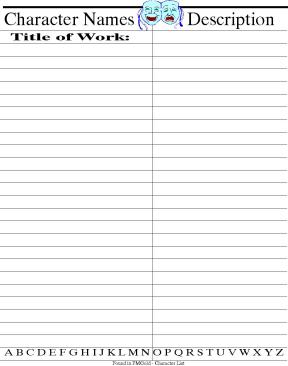
Character ListThere is another type of timeline I make: A List of Characters. I include their date of birth in case they age throughout the story. You want to make sure you don’t have a character born in 1920 be only fifty in 1990. And you don’t want a character to remember seeing news of the Hindenburg when she was born in 1947. Keep track.
 

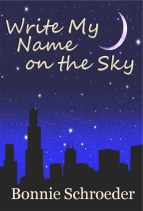
Fellow Writer-in-Residence blogger, Bonnie Schroeder, has a new book (Write My Name on the Sky) coming out in July that starts out in the late Sixties. She had to make sure the items mentioned were around then. She did it meticulously. She might have lived through that time, but she still had to make sure she didn’t drop a 21st Century gadget into the story or mention a tune that wasn’t around then.


I start out with a piece of paper that I print off just for this task. I pencil in the character’s name as I write them. I give a brief description of their role and age. Many times I change the name. If you will note, there is an alphabet at the bottom of that page. I circle the first letter of the character’s name in that alphabet. I want each name to fit each particular character, but they can’t all begin the same letter unless you’re having fun.


When I’m finished with the story, I copy all those names and descriptions into the computer and add even more description and start evaluating those characters. Do some need more personality? Does one need to be meaner? Or smarter? Or should a particular character add something to the story that is needed? Or should the character be eliminated? One time I wrote a book knowing who the bad guy (or in this case gal) was going to be, but when I was finished I had another thought. I bumped off the initial suspect and then my private detective had to go back over the case to see what she missed… or was it time to hang up her .38s and retire? It was by reviewing that list of characters that allowed me to see a “What if?” scenario. And I am glad I did. It made for a much better and far more exciting conclusion to the novel.


And here is another benefit in having that Timeline. It gives you an Outline for your story in case an editor or publisher wants a synopsis of your book. And even better, that quick rundown of the plot lets you see what your story is about so you can more easily write the all important blurb for the back of your book. You only need the first third to tell any reader what is in store. Think of the timeline as the dry run for that “elevator pitch” you have heard about. The fact that you have consolidated your story into a few pages of a “timelined” plot; you can easily tell someone what the story is about.


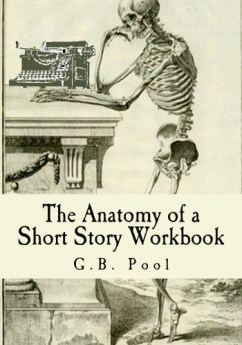
Anatomy  Book CoverI have put most of my writing course into a book: The Anatomy of a Short Story Workbook. It covers many of the things I have posted on our blog, but as an added bonus, it gives you diagrams and pictures of these worksheets. I use them in all my writing. I never create a story without them. Maybe they can help you.


Author Bio

A former private detective and a reporter for a small weekly newspaper, Gayle Bartos-Pool has several books in print: The Johnny Casino Casebook 1- Past Imperfect, The Johnny Casino Casebook 2 – Looking for Johnny Nobody, and The Johnny Casino Casebook 3 – Just Shoot Me; Media Justice, Hedge Bet, and Damning Evidence in the Gin Caulfield P.I. Series; From Light To DARK, a collection of short stories; Eddie Buick’s Last Case, Second Chance, The Santa Claus Singer, Bearnard’s Christmas and The Santa Claus Machine. She is the former Speakers Bureau Director for Sisters in Crime/Los Angeles and also a member of Mystery Writers of America and The Woman’s Club of Hollywood. She teaches writing classes: “Anatomy of a Short Story,” “How to Write Convincing Dialogue” and “Writing a Killer Opening Line” in sunny Southern California. Website: www.gbpool.com.

Chance McCoy just got the opportunity of a lifetime.

Second Chance Book CoverChance McCoy was a private detective killed during a routine case, but he is given a second chance to make good. But with his track record as a P.I., he just might blow this chance, too.

 

SECOND CHANCE is a year in the life of this P.I. who usually misses clues by a mile, but this time there just might be some help along the way. Or maybe his new pal, Harold, was right when he said: “Everything you need is inside, my friend.”


Hello All. My name is Thunder. I’m G.B. Pool’s P.R. Person for her latest book:

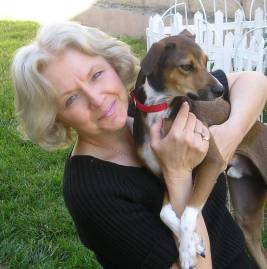
Thunder with Second Chance

SECOND CHANCE.

As you can tell from the blurb, this one is different. G. B. might write detective novels, spy novels, and a few Christmas novels, but this one will take you to a place you’ve never been… At least most of you have never been there… yet. Sometimes I wonder about a few of the good souls me and my furry friends have encountered during our lives.

That brings me to something special about this book. If you happen to find this one on your bookshelf or on your Kindle and have read the last chapter and the Acknowledgements, you’ll see what this “second chance” stuff means to the author. But something else, G.B. has made me a deal. 25% of the profits from this book go to animal shelters in the L.A. area or special ones she hears about. She already donated to Paws for Life, a unique rescue site that takes dogs literally on death row from pounds in the area and sends them to inmates doing life in the penitentiary. The inmates retrain these dogs to be good “citizens” so they can be teamed up with folks on the outside and given a forever home or if you will: a second chance. She was introduced to this worthy enterprise by author Christopher Lynch who has taught some creative writing courses to these guys. Sometimes a soul can be reached. Thank God.

So, if you find yourself in need of a summer read, SECOND CHANCE just might be your ticket. It’s a series of short stories all about this guy named Chance McCoy who gets something we all might want in life – a second chance.

Author Note: Thunder is studying to be a therapy dog with her talented mistress, Bonnie Schroeder. Bonnie’s latest book, Write My Name on the Sky is on the brink of release, but Thunder took time out from both their busy schedules to help me with the P.R. for this book. Thanks, Thunder and Bonnie.) G.B. Pool website.

Lions, Tigers, and Bears. Oh, My!

by Gayle Bartos-Pool

Friends usually have things in common. Writer friends might have even more in common because we incorporate things we have learned, researched, or stumbled across into our writing and we read each other’s work. (Books teach!) Being Facebook friends, too, brings many of those experiences into focus because we can see what each of us is doing… Sort of like a spy camera watching our every move if we happen to post parts of our lives and experiences on Facebook.

Recently, The Writers-in-Residence bunch happened to discover that we all had a strong affinity for pets… cats, dogs, birds, you name it. And something else we noticed. Those pets turn up in our pages. Even if we don’t currently have a furry or feathery face gracing our home, we have had one at one time or another that made a difference in our lives. And often we write about those experiences.

Over the next few weeks we are going to share with our readers some of these encounters. We hope you enjoy our memories and our pets and see how we incorporated them into our work.

99be9-gayle51closeupAs for me, since I have always had a pet in my house, as a kid and as an adult, I never thought it odd to put a cat or dog in a story. My Ginger Caulfield private detective character has two dogs, Sherlock and Foxtrot. In reality, my husband and I got our two Italian Greyhounds, coincidentally named Sherlock and Foxtrot, from the Los Angeles pound. The two canines don’t solve mysteries in Gin Caulfield novels… yet. Though you never know. But I will tell you one thing… no dead dogs will EVER turn up in my stories.

bookcoverpreviewcroppedThe three books in my Christmas series are full of animals even though Santa doesn’t consider them pets. After all, Bearnard, the Polar bear from Bearnard’s Christmas, works in the castle and even helps solve a mystery in the third book, Every Castle Needs a Dragon, coming out at Thanksgiving. Even the dragon, Orville by name, plays a rather large part in the story. (He reads as well as talks!) Every Castle Needs a Dragon cover trial 2 cropped

But at the North Pole many things are just a tad different from anywhere else. One of our cats, Sylvester, actually makes a guest appearance at the North Pole in Bearnard’s Christmas. Angel, Sylvester, Winston and Cookie also drop into the story.

Bearnard & SylvesterAngel0002

Sukoshi Painting 2My spy novels reference Sukoshi, the Beagle I had as a kid and up until I was working as a private detective at the age of 21. She is mentioned because the books are loosely based on my dad’s career in the Air Force and Sukoshi went to France with us when my father was stationed there. When we were visiting West Berlin, she had a very long leash that allowed her to wander under the barricade into the no-man’s land that separated West and East Berlin, so she actually got closer to the commie-side than I did.
CAVERNS is crawling with animals, mostly rats because the little dears are carving out caverns under the high-rises in Chicago. The story was actually based on something I heard from a co-worker who read about a 105 pound rat being found along the wharf area while she was living in New York City. Her story and the fact I had a case in Chicago while being a P.I. brought those two pieces together.

Most recently, I finished my latest book called SECOND CHANCE which has a rather “coincidental” tie-in to the subject of pets. Chance McCoy just got the opportunity of a lifetime. That’s the title page blurb.

Chance McCoy is a private detective killed during a routine case, but he is given a second chance to make good. But with his track record as a P.I., he just might blow this chance, too. That’s the book summary. So far, no pets… but

All through the book, Chance views people he encounters as some kind of pooch. Droopy Bloodhound eyes on one guy. A teenage girl’s bodyguards are viewed as Bulldogs. Another set of hired muscle are called Rottweilers. Chance even enlists the services of a cadaver dog named Maurice to see if a body is buried in someone’s backyard.

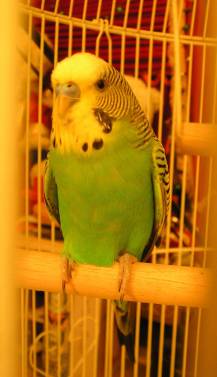
Fred Closeup cropped 2It really wasn’t a coincidence on my part to make these comparisons because, you see, I dedicated the book to Freddy J. Feathers, our beloved parakeet who recently passed away. I found Fred wandering in the backyard about six years ago and he got a “second chance” with us. That fact fit perfectly with this particular book. And the short piece at the end of the book ties my love of pets up with a big ribbon. (You’ll have to read that part for yourself.)

But pets, or members of the family as we call them in our house, have been a large part of my life and they seem to have played a big part in my writing as well. I guess we do leave bits of our heart in everything we write. So if you have room in your heart and your house, adopt a pet or get one from a reputable kennel. It’s one of the kindest things you can do for a furry or feathery friend in need.Valentines 2014 (13)