
By Jill Amadio
 Outraged at my character deciding to get herself murdered far too early in my mystery, I was also furious that she had the temerity to go out on her own and run off with my carefully organized plot. She wasn’t actually a bride, but she sure was a runaway. And a female.
How dare she! I had barely sorted out a new setting and spent time researching a lonely location in the UK when this forward young woman opted out of my book. Not only had she escaped from my timeline, but she was also in the wrong place.
Her impulsive decision and demise threw two other characters, one the murderer, into complete confusion. I almost felt them turning to me and saying, “Now what?”
Keeping control of one’s fictional characters is usually a given. Like chess pieces, the author can move them here and there with impunity. We can, and often do, change people and places around but the decision has to be the writer’s.
Something similar happened to me once before. In my second mystery, I knew who the killer was, and I looked forward to her denouement. However, the more I wrote her, the more I came to like her. The upshot was I had to choose a different character as the murderer and thus change his gender and personality, to say nothing of his traits and habits.
However, my runaway person really put me over a barrel with her unexpected death. Should I write her out completely? Force her to stay alive a little longer? What did her early, unplanned demise mean to the rest of the storyline, the remaining characters, and my peace of mind?
It seemed that the best thing to do was to move the chapter in which she wrote herself gone forever to the end of my Word document so that I wouldn’t have to look at that chapter until l I decided where to fit it in, given the new circumstances.
Actually, I knew exactly where and when I wanted her to meet her end, but her decision to die on her own terms threw me into disarray. To say nothing of writer’s block.
I perused my synopsis, wondering if I should wedge her in where she wanted to be, but again, it was clear that her interference meant a lot more work. I would have to rearrange people and places, maybe add a new character and perhaps an extra victim, if any of her shenanigans were to make sense.
Another thought – must I re-think my POV? In order to get her back in line, would she be satisfied with being re-written in first? Her dramatic demise certainly was a plea for help. On the other hand, I had envisioned and written her with poor eyesight and she wore glasses. How did that affect the decision to off herself? Was she too vain to wish to continue as one of my characters? I saw my authority begin to dissolve.
So, in a heroic effort to re-establish and re-claim my jurisdiction – after all, she was supposedly my creation – I finally decided I needed to be very firm with her. She could not just go around deciding how, when, and where to become the center of the action. What if others followed her lead?
Ah! Maybe that was her problem. She felt like a minor character rather than a major one. She wanted more attention. Still, offing herself hardly seemed the way to go about it since, once she was dead, she had no way to enjoy the fruits of her action. I’d not planned for her to play a prominent part. I guess she realized she was definitely not the important character she thought she deserved to be.
Again, I had a lightbulb moment. Therein lay the danger of a runaway character. They imagine they have a more significant role in the plot or a different personality than the author provides. Writers know that characters make a story. When your fictional book people populate your imagination and come alive their actions determine the story.
Readers want to be swept away into the life of a character. This silly woman ruined that purpose. I was sorely tempted to discard any reference to her and replace her with a male.
As I continued to figure out what to do, I began to question my understanding of human nature. Then I remembered that this runaway lady was not human but a creation—an AI. Perhaps my fellow Residence writers can suggest a solution. Am I being a Pollyanna?


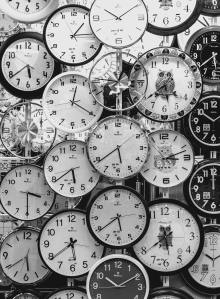 Some writers snatch a few moments of time wherever they find it. Others adhere to strict schedules. Walter Mosley tells us to write every day. Peter Brett wrote his first novel on his smartphone during his daily travels on the F train. Do you follow a set writing schedule? Write every day? Have a favorite writing spot? Do you put ‘butt to chair’ until you’ve finished a specific word count? Tell us about your writing schedule.




 The Writers in Residence
You must be logged in to post a comment.