What to Write When You Don’t Know What to Write.

by Jackie Houchin

  • Prompts help.
  • Other people’s ideas help.
  • Daydreaming out the window helps.
  • Deadlines help.
  • Contests help.
  • Tragedies or celebrations MAY help.
  • Anger MAY help if directed.
  • Copywork MAY help.
  • Unfinished manuscripts MAY help.
  • Praying (if so inclined) MAY help.

But what WORKS?  What can get your thoughts sparking and your fingers flying. What can set you on a course from A to B (with subpoints) or from Inciting incident to Denouement?  

Threats? Muses? Overdue bills?  Screaming? Pulling out hair? Ai? 

Wait….Ai?

Okay, I’m going to ask a ChatGPT assistant that question. I easily signed up, familiarized myself with a couple short questions, and then posed my dilemma.

(Oh, and I thought I needed to name my Assistant if I was going to use it. How about Charlie?) 

Meet Charlie.  

He’s not the sharpest pencil in the holder. He basically told me most of the things I’ve written above in a slightly different way. 

Here’s “Charlie’s” list of “helps”.

1. Free Writing:

  • Set a timer for 10-15 minutes and write continuously without worrying about grammar or structure. Let your thoughts flow freely; often, this can spark ideas you weren’t consciously considering.

2. Prompts and Ideas:

  • Use writing prompts to kickstart your creativity. For example, websites and books offer daily writing prompts, or you might start with “What if…?” scenarios that encourage imaginative thinking.

3. Mind Mapping:

  • Create a mind map around a central theme or topic that interests you. Branch out with related ideas, characters, or themes that come to mind. This visual representation can help organize your thoughts.

4. Write About Your Passion:

  • Reflect on topics or hobbies you’re passionate about. A blog can focus on your expertise, a hobby, or experiences you want to share. Writing about what you love can inspire authentic content.

5. Read Widely:

  • Read articles, books, and blogs in various genres. Exposure to different styles and topics can ignite new ideas or give you insight into what resonates with you.

6. Explore Personal Experiences:

  • Consider your own life experiences, emotions, or challenges you’ve faced. Personal stories often resonate with others and can be a rich source for blog posts, articles, or fiction.

7. Observe Your Surroundings:

  • Take time to observe the world around you—people, places, situations. Noticing everyday life can inspire ideas for fictional characters, settings, or events.

8. Set Goals:

  • Define what you want to achieve with your writing. If it’s a blog post, think about the message you want to convey. If it’s a short story, consider the theme or moral you want to explore.

9. Experiment with Different Genres:

  • If you’re unsure, try writing different genres or formats—a poem, a letter, or even dialogue. Experimenting can help you find your voice and lead to ideas for longer pieces.

10. Join Writing Groups or Workshops:

  • Engage with other writers in workshops, online forums, or book clubs. Sharing ideas and feedback can help stimulate creativity and lead to collaboration.

11. Create an Outline:

  • If you have a vague idea or concept, outline the main points or plot. This structure can act as a guide and make it easier to expand on your thoughts.

12. Give Yourself Permission to Write Badly:

  • Allow yourself to write poorly without judgment. The first draft doesn’t have to be perfect. Just get your ideas down; you can refine them later.

By using these strategies, you can overcome writer’s block and find inspiration for your blog, articles, stories, or any other writing project. Don’t forget to enjoy the process—exploration and creativity are key to finding your unique voice!

Well, not very creative.  I asked Charlie for MORE suggestions.  Here’s what he gave me this time.

.

If you’re looking for ways to ignite your creativity and really get your writing flowing, here are some more active and engaging techniques to help you spark ideas and motivation:

1. Change Your Environment:

  • Sometimes a change of scenery can help. Try writing in a different location – a café, park, library, or even a different room in your home. New surroundings can stimulate fresh thoughts.

2. Engage in a Creative Activity:

  • Participate in activities that aren’t directly related to writing, such as drawing, painting, or crafting. This can help free your mind and lead to unexpected inspiration.

3. Use Music or Soundscapes:

  • Create a playlist that suits the tone of what you’re writing or listen to soundscapes that inspire a mood (like rain, ocean waves, or bustling city sounds). Music can enhance creativity and help set the scene for your writing.

4. Set a Writing Challenge:

  • Challenge yourself with quick writing exercises, such as composing a short story in 10 minutes or writing a poem from a random word generator. Short time constraints can boost creativity.

5. Visual Inspiration:

  • Browse through images on platforms like Pinterest or Unsplash. Find a picture that resonates with you and write a scene or story inspired by it.

6. Interactive Writing Prompts:

  • Find interactive storytelling games or writing prompts that require you to make quick decisions or choose paths (like “Choose Your Own Adventure” games). This can stimulate your imaginative side.

7. Use Creative Apps or Tools:

  • Explore writing tools or apps designed to prompt creativity, such as “The Most Dangerous Writing App,” which encourages you to keep typing without stopping.

8. Engage Your Senses:

  • Take a moment to close your eyes and focus on each of your senses. What do you hear, smell, feel, or taste? Write a descriptive paragraph based on your sensory exploration.

9. Flash Fiction:

  • Write a complete story in 100 words or less. This constraint can force you to focus and be intentional with your word choices, leading to new ideas.

10. Interview Your Characters:

  • If you’re working on fiction, write down interview questions for your characters and answer them in their voice. This can deepen your understanding and lead to new plot ideas.

11. Use ‘What If?’ Exercises:

  • Take a mundane situation and apply a ‘What If?’ scenario. For example, “What if someone found a hidden letter in their attic?” This can help you explore unexpected plot twists or themes.

12. Journaling:

  • Keep a dedicated writing journal where you jot down random thoughts, dreams, or observations daily. This habit can lead you to uncover hidden ideas over time.

13. Connect with Other Writers:

  • Have a brainstorming session with a writing buddy. Discuss ideas, trade prompts, or even start a writing sprint together, encouraging each other in real-time.

14. Limit Distractions:

  • Turn off notifications and clear your workspace of distractions. Sometimes a focused environment can help ideas flow more freely.

Finding your flow might take some experimentation with different methods until you find what resonates with you. Don’t be afraid to try out various techniques and see what gets your creativity sparking and fingers flying across the keyboard!

..
 
 
Again….. 
 
Not quite the help I wanted. (They tell me the better ways I ASK for help, the better RESPONSES I’ll get, so I guess I need practice there.) 


Readers, how do YOU decide what to write?   (Please share your secrets!)
 
Have YOU ever tried Ai?  (If so, how? And are you happy with the experience?)


Group Post #1 – How do you handle TECHNOLOGY?

Occasionally, we have an open spot on our blog schedule. One of our members suggested we all (or those able) could jump in for a group blog question.  Our first was suggested by Miko Johnston.

How do you incorporate ever-changing technology in your writing, especially in a series that covers years?

Jackie Houchin — In my short stories, I use the technologies needed in the story’s time and place. I used GPS settings to find a long-buried stash in one mystery set in modern New York. In that story, the dates were firmly set by newspaper clippings. In my missionary kids’ series set in modern but rural Africa, cell service is spotty (indeed, you can’t even be sure of electricity), so I use these technologies but don’t depend on them.  Actually, “no cell service” adds to the suspense of the moment when an emergency happens.

#

Gayle Bartos-Pool — If you write stories set in the Roaring Twenties, you might want to include a bunch of things to define that era, like telephone operators connecting you to whomever you are calling or a radio program providing music and some news. There were no televisions or cell phones back then. The automobile was new with the Ford Model T, and assembly lines were just gearing up. 

Every era has its newfangled gadgets, but do they have to do more than set the stage in the story? Sometimes, too much detail distracts from the narrative unless there is one particular thing that plays a key role in your story, like the old typewriter with the damaged key and the ransom note with that same twisted letter. That’s been done before in several old movies, but it worked. 

But if you are writing a contemporary tale, do you have to rely on the main character’s cell phone on every page? After a while, it gets old to have the characters pull out his or her phones rather than use their eyes and ears to see the problem at hand.

I do like gadgets, but I don’t depend on them totally in my books. My characters will use a computer, but they use their brains more.

#

Miko Johnston — Back in the 1990s, before I started my series of historical novels, I attempted to write a (then) present-day mystery thriller that centered around a secret high-tech device. The problem was that I knew nothing about the subject and figured what I’d made up would ring false with knowledgeable readers, so I put the manuscript aside. Twenty years later, I revisited the story and realized I knew enough about what had been developed back then to finish the story with authenticity. 

I do incorporate technology in my modern work as it’s such an integral part of life now. For example, my short story, Senior High, comically follows three older women who travel to Washington, one of the first states to decriminalize marijuana. Although they haven’t “partied” since the seventies, they decide to get high one more time but can’t figure out how until Siri comes to their aid.

.
 

Metaphors by a Kingly Author

by Jackie Houchin

How many of you have ever read the Book (or parts of the book) of Ecclesiastes in the Bible? It’s in the Old Testament, right after Psalms and Proverbs (other excellent books to read!).

Ecclesiastes is written by King Soloman (the wise) toward the end of his life. He’s thinking back on all the “things” he has accumulated and accomplished. He calls them futile, useless, and vanity. It’s a bit depressing, however true.

Then in the last chapter he writes a fantastic – and rather gruesome – metaphor on aging, with a brilliant comment at the end. If you use metaphor in your writing, you will really appreciate it. If you are older and things about your body are “wearing out” (hearing, eyesight, energy, knees, memory) like me, you will maybe get a rueful kick out of it as well.

Here is King Solomon…

1Remember your Creator

in the days of your youth,

before the days of trouble come

and the years approach when you will say,

“I find no pleasure in them”—

..

2before the sun and the light

and the moon and the stars grow dark,

and the clouds return after the rain;

..

3when the keepers of the house tremble,

and the strong men stoop,

when the grinders cease because they are few,

and those looking through the windows grow dim;

..

4when the doors to the street are closed

and the sound of grinding fades;

when people rise up at the sound of birds,

but all their songs grow faint;

..

5when people are afraid of heights

and of dangers in the streets;

when the almond tree blossoms

and the grasshopper drags itself along

and desire no longer is stirred.

Then people go to their eternal home

and mourners go about the streets.

..

6Remember Him—before the silver cord is severed,

and the golden bowl is broken;

before the pitcher is shattered at the spring,

and the wheel broken at the well,

..

7and the dust returns to the ground it came from,

and the spirit returns to God who gave it.

..

How many of those metaphors did you catch?  I know personally about the diming vision and fading hearing, and definitely the white “almond blossom” hair!  So far, my “grinders” are still in fair shape, but I know about energy lagging with that old grasshopper.

And then in conclusion the wise old king writes…

..

12But, my child, let me give you some further advice: Be careful, for writing books is endless, and much study wears you out.

13That’s the whole story. Here now is my final conclusion: Fear God and obey his commands, for this is everyone’s duty. 14God will judge us for everything we do, including every secret thing, whether good or bad.

..

#

How have you used metaphors recently in your writing?  Do you enjoy reading them when other writers use these methods…sparingly, of course?

**** If you want to learn more about Metaphors, Similes, Analogies, Allegories and Idioms to use in your writing, check out this article in  The Free Dictionary for explanations and samples of each.

..

Photo by Matt Bennett on Unsplash

Holy Bible, New International Version®, NIV® Copyright © 1973, 1978, 1984, 2011 by Biblica, Inc.®.

Creating “Spine” Stories

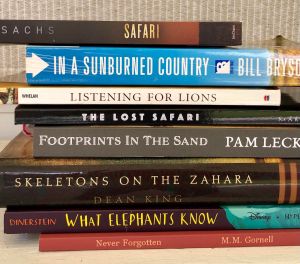
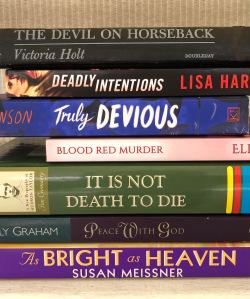
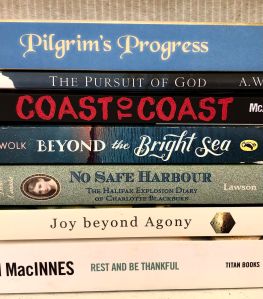
If you are like me, you’ve never heard of a Spine Story (or Poem) before.  I hadn’t until I read Erica’s wonderful children’s blog “What Do We Do All Day?” about a Summer Literacy BINGO game.

In the game, some of the squares were titled; learn a new song, finish a crossword puzzle, read a book outside, listen to an audiobook, and write a comic strip. As the the kids do each thing, they cross off the square. Five in a row means a BINGO win.

The square that caught my eye  was, create a spine poem.

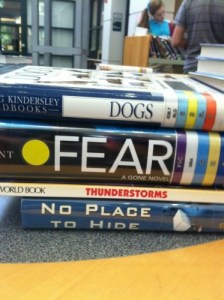
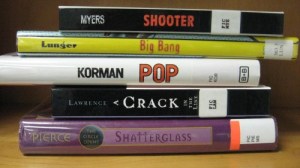
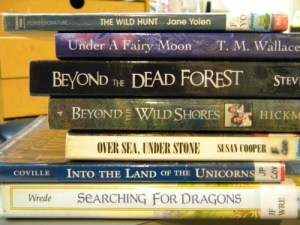
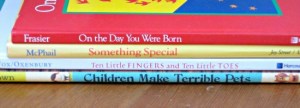
I’d never heard of a spine poem before so I clicked on a link to her page that explained them. Of course, if you’ve viewed the photos in this post, you will already know what one is. I call them stories instead of poems. A real challenge would be to do a Haiku poem in Spines.

I’ve yet to create one myself, but by the end of this post, I promise to put one together to share. Meanwhile, here are a few in Erica’s post.

(In case you can’t read the above Spines, they say “How to Write Poetry” “Brainstorm” “Where do You Get Your Ideas?” “All the world.”)

At the end of her blog on Spine Poems, she added a link to 100 Scope Notes which had a slew more of these poems/stories, titled “2013 Book Spine Poem Gallery”. There are other years of galleries available too. Lots of laughs and some really good Aligned Spines.

Okay, here are a few I tried. (haha) It was actually more fun than I thought. Once I’d done two, I saw many more possibilities!

Now it’s your turn.

Gather some of the books on your shelves or TBR stacks and try to create a few stories or poems?  I’d love to see a photo, or just write the titles in your comment below. Hey, you are very talented storysmiths. Let’s see what story you can tell… from your bookcase? Create a cool, scary, funny, mysterious, clever, or romantic “aligned spines” story.

###

Erica’s Literacy Bingo page: https://www.whatdowedoallday.com/reading-bingo-for-kids/

Erica’s Spine Poetry page:  https://www.whatdowedoallday.com/spine-poetry-activity-for-kids/

100 Scope Notes Book Spine Galleries:  https://100scopenotes.com/2013/04/02/2013-book-spine-poem-gallery/

“A Cruel Blessing” a Ballad

by Jackie Houchin

                 I know this is an unusual post, but in this time of lock-down, I’ve not been able to focus on writing anything new. So I’m presenting this Ballad I wrote for a Creative Writing class at Glendale Community College. I’ve tried to publish it, but no one will take this many stanzas (27), although one of the lines is only ONE word. Can you find it?  And it’s less than 600 words. 

                This ballad is based on a real person I knew, a man who had Grand Mal epilepsy.  


“A Cruel Blessing”


In olden days, the ancient Land

Of Ararat became

The birthplace of a first born son—

So beautiful, but lame.


The lameness was inside of him,

A sleeping fiend, unseen,

That would attack and seize him fast

Once he became a teen.


But now, the babe lay peacefully

Against his mother’s breast,

And drank her nectar, white and rich,

And safely took his rest.


They double blessed and named the boy

Vartan and Victory.

Then sprinkled him with holy oil

To seal his destiny.


A close-knit tribe, his kin instilled

Within their growing child,

A pride of place, and heritage,

A name kept undefiled.


The father taught Vartan to war,

Retaliate, defend,

And laid in Victory the love

Of truth, and God and friend.


The mother gave him nourishment

To make him strong of limb.

Likewise, the food for soul and mind

She gently forced within.


Then on their son they placed this grave

Responsibility,

“The future of this clan does rest

On your integrity.”


Relentlessly the clock of months

Ticked thirteen times around.

Vartan approached his manhood proud,

A prince as yet uncrowned.


But on his honored day there struck

A death – so fresh, so raw.

The gruesome end of one most dear

Was what young Vartan saw.


Then deep within the boy-man’s frame

An aura and a flash

Preceded tremors, shakes and quakes,

A weakness, then a crash.


Like frozen forms the family

Around the crumpled lad

Took in with shock and fright the sight,

And wailed, “Our son is mad!”


They mourned the loss of hopes and dreams,

(As well, the one so dear),

And wake became a vigil grim;

A sick bed and a bier.


Vartan lay still as death that night;

The other’s corpse quite close.

At dawn they lowered bones below,

But Victory arose!


A celebration wild with joy

Then met the rising son.

They dared to hope that only once

The dreadful foe had won.


Forgotten soon the grievous curse

As manly, Vartan grew.

A wanton woman caught his eye,

Then taught him all she knew.


But in the rush of ecstasy

The pleasures turned to pains.

He screamed, convulsed, then toppled down

Amidst a dozen stains.


In shame they found the fallen oak

And slowly hauled him home.

Beside the hearth, he warmed and woke

With kin, but all alone.


A disciplined and structured life

He thought would bring release.

Vartan desired glory bright,

But Victory sought peace.


So in the frozen, northern wastes

A soldier he became.

And hardship burned the dross from him;

A cruel and thorough flame.


But still, in light-less days he fell

A victim to his plight.

And so there came to dwell in him

A darkness more than night.


A disciplined and structured life—

This time, a different kind;

In solitude and quietness

Release he’d surely find.


So to the Church, went Victory.

He knelt, and prayed and read.

Now sixty months of sanity

Have eased his tortured head.


A Holy Man, a Prophet true

Is what he’s meant to be.

For holy oil had marked him thus,

And sealed his destiny.


Now from the monastery, he

Speaks out the Truth he’s learned,

And prays forgiveness from his kin

For hopes and dreams he’s spurned.


For from Vartan no seed will flow

To populate the clan,

And to defend the name and place

There’s no one who will stand.


But, praise! The sleeping fiend has fled—

It dared not seize a priest!

So God and Church held Vartan in…

And Victory released.

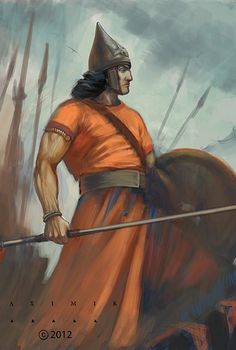
Vartan 2

Vartan woman

Vartan 3

Vartan monestary


  • * * * * *


Free WRITING For Free

WinR profile picJackie Houchin is a Christian writer, book reviewer, and retired photojournalist. She writes articles and reviews on a variety of topics, and occasionally edits manuscripts. She also dabbles in short fiction. “I’m a wife (52 years in Feb/2016), a mom, and a grandma (of adults, sigh!). I enjoy creating Bible craft projects for kids; growing fruits, flowers, and veggies; and traveling to other countries. I also adore cats and kittens and mysteries.”    Follow Jackie on Morning Meditations and Here’s How it Happened

What comes to your mind when you think of free writing?

Do you think of finding a word, idea, scene or photo, and putting your pen to paper (or fingers to keyboard) and… writing whatever comes to mind? (I did that once about salt from a photo of a vintage restaurant saltshaker, giving the condiment a personality. It turned out pretty cool, I thought!)

Or does free writing mean penning something “on spec” which is a fancy way of saying that no money is involved. Or, if you are a newbie writer, maybe you volunteer your services for articles, blog posts, interviews, fillers, etc., for experience and to accumulate “clips.”

Freeing Willie

“Free Writing” – that mind-over-matter, staring-into-space writing that begins with a prompt – is often used by writers and novelists who experience writer’s block, as a way to prime the pump. However it happens, once you get your creative juices or muses moving, your other WIP seems to suddenly take on new life. (And no, my muse’s name is not Willie!)

FREE writing3This kind of free writing invigorates your thought process, sparks ideas that catch fire and burn down forests of paper!! (Sorry, I got a little carried away.)

You don’t have to be “stuck” to make use of free writing. Some writers write from a prompt daily in a journal designated for that purpose. Not only does it kick start their writing, but they archive a huge number of ideas in the process to use later. (See a list of websites at the end that feature prompts for writers.)

Don’t write right

Another method of free writing (I love this one and have recommended it often, but no one ever tries it… or at least has told me they’ve tried it) is to use a left/right brain strategy.  (You have to use a pen or pencil for this one.)

Choose a photo, or even an advertisement from a magazine with at least two people in it, and some background. With your dominant hand, write a brief account of what is happening in the scene (other than the obvious ad line). Include background, clothes, colors, expressions, relationship possibilities, etc.

NEXT, switch hands and write about the same scene with your non-dominant hand.  I was told that your brain will notice different details and story possibilities from the “other” hand’s POV. I didn’t believe it, but I tried it. I was amazed! I did it again using a painting of a village scene this time and the same thing happened!

Try it.  Do.  Then email me (or comment below) the results.

Money Ain’t Everything

FREE writing5The other type of free writing that most wordsmiths don’t like to consider, is writing FOR FREE; not charging a fee, gratis, a lot of work for no pay. Some do it for the experience and to get a name and byline which they can later barter. They think of it as a rite of passage, paying their dues, a necessary evil. (Hey, I love clichés.)
But I bet you’ve done free writing and didn’t even realize it. How about that guest blog? (Okay, you pumped your book.) What about being so wowed by a book you just read, you ran to Amazon or Goodreads and posted a glorious review?

Unless your own blog has a commercial aspect, every post there is virtually free.

FREE editing1How about volunteering to critique or edit a friend’s manuscript? (I edit papers by seminary students in Africa and it is very gratifying.) Or mentoring a newbie writer? (I’m doing that for a friend who’s attempting her first memoir.) How about writing a note of encouragement to an author who’s just lost her editor or publisher, or gotten a stinky review?

These kind of projects are definitely in the “feel good” category but they are still writing. They are lucrative in a non-monetary way, and sometimes the payoff is astounding.

The Bottom Line

Writers write… however and whenever, for whomever, and for whatever pay. They write. WE write.

So WRITE FREE and see what happens.


Websites with writing prompts: scene setups, situations, words, and photos:

http://www.writersdigest.com/prompts – scenes

http://thinkwritten.com/365-creative-writing-prompts/ – brief suggestions

https://dailypost.files.wordpress.com/2013/12/365-days-of-writing-prompts-1387477491.pdf – each day

http://www.writingforward.com/writing-prompts/creative-writing-prompts/25-creative-writing-prompts –  brief ideas

http://writeshop.com/creative-writing-photo-prompts-imagination/  – photos

http://writingexercises.co.uk/random-image-generator.php – very cool! a new photo prompt with each click of your mouse.