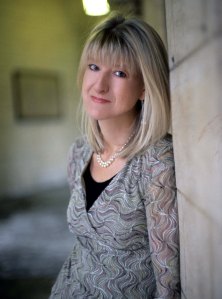
An Interview with Author, Maureen Jennings

By Jill Amadio

It hasn’t yet run as long as Agatha Christie’s “Mousetrap” in the West End, the theater district of London, U.K.,  but Maureen Jennings’ Detective Murdoch television series is well on its way to a record fourteenth year for the mystery author. A “Brummie” from Birmingham in the north of  England who emigrated to Canada as a 17-year-old and now lives in Toronto, she lends her British roots to one of her three series, the World War II DCI Tom Tyler cases, setting the books in the market town of Ludlow, in the Shropshires, U.K.

“I visit Ludlow annually”, she said a few days after being honored at the 2019 Left Coast Crime conference in Vancouver, British Columbia. “I love being in Ludlow. I wanted to write the Tyler series there because of the war years, which affected people so deeply.”

Her first foray into creative writing was three stage plays, all of which were produced, although she says, at very small theaters. She then turned to books.

As one of the top and most popular mystery authors in Canada, the Jennings’ Murdoch Mysteries (titled The Artful Detective in the US) was brought to the viewing public first as three Movies of the Week and then as a television series. Set in Toronto in Victorian days, ‘When people tended to be much more aware of good manners and polite behavior,’ the crime novels number eight so far, although the TV episodes number many more. A team of six writers creates the scripts, with Maureen writing one show a season and acting as creative consultant for the others.

After ensuring that the Murdoch books were pretty well established, but still writing a couple more later, Maureen launched the private investigator Christine Morris series. Although its future as a film is currently in limbo, she notes.

Another project, a drama titled  ‘Bomb Girls,’ was a concept derived from a Tom Tyler mystery and has become a TV series, written by Maureen with a partner. Thus, Maureen successfully mixes stage, screen, and literature. Indeed, she is regarded as a national treasure in Canada and has won so many literary awards in North America and in other countries, that it staggers the mind. The Toronto Star newspaper named her as one of 180 people who have influenced the history of their city through her mysteries.

So who is Maureen Jennings?

Married to photographer Iden Ford, who is also her literary agent, she has a constant reminder (at her feet) of her fictional Toronto detective. A dog called Murdoch. ‘He requires a daily morning walk, and that sets me up beautifully. I come back and can get going. In the evenings, I have less energy and usually use that time to read and do research.

As regards the books, I wanted to commune with ghosts of the past in Toronto, which has largely disappeared, and [back then] it was easier to include forensics, which was not as advanced as it is now.’

All the Brits from the Golden Age were and still are her inspiration, especially Arthur Conan Doyle and John Le Carré.  ‘I have always loved reading mysteries. Fell in love with Sherlock, still am. I like the notion of two-for-one, that is, you get a good story and learn something at the same time. For me, that’s typically history, which I love,’ she said.

Maureen calls getting her first book published a stroke of luck when Ruth Calvin at St Martin’s Press took a look at her manuscript at the urging of a friend, and bought it. Since then, she has mastered just about every writing discipline: books, scripts, short stories, and poetry. Yet this woman who streams so many, many words didn’t start out to be a writer. She studied psychology and philosophy at the University of Windsor and received an M.A. in English Literature at the University of Toronto.

She turned to teaching at Ryerson Polytechnic Institute, then practiced as a psychotherapist. Maureen believes that her expertise in that field has helped her create characters that are believable and their motives credible, although keeping them straight requires making careful notes. Her latest is the PI Charlotte Frayne series, starting with ‘The Heat Wave,’ which launched in March 2019 and brings the character into contact with Murdoch’s police detective son.

Her writing process involves outlining in detail. ‘That might change in small ways as the book grows, but I have found that if I don’t do that, I waste a terrible amount of time. I know some writers say they just start off, but I couldn’t imagine that. It would be like getting in the car and saying I’m going to drive somewhere now, but I don’t know where exactly. I’m not that kind of traveler. I have to have the hotel booked.’

A lover of history and a meticulous researcher, Maureen delves into primary sources, including newspapers and Coroner and Chief Constable reports, bringing her skills in particular to one of her latest mysteries, ‘A Journeyman to Grief,’ a recounting of life in the small black community in 19th century Toronto, much of it unknown to most of the city’s present residents.

Maureen’s biggest challenge?

‘Making sure Tyler didn’t look and sound like Murdoch. As for themes, they sort of come to me unbidden as I am researching. For instance, I was recently reading about Safety in the Workplace and how late that was in being established. That immediately became the focus of my next book, which is set in 1936.’

Any advice for first-time writers?

‘Oh dear. I know how hard it can be and how easy it is to get discouraged. But I absolutely believe that passion plus preparation leads to opportunity. I love horse racing and often think of it as a metaphor. Most of the horses and jockeys are more or less of equal ability, but the ones that win do so because they seize the opportunity when the gap opens up ahead of them and they gallop through. They’re ready. They’ve done their homework.

Also, I don’t think you should ever stop studying the craft, whether it be novels or theatre or film.’

A Writer Wastes Nothing

by Maggie King

“A writer wastes nothing.” This saying is attributed to F. Scott Fitzgerald. The renowned writer mined his college years to create his debut novel, the autobiographical This Side of Paradise.

I recently attended an outdoor event in a local park and feel inspired to write about it—in fiction form.

The crowd at this event was large, the air heavy with humidity. Virginia is a steamy place in the summer! I drank little water as I was unsure if facilities were available or even nearby (they weren’t). After standing for over an hour, the crowd started to leave—slowly.

A feeling of lightheadedness came over me and my vision blurred. To say I was frightened was an understatement. I was with friends and the crowd was friendly, so I wasn’t in danger. But the feeling of losing consciousness is scary and uncomfortable under any circumstances.

One of my friends let me lean on her until we came to a tree where I sank to the ground and sat back. People gave me bottles of cold water to drink and press against my wrists. I ate one of my melted protein bars. In no time I felt revived, grateful that I hadn’t passed out. A couple of EMTs showed up and took my vitals (they pronounced them fine!). I opted not to go to the hospital. Dehydration was named the culprit.

One of my friends left to get the car. The EMTs parted the crowd for me, and one of them stayed with me until the car arrived. While we waited, she asked what I did for work.

“I’m a writer, and I’m already planning to use this experience in a story.”

After all, a writer wastes nothing.

As I know how frightening it is to feel on the verge of losing consciousness, I can bring a visceral feeling to the story. My imagination will ratchet up the danger, raise the stakes. Possibly elements of a Hitchcock film I’ve seen is inspiring me as well.

My preliminary idea is based on a series of what ifs:

  • What if this is a hostile crowd, in addition being a slow moving one?
  • What if my character, a woman, is alone?
  • What if the heat and humidity make her feel lightheaded and make her vision blur?
  • What if she is carrying a quantity of cash and/or jewels that she’s stolen?
  • What if she is being pursued–by law enforcement? Another criminal? Both?

She must stay conscious and she must evade her pursuer.

Yikes!

A writer wastes nothing.

Has a personal experience ever led you to write about it, especially in fiction form? Tell us about it.

Characters: Real and Imagined

by Gayle Bartos-Pool

Writers create characters. Often, we use people from our own lives, or at least snatches of their personality, as the basis of those people. A favorite relative or friend might form the background for one or two main characters or pop up as a bit player here and there in your story, but if we’re smart, we won’t use someone we don’t like as the villain. Lawsuits can be so messy.

But What if we use real people such as celebrities or legendary individuals who changed the world in one way or another? You know, someone from a movie, a history book or the nightly news.

Would that method work?

Oh, yeah… But with limitations.

For instance, in my spy novels I use many real people like presidents and military generals and famous politicians who helped win World War II and changed the world in other ways through several decades. But my main character is totally fictional. He’s a master spy in my books, but he “knew” a lot of those real folks, “spoke” to them, and his story intertwines with what really happened back then. It took me ten years to research things that went on from WWII though part of the Cold War, because that was when those three novels took place. I read a lot of history books and even watched movies made during those times and some later movies made about those eras. The visuals alone let me “see” what it was like back then.

I have my characters “talk” with real people like Ian Fleming, the guy who wrote the James Bond novels. He was really part of the British government and one of the reasons we got in the war when our country was reluctant. He and my spy hero knew each other…fictionally, at least. But it made for a fun encounter.

I used historical figures who were our allies as good guys in the books. The bad guys like Stalin or Hitler were bad then and that’s the way they were written. I’m not changing history. The other bad guys I created came from my fertile imagination.

Even some of my contemporary books have characters that might be based on a real celebrity. I might not use their actual name, but a clever reader might figure out who it is. But these are the good guys. I come up with the bad guys from whole cloth. I watch the news and know basically what a bad guy does. I prefer to add my own twists to the villain’s personality, so I know how my guy thinks. After all, I’m telling the story. I don’t know what a real killer is thinking.

Mixing fact with fiction gives me that extra layer of reality that makes the story seem…plausible. Why not? Even Science Fiction has reality in it, mostly because the writer is guessing what the future might look like.

But here’s something fun. Take a look at old Star Trek episodes from 1966-1969. Lots of the gadgets the Enterprise crew members used are things we use now like cell phones and tablets. They didn’t have those things when the show was running. And something else. Their time frame was supposed to be in the 22nd, 24th and 32nd Centuries. We’re only in the 21st Century now, and we have those things…

So, when you write, create the world you want and put in characters with those touches of reality gotten from people you actually know and then toss in some character traits you’d like to see in contemporary folks or those coming up after us. You never know, maybe your characters will be the guide and inspiration to a whole new world.  Write On!

Christmas in Bangkok & Hong Kong

by Jill Amadio

I looked forward to spending Christmas in Bangkok, Thailand. We’d moved there four months earlier when my husband was posted to Saigon, and I landed a job as a reporter for the Bangkok Post.

Writing about an Asian Christmas energized me, and I eagerly looked around the local shopping districts for gifts, decorations, and seasonal goodies for the kitchen. Writing features and pointing out the differences between our holiday in England and America and our current home seemed like endless discovery.

Alas, none of these visions came to a realization. Thailand, like most other Southeast Asian countries, does not celebrate Christmas because it is Buddhist. With three children expecting to wake up early on The Big Day and rush downstairs to open their gifts, what to do?

Ah! Got it! We’d spend the holiday in Hong Kong, just an hour’s flight away. At the time, the colony was highly attuned to British customs, and the big hotels, I was assured, displayed a splendid farang (foreign) Christmas that would enthrall any Westerner. In addition to enjoying the holiday, I planned to interview hotel guests, locals, market stall owners, and tourists. Among the latter I encountered, were Swiss, German, Swedish, and Australians.

I’d visited Hong Kong several times due to assignments and visited the island of Macau to cover auto racing. There were always a plethora of stories worth reporting for the newspaper in Bangkok but I was eager to experience how stupendous this Christmas adventure would surely prove to be.

My husband and I decided it would be silly to take wrapped gifts with us, so we planned to take the kids shopping to choose their own. My editor agreed that I would write about the trip, sending in daily reports and photos taken with my Polaroid camera before we skipped New Year’s Eve and returned to Bangkok. As our last day drew near and we were anxious to return home, we booked an earlier flight.

Big mistake.

It turned out that December 31 was always a massive celebration for both Brits and Chinese, a richness of reporting I decided to cover, even though I had plenty of stories of our own excursions in Hong Kong. Besides, who wanted to miss the turn of a century in this historic city at the southern tip of China?

Our children had never been in a toy store because two were born in Spain, where Christmas was essentially a religious holiday. Our third child was born in the U.S. during a quick turnaround trip to New York and back to Thailand to ensure her American citizenship by being born in the States. My son was already pledged to fight, at 18, in any war that Spain became involved in because he was born in Madrid, but his second sister was registered as American, as by then, I had received my own U.S. citizenship.

Our shopping trip was a great success with many changes of mind as we, as parents, pointed out the mounting cost of their decisions. Finally, having selected their toys and new clothes, and I had talked to several shoppers from various countries, we returned to our hotel. It was my turn to choose a gift. My husband wanted to go out alone and buy me a watch. I told him I’d like a Patek Phillipe, please. Off he went but returned rather quickly.

“Are you insane?” he asked. “Do you know what those watches cost? No way. You’re going to have to settle for a Rolex.”

At the time, Hong Kong was turning out fake Rolexes by the thousands. Most had wristbands that looked like gold but were, in fact, made from anything but that precious metal. Aha! Another good story! In fact, the bona fide Rolex dealer pointed out our mistake when we showed him the watch we’d bought elsewhere. Never mind. The band looked authentic, and the watch itself was confirmed as the real McCoy.

The festive air in the colony extended everywhere we went through the perpetually crowded streets. I knew that more than 7 million people lived in the small British enclave, and they invaded every restaurant, bar, and all the shopping districts in sight. Antique stores added red ribbons to their vintage wares, and the buildings were ablaze with Christmas lights. Even the hotel’s small office for guest use had a small Christmas tree. Laptops didn’t exist back then, but the electric typewriters fit the bill for typing up my interviews.

After a great New Year’s Eve, the hotel manager asked if we planned to stay on for January 6, the Chinese New Year, but by then, we’d had our fill of festivities.

I returned to Bangkok with a new satchel filled with notes and an extra suitcase for the kids’ toys and outfits. In Bangkok, we had to have our clothes tailor-made as there were no ready-made stores. The upside was that a dressmaker charged $5 or $6 to create a dress, a blouse, or a skirt. I’d simply bring in the fabric, show her a Chanel photo in Vogue or another magazine, and she’d copy it.

We left Hong Kong after two glorious weeks and enough material for several follow-up feature stories in the Bangkok Post.

Now, permanently living in America, with stores brimming with seasonal cheer, I wish my dear friends and readers at The Writers in Residence a Happy Hanukah, a Merry Christmas, and a Happy New Year!

What’s The Point of Resistance?

by Guest Blogger, Renee Le Verrier, E-RYT*

When the writing gets tough, the tough stay in the chair.

When the writing gets tough, I slide off the chair onto a yoga mat.

I begin a class with a short reading once everyone gets settled on their mats. On one particular morning, Greta, an eighty-something with a sunny smile who never missed a session, cleared her throat.

She leaned closer to me. “May I ask you something?”

I nodded.

“If you could define yoga in one word, what would it be?”

I didn’t hesitate.

“Awareness,” I said

Greta sat upright and seemed to be considering my response. “That could apply to nearly everything, that awareness thing,” she said.

That’s the day I went home and unrolled a mat beside my writing desk. So closely related, I wanted to practice each near the other.

Yoga, in a longer definition, is more a meditation in motion than it is bending into poses. Similarly, writing is more than the number of words on a page on any given day. The craft moves characters forward or back, into twists in a kind of motion of imaginative meditation. When my mind is with me, not off planning what’s for dinner, present with my pose or in a scene, both my yoga and my writing deepen.

The word yoga derives from Sanskrit meaning ‘linking together’—as in yoking—the mind and body. Awareness connects the two. When I take notice, the continuous chatter in my brain—that’s busy, busy making mental remember-to lists—fades. What’s opened up makes room to be attentive.

In writing, I focus on how and where the words affect me physically. If my typing resembles an air drum solo, I’m on a roll. If I’m in the middle of crafting a fight between two characters I’m breathing easy and my toes aren’t curled, something is off. It might not tell me what is awry but I’m aware I need to edit.

If I can’t connect with my body, I pause and take a detour to my face to take inventory there. Are my jaws clenched? Lips squeezed tight like a zipper?  Eyebrows furled?

Toggling from body to expression has revealed an assortment of secrets. In yoga, I may believe that I’m relaxed while my cheeks and lips form a frowny face.  In writing, I’ve been delighted with myself for a stellar phrase, yet the computer screen reflecting back at me is unsmiling. These scowls indicate dissatisfaction and point me to a needed revision.

Awareness isn’t skin deep, recognizing only pain or pleasure. In yoga, my mind is reading my body and reporting back, yes. But stretching only to the first sense of pushback doesn’t allow much room for lengthening or release. I instruct the class to go as far into the pose that they get to the point of ooh, ow, ow.  But don’t stay there. Know where that point is, then ease back to where the stretch first meets resistance, to just ooh.. From there, try to coax the line of opposition into backing away.

In writing, we reach points of resistance in our plotlines, our narrators, our characters—fictional or non. The story arc banks on opposition—without it, there’d be no conflict, no resolution, no growth. I look for the far edge of that resistance. It may be too intense, unbearable, so I take it back to the point where it feels right. Just like when I’m on the mat.

Greta was right about that awareness thing.

* An E-RYT (Experienced Registered Yoga Teacher) has documented over 2,000 teaching hours and attended at least 500 hours of training as a student.

.

BIO for Renee Le Verrier

Renee Le Verrier enjoys being surrounded by books, painting supplies, dog toys and yoga. The author of Yoga for Movement Disorders and Travels with Tommy (featuring a very special Great Dane), she has been awarded Best in Show in local juried art shows but mostly fills up the walls in her office. She has been teaching and presenting on yoga throughout the US and UK for eighteen years. She writes from an island off the coast of Washington where she lives with her husband and another Great Dane. She’s currently working on a YA novel, which also means she’s practicing yoga regularly. Visit her at http://www.leverrier.com

Copy Work: What is it? Why do it?

by Jackie Houchin

If you are an avid reader, you know that the best writers pull you into their worlds. Their words become images in your imagination as soon as you read them. The writing itself becomes invisible. (Or at least it should.)

That is a problem when reading to learn how the author did it. Instead of paying attention to the sentence structure, you are immersed in the story.

That is where copy work comes in.

What is Copy Work?

It is the practice of exactly copying another writer’s words, omitting no punctuation mark or capitalization, usually done with a pen.

Who even does this?

Jack London trained himself to be a better writer by copying out (in longhand) passages from Rudyard Kipling’s work.

Other writers have used Ernest Hemingway’s writings or copied out “The Great Gatsby” by F. Scott Fitzgerald. (A short novel)

Morgan O’Hara copied the U. S. Constitution by hand, word by word.

Greg Digneo, on SmartBlogger, tells the story of salesman Dan Kennedy, who copied a two-foot stack of sales letters by hand. Twice!  He wanted to become the best in this field.  Today, you would have to pay him $100,000 to write a sales letter for you. And he would get a commission on every sale you make.

What is the goal of copy work for writers?

The goal is to understand how authors write and express their ideas. What makes their writing work and flow? How do they structure their paragraphs and sentences? How do they create compelling characters?

Copy work helps you identify bad writing habits, like passive voice, stale metaphors, repeated words, etc.  It will help you with good punctuation and grammar, spelling and vocabulary, pacing, scene description, and using dialog tags.  It will help you write more precisely, with fresher, more original words.

Seriously!

Artists copy the Masters to improve their skills. If you want to be a better writer, copy great writers. 

How do you make the most of your copy work?

  1. Choose a writer you love, the book(s) you could not put down.
  2. Set aside time to do your copy work daily (20-30 minutes for handwriting, 10-15 for typing). Use a timer.
  3. Select a moderate-sized chunk of text. (Not War & Peace, but also not a Haiku)
  4. When you finish copying one story, pick another one to work on. Keep going for at least 90 days. (The magic of copy work happens through repetition.)
  5. Don’t stick to a single author. The goal is to learn writing techniques, not imitate one author.
  6. Mix genres: nonfiction to fiction, fantasy, science fiction, mystery, poetry, film scripts. (They all teach different writing methods, scene structures, dialogue, setup, etc.)
  7. Practice daily, if you can
  8. At the end of each session, review the passage you copied and add notes. Reflect on what you liked and what you learned.
  9. Follow copy work by moving into your regular writing. You are all primed to go.

By doing copy work every day, you will be writing every day. It will train your brain to see writing as a no-stress, no-pressure practice. It will make it easier to turn to your own writing.  If you are having writer’s block or just can’t come up with a new idea for a project, story, or book, you can still do your copy work to keep that daily writing habit going. You know, seat of your pants in a chair…. etc.

What do you NOT do with your copy work?

You will not publish your copied text or try to pass it off as your own. Copy work is for your eyes only. It’s a writing exercise. It is not plagiarism.

Need some suggestions? Try copying out these.

Have YOU ever tried COPY WORK?  Did it help you?  How?  If not, will you give it a try?  If you can’t comment below, drop me an email at Photojaq@aol.com. 

CONFESSION: Years ago, I read that I could become a great writer if I could copy a book I admired in its entirety. Yes, the WHOLE book.  I thought that sounded too good to be true. But, as I admired Rosamunde Pilcher and loved THE SHELL SEEKERS, I thought I’d try that book.  (The paperback edition is 656 pages!)  I think I got to page 35. I wasn’t becoming a great writer. I was getting bored, and my hand was cramping.  I quit. 

But now, after this research (short sessions, consistency, review and take notes), I’m willing to try again. I may not become great, but I think I’ll improve my writing skills.  I have another book in mind to copy. 

Perhaps in my next rotation post, I’ll tell you what I learned from the experience.

##

  • And thanks to the following for their insights on this “cool” topic. 
  • RADEK, founder of Writing Analytics
  • ELIOT CHAN – Eliotchan.com, April 14, 2020 
  • MATTHEW ENCINA – thefutur.com, July 13, 2020
  • JULIA HESS – craftyourcontent.com, May 17, 2018
  • LORRAINE THOMPSON – marketcopywriterblog.com, March 14, 2012
  • ANN KROEKER – Annkroeker.com, June 27, 2017

The Week I Rose Before Dawn to Write

My title is a bit misleading. In the days leading up to Election Day, I did rise in the wee hours and did write. I’m not a morning person, but for years I’ve known writers who worked on their stories before sunrise. There are certainly advantages: it’s quiet, the rest of the (sensible) world sleeps, word counts soar. But it was the election that prompted this deviation from my normal schedule.

In a moment of patriotism, I had volunteered to work at the polls as an Officer of Election (OOE) on Election Day, 5am-7pm and beyond. Yikes! I needed to “train” my system to endure such a radical change to my schedule, and that meant early to bed, early to rise. As long as I was at it, I would write.

Starting on Tuesday, October 29, I rose at 6 am for two days, 5am for two days, and 4 am for three days. I enjoyed coffee, my cat’s companionship, and worked on a short story. I read book on writing, touted as a how-to book on craft (we can always learn about craft); in reality, it was a commentary on writing, delivered in a lofty tone. It required a focus that kept me awake. I did not check my email or anything else on my computer (I wrote in longhand).

Bedtime ranged from 9-10pm, and I had no trouble falling asleep—until the night before the big day when I didn’t get to sleep until 12:30pm. That meant I had three hours and ten minutes of shuteye. Would I be able to make it through the day? As Frank Sinatra crooned, “I’m in the autumn of the year” (in more ways than one).

I did make it through, and enjoyed myself. I worked with a nice group of volunteers and the day was incident-free. The voters were pleasant and cheerful, a diverse group representing a range of ages and cultures. Interesting dress and hair styles as well. A writer’s paradise! I mainly helped them scan their ballots and handed out “I Voted” stickers. Many children accompanied their parents and enjoyed the  “Future  Voter” stickers. I also worked the floor, directing voters to booths, the ballot scanner, and occasionally the restrooms. Voting is at the heart of democracy and I appreciated taking a part in the process.

Would I do it again? Not likely, but it may be too soon to decide. Early voting holds more appeal, as the volunteers work in shifts, a much kinder arrangement. And it would still offer a way to pay tribute to my mother, who worked at the polls for decades.

My feelings about rising early to write: I liked seeing the sun rise and the light growing brighter and brighter. But I found it quite lonely, especially on the 4am days. The quiet was very, well, quiet. I can see the appeal, but it’s not for me.

Happy writing, whenever and wherever you string those words together. And thank you for voting!

HOW I FOUND MYSELF WORKING AS A WRITER IN RESIDENCE OF A HIGH-SECURITY MALE PRISON

by Hannah Dennison

I’m excited to introduce our special guest today Sunday Times bestselling thriller author Jane Corry. As you’ll soon learn, Jane’s writer-in-residence experience is quite simply extraordinary.

Jane – welcome! 

My novelist career took off when I went from being a features writer on a well-known women’s magazine to prison.
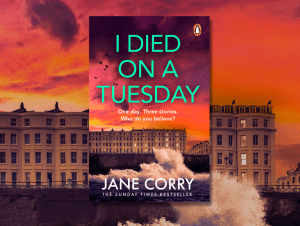
I’m not joking. But I should add that I was a writer in residence at a prison rather than being a prisoner myself.

My story started the month I got divorced from my first husband after 27 years of marriage. Two weeks later, my weekly magazine column ended due to a staff shake-up. Although I had maintenance, I found myself in need of extra income in order to bring up my three children.

After moving house, my new neighbor suggested that I look in the papers for work. I hadn’t applied for a job for 27 years—I’d been a freelancer since my children were born. But there it was—an advert saying, ‘Wanted! A writer in residence of a high-security male prison.’

Frankly, I didn’t think I had a chance. After all, I didn’t have any experience of prison, either from the outside or in.  Indeed, the only crime I’d ever committed was to park on a double yellow line.

But the money they offered was exactly what I needed to pay my mortgage – to a penny.

My sister and friends didn’t think I should apply. In fact, they thought I was crazy even to consider it.  I was, as they pointed out, in a bad place emotionally. How was it going to help me to work in a prison? I like to think it helped both me and my students, but I’ll come onto that in a moment.

I was very surprised to get an interview and not at all surprised to fluff it up. The governor asked what I would do if a prison officer came into the room where I was running a writing class and told everyone to get out. I said that I would get them to stop in the middle of the sentence so it would make it easier for them to come back to it – it’s a good writing technique. He looked at me, his eyebrows raised. ‘And by that stage,’ he pointed out drily, ‘half the prison would have escaped.’

He had a point. From that moment, I relaxed because I knew I’d blown it. So you can imagine his surprise when he rang that evening and offered me the job.

On my first day, I was given the keys to the prison. To be precise, I was handed a key belt and told that I had to lock any doors that I unlocked and went through, otherwise I’d be out on my heels. I also had to make sure that I signed in every night and handed the key back.

My role was to be a sort of literary Pied Piper. I wasn’t part of the education department, where people had to come to my lessons. I had to woo them in through notices which I put up round the prison.  I printed them out with titles such as ‘Come and join my workshop to write a letter, novel, short story, life story.’

Life stories were particularly popular. I learnt more about crime than I care to talk about. I will say, however, that I was reduced to tears of shock and horror by one man’s story. He then apologized for upsetting me and I told him he should be apologizing to the people he had held up and threatened with death.

I entered his life story for the Koestler Awards, given to men and women for art and writing in prison and he won a silver. His behaviour immediately changed for the better and the guards said that it was due to his new-found story telling skills. He told me that if he hadn’t expressed his remorse on paper, he might have banged his head against the wall.

On the whole, I was treated very well in the prison, although there were times when I was scared. I was followed around at one point by a man who – when I looked up his crime – had tried to kill his girlfriend. I didn’t look up any crimes after that apart from the former accountant who had been a rapist. I don’t want to go into that. He seemed such a nice man.

One night, the governor asked if I would spend the night in the prison for a charity drive. I would have turned down the invitation but the money was going to help pay for my next year at the prison. So I felt obliged. It was terrifying being locked in. There was a bowl under the bed for my business. I spent all night typing. The gov had allowed me to bring my typewriter in. In the middle of the night, an officer knocked on my door and asked what I was doing. I told him I had permission to write and reluctantly he went away.

On other occasions, I brought in writer friends to talk, including Colin Dexter. The men asked him how he got his inspiration. He told them that it was a large bottle of malt whiskey. This didn’t go down well with the officers, but the men thought he was wonderful.

When I started my prison job, I was told that the men either spent their leisure  time in the gym or in the chapel. That stayed in my mind. Then as I walked past the gym, with sounds of machinery pounding, a title fell into my head. The Book Of Uncommon Prayer. So I asked both the men and the staff to write down sayings that helped them through life. I’d written something similar for the women’s magazine earlier. It seemed to go down well and also improve relations between some staff and men.

My two year contract was extended to 3 years. They then asked me to stay for a fourth but I thought that I might never leave. By then I’d got married again so I said goodbye but I volunteered to be a judge for the Koestler Awards and have done so now for the past ten years. Every summer, I go up to Wormwood Scrubs and leaf through entries. The winners’ work is displayed at the Southbank in London every autumn.

I gave up romantic fiction and began writing gritty suspense novels about families who’d been affected by crime, either as aggressors or victims. I changed agents and my new one sold me to Penguin. I’ve since had eight top ten Sunday Times best-sellers.

People sometimes ask if I miss my old life. Actually, it haunts me.  You can take the girl out of the prison. But you can’t take the prison out of the girl.

You can buy my new novel ‘I DIED ON A TUESDAY’ in supermarkets, shops and   https://bit.ly/3SE8UVi. Thank you. You can also find out more about my books at www.janecorryauthor.com,   

The book on Amazon

Teaching a Writing Class?

by Jill Amadio

Teach a writing class? I have enough trouble getting myself to work on my next mystery, of which I only have one-third finished. However, I am working full-speed on my new career as a writing coach.

Westport, CT, has more than its share of elderly, I was told at the town’s country-club-style senior center where I use their gym. The executive director figured many of the members would love to write their life story if only they knew how.

Interesting, I thought, because I have been looking for a paying job. I’ve written four biographies under my own name and a few as co-author. My greatest contribution to assisting another person’s attempt to get their autobiography on the page has been as a ghostwriter. I’ve written 15 for clients. This is the kind of book you can write with no repercussions tied to your own fragile persona. No one can take potshots at you for you putting on the published page swipes or dislikes for certain relatives, remembered experiences that showed others as fools, or perhaps an opportunity to lay bare your absolute hatred of your cousin’s prize poodle. I do, however, urge a client’s caution, and I try to appeal to their good nature if they have one.

So, did I want to take up the challenge of teaching some old fogies like myself how to write their memoirs? The idea appealed to me. I had never taught anyone anything in my whole life. Well, maybe a few table manners to my kids.  So, yes, I accepted the challenge to help anyone over 65 jot down their life story in presentable and publishable form.

Creating a curriculum was my first worry. What would I teach? The elements of style came immediately to mind. I’d want to know how to structure a book, create my personal style, and how to write down my thoughts and feelings.  I’d want to know how to describe places and people, events and experiences that had made up my world since birth and were still occupying my psyche both physically and mentally.

For the first class, I asked my students to create a Timeline, a list of each year of their life with a significant note, and a few words to mark why it was memorable.

 I decided that handouts were important because I had always loved receiving them at writers’ conferences, so I found Rudy Vallee’s timeline I’d created back in 1989, as well as a champion cowboy’s timeline that chronicled his trek across America from coast to coast on horseback. One handout was a list of 106 descriptive verbs I’ve used for years.

In addition to the Timeline, I also mapped out writing techniques and elements for the following classes. In addition to Structure, Style, and Context, I added how to write Characters, Flashbacks, Settings, Cliffhangers, Editing, Beginnings and Endings, Publishing, and Marketing.  I became so enamored of my advice I began to inspect my own WIP and make changes. I dredged up a few tips and notes I’d taken at various conferences and thus was able to flesh out my curriculum.

An observation about the students. They were extremely keen to learn how to write their memoirs. It was clear some of them had been thinking about writing such a tome for a few years but had no idea how to do it. By the homework I gave them, i.e. the Timeline, they returned to class time and time again more enthusiastic than ever. I told them to always interrupt me any time with questions, hoping that my fear they’d forget them before the end of class was not apparent.

Among these senior students, limited to 12,  were a school bus driver, a poet, an attorney, an ad saleswoman, a lady from Germany who escaped the Nazis, a couple of teachers, a financier, and an accountant. One gentleman dropped out after lesson #2 because he said now that he was about to describe his life, he found it too painful to do so. Another gentleman said he doubted he would continue because as a reporter, he was trained to write lean, and that was the antithesis of writing a book. I told him I’d initially experienced the same hesitation when I was first approached about ghostwriting. My editor at the magazine I wrote for said that a CEO had called asking for a referral to a writer for his business book. Before calling him back with a recommendation, she asked me if I’d be interested.

“A book? A whole book? No way!” I said.  “I enjoy writing the 3,000-word articles for the magazine, but 70,000 words? Forget it.”

“Think of it this way,” the editor said. “Approach each chapter as an article. And the pay is really good.”

“Oh. Okay, I’ll do it.”

After that first book, I received many referrals and became a ghostwriter. A few people contacted me through my website, www.ghostwritingpro.com.  One client, a banker, asked me to ghostwrite her novel about financial fraud.

“Hmm,” I said. “Sounds a bit boring. How about we add a murder to spice it up?”

“Yes! How many murders can we have?”

The publishing of that book inspired me to create my own Tosca Trevant mystery series while I continued to ghostwrite as my main source of income.

Back to my seniors’ class. The atmosphere was informal, friendly, and focused. I showed them several of my memoirs and said that although we only had eight hours in total with which to cover the subject, it at least would get them started thinking and planning.

By lesson #4, we all felt comfortable with each other reading aloud the homework. One lady was writing her memoir only for her grandchildren and refused to share it with us. But everyone else was eager for everyone’s critique. The lawyer fella incorporated funny poems into his memoir, and someone else brought us to chuckles with her descriptions of working in a donut shop as a teenager. The German lady brought us to tears with her childhood memories of fleeing the Nazis

That first 8-hour course was popular enough to be repeated, and later in the spring, I shall be teaching How to Write a Short Story or Essay. Luckily, when I lived in Laguna Woods, CA several of my stories were published in the community’s anthologies over the years, although I can’t remember ever writing an essay. Tips for my seniors, anyone?  

.

Jill’s article was posted by Jackie Houchin

Writing About Bloodhounds & Pet Detection

Guest post by Landa Coldiron

I’m a Bloodhound Handler. I’ve been using my bloodhounds to find lost pets for 18 years.

I recently had a book published by Austin Macauley about my work as a pet detective. It is a work of ‘faction,’ as I like to call it. Some stories are true, some are fiction, and some are combined (real and made up).

It is titled ‘The Bloodhound Handler—Book One: Adventures of a Real-life Pet Detective.’ Like people, in search and rescue, search dogs are used for a direction of travel that can locate the pet, provide evidence, clues, and eyewitnesses, and /or target a search area where resources can be deployed.  In my book, I wrote about these abilities in stories, using the character Kalinda Dark as me.

My book is currently available on Amazon as a paperback or Kindle. It is a great action adventure with some mystery and has had many positive reviews. It has also been featured at Barnes & Noble.

I wrote the book a few years ago after my first bloodhound, Ellie Mae, died. She was young, and it took me by surprise. I knew I had to write about her and our life together.  Ella Mae won the 2011 California Veterinary Medical Association Animal Hall of Fame award for her work in finding lost pets.

Writing The Bloodhound Handler book took me three years of writing every day and another two years of rejections. Finally, I got an offer from a publisher!

The book also contains stories about Glory, my second bloodhound. She won the American Humane Search Dog of the Year in 2015. It was a national award over a weekend at the Beverly Hilton. Many celebrities were in attendance. Glory won over 500 other dogs in the category.

We were also flown to Washington, DC, to speak in front of a small congressional hearing on the lost pet problem in America. You can search her name on YouTube under American Humane, and you will find her story. It is really something. Glory has a Facebook following of over 16,000 people!

Thanks to anyone who supports my book. If you are an avid Kindle reader it is only $4.50 and even has colored pictures.

#

Landa Coldiron is a two-time award-winning bloodhound handler in Los Angeles. Her website and Facebook are Lost Pet Detection, and her Instagram is @thebloodhoundhandler.

###

NOTE from Jackie: I knew and wrote about Landa for a newspaper when I lived only blocks from her in Shadow Hills. I was privileged to watch Ellie Mae in action and learn about what pet owners can do when their pet goes missing. (The book covers this too.) 

Landa has also owned and trained Cadaver Dogs for her work. 

The Bloodhound Handler book is a fascinating read. It follows cases of lost (or stolen) pets from the first panicked telephone call through the process to the ending, which is sometimes joyous and thrilling and sometimes disheartening. One case toward the end of the book involves a missing dog and little girl and reads like it was “ripped from the headlines.” I enjoyed it very much.