The Resurgence of Audiobooks

by Hannah Dennison

The saying ‘ask a busy person’ never held truer for me than these past few weeks. I was on a deadline – the kind where you cannot be late because the publisher works to a tight schedule – I visit my mum almost daily in a nursing home, I have a demanding job to pay the bills, and I have energetic dogs to walk – but despite all that, I happily agreed to feed my daughter’s cats adding another 1 ½ hours of commitments to my day. It’s only a 25-mile round trip but those are country miles along narrow twisty roads and if you get stuck behind a tractor …

Miraculously, it all turned out to be a wonderful gift. The weather has been fabulous (ask Jackie – she knows!) so each morning I would take my coffee and breakfast and sit in Sarah’s beautiful garden with Taz and Tilly and listen to the birds and remember to breathe – to literally ‘stop and smell the roses.’

I also rediscovered audiobooks.

When I’m in serious writing mode – I can’t read any fiction. I just don’t have the bandwidth. Not only that, when I do pick up a book, I find it hard to switch off my writer or editing hat, unintentionally critiquing instead of just going on the journey. There are exceptions of course.  I just finished Lucy Worsley’s excellent biography Agatha Christie: A Very Elusive Woman and I can’t say enough good things about it. But I digress.

I’d checked out a CD of ‘Outlander’ by Diana Gabaldon  from my local library initially for my mother who – at 93 – is a great audio fan. I’d always loved Diana’s time travel series. I’d heard her talk many times, especially at The Poisoned Pen in Scottsdale, AZ where she is their local author.

On a whim, I thought I’d listen to Outlander en route to kitty duty. Usually, I listen to podcasts but I’d forgotten all about audiobooks despite having devoured them on my daily freeway commute when I worked in Los Angeles another lifetime ago.  I’d even got stopped by Highway Patrol once for speeding. When I explained that I’d been listening to ‘Shutter Island’ by Dennis Lehane and just hadn’t been paying attention, they still gave me a ticket – clearly not amused.

An article in Wordsrated (January 2023) stated that globally, audiobook revenue for 2022 is projected to be worth over $5.38 billion. Over the last five years, audiobook revenue in the USA has increased by 113.3% making it the fastest-growing book format in the USA. Nielsen reported that in 2022, 27 million audiobooks were sold in the UK alone, an increase of more than 50 percent since 2018 – and the median just keeps on growing. Revenue from audiobooks is expected to grow 26.4% every year from 2022 to 2030 and reach $35.05 billion in 2030. It’s mindboggling stuff so if you haven’t explored this option for your work, now is the time!

Happily, my books are available on audio but full disclosure, I don’t think I can bear to listen to them. I’d hear all the discrepancies or things that in hindsight, I may have written differently. It would be too cringeworthy.

The narrator is critical.  Davina Porter has narrated the entire series of Outlander. Deemed a Golden Voice narrator with AudioFile, it’s easy to see why. AudioFile’s founder, Robin Whitten said ‘Golden Voice narrators have superb performance skills, are keenly attuned to their authors, and are practiced in many genres and styles.’

Voice acting is a unique skill that includes accurate articulation, the ability to control emotions, instinctive pausing, being aware of when to use an accent (Davina Porter’s Scottish accent in Outlander is flawless) but most of all, the narrator must be able to differentiate each character to enable listeners to audibly ‘see’ that character and bring it to life. 

I know some folks record their own books – and I say good for you! An author friend of mine uses his car as a sound booth – seriously. He stuffs the interior with pillows and duvets and does everything on his phone. It works for him but I wouldn’t have the patience to fiddle with all the editing software.

Audio books are not for everyone. In ‘The Author’ – the UK’s quarterly publication from the Society of Authors, Laura Hackette, Deputy Literary Editor at The Sunday Times, says she ‘doesn’t have the attention span for the format’ and either she drifts off or gets distracted by other things or gets ‘frustrated by the slow-paced narration.’ She even tried listening on 1.5x speed but it just sounded weird.

My cat feeding duty is over now and, to my surprise, I turned the manuscript in three days early – the first time in years. Perhaps it was just taking that enforced time out that made a difference. Who knows? But what I do know is that I have another 8 volumes of Outlander to listen to. I think I’ll just spend more time in my car – even if it is just parked outside my house.

WORDPLAY

by Miko Johnston

Words fascinate me. I think about them constantly, their surface meaning and their subdural meaning. The subtle differences in synonyms when attempting to find the best word in a situation. The unusual pairing of words to create fresh and unique imagery. Formulating a sentence that will dazzle the reader, but not distract them.

We who write in English have an amazing array of words to use. According to a linguist I know, our language stems from our Anglo-Saxon heritage, with words deriving from both cultures.  It provides us with an abundance of synonyms.

I became interested in words early on, which is why I wanted to be a poet and have read much poetry. One of my all-time favorites is Edgar Allen Poe’s “The Bells”, a master course in the use of repetition and word sounds to create different moods. It’s where I learned about onomatopoeia – words that sound like their sound. Poe’s bells tinkled in merriment, rhymed and chimed in happiness, clanged in alarm, and tolled in sorrow.

Before I could read I would hear words and “picture” them by their sound. I would think I knew what they meant, but not always – some didn’t translate into their actual meaning.

Growing up in New York, I ate a lot of delicatessen meats like pastrami, corned beef and tongue. As a child, I assumed the last item to be a homonym of the organ found inside mouths. It took until my late teens to make the connection – the delicacy I’d enjoyed for years was actually…a tongue. Had I not already loved it I would have been grossed out!

I’ve since learned tongue is an autological word – it describes what it is, or expresses a property it also possesses.  Examples of autology include unhyphenated, word, and pentasyllabic  (a five-syllable word that means a five-syllable word).

Onomatopoeia words sound like they sound. Autological words mean what they mean. However I’m more curious by other categories of words, which have no name that I’m aware of, the first being words that sound like what they mean.

Take alluring. When it’s said out loud it rolls gently off the tongue.  You can almost hear the trilling of the R, the sensuousness of the word. I find tranquil to have a soothing sound. To me, idiot sounds ‘fast’ while moron sounds ‘slow’, which is why I ascribe each term to different, um, problematic drivers. I also think stress, beginning with its three hard consonants and ending in the shrillness of double S, sounds, well, stressful. And come to think of it, shrill sounds…shrill. I wonder – do these words sound like their meaning because we know their meaning, or would they sound that way to someone unfamiliar with the word? What would you call words that sound like what they mean?

Then there are words that sound nothing like their meaning. Who came up with pulchritude to describe pleasing beauty? Is gorgeous, with its hard opening G and harsh final syllable, much better? Does relax inspire calmness? One of my favorite and most pleasant sense memories is the smell of summer rain hitting a hot, dry pavement. There’s a word for it – petrichor. Does that sound pleasing? Not to me. Shouldn’t words like these have a name as well?

You can probably come up with other examples of words that sound, or don’t sound, like what they mean, and please do. You might know of a word that describes these types of words, or suggest one of your own. All I know for certain is that my fascination with words and language led me to become a writer.

Miko Johnston, a founding member of The Writers in Residence, is the author of the historical fiction series, “A Petal in the Wind”, as well as a contributor to several anthologies including the recently released “Whidbey Landmarks”. Miko lives in Washington (the big one) with her rocket scientist husband. Contact her at mikojohnstonauthor@gmail.com

How I Set A Mystery In The Galapagos

By Guest Blogger, Sharon Marchisello

For as long as I can remember, I had three goals in life: become a bestselling author, meet and marry the love of my life, and travel the world together. And I always figured I’d do them in that order. Although I achieved my dream of being a published author, I’m still working on that “bestselling” part.  

When I graduated from the University of Southern California with a master’s degree in professional writing, I realized I’d have to get a “real” job. Not only was I not making a living as a writer; I wasn’t even published. Should I go for an opportunity that involved writing but might drain my talent and energy? Or should I look for something mindless that would pay the bills, so I could focus on my stories during off hours? Then a position as a reservations agent at Western Airlines fell into my lap.  

My roommate had a friend who worked there, and one day the friend called to say Western Airlines was hiring. I was the first person to listen to the message on our answering machine and begged to go to the interview too.  

The woman who interviewed me said, “You’re overqualified for this job. You just want it for the travel perks, and I know you’ll quit after a year or so. But I won’t stand in your way.” I stayed with the company for twenty-seven years; my roommate left after six months.  

But she was right about me wanting the travel benefits, and my first few years, I was on a plane every time I had a day off. I met my future husband at the Los Angeles airport, and together we’ve taken 65 cruises and visited over 100 countries on all seven continents.  

Although I kept writing fiction and even published a few travel articles, I never set a story in one of the destinations I’d traveled to. Until the Galapagos.  

If you’re looking for the Galapagos on the map, it’s a group of islands straddling the equator, approximately 600 miles off the Pacific Coast of Ecuador. I never planned to set a book there, either, but six months later, I remembered an experience from our cruise that I thought would make a great opening scene for a mystery.  

Normally, the guides were conscientious about counting heads and watching over all the passengers in their charge whenever we were away from the ship. In an archipelago comprising 97% national park containing flora and fauna found nowhere else on earth, tourists must be carefully supervised.

But one day, my husband and I left another activity to join a snorkeling excursion already in progress, and neither of the guides assumed responsibility for us.  

We were swimming along, marveling at the vast array of colorful underwater life, when I surfaced to see both Zodiac boats motoring back to the ship—without us! I can still feel the panic of being left alone in the middle of the ocean, treading water off the shore of an island populated only by sea lions and blue-footed boobies.  

I waved and screamed, bobbing up and down like a spyhopping whale, and fortunately, someone spotted me. One of the boats turned around and came back to pick me up. I didn’t see my husband right away but told the guide he was still out there. In a moment, he’d swum up and climbed aboard. All was well.  

But what if… What if my protagonist’s companion didn’t get picked up? And what if the person was left behind on purpose?  

I had a great time writing the book, reliving our trip through photos and program notes, plus doing a lot of supplemental research on the internet.  

When Secrets of the Galapagos begins, my heroine, Giovanna Rogers, is snorkeling with her new friend, tortoise researcher Laurel Pardo. The two get separated from the group, and Laurel disappears. No one on the ship will acknowledge that Laurel didn’t make it back.  

To determine a motive, I recalled a conversation I’d had with one of our guides during a visit to the Charles Darwin Research Station in Puerto Ayora, the largest town on Santa Cruz (one of only four inhabited islands in the chain). “I know a secret about Lonesome George,” he said. “But if I tell you, I’ll have to kill you.”

Lonesome George was a Galapagos giant tortoise made famous for being the sole survivor of the Pinta Island species. Unfortunately, efforts to breed George were unsuccessful, and the ancient tortoise passed away in 2012 without an heir.  

But what if someone discovered another giant tortoise from a different subspecies also thought to be extinct? And then a tortoise researcher unearthed information about the animal that the tourist industry didn’t want released?  

You’ll have to read Secrets of the Galapagos to find out what happens next.  

Blurb:  

Shattered by a broken engagement and a business venture derailed by Jerome Haddad, her unscrupulous partner, Giovanna Rogers goes on a luxury Galapagos cruise with her grandmother to decompress. At least that’s what her grandmother thinks. Giovanna is determined to make Jerome pay for what he’s done, and she has a tip he’s headed for the Galapagos.  

While snorkeling in Gardner Bay off the coast of Española Island, Giovanna and another cruise passenger, tortoise researcher Laurel Pardo, become separated from the group, and Laurel is left behind. No one on the ship will acknowledge Laurel is missing, and Giovanna suspects a cover-up.  

When the police come on board to investigate a death, Giovanna assumes the victim is Laurel. She’s anxious to give her testimony to the attractive local detective assigned to the case. Instead, she learns someone else is dead, and she’s a person of interest.  

Resolved to keep searching for Laurel and make sense of her disappearance, Giovanna learns several people on board the ship have reasons to want Laurel gone. One is a scam involving Tio Armando, the famous Galapagos giant tortoise and a major tourist attraction in the archipelago. And Jerome Haddad has a hand in it. Thinking she’s the cat in this game, Giovanna gets too involved and becomes the mouse, putting her life in jeopardy. But if she doesn’t stop him, Jerome will go on to ruin others.

AMAZON 

SUNBURY PRESS

Bio:  

Sharon Marchisello is the author of two mysteries published by Sunbury Press—Going Home (2014) and Secrets of the Galapagos (2019). She has written short stories, a nonfiction book about finance, training manuals, screenplays, a blog, and book reviews. She earned a Master’s in Professional Writing from the University of Southern California and has been an active member of Sisters in Crime since 1995, currently serving as treasurer of the Atlanta chapter. Retired from a 27-year career with Delta Air Lines, she now lives in Peachtree City, Georgia, and volunteers for the Fayette Humane Society.  

Website: sharonmarchisello.com (https://smarchisello.wordpress.com/)  

##

This article was posted by member, Jackie Houchin. If you’d like to read my review of the audiobook version of  SECRETS OF THE GALAPAGOS, click here.   


Listening

When I’ve thought about “listening” in the past, it’s been in terms of music. Unfortunately, no amount of listening can improve me musical output in that I’m “tone death.” But what brought me to this post of “listening” in terms of writing was bemoaning my mental lethargy  regarding my current WIP. Then my turn came around for my Writers in Residence post! And in starting to get my mind in “posting mode,” I started rereading many of my fellow author’s posts. And there were my answers to get moving.

What I already have are setting (The Mojave of course), general main character outlines, and who gets murdered. I didn’t have – how or who’s head is the third person (narrator me) that tells the tale G.B Pool has talked about listening to your characters, but I’m talking about myself and listening to other authors on topics like…the books we’ve read or are reading… making time for writing, the words we use, and our coaches.  Heard for sure, but was I really listening?

Or even listen to my own past experiences? I’ve been stuck before…

Then there’s the listening to the off kilter “noise” in my own brain? I know, what the heck am I talking about here? Admittedly vague (I was a philosophy major ha, ha). A narrator mentioned Ambrose Bierce in a show about aliens with Willam Shatner. A perfect character! Then watching a show on the Middle East, and realizing I’m older than Israel by two years! Which suggested another character!

Midsomer Murders (with John Nettles) is my most favorite drama/mystery/suspense—based on the novels and characters written by Caroline Graham. Re-watching an episode and “listening,” I realized I could hear a symphony of great British Actors, devious plots, beautiful settings…in some ways, maybe not so tone death?

Usually I do “see” my tale in my mind, hear my characters talking, and imagine the events leading to exposing the killer. But somehow, I wasn’t even listening to myself!

And why share my mental meanderings in this post? To point out hearing, reading,sharing, etc. don’t automatically mean one is listening…and because somehow this “listening” perspective has gotten me back to the keyboard.

And therein is the bottom line, I think…if we “listen” hopefully, our readers will “hear” the good stuff in the minds and hearts our character and tales! Which leads me to thinking about better getting my readers to “listen” to the “music” in my tale… “story music” … is there even such a thing?…

All thoughts are welcome!

Happy Listening ”—oops—“, I mean writing Trails

A Reason, A Season, A Lifetime

by Maggie King

This is the opening line to an oft-quoted poem by Brian A. Chalker. It describes how people come into our lives for a purpose. According to PsychCentral, these purposes fall into three categories:

Reason: This is when a short-lived relationship brings you a benefit or helps you with a realization. It helps you with a specific difficulty you’re facing, either intentionally or unintentionally.

Season: This is when a relationship accompanies you through a certain period of your life. It lasts for some time and brings you joy and growth. You might learn a lot from the relationship, but it eventually ends.

Lifetime: This is when a relationship lasts a lifetime.

Today I have a story about someone I met for a brief moment. He clearly falls in the “reason” category described above. 

One day in 2007 I walked into one of those mall bookstores that probably no longer exist, like Waldenbooks or B. Dalton. There I met James Pendleton and his wife when he was signing Drinkwater’s Folly. I told him I was writing my first mystery and he said, “Don’t ever let anyone discourage you.” It wasn’t just his words that have stuck with me to this day—it was his sincerity and earnestness. And the fact that he came along just when I needed to hear his simple yet sage advice.

Over the years, whenever I felt discouraged, his words would come to me. I considered him an angel on my shoulder. Need I say that often the someone discouraging me was me?   

When I finally published Murder at the Book Group in 2014, I wanted to personally thank Mr. Pendleton for his helpful advice that kept me on my writing path. Likely he wouldn’t remember the advice, or even meeting me. No matter, I remembered. Since he didn’t have an online presence I had no way of reaching him other than the old school method: writing to his publisher, Ivy House Publishing Group. As Ivy House was out of business (although they seem to be in business now), that avenue took me nowhere.

I sent my thanks out to the universe and hoped Mr. Pendleton would hear it on some level of awareness. And he will forever have a place of honor on the acknowledgments page of Murder at the Book Group.

Even with James Pendleton whispering in my ear for so many years, I had never read Drinkwater’s Folly, the book he signed for me. One day in 2015 I found it on my bookshelf and read it in one day. Set on historic Roanoke Island in North Carolina, the tale follows a bold, intrepid, and ambitious woman as she navigates the turbulent sixties. The story may not be known to many readers (a sleeper, to borrow movie parlance), but is worth seeking out.

Reading James Pendleton’s work renewed my interest in locating him, and this time I was successful–sadly, I found his obit from 2009. And what an obit! Here are a few of the highlights: 

James Pendleton taught at VCU (Virginia Commonwealth University) for 34 years, and was Dean of Students, Chairman of Freshman English, and Professor of English until his retirement in 1992. He was recognized as the founding playwright of the Creative Writing section at VCU. 

At various times in his life he was a baritone soloist, singing in such venues as Carnegie Hall and with the Chicago Symphony; he directed a jazz band, playing lead trumpet; taught Small Arms at the Ft. Benning Infantry School; did stints as a disc jockey, roving reporter, newspaper editor, choir director, and pilot of light planes. 

As for writing, he wrote ten plays for stage, as well as a number of  TV, radio, and film scripts. He was published in many prestigious newspapers and magazines, wrote book reviews and novels, and won numerous awards including the Virginia Governor’s Screenwriting Award and The Eugene O’Neill New Drama for Television Award. 

His travels to Central America prompted him to write the play “Sanctuary,” about political refugees in the US, and his final book, Last Night in Managua.

I sure would have welcomed a “season” relationship with this Renaissance man, but I’ll always value that brief “reason” moment when he gave me so much. According to PsychCentral, “Even a short interaction with a stranger can impact your life in meaningful ways.”

“People come into your life for a reason, a season, or a lifetime.”

Indeed.

Read the entire poem

Can you recall someone who came into your life for a reason and left a lasting impression?

Let Your Characters Take Over

by G.B. Pool

Let me repeat myself:

When your characters start talking,

get out of the way and let them talk.

Why do I say this? Because I have done just that and my characters have taken me places I didn’t know I would be going to. They have told me who they were when I thought they were somebody else. This goes for minor characters as well as major characters.

When I was writing CAVERNS about rats eating away the ground underneath the high rises along Lake Shore Drive in Chicago, I was going to kill off a cop who first discovers the rats, but as I was writing about him, I realized I liked this guy, so I had him turn into one of the three male leads in the book. I gave him a life with a not-so-great wife, a great kid, and a really nice girlfriend. He kept telling me who he was and the story grew. I even have my female lead in the story help rescue the girlfriend. Who knew there was that much more story to write? I guess my character did, because the cop character kept nudging me to write more about himself.

One of my three detective series features this guy named Johnny Casino. I figured that would be his name. I grew up reading detective novels that my mother had and watching detective shows on television. There were three famous detectives from old TV series and a movie whose name was like a playing card: Spade, Diamond and Heart. Sam Spade from the Humphrey Bogart movie The Maltese Falcon, David Janssen’s TV series “Richard Diamond, Private Detective,” and Robert Wagner who starred in “Hart to Hart.” I wanted my detective to be the fourth playing card, a club. But “Club” wasn’t right for a last name, so I thought: what name means club? How about casino? And Johnny Casino was born.

But wait: Johnny was more than just a name. He started “talking” to me about who he was. The first page of The Johnny Casino Casebook 1, Past Imperfect, the first book in the trilogy, was literally Johnny telling me about himself. I just typed out what he was saying. This is the first paragraph in that book:

My name is Johnny Casino. I’m a retired P.I. with a past. I just hope it doesn’t catch up with me. Before I went legit, I ran numbers in Jersey for Big Louie “Fingers” D’Abruzzo and then busted heads in Miami for Big Eddie “Mambo” Fontaine. But at the ripe old age of twenty-four, Little Johnny beat a hasty retreat to L.A. when somebody slipped the cops a hot tip and all of a sudden, I became the fall guy for the Mob.

That first page was typed out in one continuous effort… No re-writes. This was who the character was going to be. I couldn’t tell you where it came from, but there it was. He knew he was born in Jersey. His dad was a consiglieri to a local crime family. His mother was from another crime family in Chicago. He worked for the mob for a while until he told himself this wasn’t the life for him and eventually moves to California. But Johnny’s real name had been Cassini back in Jersey. He changed it when he made that move to Los Angeles. But in The Johnny Casino Casebook 2, Looking for Johnny Nobody, Johnny finds out he really wasn’t a Cassini. He meets his real mother and her second husband. Johnny’s father, a cop, had been killed before he was born and an unscrupulous organization basically took him from his mother and sold him to the New Jersey pair. And how did I learn all this stuff? Johnny told me when I was writing out more of his biography for the second book.

Biography? Why not? I learned to do this when I took acting lessons in the last century. Back in 1973, I took acting lessons so I could learn how to write dialogue. It was a great way to see what actors needed to do to bring their characters to life. My teachers, Rudy Solari and Guy Stockwell, were fabulous teachers. They wanted the actor to know who they were portraying before they set foot on the stage or in front of the camera, so they had the actor write a brief bio of their character. The script doesn’t tell you everything, so Rudy said create a life for these people that you are portraying. I did it then and I still do it for the characters I write. It can be a paragraph or pages long. Just enough to know where the character came from, who they are, and why they do what they do. It really does a make a difference to the actor. If the character had a rough upbringing, they will hit the stage with attitude. If they were sheltered or beaten, they will hunch over, head down, eyes averted. The actor needs to know this. So does the writer.

Sometimes the character tells me who they are when I’m writing their dialogue. They’ll start saying something that defines them. I did this recently with one of the short stories in the third Chance McCoy book, my third detective series. I wanted a television scriptwriter to write a murder mystery that has something in the plot that rings a bell with somebody who recognizes exactly what they had done in a fairly recent murder. I was going to have the gal be a mousy little writer, but as she started to appear on the page, I realized this lady was no shrinking violet. Chance McCoy might have a lady-friend from book two, but this gal gets him thinking about doing something more permanent about his relationship with that first woman. And it all came about when this new character started talking about herself in her own voice.

I really do this, and I’m not the only writer who “hears voices.” Other writers tell me the same thing. And if you ask an actor who has taken acting lessons, they will tell you about doing “improv.” That’s when an actor will be on stage “in character” and will let their imagination make up dialogue that fits the character and the scene they’re creating on the spot. The Improv Comedy Club in the Los Angeles area and The Second City Improve group in Chicago have been doing this for decades.

So, open your mind and your imagination and let some of these characters you are fashioning tell you a little more about themselves. You never know who will appear on the page to make your story terrific. Write On!

IT’S ABOUT TIME….  

BY ROSEMARY LORD

1.08RoseSignCrop (1)

We’ve recently put the clocks forward, so we’ve lost another hour. Why did that seem so important? I mean, what could we have done with that extra hour?

They say that TIME is the most precious commodity we have… And how we’ve used it in the past, determines much about our todays and our tomorrows.

I seem to have been racing time a lot recently.  Have you noticed how often time just seems to disappear?  As writers we often get engrossed with research – that’s the fun bit, losing yourself in another world, following one link that leads to another intriguing story, then another. Then we glance at the clock. Another day is almost gone. “Where did the time go…” we ask ourselves time and again. It’s so easy just to fritter time away.

“Take time to stop and smell the roses,” goes the old saying. Make time your friend, they say. How? I ask myself, as I attempt to do ten things at once. It’s a knack!

Clock flying

Think of all those ‘time’ related phrases: from ‘once upon a time,’ ‘a whale of a good time,’ ‘living on borrowed time…’  or ‘My, how time flies when you’re having fun!’ ’Time and Tide wait for no man- or woman.’ You get the idea.

One of the most famous book openings is, ‘It was the best of times. It was the worst of times,” in Charles Dickens’ A Tale of Two Cities.  Fashion icon Coco Chanel said of time, “Don’t spend time beating on a wall, hoping to transform it into a door.” Or businessman Harvey Mackay’s sage observation, “Time is free, but it’s priceless. You can’t own it, but you can use it. You can’t keep it, but you can spend it. Once you’ve lost it, you can never get it back.”

I remember, just prior to Covid, I was so busy and overwhelmed with day-job work that I would wish for ‘time to stop’…. just for 24-hours, so I could catch up. But then the Covid lockdown stopped Life for a lot longer than 24-hours. Careful what you wish for!

And when the dreaded alarm-clock shrills us awake, how often do we mumble, “Just five more minutes….”  before we throw off the duvet and embrace a new day.

You can’t stop time. It just keeps going. It’s up to us how we use and value our time.  How many of us would give anything for “Just five more minutes… with lost loved ones?”

How much time do we allow ourselves to read all those waiting books.  How much time is allotted to research, preparation and how much time do we actually sit at our desk or table and write? Publishers work to a very tight schedule or timeline and so give us writers deadlines. Do these deadlines help the writer – or stifle the creativity?

Deadline2

I like a deadline, so I know how much time I have got. Otherwise, my industrious imagination runs wild, meandering endlessly in unruly streams of thoughts this way and that, without the satisfying clicks on the keyboard signifying The End.

And how does time affect what we’re creating?

Do we write about the Now? Or do we travel back and forth in time? Do we use time to show the origins of the story generations before, then switch to today’s update on that history? Several recent books have chapters alternating between yesterday and today.

Time Travel can transport the reader forward into science fiction. Space-age tales with characters speaking in indiscernible utterings, (translated into today’s speech) and visual images of beings unlike anything we know in our world. Writers can let their imaginations soar.

As a writer and a reader, I often prefer going back in time, perhaps, to life a hundred or so years ago. Recreating a world that seems simpler, more real. Where characters discover and react to things we take for granted today. An opportunity for richly drawn characters with colorful colloquialisms.

I’ve read a lot of books set during my parents’ and grandparents’ era of WWI and WWII and learned a greater understanding of what they went through and what they gave up.  A time when ordinary people became heroes, took on enormous challenges, without seeking attention or glory. They just got on with it. The ordinary folk I knew and read about had overcome some amazing challenges.

Victoria Hislop writes superbly researched novels set during the Spanish Civil War in The Return. Sunrise is set in WWII in Greece and The Island, is about Spinalonga, Greece’s former leper colony.  Fascinating journeys back in time, that make us appreciate our freedom and life today.

Big Ben

I’ve been reading about Bletchley Park, in WWII, where ordinary girls were called in to do long hours of top-secret work with the Enigma machines, racing against time to figure out Hitler’s secret enemy codes. The girls were not academic, but chosen because could work out puzzles, crosswords, anagrams. More ordinary, unsung heroes from a time gone by.

I’m working on a ‘timeless’ novel. A mystery. Where I don’t want to specify a time, an era.  Not a hundred years ago, yet not now. I’m figuring how to write the story so that it’s timeless; no cell phones, but also no public phone-boxes, no horse-and-buggy, but no Amtrack. Timeless buses and trains – not steam engines, nor high-speed rail travel, nor Concorde, super-jets, no Southwest Air nor Pan American. Non-specific fashions. It’s a challenge, as it needs to have the right pace, conflict, intrigue, yet nothing that puts the story in a specific time.

The thing is – it’s up to us as to how we use our time. No-one else.  We have choices. That’s a scary, yet empowering thought. Charles Darwin said: “A person who dares to waste one hour of time, of life, has not discovered the value of life.”

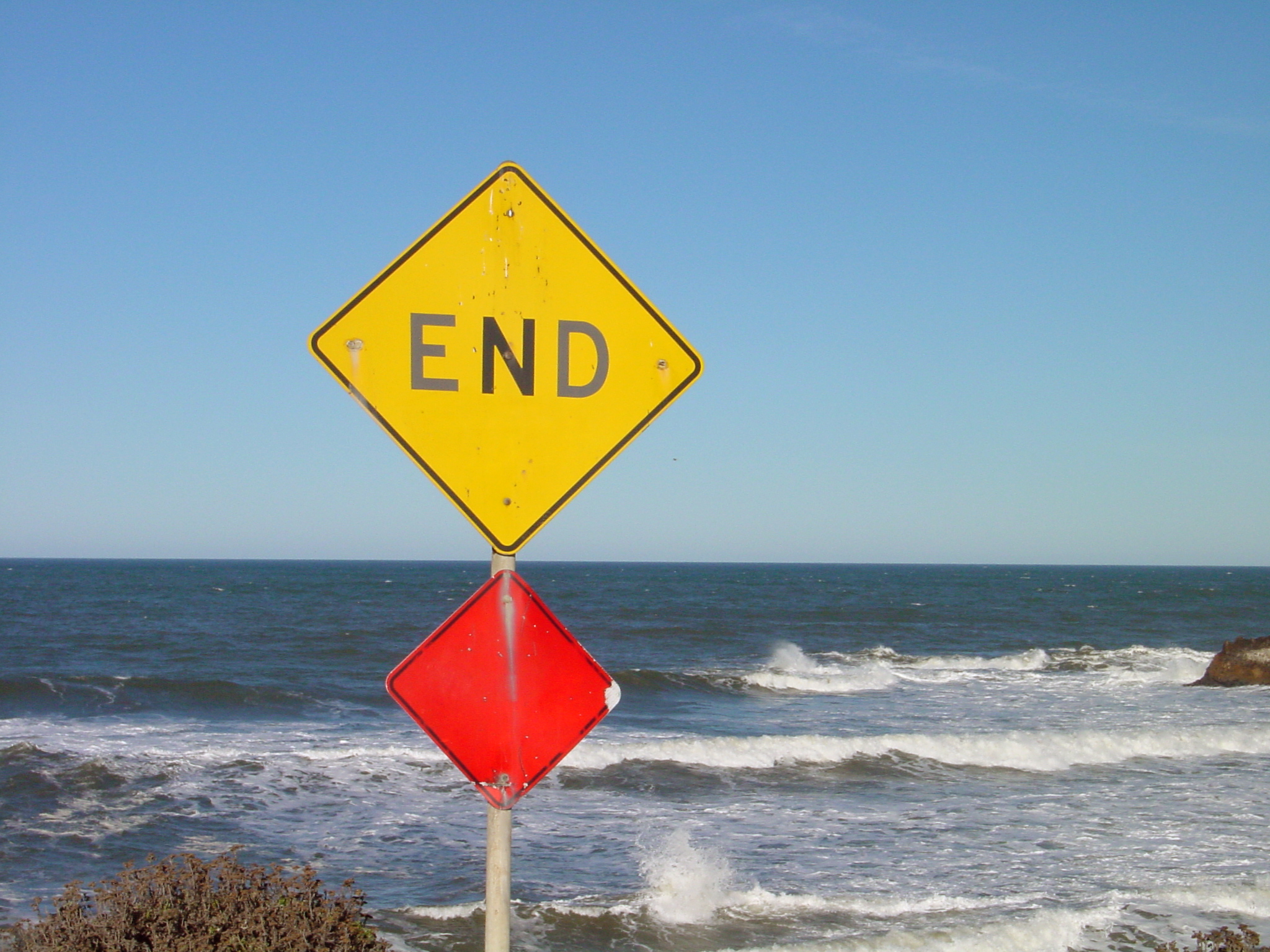
………THE END…….file3171299616544

So Many Books! So Little Time!

I don’t know about you, but I have too many books on my TBR stack but instead of reading them, I just keep adding more. I can’t help it. Often I buy books because I’ve read a tantalizing review or it’s a recommendation from a bookseller or I just want to support a fellow writer. One reader confessed to having over 4,000 books waiting to be read on her Kindle. I found that unnerving. Have we always been so cavalier?

When I was growing up, my reading source was always the library. I would pick my four books which, in those days, was the maximum you could check out at one time. This was a cherished Saturday morning trip with my Dad who was a great reader (and, years later, suffered from Alzheimer’s which broke my heart). We would spend at least an hour or two drifting among the bookshelves carefully making our selections. For me, it started with an eye-catching cover, a flick to the back to read the blurb and then a glance in the middle. It was serious stuff. When I got home and started to read one of my selections and hated it, I would still persevere and finish it. I don’t do that now.

Just speaking for myself – and apologies to those who may disagree – but having access to books at the click of a button, or arriving by Amazon Prime within twenty-four hours, has taken away some of my joyful anticipation. There was a sort of reverence to starting a new book when we all had more time and less distractions. Now, there is no commitment – at least, not from me. If a book doesn’t grab me in the first fifty pages, it’s out. Not exactly disposable, but close.

I don’t know about everyone else but I am increasingly overwhelmed by the choice and sheer number of books out there. How do we choose?

I posed that question on my Facebook page showing three different book covers of my first mystery with the original 2008 American cover, the 2012 British cover, and the 2023 French cover. Each cover appealed to a different reader but a few said if they hated a cover, they wouldn’t even bother to read it. Back cover blurbs don’t always present a true picture of the content either. Case in point – the blurb written by M.C. Beaton appears on every one of my books even though it was originally earmarked for the first.

So how do we sort the proverbial wheat from the chaff?

Enter the infamous P.69 test. This is not a new concept. It’s been around for years and was a test created by Marshall McLuhan, (The Gutenberg Galaxy, written in 1962), who suggested that book browsers turn to page 69 and read it. If that page drew them in, then read that book. The idea being that by that point in the story, the inciting incident has happened, the characters are settling in and the plot is trundling along with plenty of conflict and consequences.

Without pointing out the obvious flaws to this idea i.e. a large print edition would have a different P.69, I decided to put it to the test with three different novels.

Rebecca by Daphne du Maurier

The narrator has just arrived at Manderley and on P.69 we realize she is narrating in flashback, imagining how her life with Maxim could have been,  “growing old together” and fantasizing about their “boys. ” She reminisces on meeting the formidable Mrs. Danvers who will show the newly married pair their suite in the East Wing … not the master wing which – as those who know the story – was Rebecca’s suite of rooms that were never touched following her death.

There is a menacing foreshadowing about P. 69. I don’t know about you, but I must know what happened!

Anne Frank’s Diary by Anne Frank

I was fortunate to visit the Anne Frank museum in Amsterdam a few years ago. It’s almost incomprehensible in today’s world to be able to imagine the fear and horror of those dreadful times.

P.69 falls in the middle of a diary entry for Wednesday 10th March 1943 when Anne writes of her terror of hearing the night-time anti-aircraft gunfire, of listening to the rats in the attic and of not being able to light a candle. Anne speaks of a character who lived there “before we went into hiding.” Her courage shines through the page which makes the ultimate outcome more devastating. Anne’s diary is utterly compelling because she takes us into her present and it’s impossible not to stay on her journey.

Tigerlily’s Orchids by Ruth Rendell

Full disclosure! I have not read ANY Ruth Rendell books and selected this one when I went to the library to put P.69 to the test. And it worked! On P.69 the protagonist – Stuart – is fascinated by a beautiful Asian woman who has an overbearing father. Stuart has followed them to a greeting card shop. When Stuart buys cigarettes and turns away just for a moment, she has gone. “To lose her now was the most appalling thing he could think of. He rushed out of the shop, staring wildly about …” The girl doesn’t know she is being watched which is chilling. The page finishes with “He couldn’t let her go. He must follow her.”

I took that book out and it’s on the top of my TBR stack!

So here are my questions: do you choose a book because you like the cover or the blurb? The first line? Do you read the first three pages before buying? Have you tried the P.69 test and what did you think?

Oh … and there is another test called the P.99 test, but that’s for another time.

Hannah

P.S. For more examples of the P.69 test, visit Marshal Zeringue’s fabulous blog: The Page 69 Test

Lessons From A Child Poet

by Miko Johnston

If you’ve read my biography, you know my earliest ambition was to become a poet. I began writing poems at age six, and continued until I discovered it wasn’t a mainstream career – I found no “help wanted” ads for poets in the New York Times classified section. Being a practical sort, I changed my goal, but I’ve been writing ever since.

I still remember the first poem I wrote. I actually sat down and evaluated it line by line, and found that I had good instincts about the process. I recalled how I’d spent time playing with the wording, the rhyming and the rhythm, which created imagery through words. I also found parallels with my current approach to writing.

Let me show you what I mean. The poem goes:

I went to the moon

One sunny afternoon

Where I saw a sight

That gave me a fright

A man from Mars

With green and purple scars

The poem rhymes because I felt at the time poems should rhyme. It has a rhythm as well, for the same reason.

The first two lines had come to me immediately. I liked the way they sounded, with a sing-song bounciness reminiscent of a good nursery rhyme. The sound of words, how they flow together and the rhythm they create when read, remains an important aspect of writing to me and something I always strive to attain. The lines also comprise the first third of the poem. They introduce the setting, the character, and launch the story, as a first act should.

I don’t specify how I got to the moon, whether I rocketed, incorporated some other form of transport, or jumped, but I don’t think it matters. Rather than fill in every detail, it leaves that to the reader’s imagination, which is still characteristic of my style

The next two lines bring in an element of tension through emotion, as well as the possibility of conflict arising from it. Fear can be very potent in motivating a character. These lines also comprise the middle of the poem, but the sudden change from the playful couplet that opens the poem grabs our attention. No sagging middle here, another goal in my writing.

The last two lines are, to me, the most interesting. Finding another “non-resident” on the moon is more curious than scary, which brings the poem back to the mood set in the opening. A good ending should always reference the beginning. I contemplated the Martian’s coloring for a long while. At least some of the scars had to be green, since that was all we knew about Martians in those days. I toyed with using red or blue for the second color – the rhythm would have matched better. Somehow it had to be purple, an uncommon color in the fifties, which made it exotic. And I decided I liked the hiccup effect it gave the rhythm, like going over a speed bump or pot hole. It jars you, which also fits the theme. It also leaves it to the reader to decide whether the Martian’s appearance was scary or humorous.

Is it a great poem? No, but come on, I was only six. If this were a story, it would be incomplete. I could have added more, but it does convey an image and an emotional response. I say it’s complete as is.

I don’t write much poetry anymore, except for an occasional musing on a subject or a haiku in a humorous vein. I like fitting an idea to a very specific and brief formula. I’ll share my favorite haiku with you:

FOR THE RECORD

                                                Born in thirty-three

                                                Celebrated forty-five

                                                In seventy-eight

The math works out, but finding the right title was critical, as much for this poem as for a novel

As I consider my very first attempt at writing with the benefit of more than a half century of hindsight, I can see the roots of my development as a writer of prose.

For those of you who write, do you remember the first piece you wrote? How would you trace your development as a writer from that piece to today?

Miko Johnston, a founding member of The Writers in Residence, is the author of the historical fiction series, “A Petal in the Wind”, as well as a contributor to several anthologies including the recently released “Whidbey Landmarks”. Miko lives in Washington (the big one) with her rocket scientist husband. Contact her at mikojohnstonauthor@gmail.com

A Blog Challenge – Write the Chapter Titles in Your Autobiography

by Jackie Houchin

On my Personal Blog: “Words and Reviews” I took part in what WordPress called BLOGanuary. It was a gimic at the first of the year to get bloggers to  write every day. They sent questions to answer, and tags so you could connect with the community. It worked I guess. I went from 79 to 91 to 141 followers in one month! (Yeah, I know that’s no big deal, but my blog is less than a year old, and I don’t promote it much.)

Anywho, the question of post #30 was: What would you title the chapters of your autobiography?

At first I thought this challenge was just TOO hard.

I didn’t WANT to write an autobiography or even a memoir.  (Although a friend in THIS writer’s group blog has encouraged us to do just that. “Everyone has a story!” Gayle Bartos-Pool urges. And yes, she wrote her own life’s story, wonderfully illustrated, titled – A SCRAPBOOK LIFE.)

OK, I told myself, I’ll write down just TEN chapter headings and be done.

THIS is what I came up with….

Chapter — Title

  1. A Baby Sister!
  2. Hanging By a Head
  3. The Bobby Pin
  4. The Long Trek
  5. Trailor Park Life
  6.  Daddy’s Demise
  7.  Rude Awakening
  8. An Auto Repair Shop
  9. The Lone Ranger
  10. Joe Boysen
  11. The Gunsmith
  12. Church Camp Decision
  13. Nancy’s House
  14. Locker Combinations
  15. The 3-Mile Walk
  16. Pimples and Fat
  17. Denny Murphy
  18. The Evil Out There
  19. Double Dating
  20. A Twelth-Grade Diamond
  21. Dr Dentist
  22. Hollywood Firsts
  23. No Valentine’s Day
  24. Miramar Reality
  25. Cats and Cooking Disasters
  26. Baby Mine
  27. Hot Rods First
  28. Adoption Debacle
  29. Terror and Escapes
  30. Wrong Way Turns
  31. Dancing With Devils
  32. Comedy and Tragedy
  33. Horsing Around
  34. Deadly Diagnosis
  35. The Southern Retreat
  36. Faith
  37. Africa and Beyond
  38. Letters to Kids
  39. Pandemic Teaching
  40. See, Hear, Speak No Evil
  41. Cruising
  42. Grands and Greats
  43. Facing the Future

Gosh, maybe I SHOULD write my autobiography!

IF YOU WERE ME, with which chapter would YOU begin writing?  From 1 to 43, or here and there?  Tell me your answer in the Comments.

AND… let me challenge you to give this a try too.  Write out at least 10 chapter headings if YOU were to write YOUR autobiography.  Seriously. Try it! It may inspire you!