THE WEIGHT OF WORDS

 by Miko Johnston

Words have become a frequent topic for my posts. I often say they’re a primary tool in the writer’s toolbox, and like all tools they need to be kept sharp as well as up-to-date.

When I read, I’ll occasionally come across a word I don’t know or might be unsure of its meaning, whether in English or another language. Whether plots or articles, writing that includes corporations or government agencies and bureaus often use acronyms, and thanks to texting, so does modern fiction. We all know FBI, CEO, LOL. If the mystery is set in the fictional Gotham City, we can figure out what GCPD stands for. When the unfamiliar term is foreign, an acronym or other modern slang I’ll search for it online. I don’t mind doing this, as I enjoy learning new words, terms and expressions to expand my vocabulary, even if I never use them.

I used to keep my dictionary and thesaurus handy when I write. Now, I prefer to look up words online when I’m not sure of the proper meaning, or if they’ve changed over time. I google “(language) to English” if I need a translation, or the reverse if I need the word or phrase in another language. If I’m uncertain if a word I want to use is best or if another would be clearer, I check the thesaurus. I often understand the meaning better from similar examples than dictionary descriptions. If the synonyms don’t relate to what I want to express I delete the word and find another. You could say the dictionary “tells” me the meaning while the thesaurus “shows” it.

My thesaurus also comes in handy when I need a substitute for an overused word, or if I can’t think of the right one to use. However, it’s old and doesn’t reflect modern speech. If I want the language to be au courant, I google the word, or the idea I want to express, and add synonym. The results help me decide whether to stick with my original word, choose a better one from the list, or pick a different word that more closely expresses what I want to say. 

I also search for the etymology of words, phrases and expressions. As a writer of historical fiction, I must know when they came into usage to avoid anachronisms. The reverse is true as well. A word or phrase that brings authenticity to a period in history would sound ridiculous spoken out of time – who says 23 skidoo, groovy, or gag me with a spoon anymore? Then, I consider who will use the word. For example, I wouldn’t have a fusty old person use hipster (for the time) jargon, or vice versa.

Sometimes I must use an obscure word. When it’s foreign or an historical reference, I often describe it in the sentence following its usage. Sometimes the meaning can be gleaned by context, such as when my characters lit a yahrzeit candle to commemorate a loved one’s death. However, some terms can’t be explained without a dictionary-like entry – for example, plastron, which I used in my first novel, set in 1899. I expect most readers had to look that word up to find it meant “an ornamental front of a woman’s bodice or shirt consisting of colorful material with lace or embroidery, fashionable in the late 19th century”. Hardly something that could evolve naturally in dialogue. Certain genres, such as historical fiction and hard sci-fi, as well as unique careers and hobbies of the characters, give the writer some leeway for the occasional obscure term. So does a post on a writer’s blog.

Even so, I sometimes question the use of vocabulary that may be unfamiliar to the average reader, like etymology or anachronisms. I don’t want to oversimplify the subject, nor do I want to write over the reader’s head. I wonder – should I find another way to express myself? Is there a better way that won’t send readers rushing for their dictionary? Or is that necessarily a bad thing?

Some believe using more complex terminology – what we used to call “hundred dollar words” – makes them sound smart, while others find it pompous and pretentious. A wise person can explain complex ideas in complex terms, but a wiser person can do the same using plain language. I wouldn’t consider that “dumbing down.”  I’d call it making the information more accessible to more people. Even so, the best word may be foreign to some, including me. As a reader, I will look up a word I don’t know or am unsure of its meaning in the context of what’s on the page. If I have to do that once or twice, I will, but too many unfamiliar words put me off.

Some writers must use foreign words, terminology, slang, or acronyms related to the time period, profession, or avocations of their characters. How do you handle challenging vocabulary as a writer and as a reader?

.

Miko Johnston, a founding member of The Writers in Residence, is the author of the historical fiction series “A Petal in the Wind” as well as a contributor to several anthologies, including the about-t0-be-released “Whidbey Island: An Insider’s Guide”. Miko lives in Washington (the big one) with her rocket scientist husband. Contact her at mikojohnstonauthor@gmail.com

EXERCISING YOUR VOCABULARY

by Miko Johnston

When I think back to the dark days of the Covid pandemic, I don’t focus on the panic or the shortages. I remember the isolation. Although I had the good fortune of my husband at home and kinship through technology, I found conversations very limited. I began contacting people in my life whom I rarely saw but stayed in touch with, usually with a Christmas card, but many of my friends from the past were mired in their own woes or didn’t respond. Worse, despite having ample time to finish my novel in progress the distress kept me from writing anything…for eighteen months.

I still recall an evening at least six months into the lockdown. My husband, exhausted from yard work, went to be early. His older son called that night. In the past, I’d speak to him briefly before passing the phone to his father, but neither of us wanted to wake him. As I spoke to my stepson I began to realize how much I craved company, even if only over the phone, so what would have normally been a five-minute call stretched into over an hour. I think he, too, longed to talk, and for the same reason.

Our conversation was stilted at first, but not because of any personal reason. He and I were merely out of practice. We’d pause to think of the right word or string more than a few words together in a sentence. It took about five minutes to verbally limber up before we could chat ‘normally.’

That served as a wake-up call. From that day on, I began playing word games. It kept me entertained and, more importantly, prodded me to keep my vocabulary alive and active. Anything that forced me to plumb my memory for words (and spelling). I know many writers use writing prompts, but I wasn’t yearning to write better as much as speak better. I needed something deeper than that.

I began with Spelling Bee, a New York Times creation that gives you a ring of six letters with a seventh letter in the middle. You form words, four letters or more, that must include the center letter. I even got my husband hooked on the game; we still play it almost daily and compare our lists. Later, I added Wordle to my daily routine. You get six chances to find the five-letter word of the day – if you’re not familiar with it, you can read the instructions on the NYT website.

In both cases, trying to figure out the words stimulated my brain. Sometimes, words would pop into my head, even if they didn’t fit the puzzle. That’s when I decided I needed more stimulation and started inventing my own puzzles.

Wordle inspired a new way to challenge myself. I’d pick the first two letters of potential words and list as many as I could. I’d start with my “prompt” letters and work my way through the alphabet with the goal of reaching at least fifty words. As with my conversation with my stepson and my daily dose of word games, the more I challenged myself, the more words I could recall, and the faster they came to me.

Here’s an example:

HOW MANY WORDS CAN YOU MAKE THAT BEGIN WITH THE LETTERS:

BR——-

RULES:

  • Words must be at least five letters
  • No adding prefixes like S; ED; ING; LY; NESS to a root word of four or less letters
  • Only one version of the same word is allowed (ex: float OR floated OR floating)
  • Homographs are allowed with variations in the spelling to reflect their different meanings

(ex: score [to make shallow cuts]; score [to earn a point] becomes scoreboard)

  • No abbreviations
  • No foreign words unless they’re in common English usage (ex: pasta; rondo; bidet; pashmina)
  • No proper nouns
  • No acronyms (ex: AWOL)
  • No hyphenated words or contractions

GOOD LUCK!

“She is going, you know, to…” 

by Jill Amadio

“He fell down, you know, on that.. blah, blah blah…”

Bombarded with the words “you know” in person, on Zoom, on TV, and on the radio, I have this hollow feeling that if I do not know what I am supposed to know when someone says the phrase, what am I missing? How do we “get the drift” of what the speaker means, if we are told we already know it? What is the significance of their words if taken literally? I already know what I am being told?

In other words, how am I to know what the person talking means when it is assumed I know precisely what they mean? By slipping in those two words, often twice in a short sentence and more frequently in long ones, I am left feeling like an idiot because, like many writers, I take words not only seriously but by their true intent.

I am tempted to tell the next person who uses it out of context that, No, I do not know, or I shall ask them why they think I know what they assume I know. I shall also ask them what their intention is in telling me something they think I already know. If I already know it, why waste their time in re-telling it?

What is this innocuous but irritating manner of speaking doing to our psyche? Will our personalities change, or our memories be challenged? Will what we already need be thrown out with the bathwater? A dilemma indeed.

I have yet to read “you-know” used in any newly-published books, thank goodness, but there’s always tomorrow for the opportunity to chance upon this ultimate word-mystery.

I have not yet thrown my buttered scone at the television set as I assume, you know, that the pundit cannot hear me, but, you know, what do I know? With all this high-tech stuff circling the globe, maybe I am wrong, you know. Could I, you know, be behind the times?

Perhaps “you-know” is used to give the speaker a moment to collect their thoughts, to come up with a different statement they intended, or to end a sentence with a lilt of the voice to indicate a question.

There are, of course, plenty of ways to ask  the you-know question, such as, “Do you know that…” or “You do know, of course, that he murdered her?” This dialogue sits so much more easily upon a writer’s shoulder, placing the you-know bit within its proper grammatical intention (I think).

Then there’s my gracious understanding of why people use it: to give themselves a break to think up their next statement, to find their place on the teleprompter, to allow them to sound “with-it.”

Intonation, when using “you-know,” is also important, I have observed. There is rarely a tonal upswing indicating it is a question.

If “you-know” is spoken to a young child, do we expect a cogent answer? Children tend to take what we say as dogma. We do not want to saddle kids with untruths.

Can we pronounce “you-know” as y’all know, or y’know? Perhaps this slide into dialect can remove some of its insidious, unnecessary sentiment. Or maybe to give it an inflection it does not deserve.  Should we replace “you-know” with a different phrase? I’ve heard people slip in a “my dear” and “indeed, but “you-know” rules the roost – at present.

I have come to regard “you-know” as a target and have to constrain myself from counting how many times it is spoken and in what context. Frankly, I cannot think of any unless “you-know” is posed in a readable sentence such as, “Do you know that…” or “You do know, of course, he is…”

When used in this context, it is obvious that an answer is required, whereas thrown in higglety-pigglety, the phrase has no meaning, but at least it does not put the listener on the spot. However, who knows? I sure don’t.

A TRIBUTE TO WORDS AND WRITING

By Miko Johnston

My late father co-founded a non-profit organization dedicated to Scandinavian philately. In addition to translating and publishing educational books on the subject, the group held monthly meetings as well as annual exhibitions where members could present their best work. Dad served as their president for many years; his name and phone number appeared on all contact sources.

He wasn’t home the day a young man called for more information about the organization. I offered to answer as much as I could. His first question: “Can you join if you’re under eighteen?” Yes, I told him, there is no age limit. “Can I bring another guy to the meetings?” Sure, I said, but something told me he had something, um, different in mind. I then said, “You do realize that philately is stamp collecting.”

“Oh.” He promptly hung up.

We spend a great deal of time writing about words on this blog. If you hunt through our archives, you’ll find many posts on the topic, which should come as no surprise. Words are the most important tool in a writer’s toolbox. We think about them, which one to use in any situation, whether a particular word or one of its cousins (aka synonyms) would be more precise, more distinctive. Can we convert that verb/adverb pairing into one verb? How many descriptives can we edit out without losing the image, the rhythm, or the voice of a character?

Words convey and put into context images, thoughts and ideas, especially when they’re carefully selected. We have non-verbal ways of communicating as well, but unless there’s some established pattern to it, such as sign language or Morse code, their subtlety makes them less effective for interpretation – is she slouching because she’s humiliated, or her back hurts?

Whether spoken or written, signed or signaled, we rely on words as the basis of communication. Misinterpretations may cause embarrassment, as my earlier story shows, but in the right hands they surprise in an entertaining way. Writers can inform the reader without the character’s knowledge, a technique I relied upon in my first novel, when my protagonist was a child. Or they can make the reader wait – ideally with keen anticipation – for information the character already knows.

We can use words to assure clarity of thought, or to deliberately deceive. Red herrings in mysteries fall into the latter category, as do ambiguous phrases meant to mislead the reader into thinking something the author intends to prove wrong later. I’ve done this so often in my writing it might be a hallmark of my style.

Words have the power to calm and reassure, to encourage and inspire, or to agitate and inflame. Think of all the influential speeches you’ve heard or read, or the memorable phrases culled from them. Whether by actors reading from a script, politicians addressing their constituents, or activists crusading for their cause, their words, carefully chosen with deliberation, hold the power to move people. To bolster their spirits, or shock them. Convince them they’re right, or maybe, just maybe, they’re not.

All have one thing in common: Someone, or some ones, wrote those words.

Not to equate a frothy page-turner with The Gettysburg Address, but I celebrate writers who celebrate the written word. I commiserate with writers who agonize over the best way to express their or their characters’, thoughts. I respect writers for what they try to accomplish whenever they put pen to paper or fingers on the keyboard.

That’s why we deserve a formal representation for what we do.

The practice of medicine has a symbol – a caduceus with two snakes coiled around it. The symbol of law is the scales of justice. No formal symbol of writing exists, although if you Google it you’ll find cartoons of a hand holding a pencil or pen.

What do you think would make an apt symbol for writers?

Miko Johnston, a founding member of The Writers in Residence, is the author of the historical fiction series, “A Petal in the Wind”, as well as a contributor to several anthologies including the recently released “Whidbey Island: An Insider’s Guide”. Miko lives in Washington (the big one) with her rocket scientist husband. Contact her at mikojohnstonauthor@gmail.com

Big Words, Bad Words

By Maggie King

Many years ago I read a mystery with so many words I didn’t know that I had to keep my dictionary close at hand. As I enjoy learning new words I liked the experience the popular author provided. But when I mentioned it to a couple of friends, they said, “Not me. I’d have put that book down, and fast. I want to read words I already know.”

I’ve always had a love of words. I fondly remember vocabulary lists in high school: perspicacious, truculent, vapid, loquacious, polemic, specious, logy. With all those big words swirling through my brain, you’d think my SAT scores would have been more impressive than they were.

When I presented my manuscript for Murder at the Book Group (my debut, published in 2014) to a long-ago critique group, the members advised me to ditch the big words. “What big words?” I asked, bewildered. They named a few but the one that stuck with me was “diatribe.” I didn’t consider diatribe a big word and it would surely be understood in context, as in “Arthur ignored his mother and carried on with his diatribe against Evan.”

The upshot was that I kept diatribe, but changed some of the other “big” words.

A word I recall from reading Nancy Drew was “elated,” as in “Nancy was elated by the news.” The context wasn’t clear, so I ran to the dictionary and learned that Nancy was ecstatically happy by the news. Elated is a wonderful word to teach a ten-year-old.

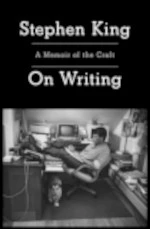
One of my favorite books on writing is On Writing: A Memoir of the Craft by Stephen King. In the book, King says, “Wherever your vocabulary is at today is fine. There’s no need to learn more words or different words. Whatever words you know right now, you use. This will help you develop your voice and sound unique.”

Is using big words in a story a good idea? In my opinion, the answer is yes—as long as the writer chooses words whose meaning and context is easily understood. A thesaurus is a great tool, but don’t use it to come up with words you think sound cool and sophisticated. Readers have a wide range of word knowledge but even those with an impressive vocabulary feel that showing it off is pretentious.

To sum it up: use your best judgment.

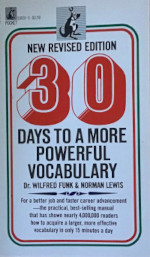
In the meantime, I’ll hang on to my precious dog-eared copy of 30 Days to a More Powerful Vocabulary and see how many of the words I learn end up in my writing. Ceraunophobia, anyone?

To swear or not to swear?


Do your characters swear? Do they swear too much? Not enough? Should they swear at all?

Personally, I don’t get exercised over swearing. Let’s face it, people swear—some a little, some a lot, some only when “necessary.” Swearing can add a touch of realism to our writing (after all, what does one say when tripping over a dead body?). We’ve all known colorful folks who liberally season their conversations with salty words. For one story, I created a character loosely based on a former co-worker who never felt the need to censor her speech. Not a word of it.

But my readers object to profanity and I must respect their wishes. There are ways to suggest swearing and author Naomi Hirahara is so skilled at this that you know the exact word she’s not using. Another author, F.M. Meredith, has this to say about the lack of salty language in her Rocky Bluff P.D. series: “Oh, the characters do cuss, I just don’t quote them.”

Here are ways I’ve suggested swearing in my stories: She shrieked a litany of curse words; She continued to scream and curse …; He included a few four-letter words of a sexist nature; Donna slurred a few non-PG13 adjectives to describe her feelings for her ex; Kat cursed a blue streak (I wouldn’t choose this one again, as it’s a cliché that sneaked past me and my editor).

On several occasions I’ve presented a seminar/webinar on dialogue and tackled the question of profanity. This is how I answered the question “To swear or not to swear?”:

• Know your reader and your genre. Cursing and four-letter words are more acceptable in a thriller than in a romance or a cozy mystery.
• Refrain from profanity in narrative, but an occasional expletive in dialogue is acceptable (depending, of course, on genre).
• Realize that profanity is more noticeable in a novel than it is in real-life conversation.

Again, use your best judgment. And ask your beta readers for feedback.

Your thoughts?

Words!

by Linda O. Johnston

Some of my fellow Writers in Residence inspired me to write this post by mentioning, in past weeks, their enjoyment of, and working with, words–most especially Miko Johnston, who wrote “Wordplay,” and Jill Amadio, who wrote “You Say Potatoe…” I always enjoy our posts here, but those two really jostled a lot in my mind.

Why? I love words! I always have, from the time I was a very young kid, and still do. Reading, spelling, grammar in grade school? Wonderful!

Miko described her fascination with words and their origins and imagery and sounds and more. Jill focused somewhat on the differences between the U.S. and U.K. versions of the same words and their spelling and uses in grammar.

And me, here? Well, let’s just say I do all I can with words in different schemes and environments. Yes, I write. I’ve always written, since I was a child, but I do a lot more now. My undergraduate college degree was in journalism, and I worked in advertising and public relations before becoming an attorney–and a published novelist. They all involved words!

Besides writing these days, I also do a lot with word puzzles, especially crosswords, cryptograms and acrostics. It keeps me fresh with the words I use as well as learning how others can play games with them, literally. Yes, I sometimes check the answers if I don’t otherwise figure them out, since it’s a good method to learn not only words but different and sometimes strange usages–although I’d much rather figure them out myself.
I find it interesting that I sometimes also have to figure out what recent slang and other words mean, even though many used to come to me just by hearing them and their usage. For example, I had to look up what the current usage of “woke” means. Yes, I had to become woke in its usage!

My own vocabulary was helped over the years by the fact I used to be fairly literate in the French language after studying it for over ten years as a kid. I rarely use it now, though I can often read French, but I don’t always understand when people speak it in my presence unless…they…speak…slowly. Yes, lack of usage has slowed me down, although I can always come up with a sentence in French, probably an elementary one. And if I see French words on a page, I can often translate them.

Plus, over the years I’ve learned some Spanish words, too. And after spending a significant amount of time in Germany years ago, I can sometimes recognize German words as well.

So… Yes, words and I are good friends. Buddies, chums, mates and more. Amies et amigos und Freunden. Guess I’ll keep talking and reading and listening and solving puzzles…and hope to learn even more words.

WORDPLAY

by Miko Johnston

Words fascinate me. I think about them constantly, their surface meaning and their subdural meaning. The subtle differences in synonyms when attempting to find the best word in a situation. The unusual pairing of words to create fresh and unique imagery. Formulating a sentence that will dazzle the reader, but not distract them.

We who write in English have an amazing array of words to use. According to a linguist I know, our language stems from our Anglo-Saxon heritage, with words deriving from both cultures.  It provides us with an abundance of synonyms.

I became interested in words early on, which is why I wanted to be a poet and have read much poetry. One of my all-time favorites is Edgar Allen Poe’s “The Bells”, a master course in the use of repetition and word sounds to create different moods. It’s where I learned about onomatopoeia – words that sound like their sound. Poe’s bells tinkled in merriment, rhymed and chimed in happiness, clanged in alarm, and tolled in sorrow.

Before I could read I would hear words and “picture” them by their sound. I would think I knew what they meant, but not always – some didn’t translate into their actual meaning.

Growing up in New York, I ate a lot of delicatessen meats like pastrami, corned beef and tongue. As a child, I assumed the last item to be a homonym of the organ found inside mouths. It took until my late teens to make the connection – the delicacy I’d enjoyed for years was actually…a tongue. Had I not already loved it I would have been grossed out!

I’ve since learned tongue is an autological word – it describes what it is, or expresses a property it also possesses.  Examples of autology include unhyphenated, word, and pentasyllabic  (a five-syllable word that means a five-syllable word).

Onomatopoeia words sound like they sound. Autological words mean what they mean. However I’m more curious by other categories of words, which have no name that I’m aware of, the first being words that sound like what they mean.

Take alluring. When it’s said out loud it rolls gently off the tongue.  You can almost hear the trilling of the R, the sensuousness of the word. I find tranquil to have a soothing sound. To me, idiot sounds ‘fast’ while moron sounds ‘slow’, which is why I ascribe each term to different, um, problematic drivers. I also think stress, beginning with its three hard consonants and ending in the shrillness of double S, sounds, well, stressful. And come to think of it, shrill sounds…shrill. I wonder – do these words sound like their meaning because we know their meaning, or would they sound that way to someone unfamiliar with the word? What would you call words that sound like what they mean?

Then there are words that sound nothing like their meaning. Who came up with pulchritude to describe pleasing beauty? Is gorgeous, with its hard opening G and harsh final syllable, much better? Does relax inspire calmness? One of my favorite and most pleasant sense memories is the smell of summer rain hitting a hot, dry pavement. There’s a word for it – petrichor. Does that sound pleasing? Not to me. Shouldn’t words like these have a name as well?

You can probably come up with other examples of words that sound, or don’t sound, like what they mean, and please do. You might know of a word that describes these types of words, or suggest one of your own. All I know for certain is that my fascination with words and language led me to become a writer.

Miko Johnston, a founding member of The Writers in Residence, is the author of the historical fiction series, “A Petal in the Wind”, as well as a contributor to several anthologies including the recently released “Whidbey Landmarks”. Miko lives in Washington (the big one) with her rocket scientist husband. Contact her at mikojohnstonauthor@gmail.com