Once upon a time…

by Jackie Houchin

Once upon a time, in a WAY long time ago, before I had a smartphone, a computer, an online presence, or even a typewriter, I wrote with a pencil, on lined school paper.  I wrote letters (to pen pals and cousins), stories (mostly tragically romantic vignettes in far-off places), and I wrote in small daily diaries.

You know those little books, about four by five inches, with a strap that wrapped across the pages and fit into a lock on the front, and had a half-inch, flat key to secure it. I mean, even a fork or a good slap could open them! 

The pages were dated, but you had to fill in the year. And you had to write quite small if you had a lot to say, like I did.  Wow, did they hold secrets!  And souvenirs – another good reason for that little strap and key. I wrote about feelings, events, boys, teachers, embarrassments, fights, dreams, disappointments, and things or people who made me mad, jealous, or envious.

One day, I found and opened a thirty-five-year-old diary like that. Oh, my goodness!  I slammed it shut and looked around me. Then I carried it to a small chair in a corner of the bedroom and opened it again.

I wrote THAT?  And that? Oh, my!

I laughed. I cringed. I even cried a little. A couple of times, I gazed off into space, seeing and reliving a sweet incident.  I’d smile and sigh.

How would my life be different if THAT had happened? Or hadn’t happened? Or if I’d said something else? Or acted quickly, nicely, or at least not selfishly? What if….?

What if? 

That’s the way fiction writers often dredge up a story idea or outline. What if such and such happened, or someone said or did THAT?  

I glanced down at the diary and thumbed through the pages, stopping now and then to read a heavily underlined passage.  WHOA!

I eventually put the little book back into the cardboard box with maybe eight others like it.  I’ll read them all, I promised myself.  I’ll write a story or two.  Is there enough for a book, I wondered?  

I stretched the duct tape tightly across the flaps and penciled “diaries” on the front. Tomorrow we will take the last of these attic finds to our new house.  After all the unpacking and settling in, I will dig out these diaries and sit at my computer, and type, “What if….?”

Halfway down the busy freeway to the new house, traveling at 65 mph, our heavily packed pick-up truck hit a pothole. In the passenger side mirror, I saw a small box jump and pitch itself over the truck’s railing. When it landed, the box split apart.  Small square objects flew out and bounced into the bushes growing close along the side.

“OH!” I cried.

“What?” my hubby asked.

“My diaries!  Didn’t you tie the boxes down?”

“I did!”

“But…”

There was no place to pull over. No going around. No going back, either along the freeway… or to that youthful time long ago.

I sat stunned.  Then I laughed, imagining some homeless dude living in the bushes finding and being entertained by my teenage drama and angst. Or maybe a gang of miscreants wearing orange vests and carrying plastic bags would come by to clean up the roadside trash, and find them. 

Hey, my stories could be read in jail! Perhaps even traded among the inmates for snacks or phone calls. Juicy sections could be copied on the backs of old envelopes and reread a hundred times. Pages might be torn out and passed on to new inductees as the old timers were released. My audience would grow! I might become “a best-selling author!”  

Well, maybe not.

Anyway, that’s why I never wrote the “Great American Novel.” 

Did you ever write in diaries?  Do you keep a journal now?  If so, is what you write  “stream-of-consciousness” or does it have a specific purpose?  Have you ever reread your previous ones from a year ago, or many years past?

Do You Really Want to Be a Writer?

by Jacqueline Vick

Lots of people dream about writing. And writing for yourself and your family is great. Recording memories. Journaling for fun and self-awareness. These are all wonderful, creative pastimes that I encourage. In fact, if you write, you are a writer.

I suspect what most people mean when they say they want to be writers is that they want to make a lot of money doing something they enjoy. And that’s an honorable goal. But there will be challenges.

One thing that stands out from my time with the Sisters in Crime Los Angeles Speakers Bureau is the number of people in the audience who asked published writers for tips and then rejected them.

Audience Member: How do you find time to write a book?

Writer: You need to write every chance to get. On the train or bus if you commute. During your lunch hour. Or get up early.

AM: I drive to work. My lunch hour is too short. I have enough trouble getting up for work. I have no time.

Audience Member 2: How do I sell my book?

Writer: You have to put yourself out there to meet other writers and readers. Meet with book clubs. Do library or bookstore events.

AM2: I’m too shy. And I don’t have a car.

Writer: If in-person events are a problem, there are many online opportunities available.

AM2: I don’t have internet access.

Writer: You could do paid advertising.

AM2: I have no money.

Based on those conversations, I thought I’d give aspiring writers a reality check in the most loving way possible.

If you want to write for a living, you will run into obstacles. You will either find a way over them or around them, but, if you’re serious, you will move forward.

There are many paths to publication.

Online zines publish short stories, and some of them pay. Competition is high.

Traditional publishers will most likely require you to have an agent submit your book, which means having a clean, edited copy of your manuscript along with a polished query letter. Check with each agent for their requirements. (Or the publishers, for those who accept direct submissions.)

Self-publishing. You will need to have a professionally edited book and a professionally designed cover. After that, everything falls under your responsibility: submission to the markets, marketing the book, and handling all business decisions and finances.

My point is not to scare you but to prepare you.

I spend my typical day writing AND marketing. At this point, probably 40% of my time is working on marketing, whether that is appearances on websites or blogs, testing creatives for ads, testing headlines for ads, testing primary text for ads, keeping up with trends, watching my ads and making adjustments, such as killing the ones that aren’t working and adding ones I hope will work better. And so on.

I also spend hours each week in marketing groups as well as writer’s groups.

Part of my budget is spent on tools that help make me a better writer and marketer. ProWritingAid for grammar. Fictionary for story development. Unbounce, Mouseflow, and Shopify for marketing and direct sales. And the plugins to make Shopify perform better. Not to mention the thousands of dollars I spend on ads each month.

Usually, I come out ahead, but there are no guarantees. Some months, especially when Facebook makes a change that affects the algorithms, I don’t. But it’s a growing and learning process. You need to hang in there.

If that sounds like something that interests you, I suggest you join a writer’s group that focuses on your genre. Sisters in Crime, Romance Writers of America, and Society of Children’s Book Writers and Illustrators are a few. They often have great resources.

Follow authors you like, especially those who write in the same genre, on social media. See what they’re doing. Study their Amazon book pages, author pages, or, more popular now, their direct sales shops.

And don’t expect overnight success.

If that sounds appealing to you—or at least it doesn’t scare you—good luck. May you have a long and fruitful career ahead of you.

###


A “Hot” Cool Book for Summer!

By Bonnie Schroeder

How are you coping with what feels like the hottest summer on record, everywhere except maybe Antarctica?

When I was a kid, I sought refuge in the local library, which had two ways to escape the heat: good books and air conditioning. Still not a bad way to go, right? But today you don’t even have to leave your air-conditioned home (if you have one) because you can rent eBooks right from your phone or computer.

I haven’t spent the entire summer loafing. In fact, I have at least resurrected one of my novels from the internet oblivion where it languished after my publisher closed its doors at the end of last year. Yes—it’s true! Mending Dreams has been reissued in a second edition and is back in circulation, through Amazon, Barnes & Noble, Apple iBooks, and a ton of other retailers as well. Readers may even be able to order it through their local bookstore, since I’m publishing with IngramSpark as well as Amazon.
The text of the book is unchanged except for some small grammatical corrections, but I’ve added bonus material at the end—a list of book group questions, and a sample of my second novel, Write My Name on the Sky, which will be next up for reissuance.

Check out Mending Dreams’ spiffy new cover, designed by the amazing Paula Johnson, who also guided me through the indie publishing maze on this, my first-ever attempt. There were a few bumps in the twisty road to publication, but it was worth all the angst and hand-wringing to see my novel back on virtual bookshelves, and to hold a copy in my hands.

I can now honestly say that writing a book is easy compared to publishing it. This has been a true learning experience, and I tell myself all this new education has been good for my brain. I’d be glad to share my experiences with you—simply reply to this email, and we’ll talk.

Now, here’s your reward for reading this shameless self-promotion. I’m not much of a cook, but I recently discovered a terrific idea for breakfast on these sultry summer days: overnight oatmeal. I found this on the Weight Watchers website (being a Lifetime member since 1989) and modified it a little to suit my tastes.
Start with ½ cup uncooked rolled oats and add ½ cup fat free milk. Mix them together in a storage container, cover and refrigerate overnight.

In the morning top with crushed berries, bananas, peaches or whatever fresh fruit strikes your fancy. Stir in about ¼ cup plain fat free Greek yogurt.

And—presto! You have a nice, cool, nutritious breakfast at your fingertips.

Some recipes suggest you make this in a glass Mason jar, adding the toppings in pretty layers, but I like my glass cereal bowl with a top that seals. You can find a ton of variations on the internet, too—so let your imagination run wild.

Meanwhile, my dog Thunder and I have some reading to do.

A NEW LEARNING CURVE

By Bonnie Schroeder

 Unlike many of my colleagues, including several Writers in Residence, I’m a novice at self-publishing. My first two novels were published by the late, great Champlain Avenue Books (CAB), but they’ve closed up shop—which means those books are no longer available, not online, not in bookstores, not anywhere except in the boxes stashed in my linen closet.

It has therefore fallen to me to get those books back out into the world for people to find and—I hope—buy or at least read.

As I embarked on this journey, the best advice I received is this: “get professional help,” and they didn’t mean psychotherapy (although that may be necessary on down the road.) I took that advice and enlisted the wonderful Paula Johnson to guide me, answer questions, tolerate my whining—oh, and design the cover and format the manuscript for uploading to print and e-book formats. Thanks to Paula’s hard work (and a little of my own), it looks as if Mending Dreams, my very first published novel, will be resurrected later this month, first as an e-book and eventually in print as well.

Even with a pro steering me through this, I’ve had to manage some issues myself and make a few decisions. CAB really spoiled me—all I had to do was write the book and turn it over to them. But now …

First came the cover image. Paula sent me ideas for a basic concept, and I found an image I liked, which Paula then massaged and added the text. Here it is.

Yep, it’s a radical departure from the First Edition cover, and I confess that neither Paula nor I loved-loved-loved the image itself. However, it does speak to the heart (pun intended) of the story, it’s eye-catching, and it will tell the potential reader/buyer what kind of story this is.
This is an important consideration when choosing a book cover, as Miko Johnston observed in her recent post here.

Once the cover was set, and before we could proceed with formatting the manuscript, I had to manage those business issues. Fortunately, the copyright I registered for the first edition still applies, but I had to procure new ISBN numbers for both formats, plus an LCCN number. Those initials, as you probably know, stand for International Standard Book Number and Library of Congress Control Number respectively. The former is your book’s unique identifier, which you can purchase from Bowker. Some self-publishing platforms will offer to provide them for free (they’re not cheap!), but I wanted my own so I could take it with me to other platforms in the future if I wanted. And you don’t absolutely-positively need one for an e-book, but I went that route because I’m just a total control freak. The LCCN number tells libraries or any other interested party specifically where your book is located within the hallowed halls of the Library of Congress. Registration is free, although the website isn’t the most user-friendly, but they were quick to give me a provisional number, which will become official only when I send them a copy of the published print book. An LCCN number is not mandatory, but if ever I hope to get my book into libraries, I need one.

Paula did a fine job formatting both the print manuscript and the e-book, which I then had to read over for any weird section or line breaks and other things like that. In theory I only needed to scan the files because the text itself was straight from my triple-proofread manuscript, but that process wasn’t as easy as I expected. This was mostly because I got caught up in reading the text, and there were times when I came on sections where I went, “Wow, I don’t remember writing that!” In the end, I found very little to correct.

I learned a couple of new terms during this process: “Front Matter” and “Back Matter.” They are just what they sound like.

Front Matter comprises the title page and the copyright page, where those pesky numbers are shown, along with the usual copyright notice and typically a disclaimer about this book being a work of fiction, etc., plus any credits or dedication you want to include.

Back matter is where you place any Acknowledgements and the author bio. And here’s where professional help’s value is evident. Paula suggested I include some book club-type questions AND an excerpt from Write My Name on the Sky, my second novel. She also included my website url and a request for reviews at the end of the bio. These are things that would never have occurred to me.

The final touch is the back cover, where I put a short summary of the story that, with any luck, will entice a prospective reader to open the book and read more. It helps to have one or two “blurbs” by published authors, praising my book, and my good friend G.B. Pool stepped up and wrote a lovely blurb for the back cover of Mending Dreams. “You gotta have friends.” So true!

I’m still traveling along that learning curve. Next stop: distribution—how to get the book into readers’ hands. There’s a dizzying array of options, and I think I’ve narrowed the choices down. But that’s another story, for another day.

The bottom line is this: yes, it’s a lot of work to publish your own books. It’s scary and sometimes confusing. But for a control freak like me, it’s also exhilarating. And I want to emphasize that the path I’ve chosen is not for everyone. Many of my colleagues have gone the self-publishing route totally on their own, with great success. Several of them have shared their experiences, as well as tips for my own adventure—along with support and encouragement. However, such skills as I have are verbal, not visual. For a novice self-publisher like me, having a partner has made the journey less confusing, and I know the end result will prove I made the right choices.

Good luck on your own publishing journey, however you go about it, and thanks for reading.

How To Earn $1 Million on Your First Book… or NOT!

Jackie Houchin

bag of moneyI was going to write this post on “how to make $1 million on your first book” and follow the story of paranormal-romance writer Amanda Hocking who actually sold 1.5 million eBooks in 2010 and made $2.5 million. “All by her lonesome self. Not a single book agent or publishing house or sales force or marketing manager or bookshop anywhere in sight.”

Following tips she’d gleaned from the blog of JA Konrath (an internet self-publishing pioneer, who boasted of making $100,000 in three weeks), she also uploaded to Smashwords to gain access to the Nook, Sony eReader and iBook markets.  “It wasn’t that difficult. A couple of hours of formatting, and it was done.”

Then… she got a $2 million contract from St Martin’s Press and… yada, yada, yada.   Here’sHerStory

Today the self-published book market is flooded with books, and unfortunately a lot of them are inferior in quality in one way or another.  Authors in a rush to publish don’t take time to write a quality story, edit, format, proofread, and design a cover professionally. And less than half of them make even $500.

So what’s a newbie author like me to do?

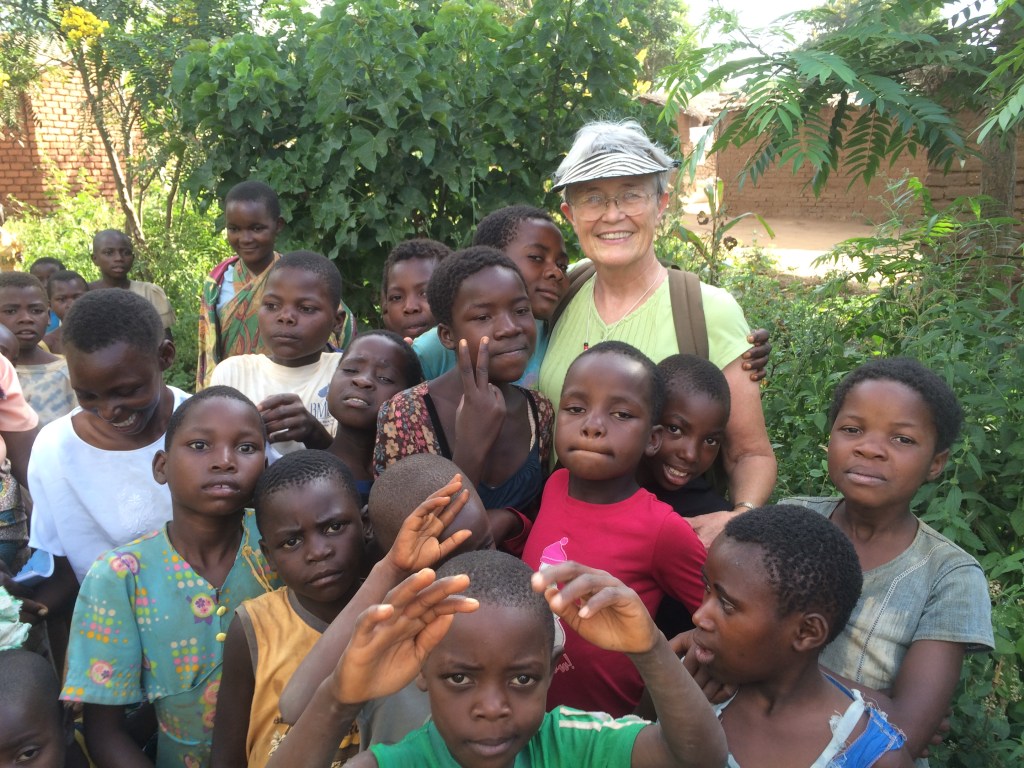
I’m currently working on a middle grade children’s book manuscript. It is a collection of twelve stories from the POV of seven kids who are the children of Missionaries in Africa. The kids take turns writing emails to their friends back home, telling of adventures, mishaps, mysteries, and lessons learned. In the process they reveal amazing bits of African culture, as well as showing how kids anywhere can use the Bible to help them in life.

Because it is unabashedly a Christian book and might be difficult to market, I decided to self-publish.  I’m also determined to make it the best possible book I can.

Okay. No problem.

I’m a journalist and a reviewer. I’ve written tons of stories for my granddaughters over the years. And these twelve stories have been “kid tested” to more than a dozen children at my church. (They loved them.)

So all I have to do is a minor rework so they fit together smoothly, check for typos and grammar errors, and ask a friend to help me upload it to Kindle and Createspace. Right?

WRONG!

IMG_3243As I began to read blogs about self-publishing and downloaded PDFs like “Checklist for Publishing Your Book” and “Which Format Should I Choose” and followed marketing blogs with tips on using  social media, launching your book, advertising, newsletters, and websites, I discovered there’s a lot more to consider.

How to self publish your bookI bought and read “How to Self Publish Your Book” by Craig Gibb, which details about titles, pen names, and blurbs, as well as editing, cover designs, formatting, promoting and marketing options.
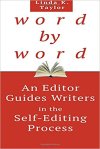
Word by Word Editing“Word by Word, An Editor Guides Writers in the Self-Editing Process” by Linda Taylor describes in detail the process of content and copy editing, proofreading, formatting, and all the front and back matter I would need to write for a complete “up-loadable manuscript package.”
 

My take away, if I am determined enough to do it:

  1. Write/rewrite my stories so they are polished to a mirror shine and have a kid-compelling first chapter.
  2. Get my manuscript professionally edited. (I sent in a sample 750 words to be edited free to one publisher, and was aghast at all the track changes suggested!) A proofreader is also high on my list.
  3. Get professional help in formatting my manuscript for the various eBook and print options. (There are just too many things that can go wrong, and I know from a dear friend on this blog that the learning curve is steep.) This is especially important because I want to include photos or illustrations.
  4. Get a cover designer/illustrator who can format for both eBook and Print, and who can portray the vision I have for the stories.

How much is this going to cost me?  A lot.

Can a middle grade children’s book with a Bible slant recoup that in sales?  Only God knows. I’m really NOT out to earn $millions. Any profit I make will be channeled back into the Africa ministries that I love.

But… I DO have a person who has promised to read the book and write a foreward for it. He’s worked with Wycliffe Bible Translators and travels the world as a Partnership Facilitator. He’s been to Malawi many times.  Who knows where THAT contact might lead.

And YOU might even know a 7-12-year-old who thinks it would be fun to grow up in deepest, darkest Africa!  And want to read my book.

IMG_3208